Giganotosaurus
GIG-an-OH-toh-SORE-us
"giant southern lizard"
- Lived
- 113 to 106 million years ago, Early Cretaceous
- Diet
- Carnivore
- Length
- about 13 m (41 ft)
- Group
- Theropods, Carcharodontosauridae
- Found in
- Argentina
- Named by
- Coria and Salgado 1995
Size comparison
To scale
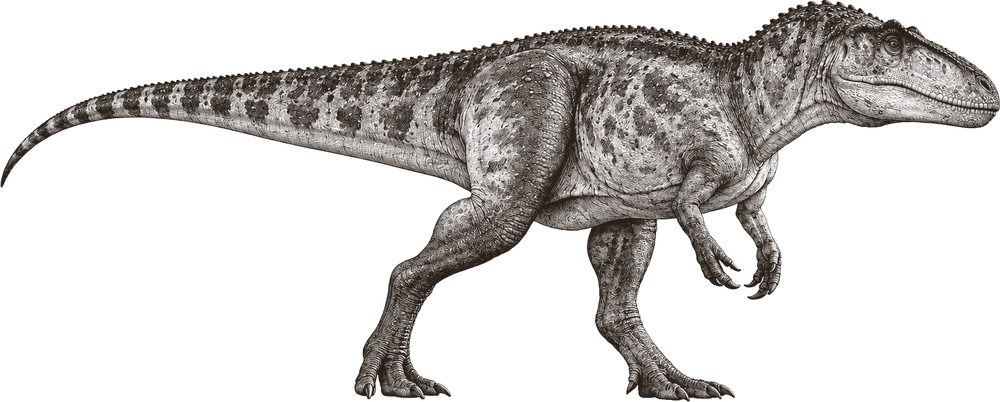


Scale in meters
Where its fossils were found
The evidence
Today

110 million years ago
Habitat
Its Candeleros Formation world included river channels and dry stretches of floodplain. Andesaurus and Buitreraptor are also known from these rocks.
Field notes
About Giganotosaurus
What it was like
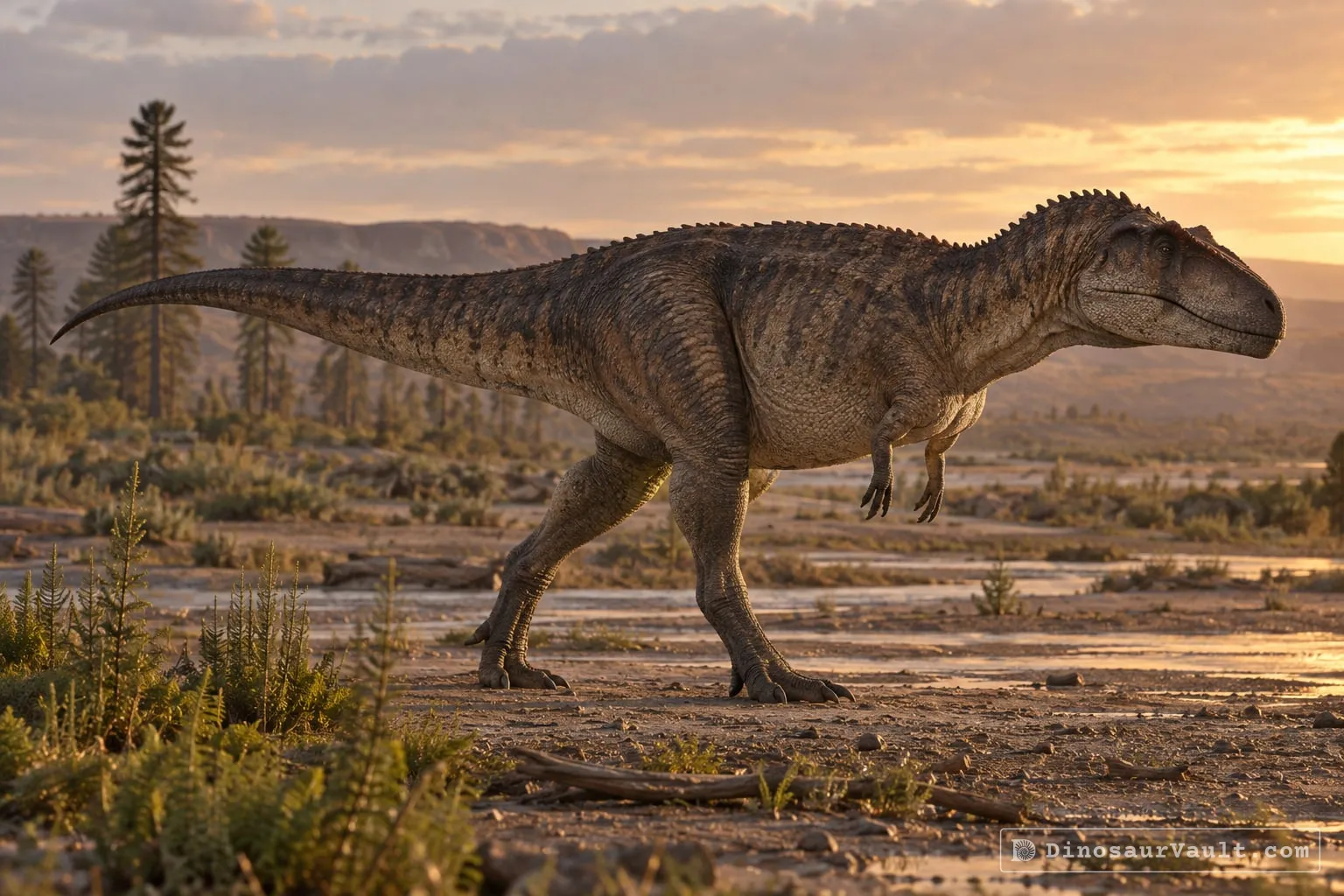
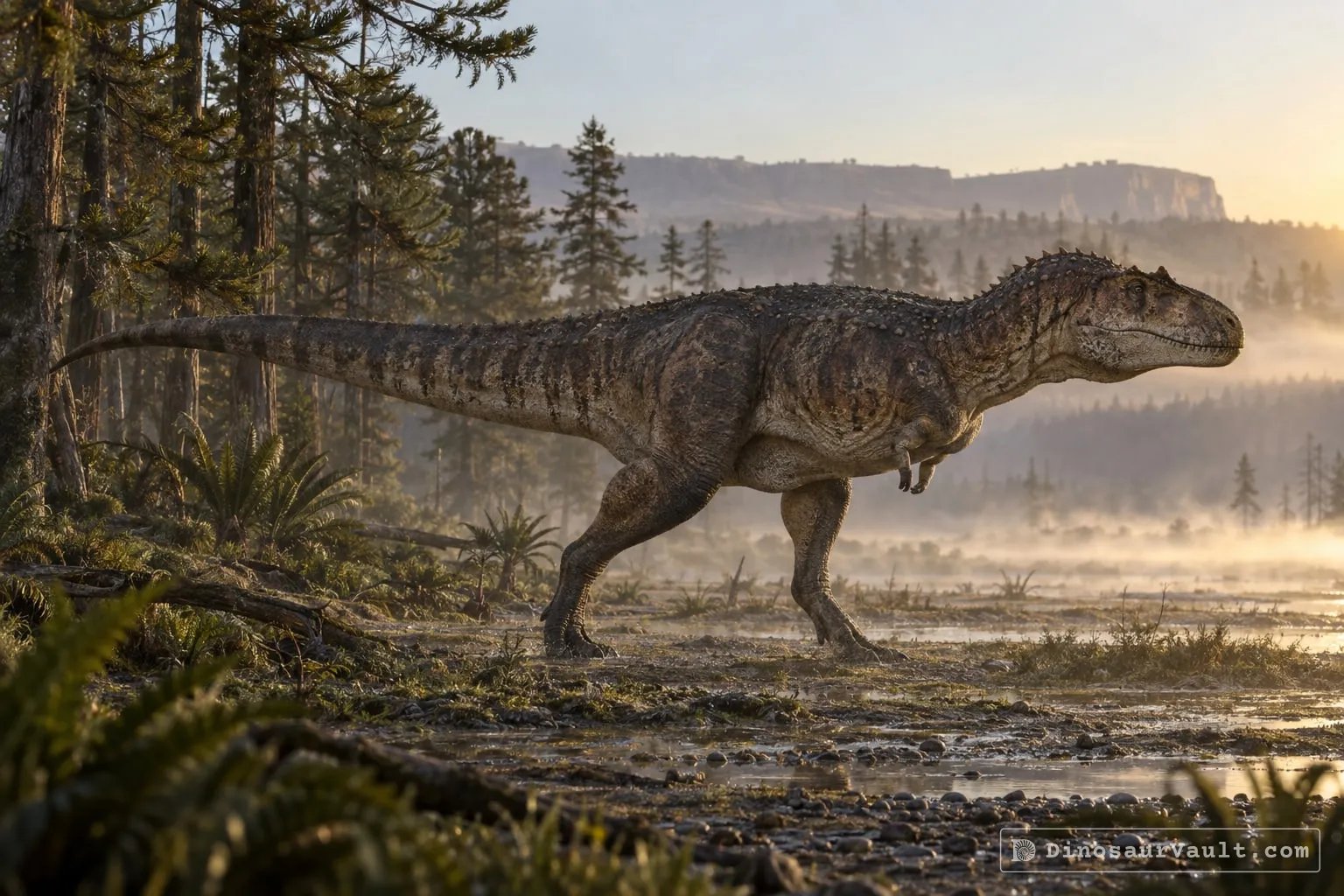
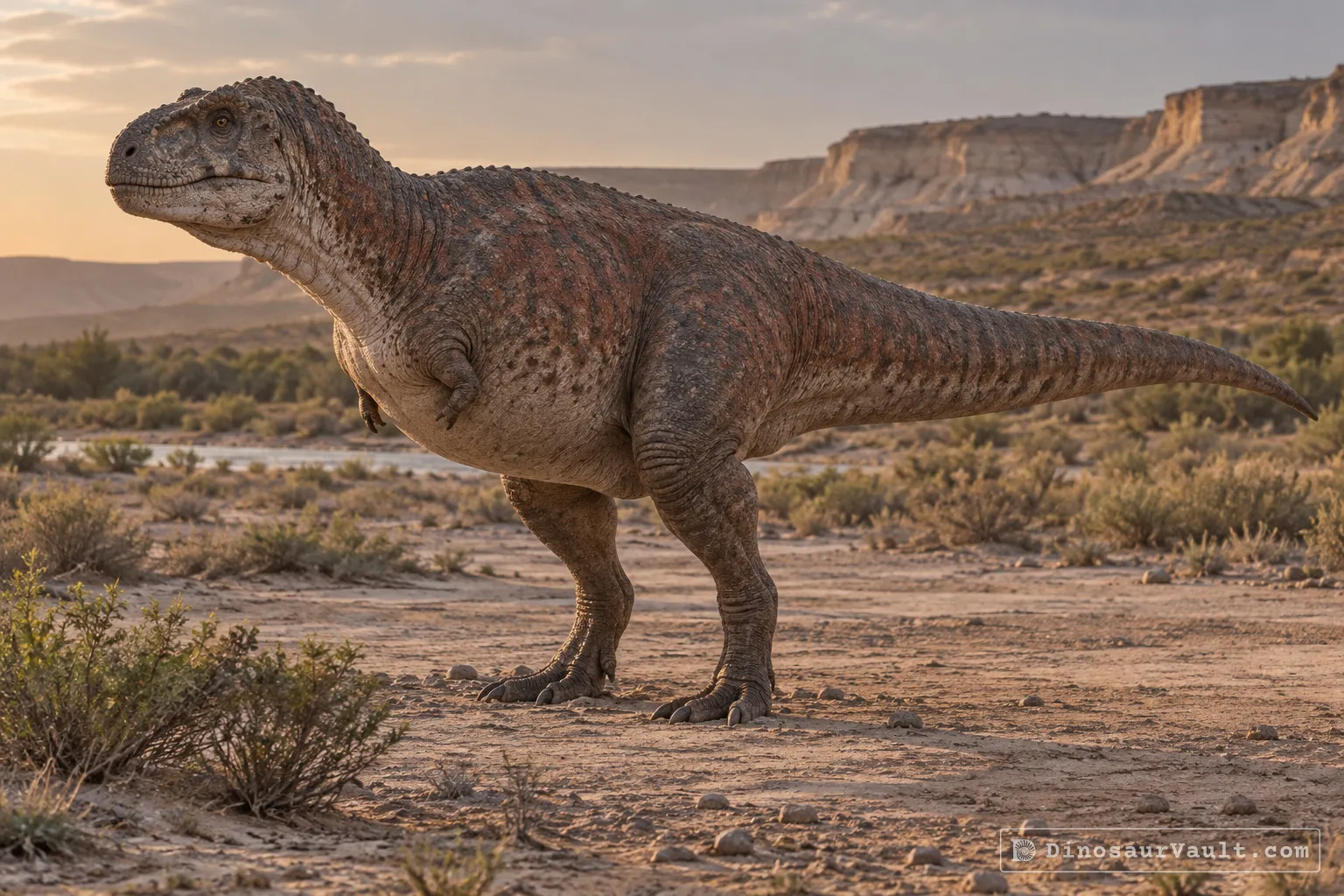
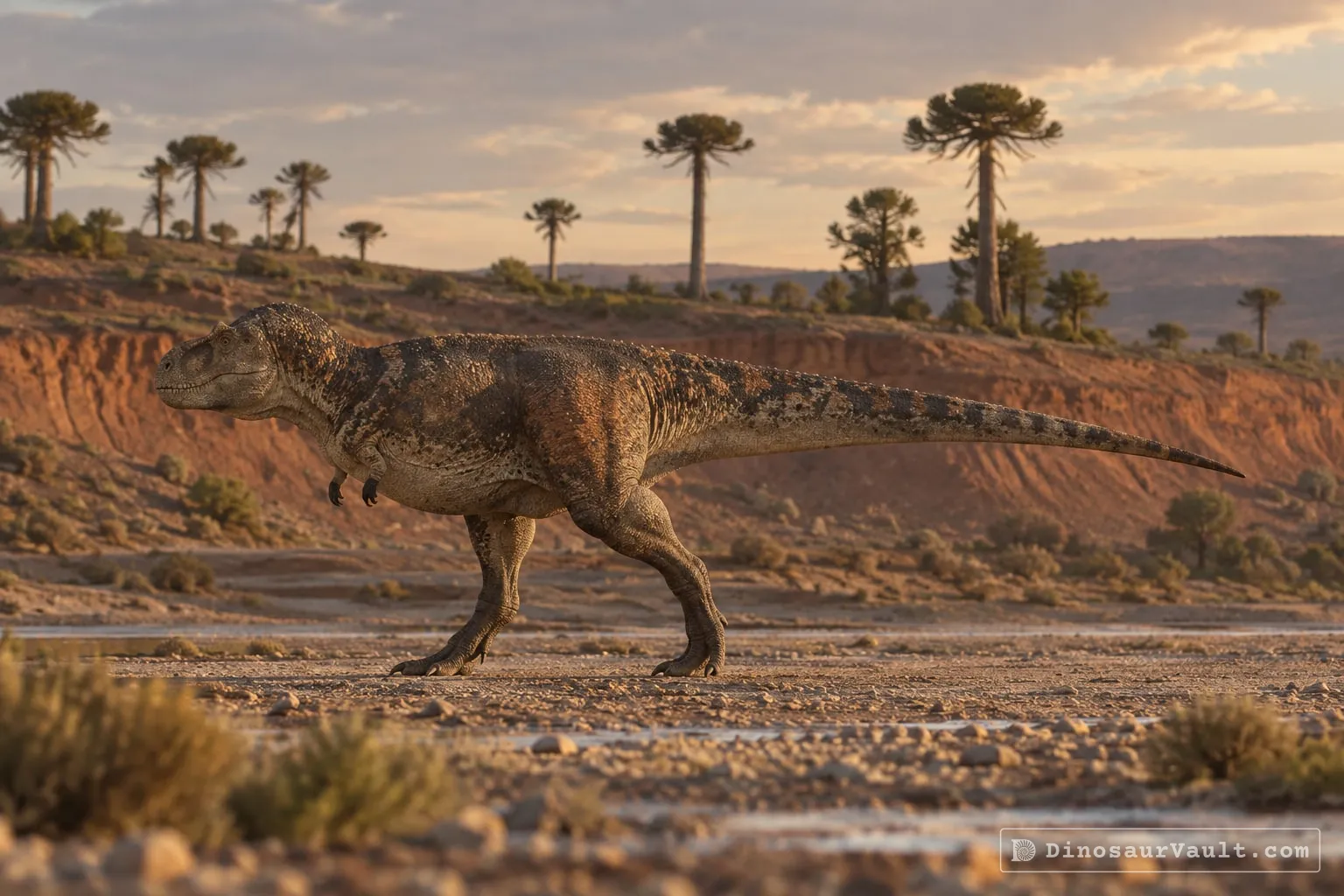
Giganotosaurus was one of the largest meat-eating dinosaurs known, with a long, low skull and rows of blade-like, serrated teeth. It grew to roughly 12.5 meters (41 feet) long, one of the longest meat-eating dinosaurs known.
Its size rivaled Tyrannosaurus, though scientists disagree over which animal was actually bigger, since only a few incomplete skeletons of Giganotosaurus have been found. It was likely fast for its size and probably delivered quick, powerful bites rather than a single crushing one.
Its world
Giganotosaurus lived in what is now Argentina. Its best-known remains come from the Candeleros Formation. Recent radiometric dating supports an Early Cretaceous age for these rocks, revising the Late Cretaceous age used in older studies.
Meraxes and Mapusaurus come from younger rock levels in the region. These finds record different stages in the history of the landscape.
How it was found
Coria and Salgado named Giganotosaurus in 1995. Only about 4 fossil finds of the genus are known, making it a rare animal in the fossil record even though it is one of the most talked-about predators of its size. Each new bone adds useful detail to a picture that is still far from complete.
Field gallery
More views of Giganotosaurus
Scenes reconstructed from the available fossil evidence.
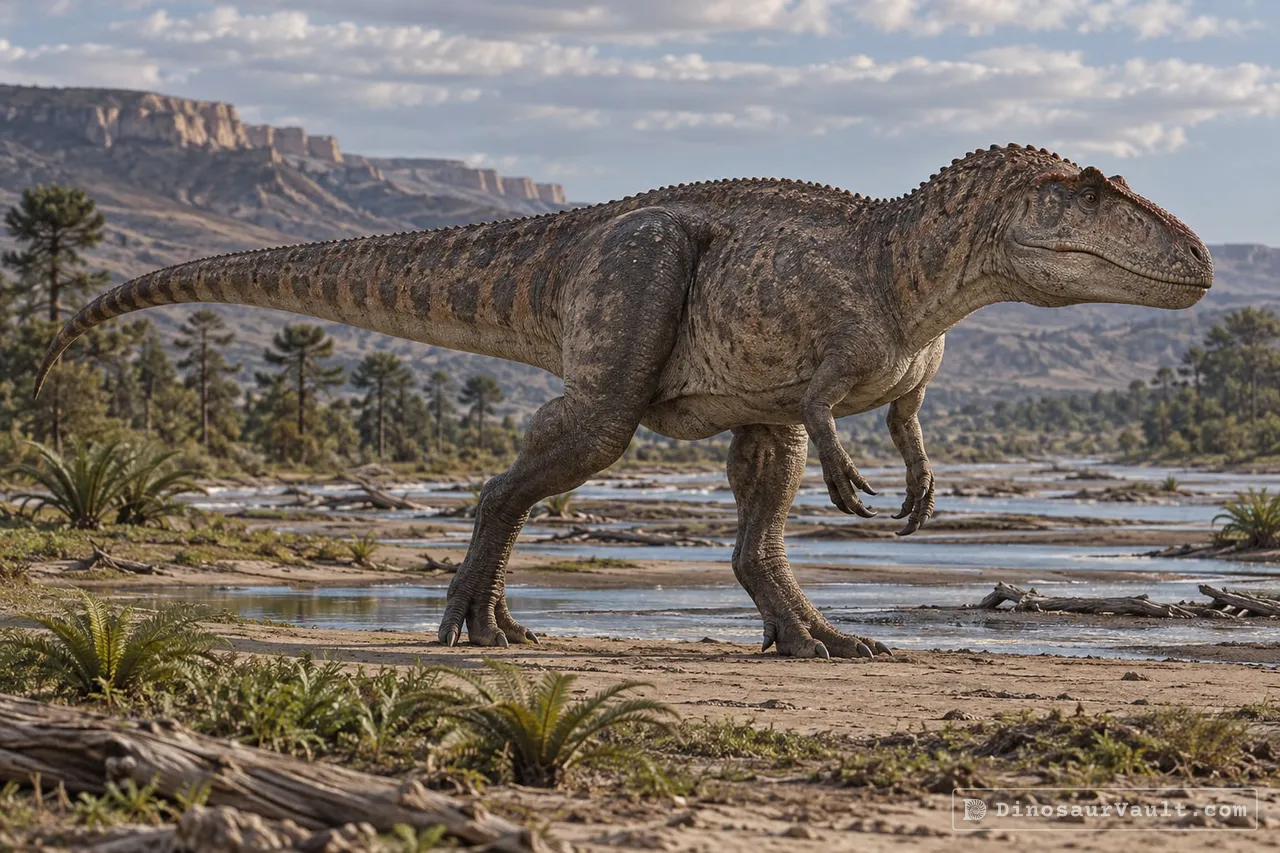
1 of 7
Lived alongside
Found in the same rock formations
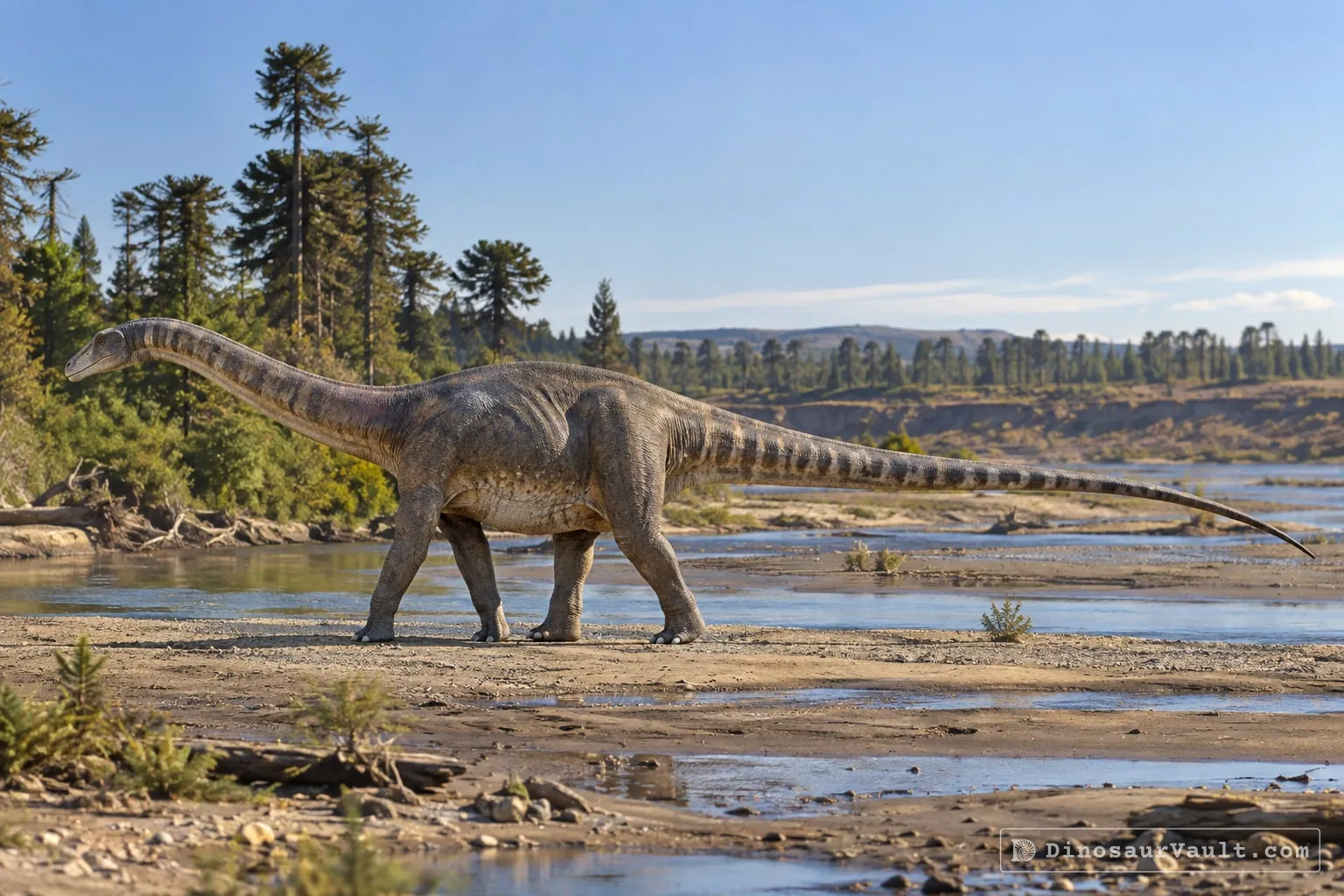
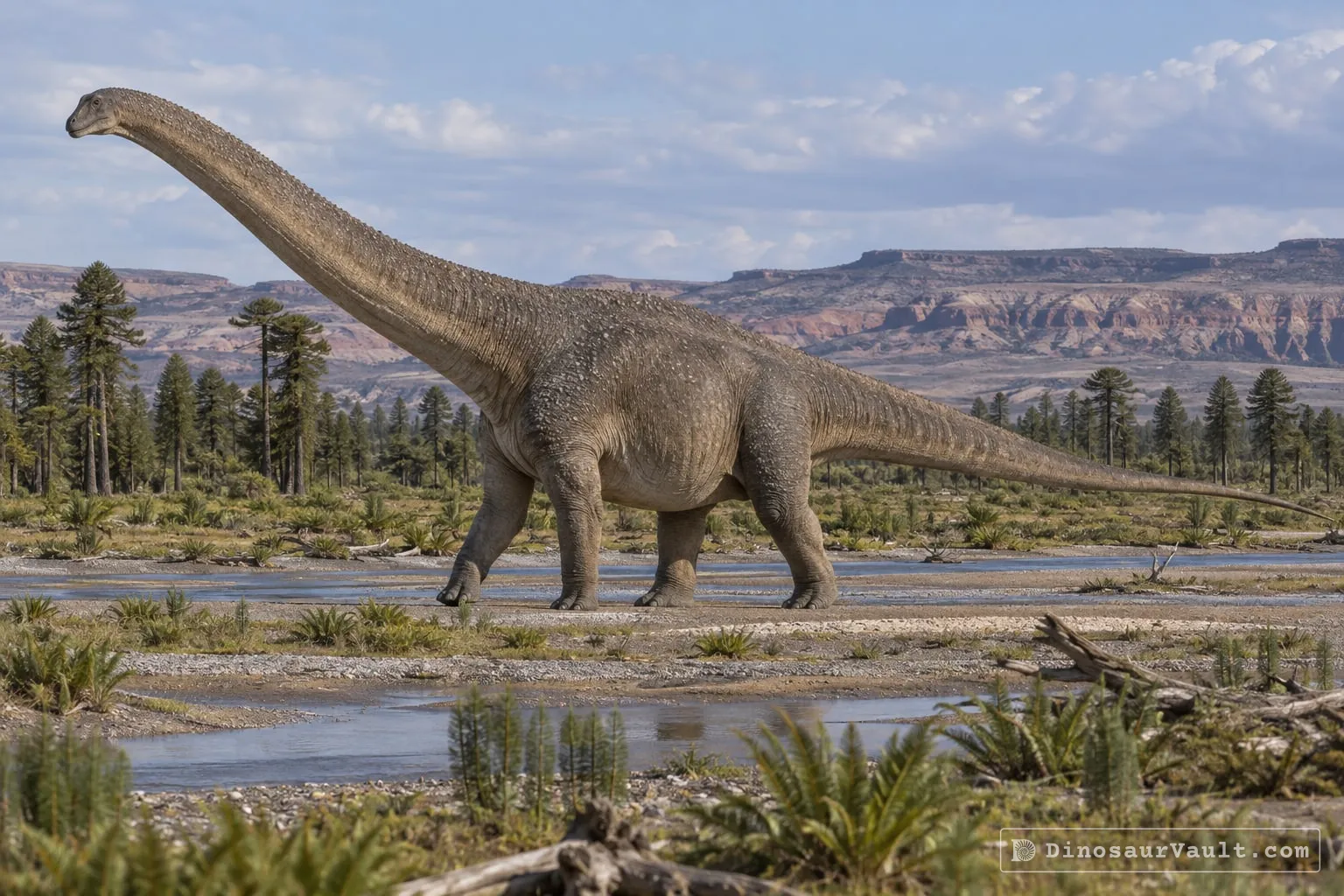
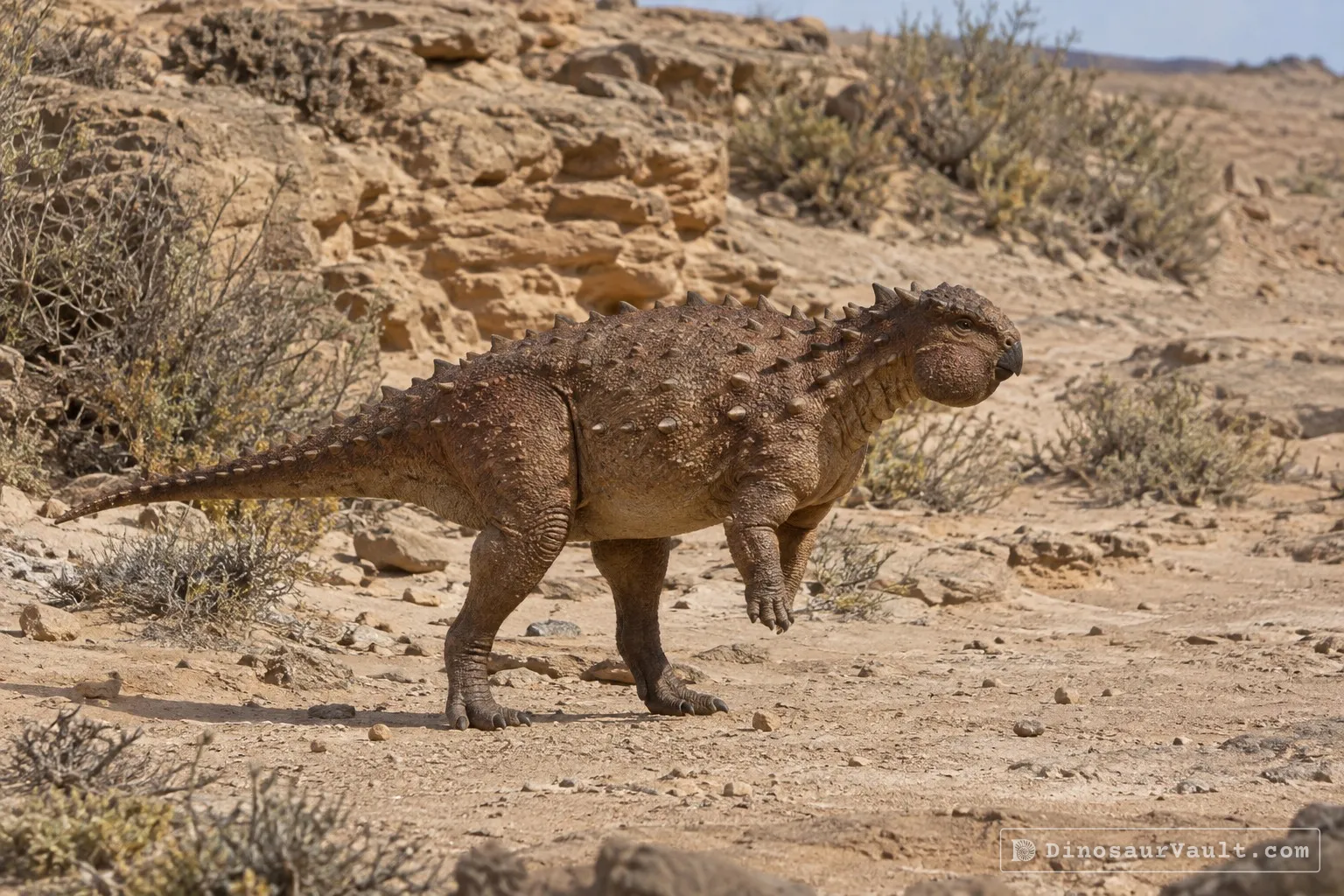
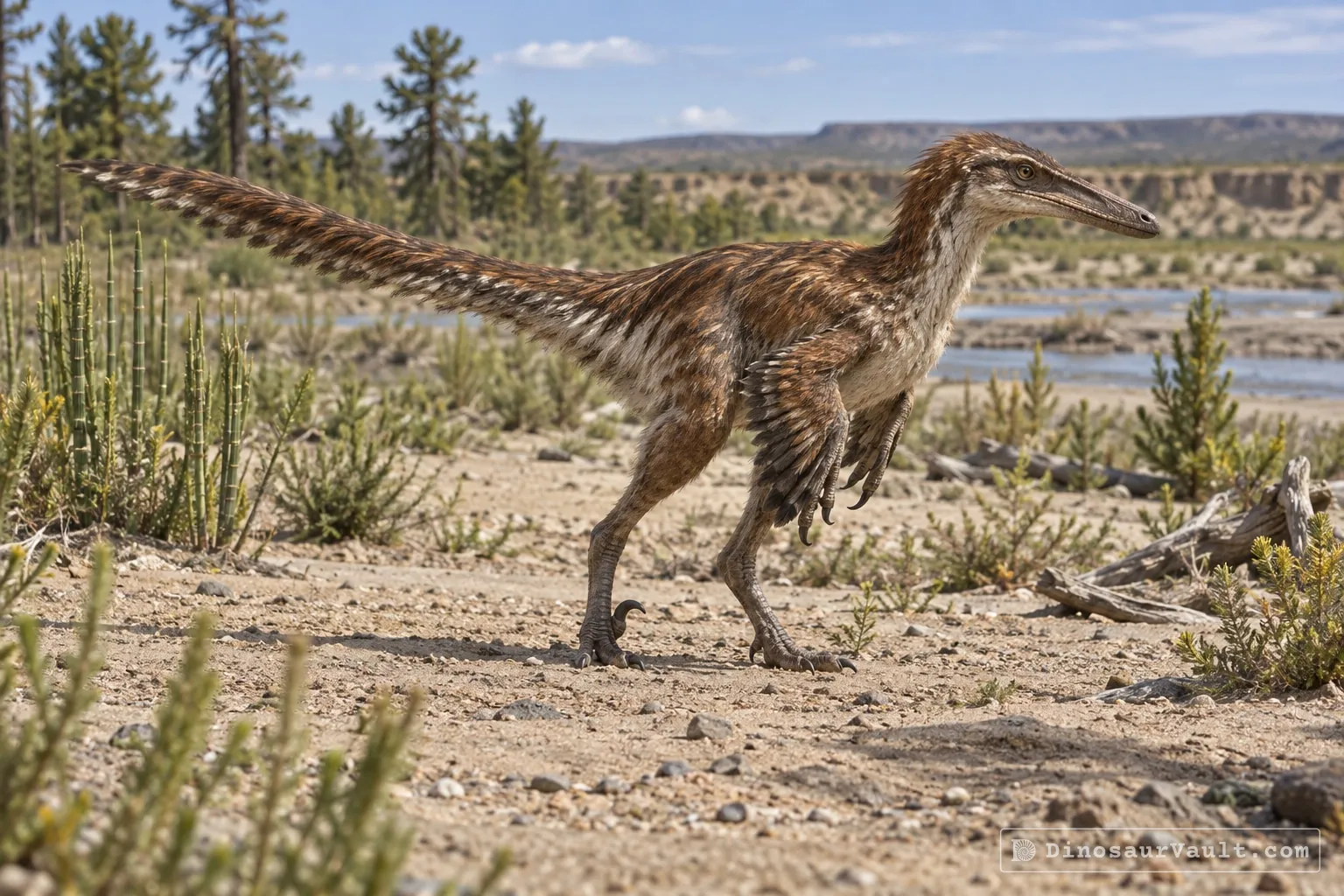


A rock formation can hold fossils laid down millions of years apart, so not every animal here met Giganotosaurus.
The evidence
The science behind Giganotosaurus
Which parts of the picture come from its own bones, and which come from its relatives.
From its own fossils
- The main partial skeleton preserves skull bones, vertebrae, the pelvis and large hindlimb bones.
- Its long jaws carried flattened, serrated teeth shaped for cutting flesh.
- An additional lower jaw adds another individual to the small collection of known remains.
Borrowed from relatives
- Missing parts of the arms and hands are restored by comparison with Mapusaurus and Meraxes.
- Lips over the teeth are inferred from comparisons with other theropods, including Tyrannosaurus.
Still unknown
- What its young looked like and how their proportions changed as they grew.
- Its color and the full pattern of its skin covering.
- Whether it hunted in groups or cared for its young.
Often drawn wrong
- Its skull was long and relatively low, rather than the deep, bulky shape of Tyrannosaurus.
- Its hands are restored with three fingers, rather than the pair seen in Tyrannosaurus.
Discovery timeline
- 1995Named itCoria & Salgado
- 2003SkullCoria & Currie
- 2022Close relativeCanale et al.
- 2023Close relativeCullen et al.
- 2026Its worldManiel et al.
Key papers
The research behind what we know of Giganotosaurus
Named it
Named Giganotosaurus from a partial skeleton with a long skull and enormous hindlimbs, establishing a giant predator from Argentina.
A new giant carnivorous dinosaur from the Cretaceous of Patagonia. Nature 377: 224-226
Read the paper : A new giant carnivorous dinosaur from the Cretaceous of Patagonia (opens in a new tab)Skull
Described the bones surrounding the brain and compared them with those of other large theropods.
The braincase ofGiganotosaurus carolinii(Dinosauria: Theropoda) from the Upper Cretaceous of Argentina. Journal of Vertebrate Paleontology 22: 802-811
Read the paper : The braincase ofGiganotosaurus carolinii(Dinosauria: Theropoda) from the Upper Cretaceous of Argentina (opens in a new tab)Close relative
Described Meraxes, a close relative with well-preserved short arms, helping explain how arm reduction evolved among giant predators.
New giant carnivorous dinosaur reveals convergent evolutionary trends in theropod arm reduction. Current Biology 32: 3195-3202.e5
Read the paper : New giant carnivorous dinosaur reveals convergent evolutionary trends in theropod arm reduction (opens in a new tab)Close relative
Comparisons of theropod teeth and living reptiles support lips covering the teeth in a closed mouth.
Theropod dinosaur facial reconstruction and the importance of soft tissues in paleobiology. Science 379: 1348-1352
Read the paper : Theropod dinosaur facial reconstruction and the importance of soft tissues in paleobiology (opens in a new tab)Its world
Dated volcanic ash in the Candeleros and Huincul formations, placing these rocks in the Early Cretaceous.
Albian zircon U-Pb crystallization ages from tuff beds in the Candeleros and Huincul formations, Neuquén Basin, Argentina. Gondwana Research 159: 193-204
Read the paper : Albian zircon U-Pb crystallization ages from tuff beds in the Candeleros and Huincul formations, Neuquén Basin, Argentina (opens in a new tab)
Close relatives
Other members of Carcharodontosauridae


Sources: Wikidata