Gongpoquansaurus
"Gongpoquan lizard"
- Lived
- 113 to 110 million years ago, Early Cretaceous
- Diet
- Herbivore
- Group
- Ornithopods
- Found in
- China
- Named by
- You et al. 2014
Where its fossils were found
The evidence
Today

110 million years ago
Habitat
Rivers and lakes crossed this part of China during the Early Cretaceous, with conifers and ferns growing in the region. Other dinosaurs from the region include Equijubus, Archaeoceratops and Auroraceratops.
Field notes
About Gongpoquansaurus
What it was like
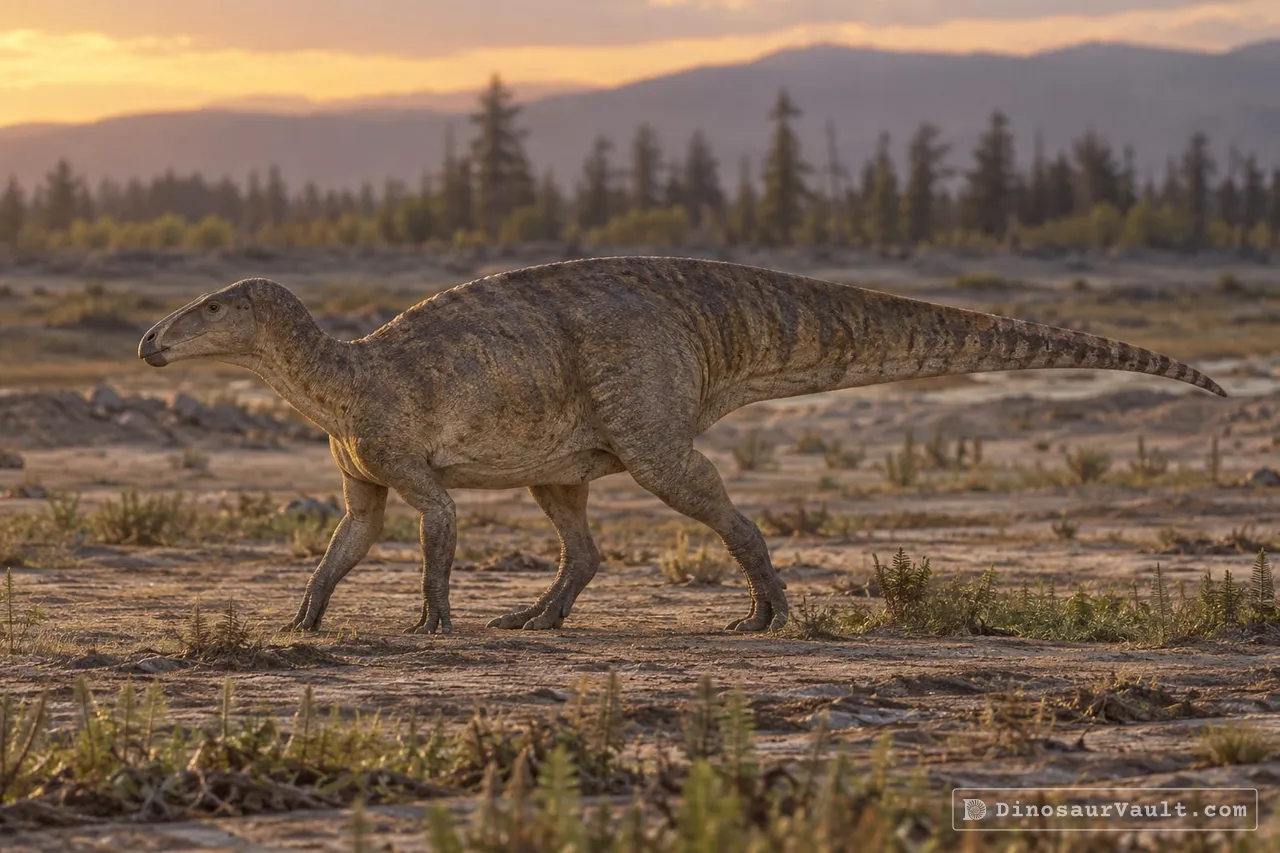
Gongpoquansaurus was a plant eater, an early relative of the duck-billed dinosaurs. The specimen that defines it is the back of a skull. Teeth and body bones have also been assigned to it, but may belong to another dinosaur from the same area.
Its world
It lived in the Early Cretaceous in what is now northwestern China. Its bones come from the Zhonggou Formation, where it shared the land with the small horned Archaeoceratops and Auroraceratops and the plant eater Equijubus.
How it was found
You and colleagues named it in 2014. It is named after the basin where it was found.
Field gallery
More views of Gongpoquansaurus
Scenes reconstructed from the available fossil evidence.
1 of 3
Lived alongside
Found in the same rock formations
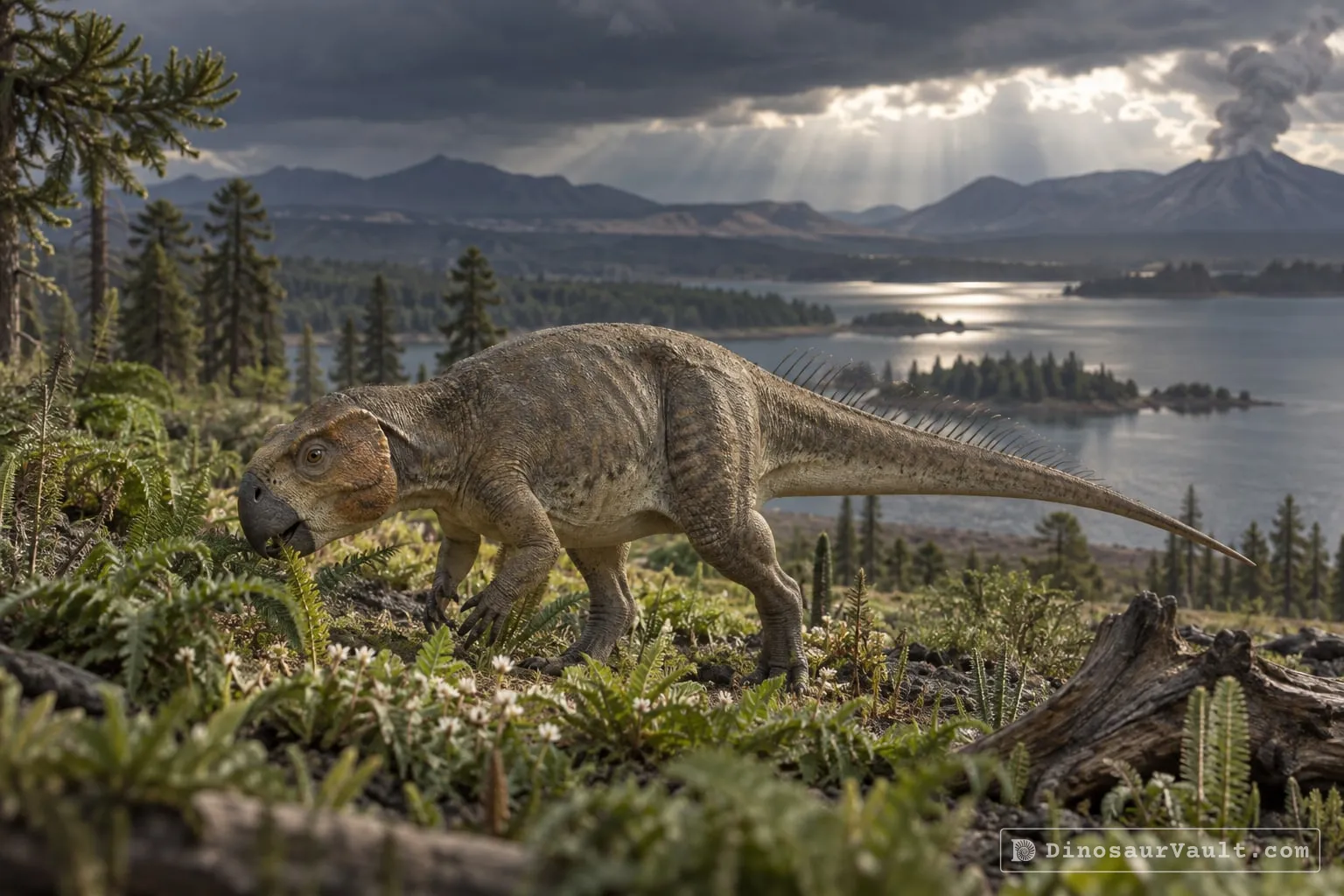
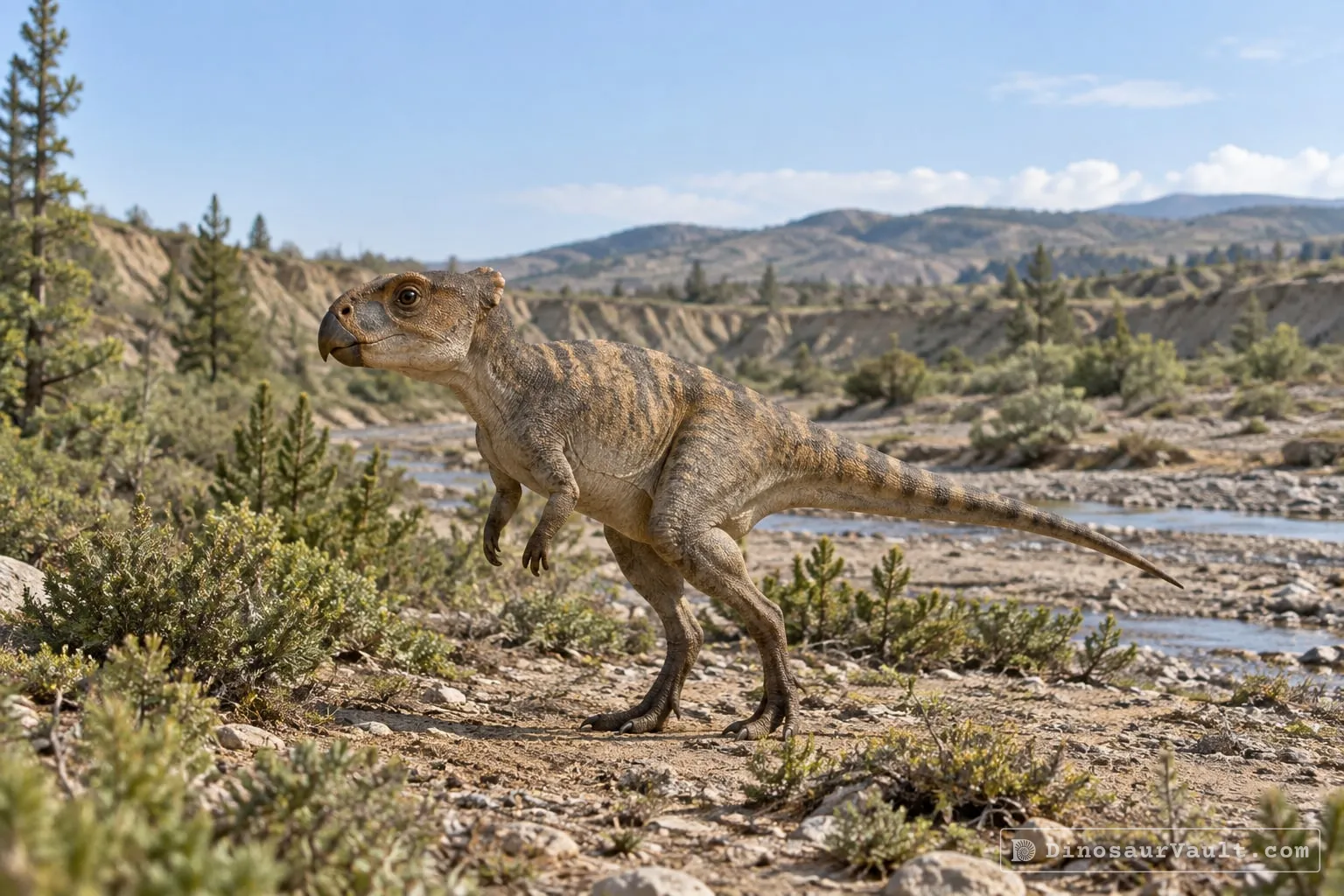
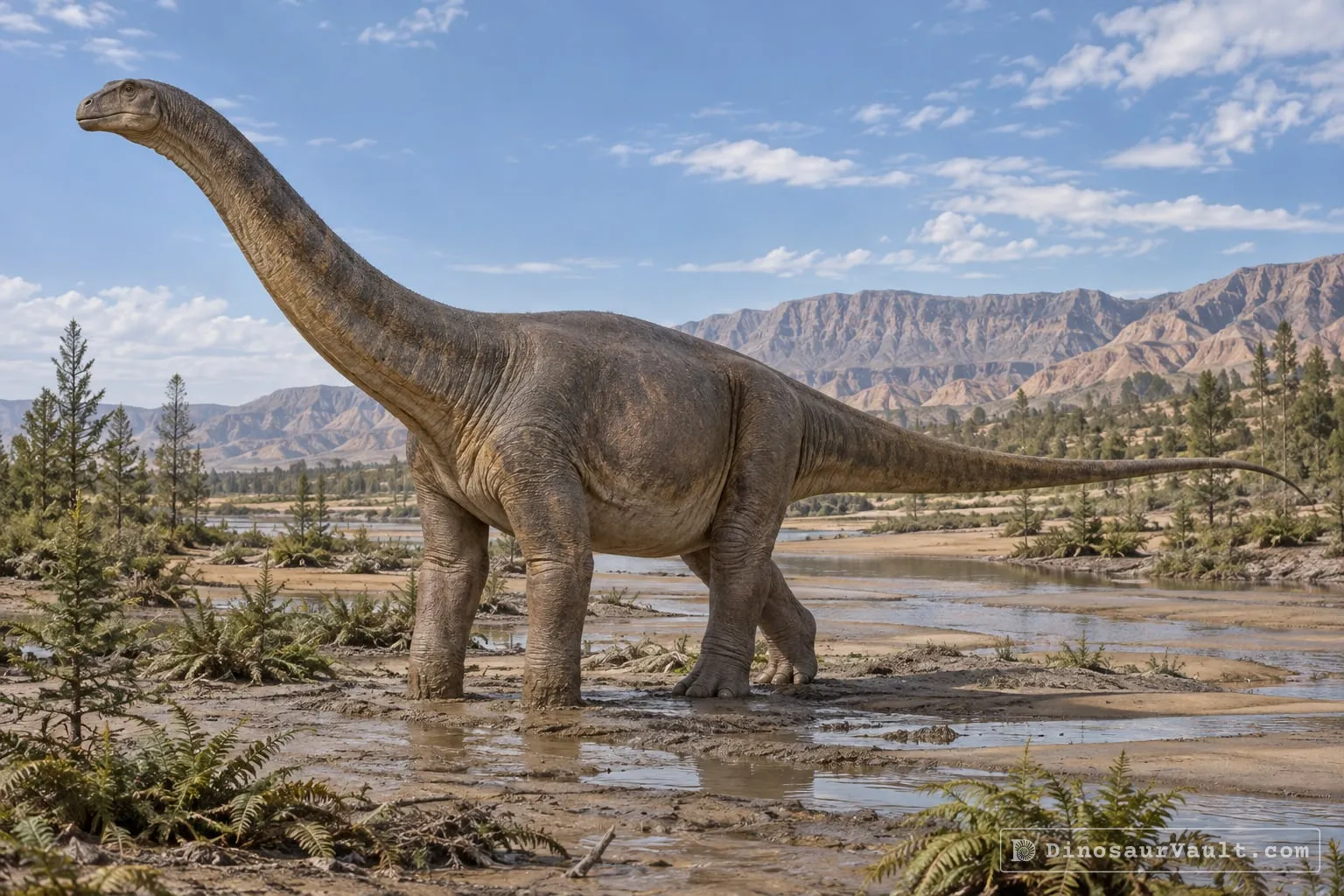
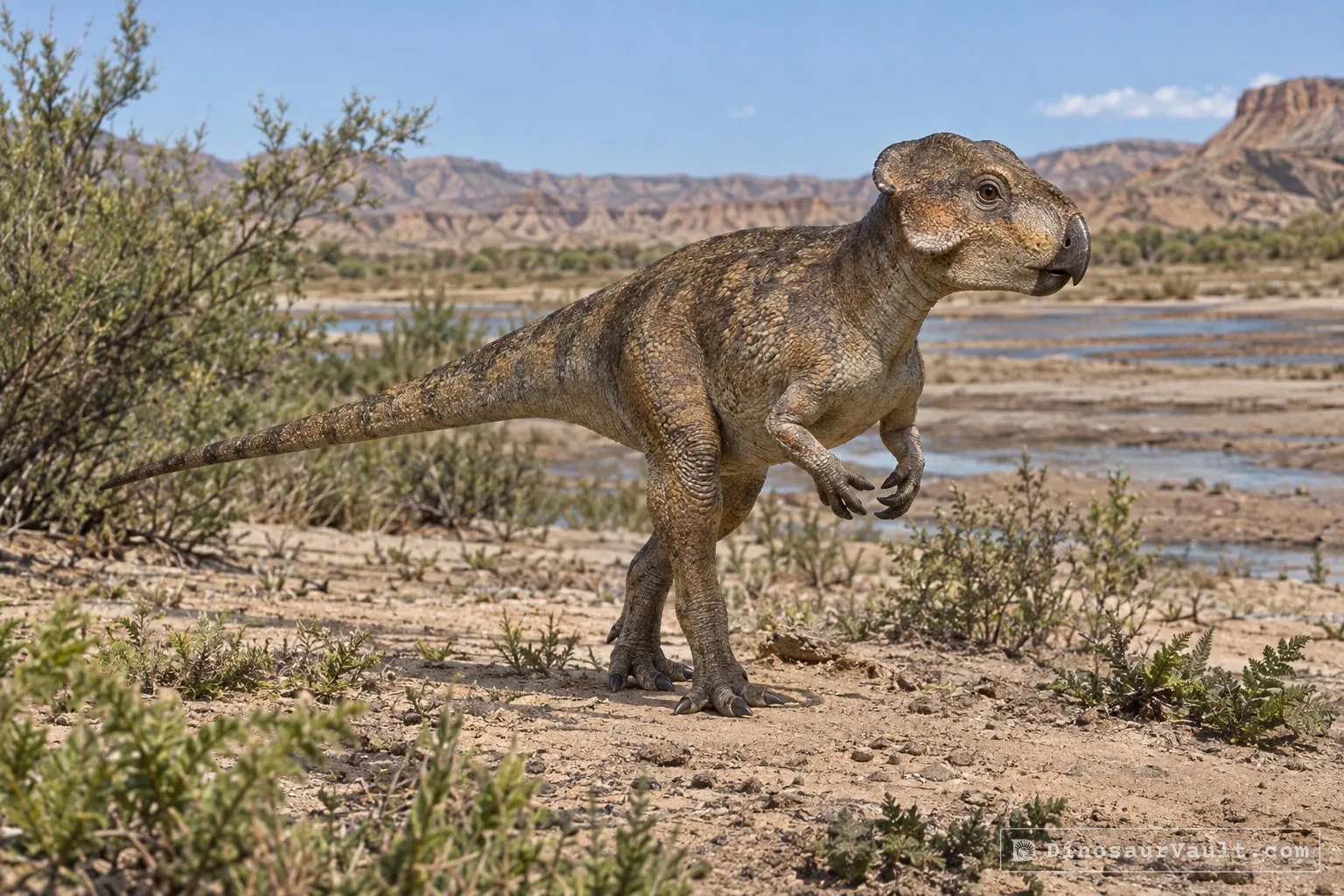
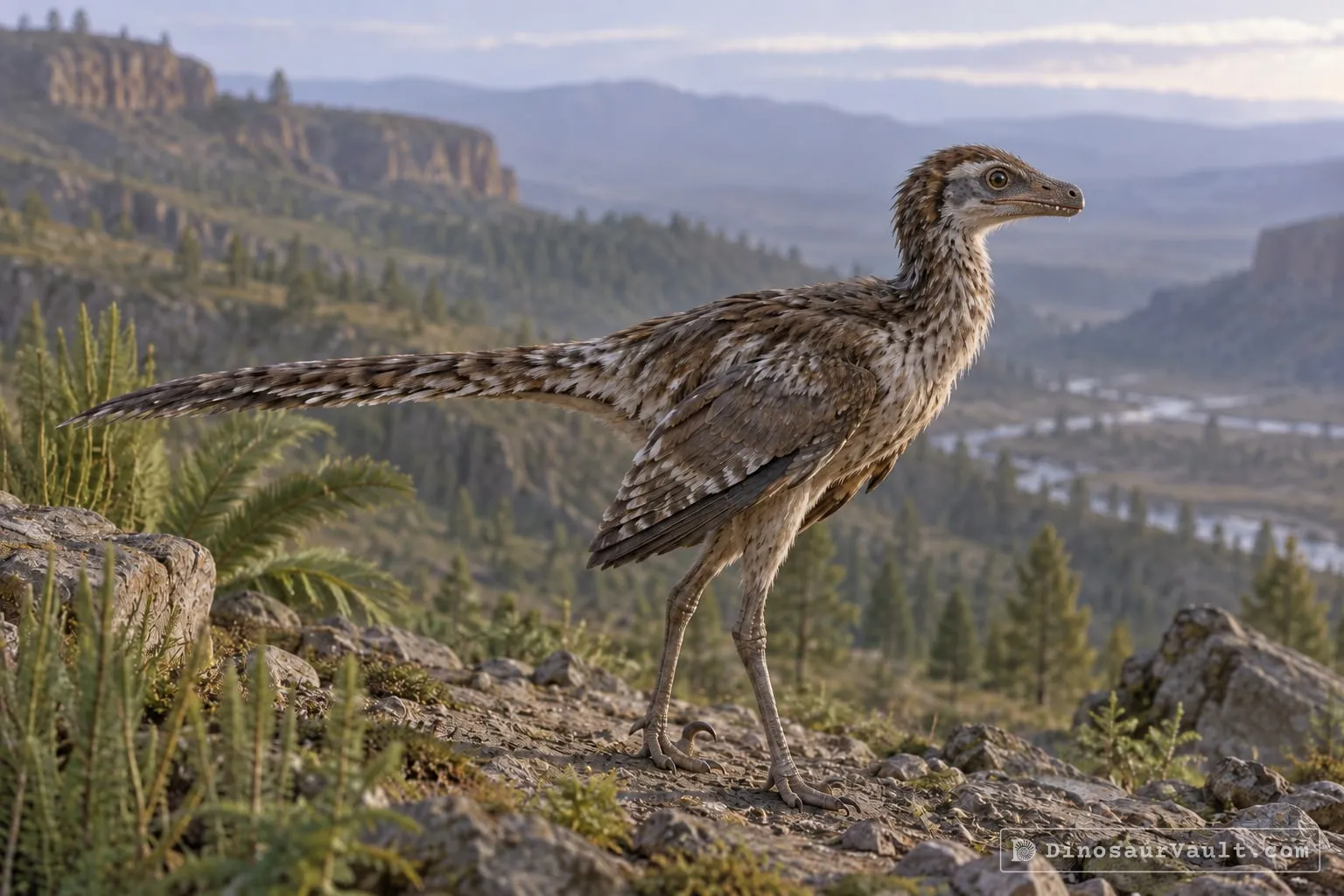
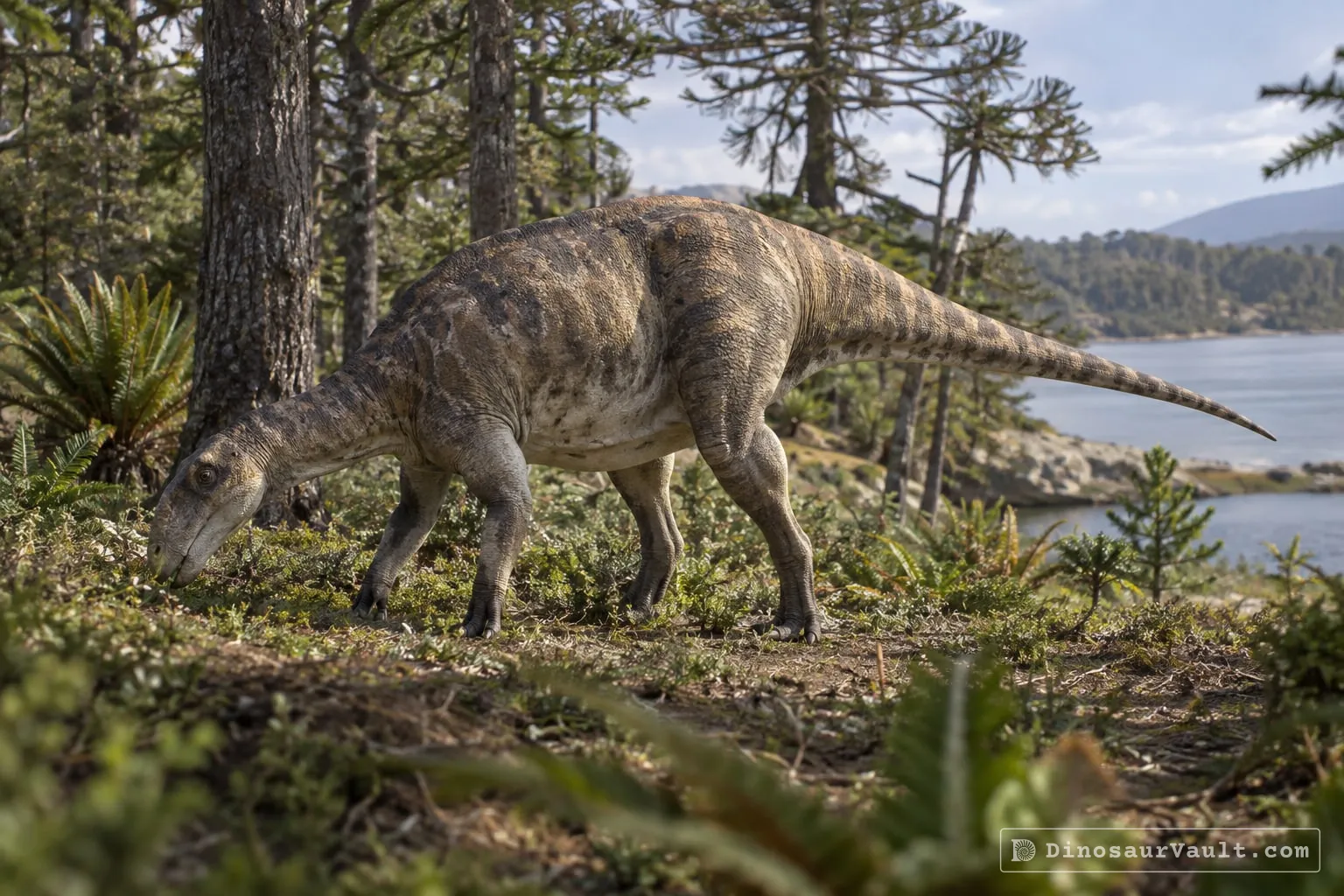
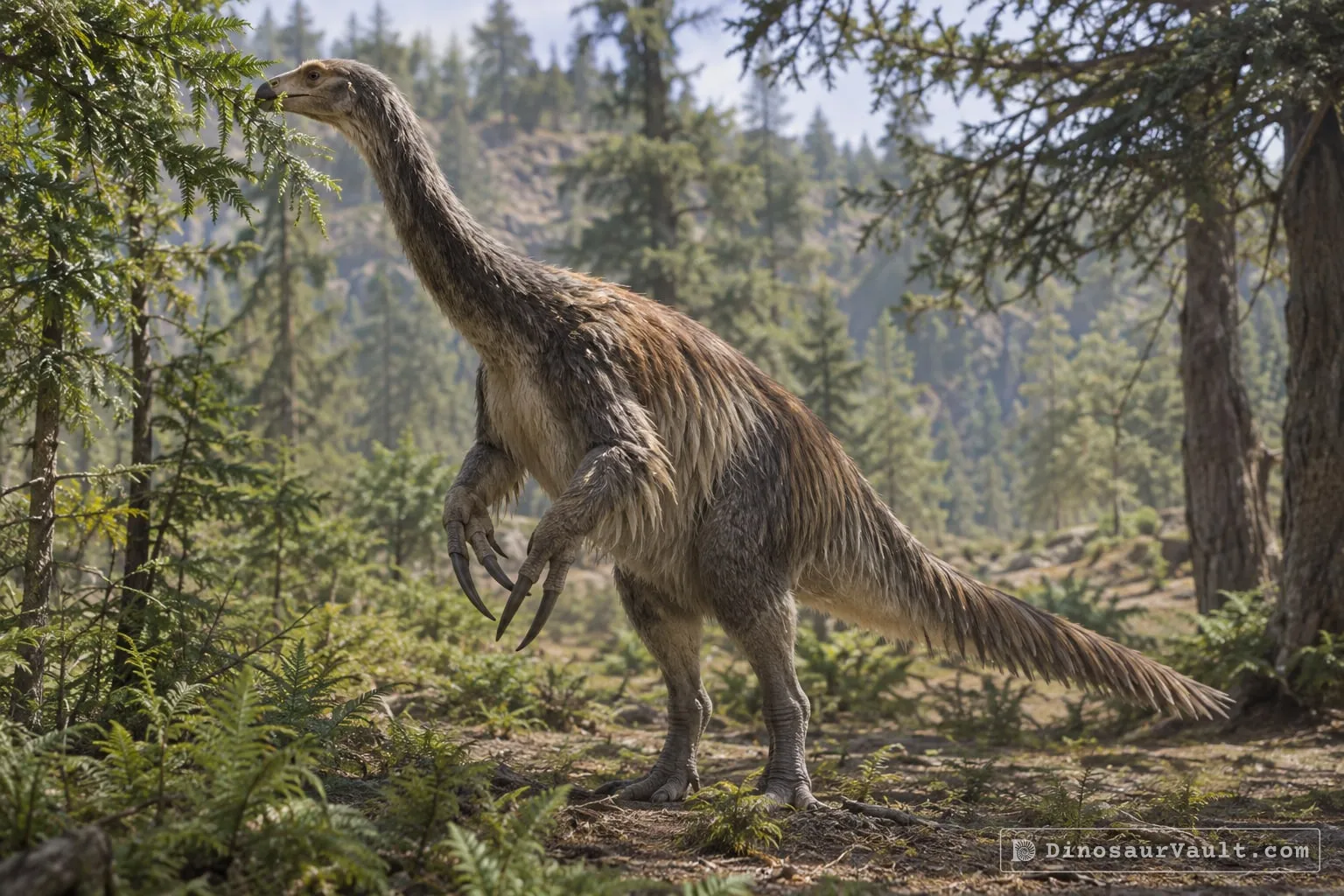


A rock formation can hold fossils laid down millions of years apart, so not every animal here met Gongpoquansaurus.
The evidence
The science behind Gongpoquansaurus
Which parts of the picture come from its own bones, and which come from its relatives.
From its own fossils
- The specimen that defines Gongpoquansaurus is the back part of a skull.
- Its skull roof has a broad, flat surface with a deep groove along the middle and a large, straight ridge at the back. The openings on top of the skull behind the eyes are stretched from side to side.
- Teeth, a jaw-joint bone, vertebrae, a shoulder blade, an upper arm bone, hip bones and a thigh bone from the same area have been assigned to it.
Borrowed from relatives
- Eolambia, an early duck-bill relative, guides restorations of the missing snout, jaws, neck, chest and arms.
- The broad, flat back of the head follows Gongpoquansaurus's own skull roof.
Still unknown
- Whether the teeth and body bones assigned to it belong to the same kind of dinosaur, since Equijubus is also found there.
- The complete shape of its snout.
- Its skin colors.
Discovery timeline
- 2001Its worldTang et al.
- 2014Named itYou, Li & Dodson
- 2018Same rocksYou et al.
Key papers
The research behind what we know of Gongpoquansaurus
Its world
Studied the region's rocks, pollen and fossils, reconstructing river and lake environments with changing wet and dry conditions.
Biostratigraphy and palaeoenvironment of the dinosaur-bearing sediments in Lower Cretaceous of Mazongshan area, Gansu Province, China. Cretaceous Research 22: 115-129
Read the paper : Biostratigraphy and palaeoenvironment of the dinosaur-bearing sediments in Lower Cretaceous of Mazongshan area, Gansu Province, China (opens in a new tab)Named it
Separated Gongpoquansaurus from Probactrosaurus using skull features and restricted its defining traits to the original partial skull.
Gongpoquansaurus mazongshanensis (Lü, 1997) comb. nov. (Ornithischia: Hadrosauroidea) from the Early Cretaceous of Gansu Province, northwestern China. Hadrosaurs.
No link available
Same rocks
Reviewed the regional dinosaur fauna, including early duck-bill relatives, small horned dinosaurs and large plant-eating theropods.
Introducing the Mazongshan Dinosaur Fauna. Journal of Vertebrate Paleontology 38: 1-11
Read the paper : Introducing the Mazongshan Dinosaur Fauna (opens in a new tab)
Close relatives
Other members of Hadrosauroidea


Sources: Wikidata