Archaeoceratops
"ancient horned face"
- Lived
- 121 to 110 million years ago, Early Cretaceous
- Diet
- Herbivore
- Length
- about 1.3 m (4 ft)
- Group
- Ceratopsians
- Found in
- China
- Named by
- Dong and Azuma 1997
Size comparison
To scale

Scale in metersOutline: typical ceratopsian shape
Where its fossils were found
The evidence
Today

115 million years ago
Habitat
Rivers and lakes crossed a partly dry, subtropical landscape in northwestern China, with conifers and early flowering plants. Other dinosaurs in the region included Psittacosaurus, Suzhousaurus and Xiongguanlong.
Field notes
About Archaeoceratops
What it was like
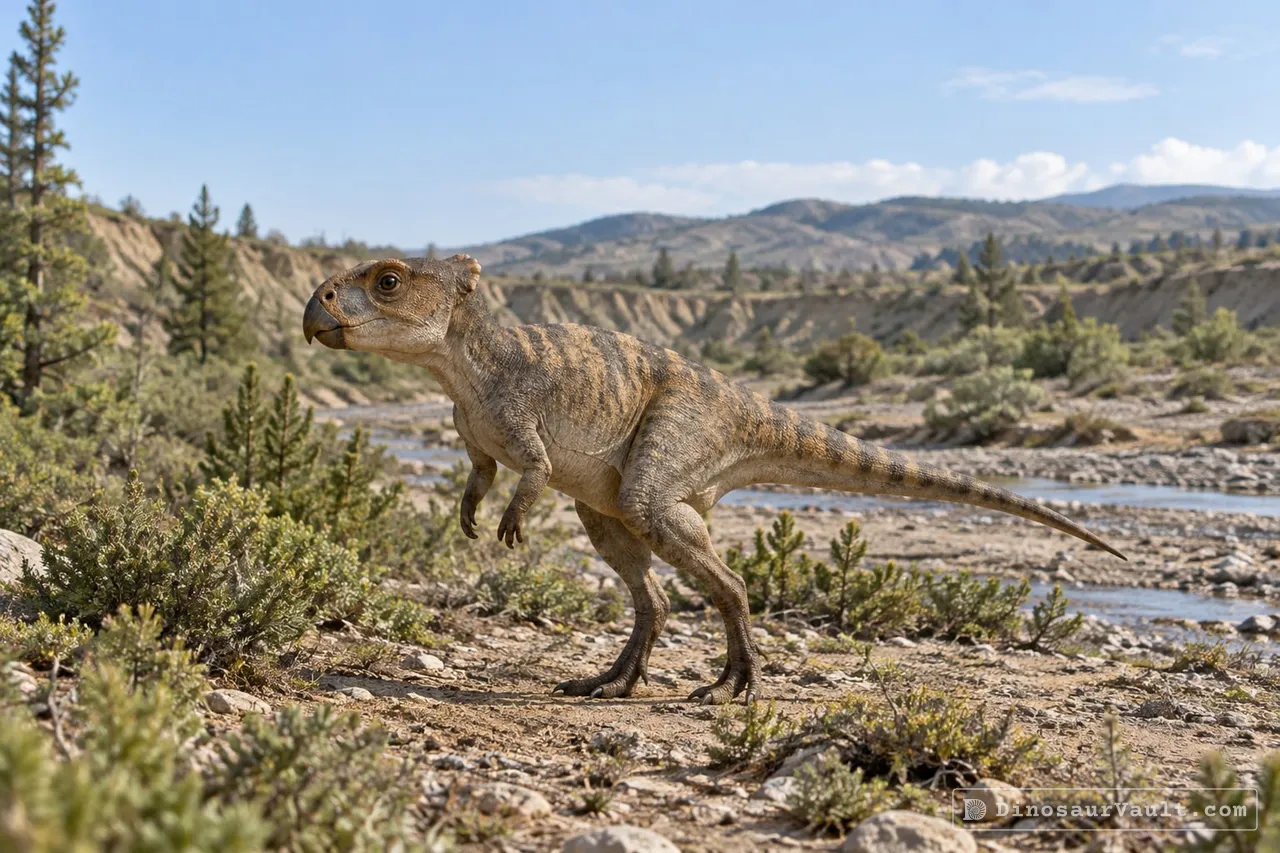
Archaeoceratops was a small, early horned dinosaur about 1.3 meters (4 feet) long. It had a large head, a small frill and no horns, and it may have walked on two legs.
Its world
It lived in the Early Cretaceous, in what is now China. It shared its world with the parrot-beaked Psittacosaurus, the therizinosaur Suzhousaurus and the early tyrannosaur Xiongguanlong.
How it was found
Dong and Azuma named Archaeoceratops in 1997. It is an early member of the line that led to Triceratops.
Field gallery
More views of Archaeoceratops
Scenes reconstructed from the available fossil evidence.
1 of 3
Lived alongside
Found in the same rock formations
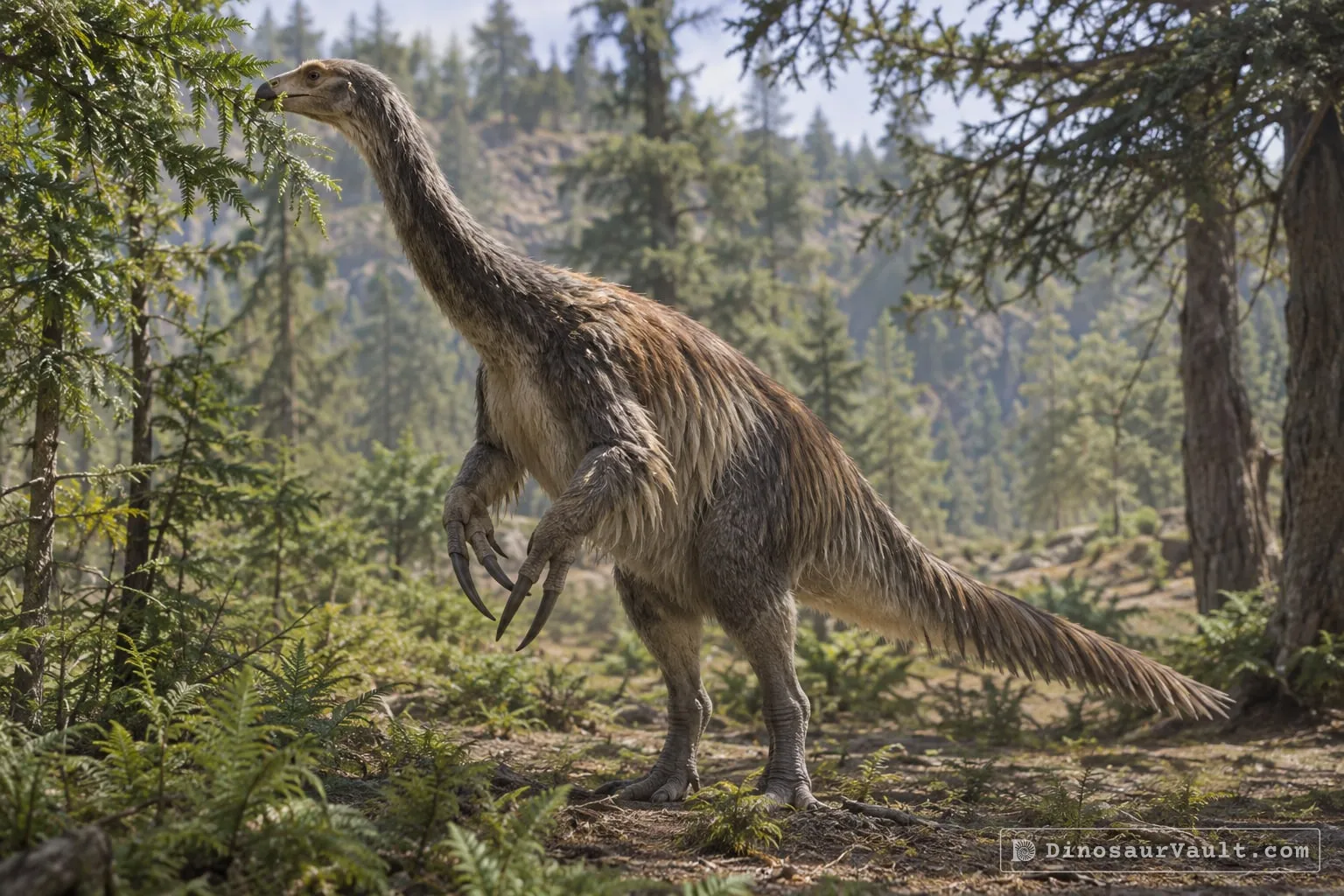
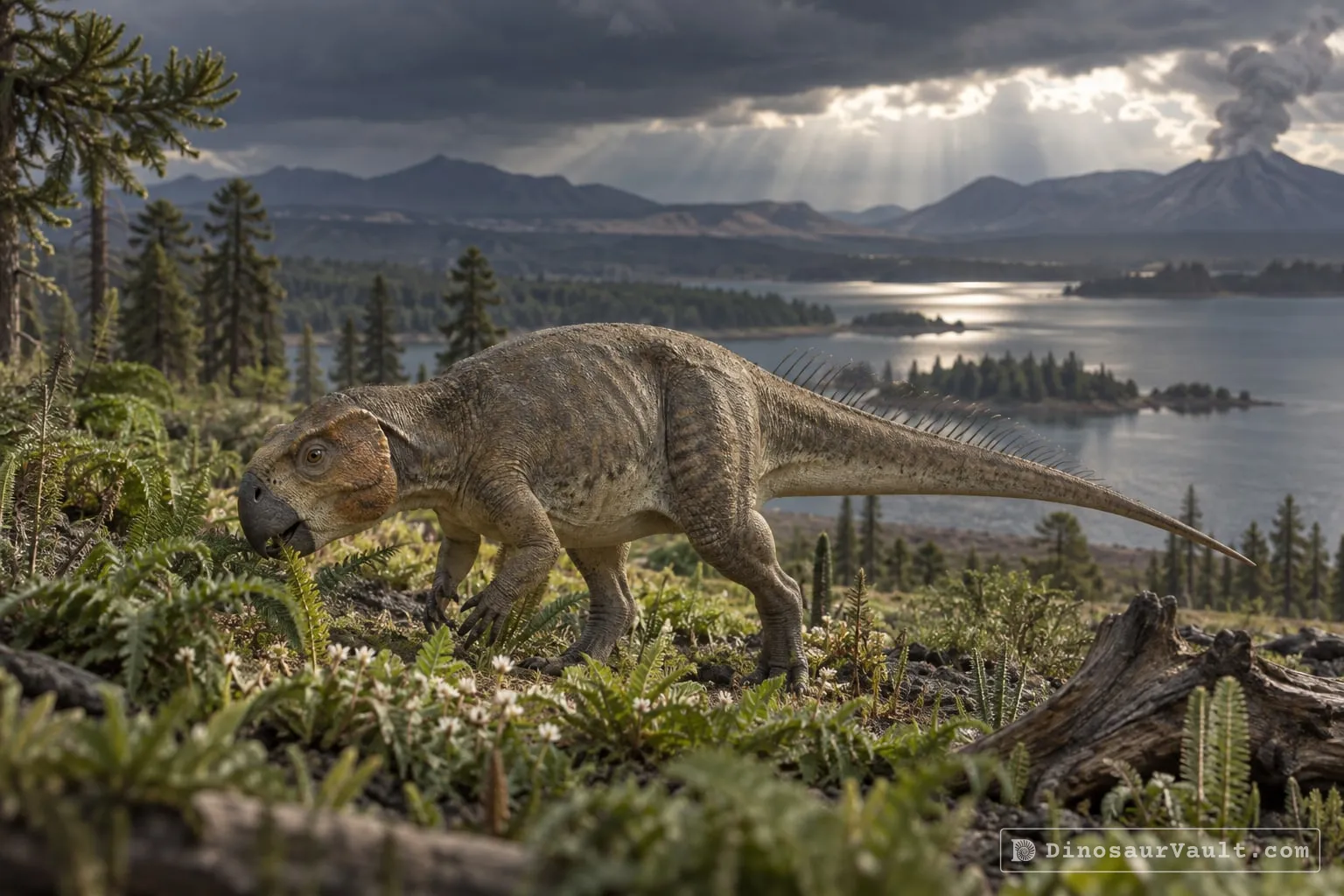
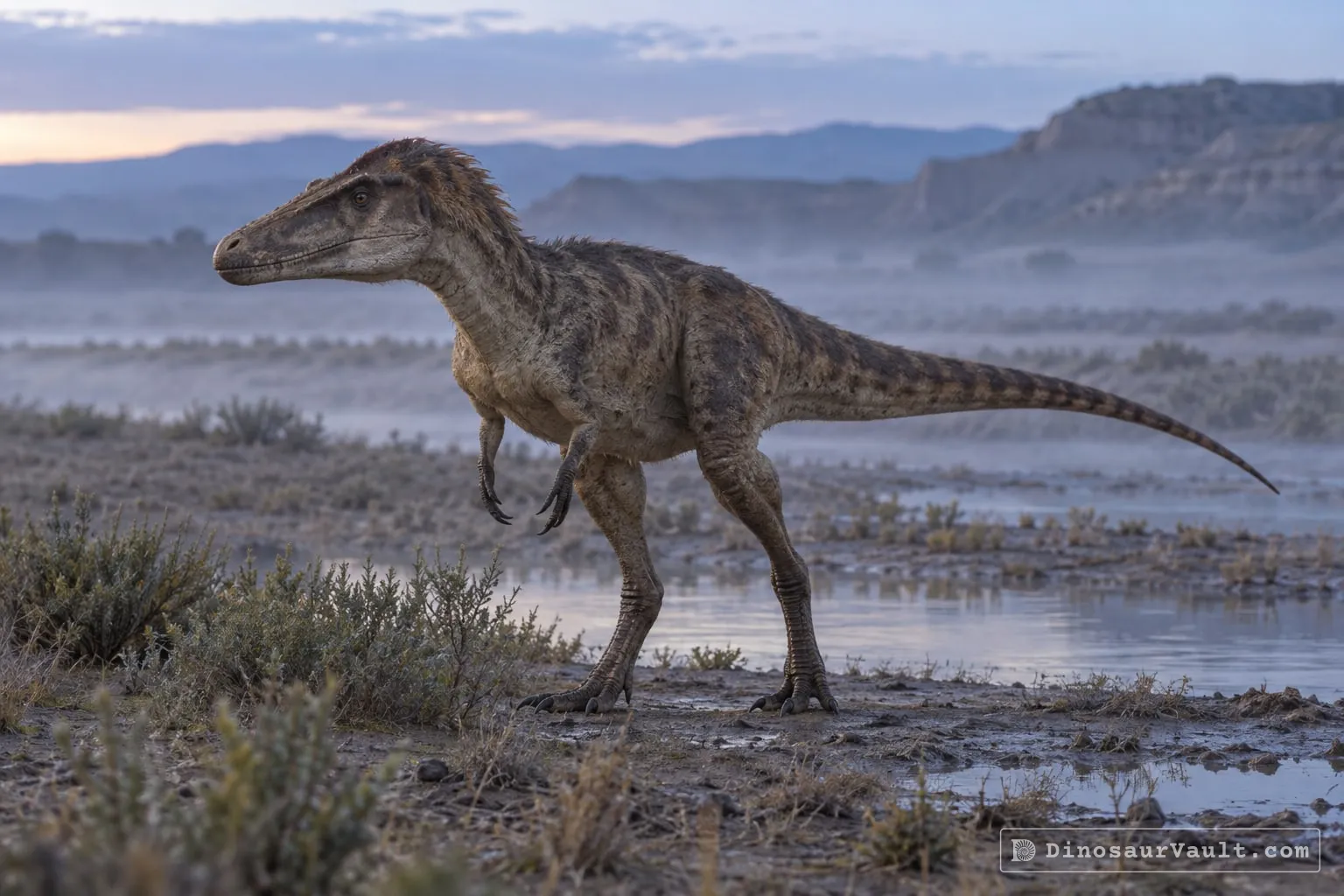
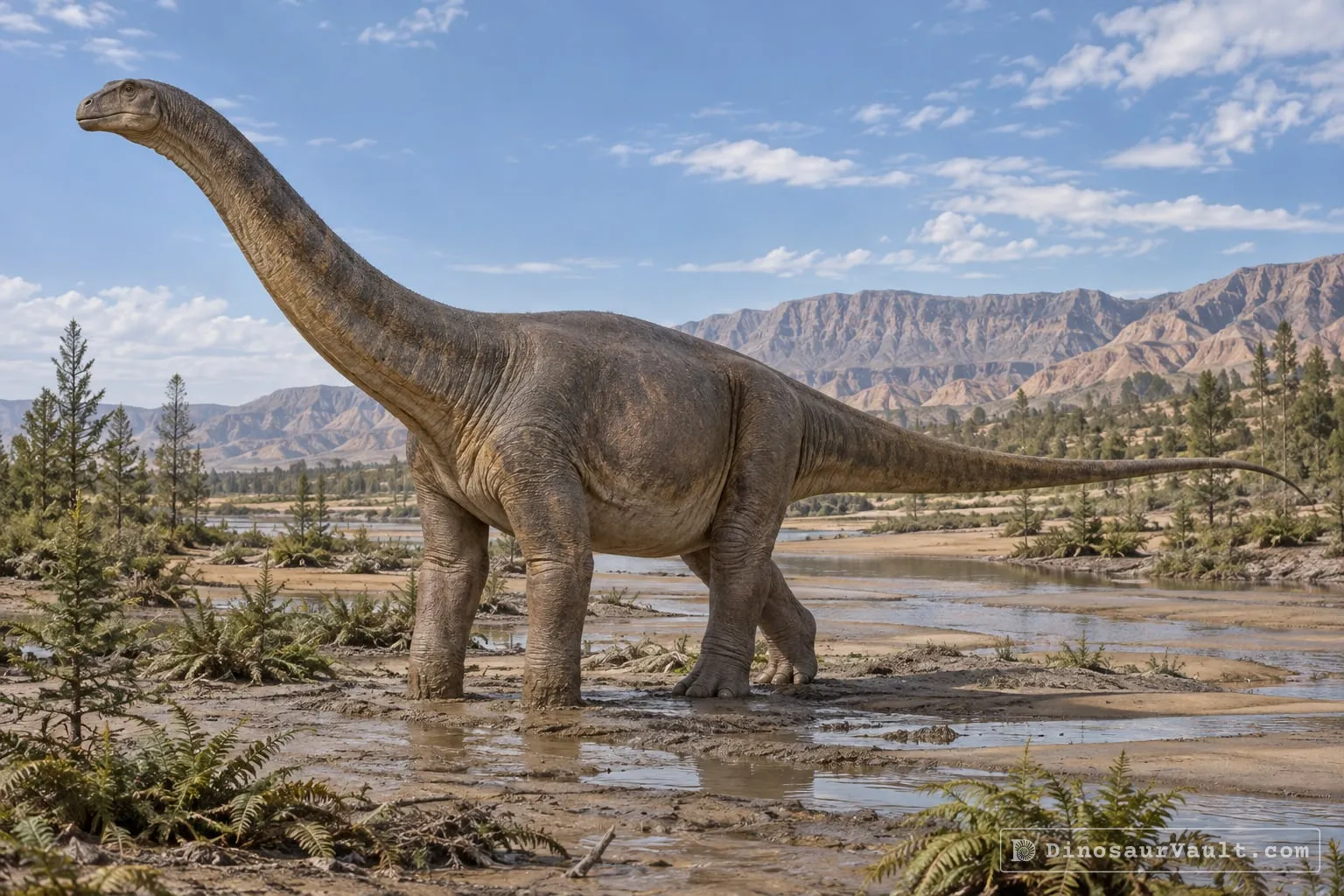
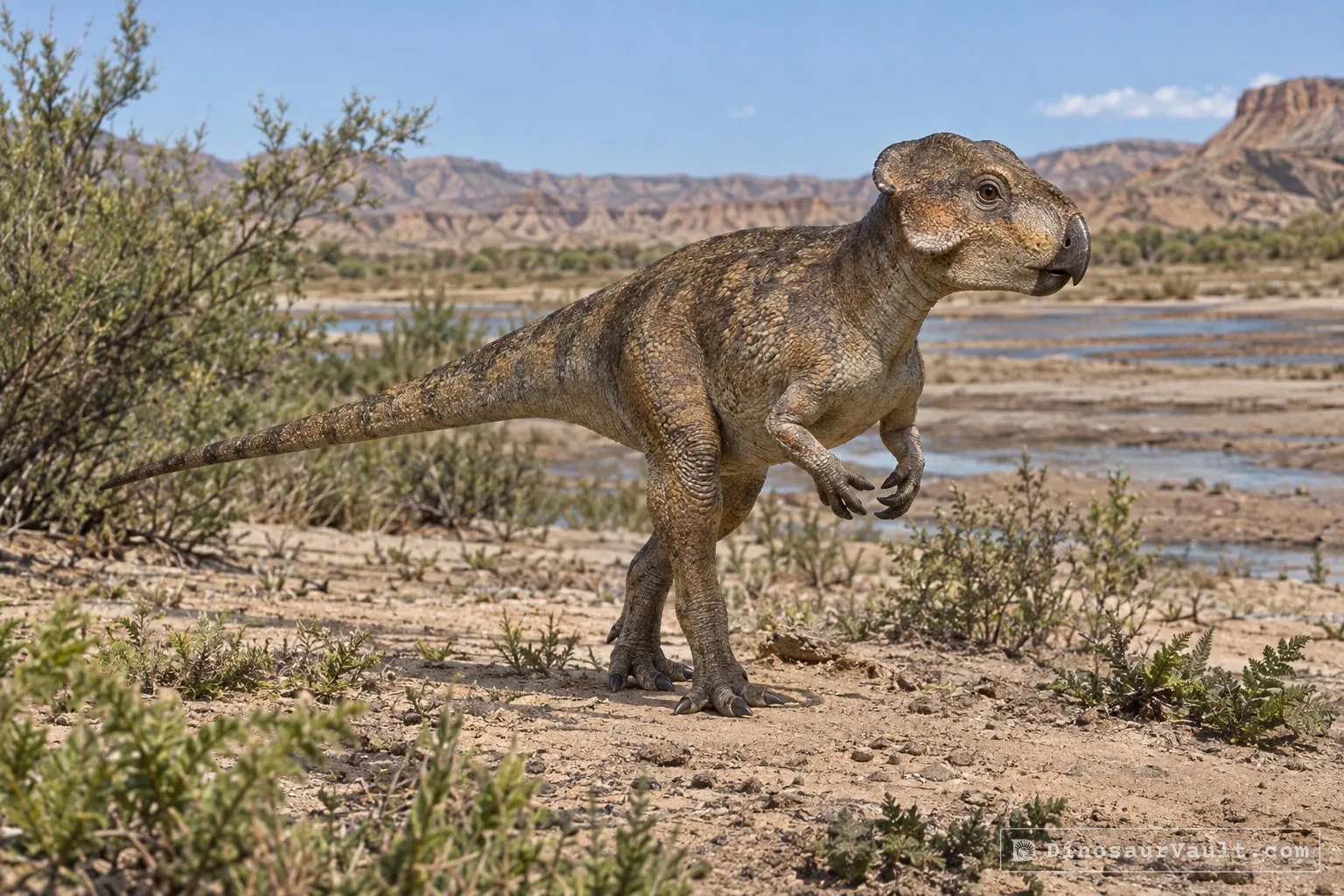
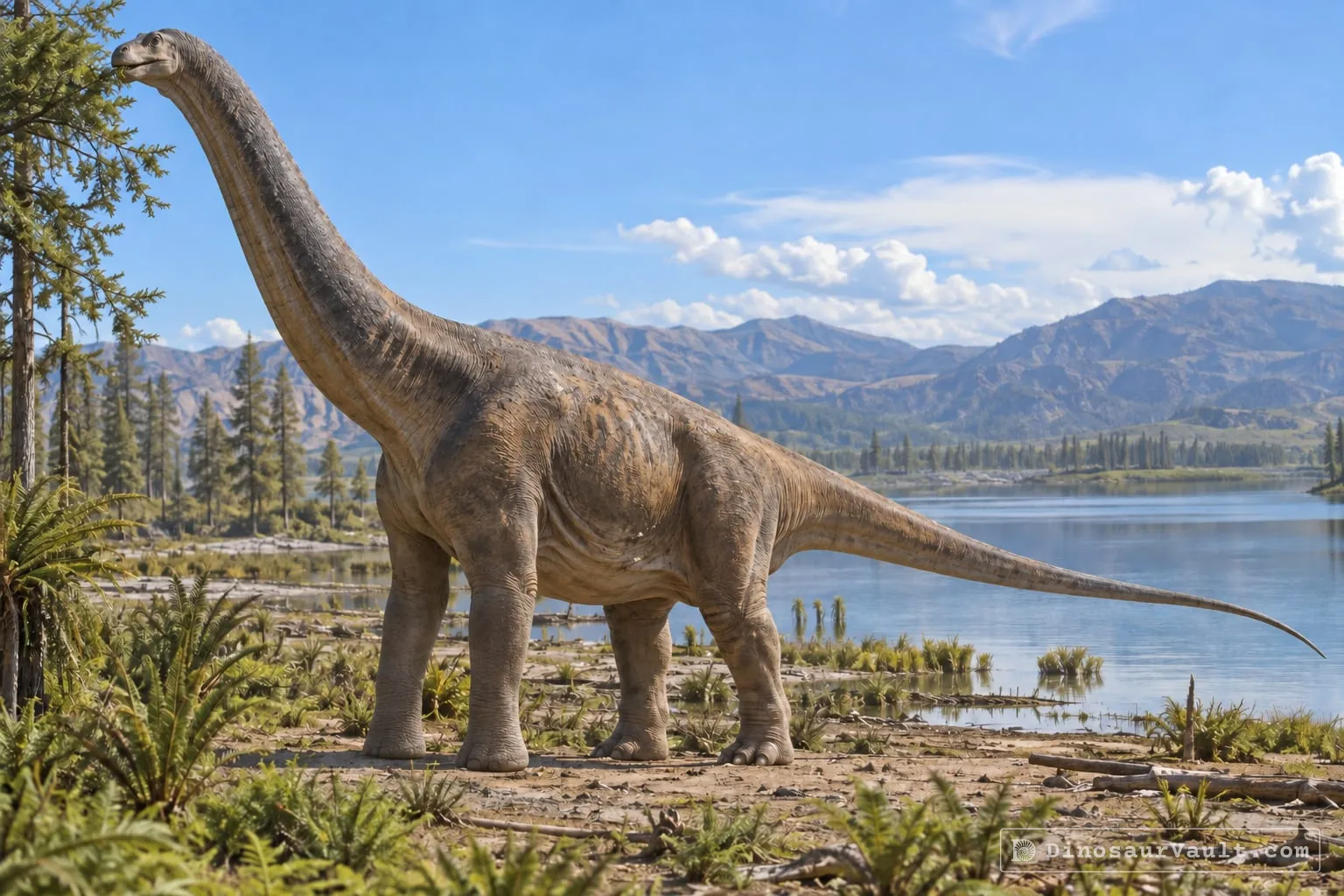
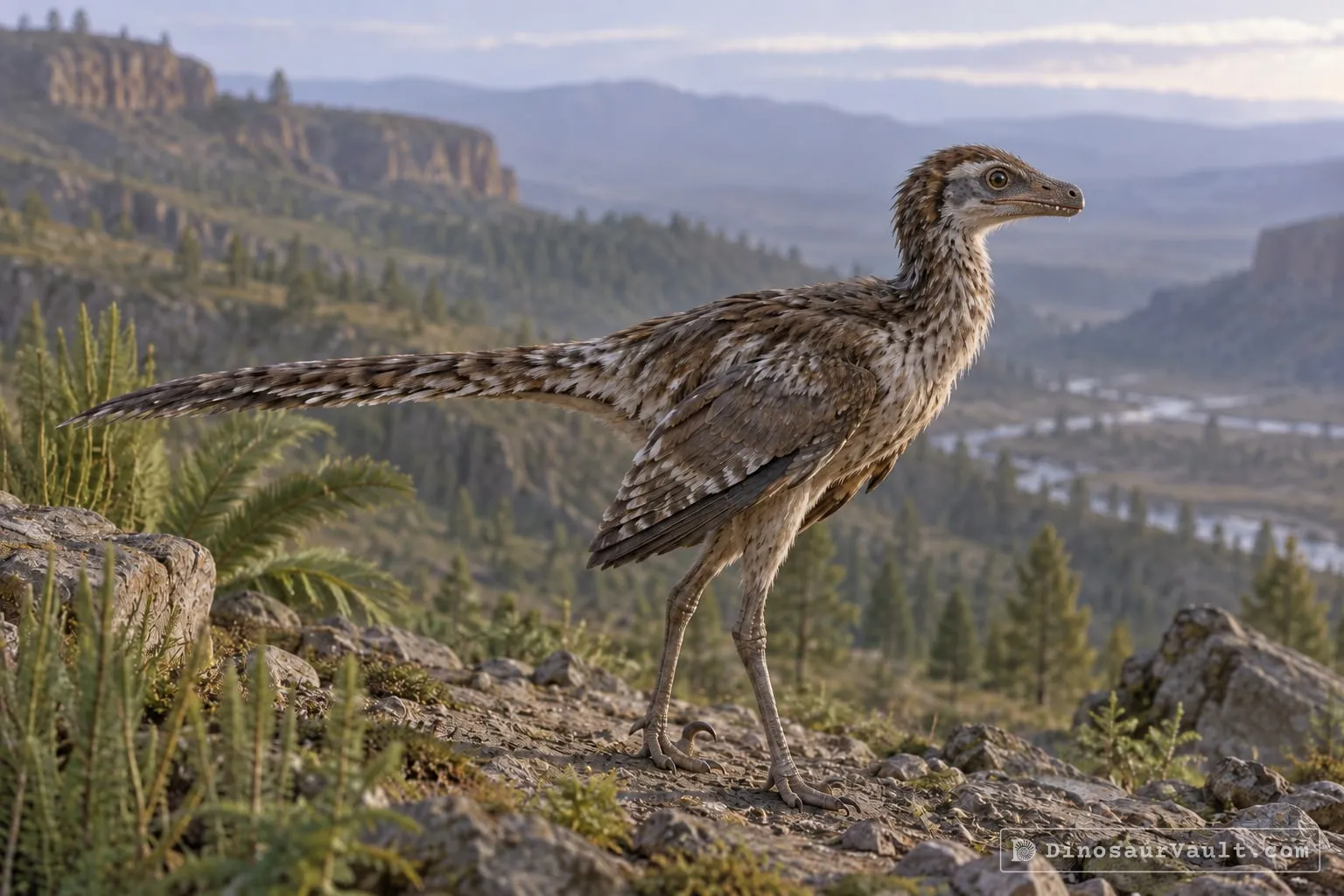
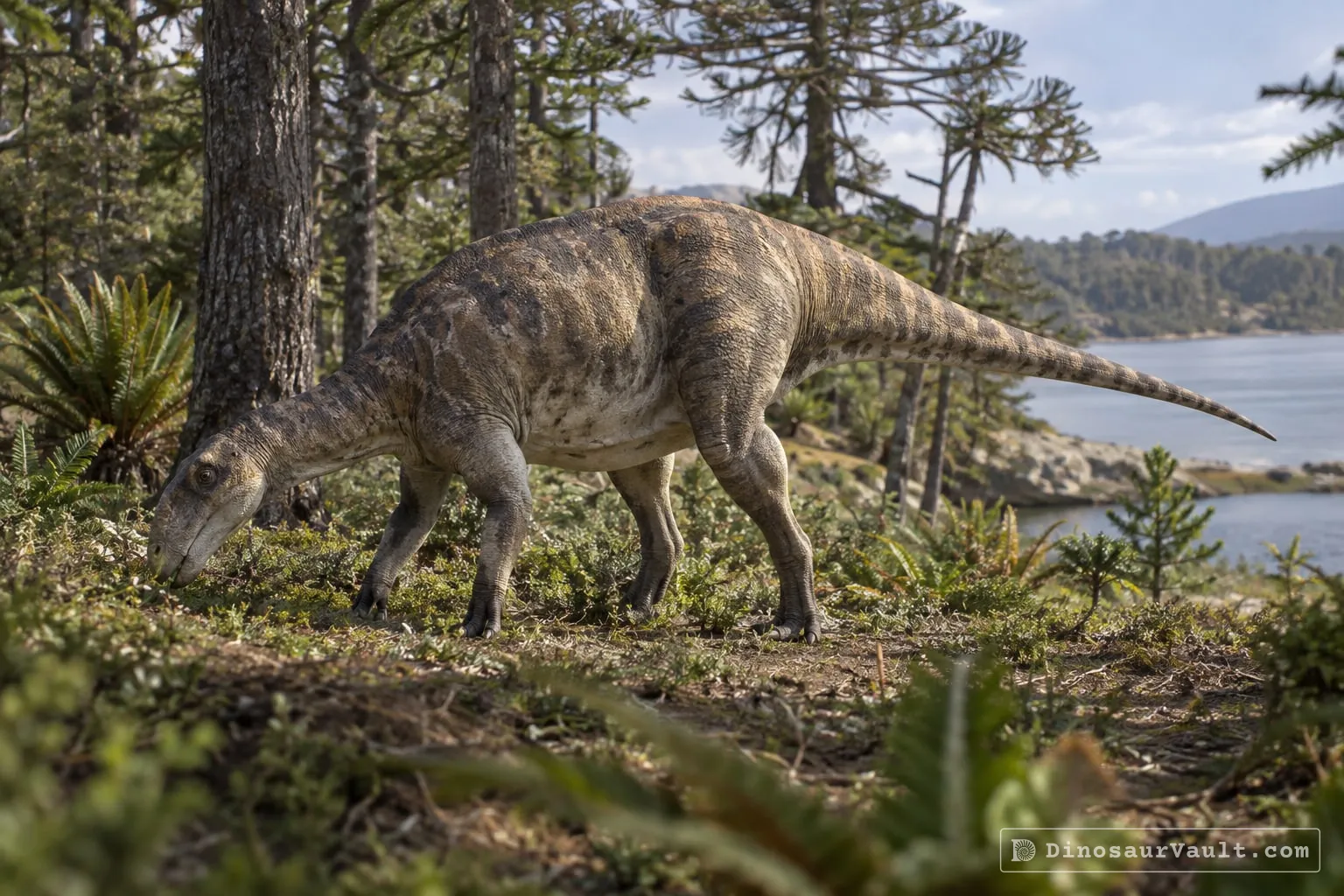


A rock formation can hold fossils laid down millions of years apart, so not every animal here met Archaeoceratops.
The evidence
The science behind Archaeoceratops
Which parts of the picture come from its own bones, and which come from its relatives.
From its own fossils
- A nearly complete skull and partial skeletons preserve the jaws, parts of the backbone and hips, a nearly complete tail and a complete foot.
- The skull has a small frill and lacks horns over the nose and eyes.
- Teeth remain in the front of the upper jaw behind the beak.
Borrowed from relatives
- Missing parts of the limbs can be restored by comparison with small early horned dinosaurs such as Liaoceratops.
Still unknown
- Its skin covering and color.
- The full outline of its frill.
- How its skull and body changed as it grew.
Discovery timeline
- 1997Named itDong & Azuma
- 2001Its worldTang et al.
- 2014Family treeFarke et al.
Key papers
The research behind what we know of Archaeoceratops
Named it
Named Archaeoceratops from a skull and partial skeletons in China, recognizing an early member of the horned-dinosaur family.
On a primitive neoceratopsian from the Early Cretaceous of China. Sino-Japanese Silk Road Dinosaur Expedition. China Ocean Press, Beijing.
No link available
Its world
Studied the rocks, pollen and fossils of the region where Archaeoceratops lived, identifying rivers and lakes in a partly dry subtropical climate.
Biostratigraphy and palaeoenvironment of the dinosaur-bearing sediments in Lower Cretaceous of Mazongshan area, Gansu Province, China. Cretaceous Research 22: 115-129
Read the paper : Biostratigraphy and palaeoenvironment of the dinosaur-bearing sediments in Lower Cretaceous of Mazongshan area, Gansu Province, China (opens in a new tab)Family tree
Compared Aquilops with Archaeoceratops and other early horned dinosaurs to study the group's relationships and spread between Asia and North America.
A Ceratopsian Dinosaur from the Lower Cretaceous of Western North America, and the Biogeography of Neoceratopsia. PLoS ONE 9: e112055
Read the paper : A Ceratopsian Dinosaur from the Lower Cretaceous of Western North America, and the Biogeography of Neoceratopsia (opens in a new tab)
Close relatives
Other members of Neoceratopsia


Sources: Wikidata