Gobititan
"Gobi titan"
- Lived
- 113 to 110 million years ago, Early Cretaceous
- Diet
- Herbivore
- Group
- Sauropods, Euhelopodidae
- Found in
- China
- Named by
- You et al. 2003
Where its fossils were found
The evidence
Today

110 million years ago
Habitat
It lived in a vegetated landscape in what is now China. The Zhonggou Formation also contains Psittacosaurus, Archaeoceratops and Equijubus.
Field notes
About Gobititan
What it was like
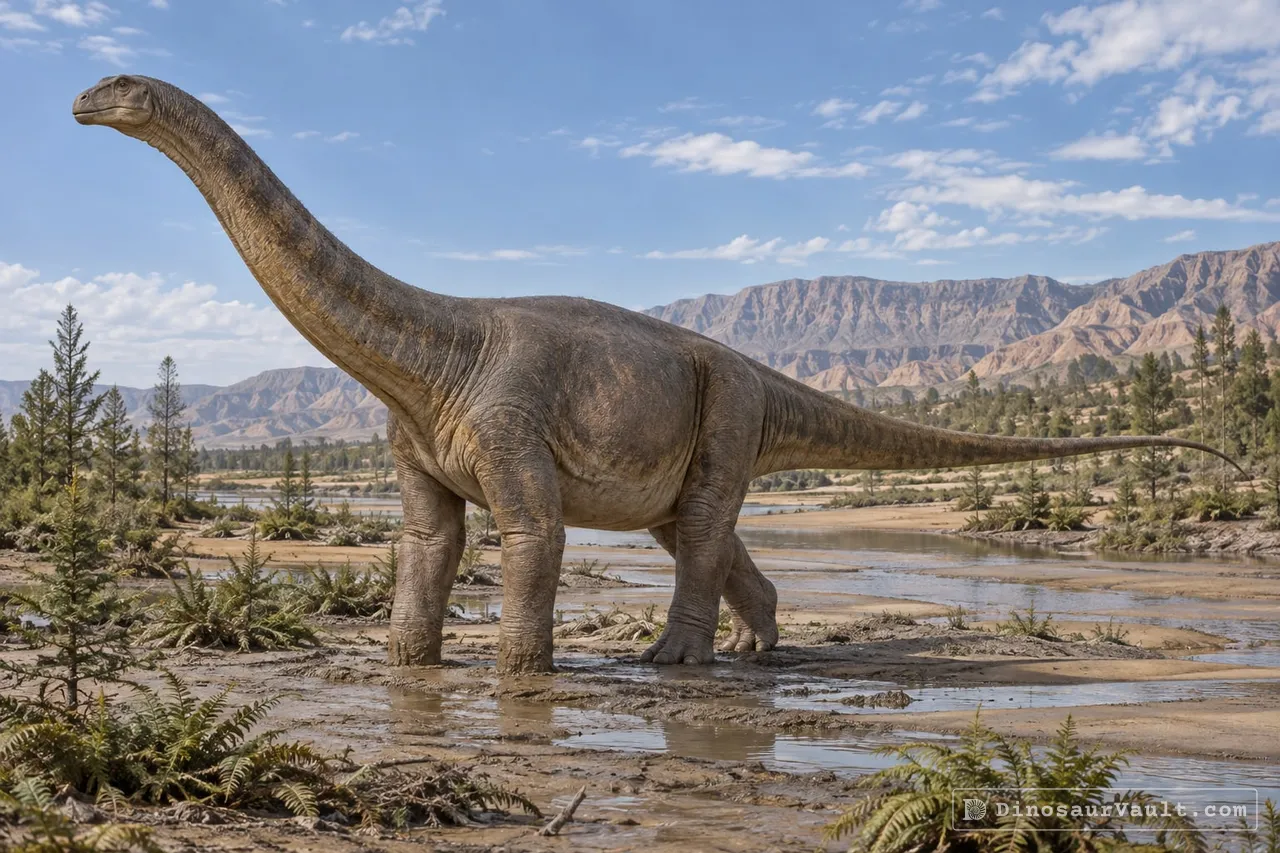
Gobititan was a large, long-necked, four-legged plant eater, a relative of Euhelopus. It is known from parts of its legs and tail.
Its world
It lived in the Early Cretaceous in what is now northwestern China. Its bones come from the Zhonggou Formation, where it shared the land with Psittacosaurus, the early horned Archaeoceratops and Auroraceratops, and the plant eater Equijubus.
How it was found
You and colleagues named Gobititan in 2003, from a single find.
Field gallery
More views of Gobititan
Scenes reconstructed from the available fossil evidence.
Lived alongside
Found in the same rock formations
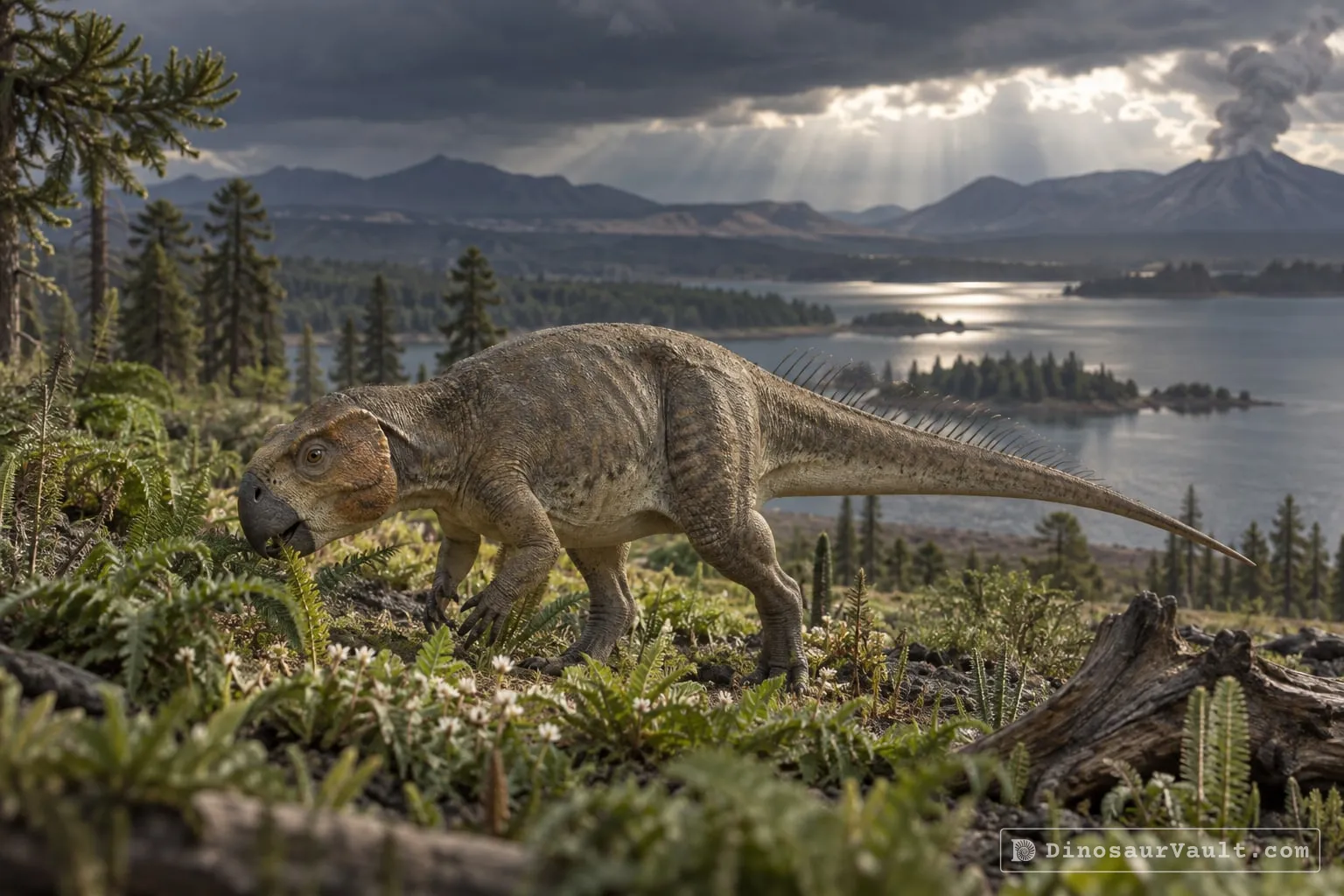
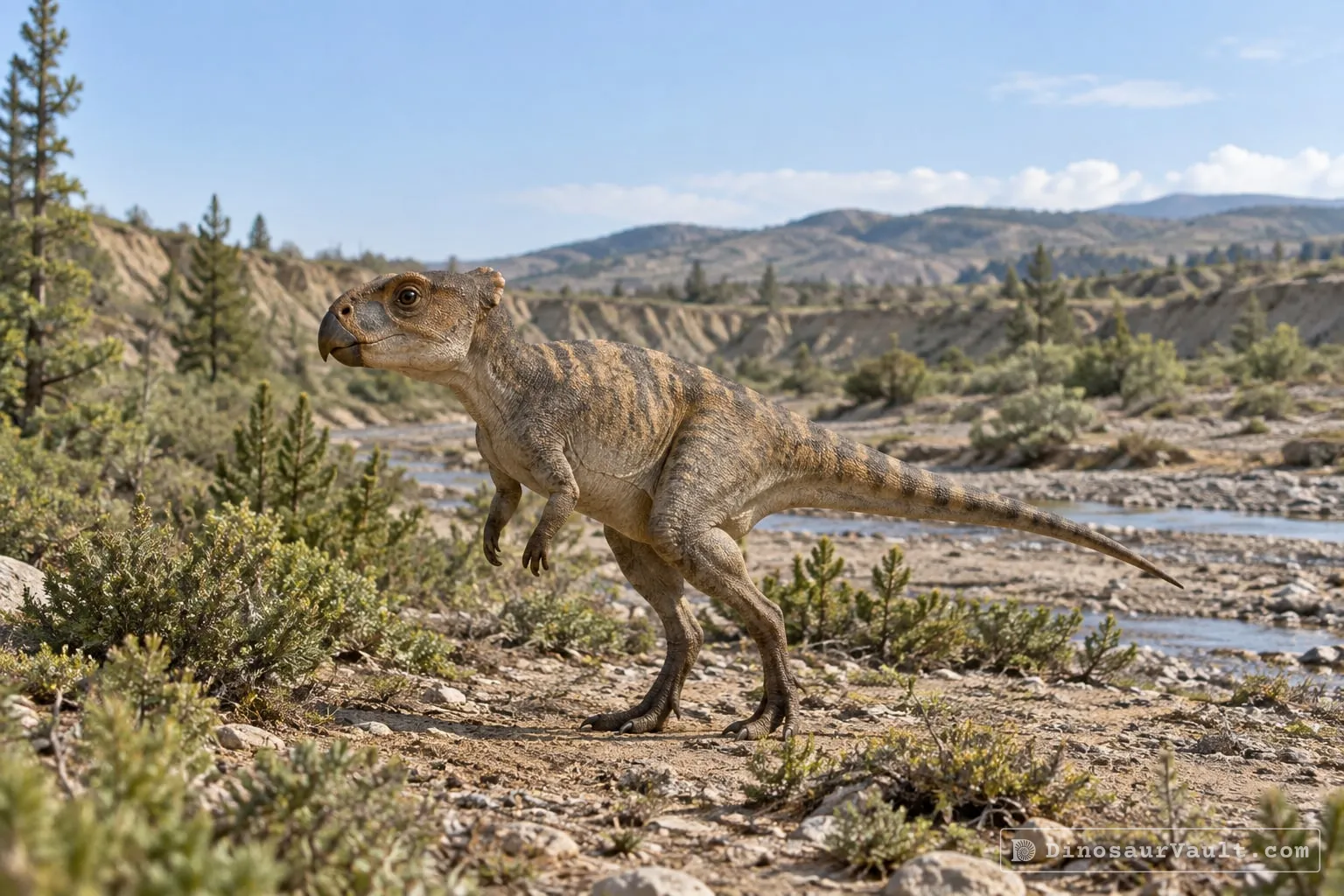
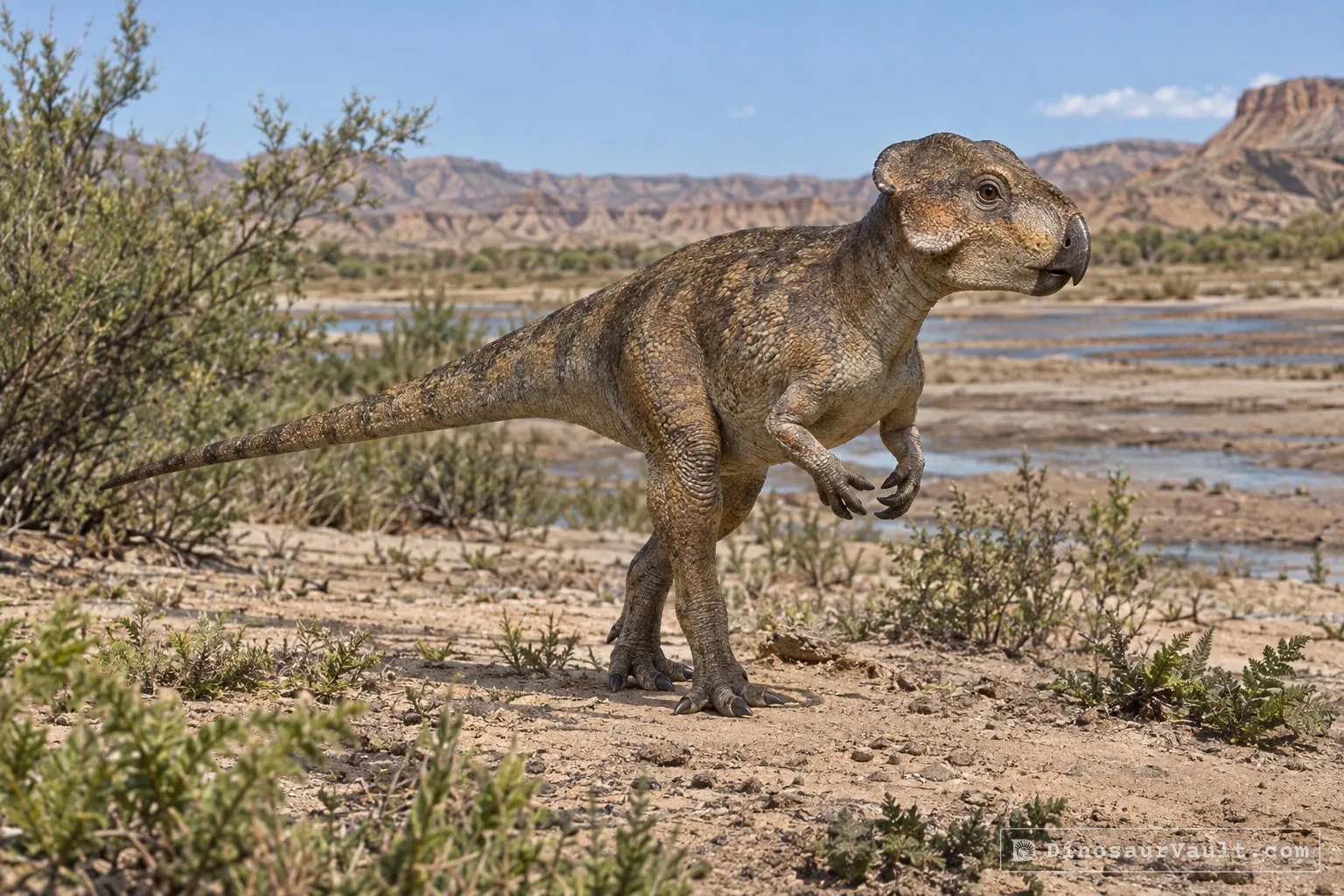
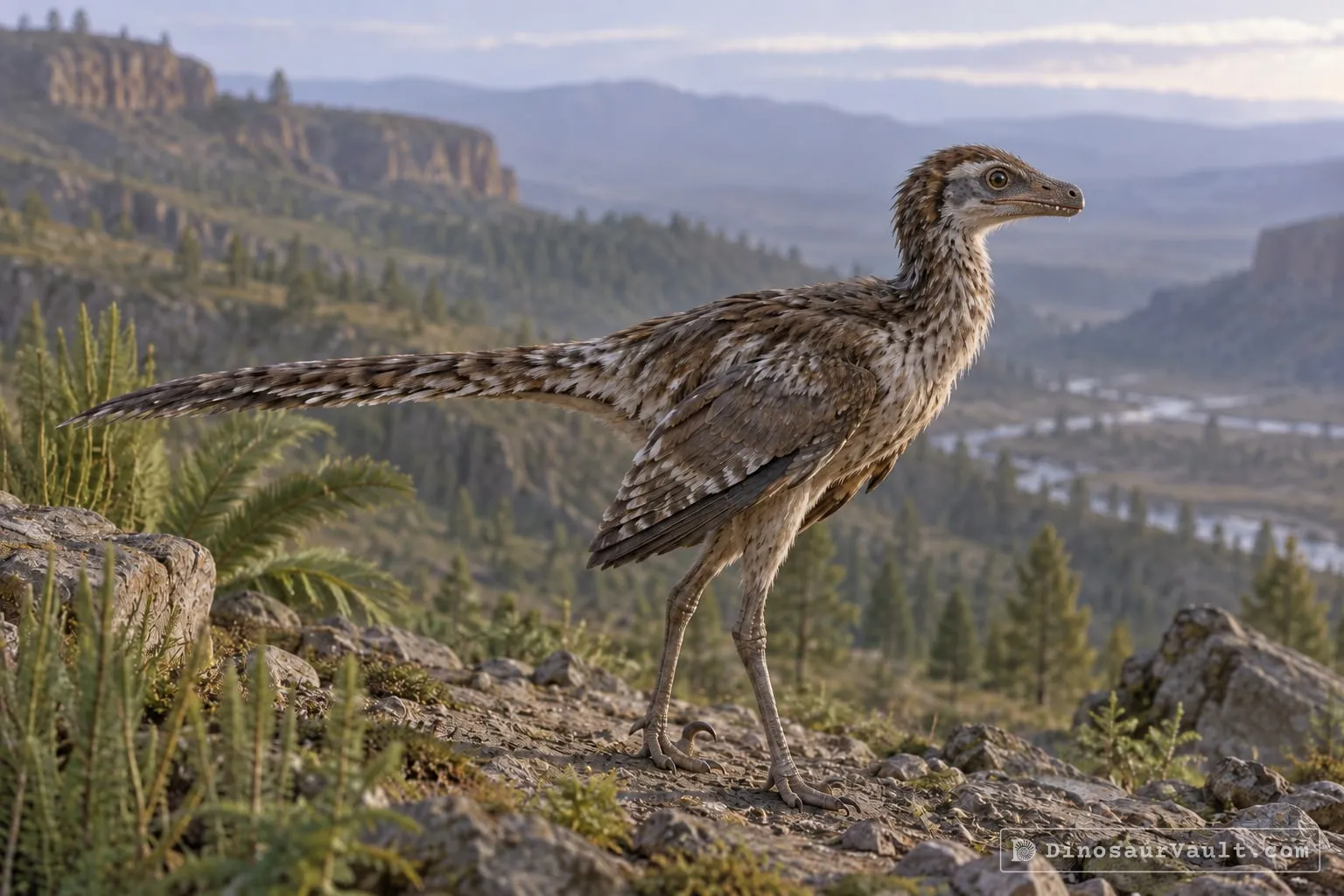
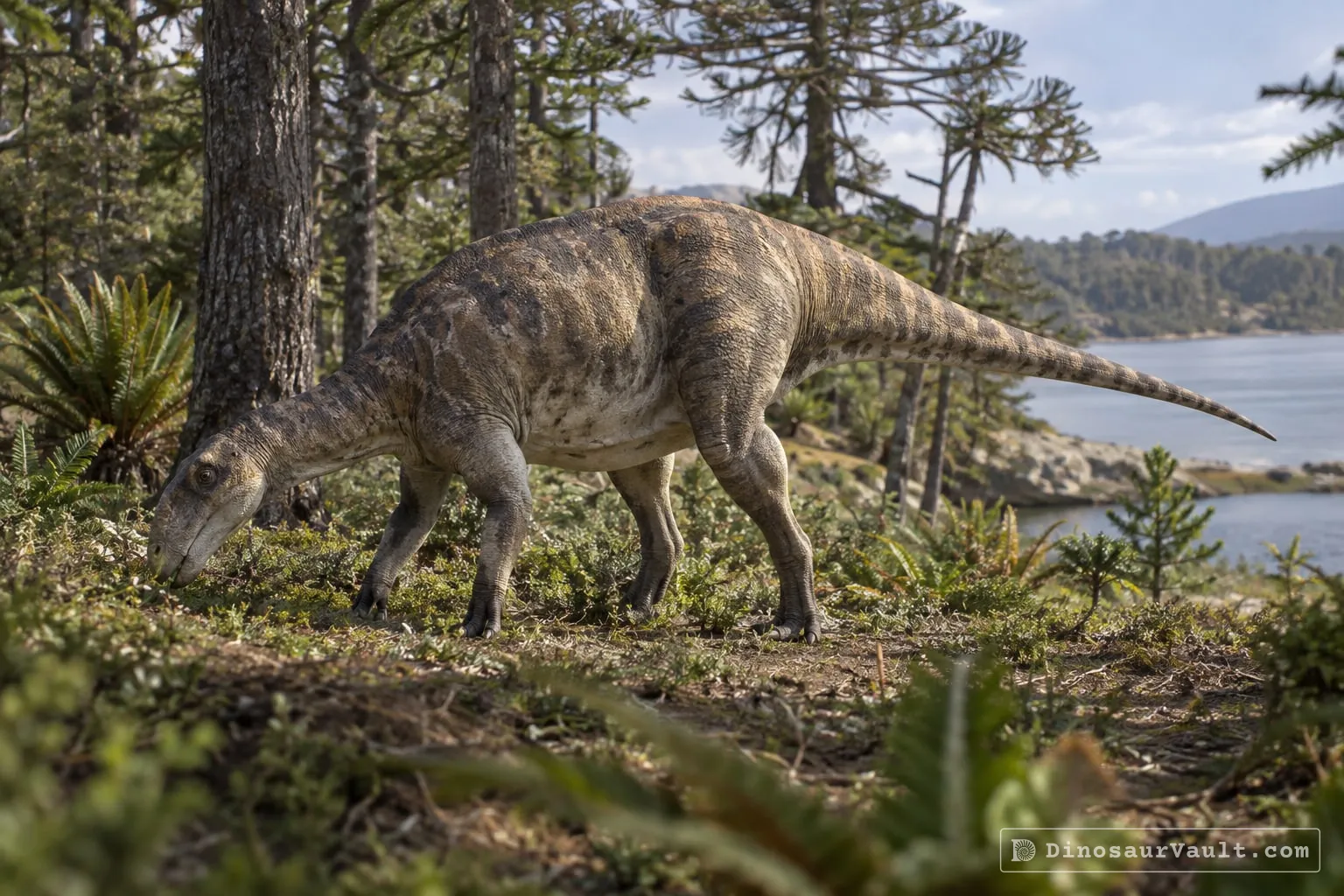
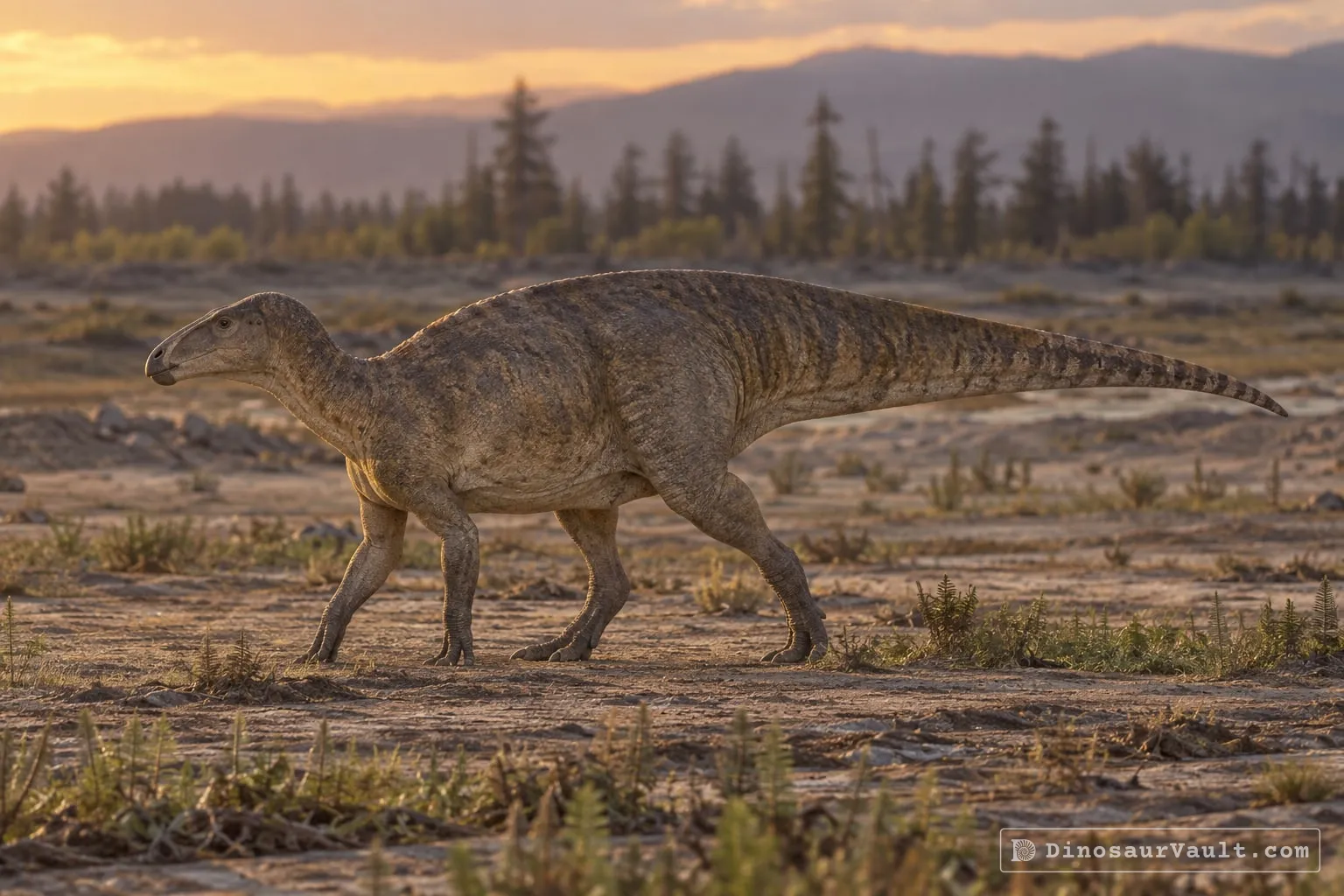
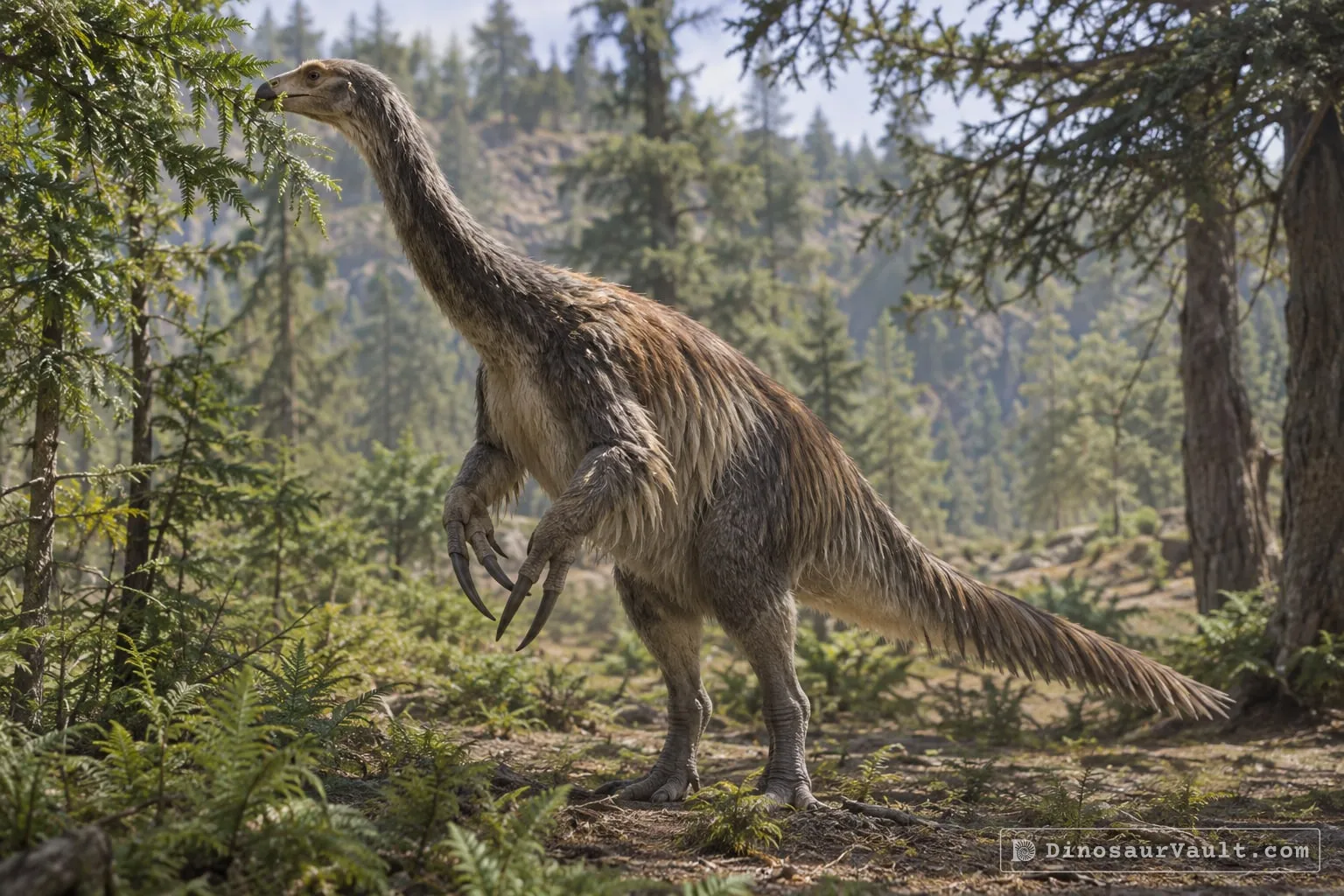


A rock formation can hold fossils laid down millions of years apart, so not every animal here met Gobititan.
The evidence
The science behind Gobititan
Which parts of the picture come from its own bones, and which come from its relatives.
From its own fossils
- Parts of the tail and a hind leg are known from a single find.
- The lower leg includes an ankle bone also found in Erketu and Euhelopus.
Borrowed from relatives
- Euhelopus provides a comparison for the missing skull.
- The long neck and four-legged stance follow better-known sauropod relatives.
Still unknown
- The shape of its skull and the length of its neck.
- Its full body size and skin covering.
- Its exact place among the relatives of titanosaurs.
Discovery timeline
- 2003Named itYou, Tang & Luo
- 2006Close relativeKsepka & Norell
- 2013Family treeMannion et al.
Key papers
The research behind what we know of Gobititan
Named it
Named a new sauropod from China and proposed that it was an early member of the titanosaur group.
A new basal titanosaur (Dinosauria: Sauropoda) from the Early Cretaceous of China. Acta Geologica Sinica 77: 424-429
No link available
Close relative
Compared the lower hind leg of Erketu with Gobititan and described their similar shin and ankle bones.
Erketu Ellisoni, a Long-necked Sauropod from Bor Guvé (Dornogov Aimag, Mongolia). American Museum Novitates 3508: 1
Read the paper : Erketu Ellisoni, a Long-necked Sauropod from Bor Guvé (Dornogov Aimag, Mongolia) (opens in a new tab)Family tree
Compared Gobititan with other sauropods and found that its position changed with the way skeletal features were analyzed.
Osteology of the Late Jurassic Portuguese sauropod dinosaurLusotitan atalaiensis(Macronaria) and the evolutionary history of basal titanosauriforms. Zoological Journal of the Linnean Society 168: 98-206
Read the paper : Osteology of the Late Jurassic Portuguese sauropod dinosaurLusotitan atalaiensis(Macronaria) and the evolutionary history of basal titanosauriforms (opens in a new tab)
Close relatives
Other members of Euhelopodidae


Sources: Wikidata