Outline: a typical ornithopod
Gonkoken
"like a wild duck"
Type species Gonkoken nanoi
- Lived
- 72 to 66 million years ago, Late Cretaceous
- Diet
- Herbivore
- Group
- Ornithopods
- Found in
- Chile
- Named by
- Alarcón-Muñoz et al. 2023
Where its fossils were found
The evidence
Today

70 million years ago
Field notes
About Gonkoken
What it was like
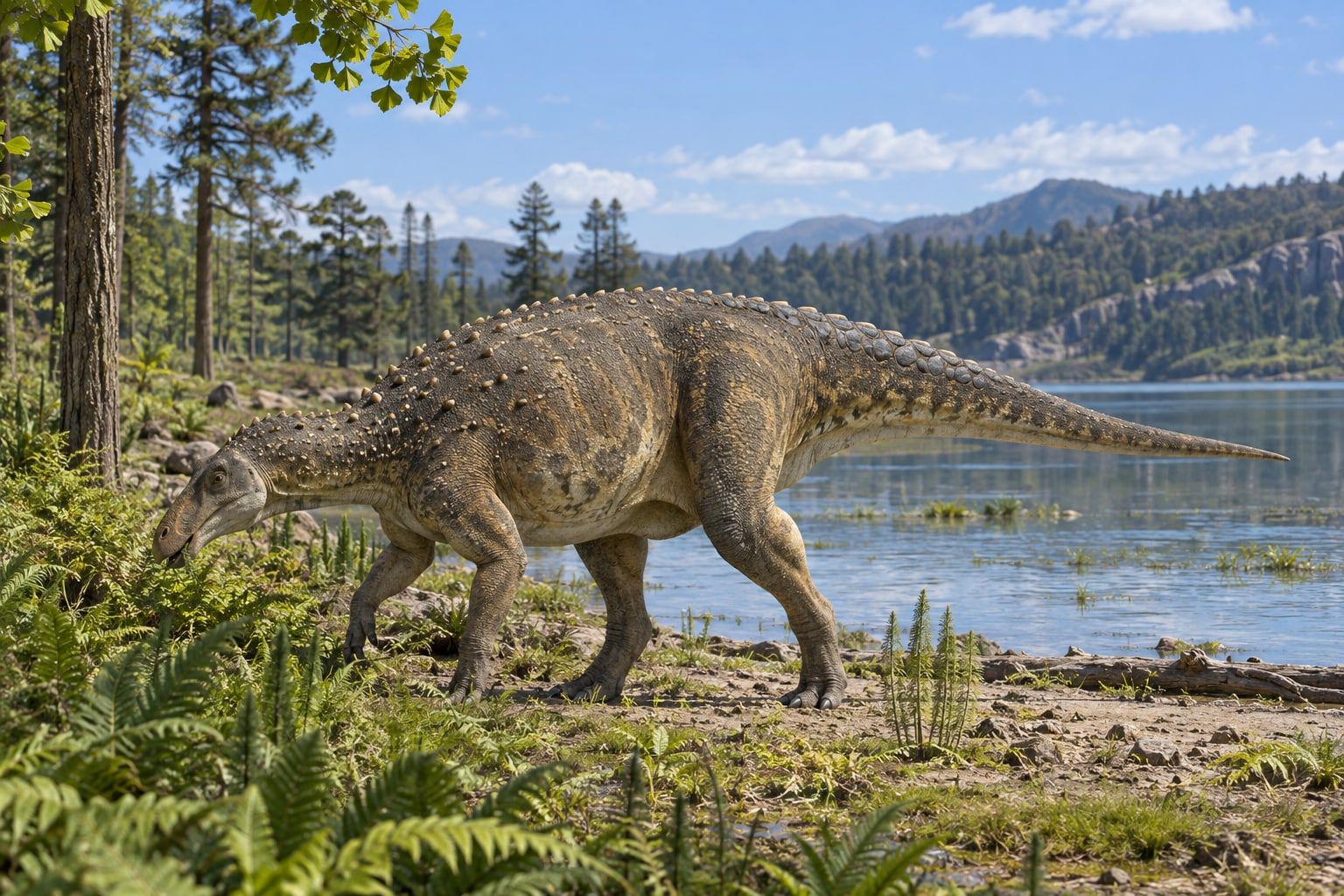
Gonkoken was a plant eater related to the duck-billed dinosaurs, but not a true duckbill itself. It is known from bones of several individuals.
Its world
It lived about 72 to 66 million years ago, at the end of the Late Cretaceous, in the far south of what is now Chile. Its bones come from the Dorotea Formation, where it lived alongside the strange armored dinosaur Stegouros.
How it was found
Alarcón-Muñoz and colleagues named it in 2023. The type species is Gonkoken nanoi. Its name comes from a local language. It suggests that relatives of the duckbills reached South America more than once.
Lived alongside
Found in the same rock formations
Close relatives
Other members of Hadrosauroidea
Sources: WikidataNamed in: J. Alarcón-Muñoz, A. O. Vargas, and H. P. Püschel, S. Soto-Acuña, L. Manríquez, M. Leppe, J. Kaluza, V. Milla, C. S. Gutstein, J. Palma-Liberona, W. Stinnesbeck, E. Frey, J. P. Pino, D. Bajor, E. Núñez, H. Ortiz, D. Rubilar-Rogers, P. Cruzado-Caballero. 2023. Relict duck-billed dinosaurs survived into the last age of the dinosaurs in subantarctic Chile. Science Advances 9:eadg2456:1-17