Sinornithoides
"Chinese bird form"
- Lived
- 137 to 101 million years ago, Early Cretaceous
- Diet
- Omnivore
- Group
- Theropods, Troodontidae
- Found in
- China
- Named by
- Russell and Dong 1994
Where its fossils were found
The evidence
Today

120 million years ago
Habitat
It lived inland in what is now China during the Early Cretaceous. Regional neighbors included Psittacosaurus and Wuerhosaurus.
Field notes
About Sinornithoides
What it was like
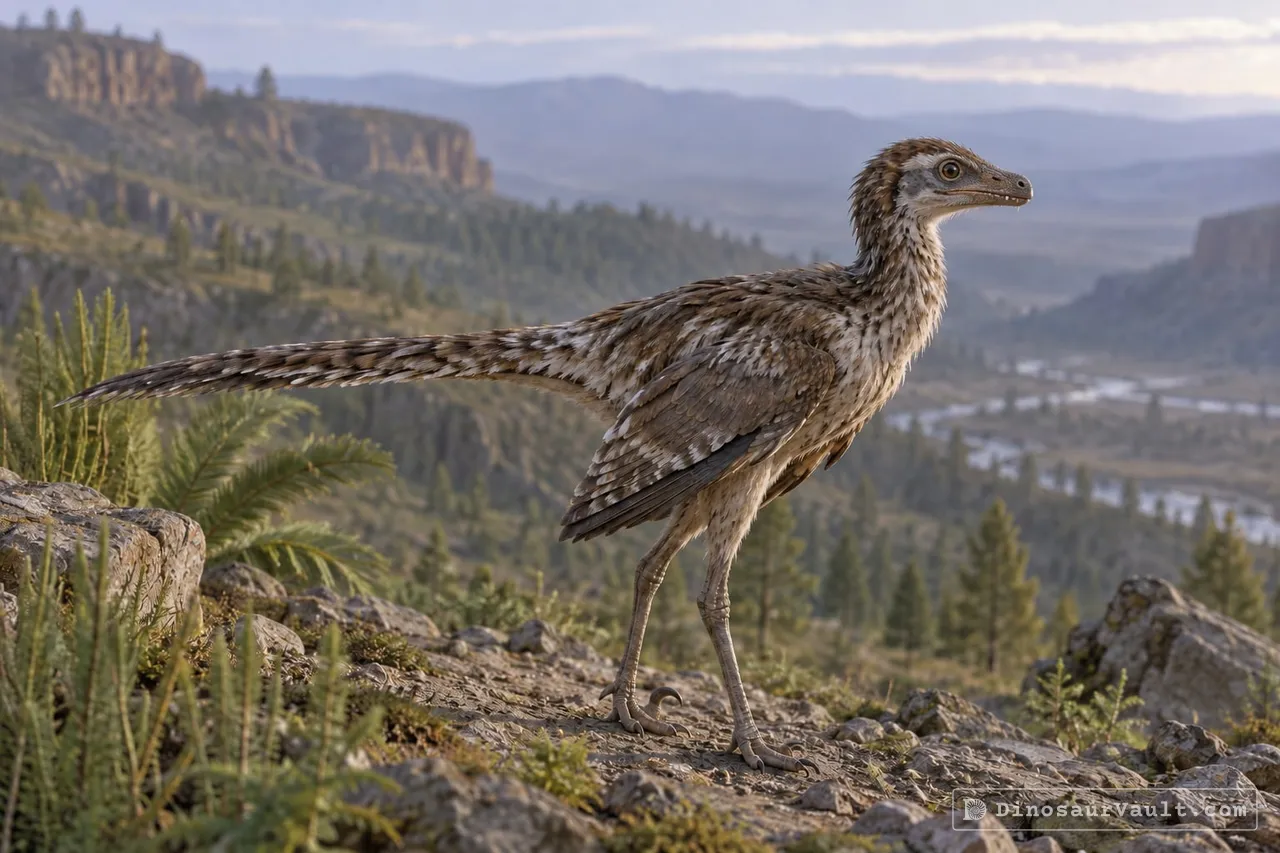
Sinornithoides was a small troodontid, a feathered theropod about the size of a chicken. Its only skeleton was found curled up, as if asleep, like a modern bird.
Its world
It lived in the Early Cretaceous, in what is now China. It shared its world with the parrot-beaked Psittacosaurus.
How it was found
Russell and Dong named Sinornithoides in 1994, from a nearly complete skeleton.
Field gallery
More views of Sinornithoides
Scenes reconstructed from the available fossil evidence.
1 of 2
Lived alongside
Found in the same rock formations
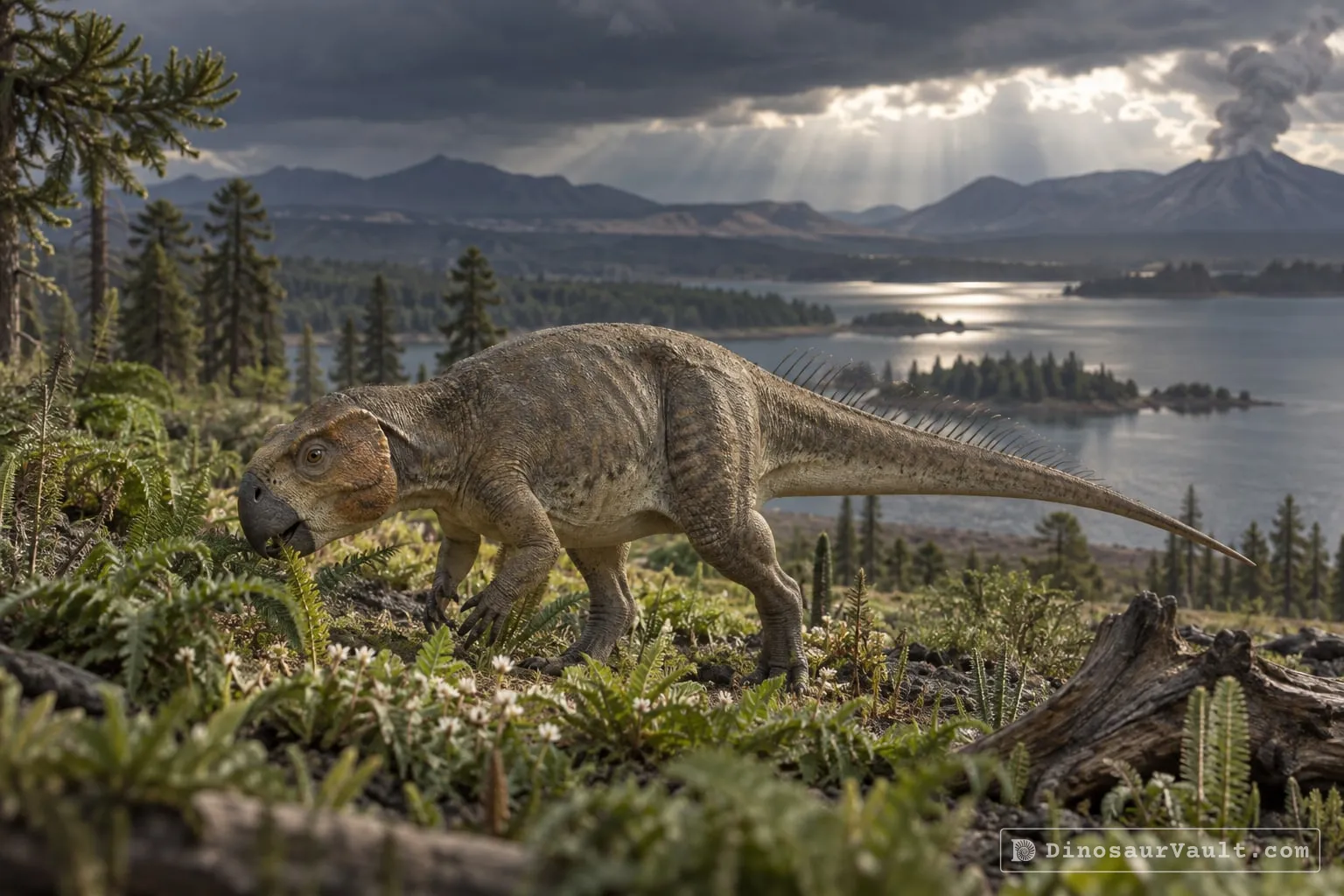
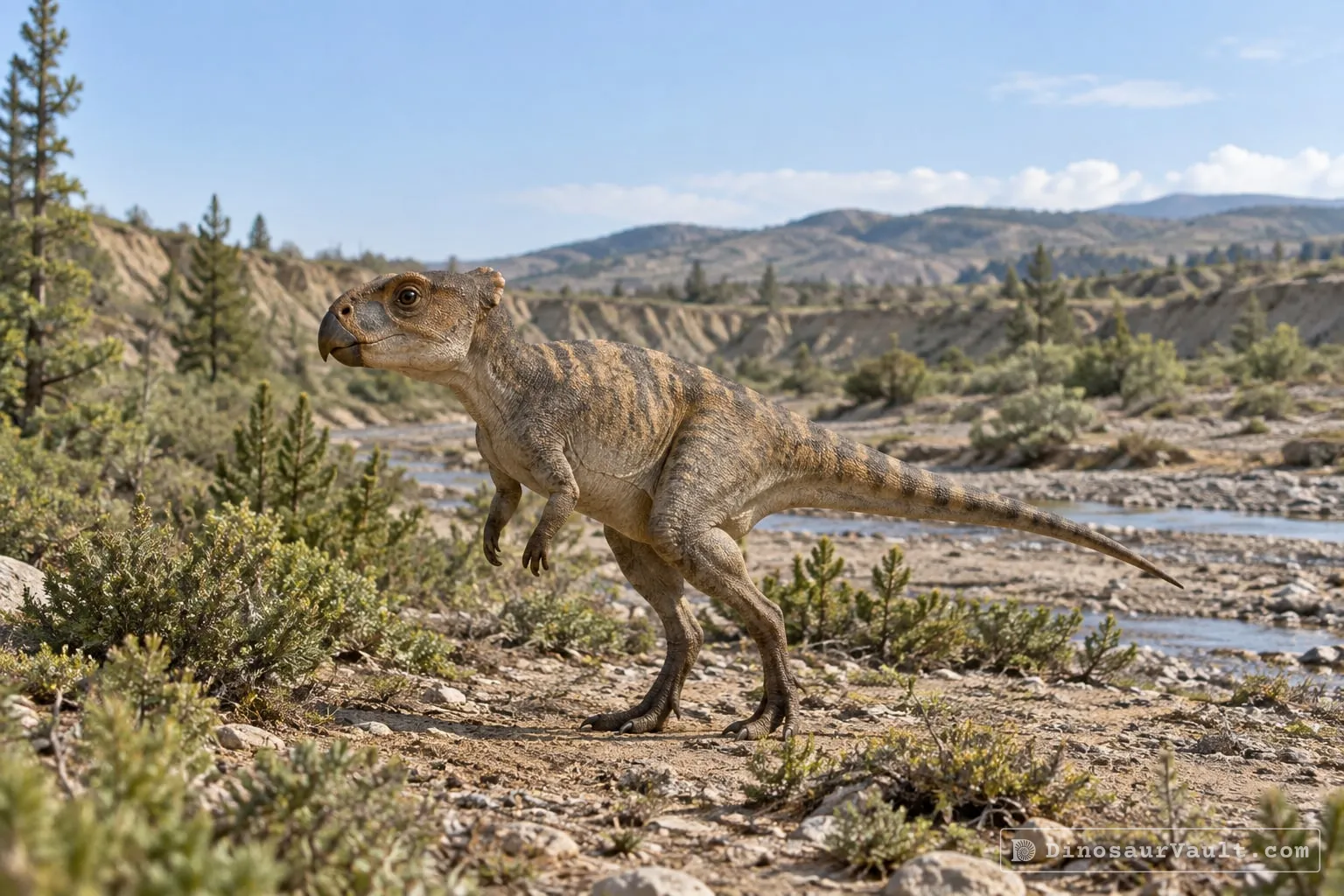
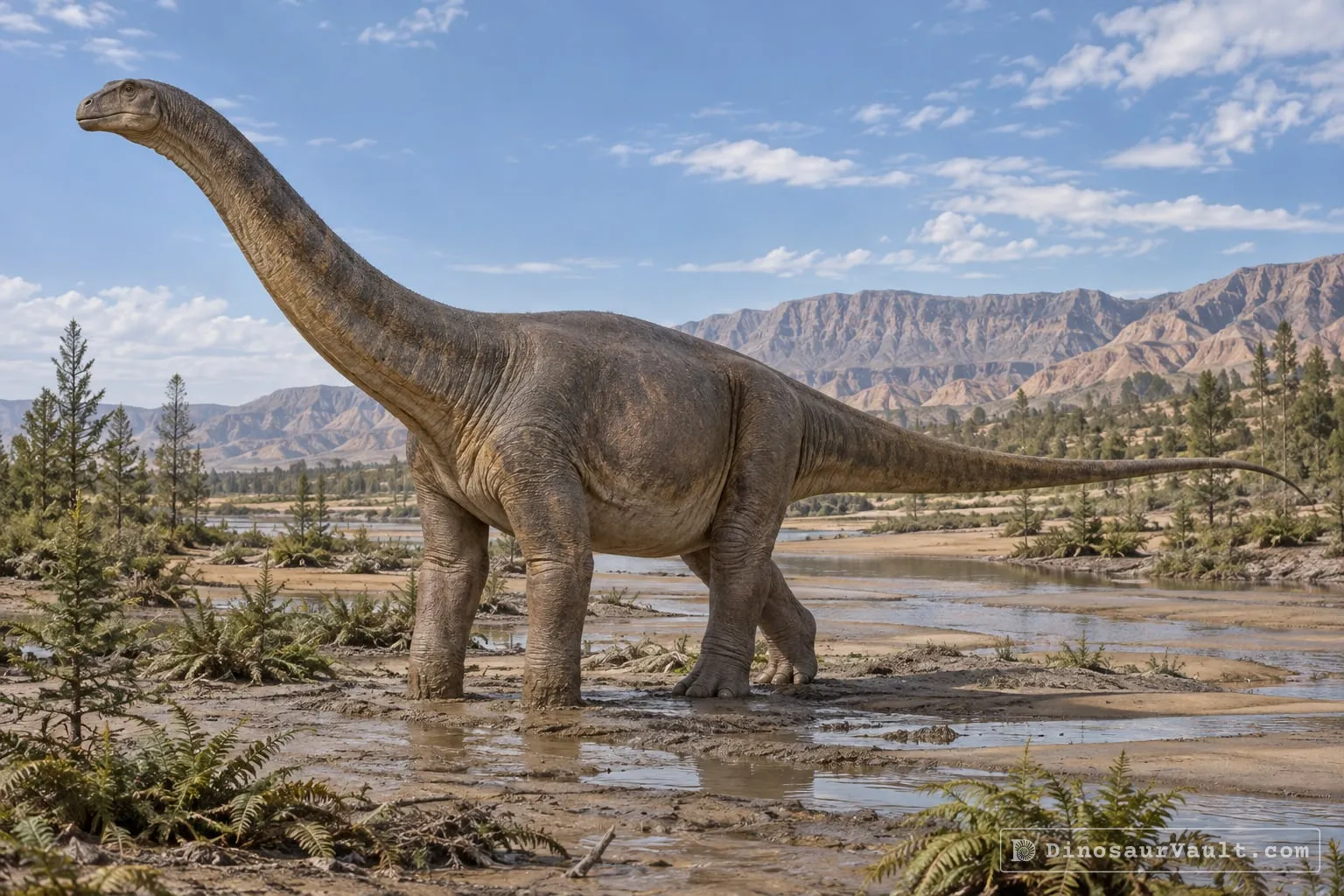
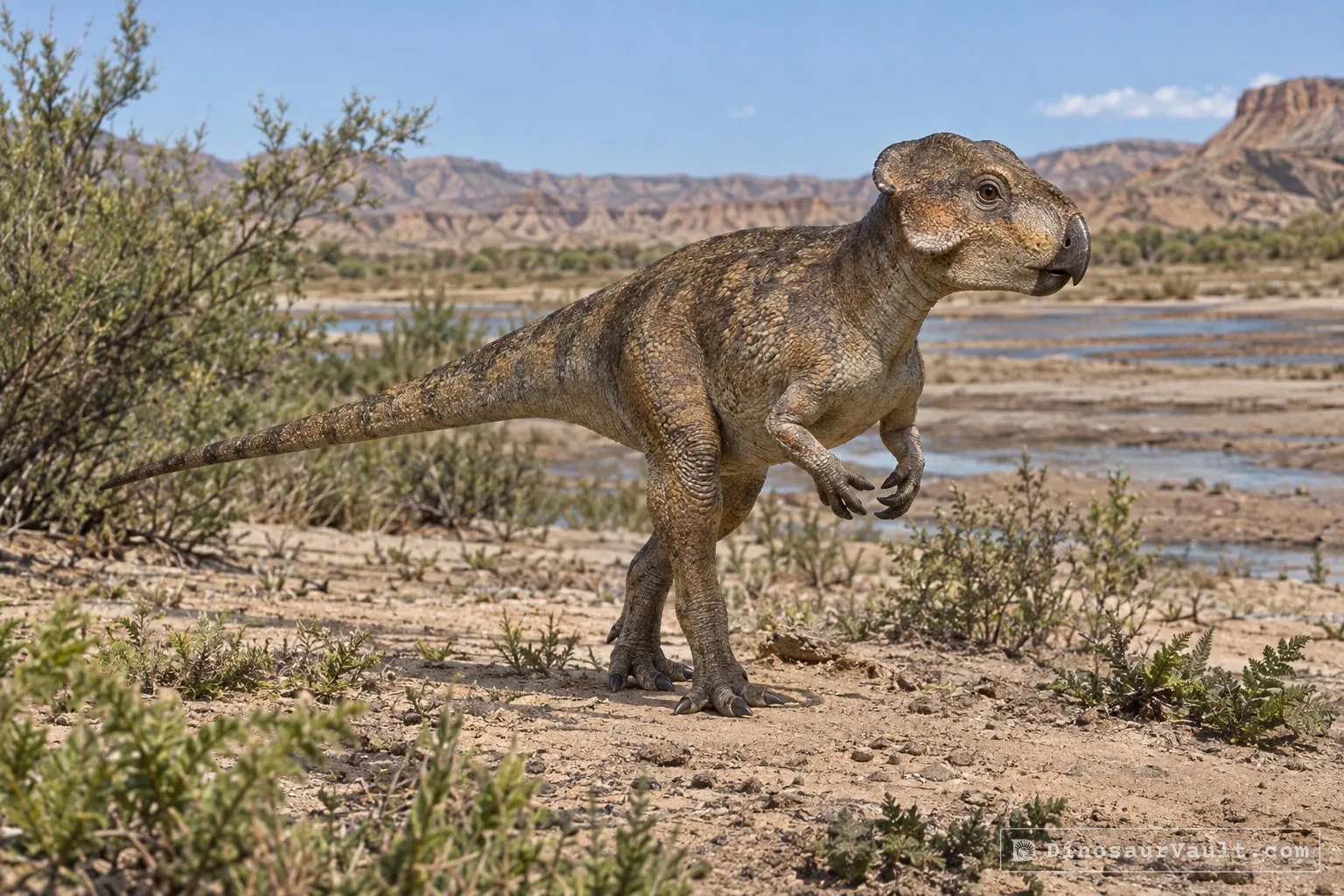
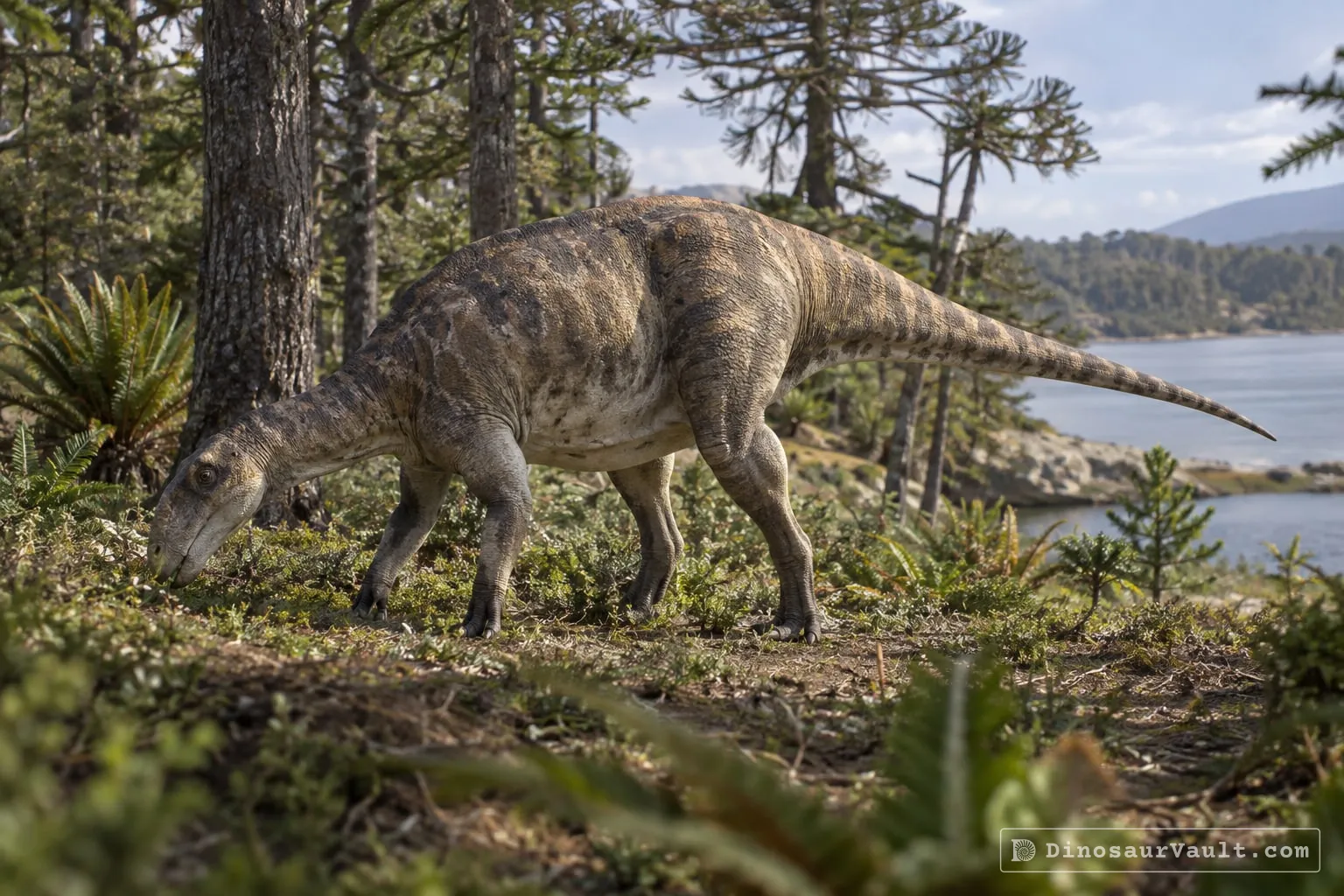
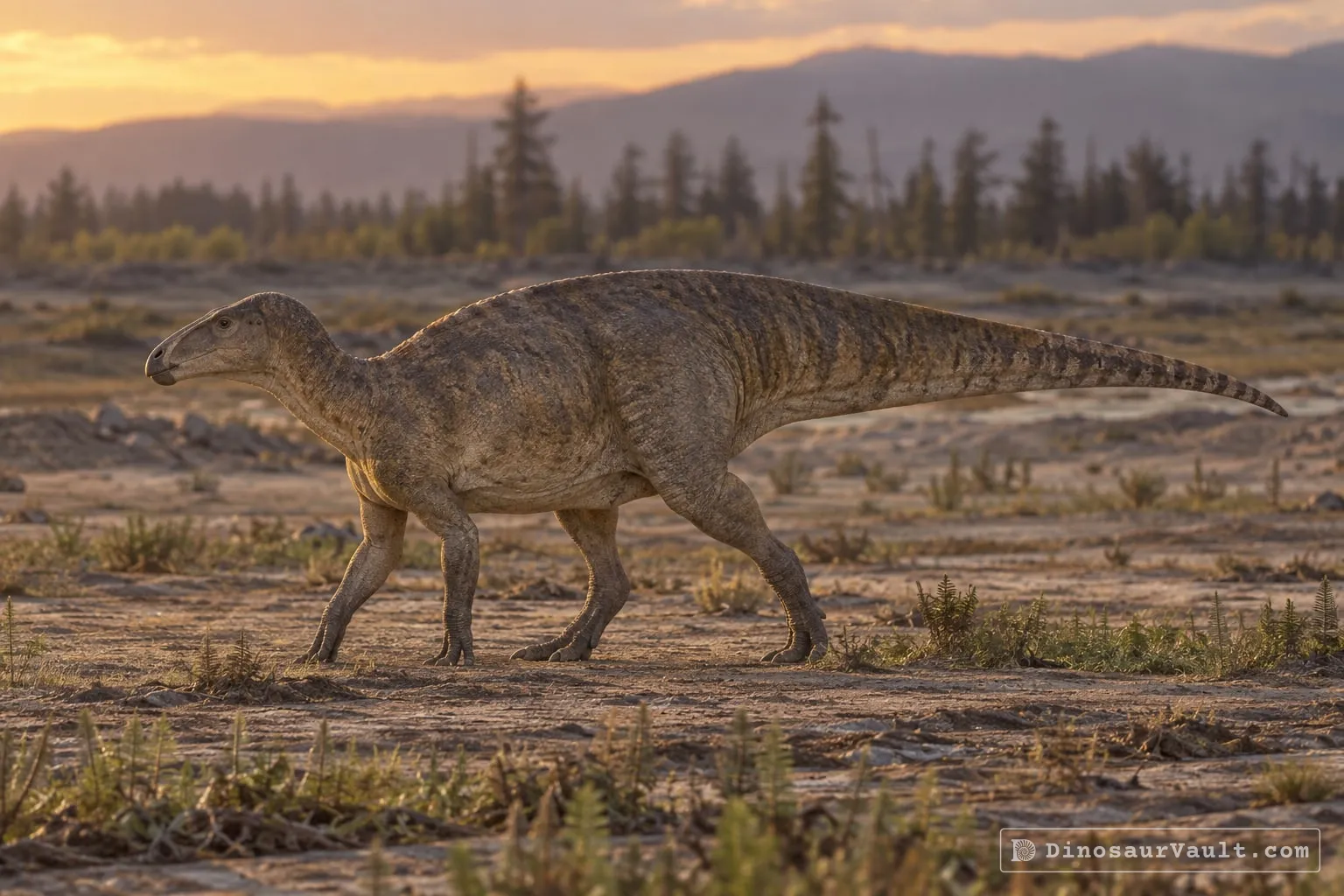
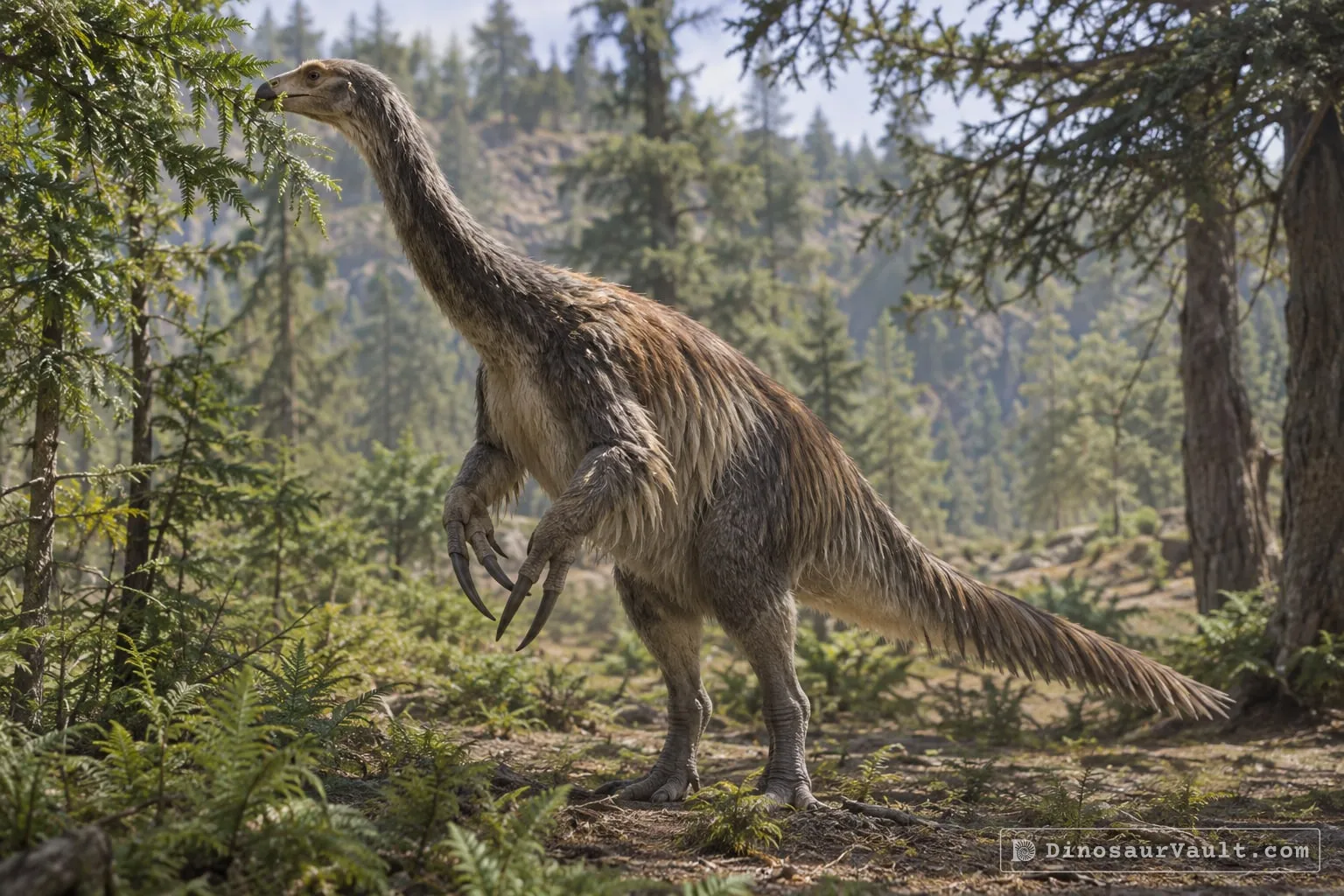


A rock formation can hold fossils laid down millions of years apart, so not every animal here met Sinornithoides.
The evidence
The science behind Sinornithoides
Which parts of the picture come from its own bones, and which come from its relatives.
From its own fossils
- The type skeleton preserves much of the skull, limbs and tail, including jaws with small serrated teeth.
- Its neck and tail curl beside the body in a bird-like resting pose.
- At least two hand claws preserve traces of thick keratin near their tips. Its second toe has a more curved claw than the other toes.
Borrowed from relatives
- Much of the body is known from its own skeleton; Jianianhualong provides a comparison for the missing skull roof, neck and trunk.
- Feathers are inferred from feathered relatives such as Anchiornis and Jianianhualong.
Still unknown
- Its feather color and markings, exact diet and hatchling appearance.
- Its complete skull roof and the missing parts of its neck and back.
- One later analysis places Sinornithoides outside Troodontinae, unlike some earlier ones.
Discovery timeline
- 1994Named itRussell & Dong
- 2001Full descriptionCurrie & Zhiming
- 2004PostureXu & Norell
- 2009SkinHu et al.
- 2017SkinXu et al.
- 2024Family treeKubota, Kobayashi & Ikeda
Key papers
The research behind what we know of Sinornithoides
Named it
Named Sinornithoides from a nearly complete skeleton with a short skull, long hindlimbs and a curled neck and tail.
A nearly complete skeleton of a new troodontid dinosaur from the Early Cretaceous of the Ordos Basin, Inner Mongolia, People's Republic of China. Canadian Journal of Earth Sciences 30: 2163-2173
Read the paper : A nearly complete skeleton of a new troodontid dinosaur from the Early Cretaceous of the Ordos Basin, Inner Mongolia, People's Republic of China (opens in a new tab)Full description
Added detailed skull and skeletal anatomy, compared troodontid teeth and showed that the known Sinornithoides was approaching maturity.
New information on Cretaceous troodontids (Dinosauria, Theropoda) from the People's Republic of China. Canadian Journal of Earth Sciences 38: 1753-1766
Read the paper : New information on Cretaceous troodontids (Dinosauria, Theropoda) from the People's Republic of China (opens in a new tab)Posture
Described Mei curled in a bird-like resting position, strengthening the interpretation of a similar pose in Sinornithoides.
A new troodontid dinosaur from China with avian-like sleeping posture. Nature 431: 838-841
Read the paper : A new troodontid dinosaur from China with avian-like sleeping posture (opens in a new tab)Skin
Described extensive feathers on Anchiornis, supporting feathered reconstructions of related small theropods.
A pre-Archaeopteryx troodontid theropod from China with long feathers on the metatarsus. Nature 461: 640-643
Read the paper : A pre-Archaeopteryx troodontid theropod from China with long feathers on the metatarsus (opens in a new tab)Skin
Described feathered Jianianhualong, giving a comparison for the feathers and for the missing skull roof and trunk of Sinornithoides.
Mosaic evolution in an asymmetrically feathered troodontid dinosaur with transitional features. Nature Communications 8
Read the paper : Mosaic evolution in an asymmetrically feathered troodontid dinosaur with transitional features (opens in a new tab)Family tree
A family-tree analysis placed Sinornithoides outside Troodontinae, differing from earlier studies.
Early Cretaceous troodontine troodontid (Dinosauria: Theropoda) from the Ohyamashimo Formation of Japan reveals the early evolution of Troodontinae. Scientific Reports 14
Read the paper : Early Cretaceous troodontine troodontid (Dinosauria: Theropoda) from the Ohyamashimo Formation of Japan reveals the early evolution of Troodontinae (opens in a new tab)
Close relatives
Other members of Troodontidae


Sources: Wikidata