Eoneophron
"dawn Neophron"
Type species Eoneophron infernalis
- Lived
- 72 to 66 million years ago, Late Cretaceous
- Diet
- Omnivore
- Group
- Theropods, Caenagnathidae
- Found in
- United States
- Named by
- Atkins-Weltman et al. 2024
Where its fossils were found
The evidence
Today

70 million years ago
Habitat
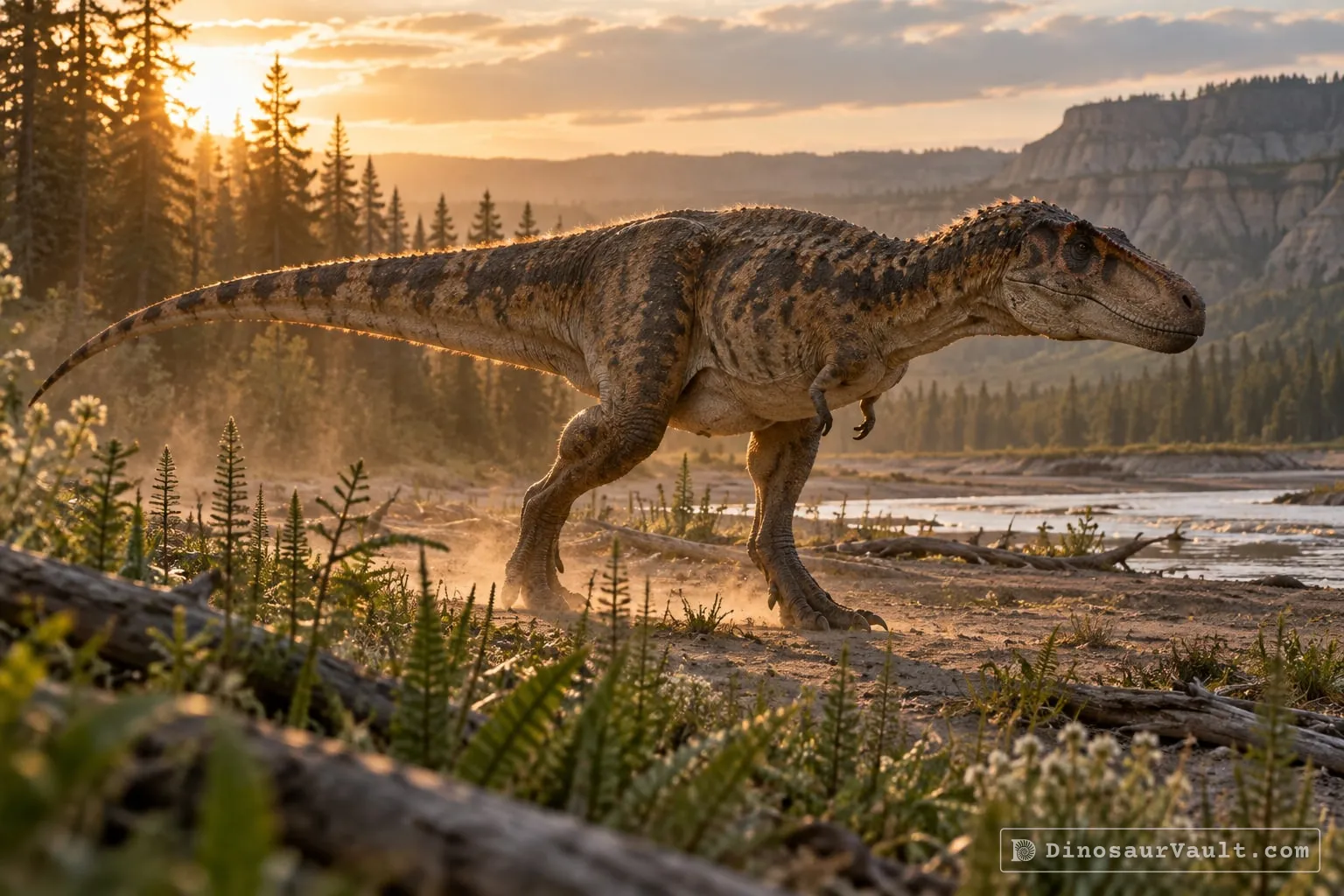
It lived on the river floodplains recorded by the Hell Creek Formation. Tyrannosaurus, Triceratops and Edmontosaurus lived in the same region.
Field notes
About Eoneophron
What it was like
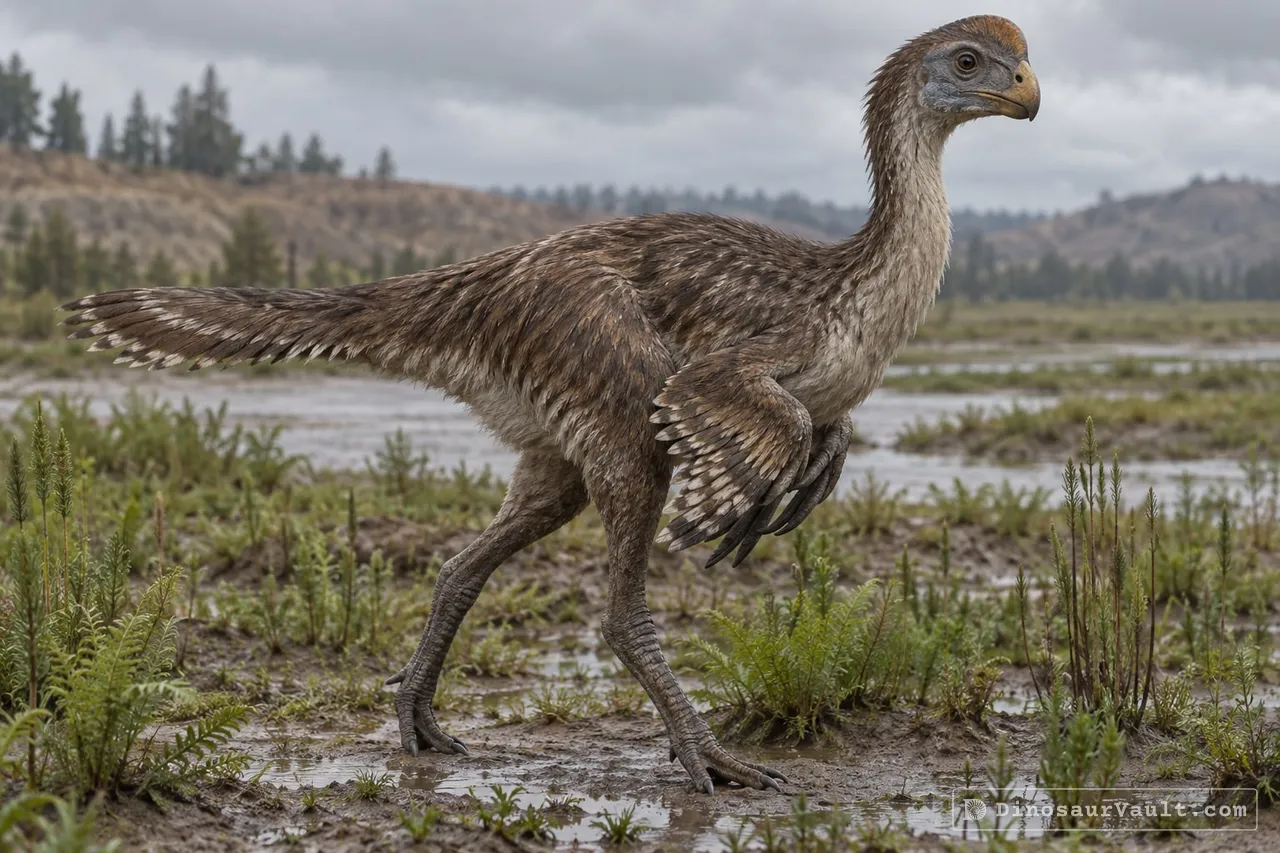
Eoneophron was a caenagnathid, a toothless, feathered relative of Oviraptor. It is known from a partial hind leg. It was about the size of a person, bigger than some of its close relatives.
Its world
It lived about 72 to 66 million years ago, at the very end of the Late Cretaceous, in what is now South Dakota. Its bones come from the Hell Creek Formation, where it shared the land with Tyrannosaurus, Triceratops and Edmontosaurus.
How it was found
Atkins-Weltman and colleagues named it in 2024. The type species is Eoneophron infernalis. Its name compares it to a kind of vulture.
Field gallery
More views of Eoneophron
Scenes reconstructed from the available fossil evidence.
1 of 2
Lived alongside
Found in the same rock formations
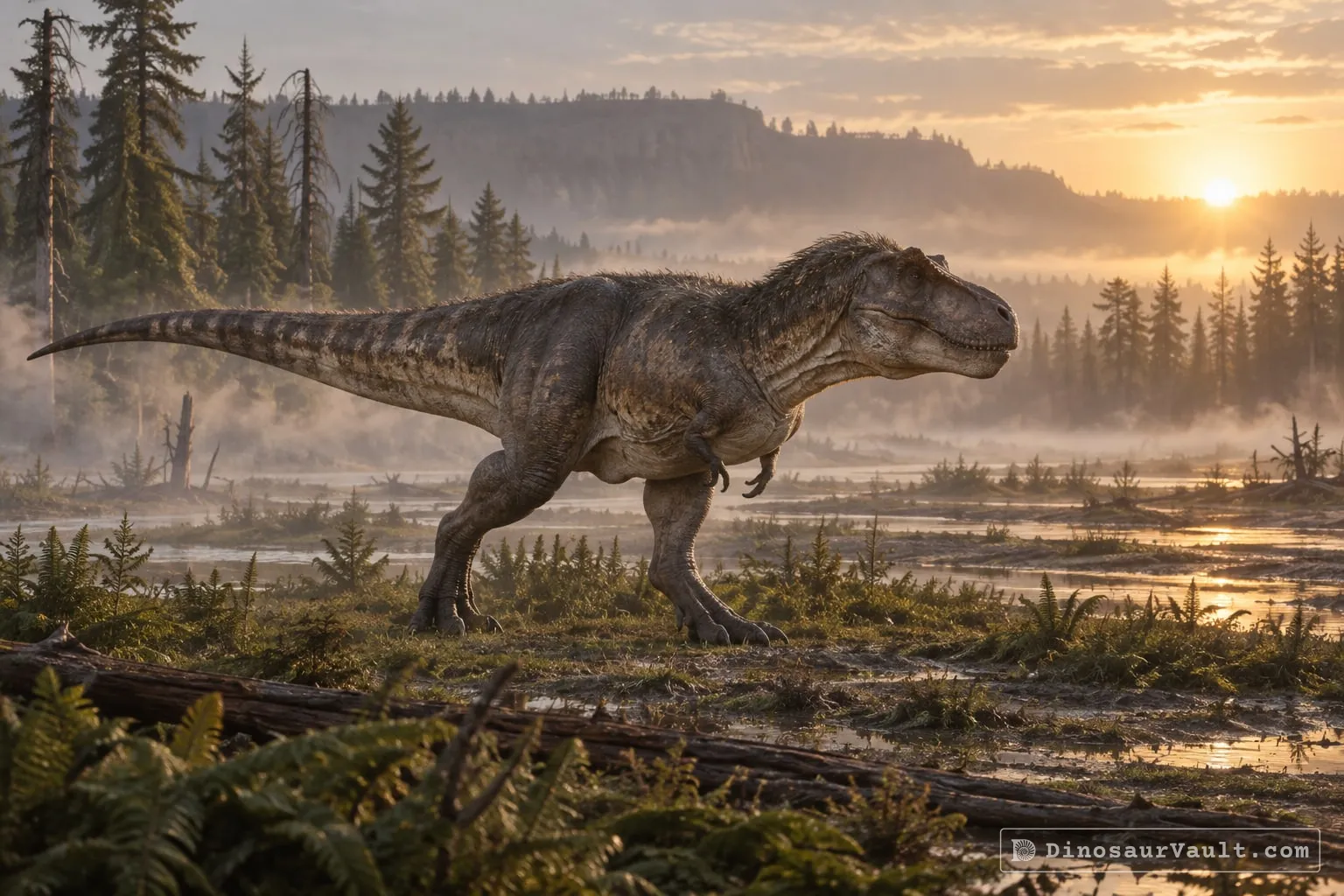
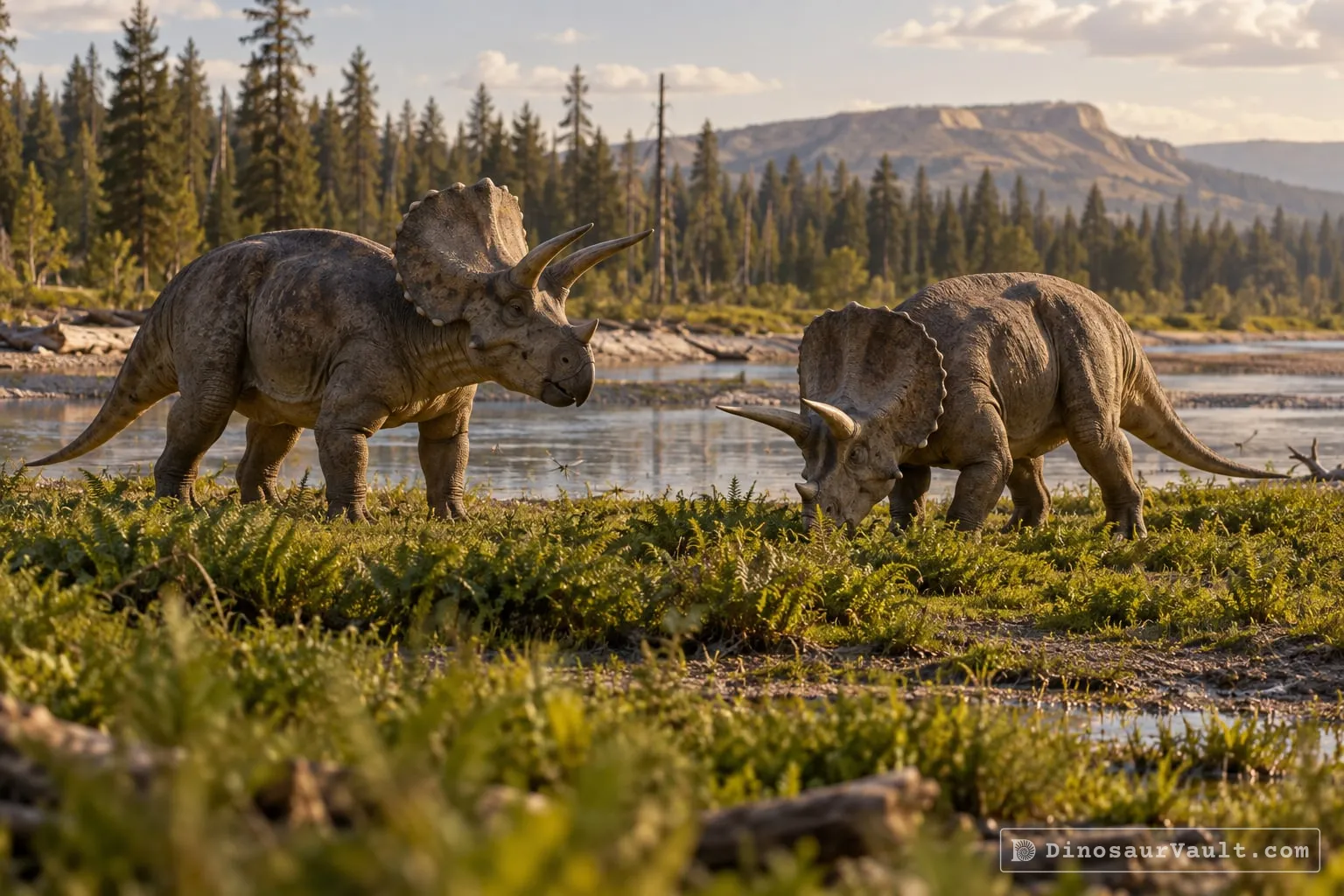
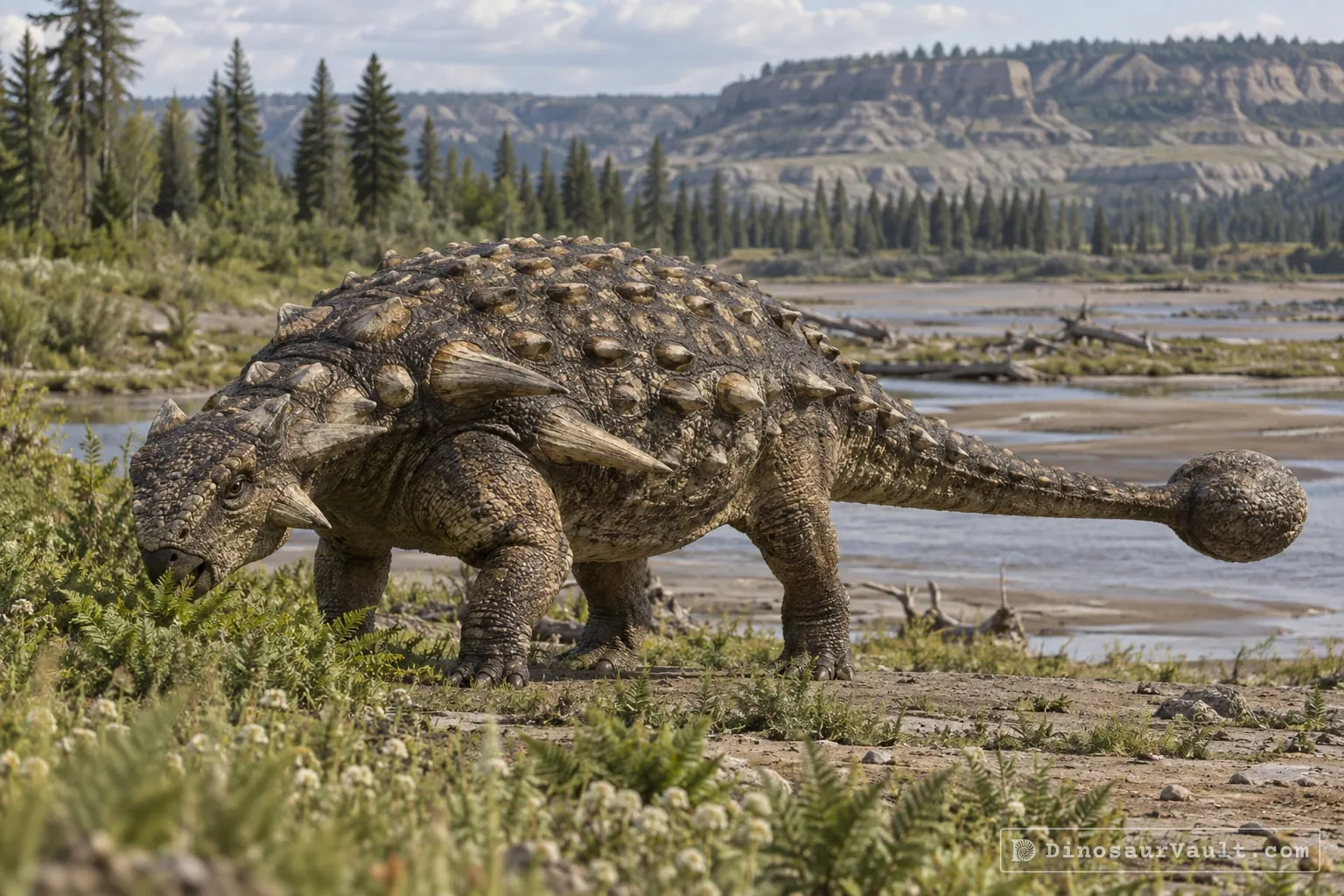
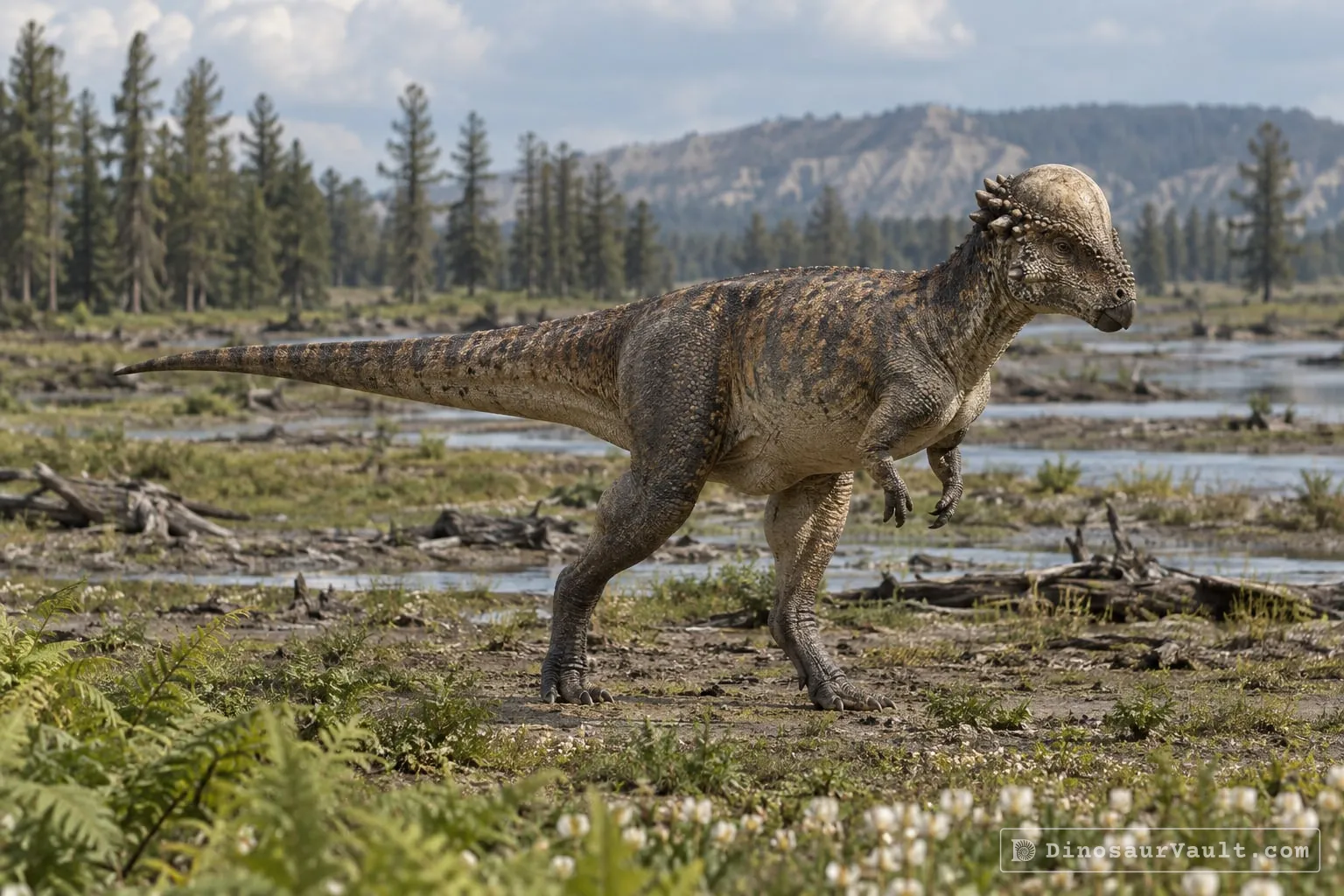
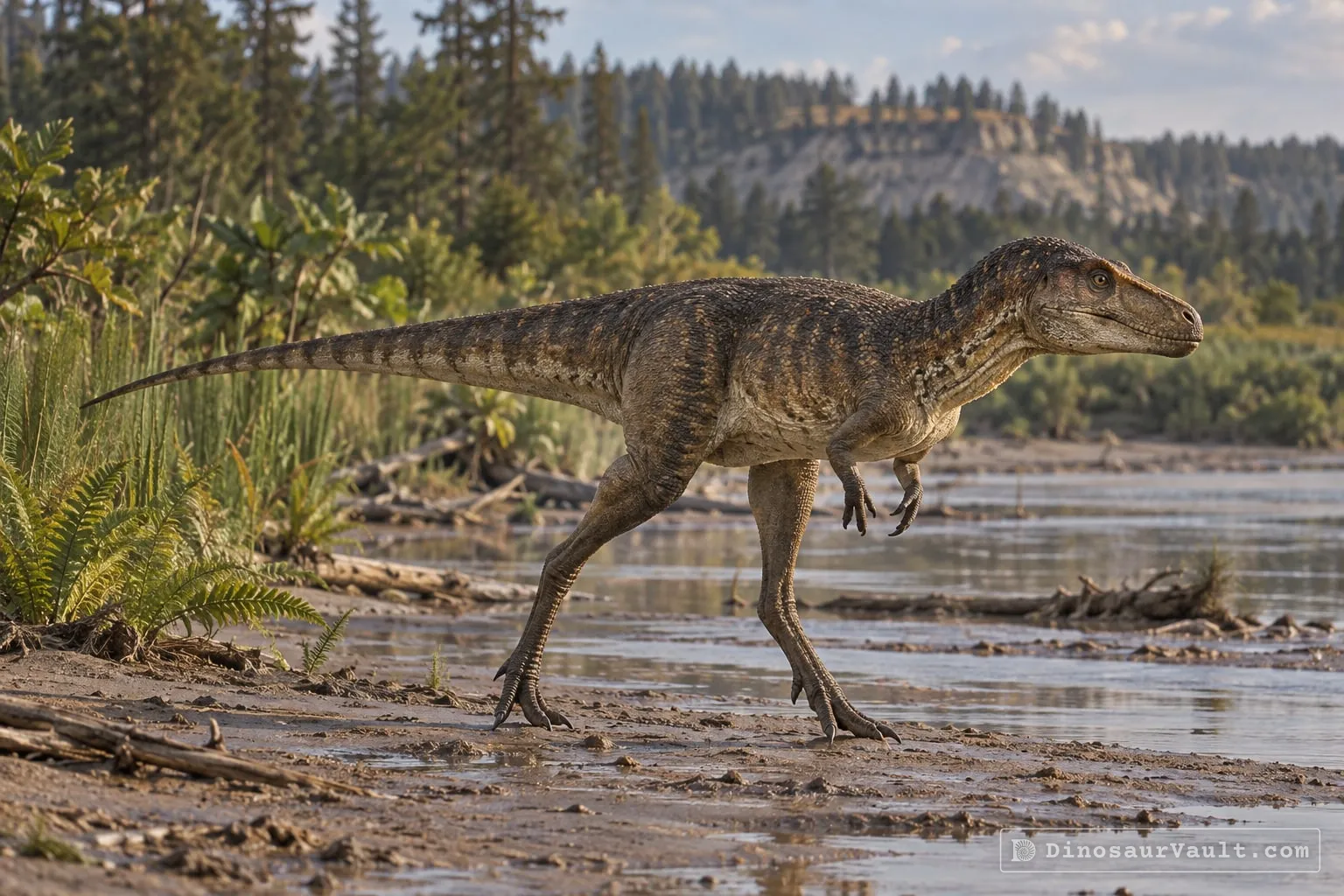
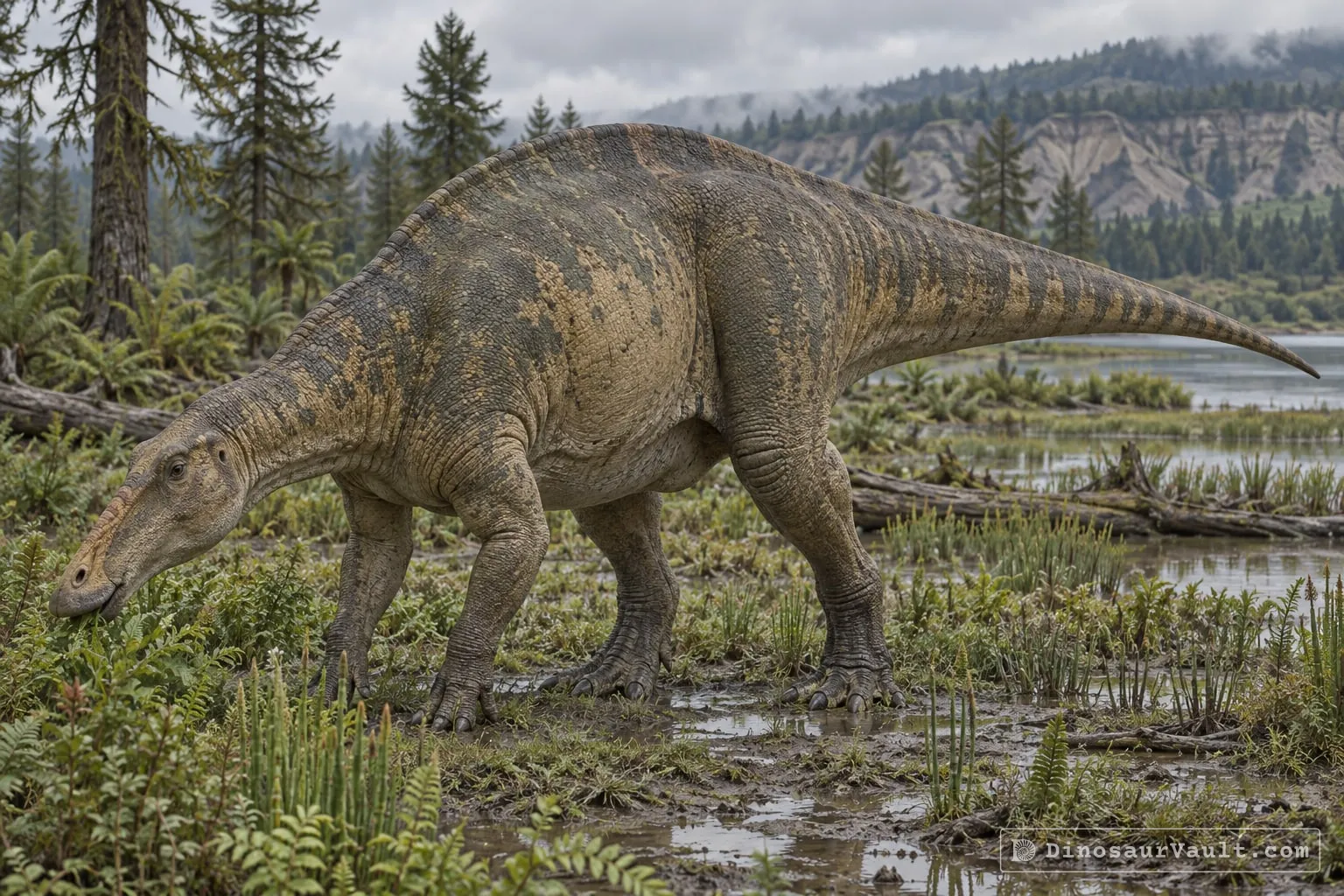
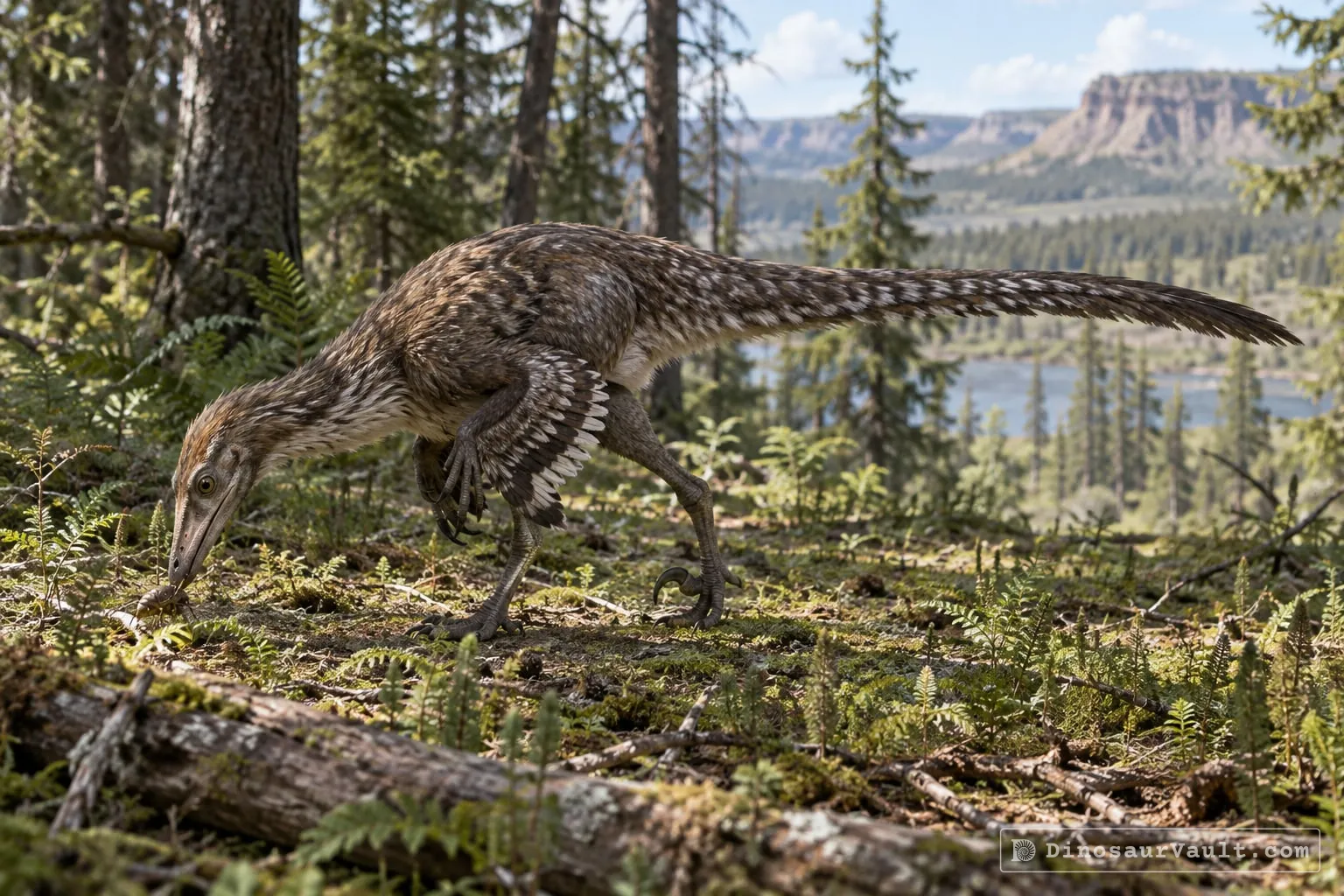


A rock formation can hold fossils laid down millions of years apart, so not every animal here met Eoneophron.
The evidence
The science behind Eoneophron
Which parts of the picture come from its own bones, and which come from its relatives.
From its own fossils
- A partial right hind leg includes the thighbone, shinbone, ankle and long bones of the foot.
- Its ankle bones were fused to the shinbone.
- Growth marks inside the bones show that this smaller relative of Anzu was approaching adult size.
Borrowed from relatives
- The missing head, neck and arms are restored by comparison with caenagnathids such as Anzu and Chirostenotes.
- A toothless beak is inferred from the jaws of other caenagnathids.
Still unknown
- The shape of its skull and whether it had a crest.
- Its feather colors.
- Which foods it ate.
Discovery timeline
- 2014Close relativeLamanna et al.
- 2020Growing upFunston
- 2024Named itAtkins-Weltman et al.
Key papers
The research behind what we know of Eoneophron
Close relative
Described Anzu from partial skeletons, revealing much of the body plan used to restore fragmentary caenagnathids.
A New Large-Bodied Oviraptorosaurian Theropod Dinosaur from the Latest Cretaceous of Western North America. PLoS ONE 9: e92022
Read the paper : A New Large-Bodied Oviraptorosaurian Theropod Dinosaur from the Latest Cretaceous of Western North America (opens in a new tab)Growing up
Used bone growth marks to distinguish mature caenagnathids of different sizes, including Citipes and Chirostenotes.
Caenagnathids of the Dinosaur Park Formation (Campanian) of Alberta, Canada: anatomy, osteohistology, taxonomy, and evolution. Vertebrate Anatomy Morphology Palaeontology 8: 105-153
Read the paper : Caenagnathids of the Dinosaur Park Formation (Campanian) of Alberta, Canada: anatomy, osteohistology, taxonomy, and evolution (opens in a new tab)Named it
Used hind-leg anatomy and bone growth marks to identify a smaller caenagnathid distinct from Anzu.
A new oviraptorosaur (Dinosauria: Theropoda) from the end-Maastrichtian Hell Creek Formation of North America. PLOS ONE 19: e0294901
Read the paper : A new oviraptorosaur (Dinosauria: Theropoda) from the end-Maastrichtian Hell Creek Formation of North America (opens in a new tab)
Close relatives
Other members of Caenagnathidae


Sources: Wikidata