Outline: a typical theropod
Beibeilong
"baby dragon"
Type species Beibeilong sinensis
- Lived
- 101 to 90 million years ago, Late Cretaceous
- Diet
- Omnivore
- Group
- Theropods, Caenagnathidae
- Found in
- China
- Named by
- Pu et al. 2017
Where its fossils were found
The evidence
Today
95 million years ago
Field notes
About Beibeilong
What it was like
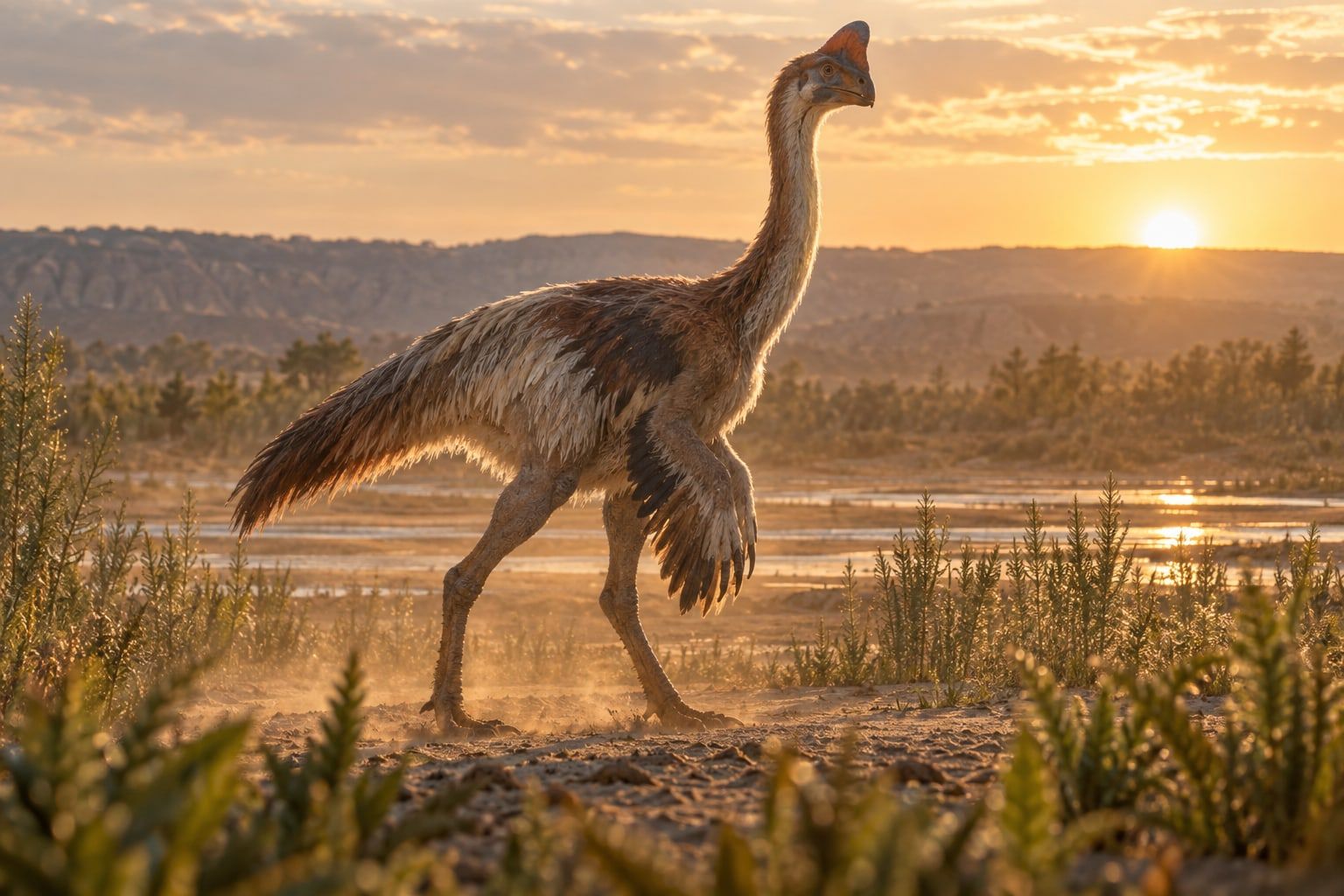
Beibeilong was a giant caenagnathid, a toothless, feathered relative of Oviraptor. It is known from an embryo curled inside one of several huge eggs in a nest. The adults were probably giants like Gigantoraptor, among the largest bird-like dinosaurs.
Its world
It lived in the Late Cretaceous in what is now China. Its fossils come from the Gaogou Formation.
How it was found
The nest and embryo were collected by farmers years before it was named. Pu and colleagues named it in 2017. The type species is Beibeilong sinensis.
Close relatives
Other members of Caenagnathidae
Sources: WikidataNamed in: H. Pu, D. K. Zelenitsky, and J. Lü, P. J. Currie, K. Carpenter, L. Xu, E. B. Koppelhus, S. Jia, L. Xiao, H. Chuang, T. Li, M. Kundrát, C. Shen. 2017. Perinate and eggs of a giant caenagnathid dinosaur from the Late Cretaceous of central China. Nature Communications 8:14952:1-9