Pachycephalosaurus
pak-ee-SEF-uh-loh-SORE-us
"thick-headed lizard"
Type species Pachycephalosaurus wyomingensis
- Lived
- 72 to 66 million years ago, Late Cretaceous
- Diet
- Herbivore
- Length
- about 4.5 m (15 ft)
- Group
- Pachycephalosaurs
- Found in
- United States
- Named by
- Brown and Schlaikjer 1943
Size comparison
To scale
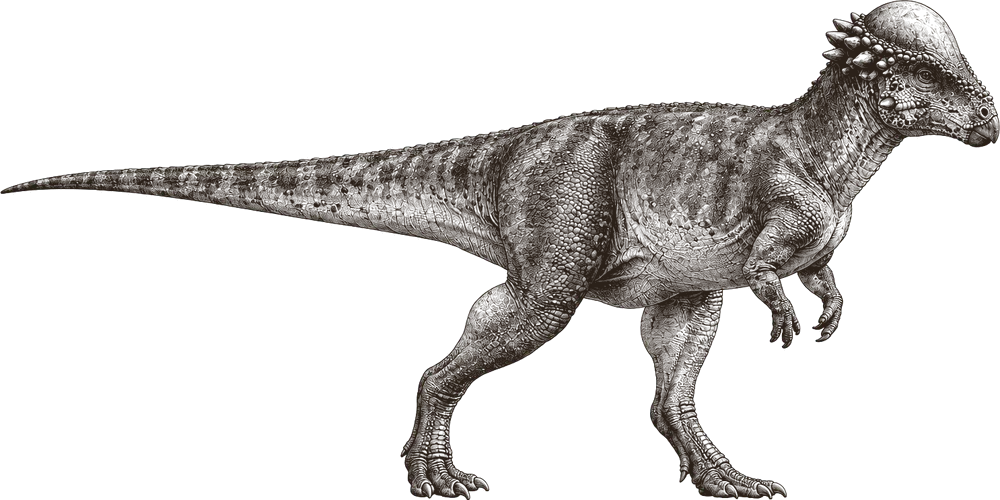


Scale in meters
Where its fossils were found
The evidence
Today

70 million years ago
Also reported from Canada.
Habitat
Rivers wound through the wooded Hell Creek floodplains, where flowering plants and conifers grew. Triceratops, Tyrannosaurus and Ornithomimus inhabited the region.
Field notes
About Pachycephalosaurus
A thick-skulled plant-eater
Pachycephalosaurus was a plant-eater that walked on two legs and carried an unusually thick, dome-shaped skull roof, framed by small bony knobs and spikes around the back and sides. It grew to roughly 4.5 meters long. Its legs were long and strong, and its arms were short, with five-fingered hands.
Scientists have debated what the thick skull was for. Some think males rammed or shoved each other with it, similar to how some horned mammals fight today. Others argue the skull was not built to survive hard, head-on impacts, so the true use of the dome is still unresolved.
Its world
Pachycephalosaurus lived at the very end of the Cretaceous, between about 72 and 66 million years ago, shortly before the extinction event that ended the age of non-avian dinosaurs. Its fossils come from Montana, Wyoming, South Dakota, Colorado, and North Dakota in the United States, and from Alberta in Canada, preserved in rock layers such as the Hell Creek, Lance, Ferris, Denver, and Dinosaur Park formations. It lived alongside Tyrannosaurus, Triceratops, Troodon, and the small hunters Dromaeosaurus and Ornithomimus.
How it was found
Brown and Schlaikjer named Pachycephalosaurus in 1943, working from a skull recovered in the northern United States. The type species is Pachycephalosaurus wyomingensis. Since then, 31 separate finds have added new skulls and skeletal material, though no single Pachycephalosaurus skeleton found so far is complete, so parts of its body are still known only from related pachycephalosaurs such as Stegoceras, Homalocephale, and Prenocephale.
Field gallery
More views of Pachycephalosaurus
Scenes reconstructed from the available fossil evidence.
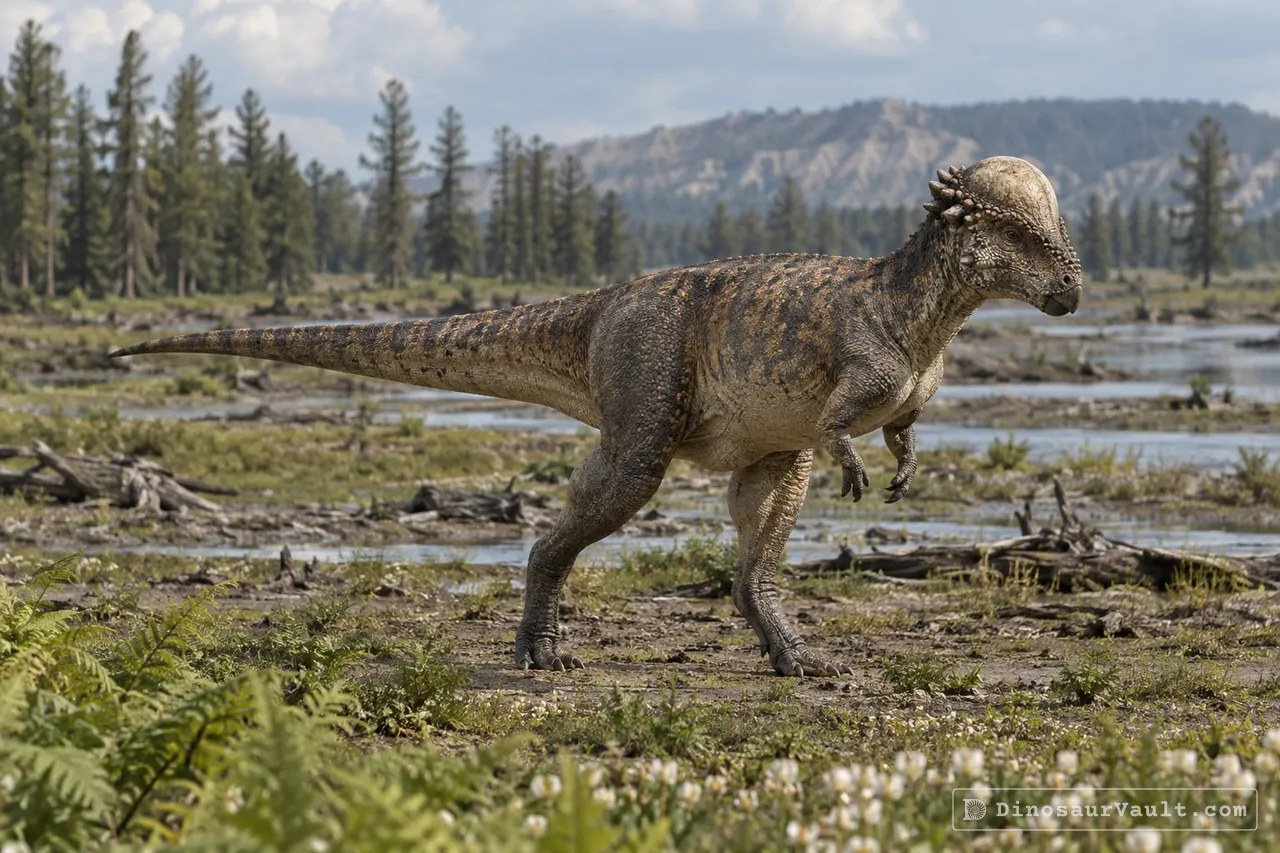
1 of 7
Lived alongside
Found in the same rock formations
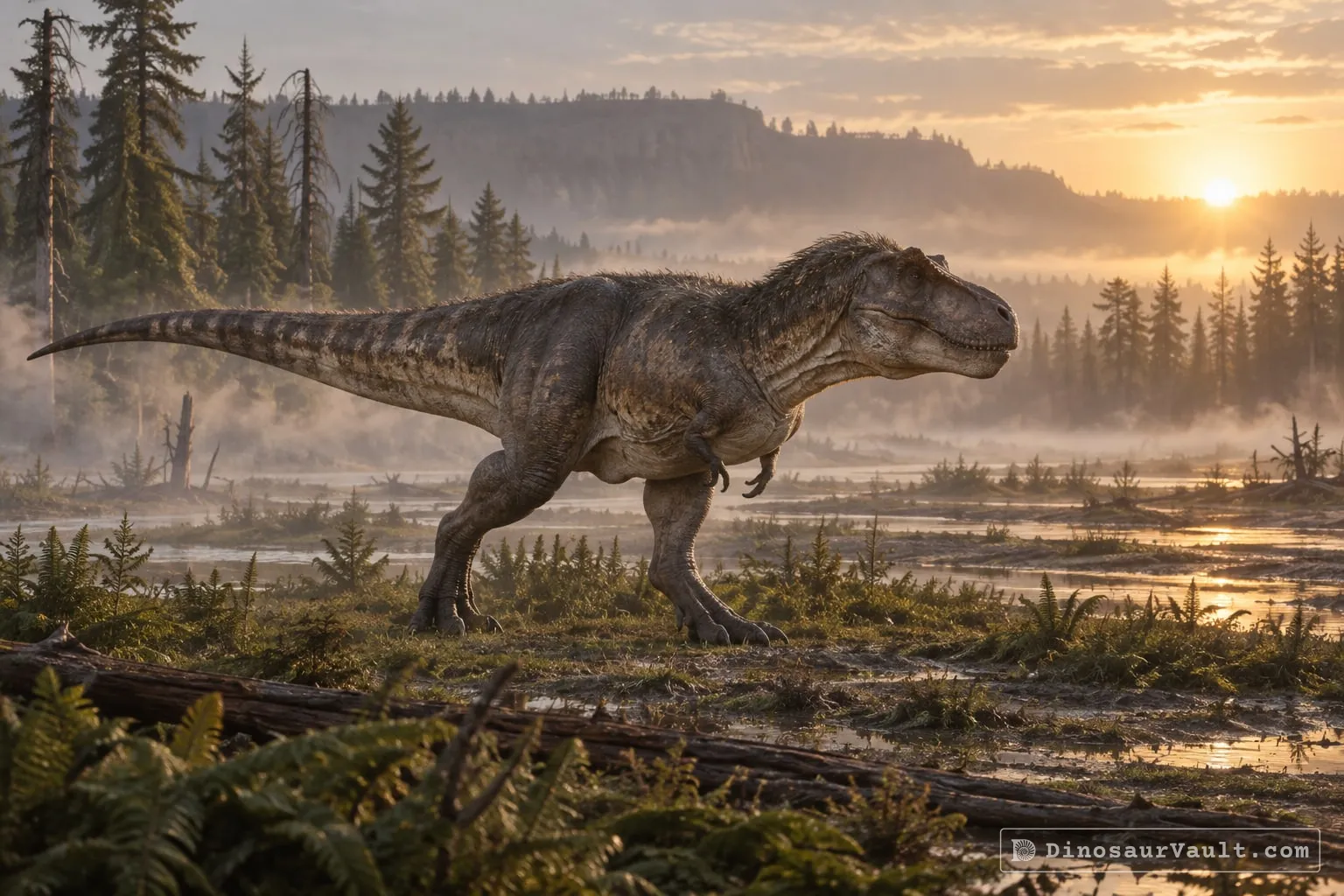
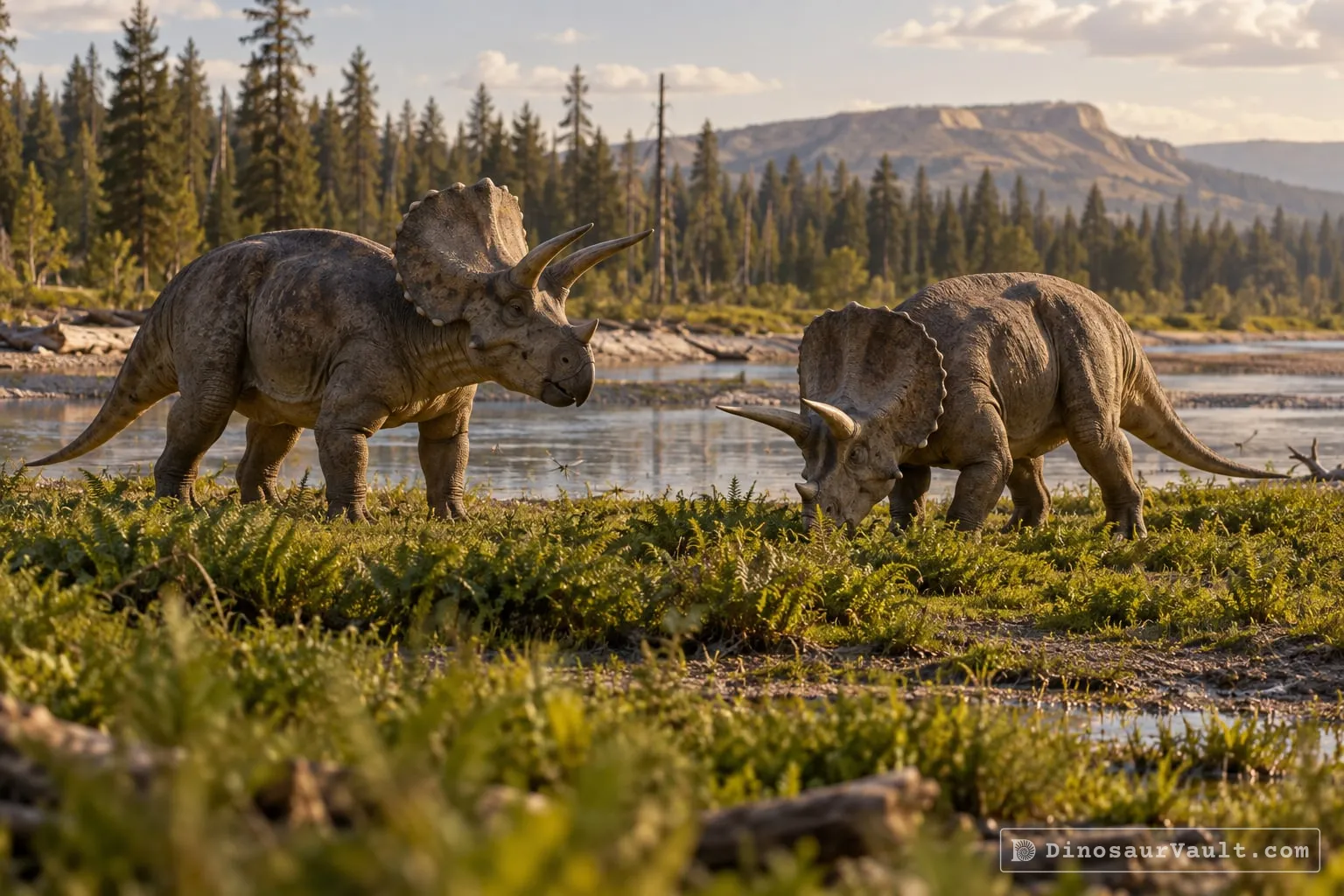
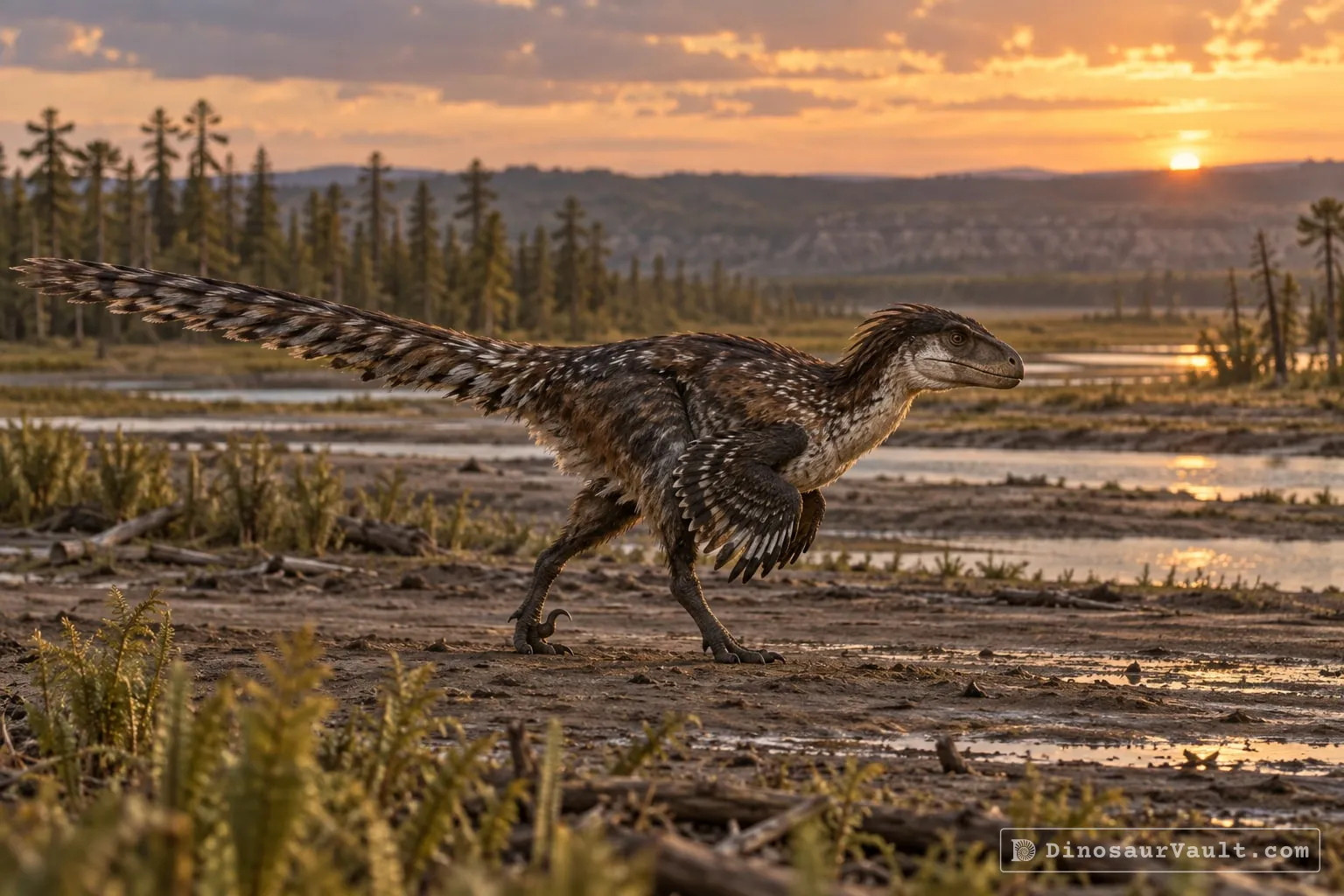
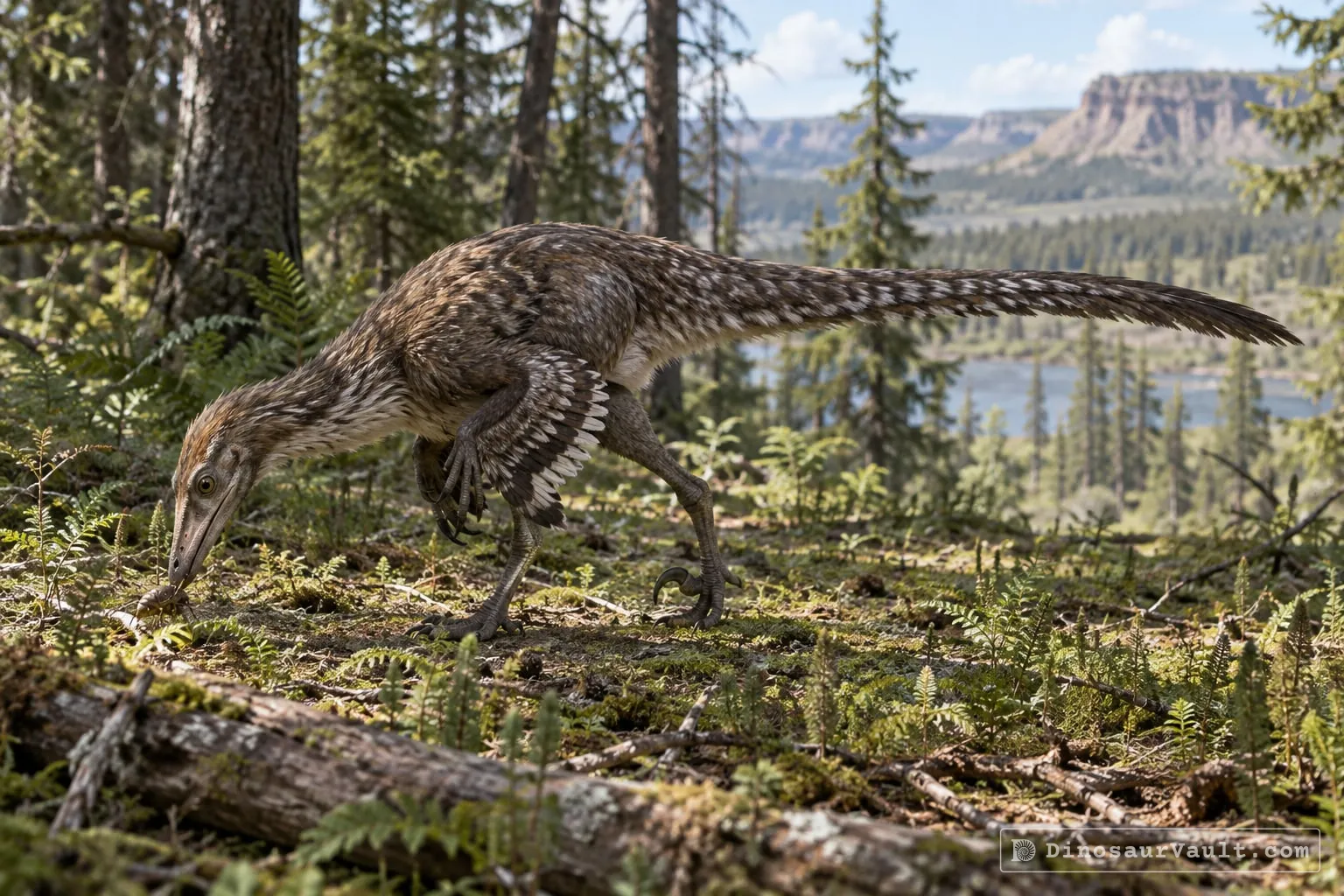
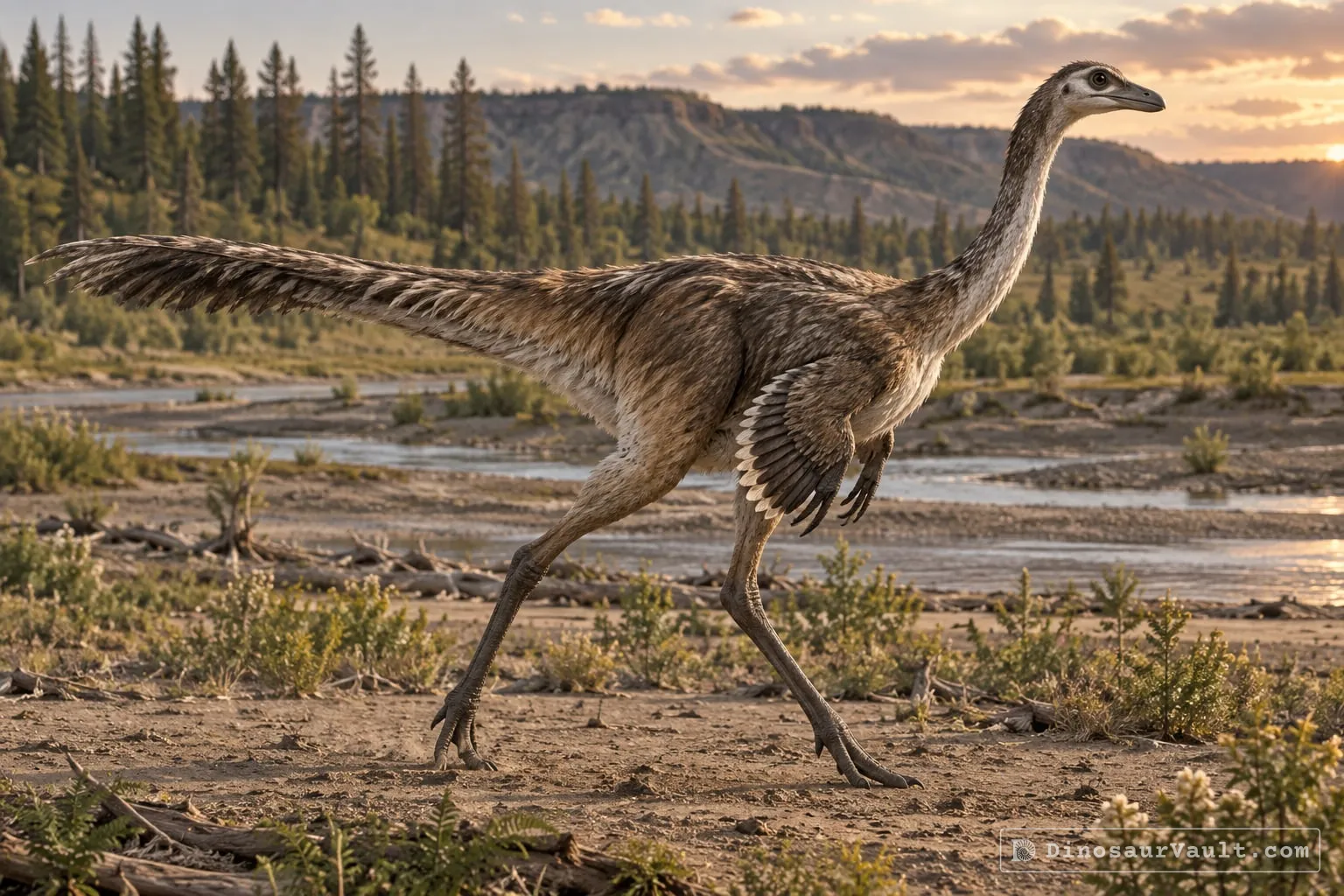
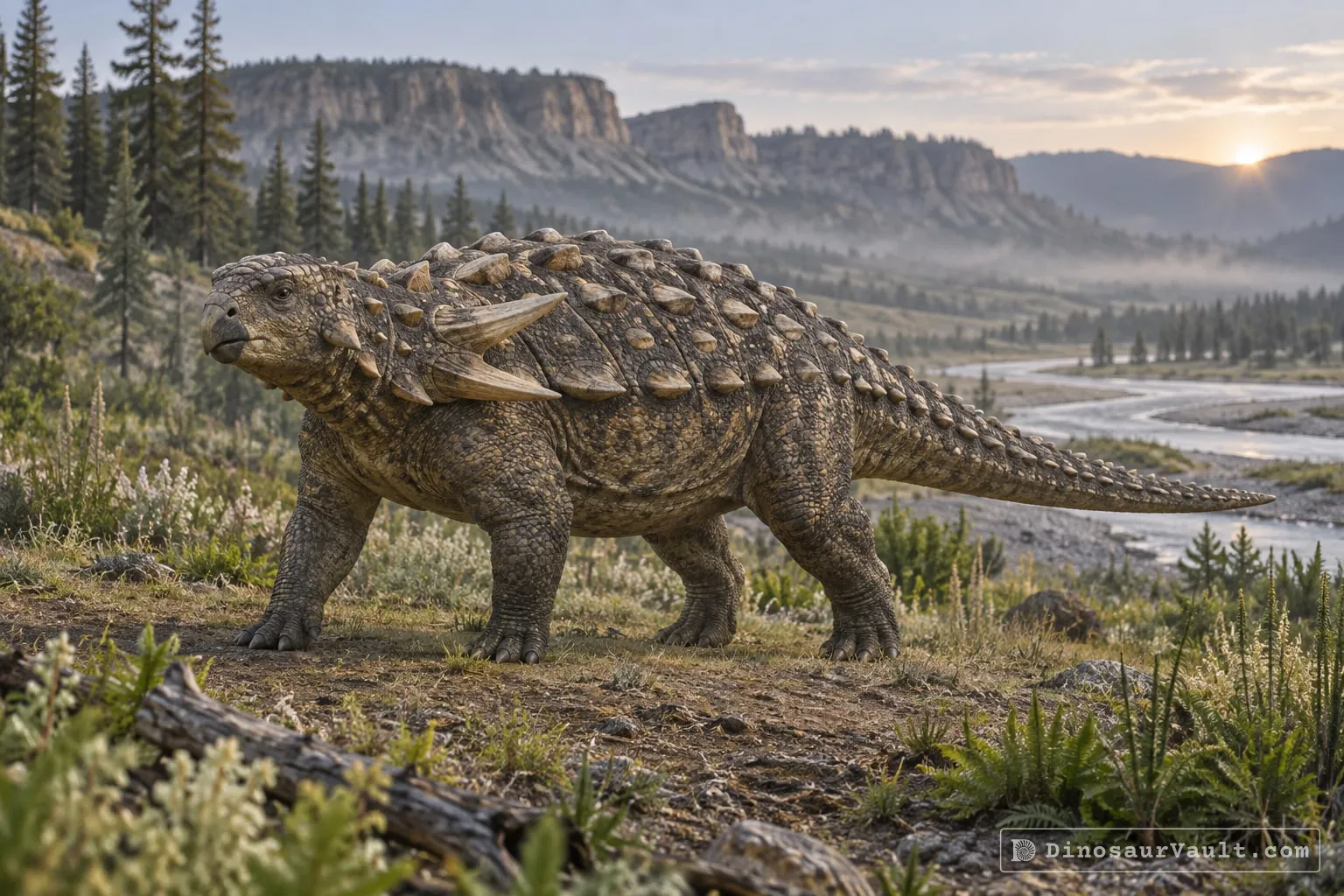


A rock formation can hold fossils laid down millions of years apart, so not every animal here met Pachycephalosaurus.
The evidence
The science behind Pachycephalosaurus
Which parts of the picture come from its own bones, and which come from its relatives.
From its own fossils
- Skulls show a thick, rounded dome with small bony knobs around the back and sides.
- Cuts through adult domes reveal dense bone inside.
- Some domes carry damaged areas interpreted as injuries and bone infections.
Borrowed from relatives
- Much of the body is restored from more complete relatives such as Stegoceras and Homalocephale.
- Those relatives guide the short arms, strong hindlegs and stiff balancing tail.
Still unknown
- Whether flatter or more heavily horned skulls belong to young Pachycephalosaurus or separate animals.
- Whether it struck heads, shoved rivals or used the dome mainly for display.
- Its color and skin covering.
Often drawn wrong
- Adults had small bumps around the dome, rather than a crown of long spikes.
- It had no ceratopsian frill or large brow horns.
Discovery timeline
- 1943Named itBrown & Schlaikjer
- 2009Growing upHorner & Goodwin
- 2012SkullPeterson & Vittore
- 2013SkullPeterson, Dischler & Longrich
- 2014Same rocksScannella et al.
Key papers
The research behind what we know of Pachycephalosaurus
Named it
Established Pachycephalosaurus as a genus from its unusually thick, domed skull.
A study of the troödont dinosaurs with the description of a new genus and four new species. Bulletin of the American Museum of Natural History 82: 115-150
No link available
Growing up
Compared skull shapes and bone growth, proposing that flatter and more heavily horned skulls were younger stages of Pachycephalosaurus.
Extreme Cranial Ontogeny in the Upper Cretaceous Dinosaur Pachycephalosaurus. PLoS ONE 4: e7626
Read the paper : Extreme Cranial Ontogeny in the Upper Cretaceous Dinosaur Pachycephalosaurus (opens in a new tab)Skull
Described damaged bone on a Pachycephalosaurus dome and interpreted it as injury followed by infection.
Cranial Pathologies in a Specimen of Pachycephalosaurus. PLoS ONE 7: e36227
Read the paper : Cranial Pathologies in a Specimen of Pachycephalosaurus (opens in a new tab)Skull
Found injuries concentrated on the tops of domes, supporting the idea that dome-headed dinosaurs used their heads in fights.
Distributions of Cranial Pathologies Provide Evidence for Head-Butting in Dome-Headed Dinosaurs (Pachycephalosauridae). PLoS ONE 8: e68620
Read the paper : Distributions of Cranial Pathologies Provide Evidence for Head-Butting in Dome-Headed Dinosaurs (Pachycephalosauridae) (opens in a new tab)Same rocks
Tracked changes in Triceratops through the Hell Creek rocks, helping place this neighbor of Pachycephalosaurus in time.
Evolutionary trends in Triceratops from the Hell Creek Formation, Montana. Proceedings of the National Academy of Sciences 111: 10245-10250
Read the paper : Evolutionary trends in Triceratops from the Hell Creek Formation, Montana (opens in a new tab)
Close relatives
Other members of Eupachycephalosauria


Sources: Wikidata