Dinheirosaurus
"Porto Dinheiro lizard"
Type species Dinheirosaurus lourinhanensis
- Lived
- 152 to 149 million years ago, Late Jurassic
- Diet
- Herbivore
- Group
- Sauropods, Diplodocidae
- Found in
- Portugal
- Named by
- Bonaparte and Mateus 1999
Where its fossils were found
The evidence
Today

150 million years ago
Habitat
Rivers crossed muddy floodplains in Late Jurassic Portugal. Its neighbors included Allosaurus, Torvosaurus and Dacentrurus.
Field notes
About Dinheirosaurus
What it was like
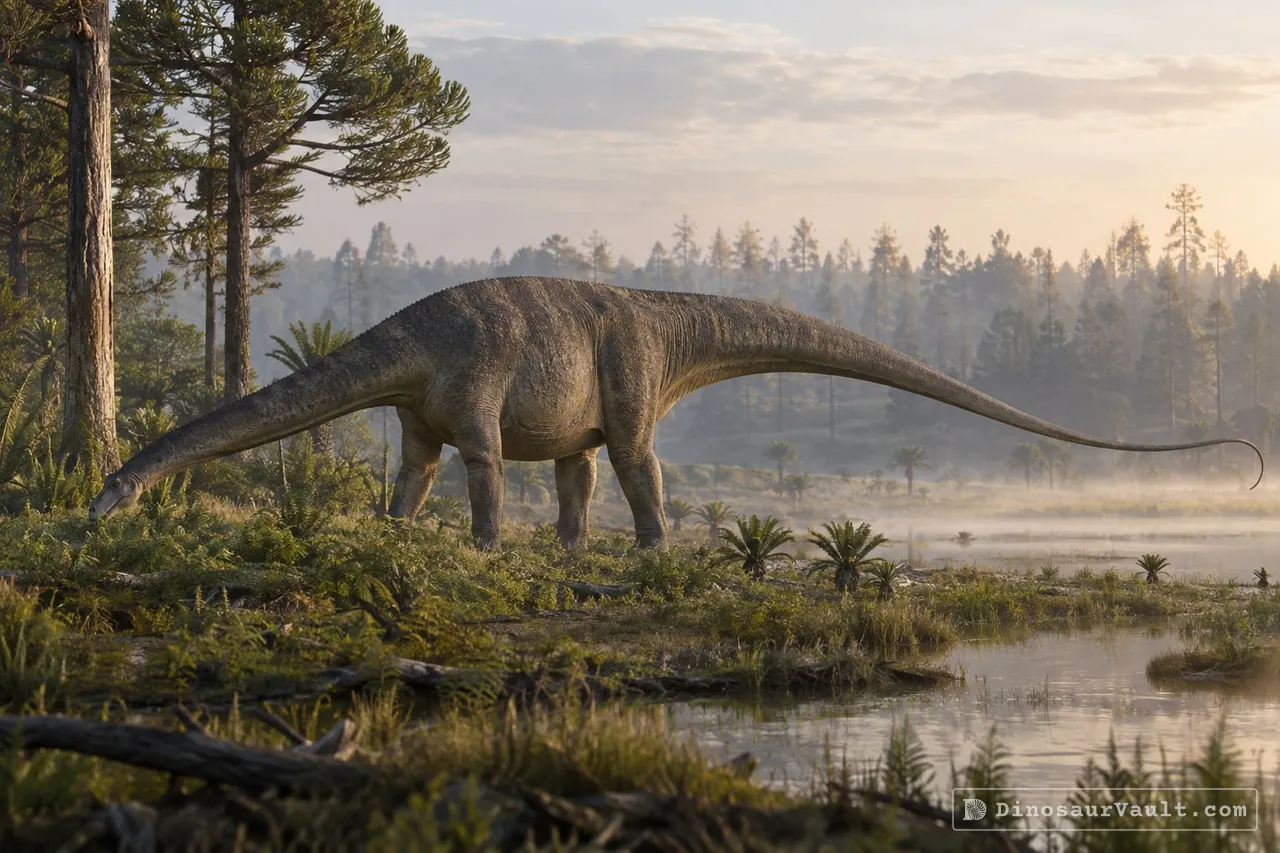
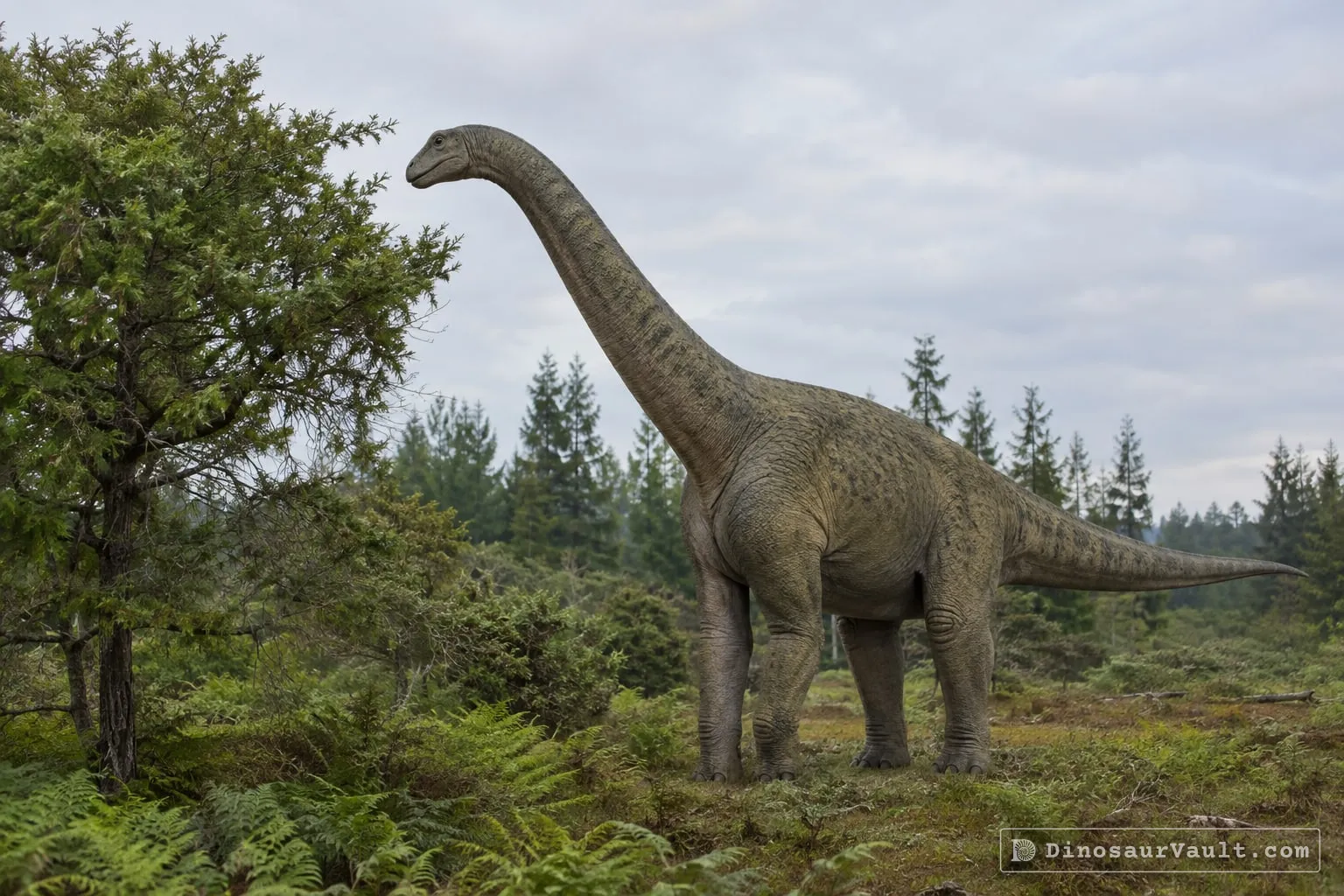
Dinheirosaurus was a long-necked, whip-tailed sauropod from the same family as Diplodocus. It is known from bones of the neck and back. Some scientists think it may belong to Supersaurus.
Its world
It lived in the Late Jurassic in what is now Portugal. Its bones come from the Lourinhã Formation, where it shared the land with the predators Allosaurus and Torvosaurus, the stegosaur Dacentrurus and the sauropod Lusotitan.
How it was found
Bonaparte and Mateus named it in 1999. The type species is Dinheirosaurus lourinhanensis. It is named after the beach where it was found.
Field gallery
More views of Dinheirosaurus
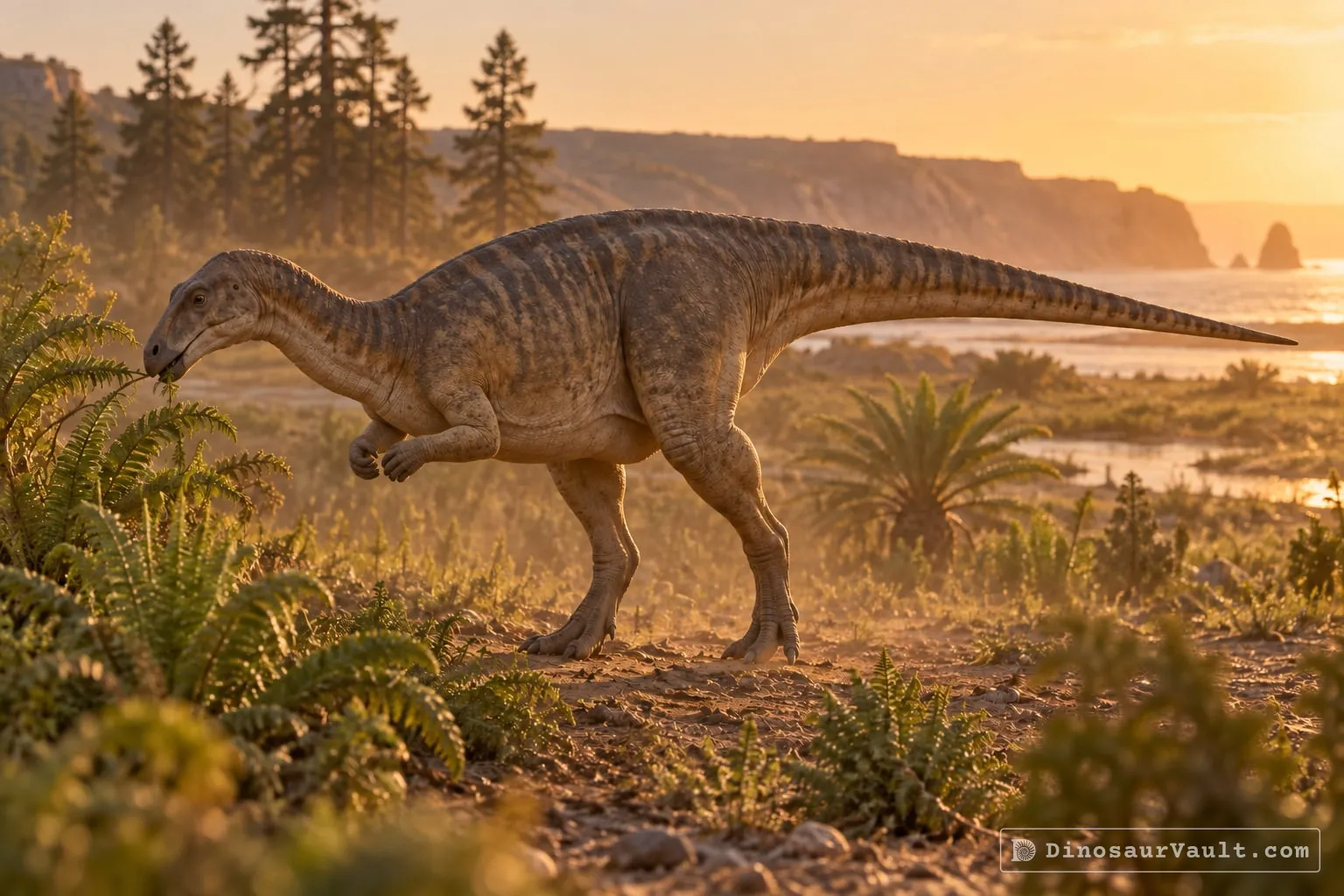
Scenes reconstructed from the available fossil evidence.
Lived alongside
Found in the same rock formations
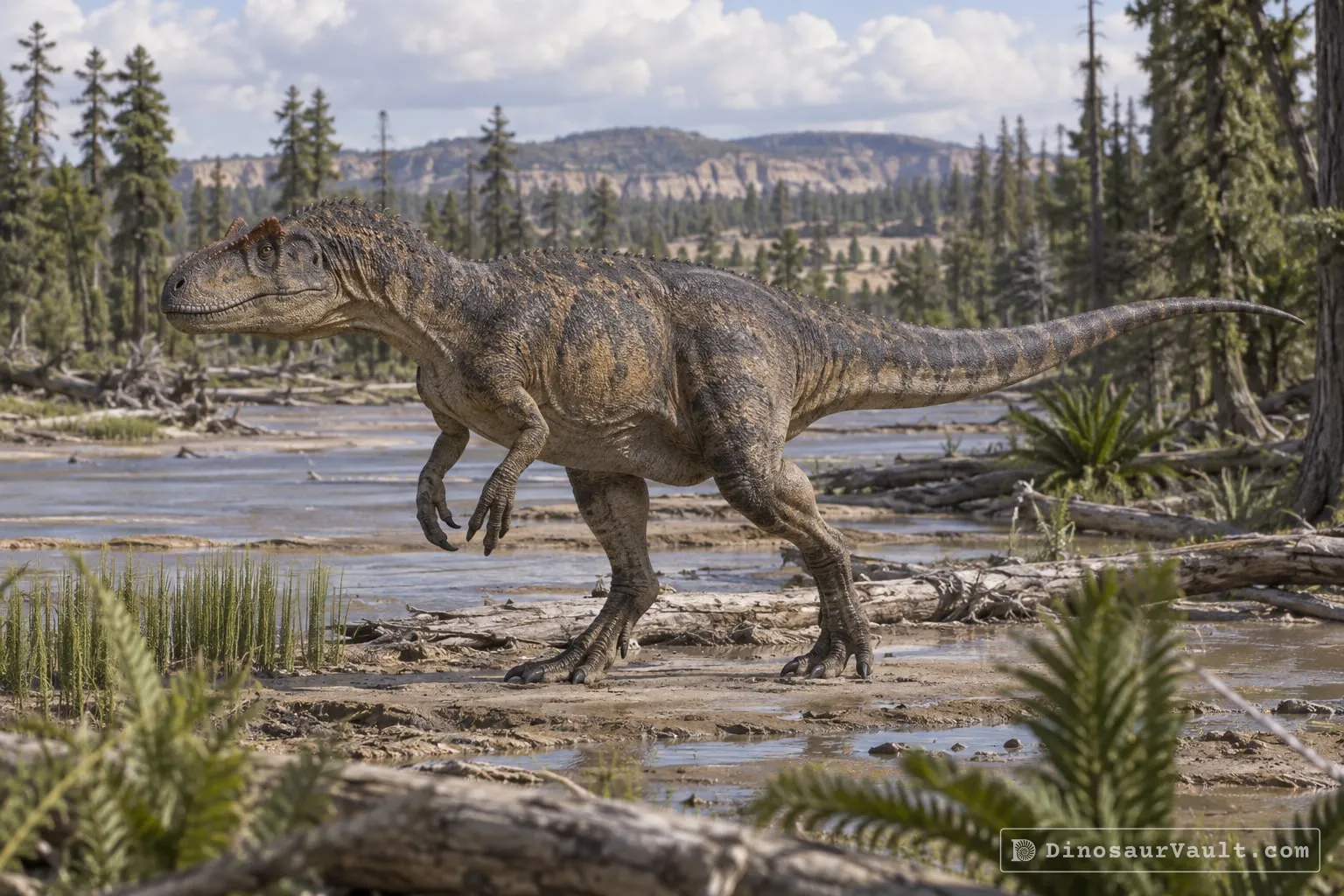
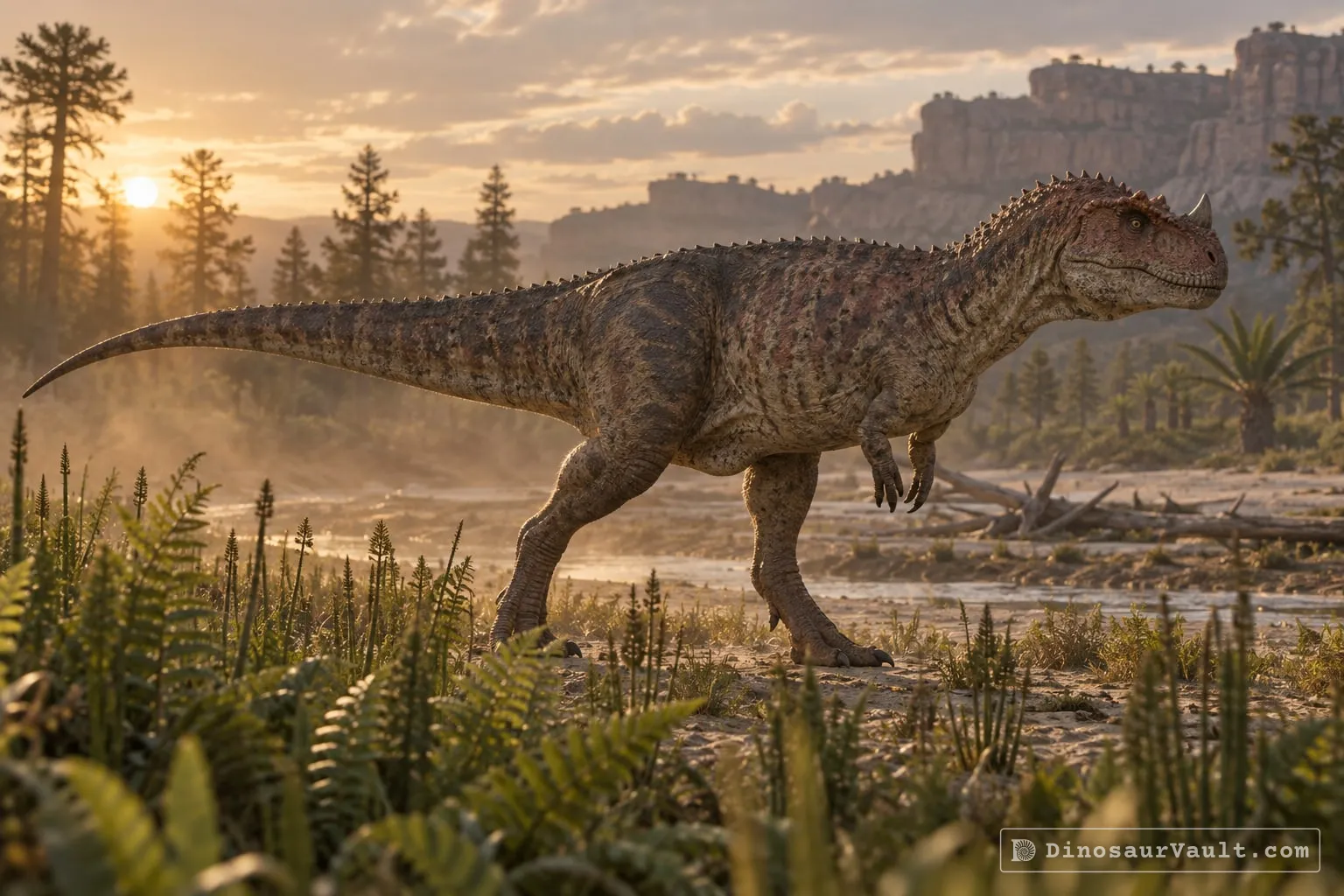
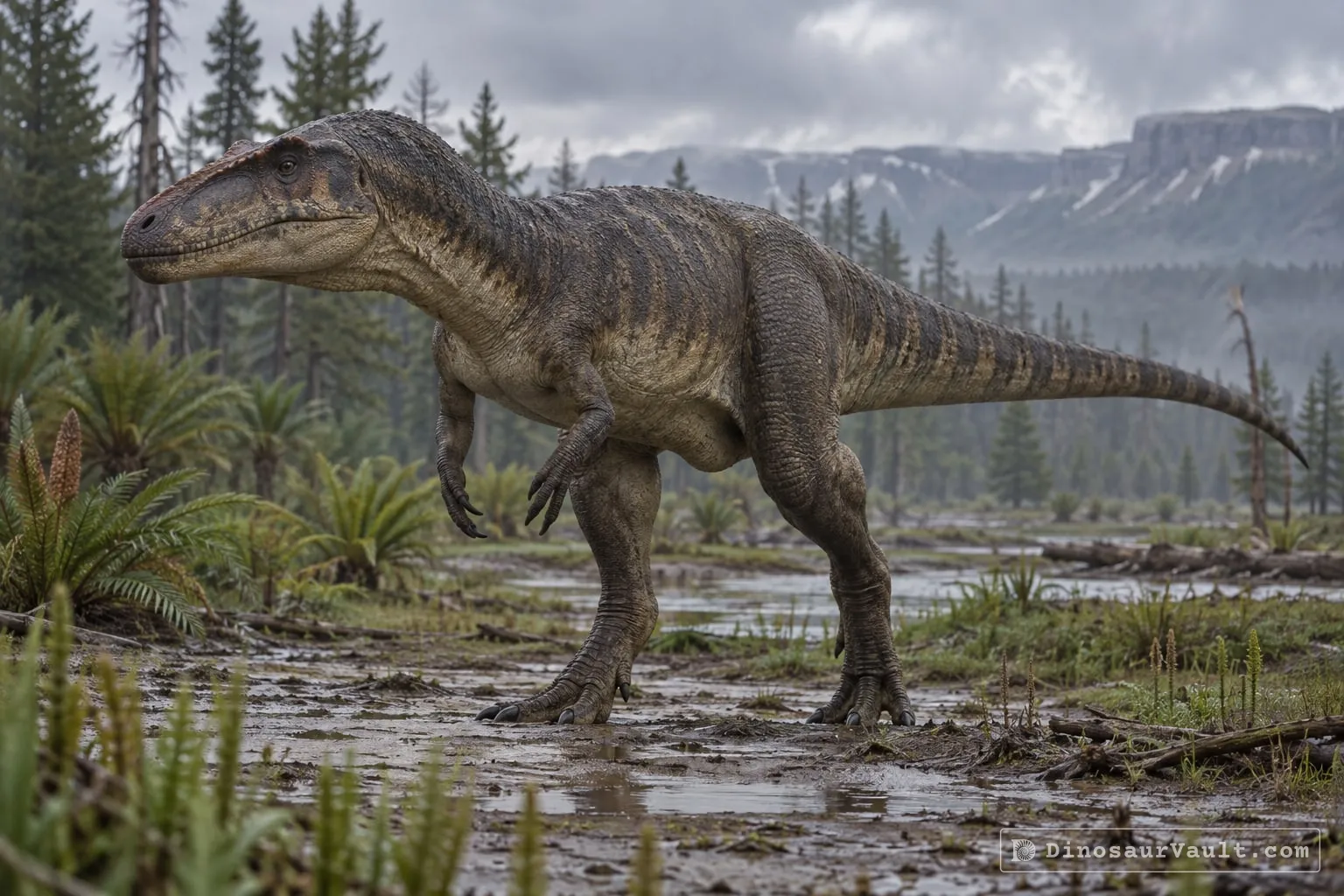
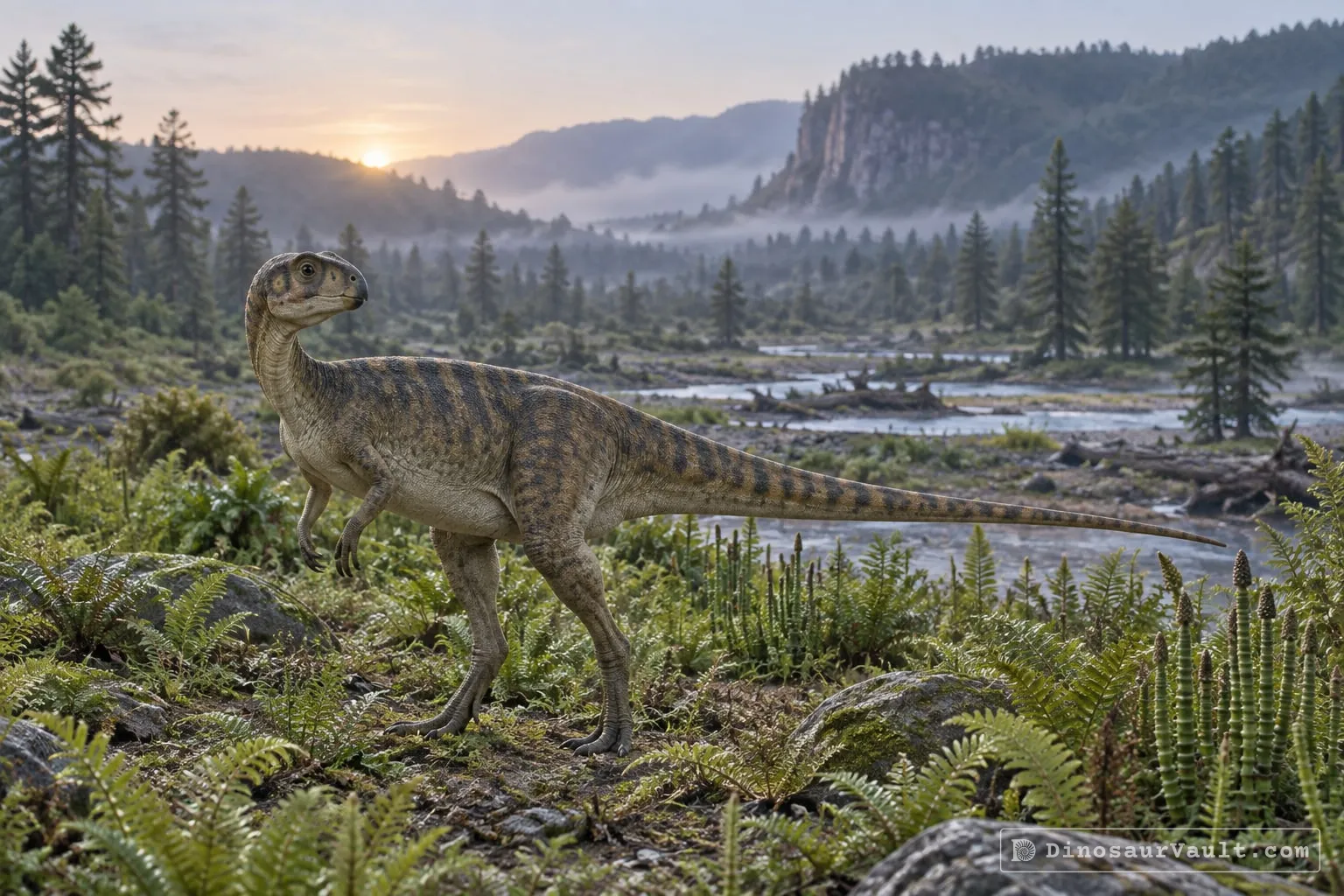
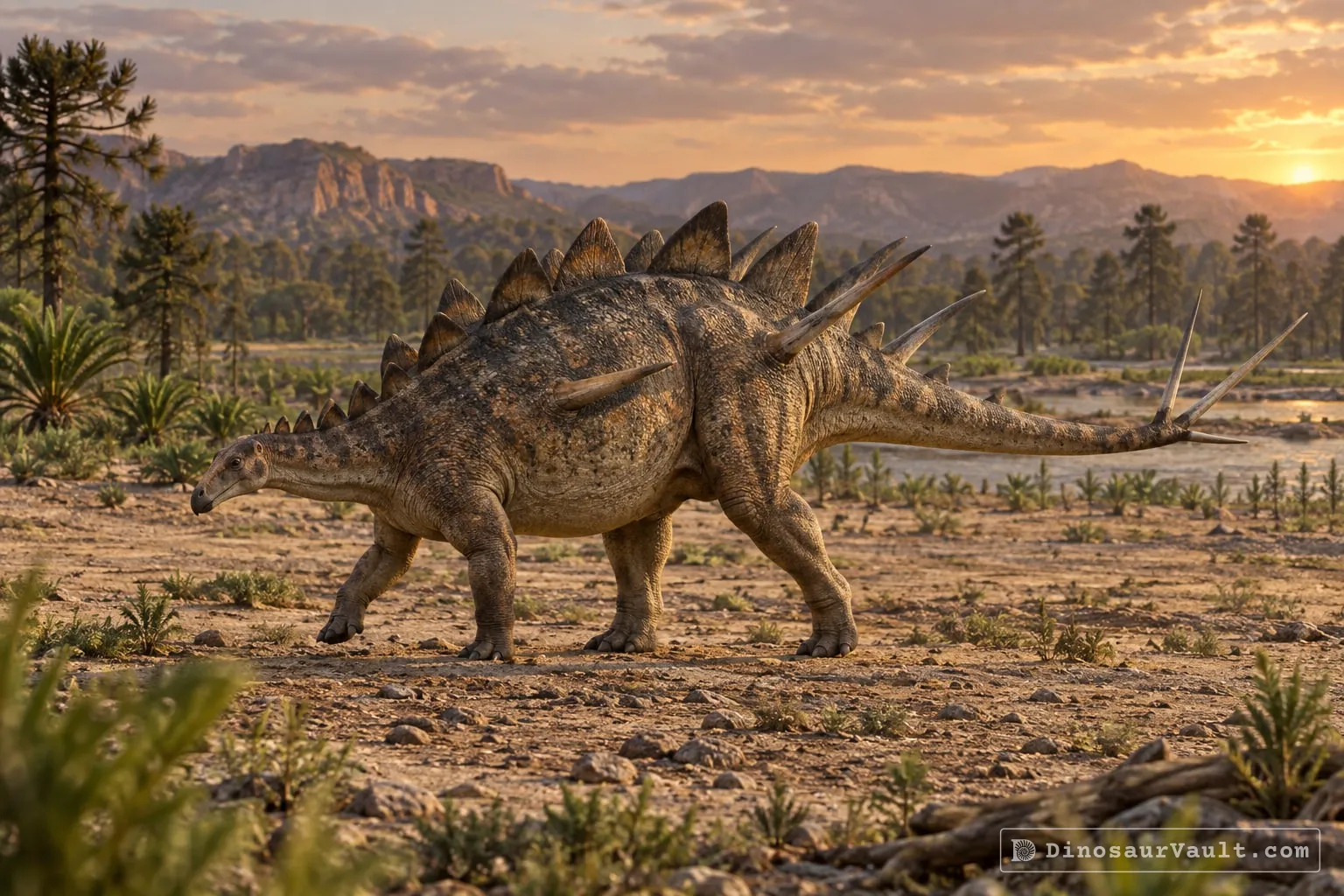
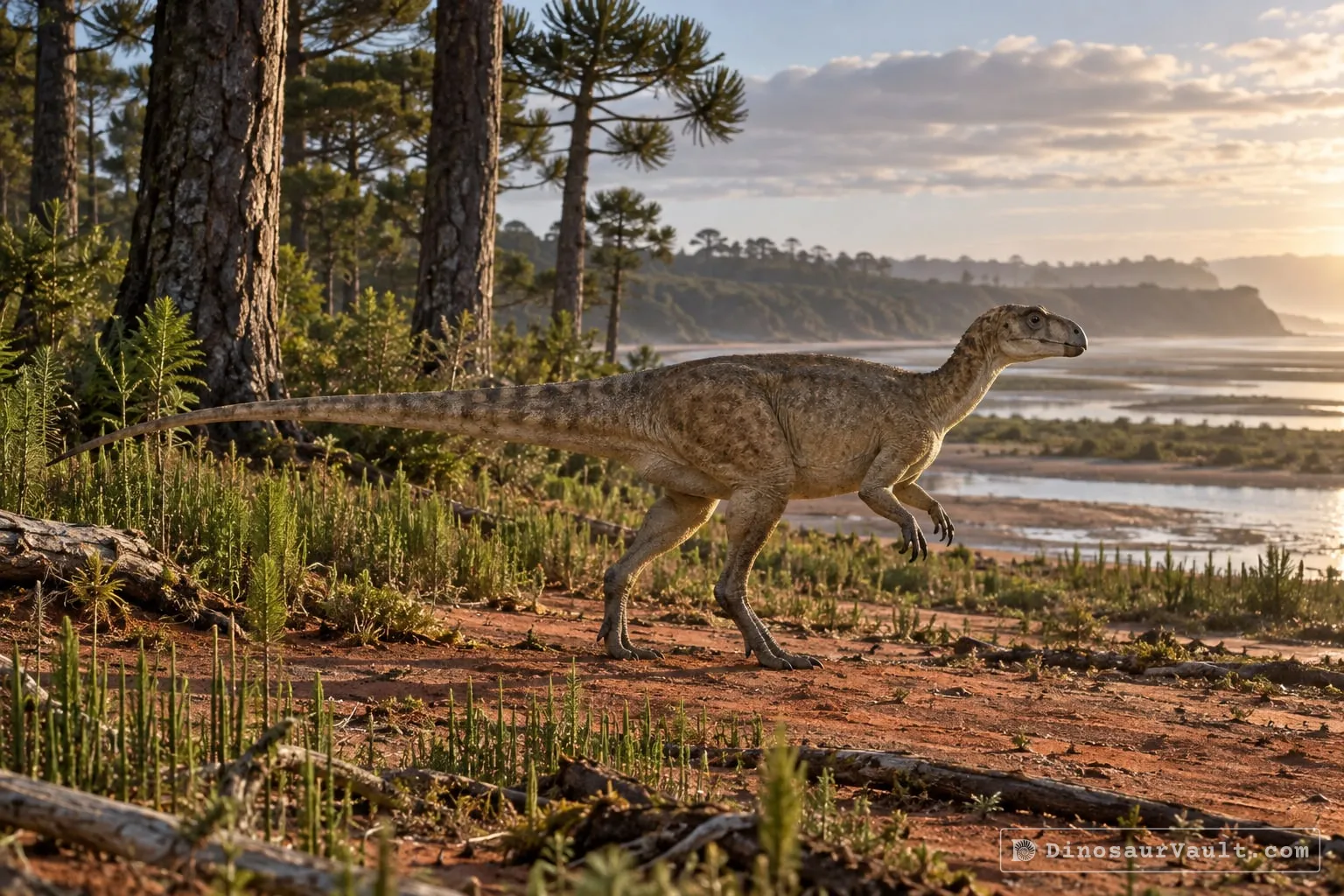


A rock formation can hold fossils laid down millions of years apart, so not every animal here met Dinheirosaurus.
The evidence
The science behind Dinheirosaurus
Which parts of the picture come from its own bones, and which come from its relatives.
From its own fossils
- The type skeleton preserves a run of neck and back vertebrae, chest ribs, a few tail vertebrae and a piece of the hip.
- Its rear neck vertebrae are long, but less stretched than those of Diplodocus, and their spines are not split in two. Hollow spaces inside the vertebrae show that air sacs reached into its backbone.
- Vertebrae from a second find, once assigned to Dinheirosaurus, are now thought to belong to a different diplodocid.
Borrowed from relatives
- Its skull, limbs, hands and feet are restored by comparison with Galeamopus, a relative known from a skull and much of the skeleton.
- The knees and lower hind legs follow a Diplodocus skeleton, and the long, tapering tail follows Diplodocus and its close relatives.
Still unknown
- The shape of its skull and teeth.
- Its skin texture and color.
- Whether it belongs in its own genus or in Supersaurus. Experts are split on the question.
Discovery timeline
- 1999Named itBonaparte & Mateus
- 2011RedescriptionMannion et al.
- 2015Family treeTschopp, Mateus & Benson
- 2025Family treeMannion & Moore
Key papers
The research behind what we know of Dinheirosaurus
Named it
Described neck and back bones from Portugal as a new relative of Diplodocus.
A new diplodocid, Dinheirosaurus lourinhanensis gen. et sp. nov., from the Late Jurassic beds of Portugal. Revista del Museo Argentino de Ciencias Naturales "Bernardino Rivadavia" e Instituto Nacional de Investigación de las Ciencias Naturales, Paleontología 5: 13-29
No link available
Redescription
Restudied the original skeleton and found a close relationship with Supersaurus.
New information on the anatomy and systematic position ofDinheirosaurus lourinhanensis(Sauropoda: Diplodocoidea) from the Late Jurassic of Portugal, with a review of European diplodocoids. Journal of Systematic Palaeontology 10: 521-551
Read the paper : New information on the anatomy and systematic position ofDinheirosaurus lourinhanensis(Sauropoda: Diplodocoidea) from the Late Jurassic of Portugal, with a review of European diplodocoids (opens in a new tab)Family tree
Compared diplodocid skeletons and proposed placing Dinheirosaurus in Supersaurus.
A specimen-level phylogenetic analysis and taxonomic revision of Diplodocidae (Dinosauria, Sauropoda). PeerJ 3: e857
Read the paper : A specimen-level phylogenetic analysis and taxonomic revision of Diplodocidae (Dinosauria, Sauropoda) (opens in a new tab)Family tree
Found Dinheirosaurus closest to Supersaurus but kept it as a separate genus for now, since the two lived far apart and differ in several ways.
Critical reappraisal of a putative dicraeosaurid sauropod dinosaur from the Middle Jurassic of Gondwana and a revised view of diplodocoid evolutionary relationships and biogeography. Journal of Systematic Palaeontology 23
Read the paper : Critical reappraisal of a putative dicraeosaurid sauropod dinosaur from the Middle Jurassic of Gondwana and a revised view of diplodocoid evolutionary relationships and biogeography (opens in a new tab)
Close relatives
Other members of Diplodocidae


Sources: Wikidata