Lusotitan
"Lusitanian titan"
- Lived
- 152 to 145 million years ago, Late Jurassic
- Diet
- Herbivore
- Group
- Sauropods, Brachiosauridae
- Found in
- Portugal
- Named by
- Antunes and Mateus 2003
Where its fossils were found
The evidence
Today

150 million years ago
Habitat
Rivers crossed coastal floodplains in what is now Portugal, with conifers growing nearby. Its neighbors included Allosaurus, Torvosaurus and Dacentrurus.
Field notes
About Lusotitan
What it was like
Lusotitan was a sauropod, a long-necked plant eater. Its elongated upper arm bones led scientists to compare it with brachiosaurs such as Brachiosaurus and Giraffatitan, but its place in that group depends on the analysis. Only part of the skeleton is known.
Its world
It lived about 152 to 145 million years ago, in the Late Jurassic, in what is now Portugal. Its bones come from the Lourinhã Formation, where it lived with Allosaurus, Torvosaurus, Ceratosaurus and the stegosaur Dacentrurus.
How it was found
Antunes and Mateus named Lusotitan in 2003. Only one find is known.
Field gallery
More views of Lusotitan
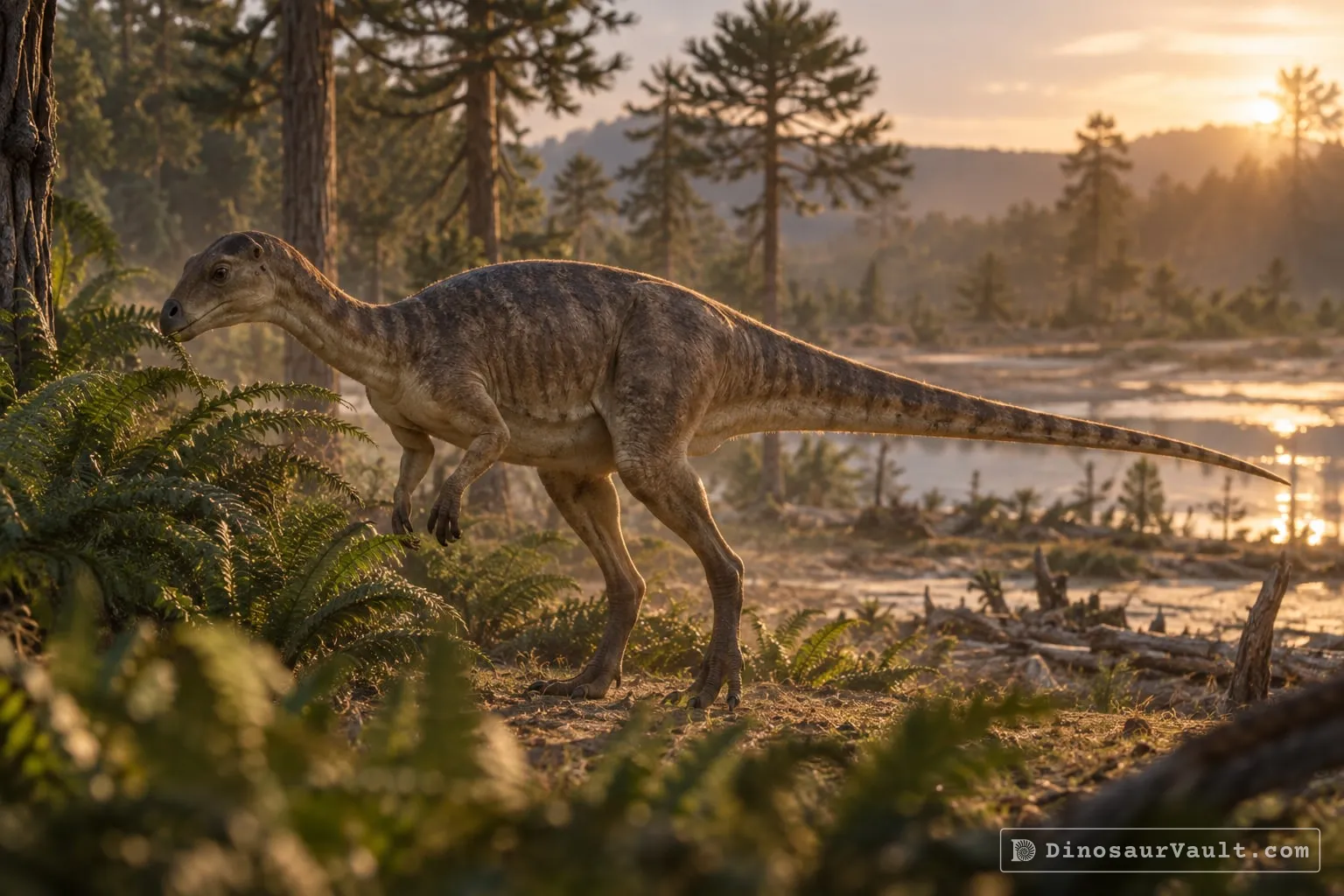
Scenes reconstructed from the available fossil evidence.
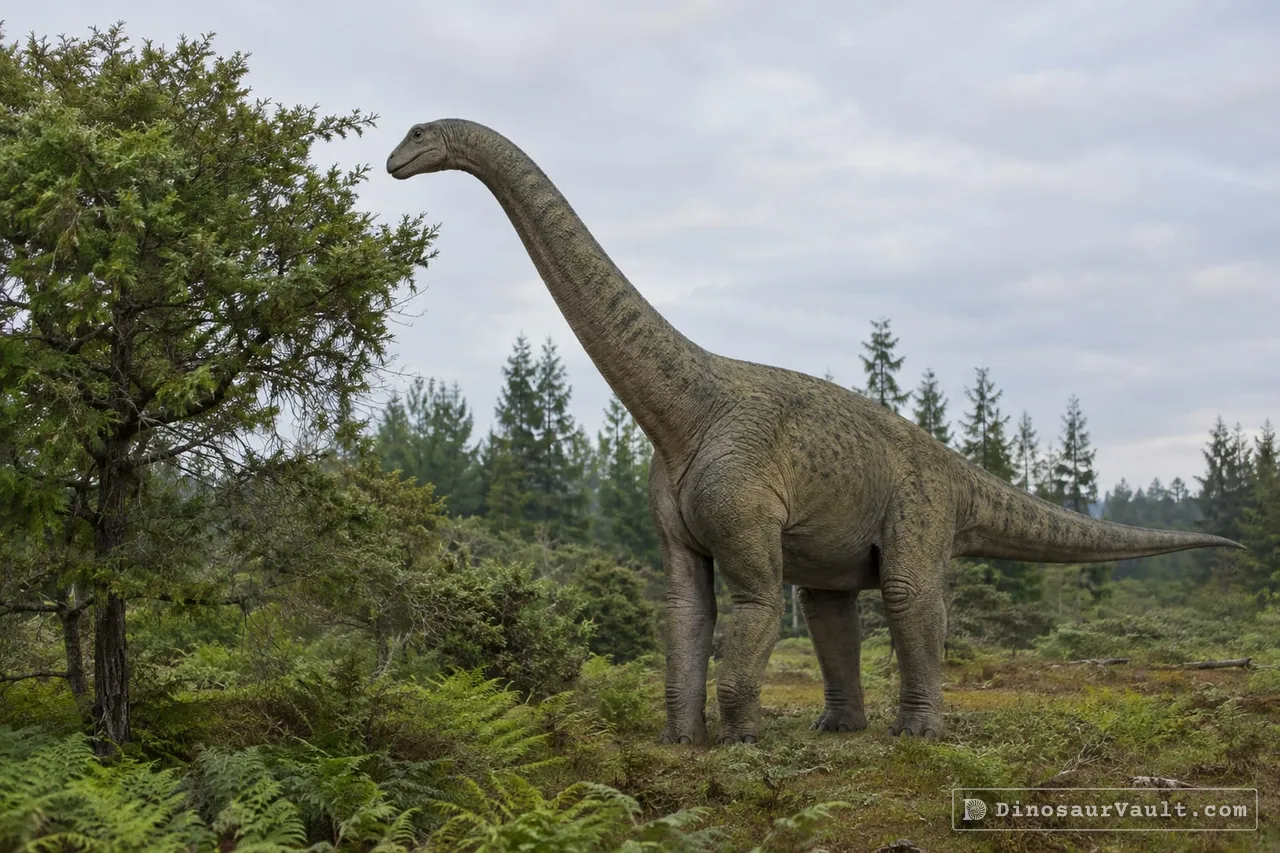
1 of 3
Lived alongside
Found in the same rock formations
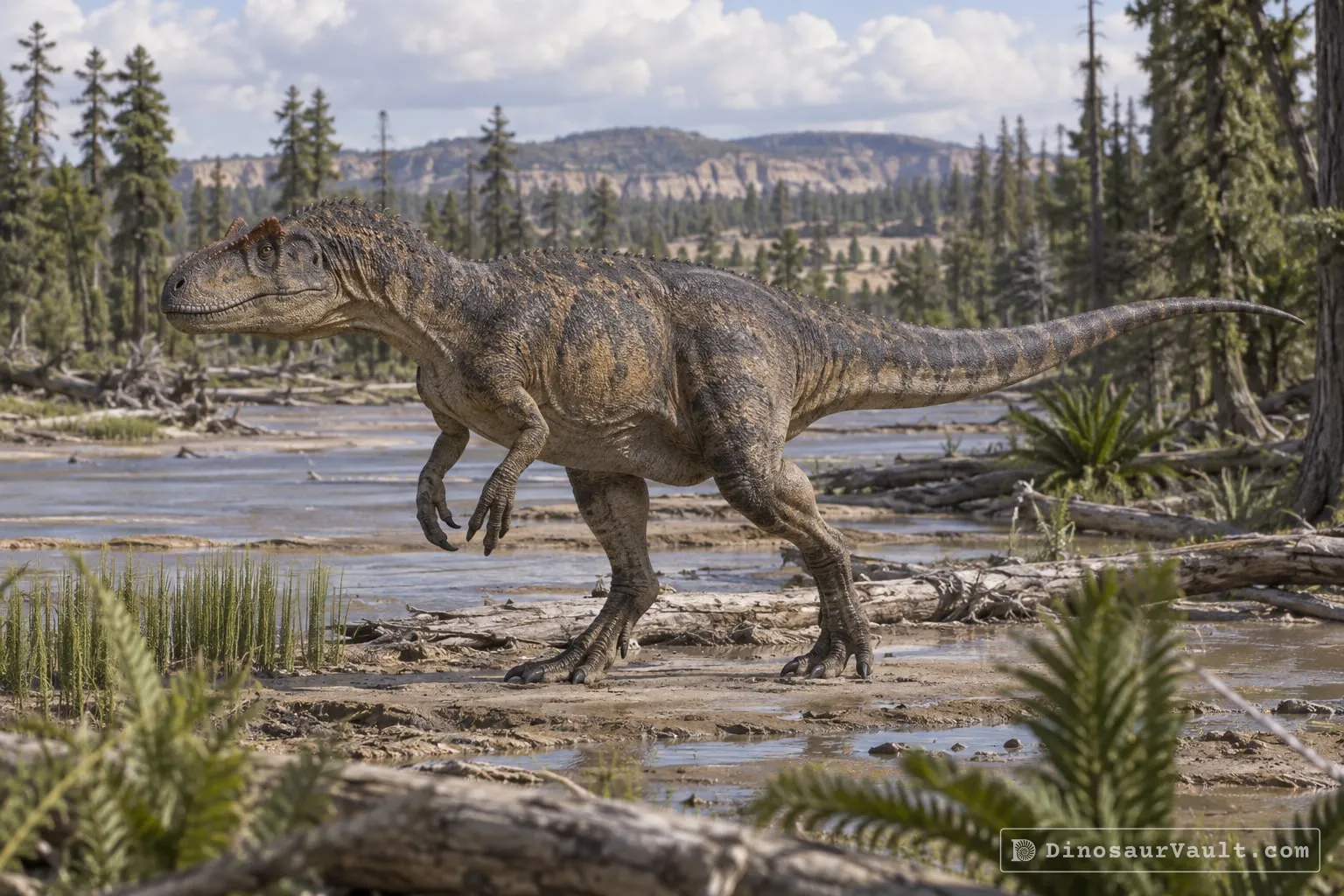
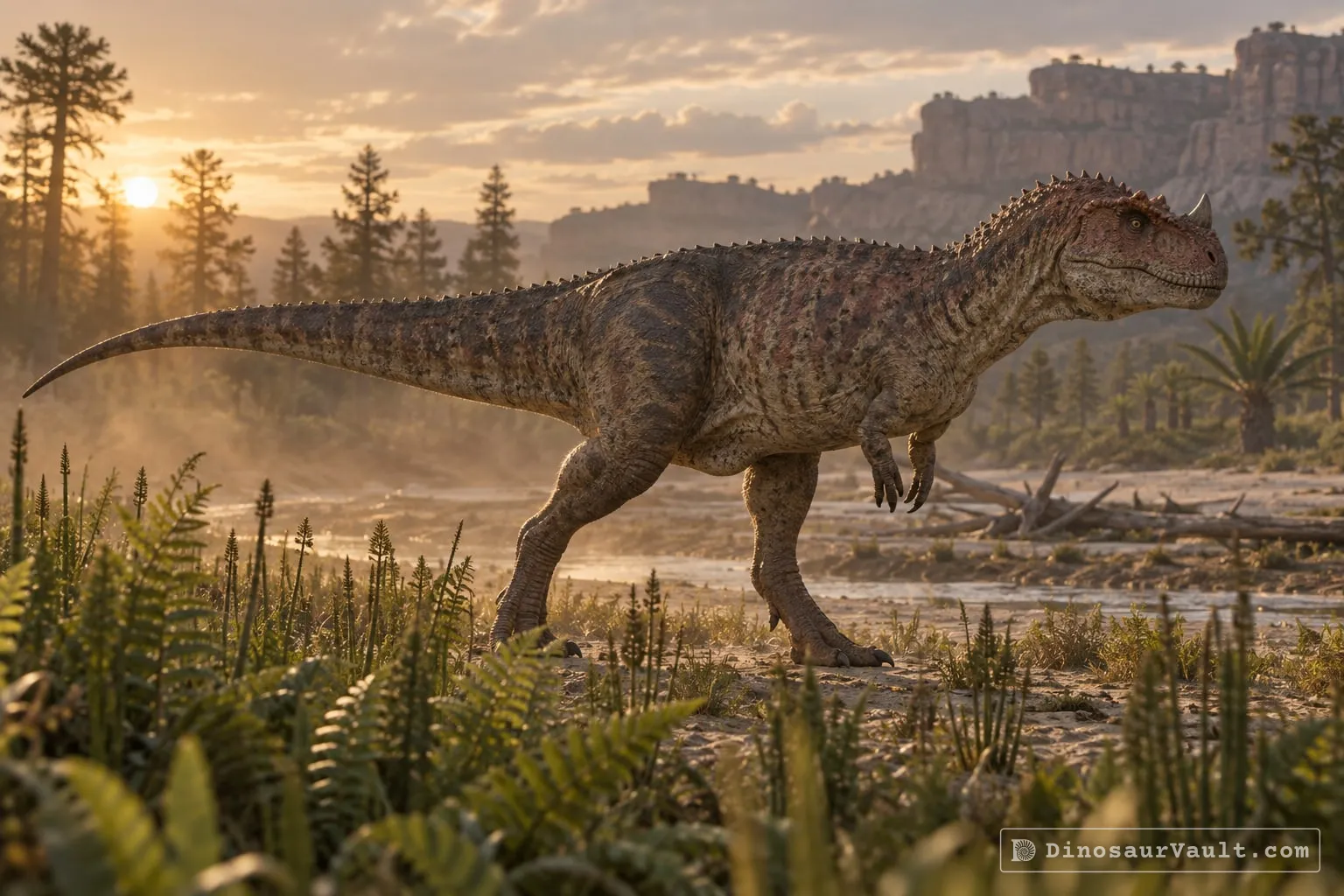
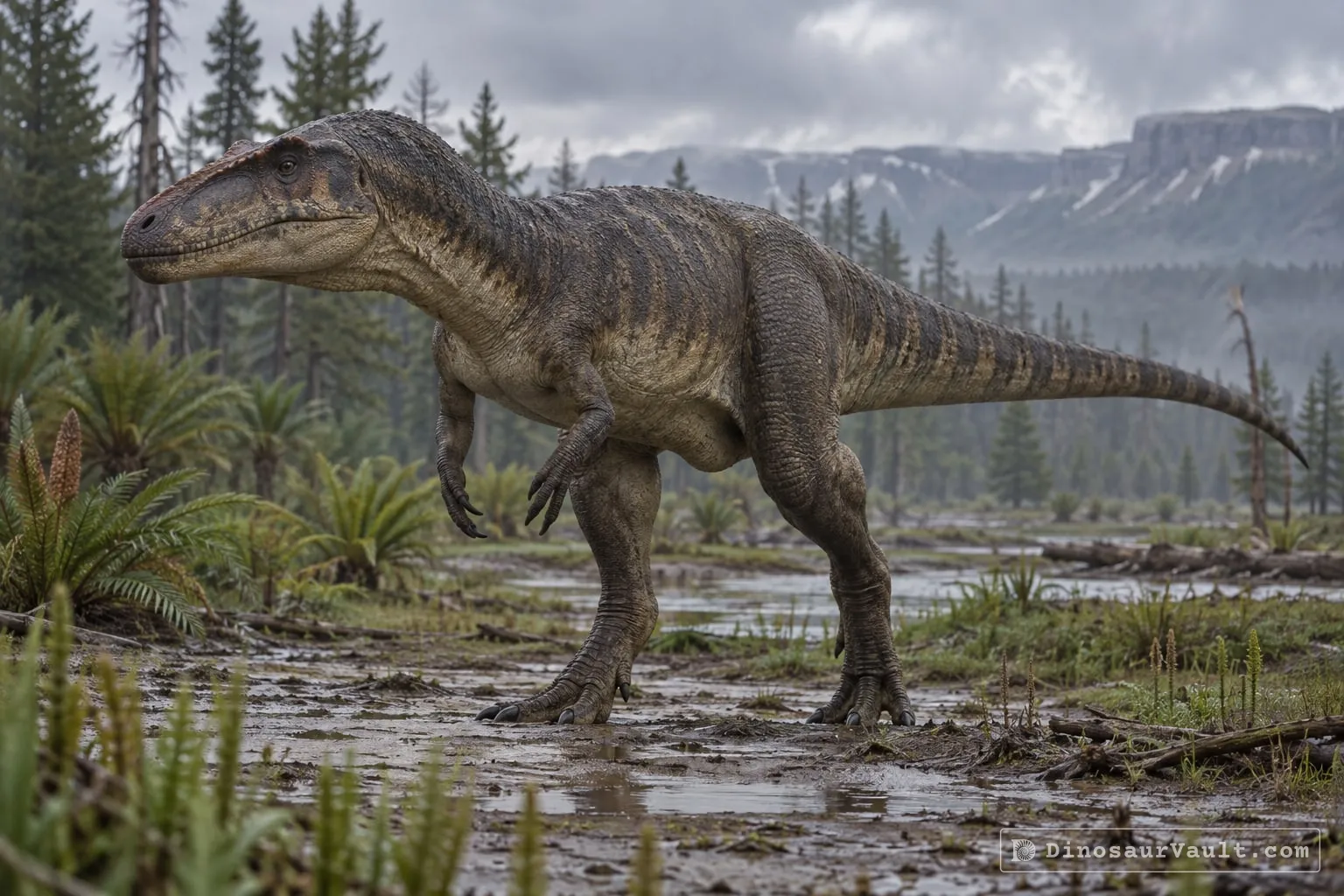
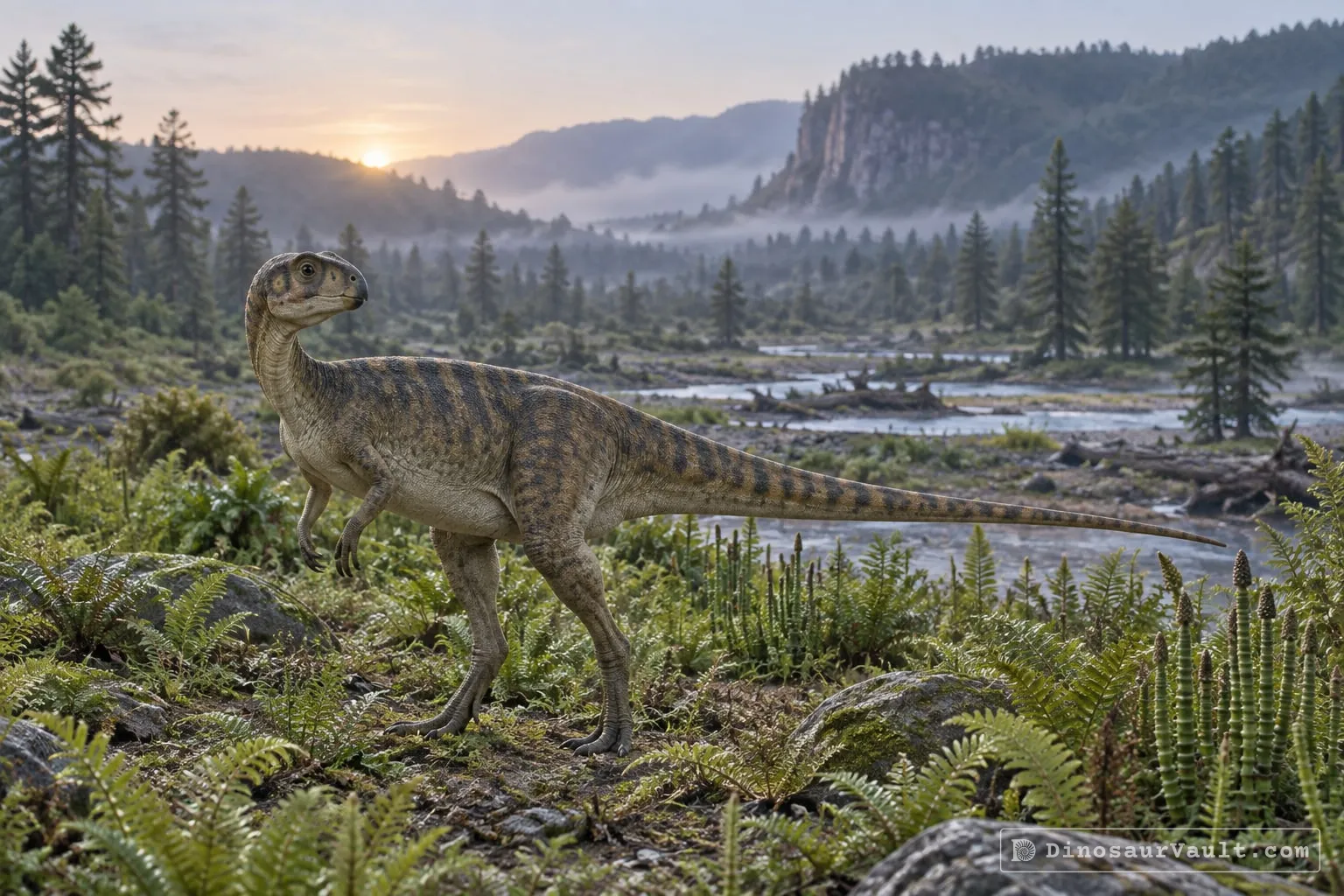
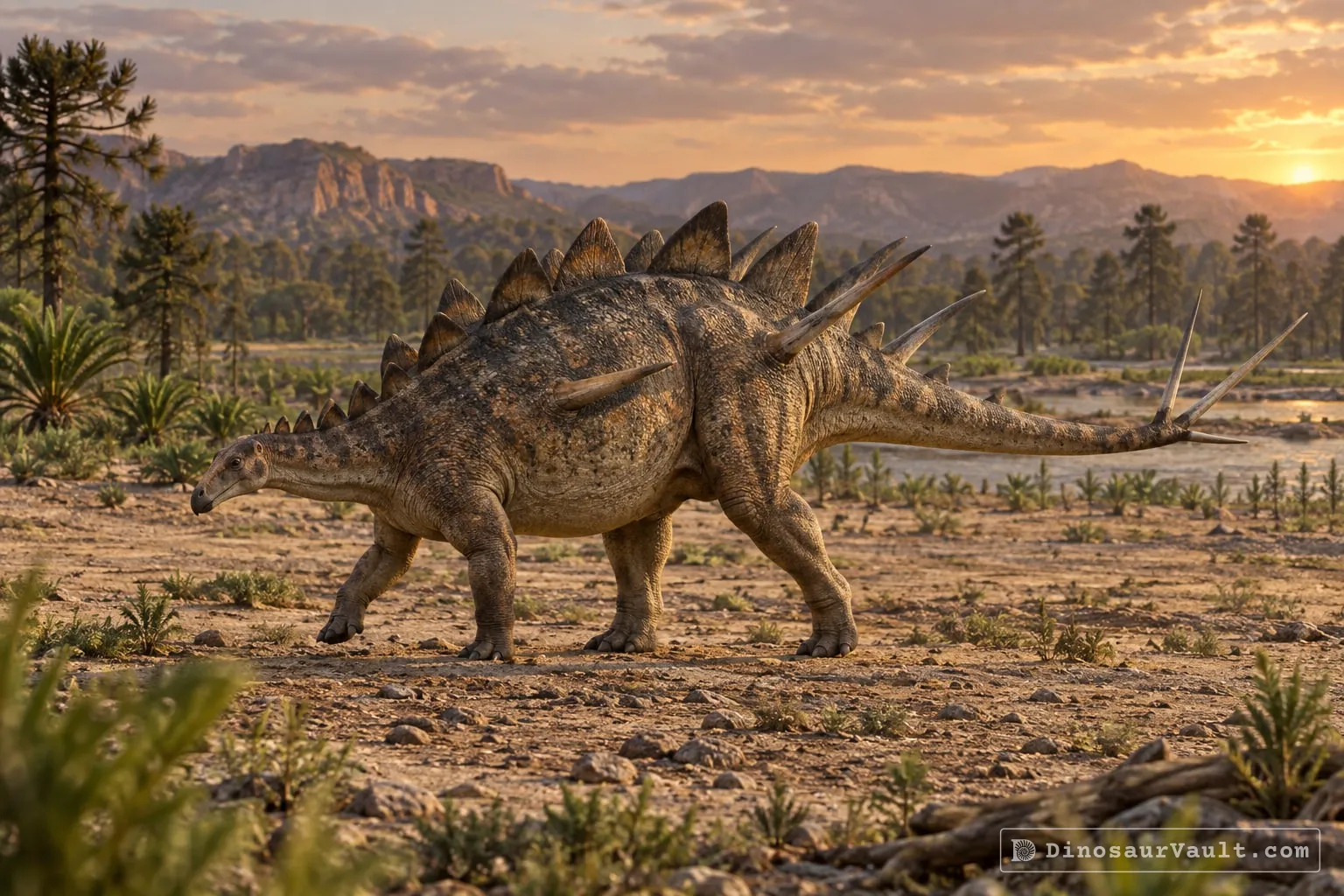
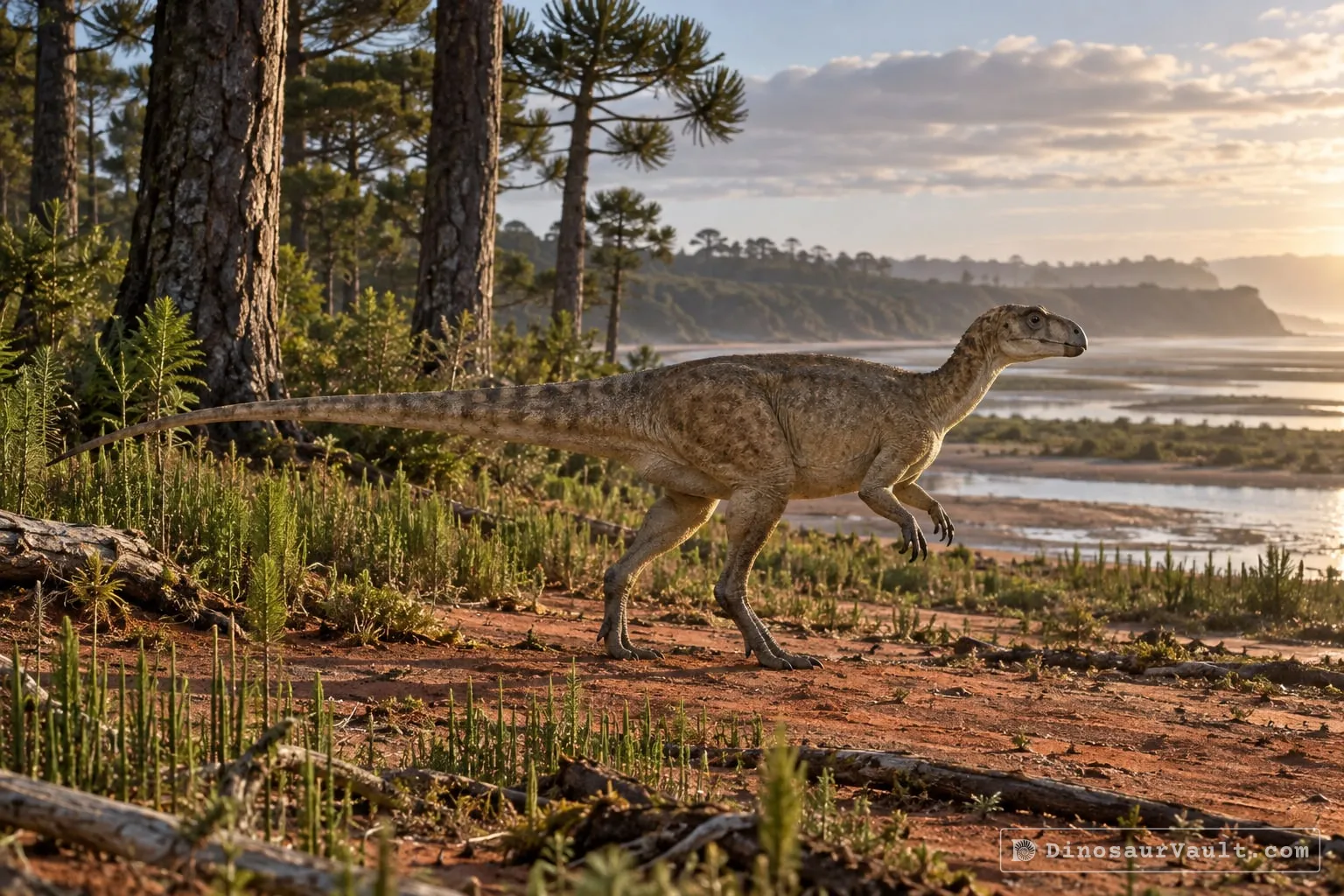
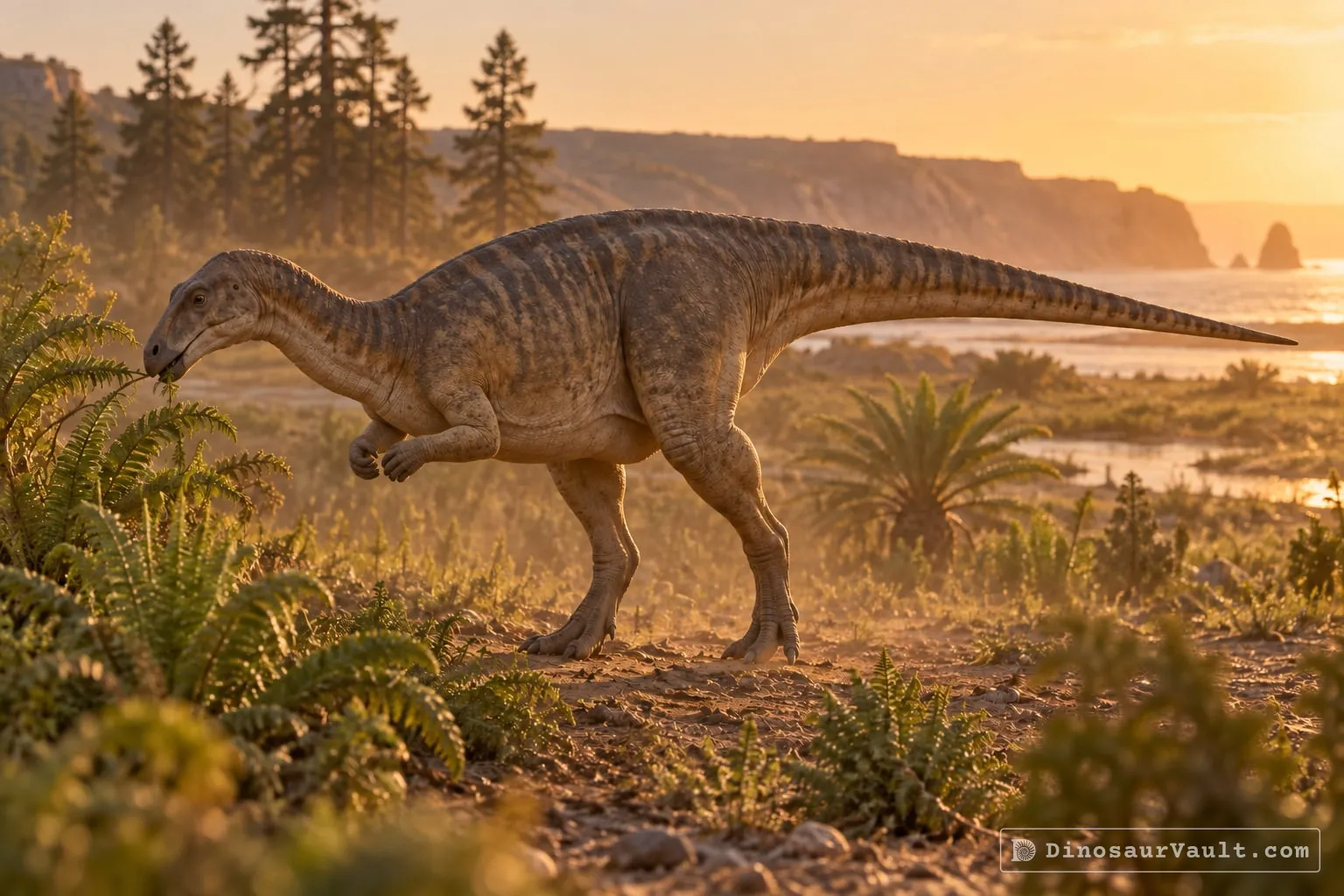


A rock formation can hold fossils laid down millions of years apart, so not every animal here met Lusotitan.
The evidence
The science behind Lusotitan
Which parts of the picture come from its own bones, and which come from its relatives.
From its own fossils
- A partial skeleton preserves vertebrae from the neck, back and tail, along with parts of the limbs and hips. Some of the bones first collected have since been lost.
- Its upper arm bones are elongated, a feature shared with brachiosaurs.
- Some tail vertebrae have unusually long joint projections extending behind the main arch of the bone.
Borrowed from relatives
- Its missing head is restored by comparison with Camarasaurus, and the missing stretches of the neck by comparison with other sauropods such as Mnyamawamtuka.
Still unknown
- Its skull, since no skull bones are among its fossils.
- Its exact neck length and usual neck posture, and its skin texture and color.
- Its place in the family tree. It has been placed among the brachiosaurs, but a recent study found it on an earlier branch of the macronarian sauropods in some of its analyses.
Discovery timeline
- 2003Named itAntunes & Mateus
- 2013Full descriptionMannion et al.
- 2017Family treeMannion, Allain & Moine
- 2026Family treeReutter et al.
Key papers
The research behind what we know of Lusotitan
Named it
Established Lusotitan as a separate genus for a Portuguese sauropod previously classified as a species of Brachiosaurus.
Dinosaurs of Portugal. Comptes Rendus Palevol 2: 77-95
Read the paper : Dinosaurs of Portugal (opens in a new tab)Full description
Redescribed its vertebrae, limbs and hips, confirming distinctive features that separate Lusotitan from Brachiosaurus and Giraffatitan.
Osteology of the Late Jurassic Portuguese sauropod dinosaurLusotitan atalaiensis(Macronaria) and the evolutionary history of basal titanosauriforms. Zoological Journal of the Linnean Society 168: 98-206
Read the paper : Osteology of the Late Jurassic Portuguese sauropod dinosaurLusotitan atalaiensis(Macronaria) and the evolutionary history of basal titanosauriforms (opens in a new tab)Family tree
A broader family-tree analysis placed Lusotitan within the brachiosaurs, close to Cedarosaurus and Venenosaurus.
The earliest known titanosauriform sauropod dinosaur and the evolution of Brachiosauridae. PeerJ 5: e3217
Read the paper : The earliest known titanosauriform sauropod dinosaur and the evolution of Brachiosauridae (opens in a new tab)Family tree
Named Bicharracosaurus and compared it with Lusotitan, whose position shifted between brachiosaurs and earlier macronarians depending on the analysis.
Bicharracosaurus dionidei, gen. et sp. nov., a new macronarian (Dinosauria, Sauropoda) from the Late Jurassic Cañadón Calcáreo Formation of Argentina and the problematic early evolution of macronarians. PeerJ 14: e20945
Read the paper : Bicharracosaurus dionidei, gen. et sp. nov., a new macronarian (Dinosauria, Sauropoda) from the Late Jurassic Cañadón Calcáreo Formation of Argentina and the problematic early evolution of macronarians (opens in a new tab)
Close relatives
Other members of Brachiosauridae


Sources: Wikidata