Dacentrurus
day-SEN-troo-rus
"tail full of points"
Type species Dacentrurus armatus
- Lived
- 155 to 143 million years ago, Late Jurassic
- Diet
- Herbivore
- Length
- about 6 m (20 ft)
- Group
- Stegosaurs, Stegosauridae
- Found in
- Portugal, Spain and France
- Named by
- Lucas 1902
Size comparison
To scale
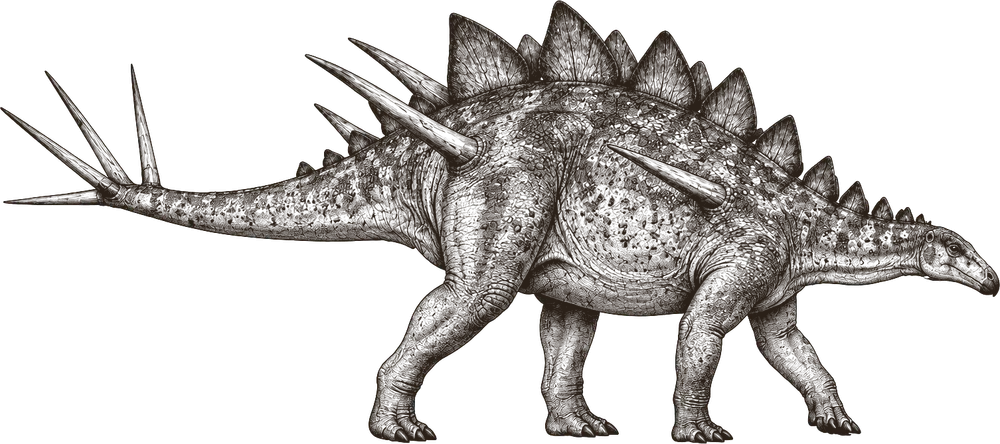


Scale in meters
Where its fossils were found
The evidence
Today

150 million years ago
Also reported from United Kingdom and United States.
Habitat
Its European habitats included coastal lowlands crossed by rivers. Dinosaurs from the Portuguese rocks include Allosaurus, Torvosaurus and Zby.
Field notes
About Dacentrurus
What it was like
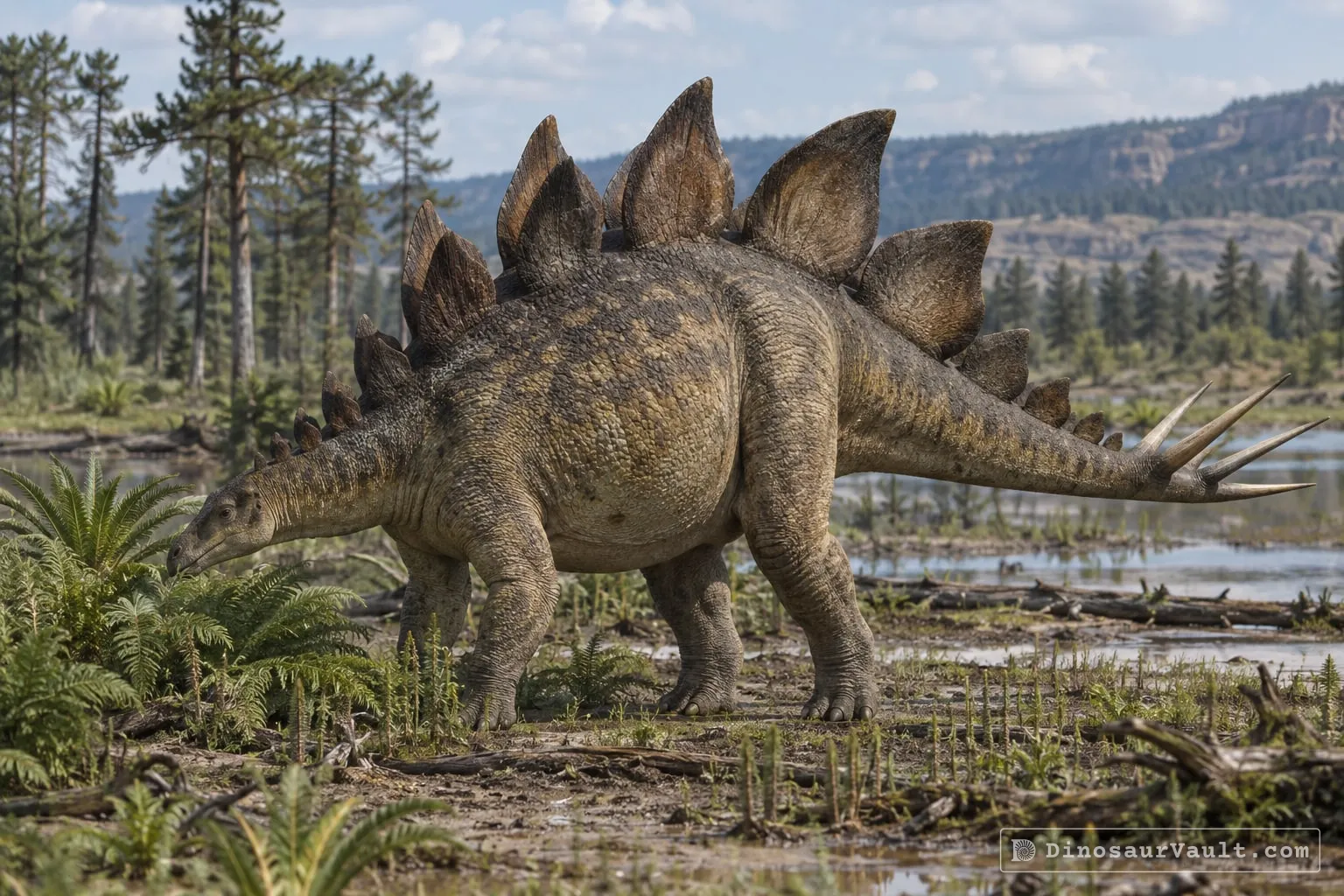
Dacentrurus was a large stegosaur, among the biggest known from its group, growing to roughly 6 meters (20 feet) long. Like other stegosaurs, it walked on four legs, carried a row of bony plates and spikes along its back and tail, and used the spikes at the tip of its tail as a weapon against attacking predators.
Compared to the later Stegosaurus, its plates were smaller and its build was heavier, and much about its exact appearance is still debated, since complete skeletons of Dacentrurus are rare.
Its world
Dacentrurus lived from about 155 to 143 million years ago, spanning the end of the Late Jurassic and the start of the Early Cretaceous, across what are now Portugal, Spain, and France, with likely finds also reported from the United Kingdom and Wyoming in the United States. Its bones come from formations including the Lourinhã and the Kimmeridge Clay.
It shared its world with large predators such as Allosaurus, Ceratosaurus, and Torvosaurus, the sauropod Camarasaurus, and its close relatives Lusovenator and Zby.
How it was found
Lucas named Dacentrurus in 1902, after an earlier name for the same animal turned out to already belong to a different reptile. The type species is Dacentrurus armatus. About 28 finds are known, more than for many other stegosaurs, and its relatives Kentrosaurus, Wuerhosaurus, and Tuojiangosaurus show that stegosaurs had already spread widely by the Late Jurassic.
Field gallery
More views of Dacentrurus
Scenes reconstructed from the available fossil evidence.
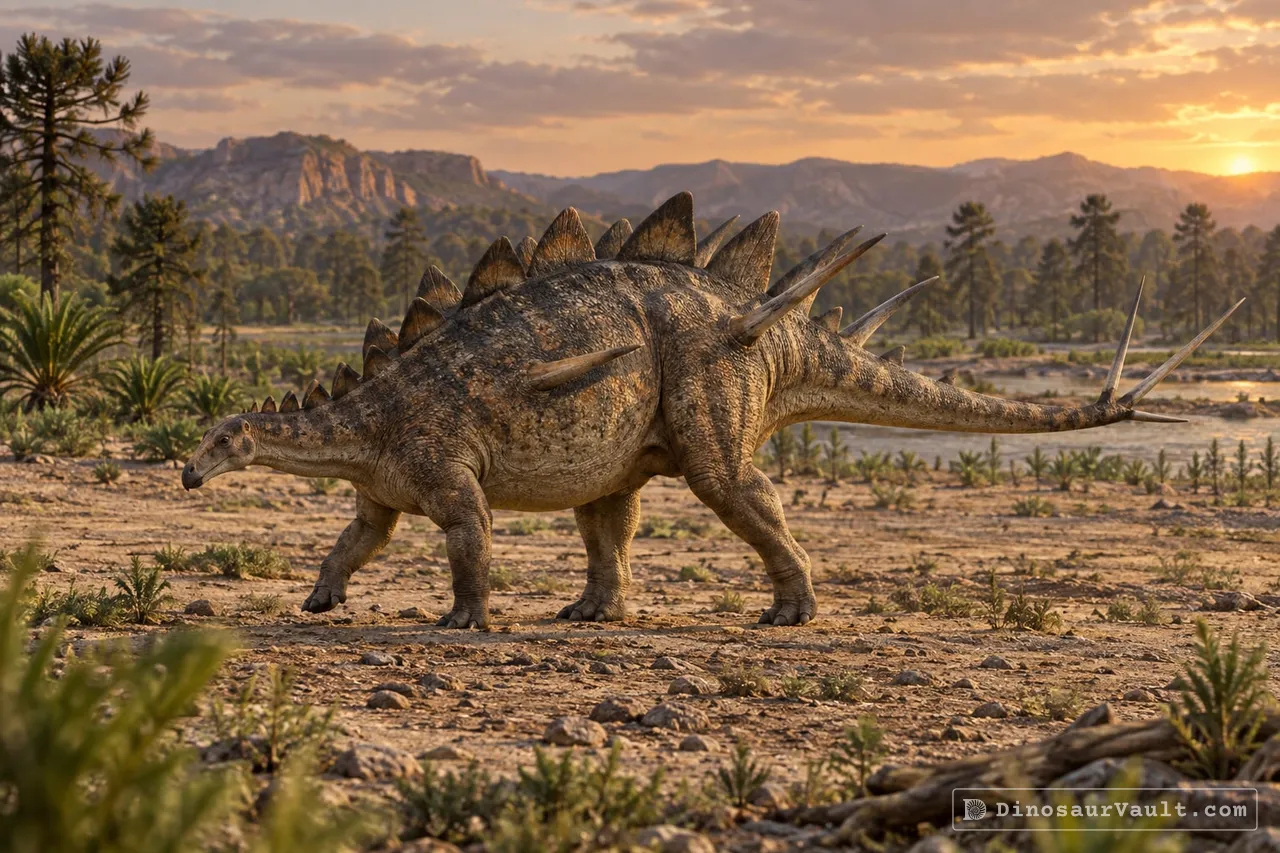
1 of 7
Lived alongside
Found in the same rock formations
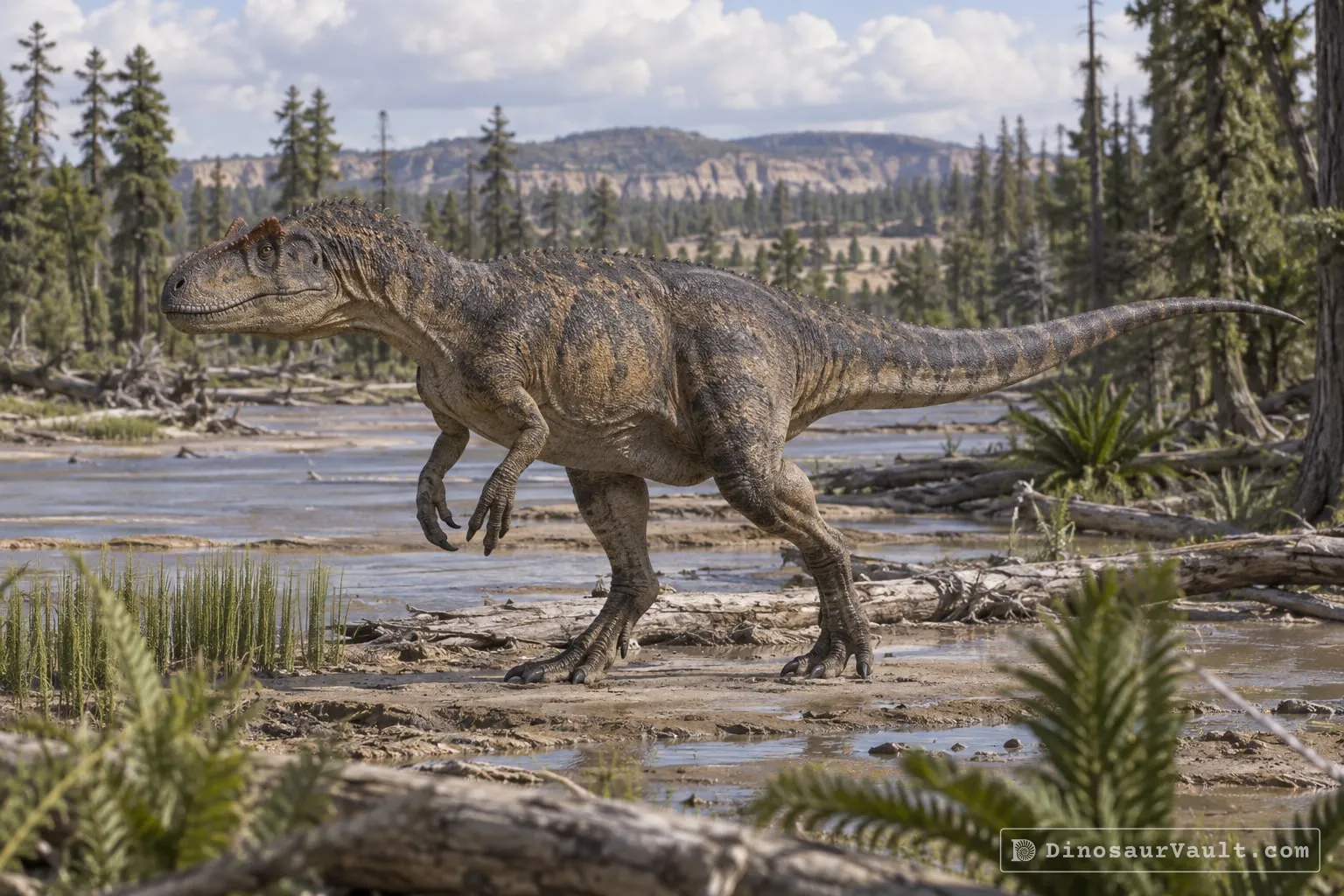
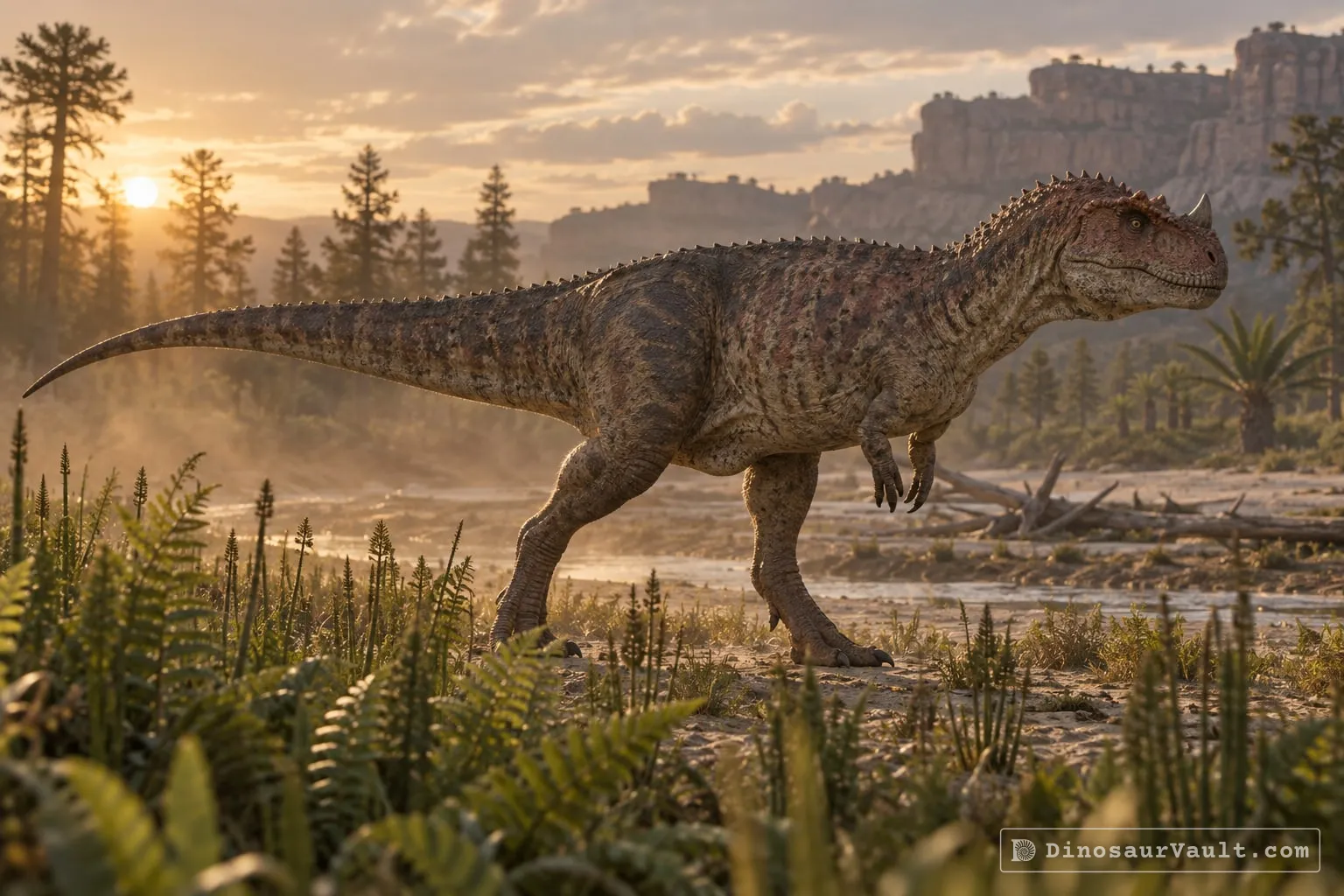

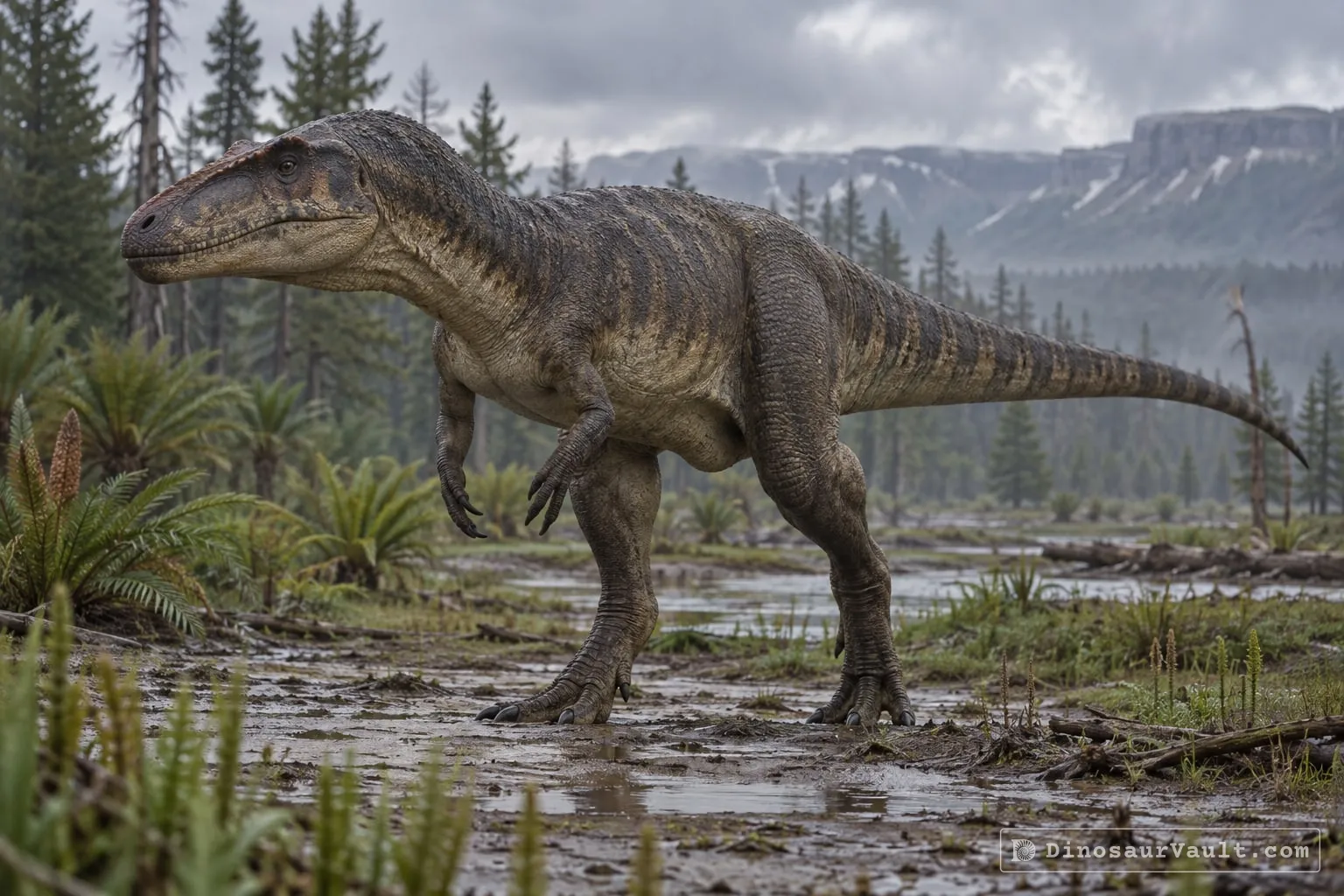
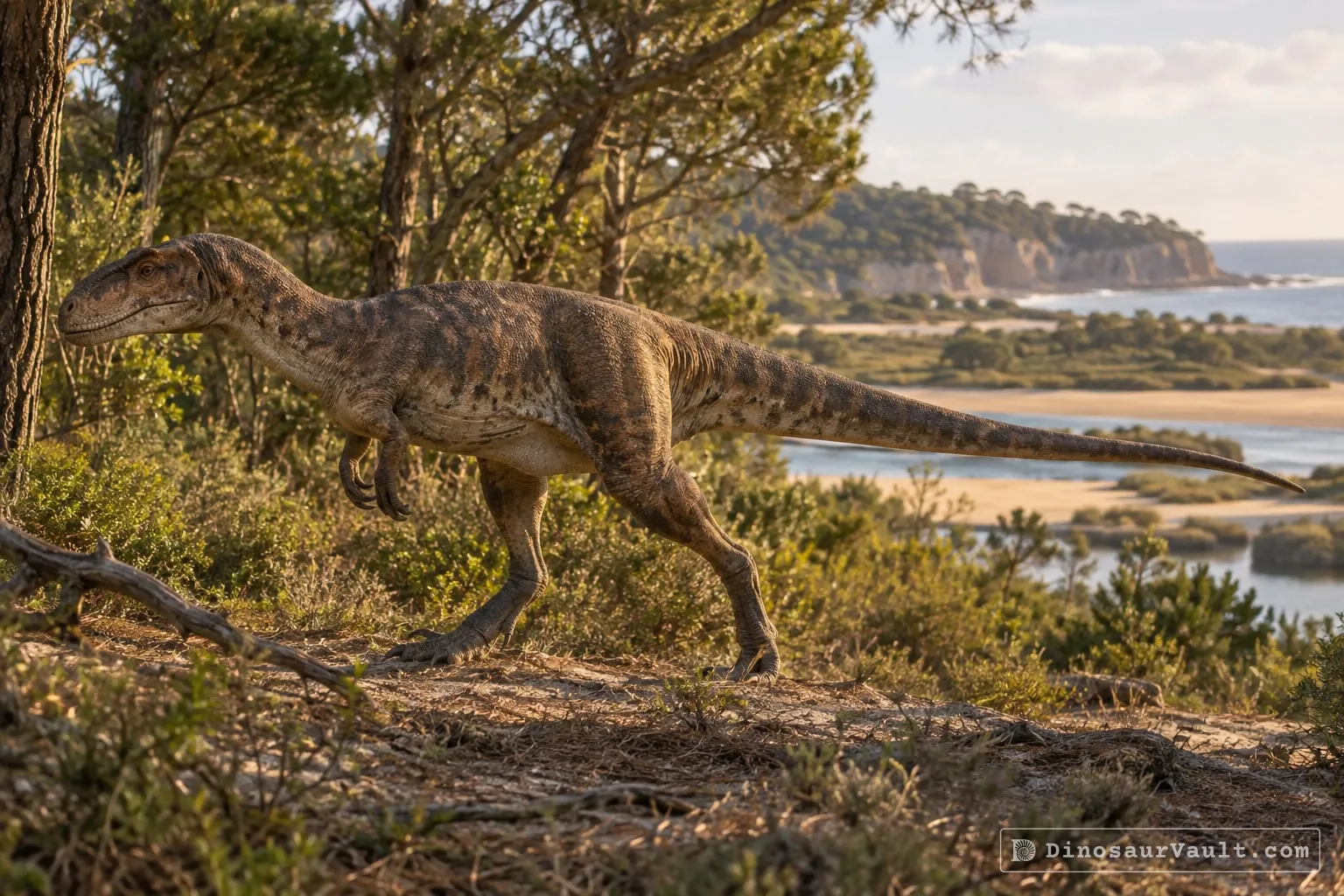
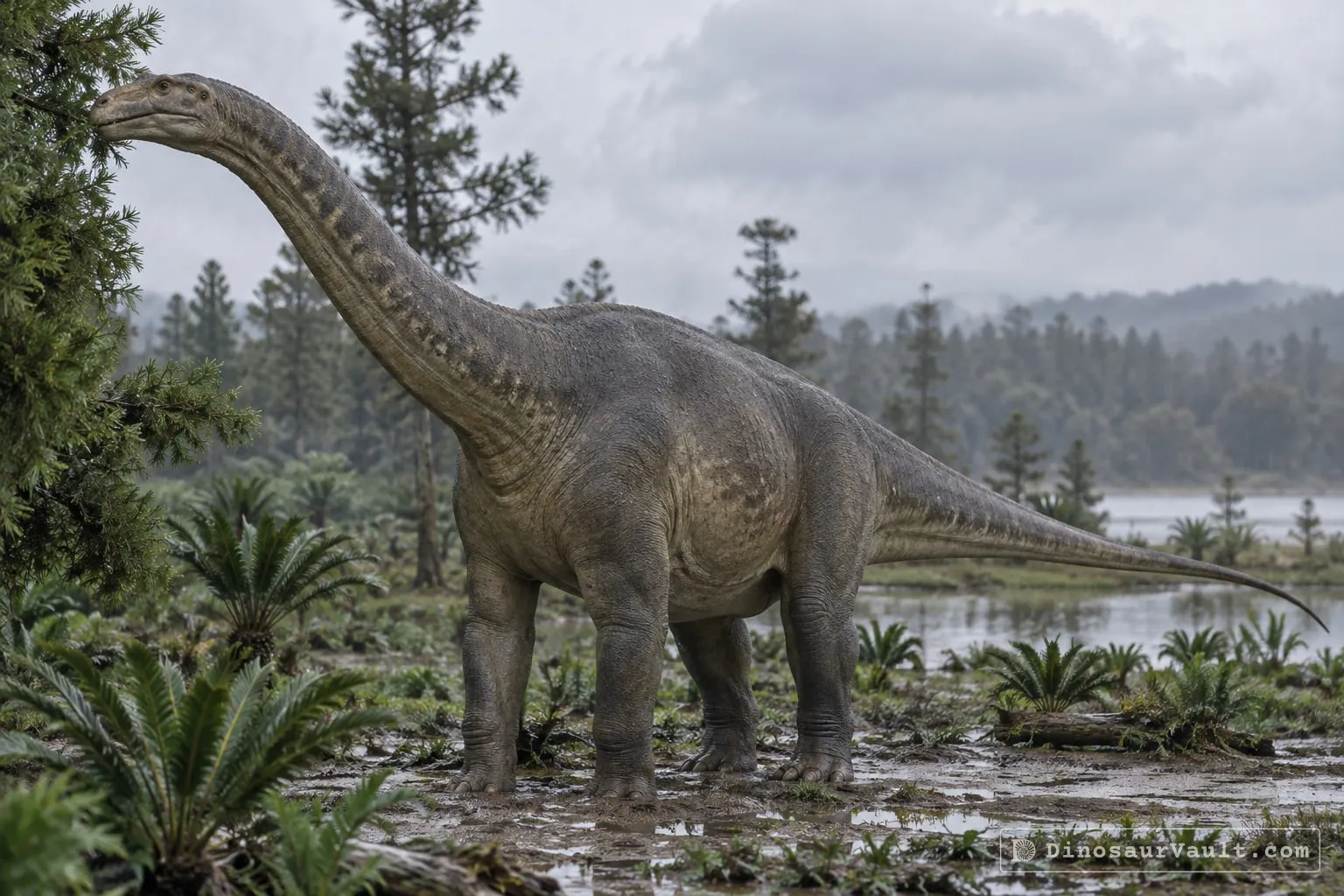
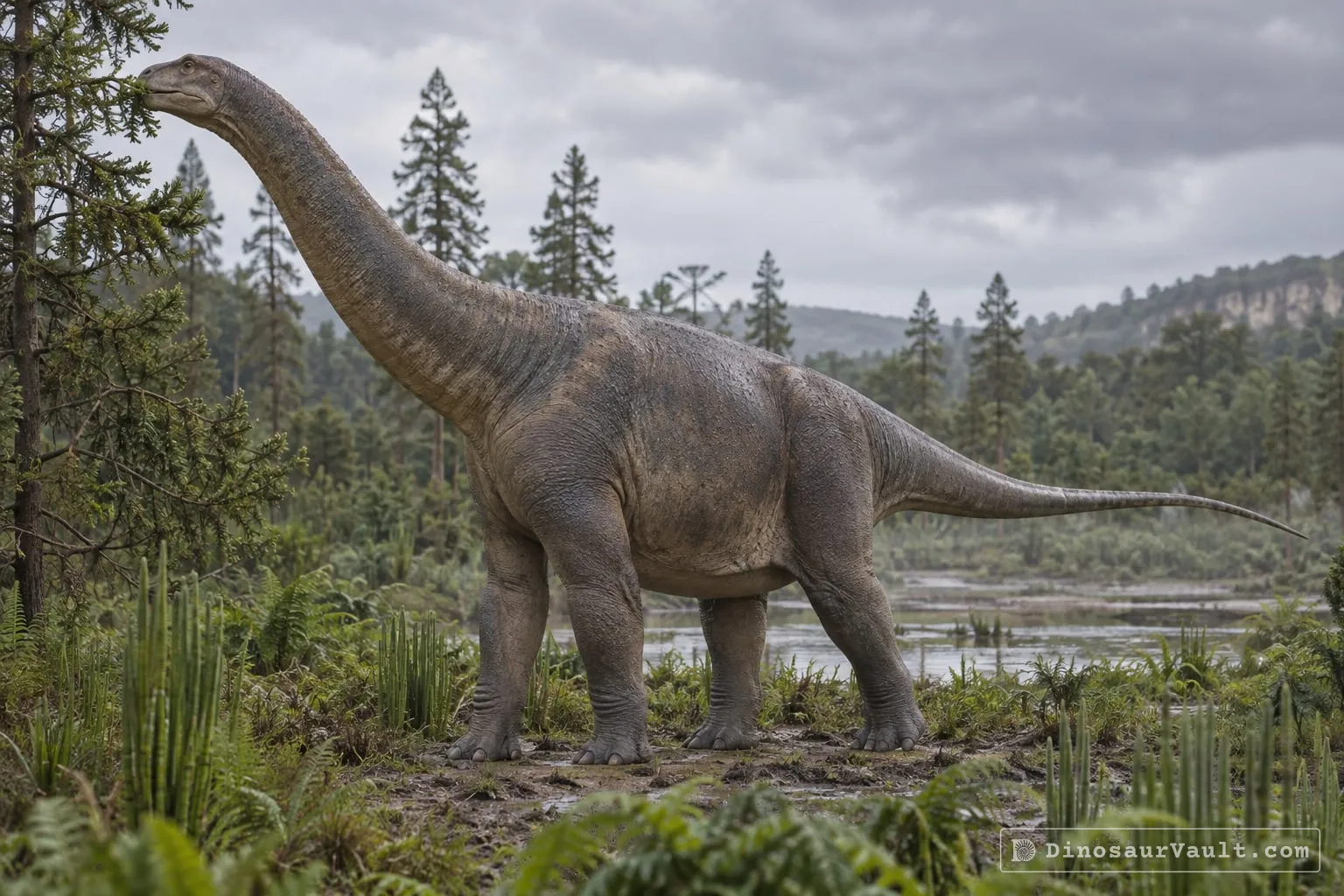


A rock formation can hold fossils laid down millions of years apart, so not every animal here met Dacentrurus.
The evidence
The science behind Dacentrurus
Which parts of the picture come from its own bones, and which come from its relatives.
From its own fossils
- The original partial skeleton preserves backbone, hip and limb bones from a heavily built stegosaur.
- A bony plate and a long tail spine show parts of its armor.
Borrowed from relatives
- Missing head details and the gaps between its armor bones are restored by comparison with Stegosaurus and other stegosaurs.
Still unknown
- The exact order of plates and spikes along its body.
- The complete shape of its head and its color.
- Whether the long-necked Portuguese specimens belong to a separate genus.
Often drawn wrong
- A tall row of broad Stegosaurus plates replaces its relatively low front armor and long rear spikes.
Discovery timeline
- 1902Named itLucas
- 2019Family treeCosta & Mateus
- 2024New findSánchez-Fenollosa, Escaso & Cobos
Key papers
The research behind what we know of Dacentrurus
Named it
Introduced Dacentrurus as a replacement for a genus name already used for another reptile.
Paleontological Notes. Science 16: 435-435
Read the paper : Paleontological Notes (opens in a new tab)Family tree
Compared the original Dacentrurus bones with Miragaia and other stegosaurs, arguing that Miragaia was a separate genus.
Dacentrurine stegosaurs (Dinosauria): A new specimen of Miragaia longicollum from the Late Jurassic of Portugal resolves taxonomical validity and shows the occurrence of the clade in North America. PLOS ONE 14: e0224263
Read the paper : Dacentrurine stegosaurs (Dinosauria): A new specimen of Miragaia longicollum from the Late Jurassic of Portugal resolves taxonomical validity and shows the occurrence of the clade in North America (opens in a new tab)New find
Described a more complete skeleton from Spain and proposed placing the long-necked Portuguese specimens in Dacentrurus.
A new specimen of Dacentrurus armatus Owen, 1875 (Ornithischia: Thyreophora) from the Upper Jurassic of Spain and its taxonomic relevance in the European stegosaurian diversity. Zoological Journal of the Linnean Society 203
Read the paper : A new specimen of Dacentrurus armatus Owen, 1875 (Ornithischia: Thyreophora) from the Upper Jurassic of Spain and its taxonomic relevance in the European stegosaurian diversity (opens in a new tab)
Close relatives
Other members of Stegosauridae


Sources: Wikidata