Chuanqilong
"legendary dragon"
Type species Chuanqilong chaoyangensis
- Lived
- 121 to 113 million years ago, Early Cretaceous
- Diet
- Herbivore
- Group
- Ankylosaurs, Ankylosauridae
- Found in
- China
- Named by
- Han et al. 2014
Where its fossils were found
The evidence
Today

115 million years ago
Habitat
A landscape of lakes near active volcanoes in what is now China. Other dinosaurs from the Jiufotang Formation include Microraptor and Psittacosaurus.
Field notes
About Chuanqilong
What it was like
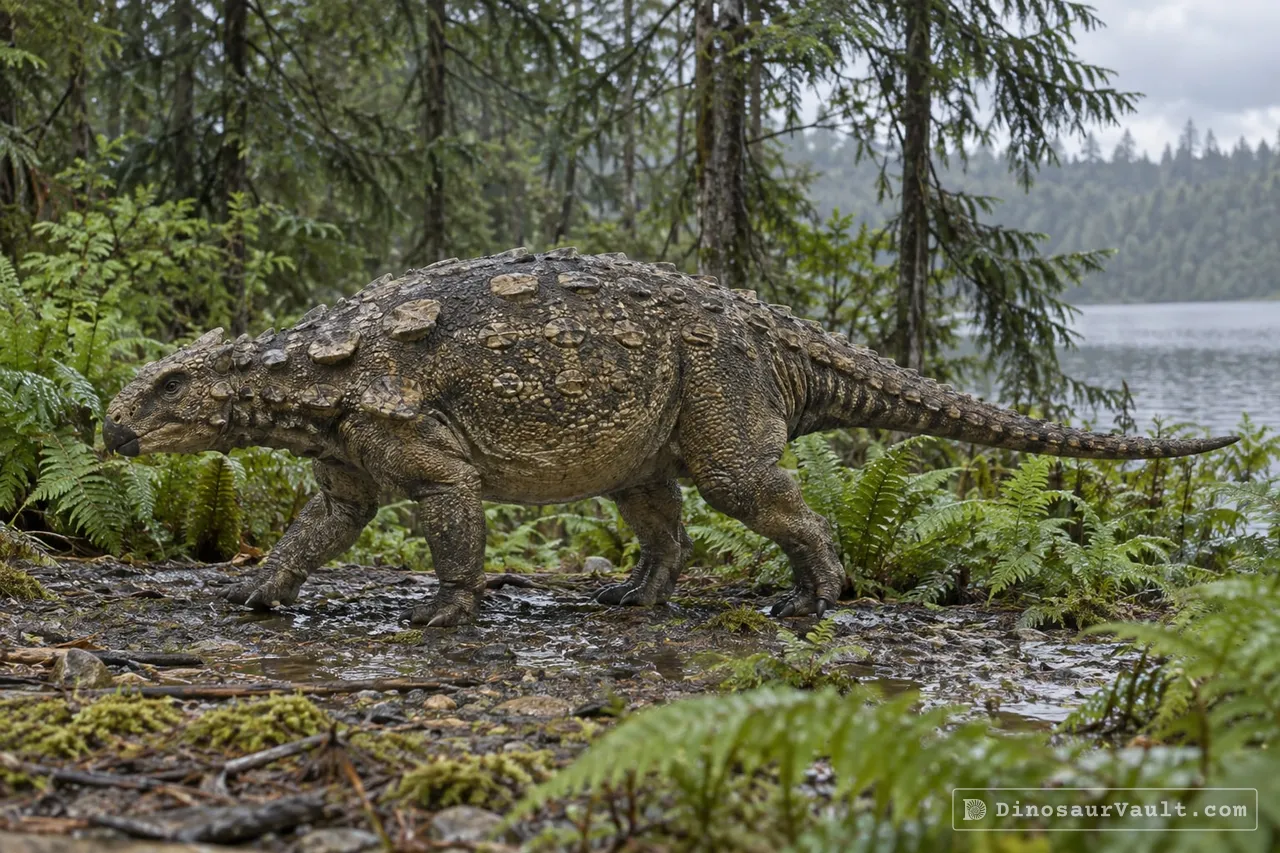
Chuanqilong was an early ankylosaur, an armored plant eater with bony plates on its back. It is known from a nearly complete skeleton with a skull, from a young animal. It had no bony club on its tail.
Its world
It lived in the Early Cretaceous in what is now China. Its bones come from the Jiufotang Formation, a land of forests and lakes shared with the small four-winged Microraptor and the horned Psittacosaurus.
How it was found
Han and colleagues named it in 2014. The type species is Chuanqilong chaoyangensis.
Field gallery
More views of Chuanqilong
Scenes reconstructed from the available fossil evidence.
Lived alongside
Found in the same rock formations
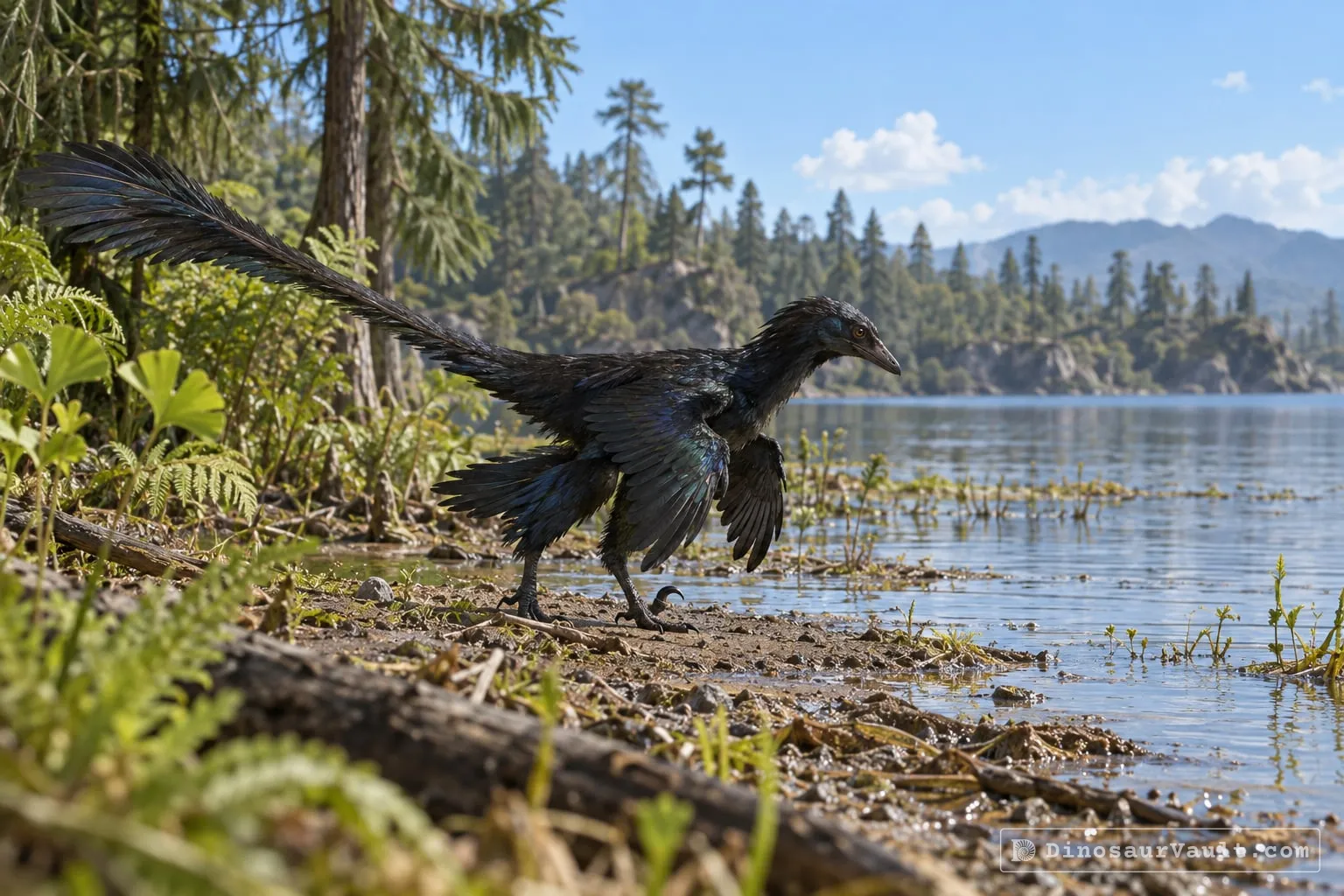
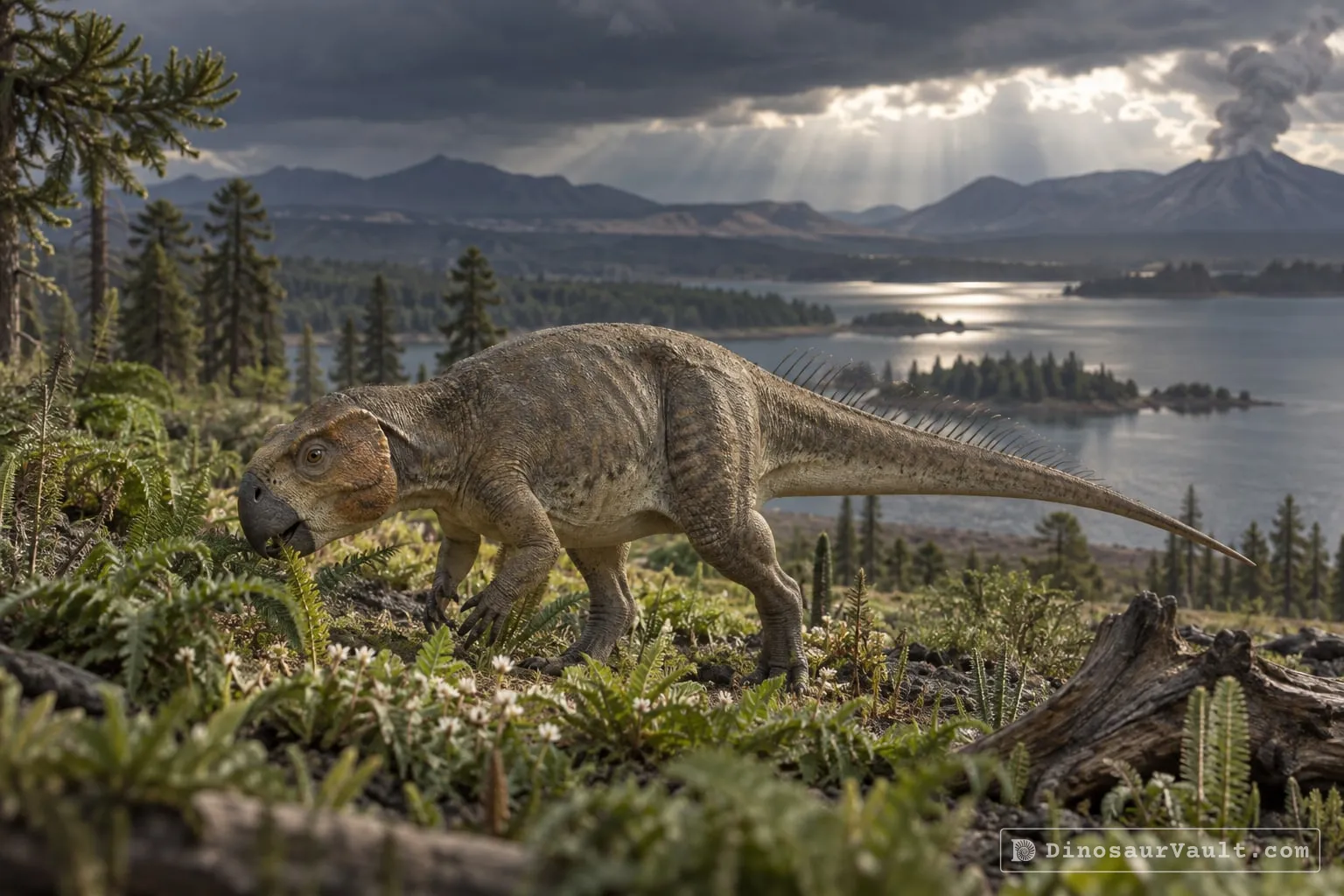
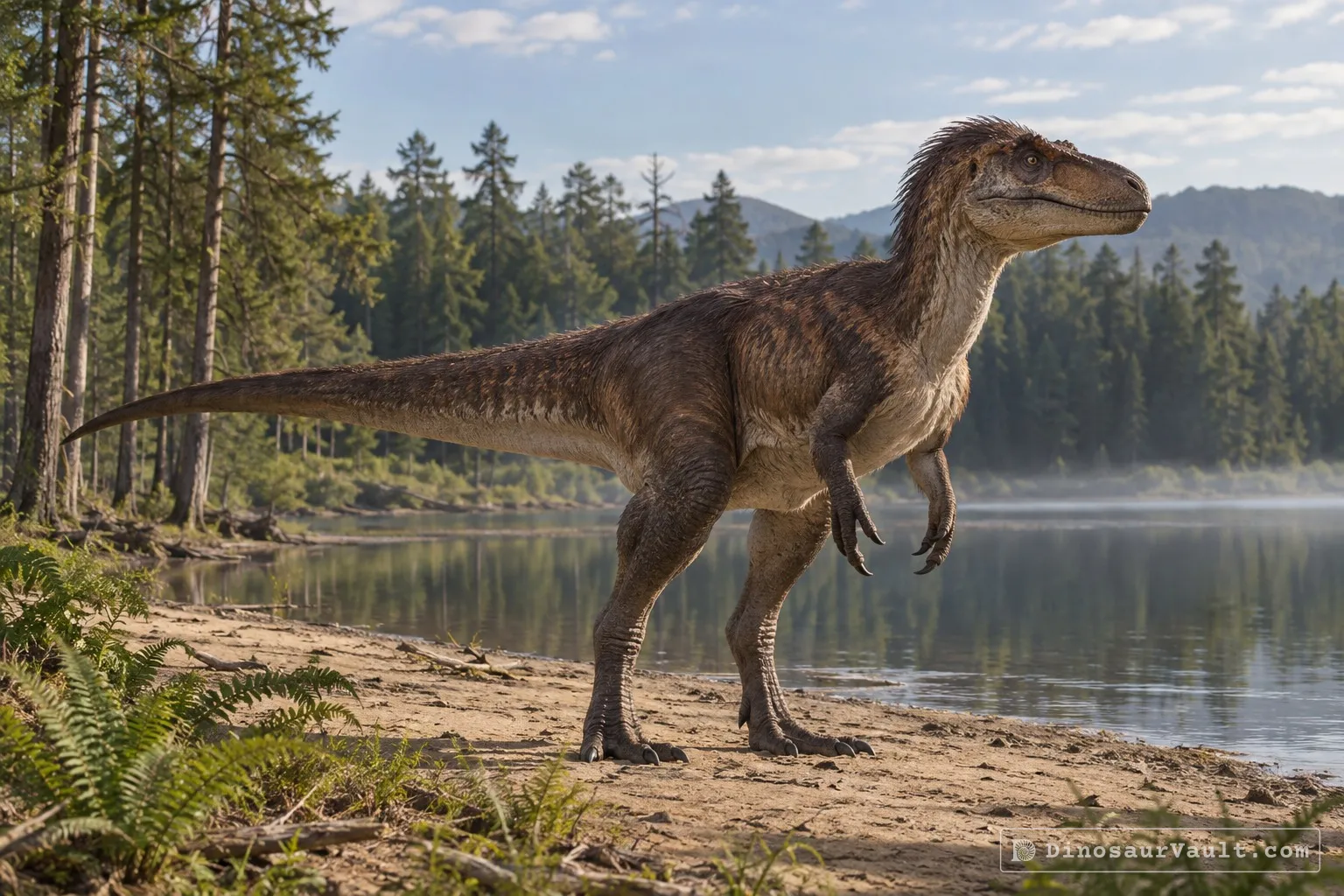
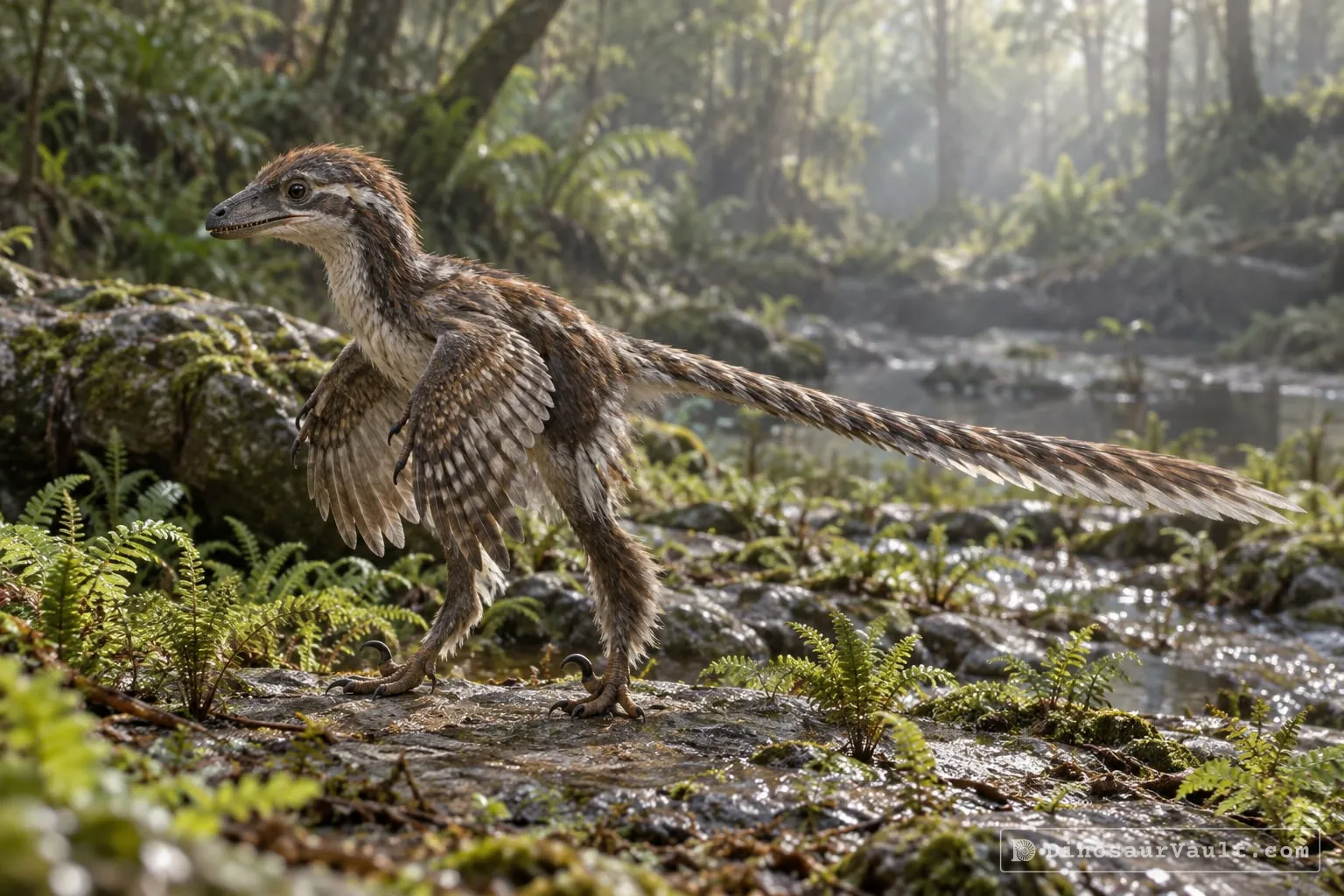
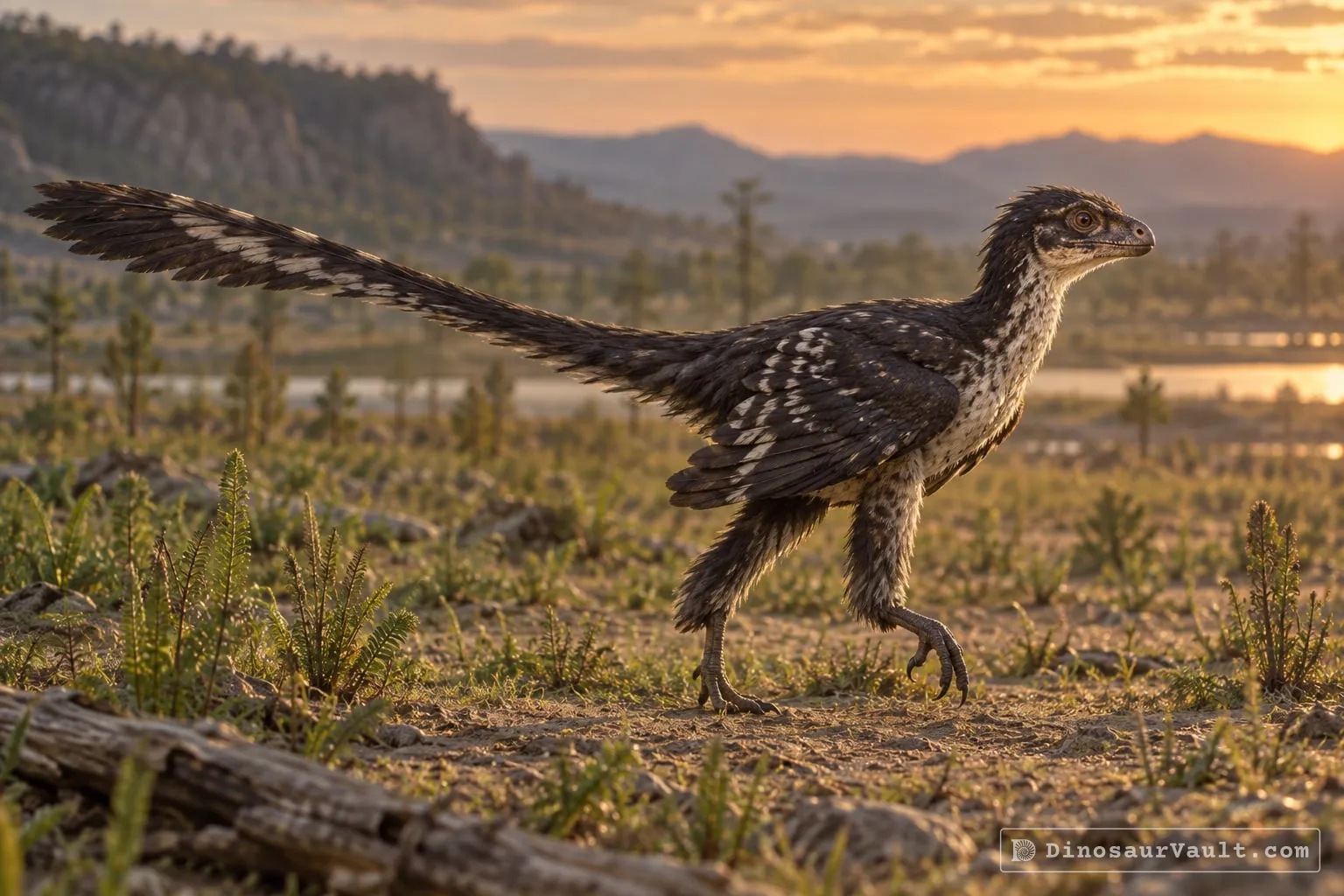
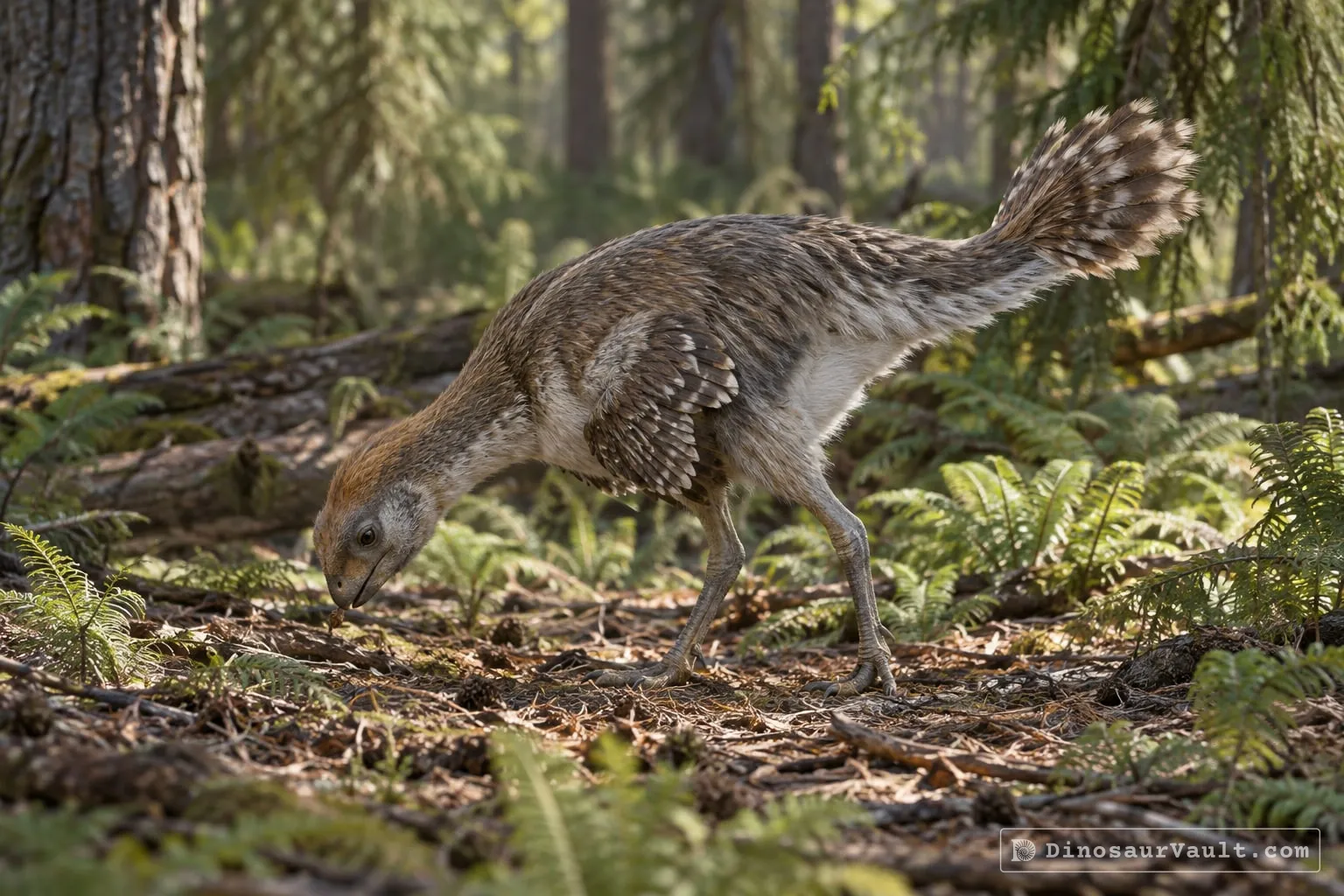
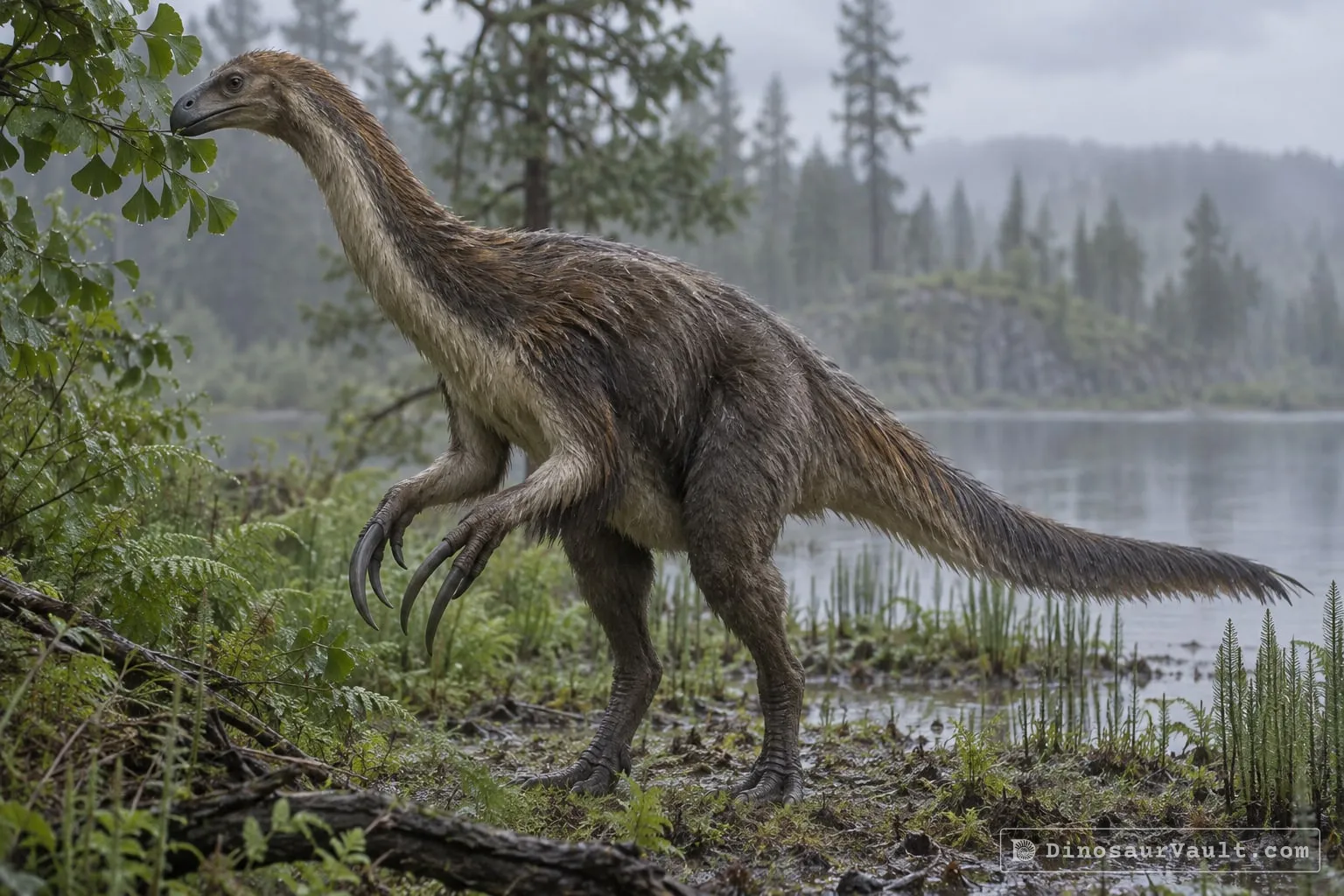


A rock formation can hold fossils laid down millions of years apart, so not every animal here met Chuanqilong.
The evidence
The science behind Chuanqilong
Which parts of the picture come from its own bones, and which come from its relatives.
From its own fossils
- A nearly complete skeleton preserves the skull, limbs, much of the tail and bony armor.
- The armor includes a band across the neck, keeled plates and small bony nodules.
- The preserved tail vertebrae lack the long, overlapping joints that stiffen the tail-club handle in later ankylosaurs.
Borrowed from relatives
- Almost the whole body is known from its own bones, so little of the skeleton needs to be borrowed from relatives.
Still unknown
- Its full-grown size and how its armor changed with age.
- The exact arrangement of all its armor plates.
- Its color.
Discovery timeline
- 2014Named itHan et al.
- 2014Its worldJiang et al.
- 2015Family treeArbour & Currie
Key papers
The research behind what we know of Chuanqilong
Named it
Named Chuanqilong from a nearly complete immature skeleton and placed it among early ankylosaurids, with a tail probably lacking a club.
A New Basal Ankylosaurid (Dinosauria: Ornithischia) from the Lower Cretaceous Jiufotang Formation of Liaoning Province, China. PLoS ONE 9: e104551
Read the paper : A New Basal Ankylosaurid (Dinosauria: Ornithischia) from the Lower Cretaceous Jiufotang Formation of Liaoning Province, China (opens in a new tab)Its world
Proposed that volcanic flows carried land animals into lakes, helping explain fossil preservation in the Jiufotang Formation and neighboring rocks.
New evidence suggests pyroclastic flows are responsible for the remarkable preservation of the Jehol biota. Nature Communications 5
Read the paper : New evidence suggests pyroclastic flows are responsible for the remarkable preservation of the Jehol biota (opens in a new tab)Family tree
Found that stiff tail handles evolved before large club knobs, and compared the unmodified tail vertebrae of Chuanqilong with those of other ankylosaurs.
Ankylosaurid dinosaur tail clubs evolved through stepwise acquisition of key features. Journal of Anatomy 227: 514-523
Read the paper : Ankylosaurid dinosaur tail clubs evolved through stepwise acquisition of key features (opens in a new tab)
Close relatives
Other members of Ankylosauridae


Sources: Wikidata