Wulong
"dancing dragon"
- Lived
- 121 to 113 million years ago, Early Cretaceous
- Diet
- Carnivore
- Group
- Theropods, Dromaeosauridae
- Found in
- China
- Named by
- Poust et al. 2020
Where its fossils were found
The evidence
Today

115 million years ago
Habitat
Rivers and lakes crossed its part of China during a cool interval, with volcanic ash falling into some of the lake beds. Other dinosaurs of the Jiufotang Formation included Microraptor and Psittacosaurus.
Field notes
About Wulong
What it was like
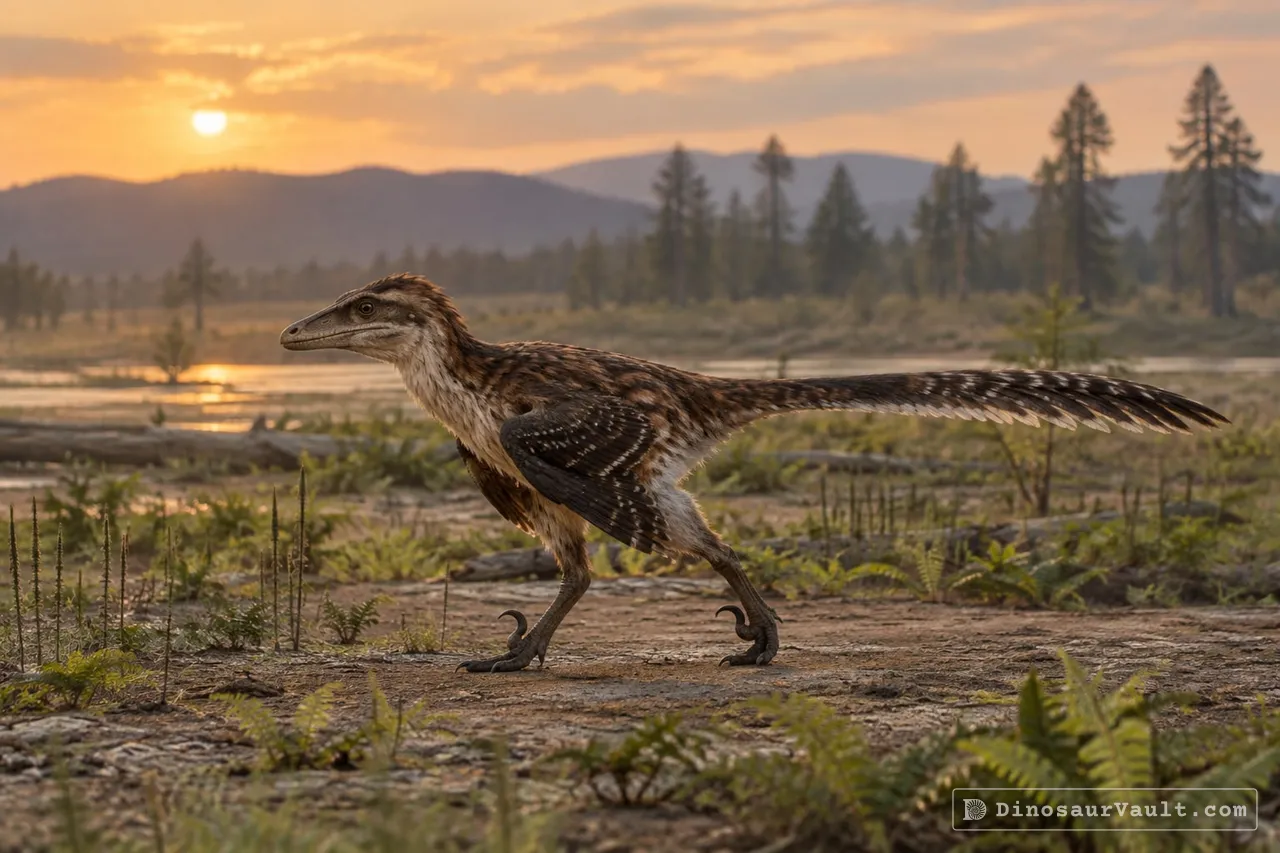
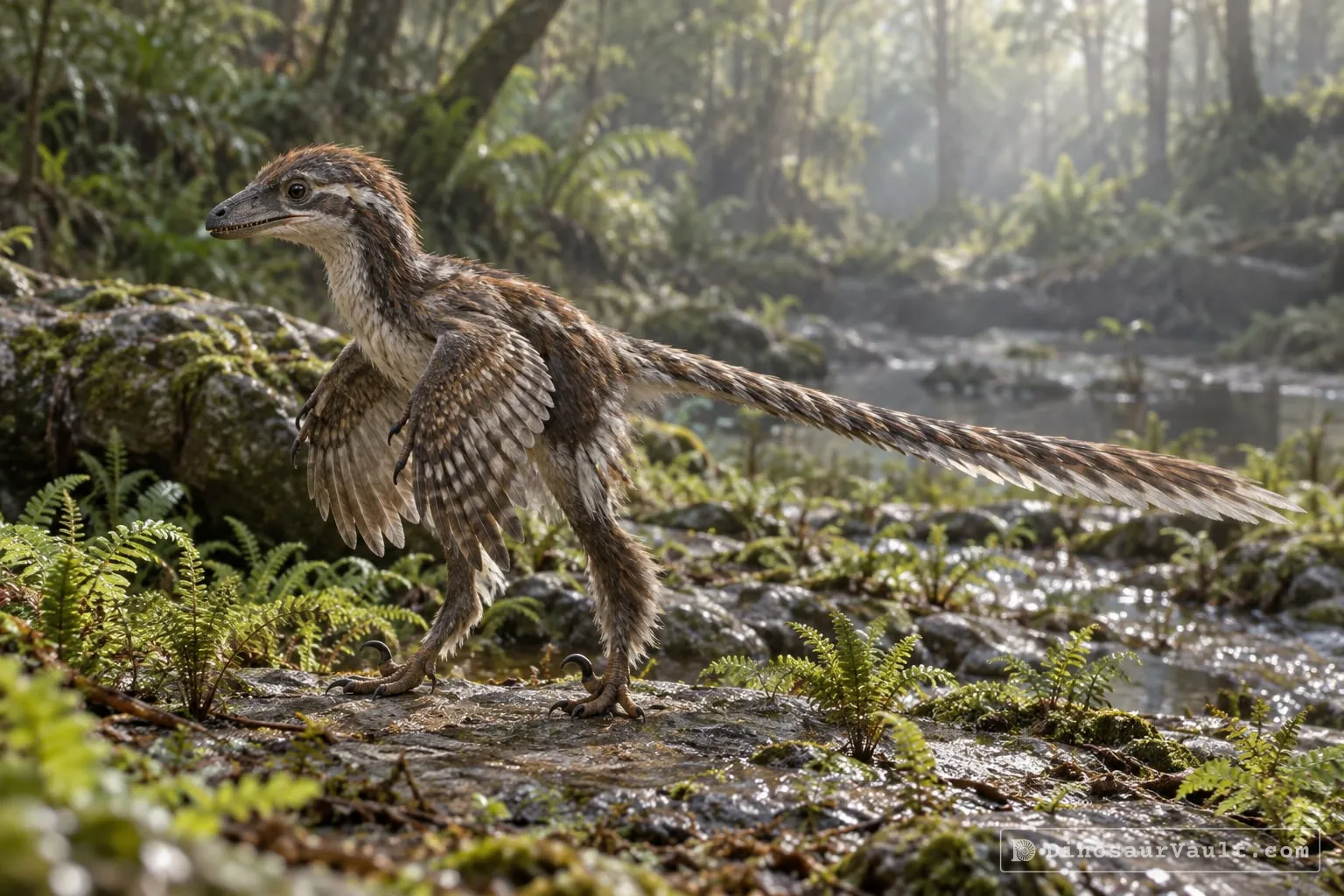
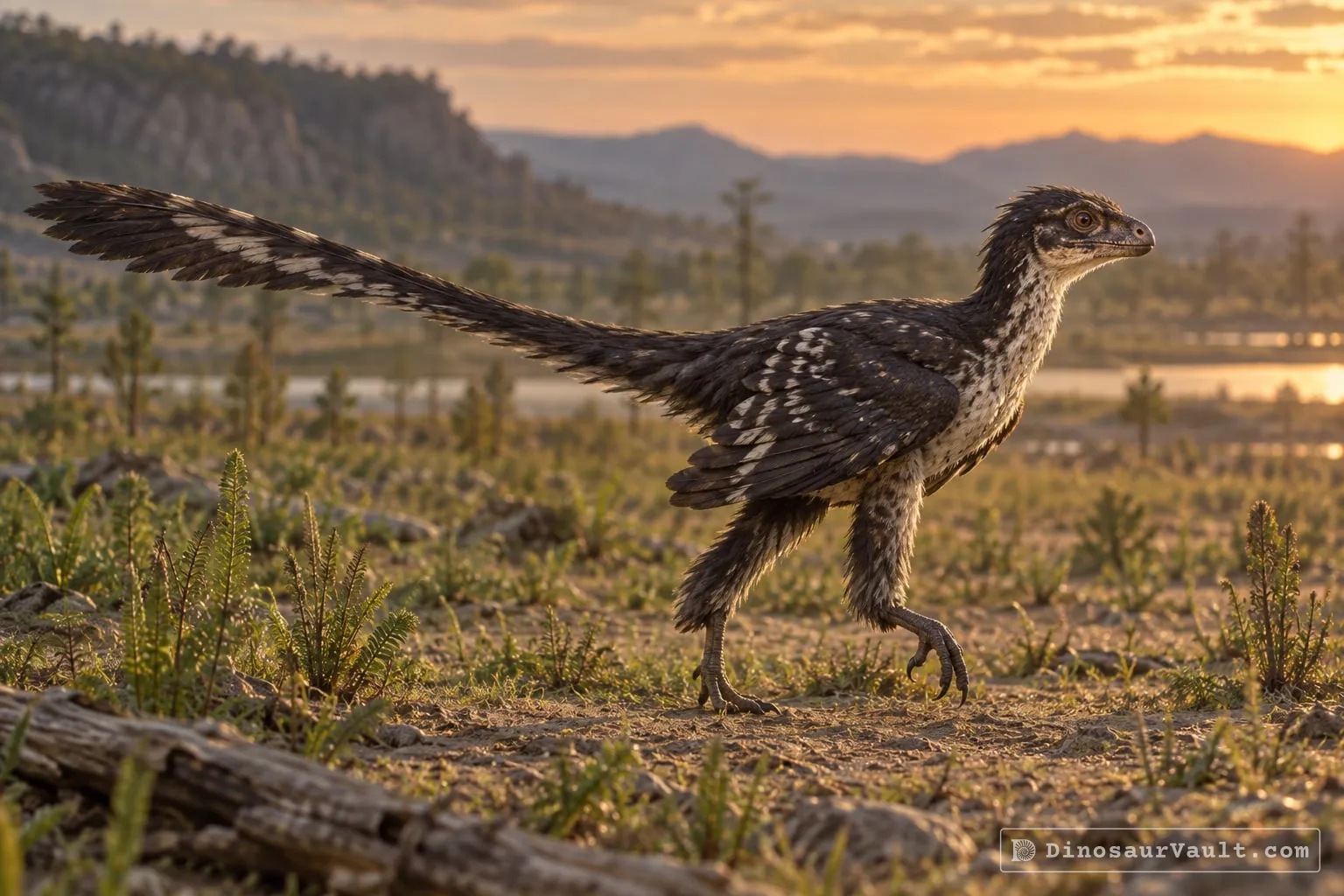
Wulong was a small feathered raptor, a relative of Microraptor, known from a complete skeleton of a young animal. It had feathers on its arms and legs and two long feathers at the tip of its tail.
Its well-developed feathers show that even young raptors had fairly advanced plumage.
Its world
It lived in the Early Cretaceous in what is now northeastern China. Its skeleton comes from the Jiufotang Formation, where it shared the land with Microraptor and Psittacosaurus.
How it was found
Poust and colleagues named Wulong in 2020, from a single find.
Field gallery
More views of Wulong
Scenes reconstructed from the available fossil evidence.
1 of 3
Lived alongside
Found in the same rock formations
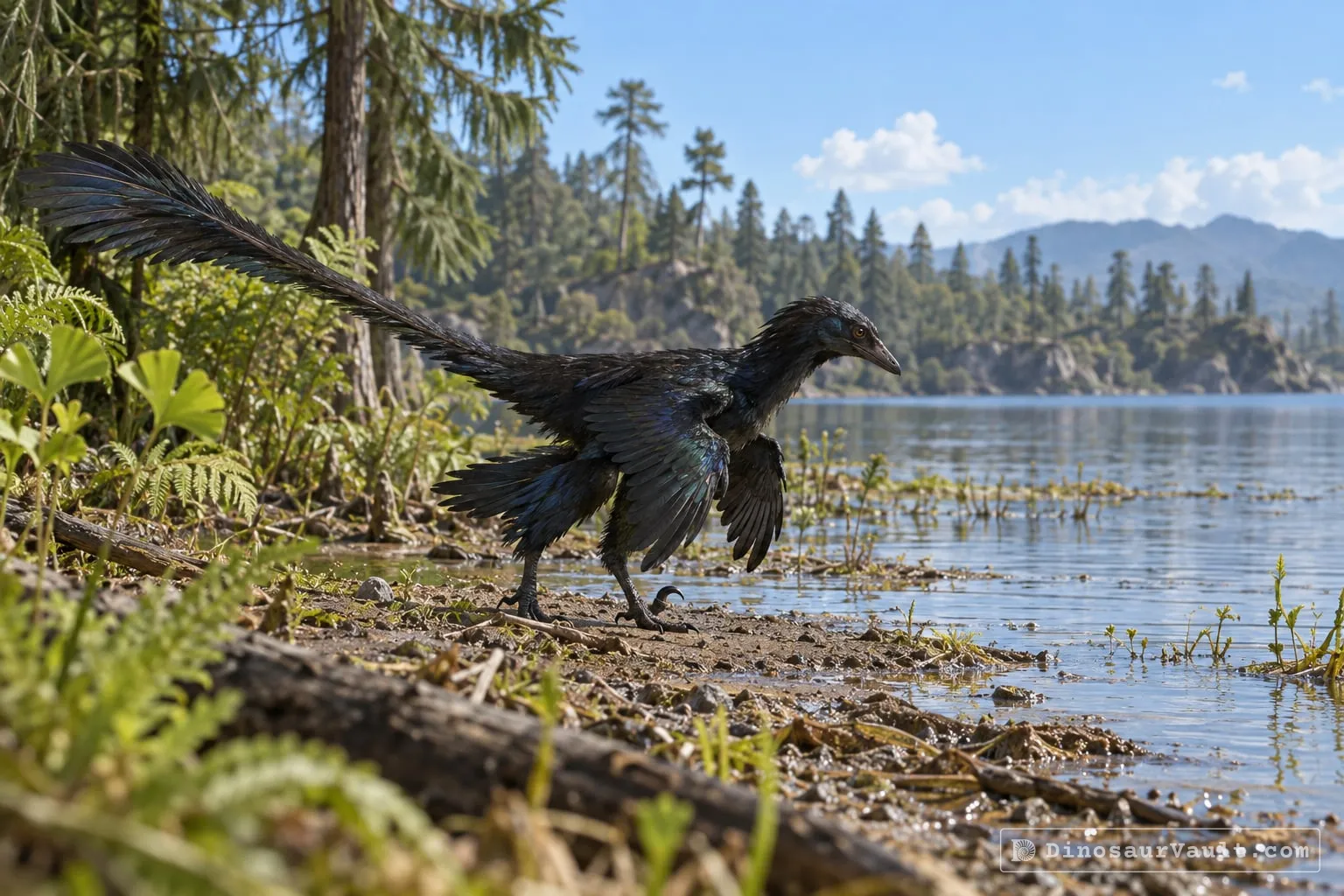
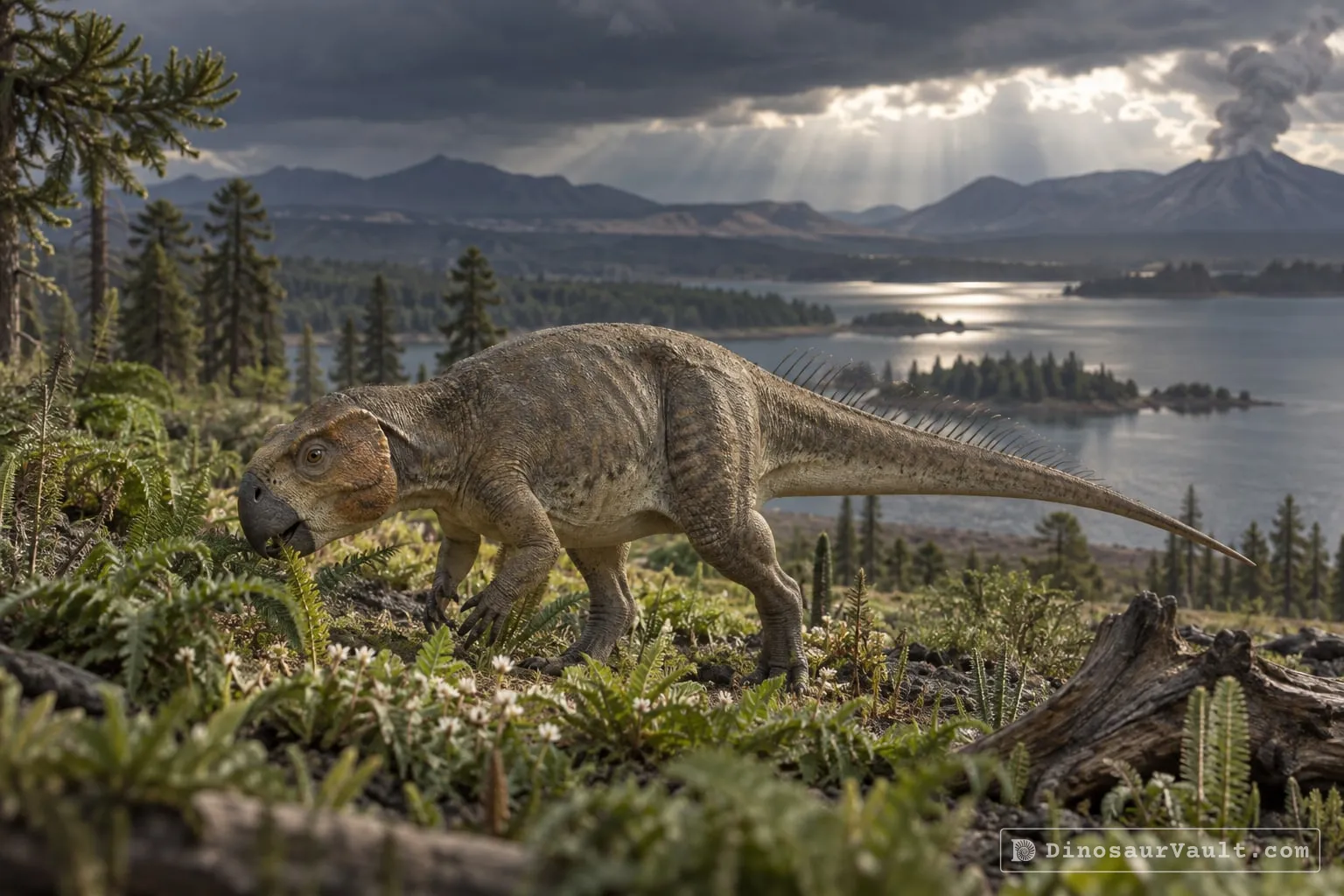
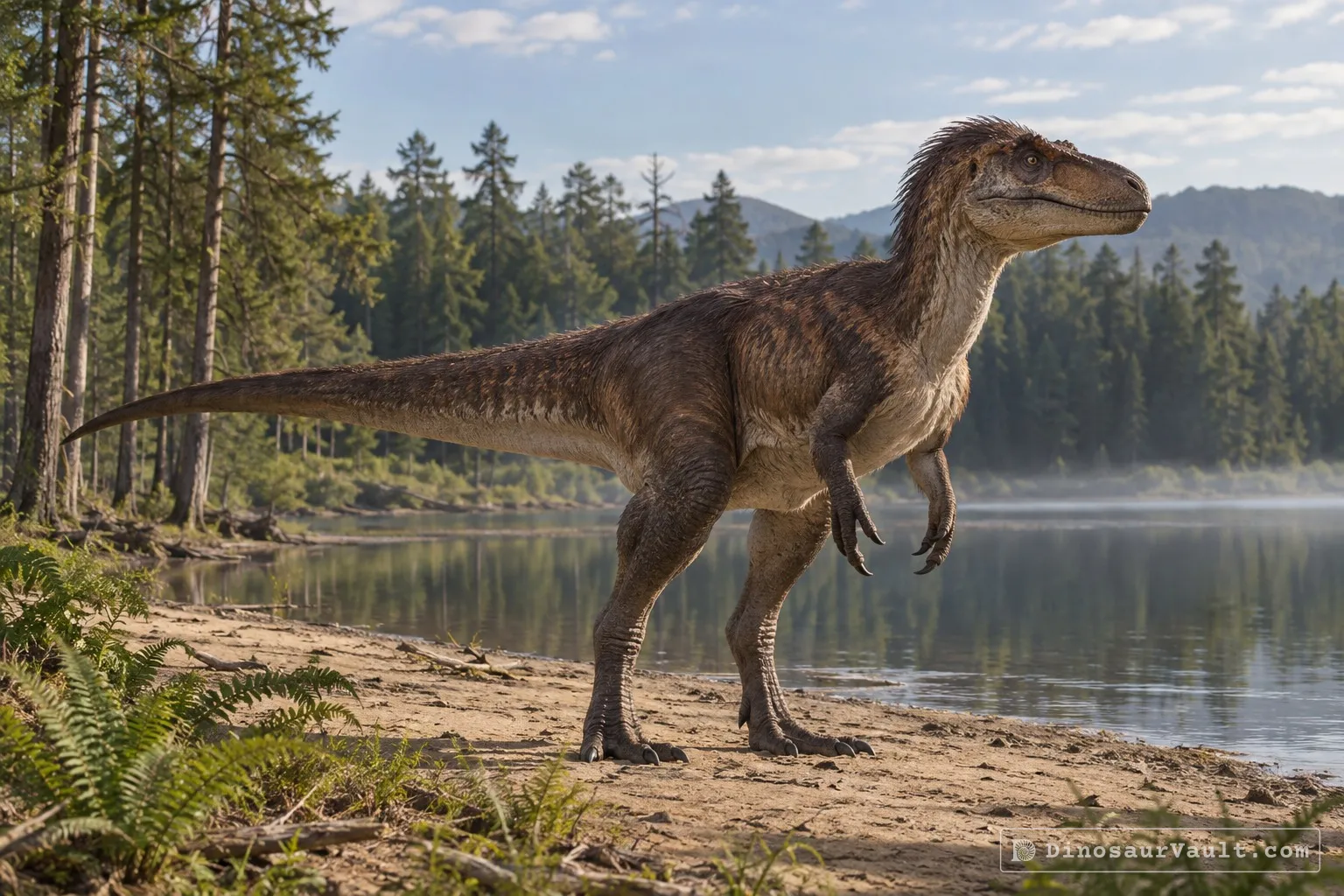


A rock formation can hold fossils laid down millions of years apart, so not every animal here met Wulong.
The evidence
The science behind Wulong
Which parts of the picture come from its own bones, and which come from its relatives.
From its own fossils
- A complete skeleton preserves feathers on the body, arms and legs, with long feathers extending from the tail tip.
- Its long tail has bony rods that helped stiffen it, and each foot carries a curved sickle claw.
- Tiny pigment structures suggest shimmering feathers on the limbs and gray feathers on parts of the body.
Borrowed from relatives
- Almost the whole skeleton is known from its own bones, so little of the body needs to be borrowed from relatives.
- Microraptor provides a comparison for how long feathers on the arms and legs might have helped in gliding.
Still unknown
- The size and appearance of a fully grown adult.
- Whether it could glide or fly by flapping.
- The color of its long tail feathers.
Discovery timeline
- 2003Close relativeXu et al.
- 2020Named itPoust et al.
- 2023SkinCroudace et al.
Key papers
The research behind what we know of Wulong
Close relative
Described long feathers on the arms and legs of Microraptor and proposed gliding, providing a comparison for Wulong's feathered limbs.
Four-winged dinosaurs from China. Nature 421: 335-340
Read the paper : Four-winged dinosaurs from China (opens in a new tab)Named it
Described the feathered skeleton and examined bone tissue, showing that long feathers developed while the animal was still young and growing.
A new microraptorine theropod from the Jehol Biota and growth in early dromaeosaurids. The Anatomical Record 303: 963-987
Read the paper : A new microraptorine theropod from the Jehol Biota and growth in early dromaeosaurids (opens in a new tab)Skin
Studied preserved pigment structures and reconstructed shimmering limb feathers and gray body feathers in the young Wulong.
Iridescent plumage in a juvenile dromaeosaurid theropod dinosaur. Acta Palaeontologica Polonica 68
Read the paper : Iridescent plumage in a juvenile dromaeosaurid theropod dinosaur (opens in a new tab)
Close relatives
Other members of Dromaeosauridae


Sources: Wikidata