Lingyuanosaurus
Type species Lingyuanosaurus sihedangensis
- Lived
- 121 to 113 million years ago, Early Cretaceous
- Diet
- Carnivore
- Group
- Theropods
- Found in
- China
- Named by
- Yao et al. 2019
Where its fossils were found
The evidence
Today

115 million years ago
Habitat
Its bones were buried in lake sediments in what is now China. Microraptor and Psittacosaurus lived in the region.
Field notes
About Lingyuanosaurus
What it was like
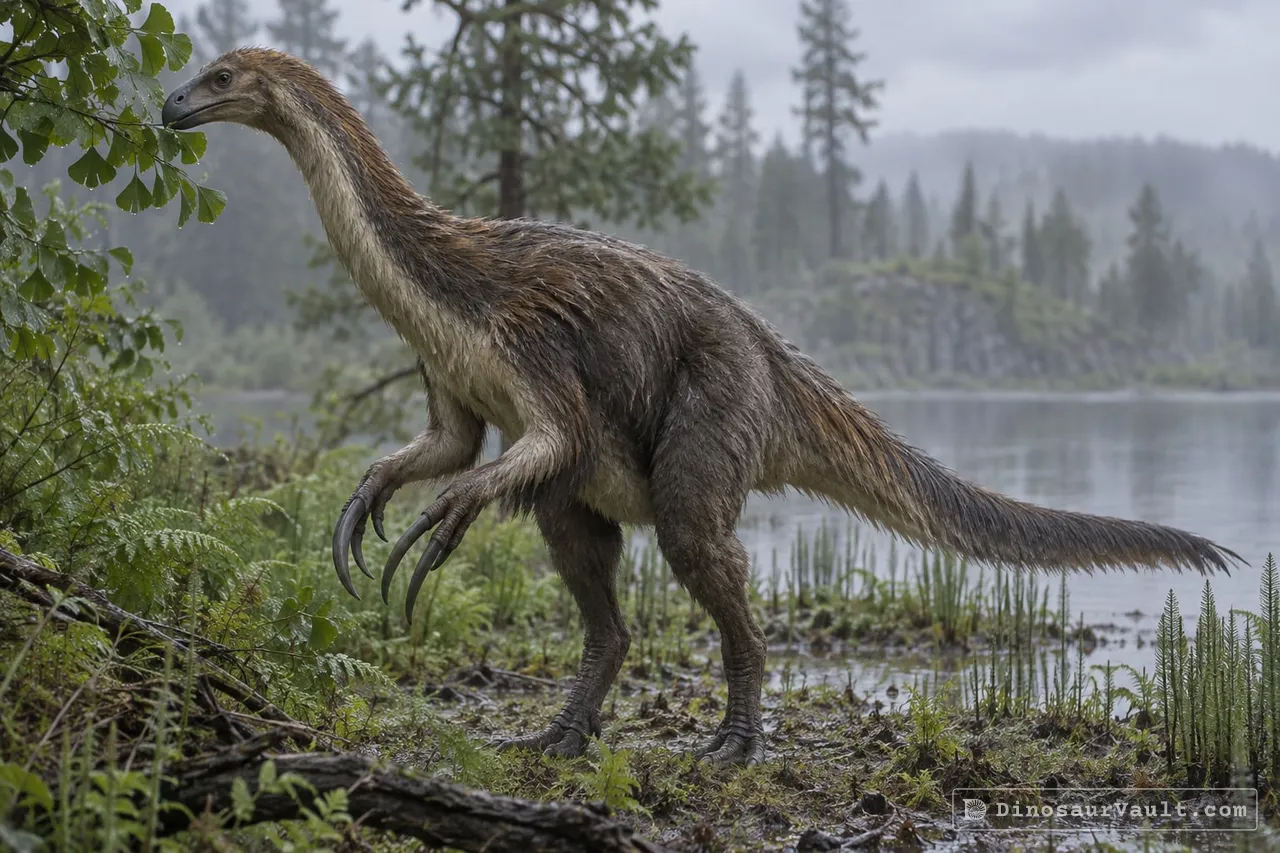
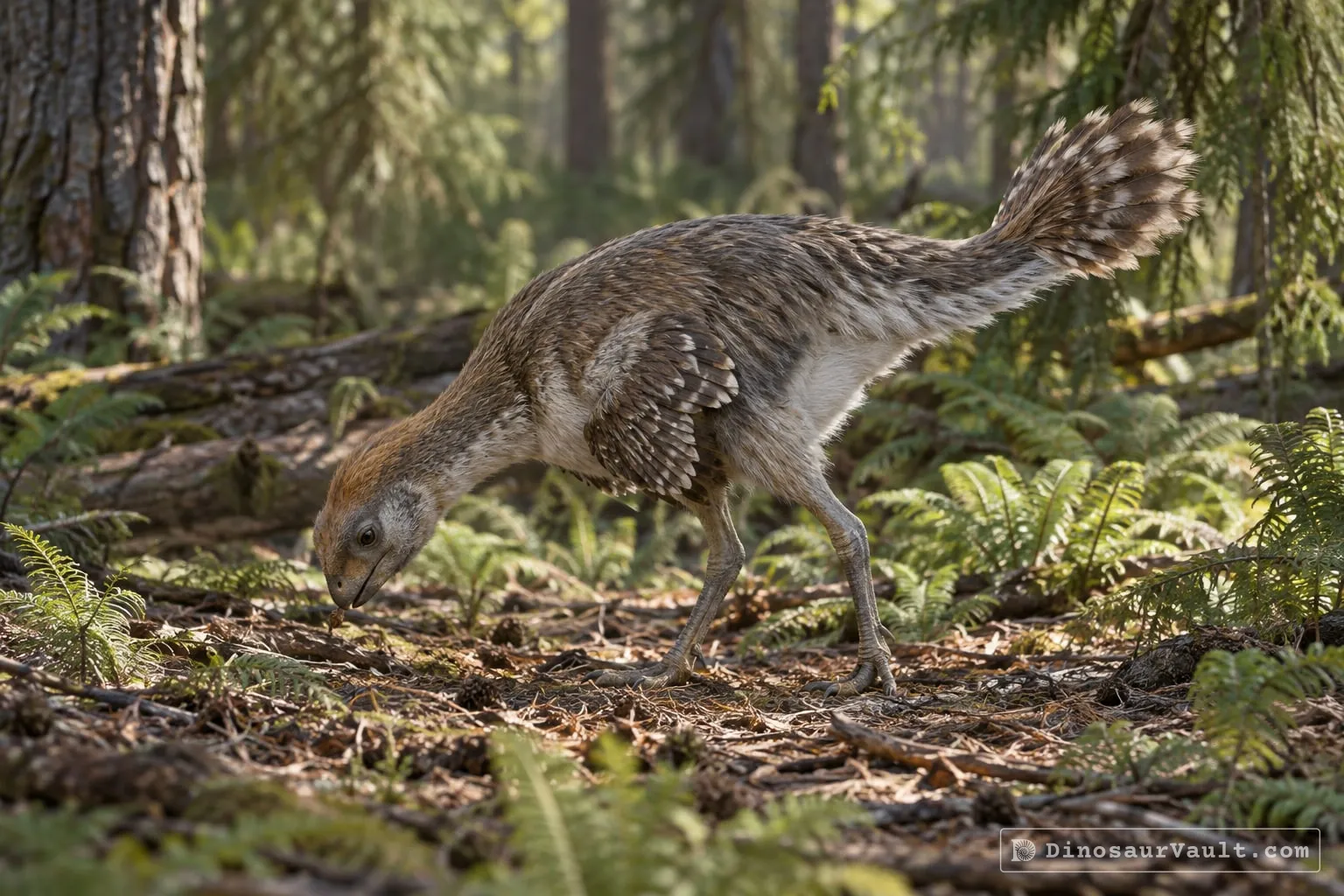
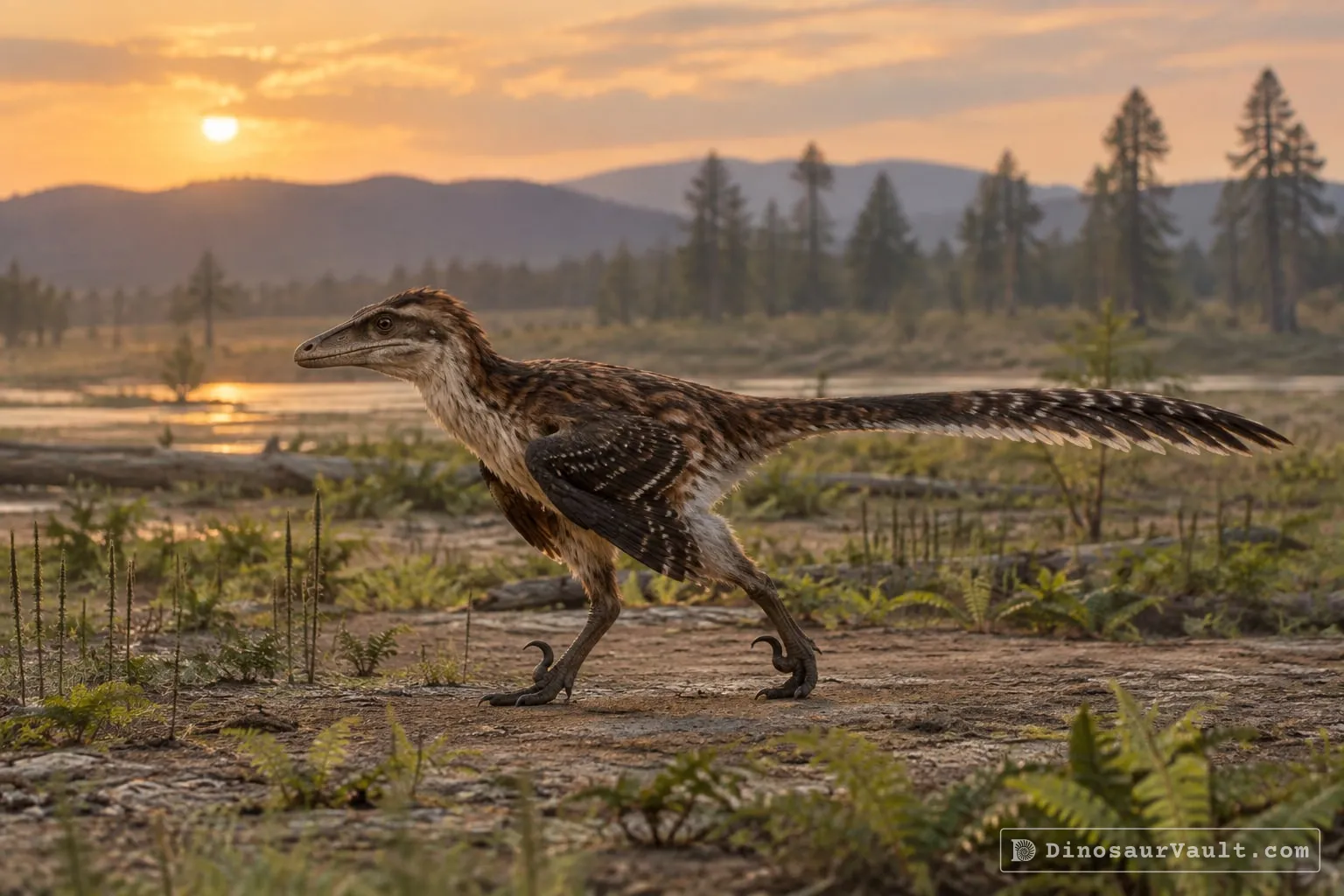
Lingyuanosaurus was an early therizinosaur, a feathered theropod that probably ate plants. It is known from part of the skeleton.
Its world
It lived in the Early Cretaceous, in what is now China. It comes from the Jiufotang Formation, where it shared the land with the small four-winged Microraptor and the plant eater Psittacosaurus.
How it was found
Yao and colleagues named Lingyuanosaurus in 2019. The type species is Lingyuanosaurus sihedangensis.
Field gallery
More views of Lingyuanosaurus
Scenes reconstructed from the available fossil evidence.
1 of 3
Lived alongside
Found in the same rock formations
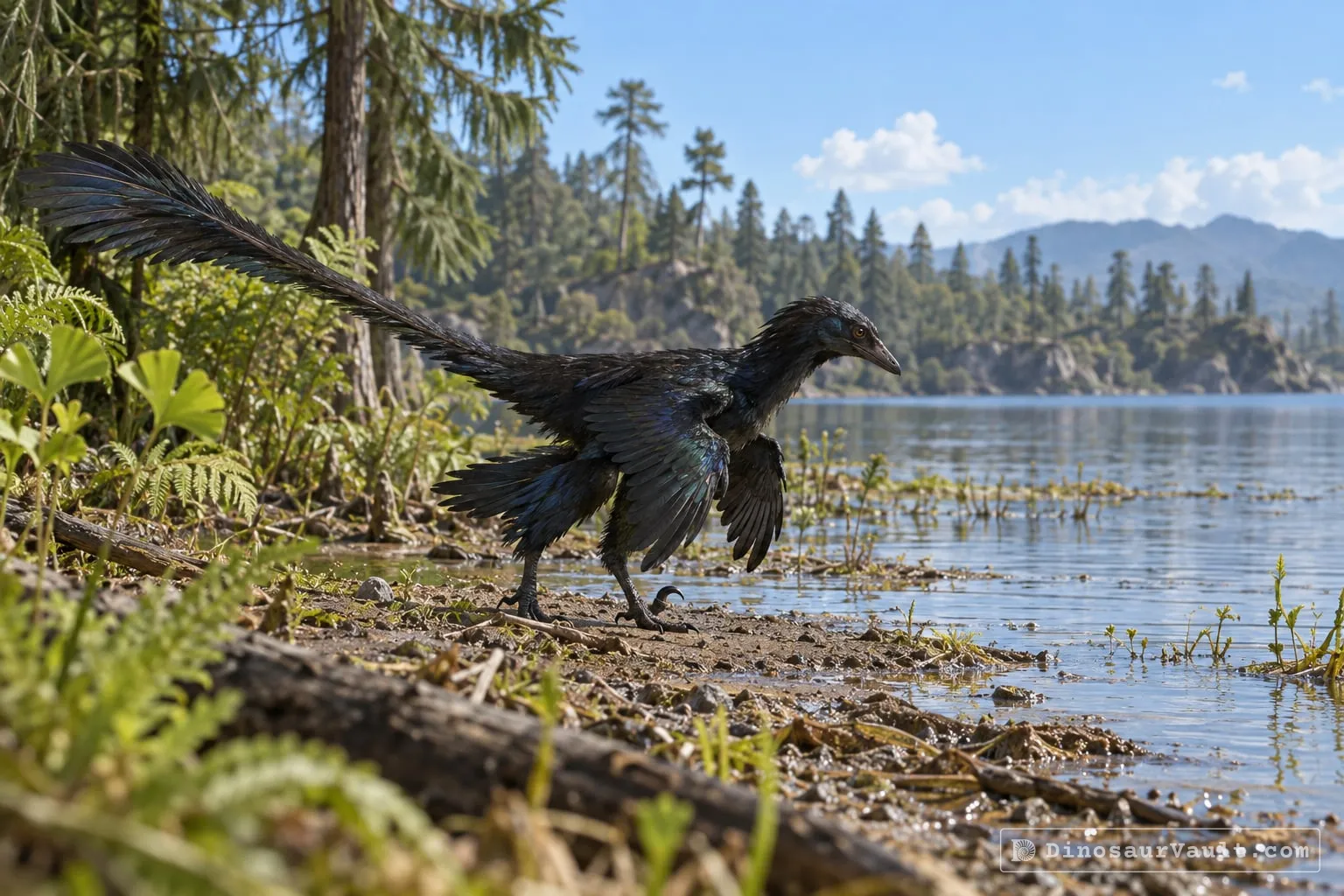
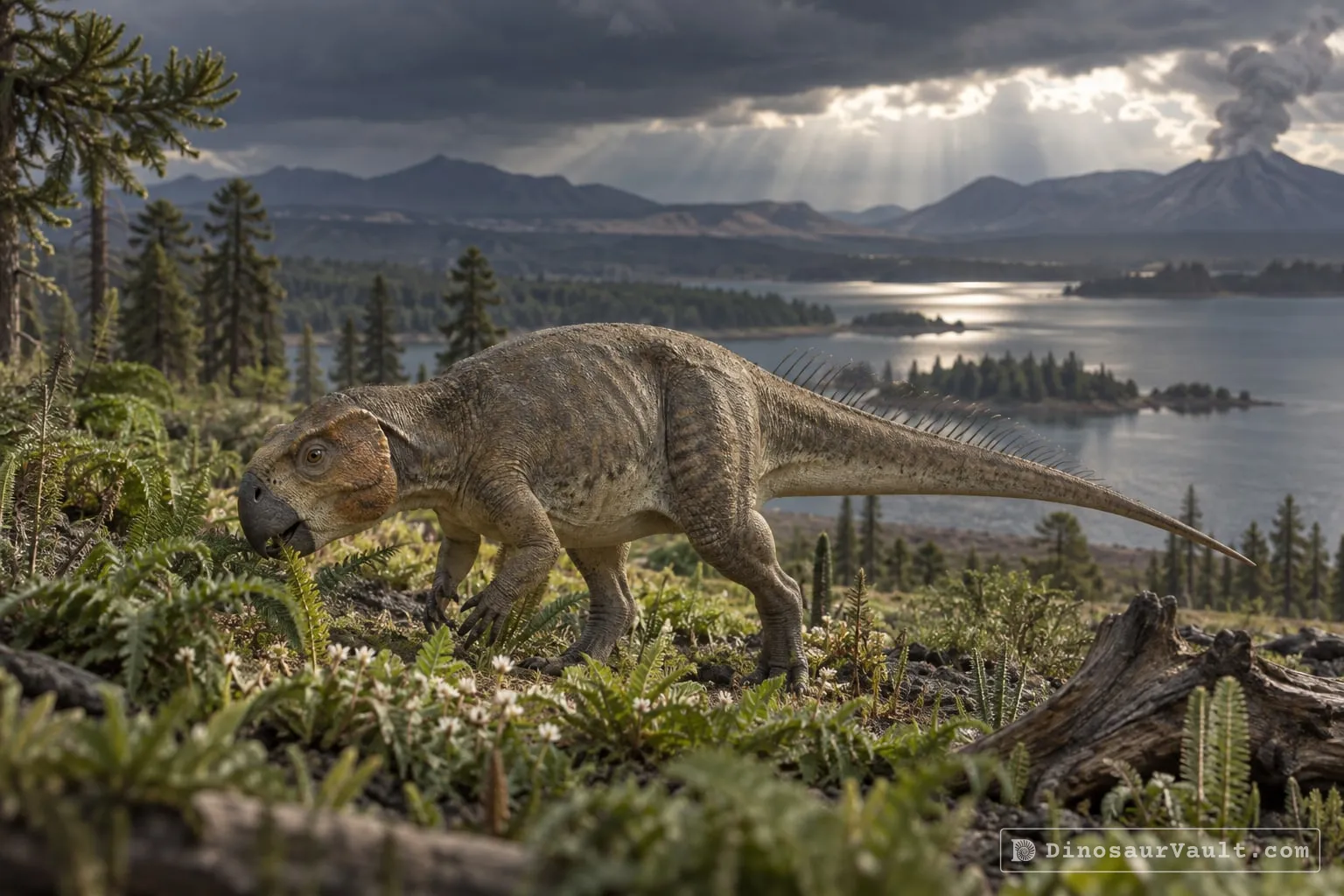
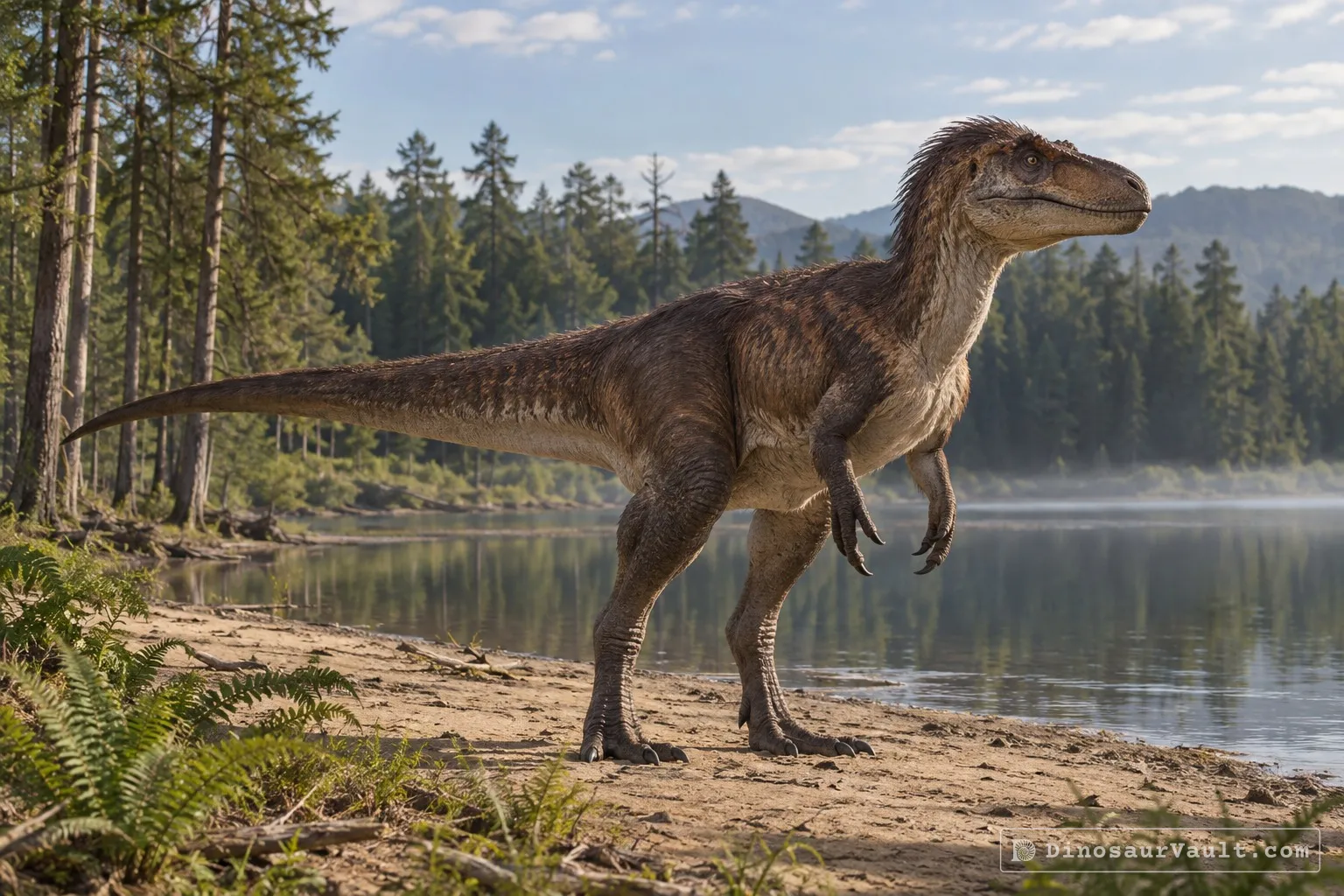
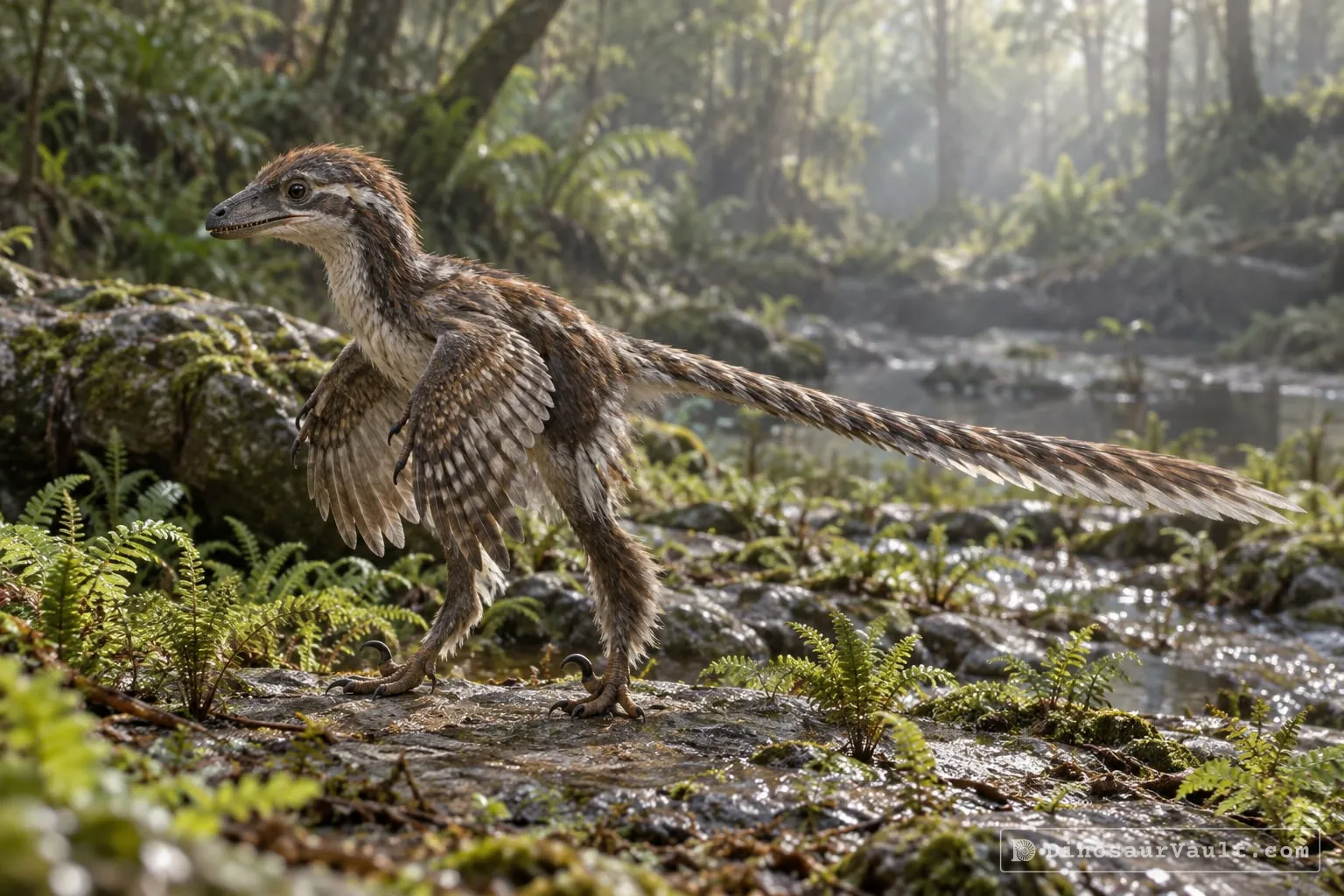
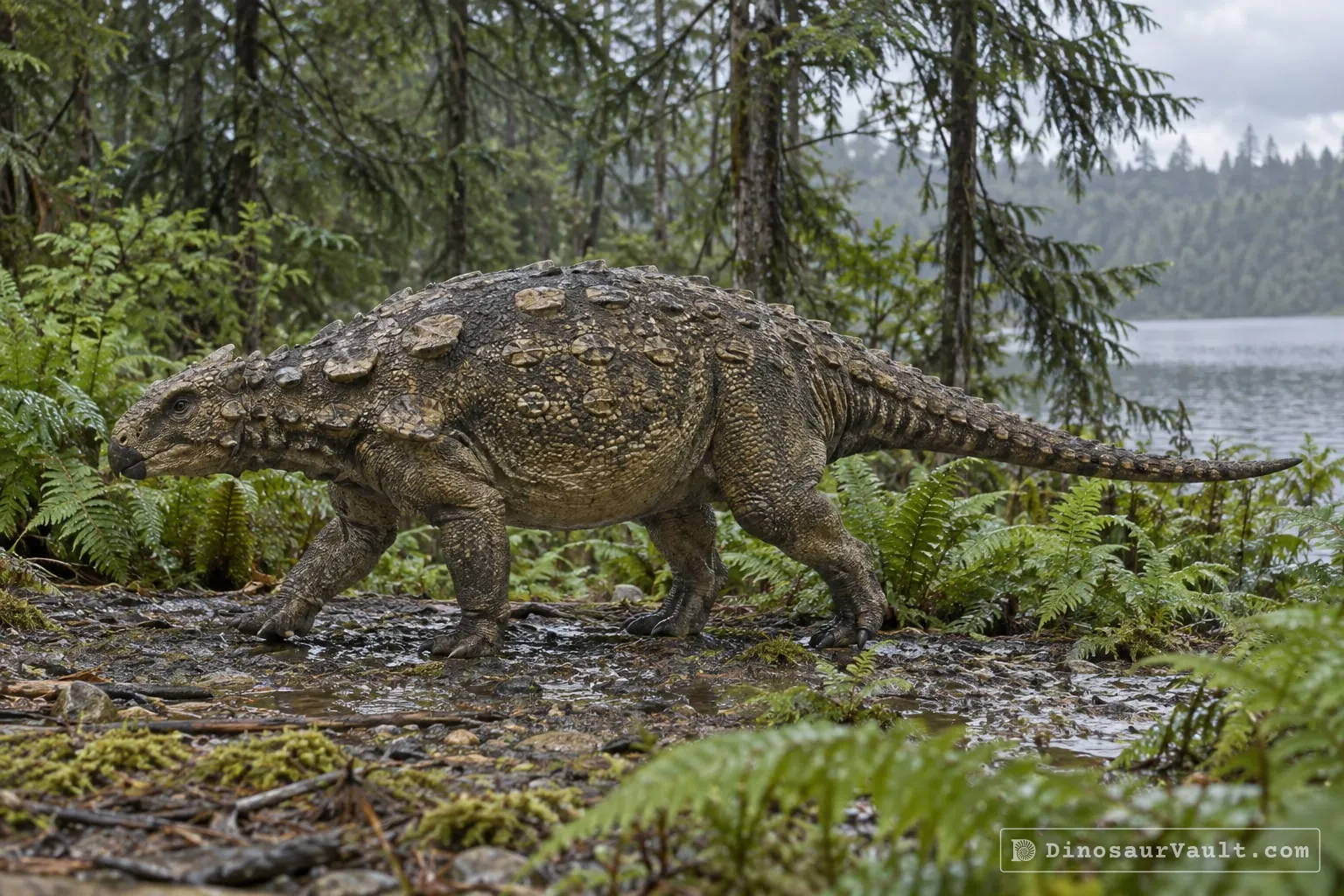
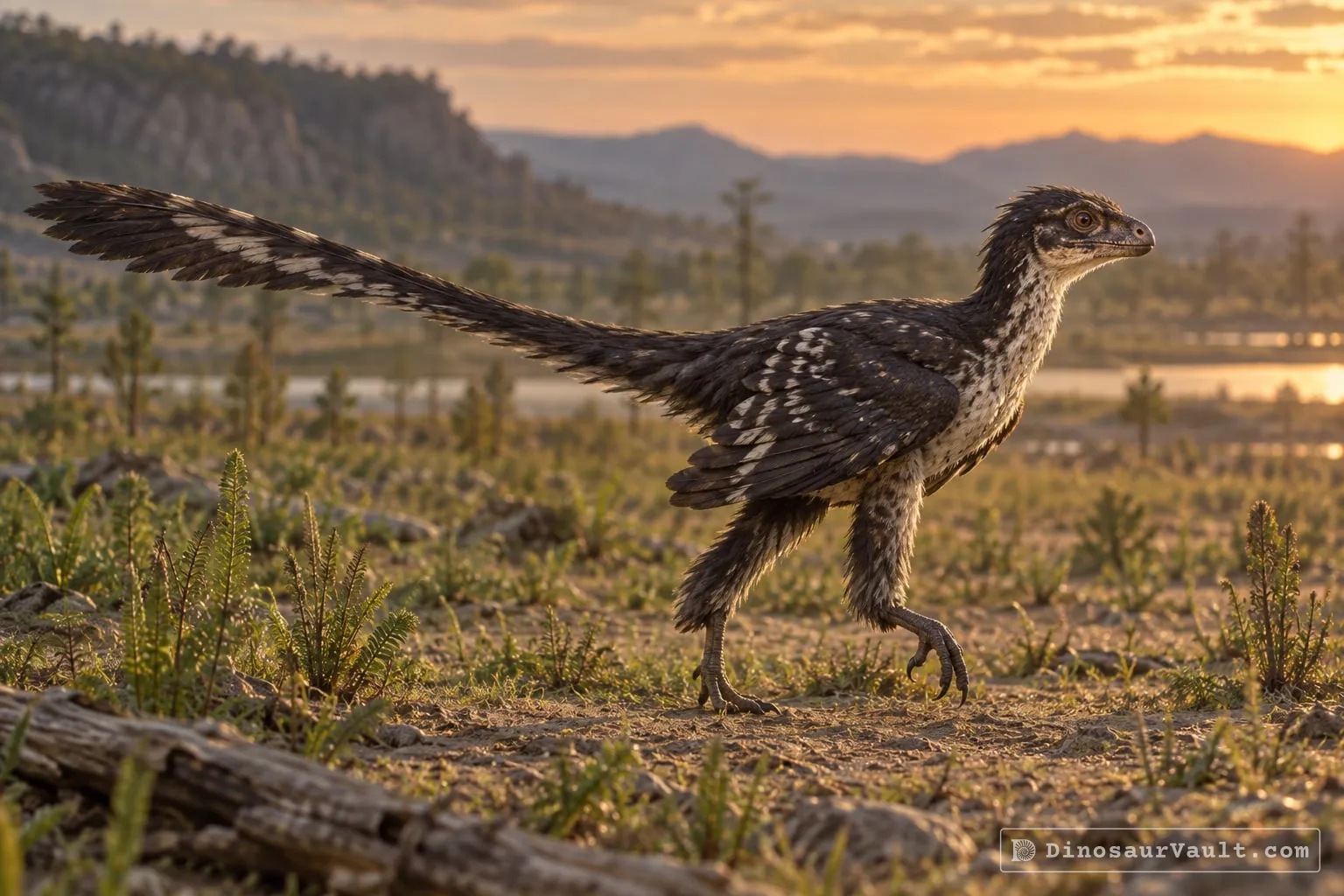


A rock formation can hold fossils laid down millions of years apart, so not every animal here met Lingyuanosaurus.
The evidence
The science behind Lingyuanosaurus
Which parts of the picture come from its own bones, and which come from its relatives.
From its own fossils
- A partial skeleton includes vertebrae, ribs, upper arm bones, hand claws, a hip bone and hind-leg bones.
- Its hand claws are flattened from side to side.
- The shin is longer than the thigh, while the deep hip bone resembles those of more specialized therizinosaurs.
Borrowed from relatives
- A feathered covering follows Beipiaosaurus, a related therizinosaur with preserved feathers.
- The missing skull is restored by comparison with early therizinosaurs such as Jianchangosaurus.
Still unknown
- Its adult size and proportions.
- Its feather pattern and color.
- Exactly what it ate.
Discovery timeline
- 2009Close relativeXu, Zheng & You
- 2013Close relativePu et al.
- 2019Named itYao et al.
Key papers
The research behind what we know of Lingyuanosaurus
Close relative
Beipiaosaurus preserves broad, simple feather filaments, providing a comparison for the covering of related therizinosaurs.
A new feather type in a nonavian theropod and the early evolution of feathers. Proceedings of the National Academy of Sciences 106: 832-834
Read the paper : A new feather type in a nonavian theropod and the early evolution of feathers (opens in a new tab)Close relative
Described the nearly complete Jianchangosaurus, whose unusual tooth arrangement helps explain how early therizinosaurs processed plant food.
An Unusual Basal Therizinosaur Dinosaur with an Ornithischian Dental Arrangement from Northeastern China. PLoS ONE 8: e63423
Read the paper : An Unusual Basal Therizinosaur Dinosaur with an Ornithischian Dental Arrangement from Northeastern China (opens in a new tab)Named it
Described a young therizinosaur whose hips resemble specialized relatives while its long shin retains an earlier body plan.
A new transitional therizinosaurian theropod from the Early Cretaceous Jehol Biota of China. Scientific Reports 9
Read the paper : A new transitional therizinosaurian theropod from the Early Cretaceous Jehol Biota of China (opens in a new tab)
Close relatives
Other members of Therizinosauria


Sources: Wikidata