Zhenyuanlong
- Lived
- 126 to 120 million years ago, Early Cretaceous
- Diet
- Carnivore
- Group
- Theropods, Dromaeosauridae
- Found in
- China
- Named by
- Lü and Brusatte 2015
Where its fossils were found
The evidence
Today

125 million years ago
Habitat
Lakes and forests of conifers and ginkgo relatives covered its Yixian Formation world. Psittacosaurus, Sinosauropteryx and Sinornithosaurus are other dinosaurs from these rocks.
Field notes
About Zhenyuanlong
What it was like
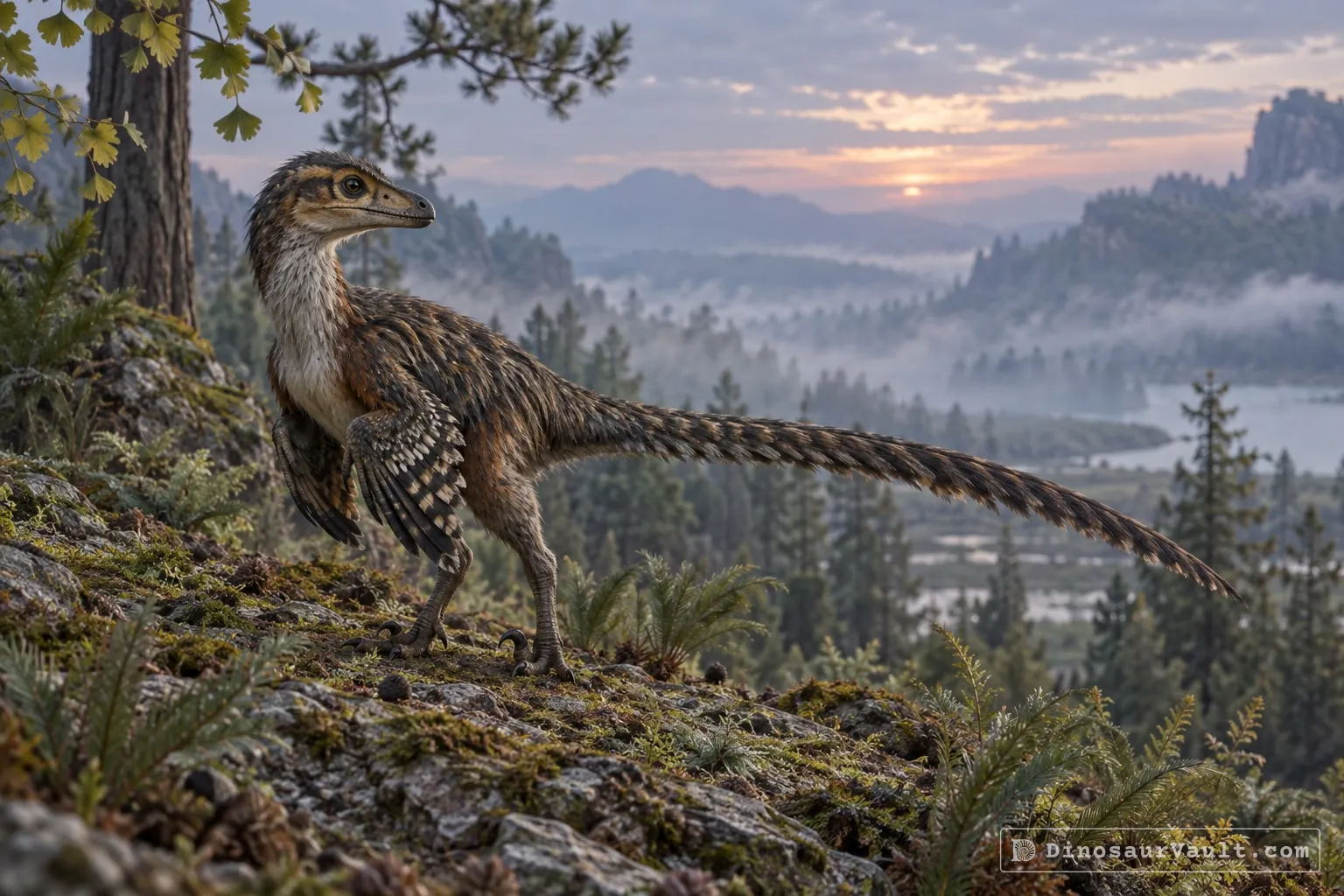
Zhenyuanlong was a feathered dromaeosaur, a relative of Velociraptor. Its single skeleton is nearly complete and shows large wing feathers on its short arms and long feathers on its tail. It was too heavy to fly, so its wings may have been for display or for keeping eggs warm.
Its world
It lived in the Early Cretaceous, in what is now China. The Yixian Formation it comes from was a land of lakes and forests, often buried by volcanic ash. It shared that world with the feathered tyrannosaur Yutyrannus, the small hunters Sinosauropteryx and Sinornithosaurus, and the plant eater Psittacosaurus.
How it was found
Lü and Brusatte named Zhenyuanlong in 2015. The name ends in the Chinese word for dragon.
Field gallery
More views of Zhenyuanlong
Scenes reconstructed from the available fossil evidence.
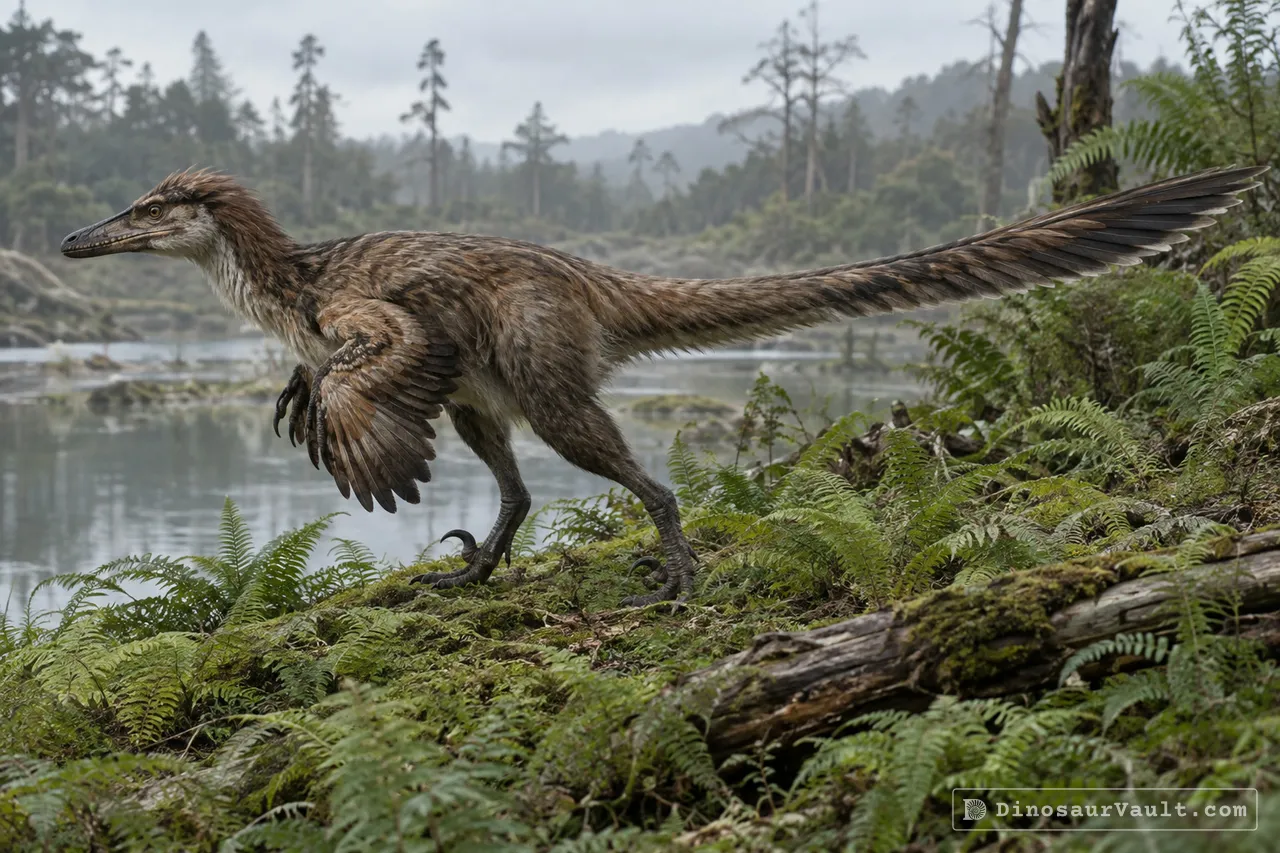
1 of 3
Lived alongside
Found in the same rock formations
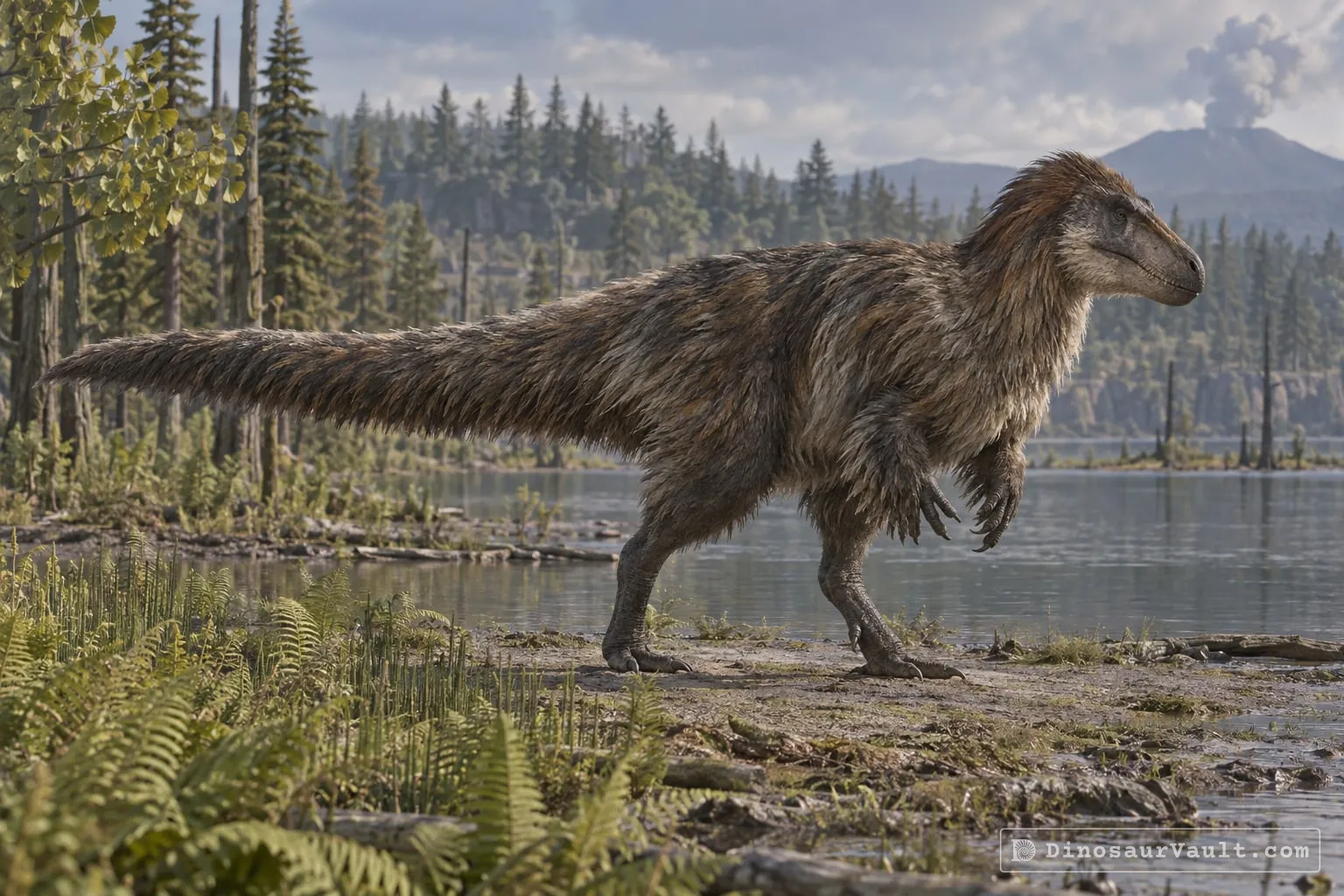
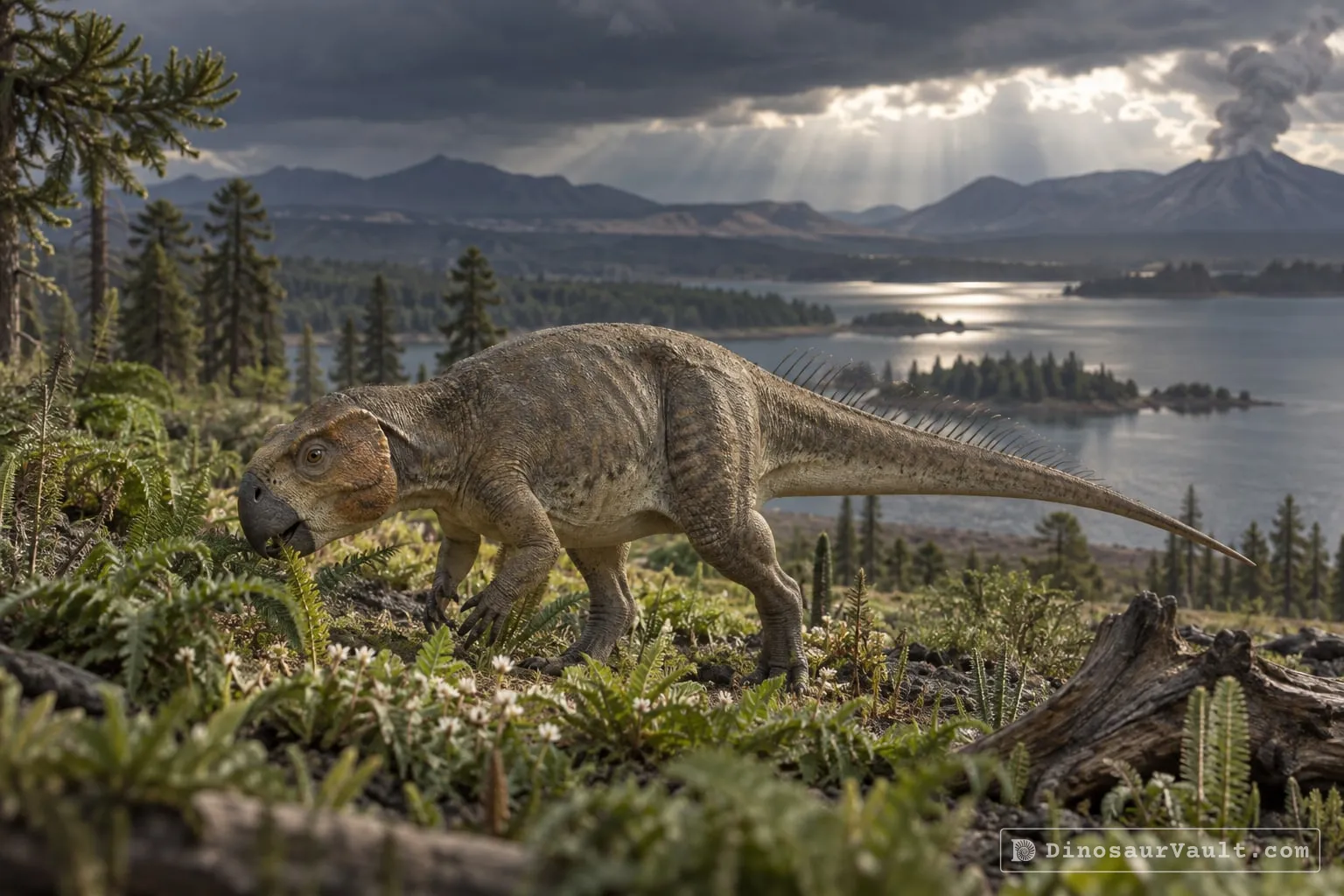
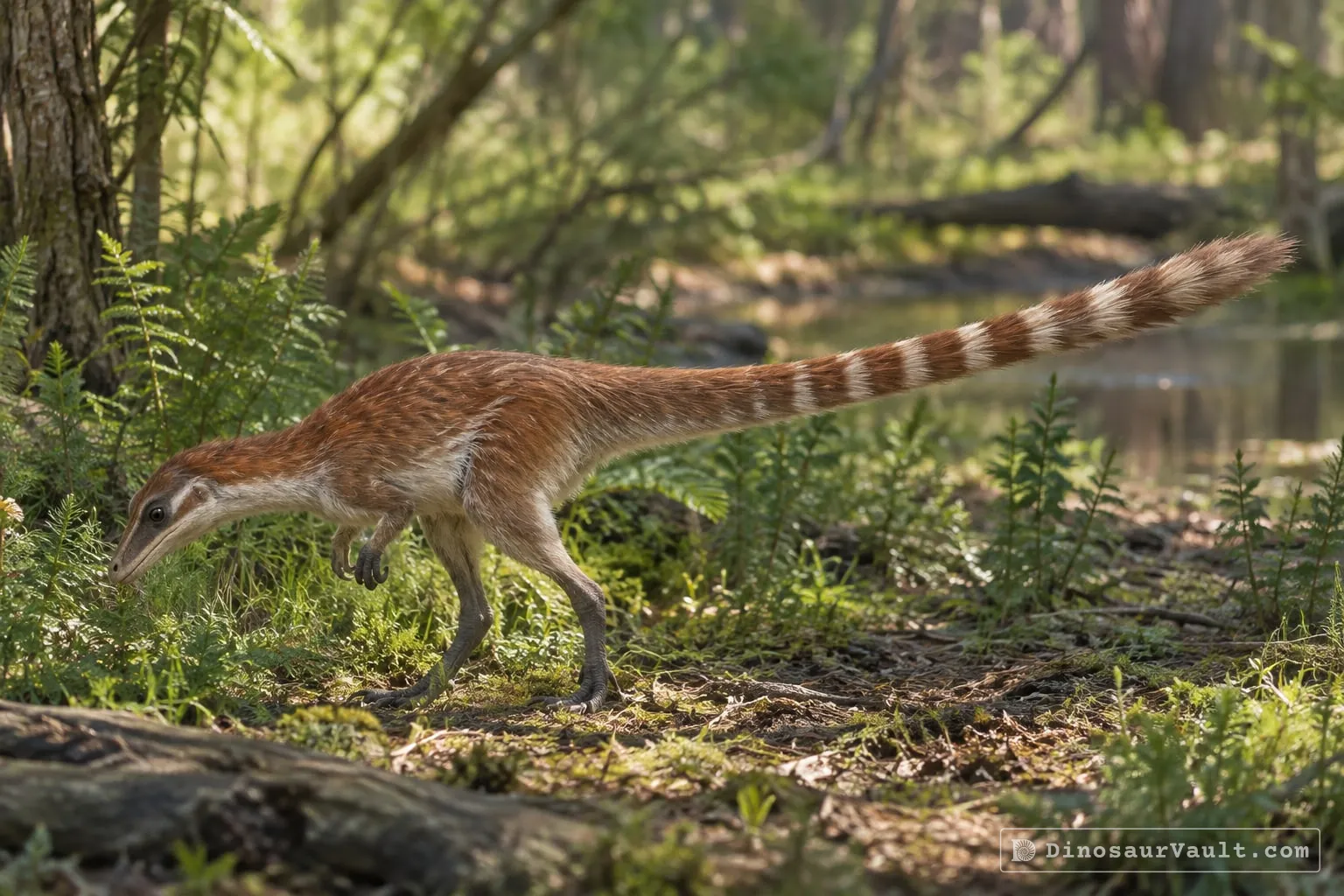
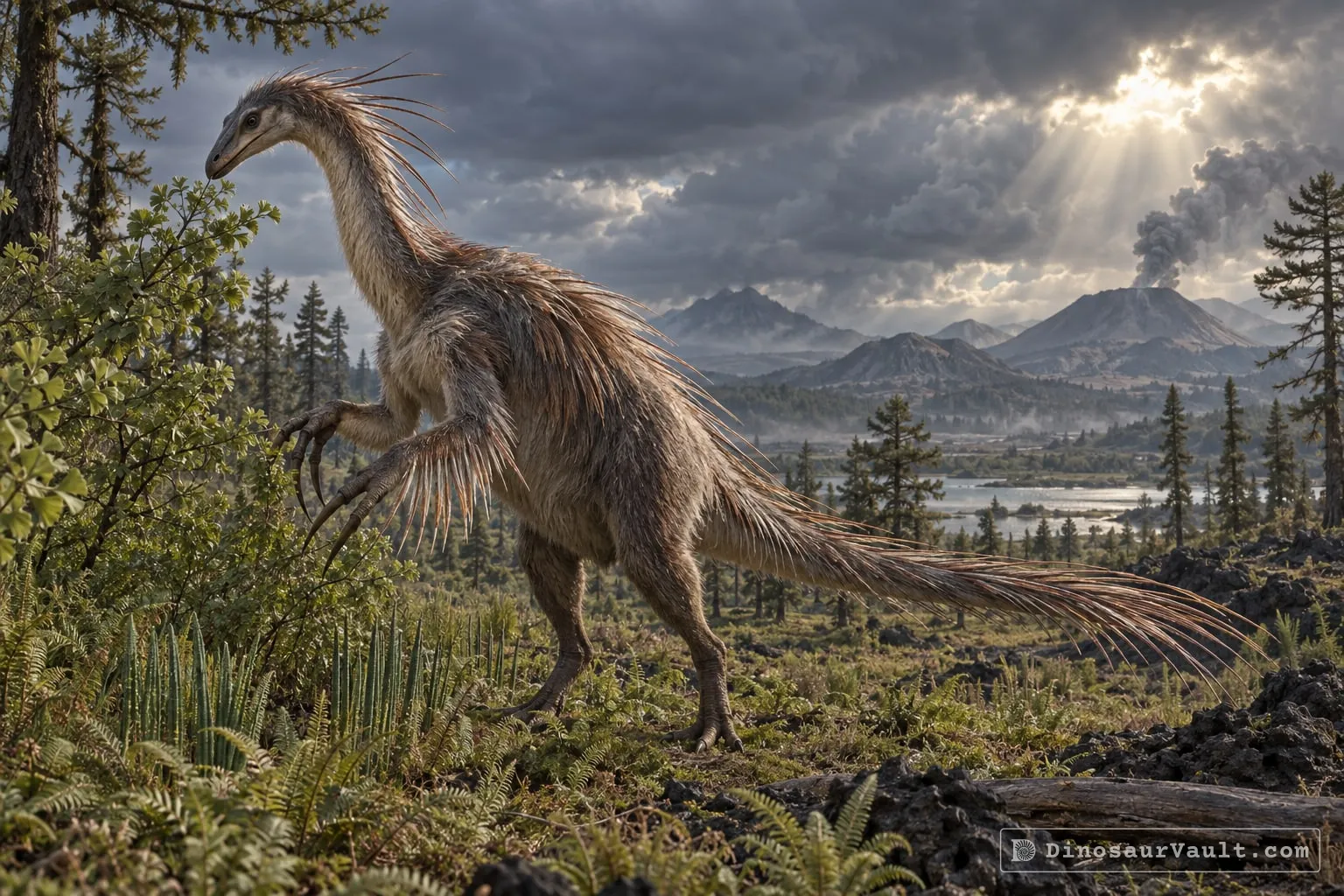
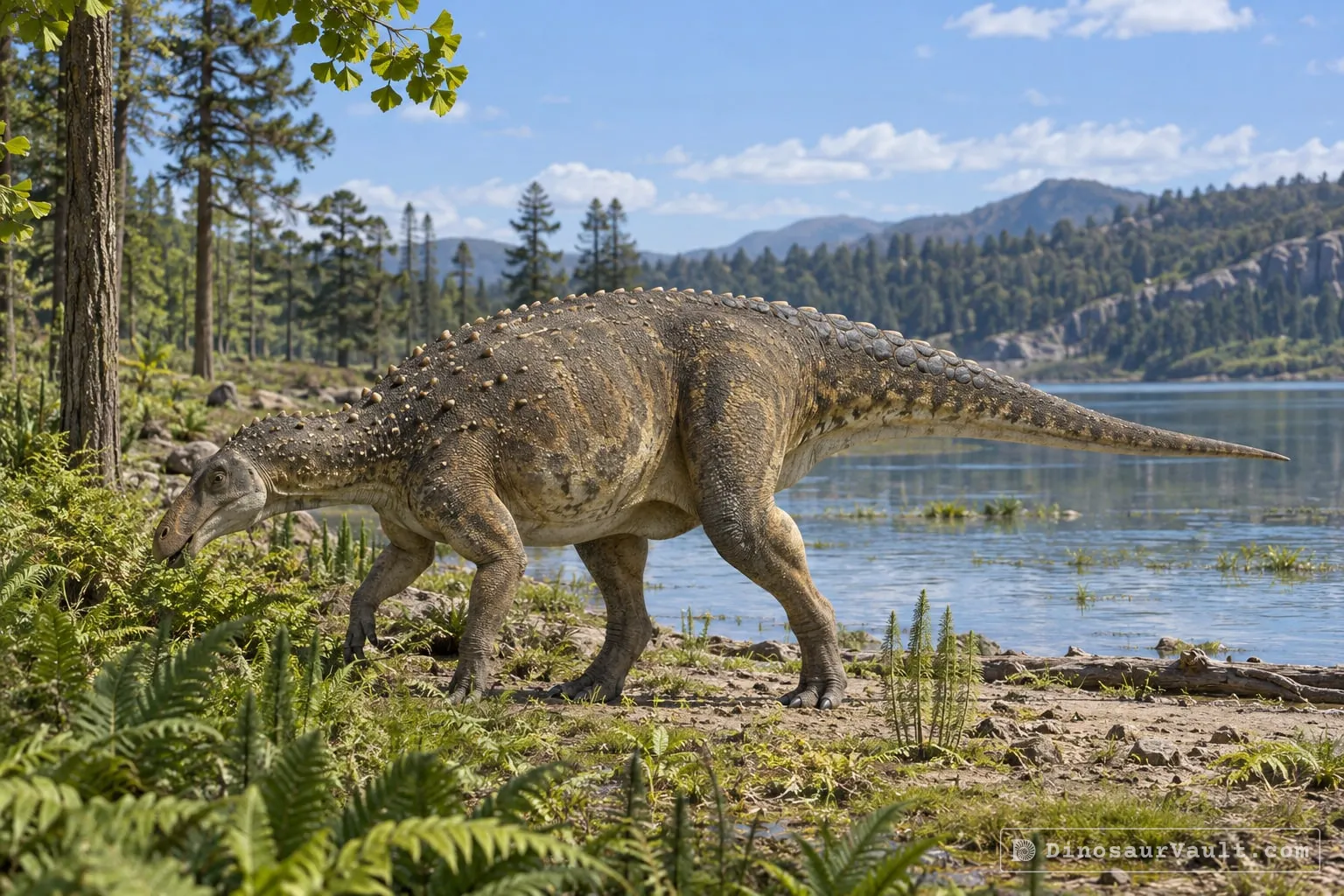
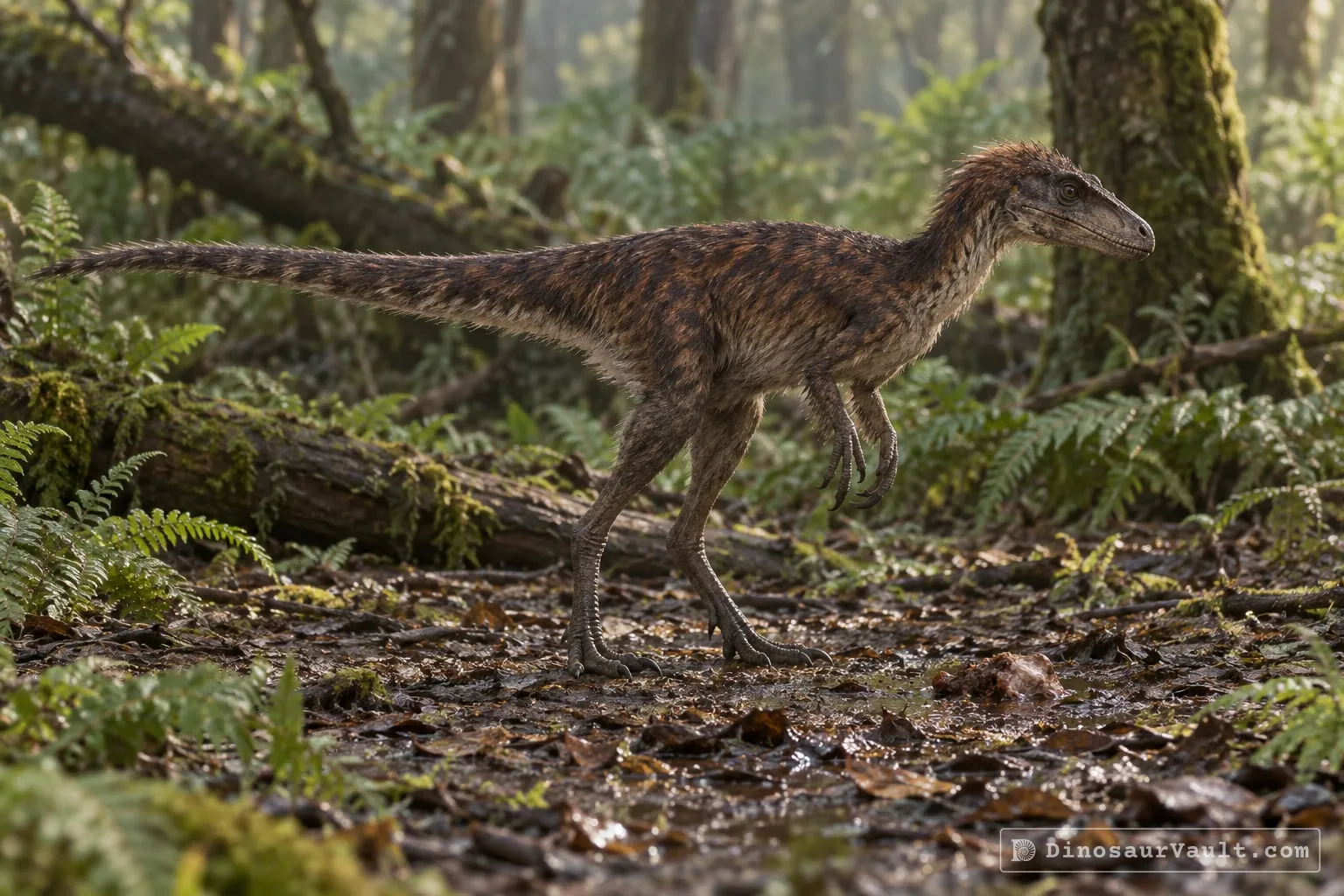
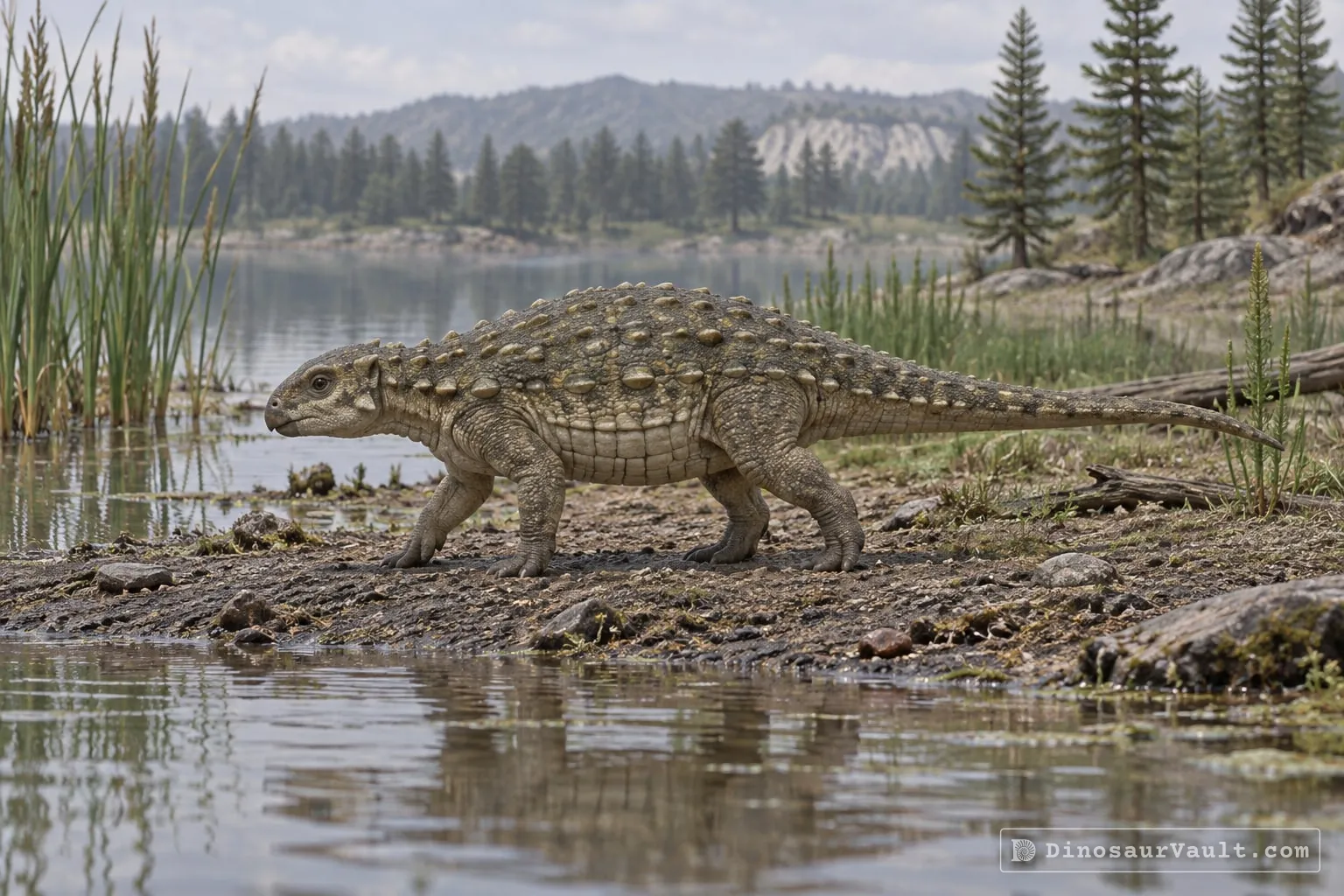


A rock formation can hold fossils laid down millions of years apart, so not every animal here met Zhenyuanlong.
The evidence
The science behind Zhenyuanlong
Which parts of the picture come from its own bones, and which come from its relatives.
From its own fossils
- A nearly complete skeleton preserves the skull, short arms and long hind legs.
- Large feathers with broad vanes form wings on the arms and fringes along the preserved tail.
- Fine feathers also survive around the neck and back.
Borrowed from relatives
- The missing end of the tail is restored by comparison with Tianyuraptor.
- Most of the body and the arm feathers are known from its own fossil.
Still unknown
- Its color.
- Whether the missing tail tip carried a broad feather fan.
- What its large wings did for an animal that probably could not fly.
Discovery timeline
- 2009Close relativeZheng et al.
- 2011Its worldAmiot et al.
- 2015Named itLü & Brusatte
Key papers
The research behind what we know of Zhenyuanlong
Close relative
Described Tianyuraptor, another dromaeosaur with short arms, providing a comparison for the body proportions and missing tail of Zhenyuanlong.
A short-armed dromaeosaurid from the Jehol Group of China with implications for early dromaeosaurid evolution. Proceedings of the Royal Society B: Biological Sciences 277: 211-217
Read the paper : A short-armed dromaeosaurid from the Jehol Group of China with implications for early dromaeosaurid evolution (opens in a new tab)Its world
Chemical measurements from reptile fossils suggest that northeastern China had a cool climate during the Early Cretaceous.
Oxygen isotopes of East Asian dinosaurs reveal exceptionally cold Early Cretaceous climates. Proceedings of the National Academy of Sciences 108: 5179-5183
Read the paper : Oxygen isotopes of East Asian dinosaurs reveal exceptionally cold Early Cretaceous climates (opens in a new tab)Named it
Described a short-armed dromaeosaur with large feathered wings and long tail feathers, probably unable to fly.
A large, short-armed, winged dromaeosaurid (Dinosauria: Theropoda) from the Early Cretaceous of China and its implications for feather evolution. Scientific Reports 5
Read the paper : A large, short-armed, winged dromaeosaurid (Dinosauria: Theropoda) from the Early Cretaceous of China and its implications for feather evolution (opens in a new tab)
Close relatives
Other members of Dromaeosauridae


Sources: Wikidata