Zaraapelta
Type species Zaraapelta nomadis
- Lived
- 84 to 72 million years ago, Late Cretaceous
- Diet
- Herbivore
- Group
- Ankylosaurs, Ankylosauridae
- Found in
- Mongolia
- Named by
- Arbour et al. 2014
Where its fossils were found
The evidence
Today

80 million years ago
Habitat
A dry landscape with windblown sand. Saichania and Tarchia were other armored plant eaters in the same region.
Field notes
About Zaraapelta
What it was like
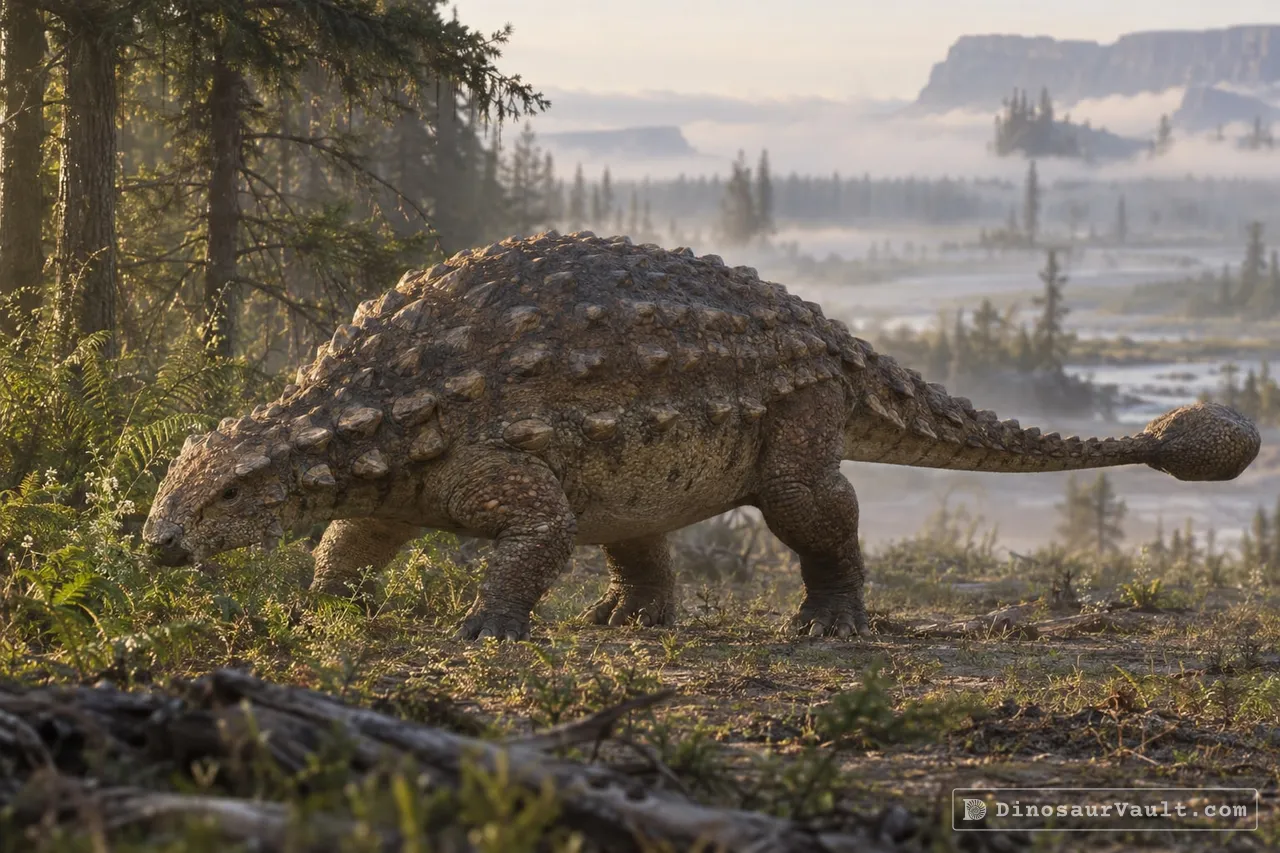
Zaraapelta was an ankylosaur, a low, armored plant eater known from a skull. The skull was covered in large, rough bony bumps, and it had horn-like spikes at the back.
Its world
It lived in the Late Cretaceous, in what is now Mongolia. It was a relative of Tarchia.
How it was found
Arbour and colleagues named Zaraapelta in 2014. The type species is Zaraapelta nomadis.
Field gallery
More views of Zaraapelta
Scenes reconstructed from the available fossil evidence.
1 of 2
Lived alongside
Found in the same rock formations
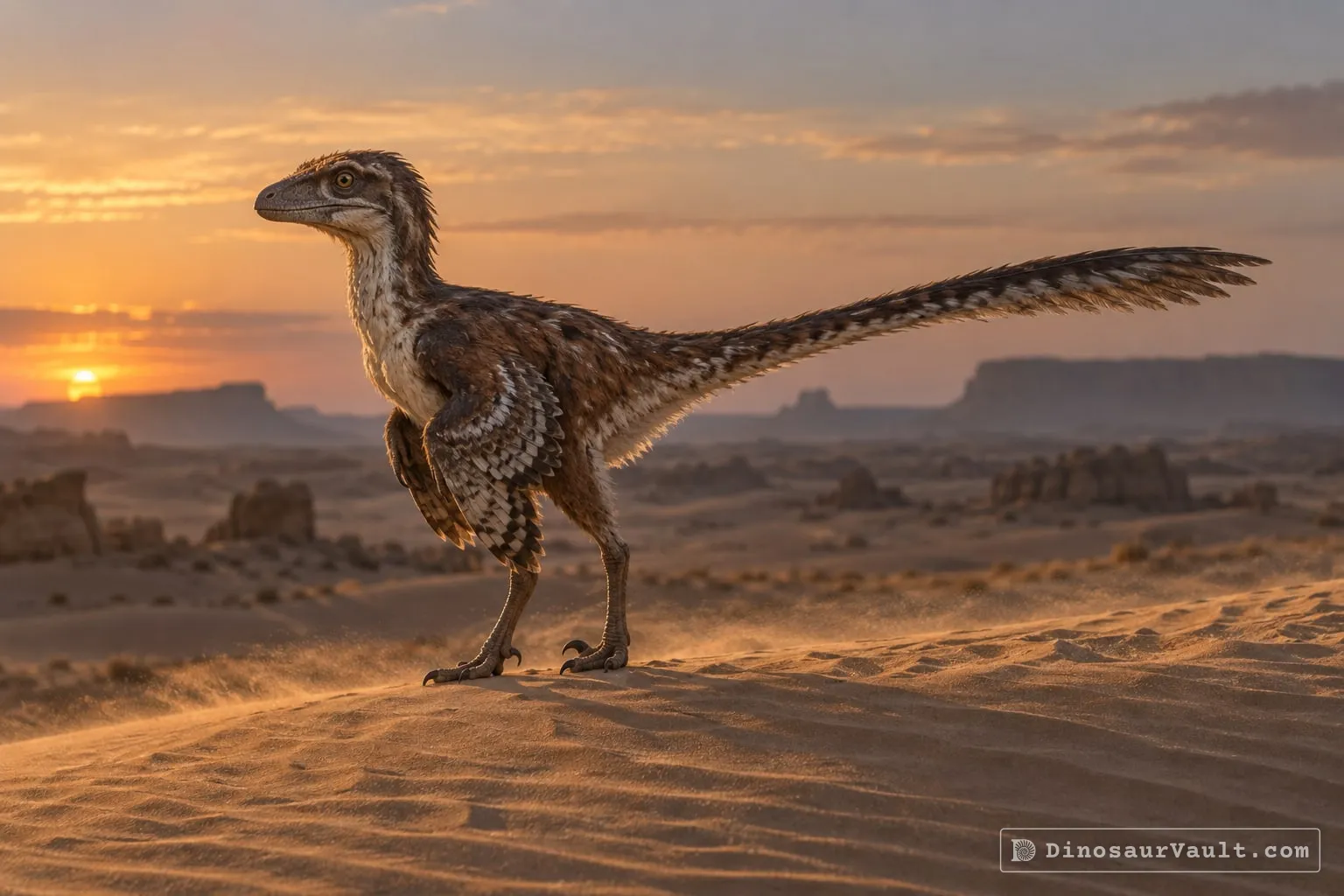
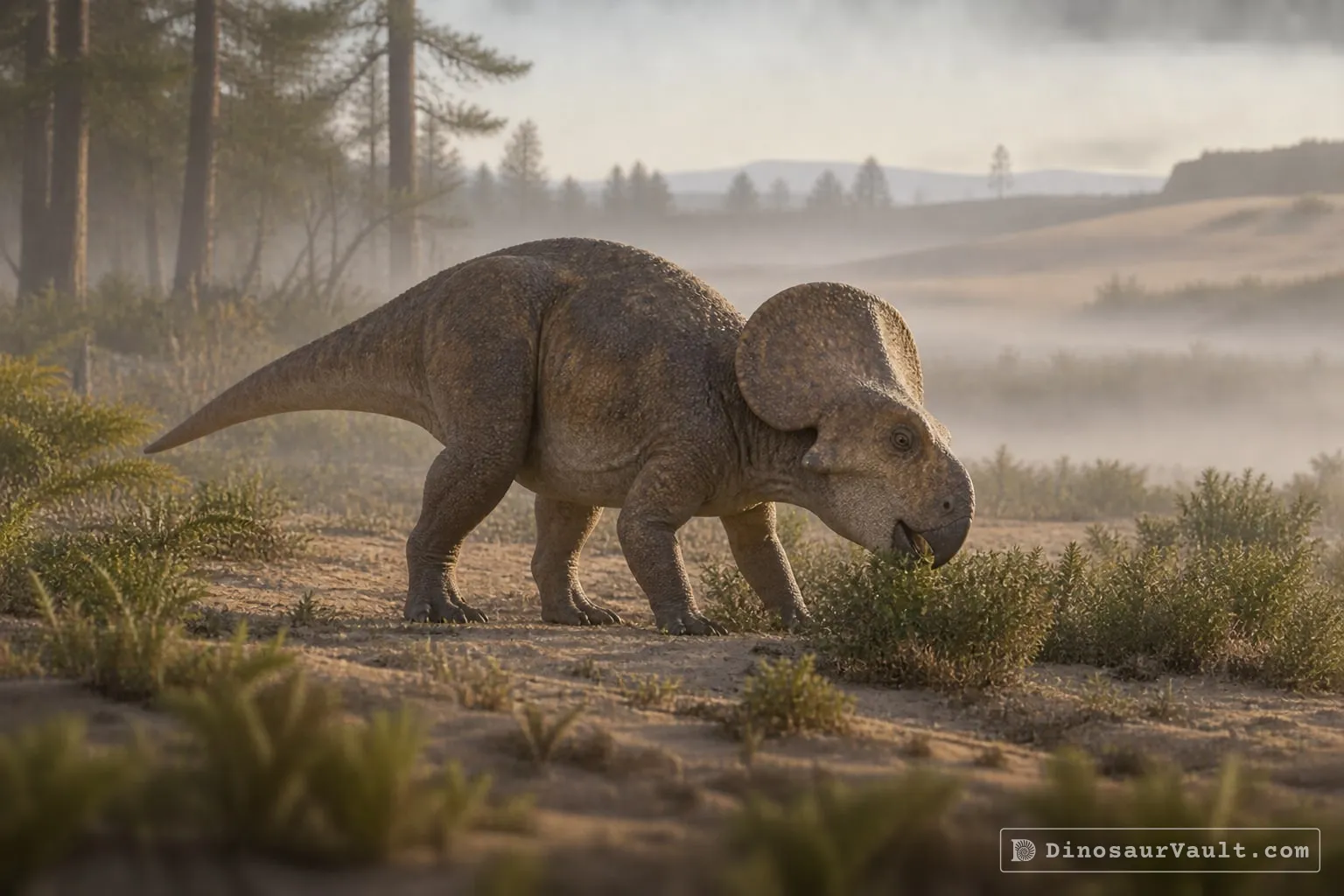
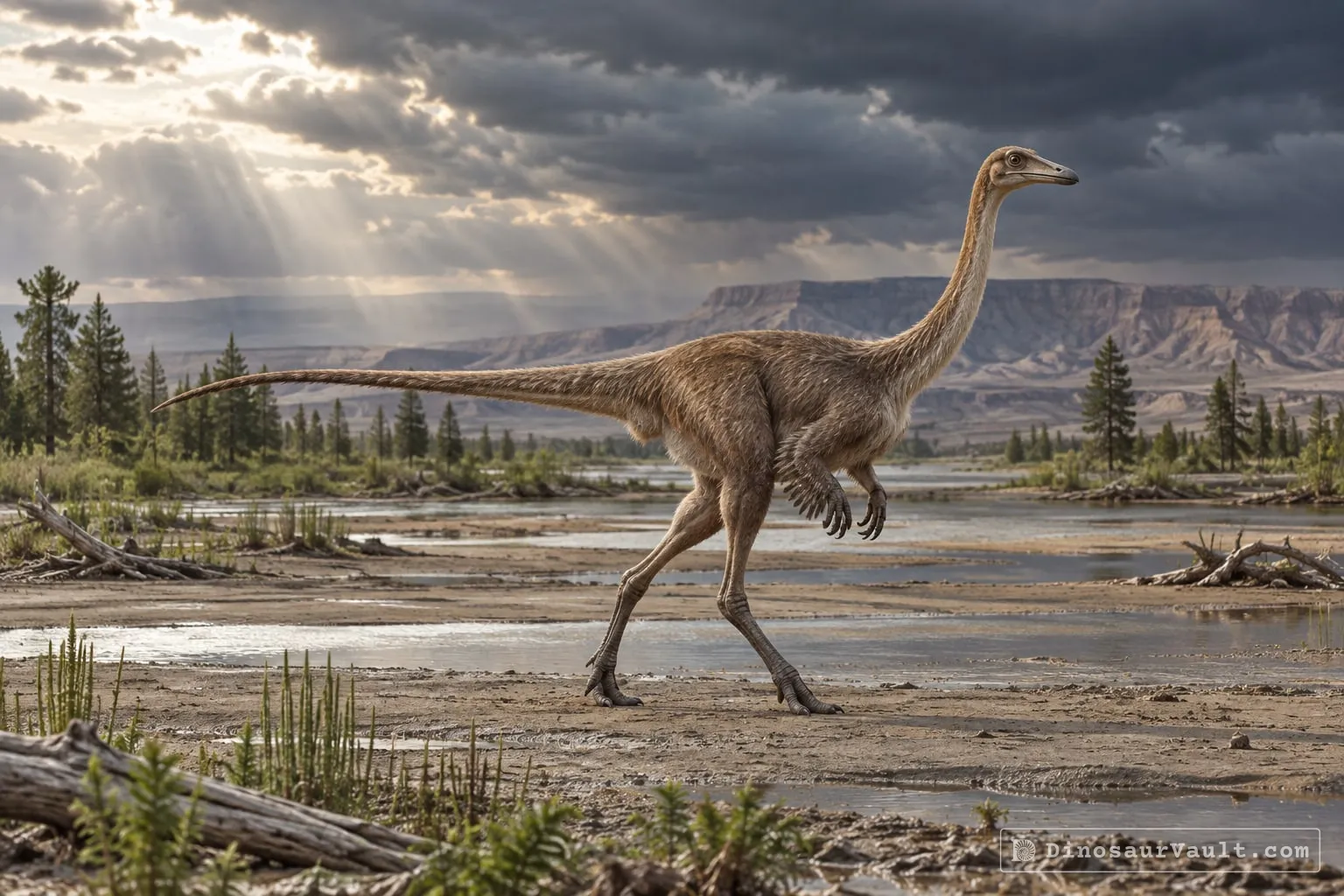
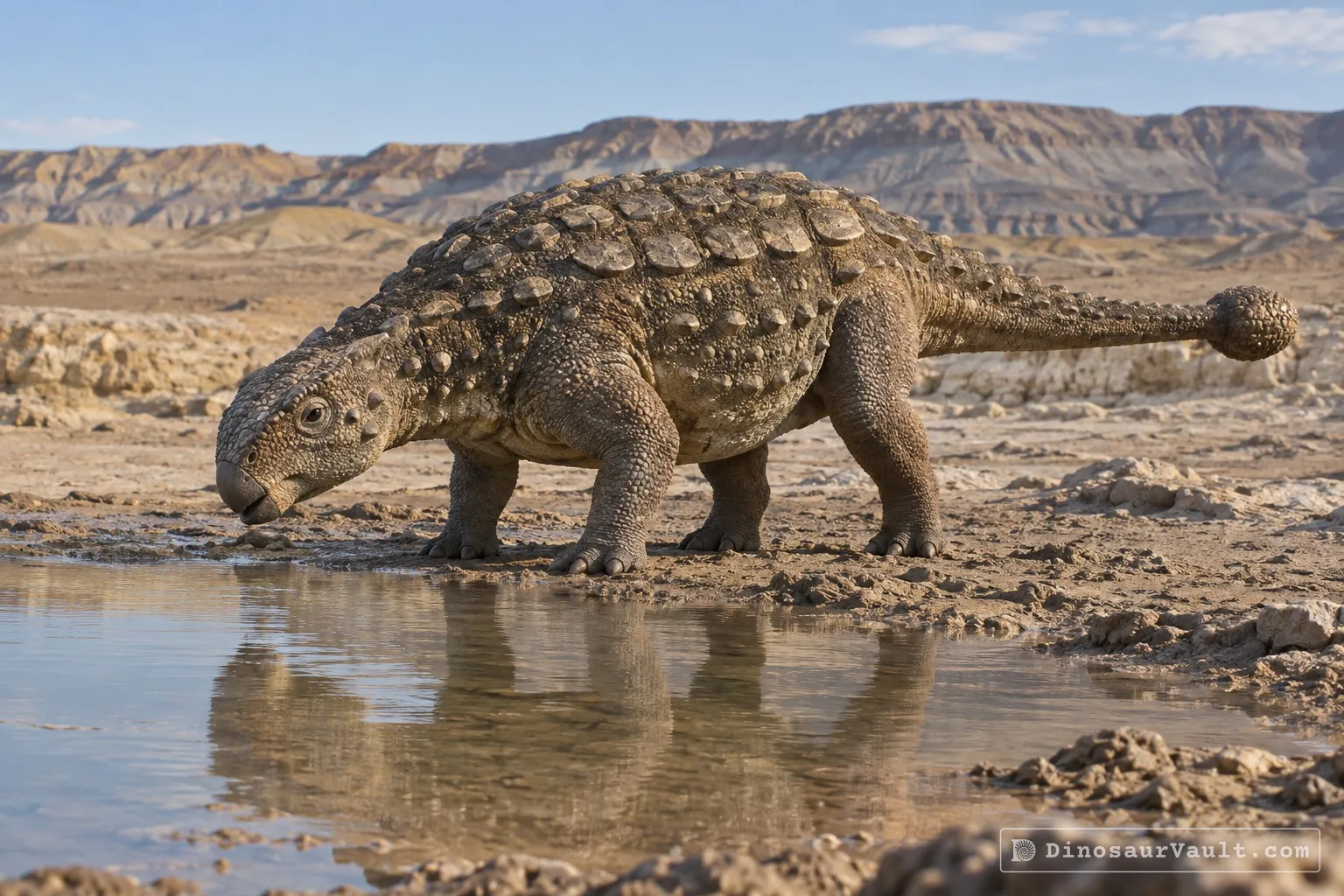
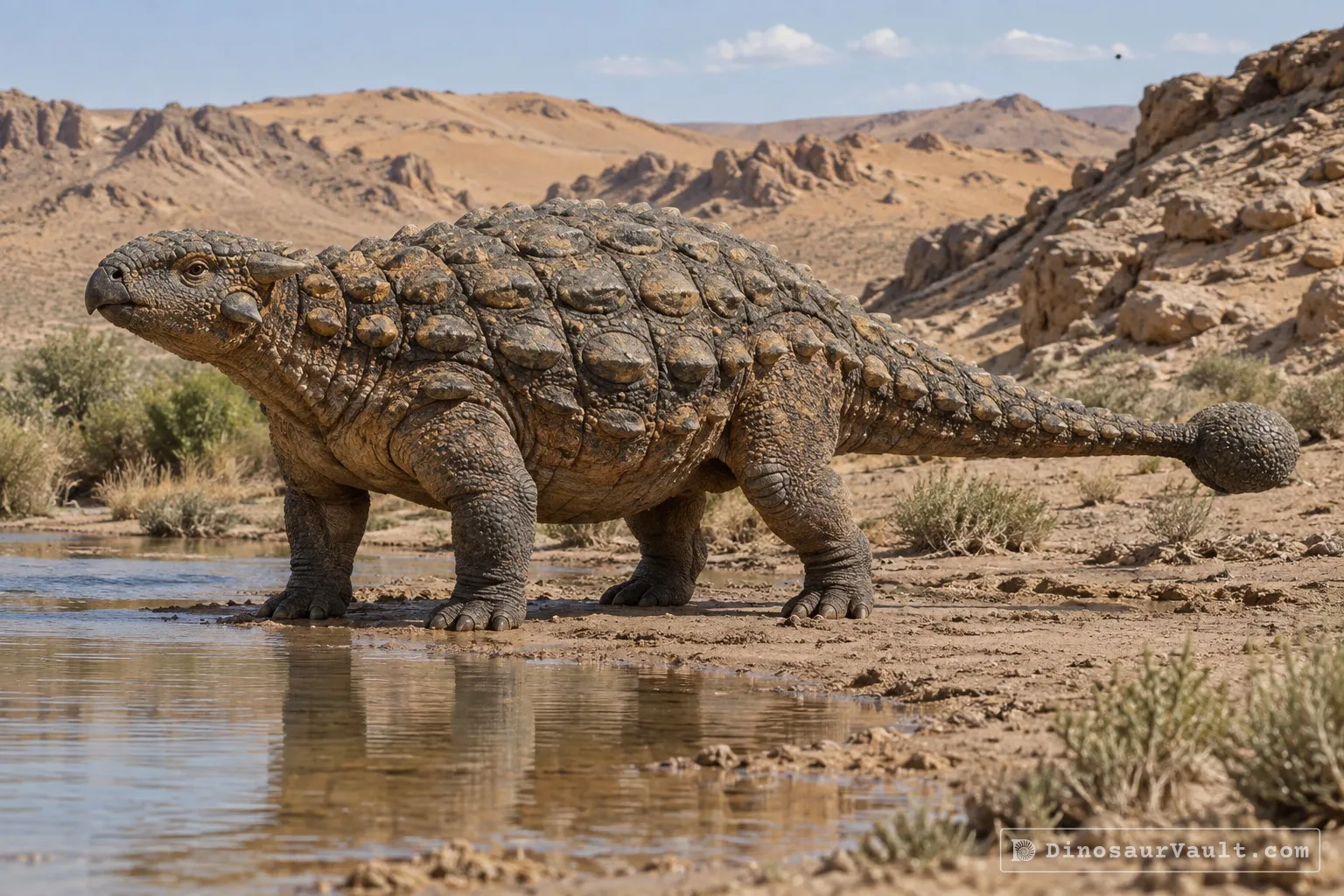
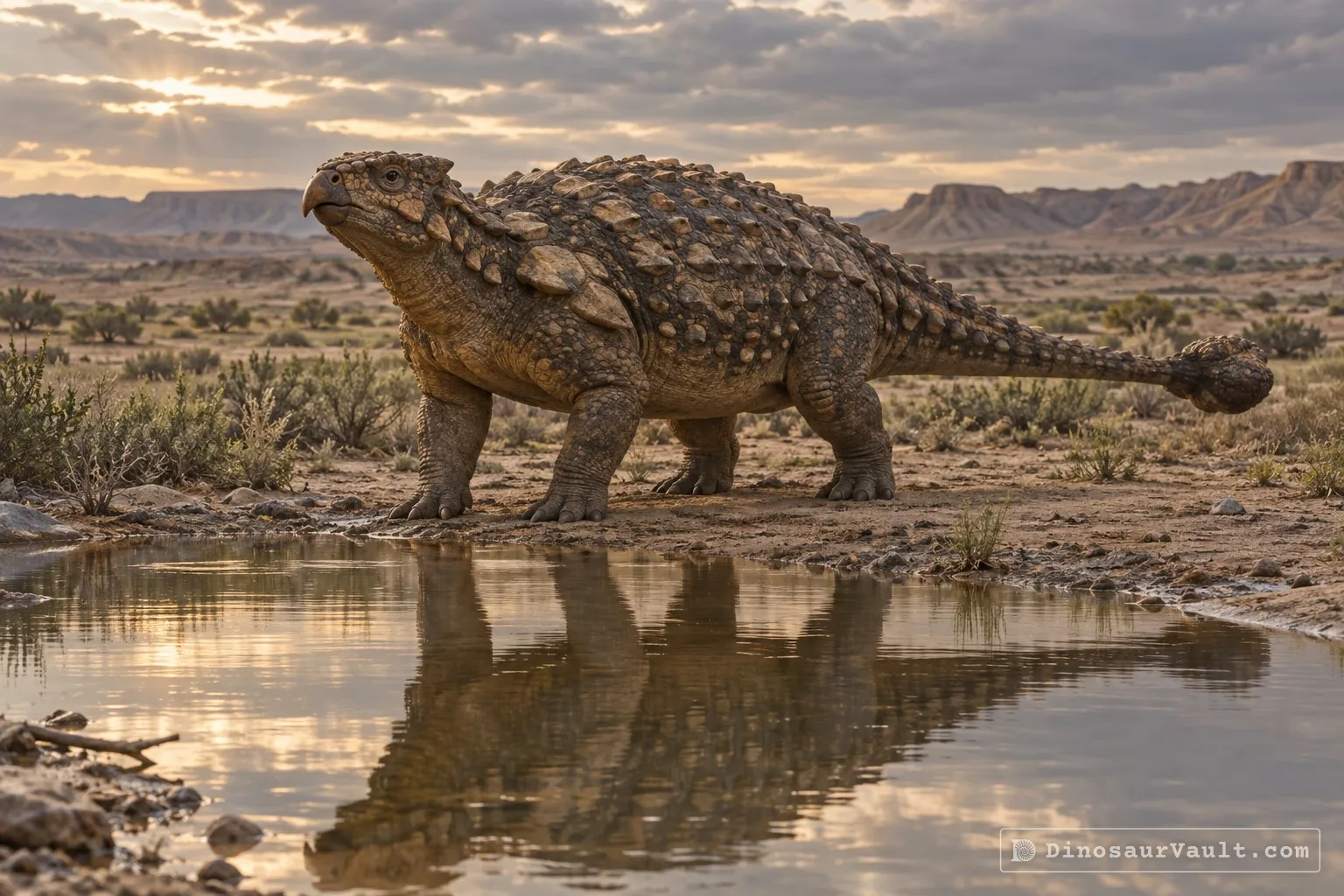
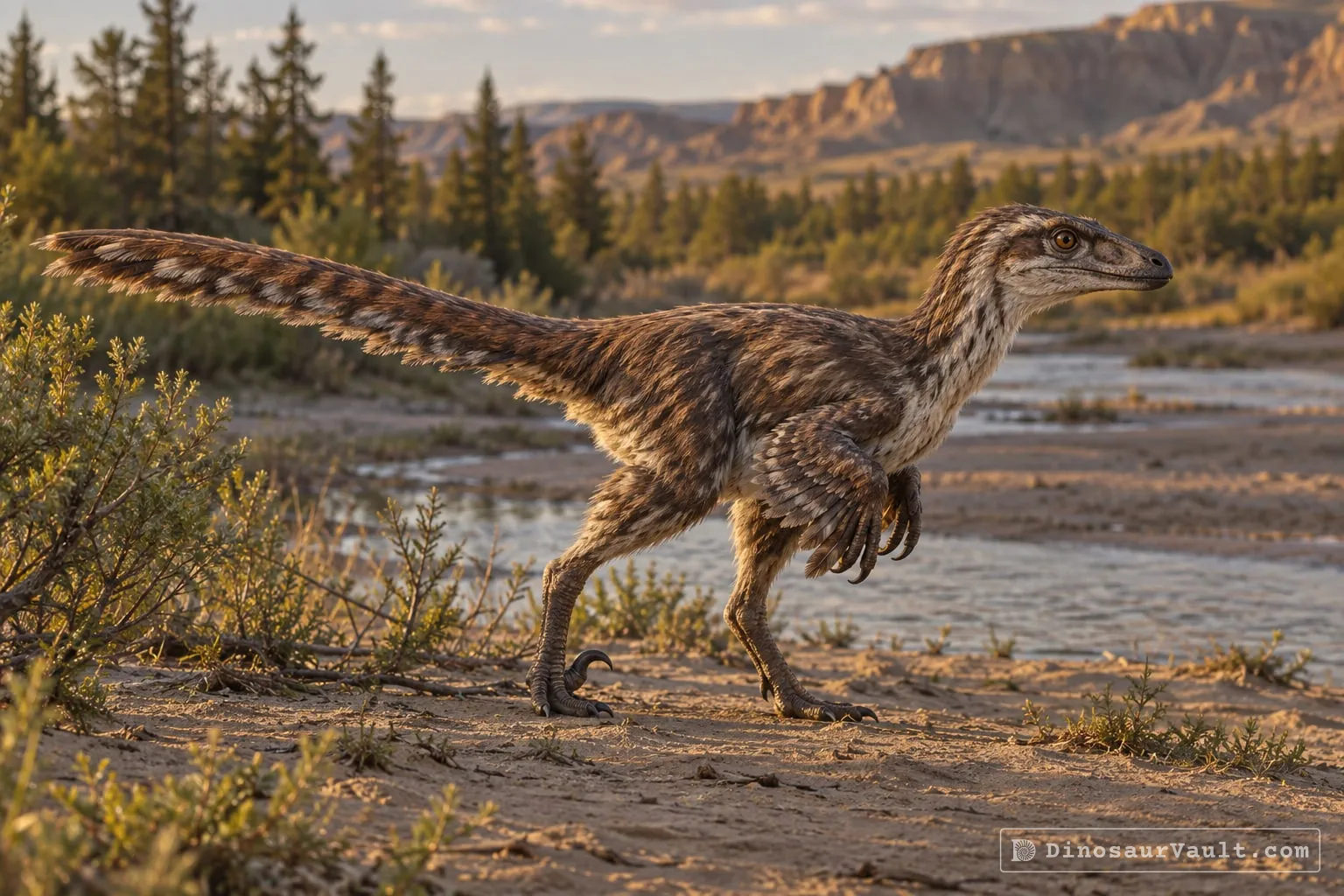


A rock formation can hold fossils laid down millions of years apart, so not every animal here met Zaraapelta.
The evidence
The science behind Zaraapelta
Which parts of the picture come from its own bones, and which come from its relatives.
From its own fossils
- Its skull carries an elaborate cluster of bony ornaments behind each eye.
- The horns at the back of the skull have a distinctive layered surface texture.
Borrowed from relatives
- The broad, low body and armor arrangement are restored by comparison with Saichania and other Mongolian ankylosaurids.
- A tail club is inferred from relatives such as Pinacosaurus.
Still unknown
- The shape of its tail club and the arrangement of its body armor.
- Its color.
- How its skull ornaments changed as it grew.
Discovery timeline
- 2014Named itArbour, Currie & Badamgarav
- 2015Close relativesArbour & Currie
- 2021Same rocksPark et al.
Key papers
The research behind what we know of Zaraapelta
Named it
Named Zaraapelta from its ornamented skull and found a close relationship with Tarchia.
The ankylosaurid dinosaurs of the Upper Cretaceous Baruungoyot and Nemegt formations of Mongolia. Zoological Journal of the Linnean Society 172: 631-652
Read the paper : The ankylosaurid dinosaurs of the Upper Cretaceous Baruungoyot and Nemegt formations of Mongolia (opens in a new tab)Close relatives
Found that stiff tail handles evolved before enlarged club knobs, and that isolated Mongolian clubs are difficult to assign to particular species.
Ankylosaurid dinosaur tail clubs evolved through stepwise acquisition of key features. Journal of Anatomy 227: 514-523
Read the paper : Ankylosaurid dinosaur tail clubs evolved through stepwise acquisition of key features (opens in a new tab)Same rocks
Described an armored skeleton from the same formation, showing a stiff trunk and different possible patterns of flank armor.
A new ankylosaurid skeleton from the Upper Cretaceous Baruungoyot Formation of Mongolia: its implications for ankylosaurid postcranial evolution. Scientific Reports 11
Read the paper : A new ankylosaurid skeleton from the Upper Cretaceous Baruungoyot Formation of Mongolia: its implications for ankylosaurid postcranial evolution (opens in a new tab)
Close relatives
Other members of Ankylosauridae


Sources: Wikidata