Spinosaurus
SPY-no-SORE-us
"spine lizard"
Type species Spinosaurus aegyptiacus
- Lived
- 106 to 94 million years ago, Early Cretaceous to Late Cretaceous
- Diet
- Carnivore
- Length
- about 14 m (46 ft)
- Group
- Theropods, Spinosauridae
- Found in
- Morocco, Egypt, Niger, Algeria and Tunisia
- Named by
- Stromer 1915
Size comparison
To scale


Scale in meters
Where its fossils were found
The evidence
Today

100 million years ago
Habitat
Fish-rich rivers crossed floodplains in Morocco. Carcharodontosaurus, Deltadromeus and Rebbachisaurus lived in the same regional river system.
A Dinosaur Vault film
Spinosaurus: The River Monster Longer Than T. rex
A morning hunt in the rivers of North Africa, the skeleton lost in the Second World War, and the question scientists still argue over: did it swim?
Subscribe on YouTubeField notes
About Spinosaurus
What it was like
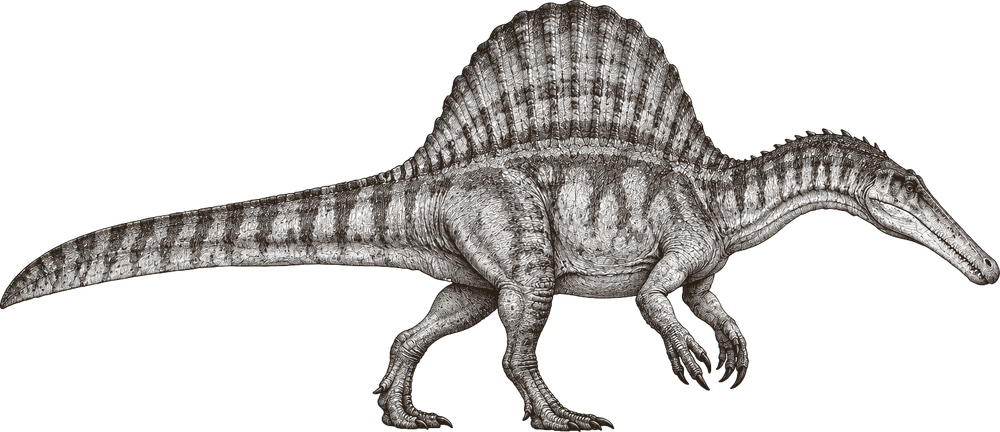
Spinosaurus had a long, narrow skull much like a crocodile's, lined with straight, cone-shaped teeth for gripping slippery prey. Tall spines rose from its backbone, probably covered in skin to form a sail along its back. It grew to roughly 14 meters (46 feet) long, making it one of the longest meat-eating dinosaurs known.
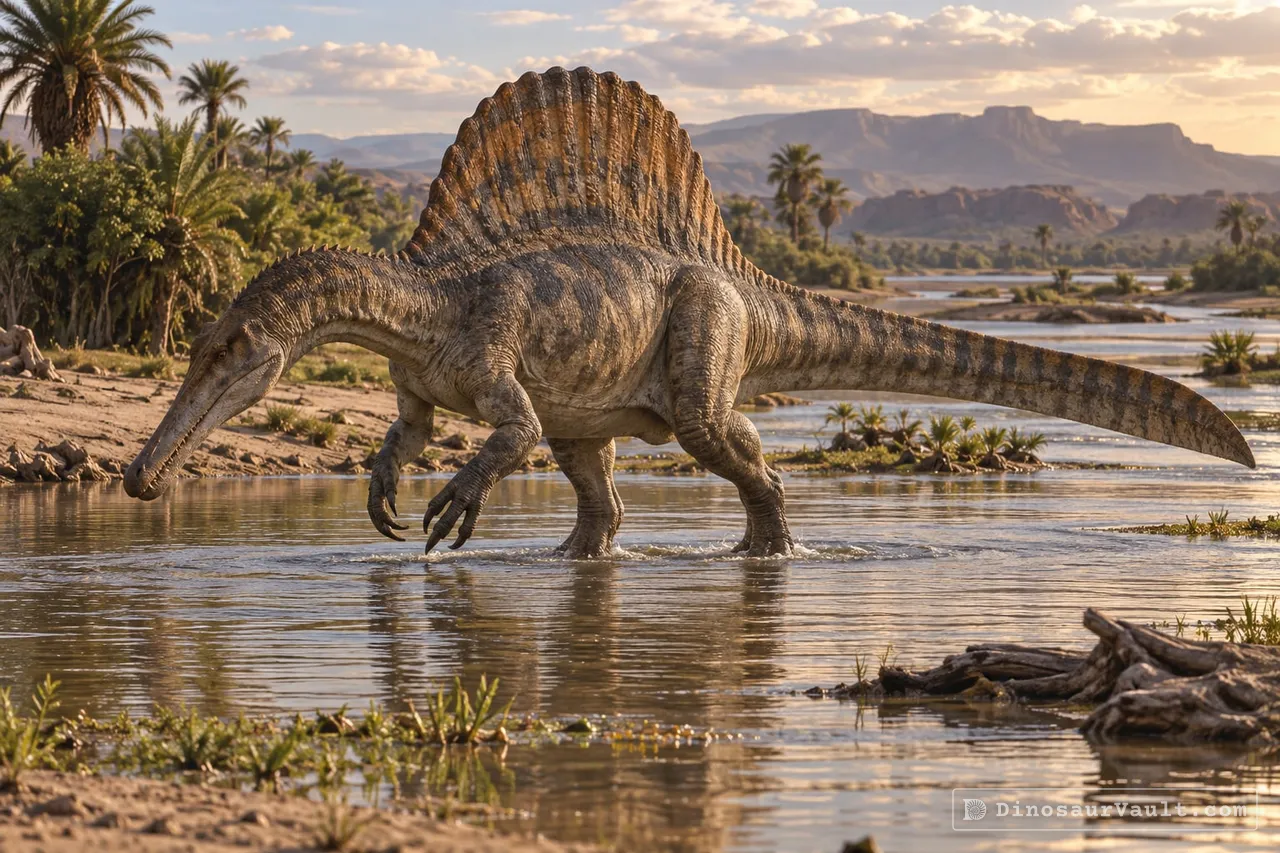
Its legs were short for its body size, and its feet and tail were built more for moving through water than for running on land. Most researchers think it waded or swam, hunting fish alongside other prey.
Its world
Spinosaurus lived from about 106 to 94 million years ago, spanning the Early and Late Cretaceous, in what is now North Africa. Its bones come from Morocco, Egypt, Niger, Algeria, and Tunisia, including rock layers such as Ifezouane and Baharîje.
It shared its river and coastal habitat with other large predators, including Carcharodontosaurus and Deltadromeus, as well as the plant eater Ouranosaurus.
How it was found
Stromer named Spinosaurus in 1915 from bones found in Egypt. The original fossils were destroyed decades later, but new material found since has let paleontologists study the animal again. Around 30 fossil finds of Spinosaurus are known today, still a modest number for such a large animal, so parts of its anatomy remain debated.
Field gallery
More views of Spinosaurus
Scenes reconstructed from the available fossil evidence.
1 of 7
Lived alongside
Found in the same rock formations
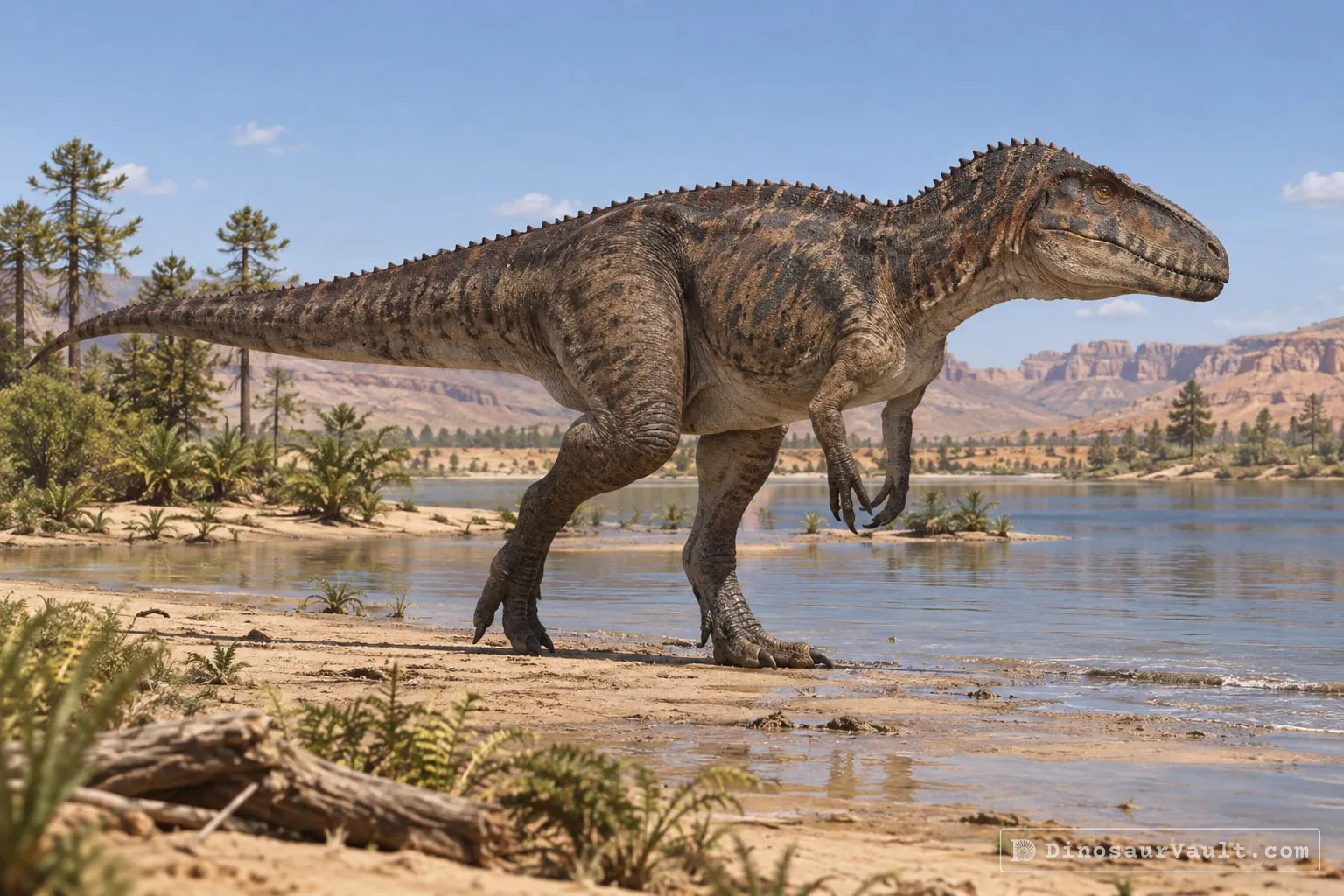
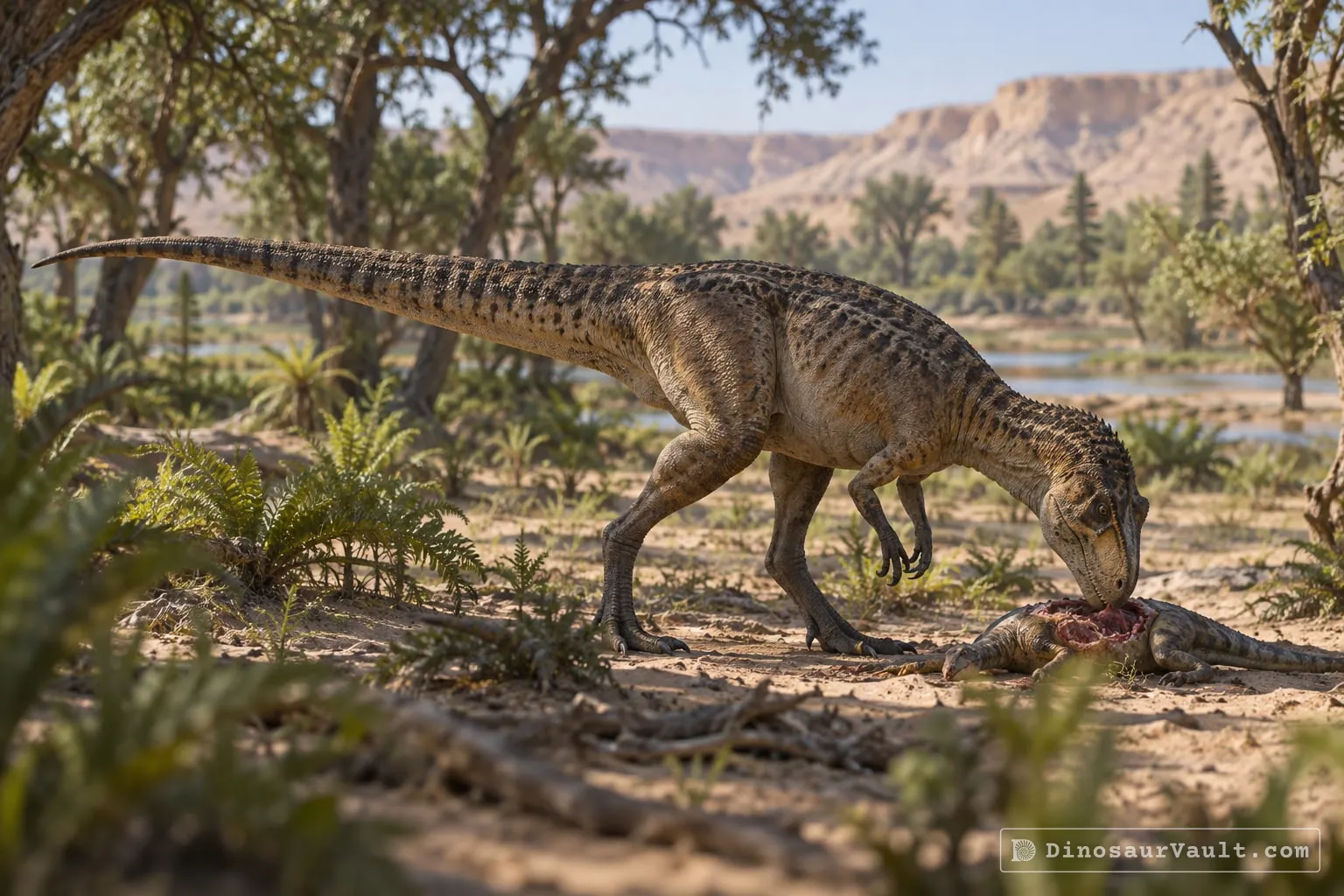
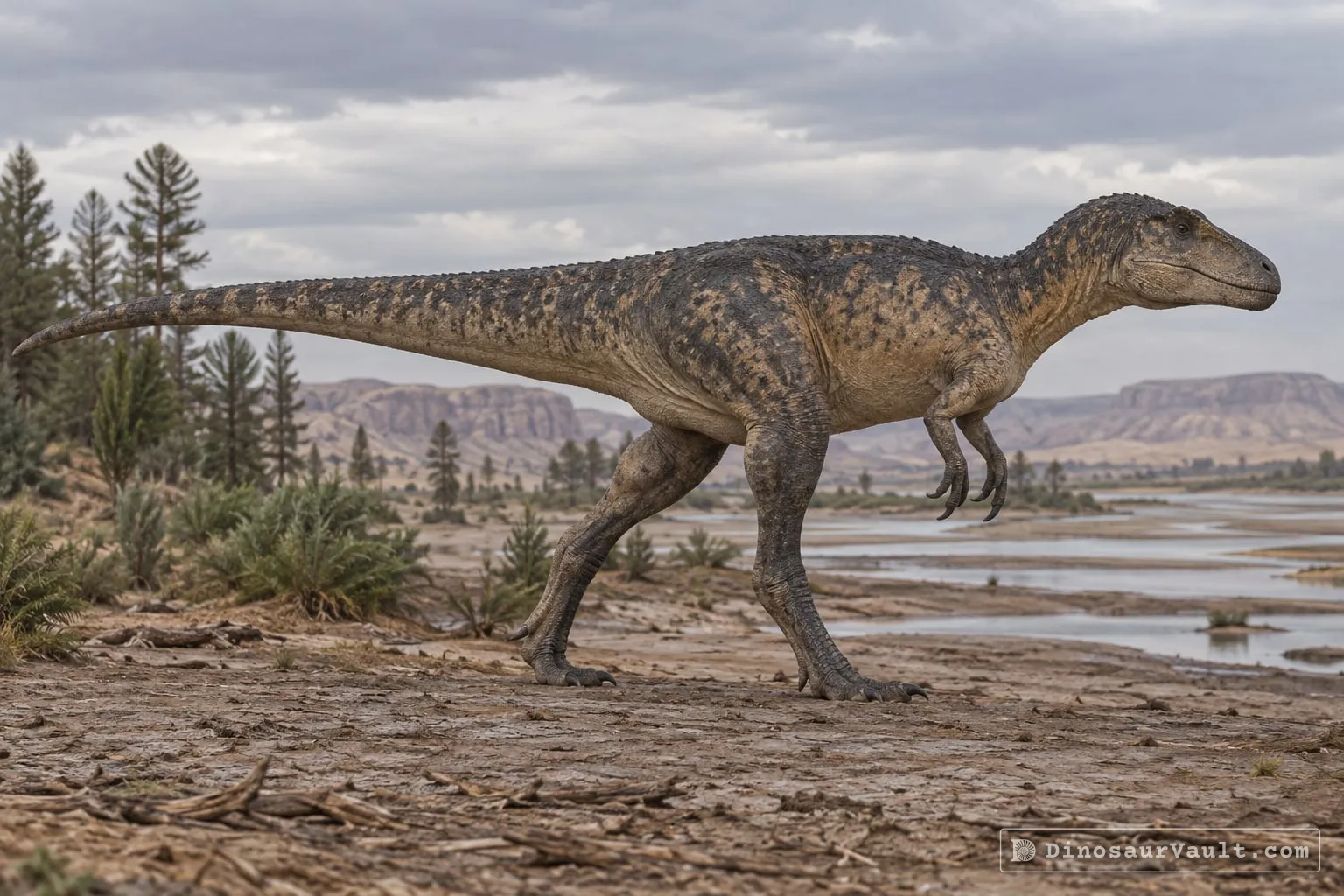
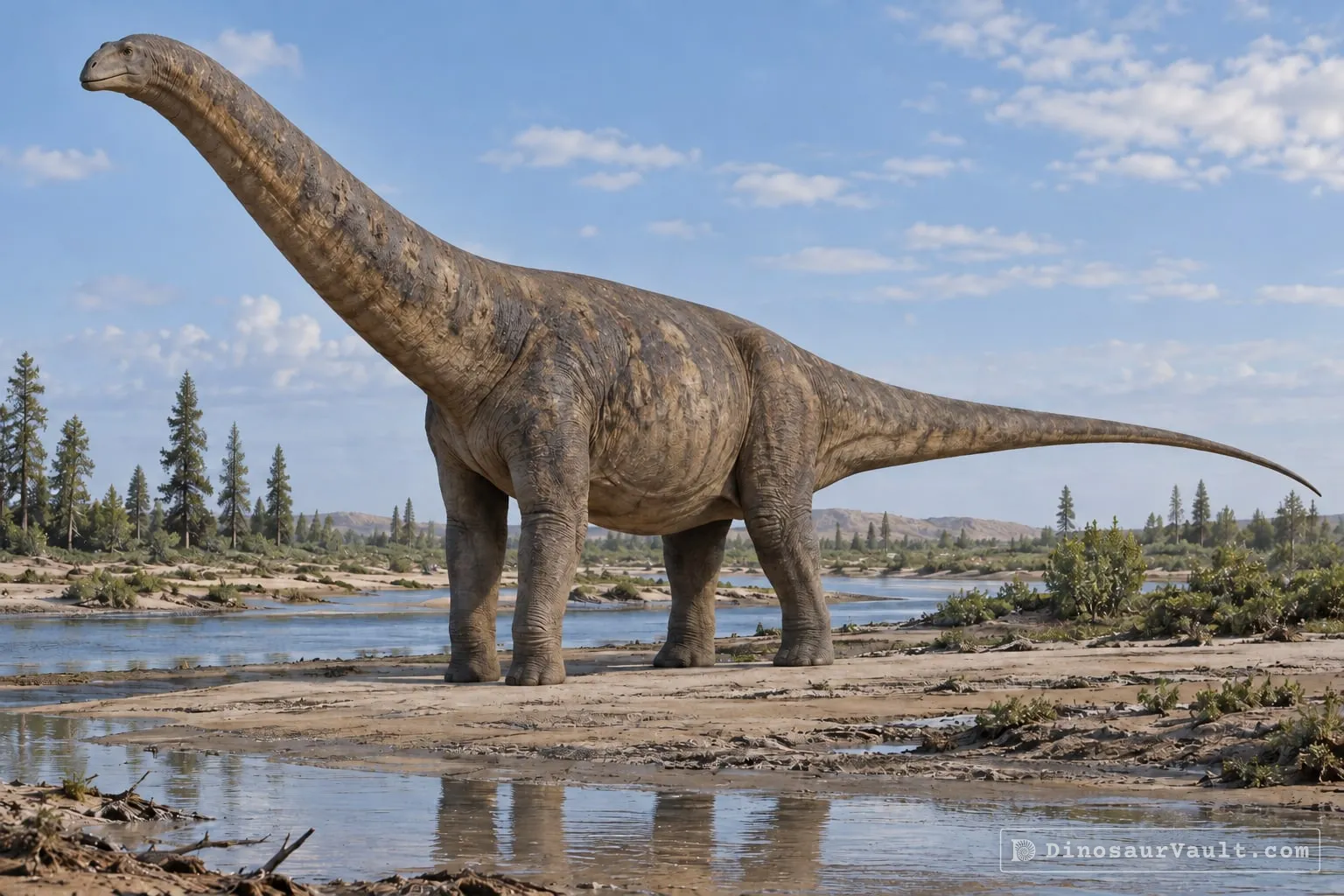
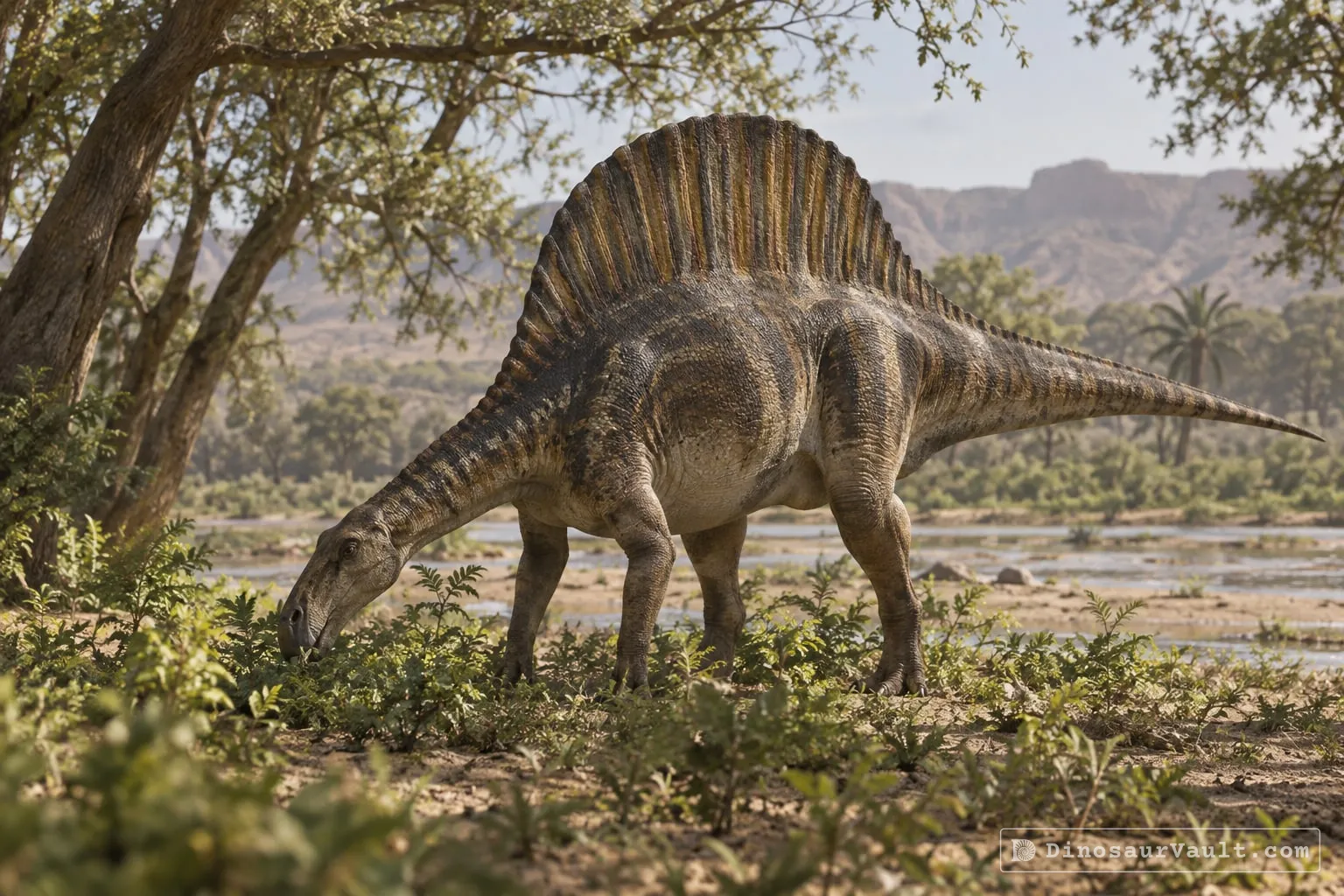
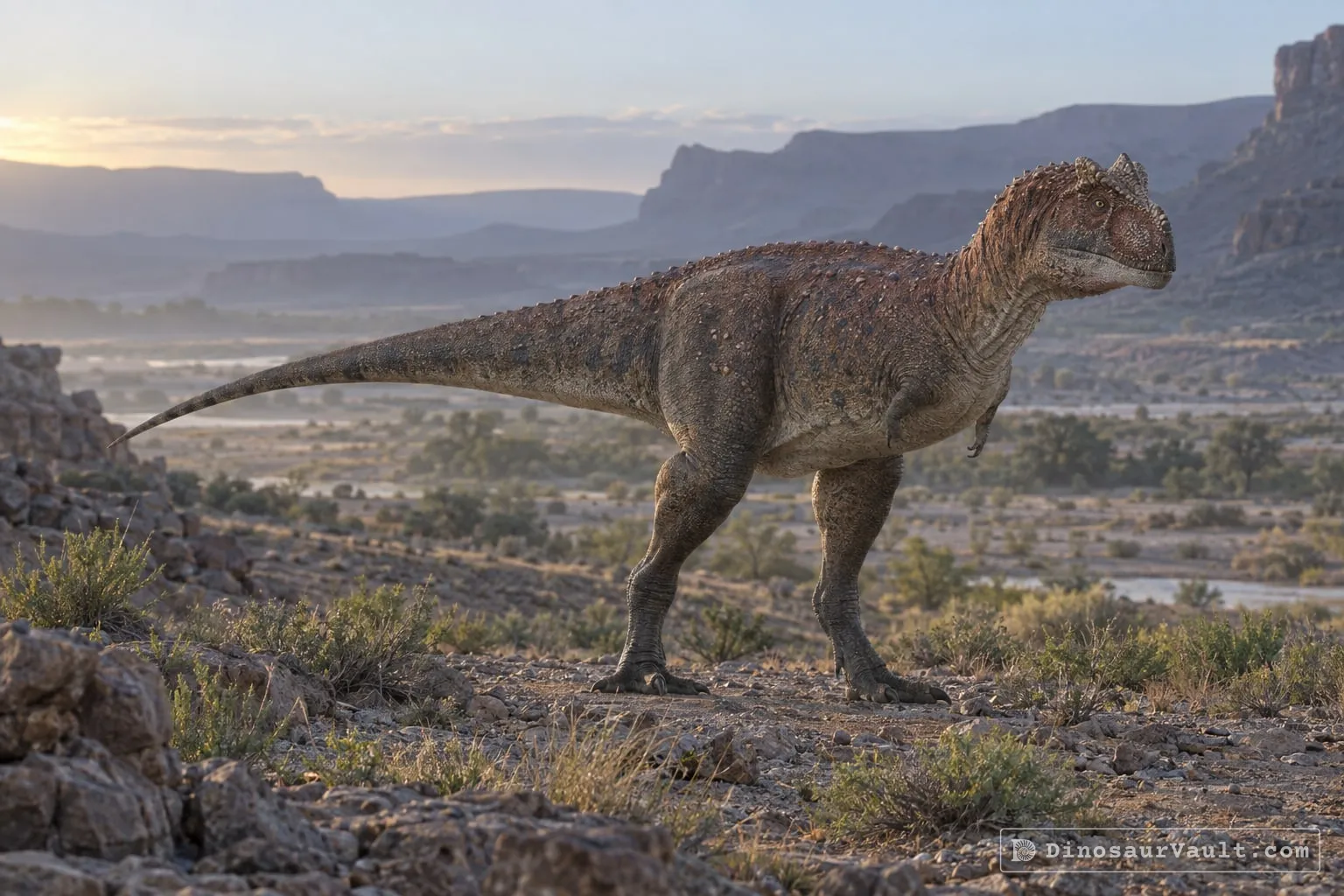
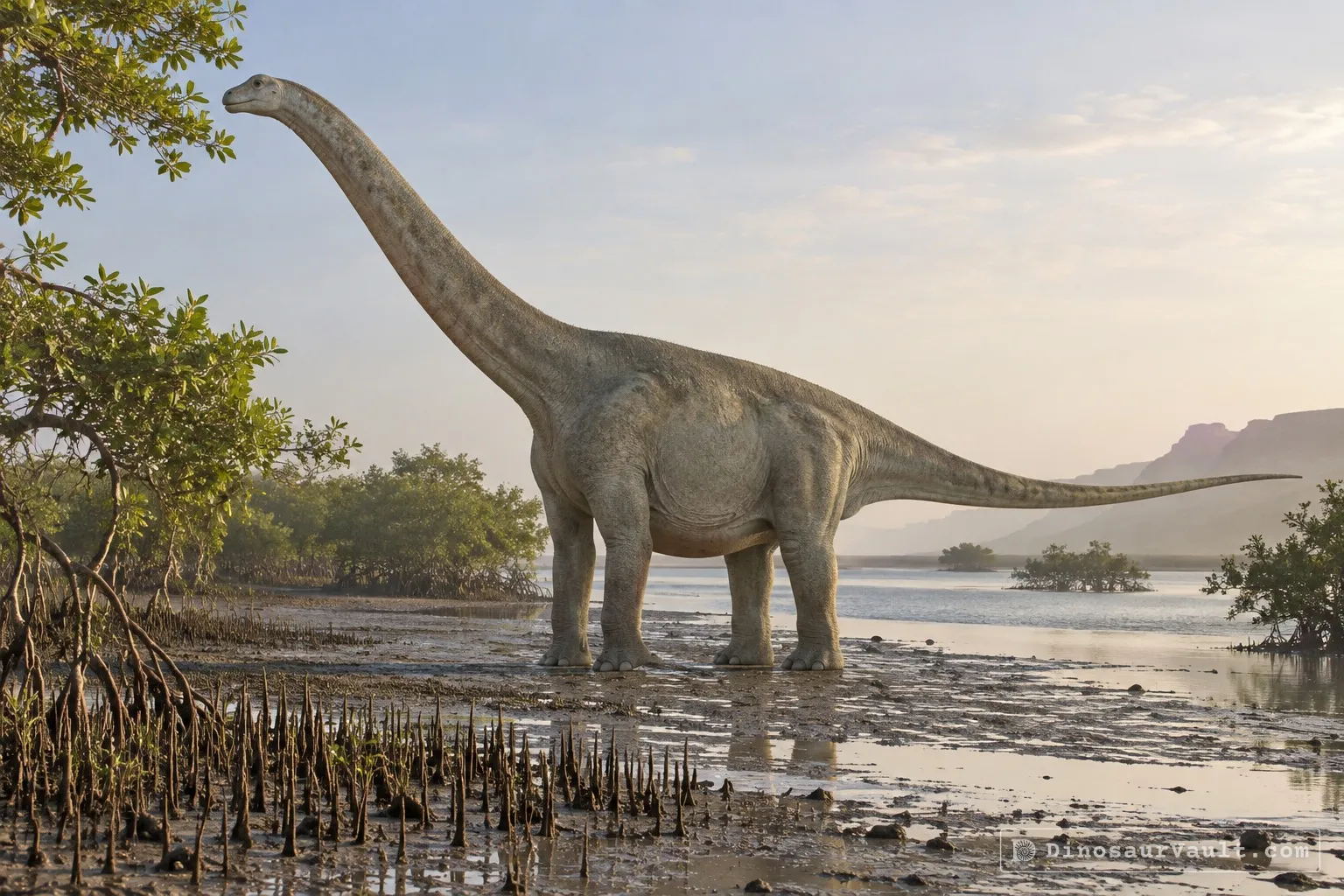
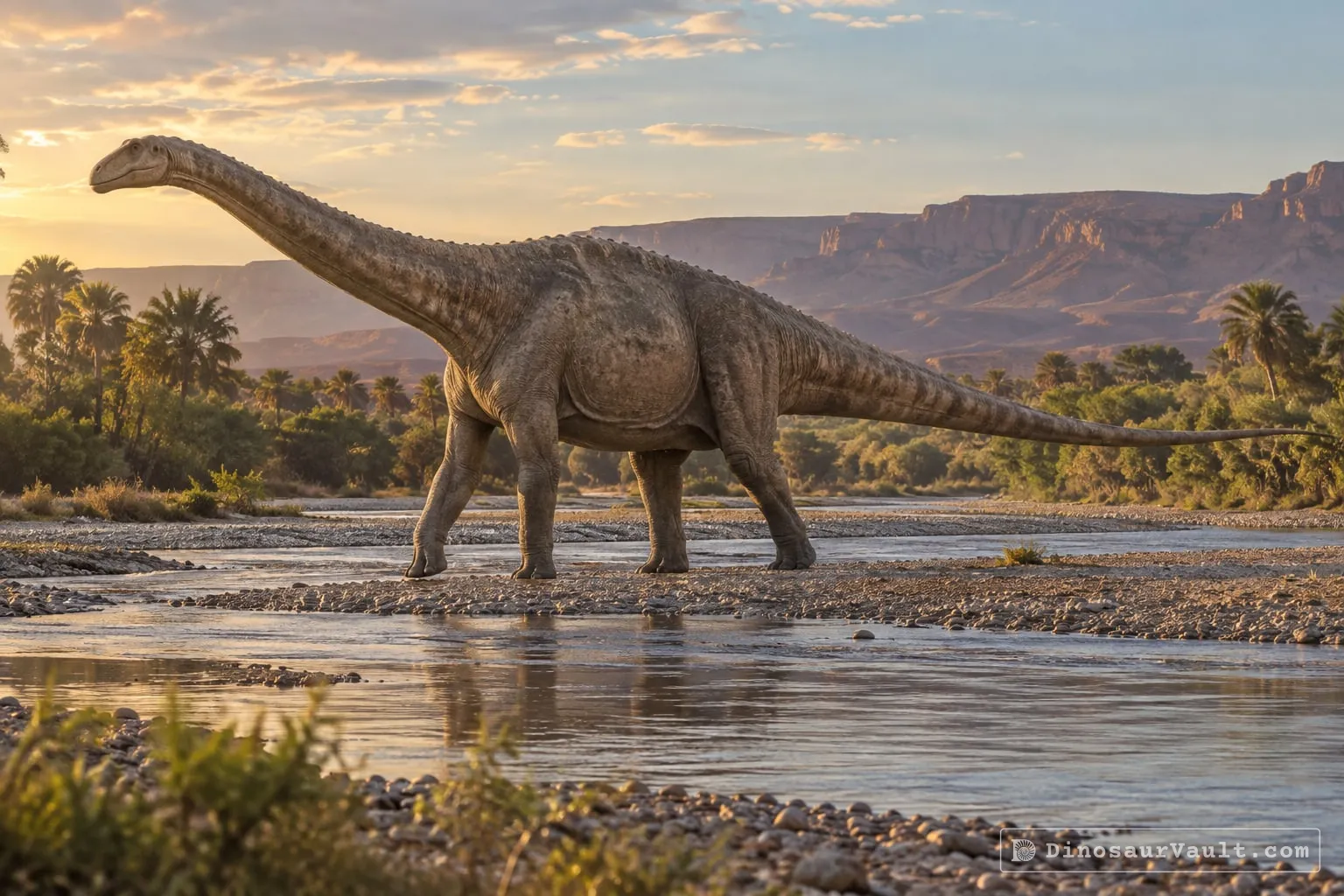


A rock formation can hold fossils laid down millions of years apart, so not every animal here met Spinosaurus.
The evidence
The science behind Spinosaurus
Which parts of the picture come from its own bones, and which come from its relatives.
From its own fossils
- Long jaws hold conical teeth, with the nostrils set back from the snout tip.
- Tall spines on the backbone supported a sail, and a partial skeleton preserves unusually short hindlegs.
- Tall spines above and long bones below the tail vertebrae gave the tail a deep, fin-like outline.
Borrowed from relatives
- More complete skeletons of Baryonyx and Suchomimus help fill gaps in the arms and torso.
- Scaly skin and lips follow comparisons with other large theropods.
Still unknown
- How well it swam and whether it chased prey underwater.
- Its exact balance on land and the outer outline of its sail.
- The full shape of its young, its color and whether it lived in groups.
Often drawn wrong
- Older pictures give it long hindlegs like other large meat eaters. The newer skeleton has much shorter hindlegs.
- A thin, round tail misses the deep shape supported by its tail bones.
- Its palms faced inward rather than flat toward the ground.
Discovery timeline
- 1915Named itStromer
- 2014New findIbrahim et al.
- 2018Growing upMaganuco & Dal Sasso
- 2020PostureIbrahim et al.
- 2022How it fedSereno et al.
Key papers
The research behind what we know of Spinosaurus
Named it
Named Spinosaurus from Egyptian jaws and backbone fragments, including the tall spines that supported its sail.
Ergebnisse der Forschungsreisen Prof. E. Stromers in den Wüsten Ägyptens. II. Wirbeltier-Reste der Baharîje-Stufe (unterstes Cenoman). 3. Das Original des Theropoden Spinosaurus aegyptiacus nov. gen., nov. spec. Abhandlungen der Königlich Bayerischen Akademie der Wissenschaften Mathematisch-physikalische Klasse Abhandlung 28: 1-31
No link available
New find
Described a partial skeleton with short hindlegs and interpreted its anatomy as suited to feeding in water.
Semiaquatic adaptations in a giant predatory dinosaur. Science 345: 1613-1616
Read the paper : Semiaquatic adaptations in a giant predatory dinosaur (opens in a new tab)Growing up
Described a tiny foot claw tentatively assigned to a young Spinosaurus.
The smallest biggest theropod dinosaur: a tiny pedal ungual of a juvenile Spinosaurus from the Cretaceous of Morocco. PeerJ 6: e4785
Read the paper : The smallest biggest theropod dinosaur: a tiny pedal ungual of a juvenile Spinosaurus from the Cretaceous of Morocco (opens in a new tab)Posture
Described a deep, flexible tail and tested how its shape could provide thrust in water.
Tail-propelled aquatic locomotion in a theropod dinosaur. Nature 581: 67-70
Read the paper : Tail-propelled aquatic locomotion in a theropod dinosaur (opens in a new tab)How it fed
Challenged underwater pursuit and proposed that Spinosaurus caught fish from shallow water margins.
Spinosaurus is not an aquatic dinosaur. eLife 11
Read the paper : Spinosaurus is not an aquatic dinosaur (opens in a new tab)
Close relatives
Other members of Spinosauridae


Sources: Wikidata