Outline: a typical theropod
Bahariasaurus
"Bahariya lizard"
- Lived
- 113 to 94 million years ago, Early Cretaceous to Late Cretaceous
- Diet
- Carnivore
- Group
- Theropods
- Found in
- Egypt and Niger
- Named by
- Stromer 1934
Where its fossils were found
The evidence
Today
105 million years ago
Field notes
About Bahariasaurus
What it was like
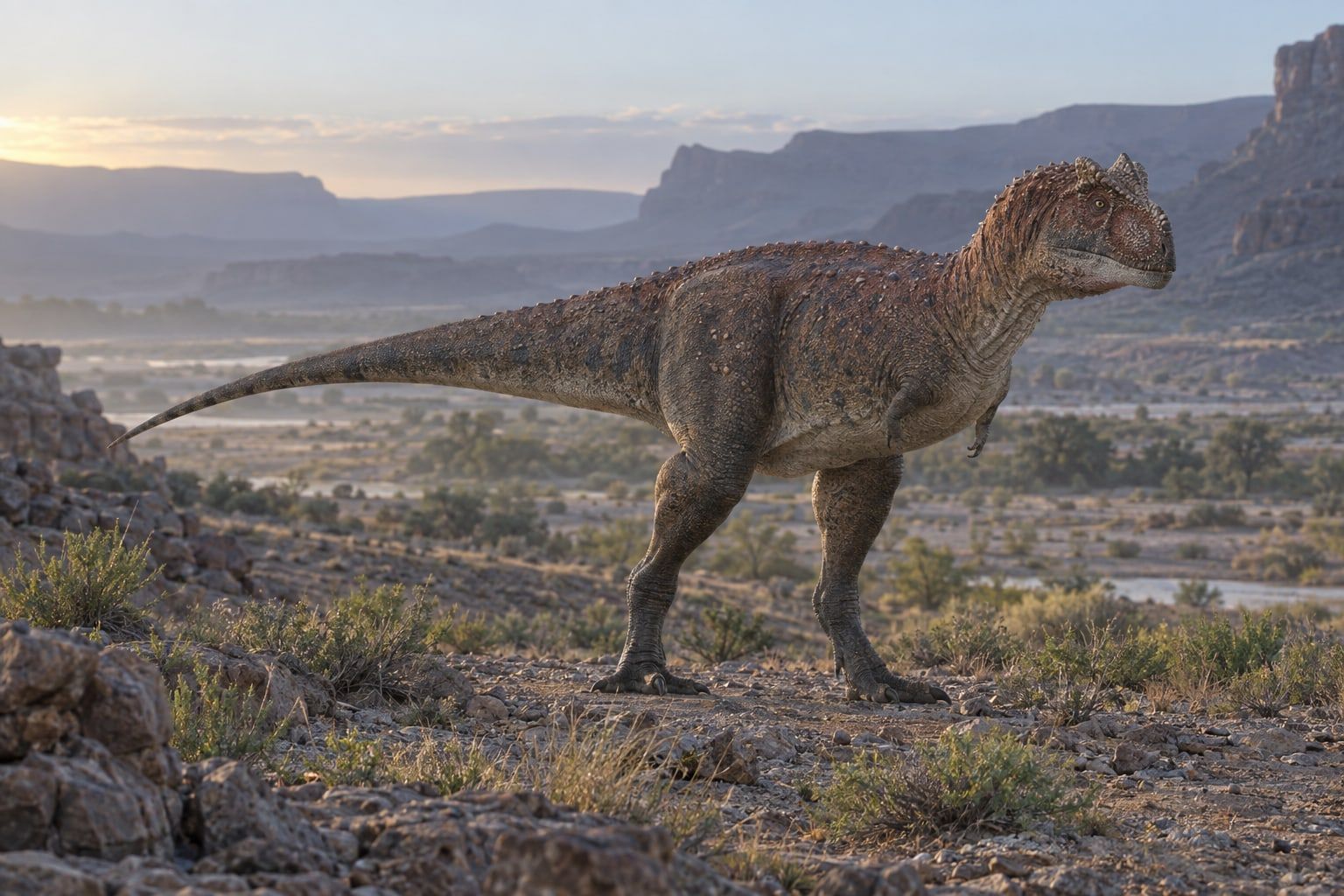
Bahariasaurus was a large two-legged meat eater, but little is known about its shape. Its original bones were destroyed by wartime bombing, so scientists work from old descriptions and drawings.
It was clearly one of the big hunters of its time, but its exact place among the theropods is still debated.
Its world
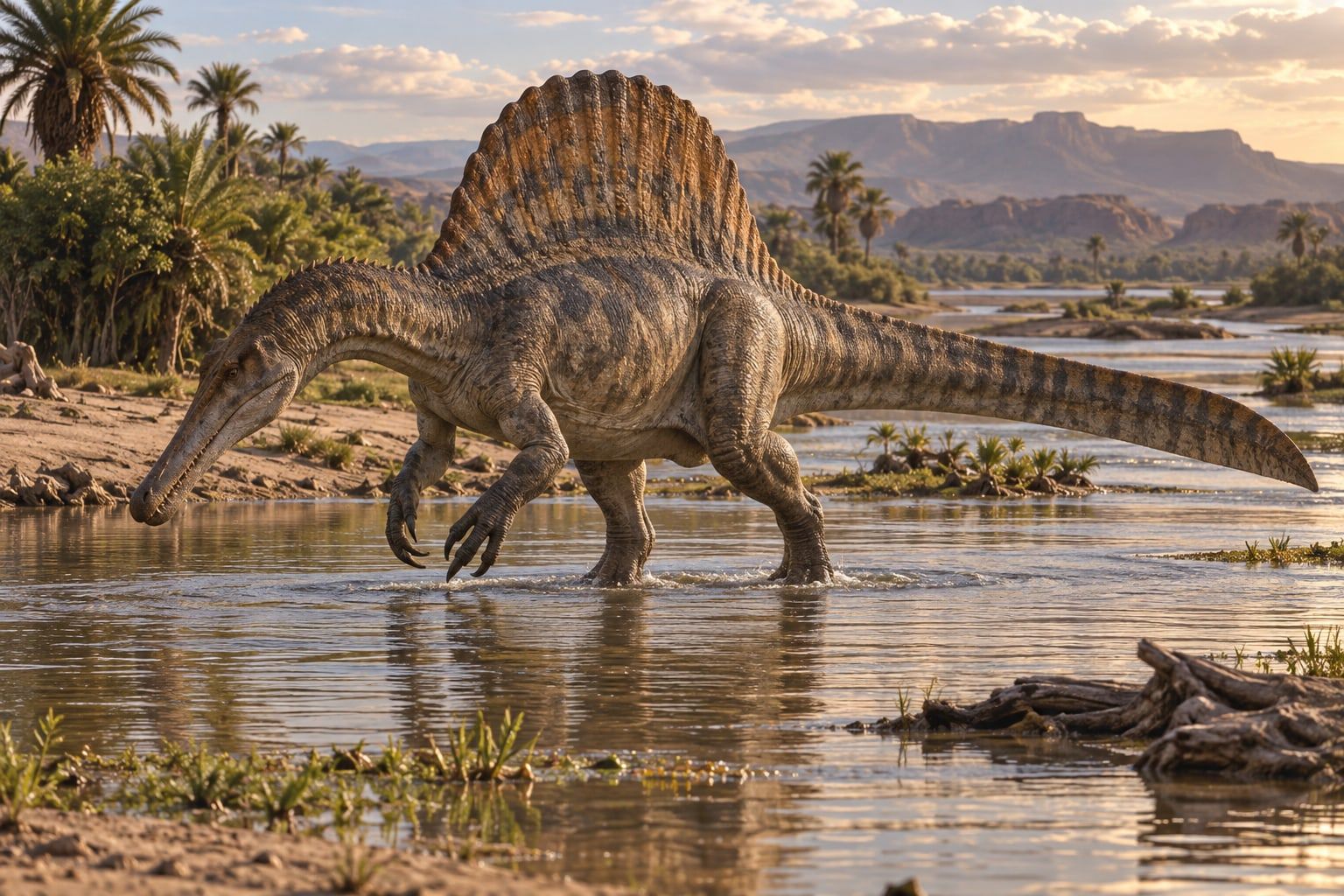
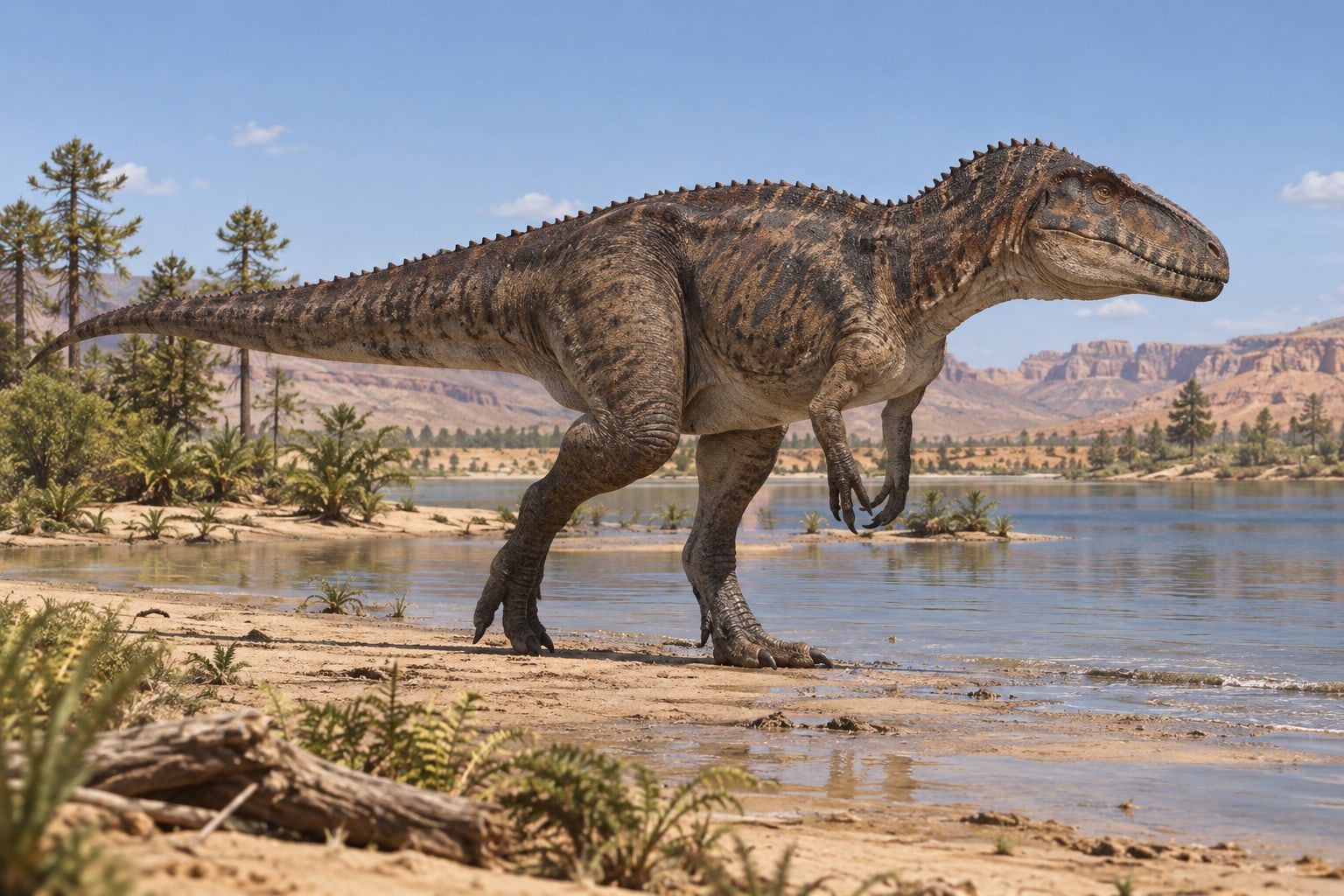
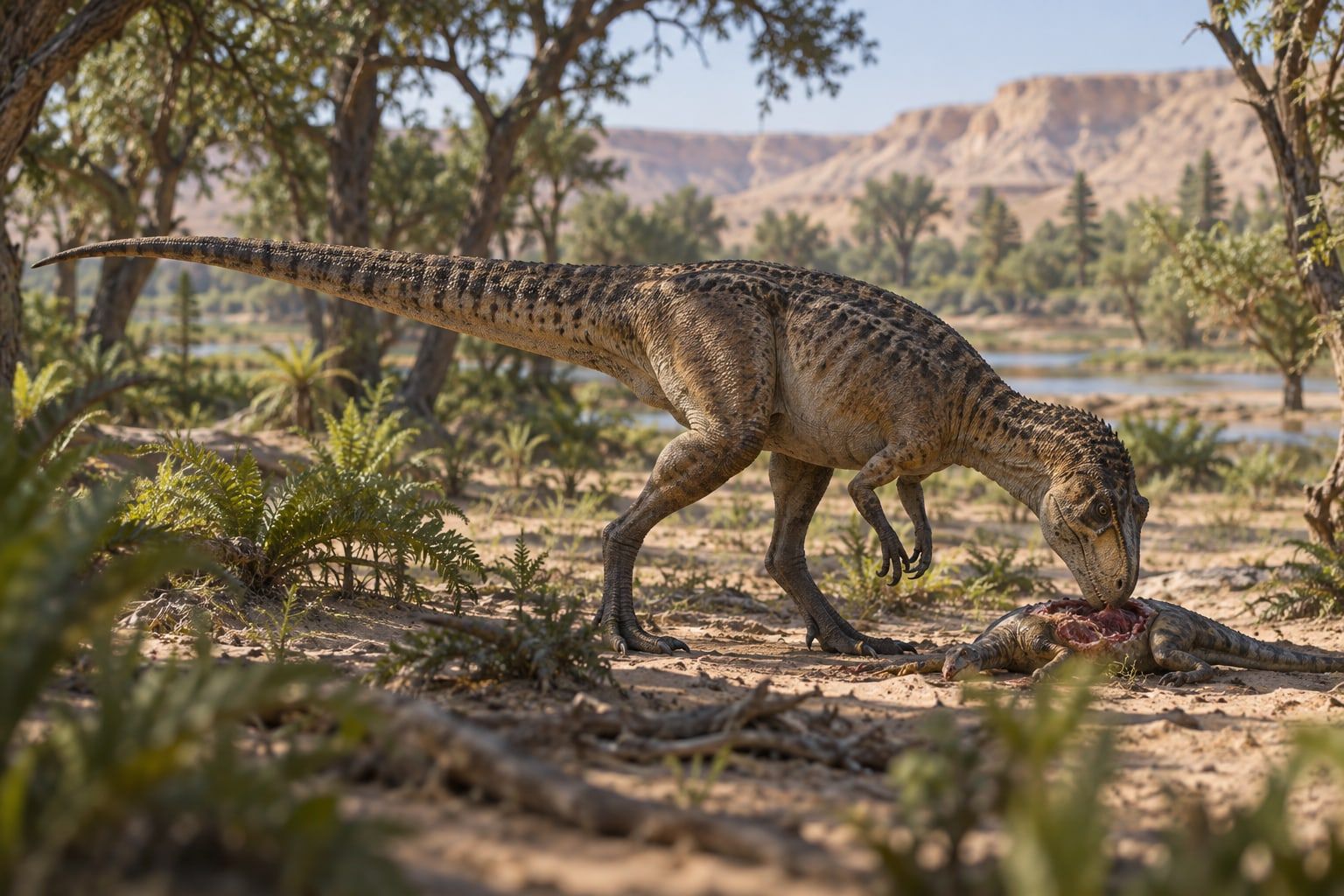
It lived about 113 to 94 million years ago, in the Cretaceous, in what are now Egypt and Niger. In Egypt it shared a world of rivers and swamps with Spinosaurus, Carcharodontosaurus and the giant titanosaur Paralititan.
How it was found
Stromer named Bahariasaurus in 1934 from bones found in a desert oasis in Egypt. Some later bones from Niger have been assigned to it.
Lived alongside
Found in the same rock formations
Close relatives
Other members of Avetheropoda
Sources: WikidataNamed in: E. Stromer. 1934. Ergebnisse der Forschungsreisen Prof. E. Stromers in den Wüsten Ägyptens. II. Wirbeltierreste der Baharîje-Stufe (unterstes Cenoman). 13. Dinosauria [Results of the expeditions of Professor E. Stromer in the Egyptian deserts. II. Vertebrate animal remains from the Baharîje bed (lowest Cenomanian). 13. Dinosauria]. Abhandlungen der Bayerischen Akademie der Wissenschaften Mathematisch-naturwissenschaftliche Abteilung, Neue Folge 22:1-79