Outline: a typical sauropod
Paralititan
pa-RAL-ih-TIE-tan
"tidal giant"
- Lived
- 101 to 94 million years ago, Late Cretaceous
- Diet
- Herbivore
- Length
- about 28 m (92 ft)
- Group
- Sauropods
- Found in
- Algeria and Egypt
- Named by
- Smith et al. 2001
Size comparison
To scale

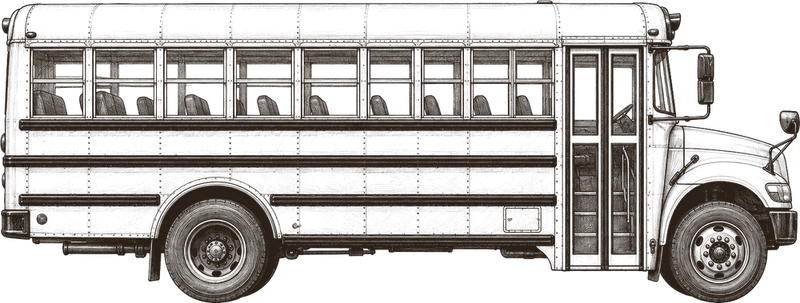
Scale in metersOutline: typical sauropod shape
Where its fossils were found
The evidence
Today
95 million years ago
Field notes
About Paralititan
What it was like
Paralititan was a titanosaur, a long-necked plant eater, and one of the biggest animals of its time. It may have reached about 28 meters (92 feet) long, though the estimate rests on a few bones, including a huge upper arm bone.
Its world
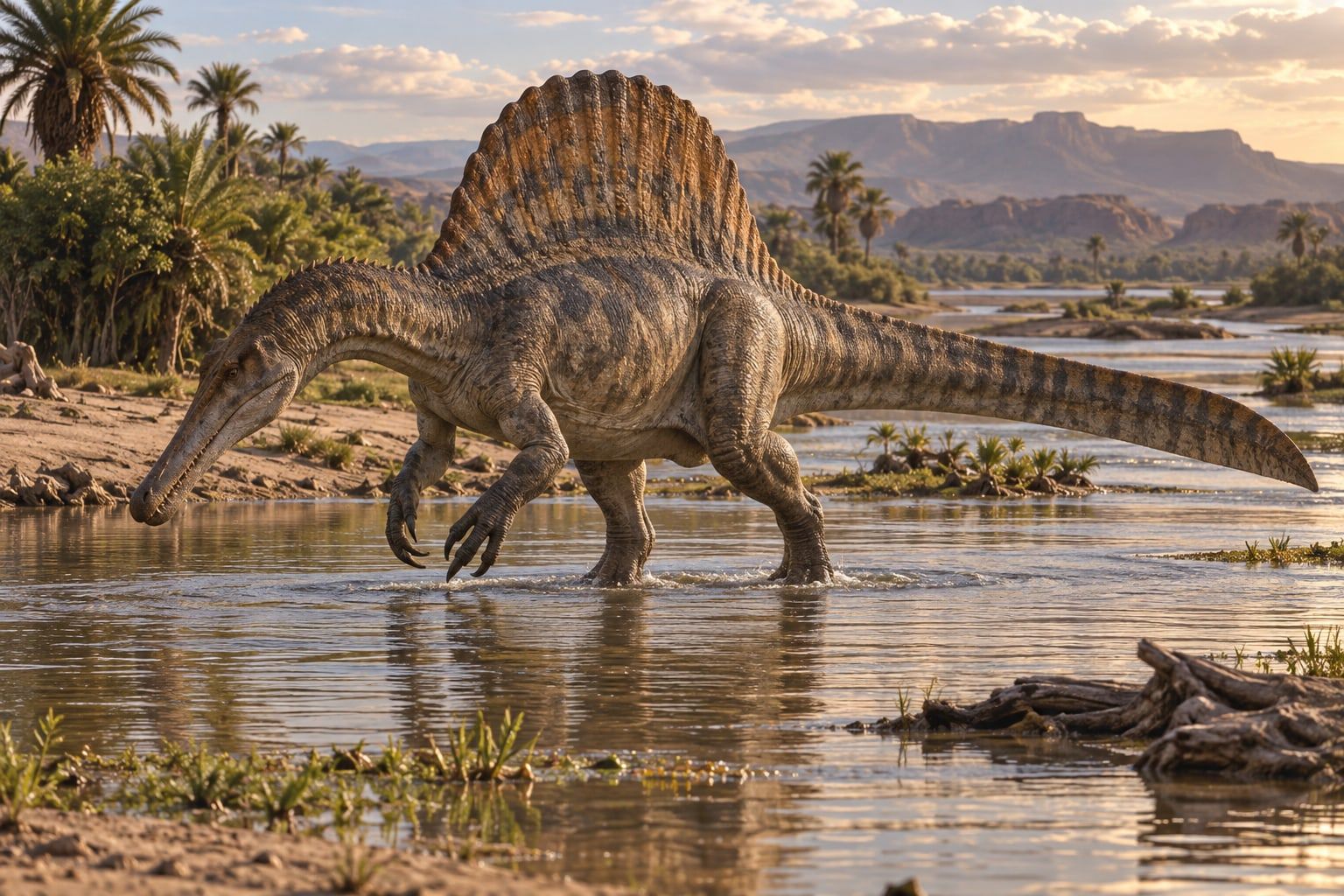
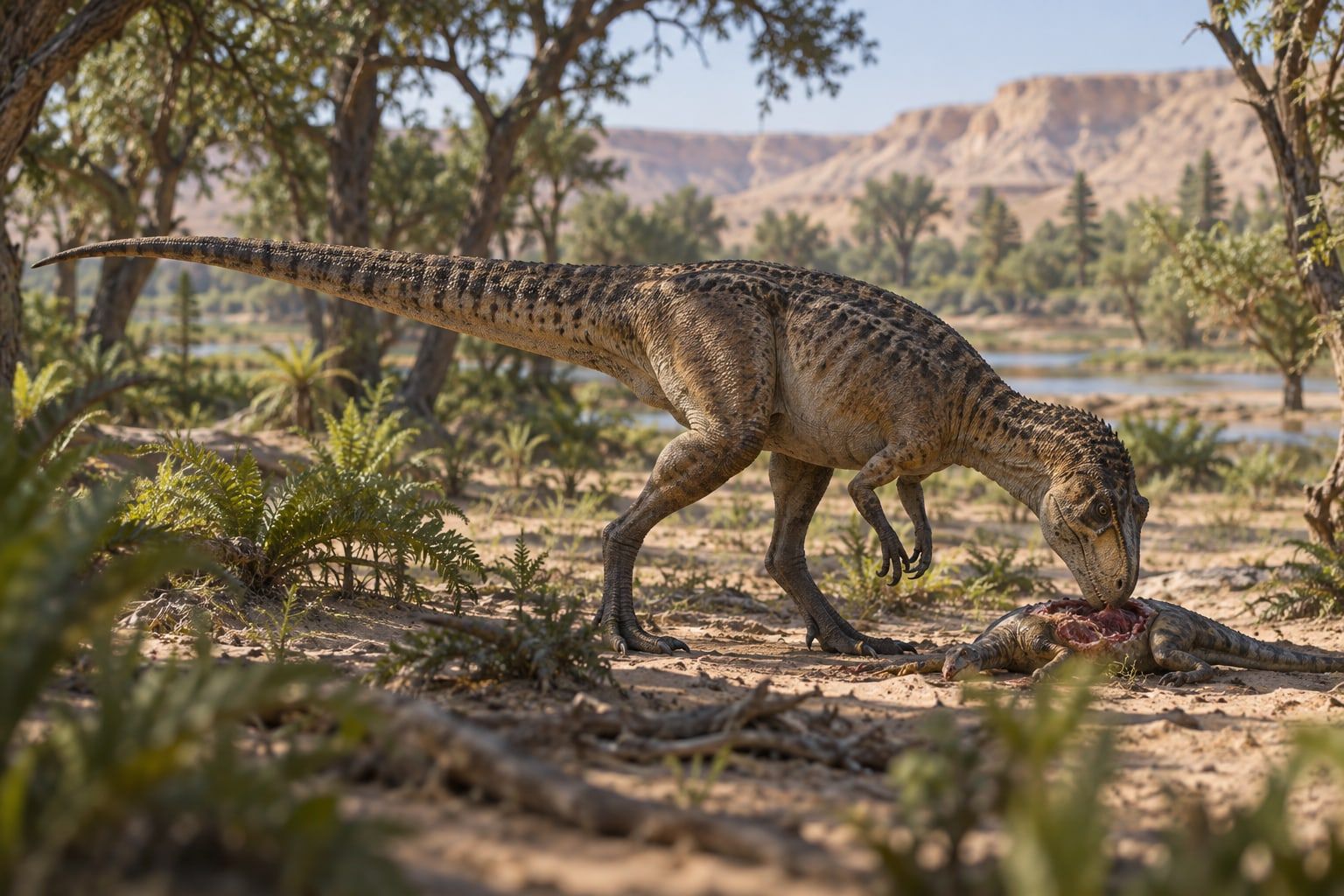
It lived about 101 to 94 million years ago, in the Late Cretaceous, in what is now Egypt. Its world was a coast of tidal flats and mangrove-like swamps, which gave it its name. It shared that coast with some of the largest predators ever found, including Spinosaurus and Bahariasaurus, and with the smaller hunter Deltadromeus and the sauropod Aegyptosaurus.
How it was found
Smith and colleagues named Paralititan in 2001, after an expedition returned to the desert rocks of the Baharîje Formation, where German collectors had worked almost a century earlier.
Lived alongside
Found in the same rock formations
Close relatives
Other members of Lithostrotia
Sources: WikidataNamed in: J. B. Smith, M. C. Lamanna, and K. J. Lacovara, P. Dodson, J. R. Smith, J. C. Poole, R. Giegengack, Y. Attia. 2001. A giant sauropod dinosaur from an Upper Cretaceous mangrove deposit in Egypt. Science 292:1704-1706