Suchomimus
SOO-koh-MY-mus
"crocodile mimic"
- Lived
- 121 to 101 million years ago, Early Cretaceous
- Diet
- Carnivore
- Length
- about 10 m (33 ft)
- Group
- Theropods, Spinosauridae
- Found in
- Niger
- Named by
- Sereno et al. 1998
Size comparison
To scale
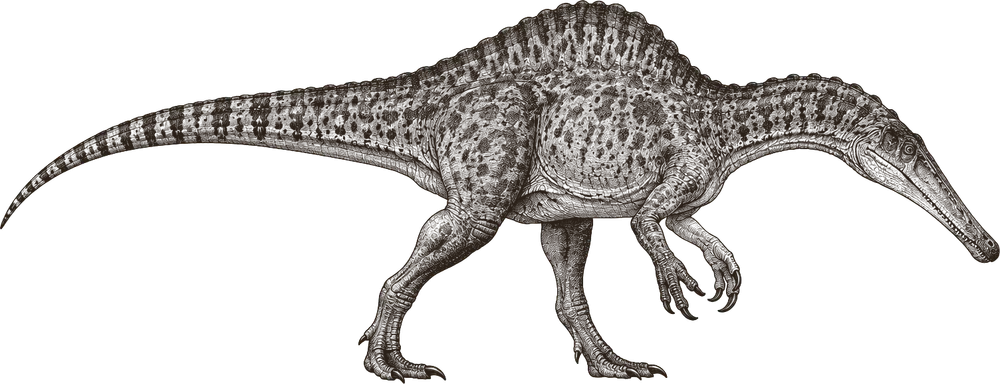


Scale in meters
Where its fossils were found
The evidence
Today

110 million years ago
Habitat
Rivers crossed broad floodplains in the region now preserved as the Elrhaz Formation of Niger. Regional neighbors included Ouranosaurus, Lurdusaurus and Nigersaurus.
Field notes
About Suchomimus
What it was like
Suchomimus had a long, low, narrow skull much like a crocodile's, lined with many cone-shaped teeth for gripping slippery prey. A large, curved claw tipped each thumb, and a row of tall spines ran along its back, probably supporting a low sail of skin. It grew to roughly 10 meters (33 feet) long.
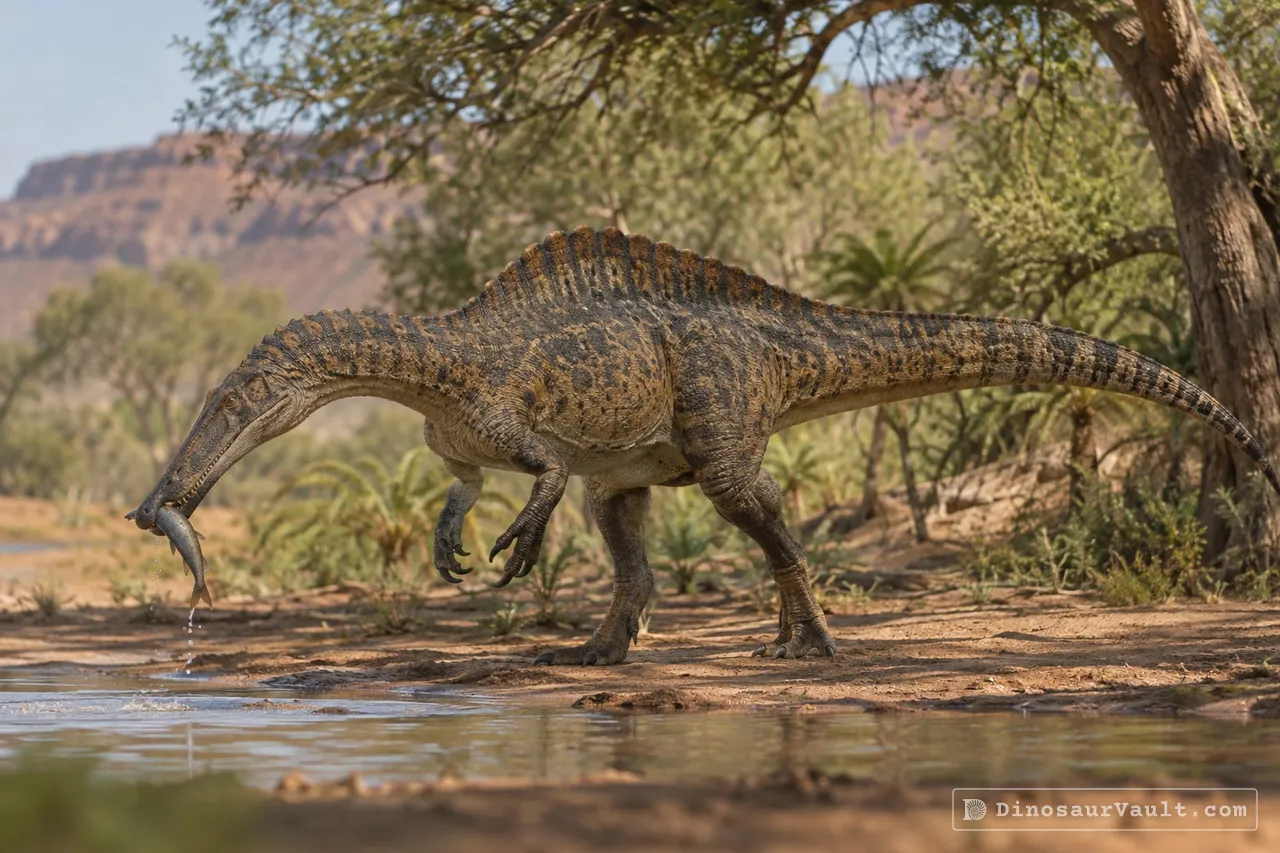
Its body was built for hunting near water. Paleontologists think it waded through rivers and swamps, snatching fish and other prey with its long jaws and clawed hands.
Its world
Suchomimus lived from about 121 to 101 million years ago, in the Early Cretaceous, in what is now Niger. Its fossils come from the Elrhaz Formation.
It shared its floodplain habitat with the huge predator Carcharodontosaurus, the smaller carnivore Eocarcharia, the plant eaters Ouranosaurus and Lurdusaurus, the armored Kryptops, and the long-necked Nigersaurus.
How it was found
Sereno and colleagues named Suchomimus in 1998, based on bones found in Niger. Only about two fossil finds are known, so much of what scientists know comes from a small number of skeletons. Some researchers think Suchomimus may be the same animal as the spinosaurid Baryonyx, or a separate but closely related genus; the question remains debated. It is considered a close relative of Spinosaurus and Irritator.
Field gallery
More views of Suchomimus
Scenes reconstructed from the available fossil evidence.
1 of 7
Lived alongside
Found in the same rock formations
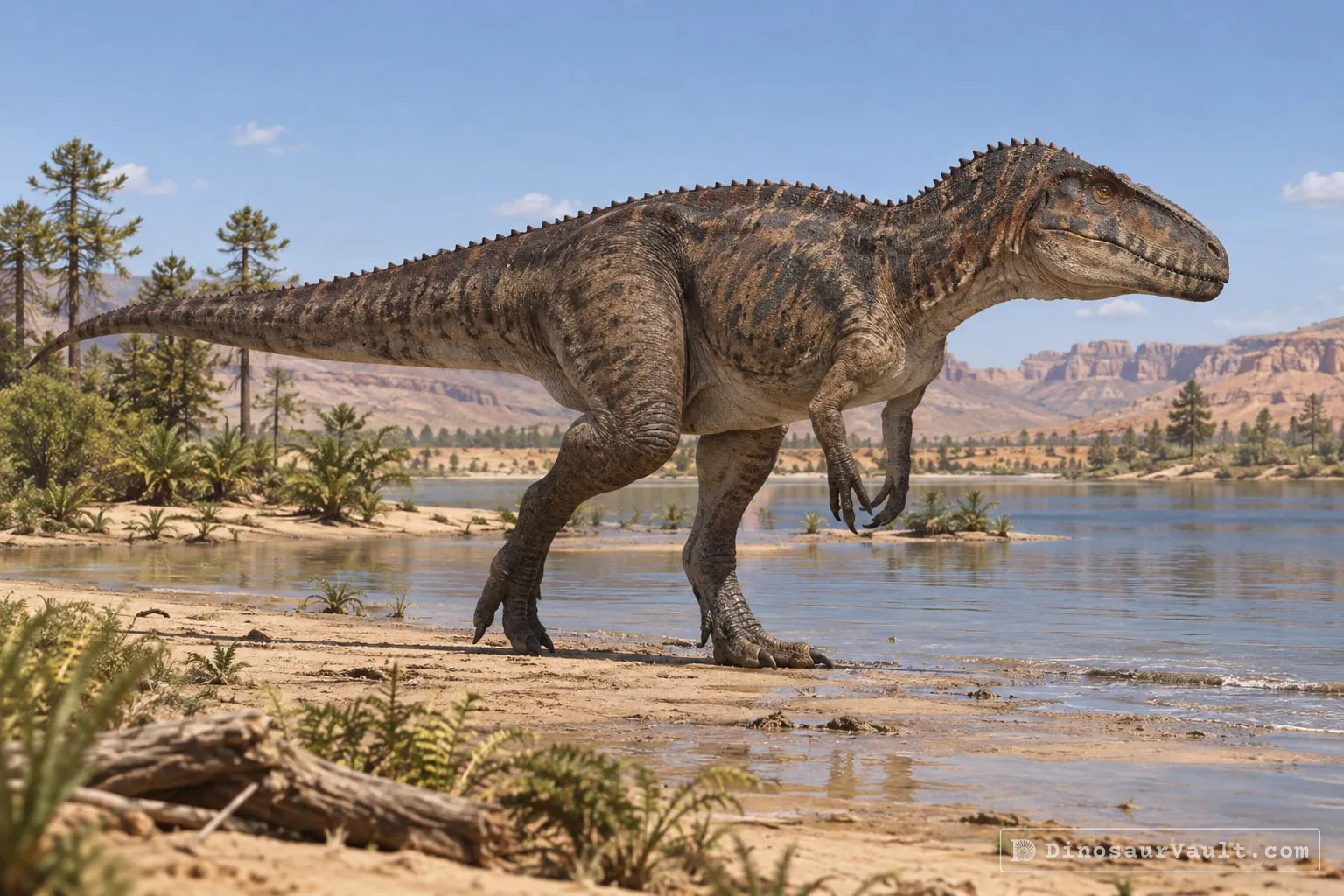
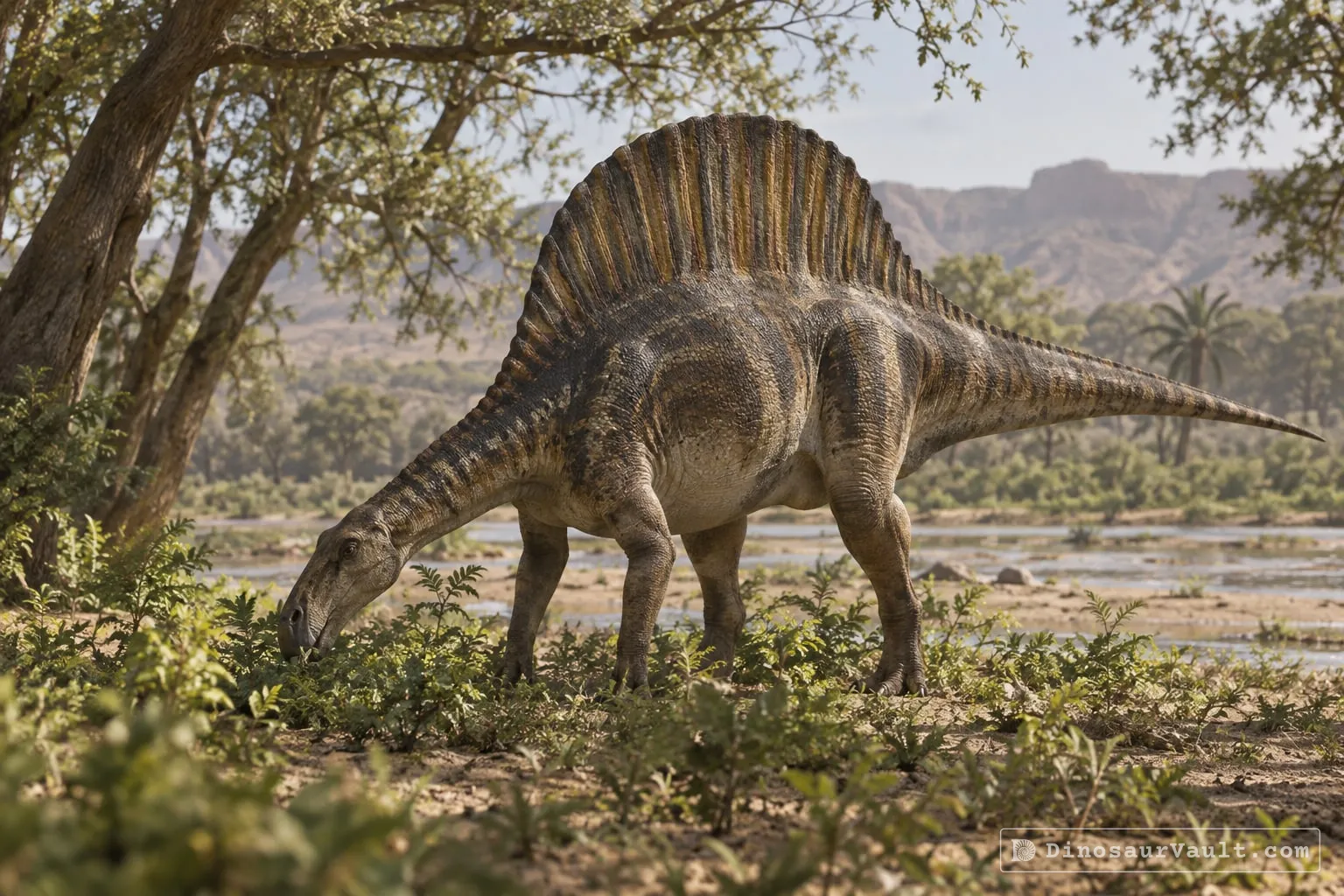
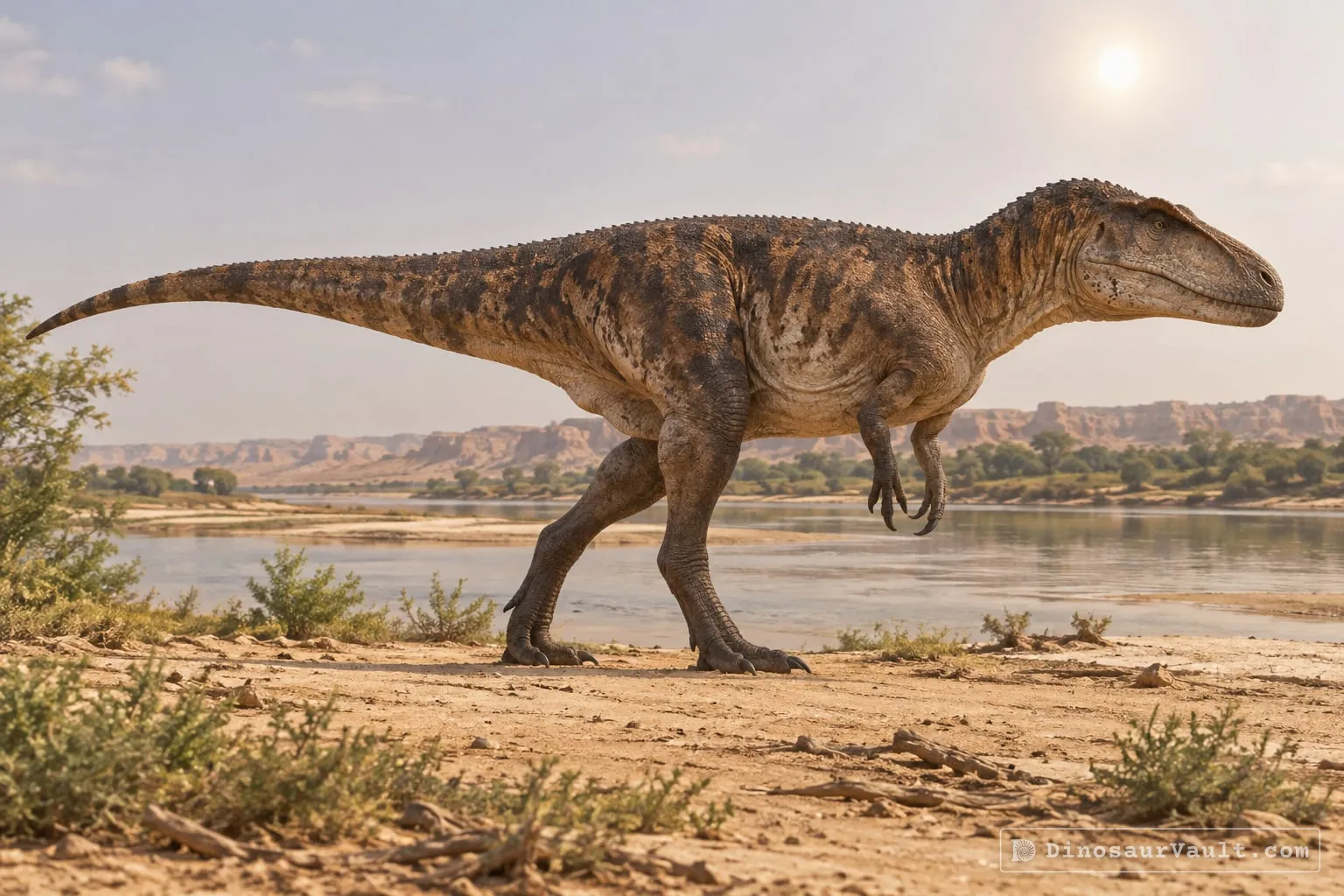
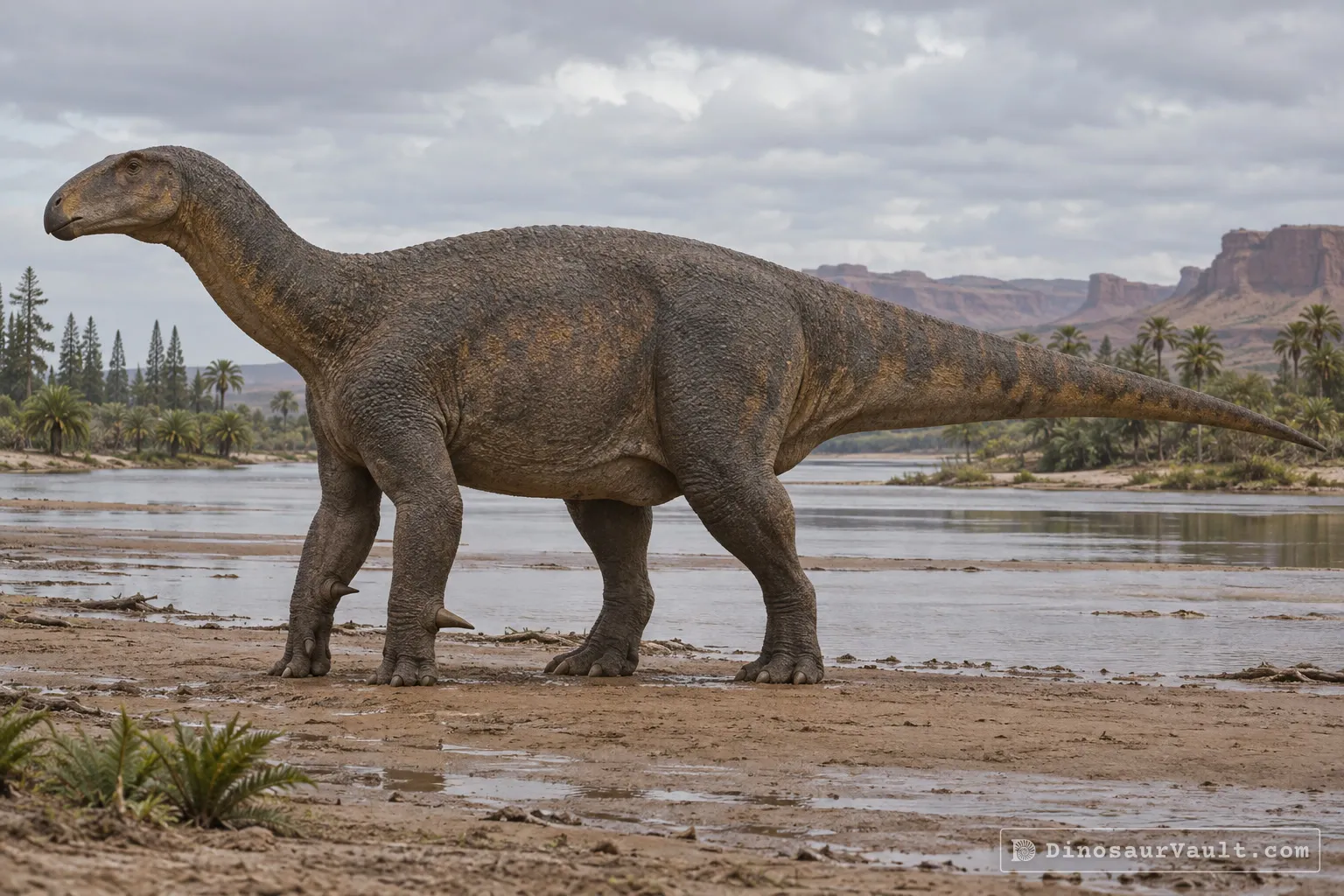
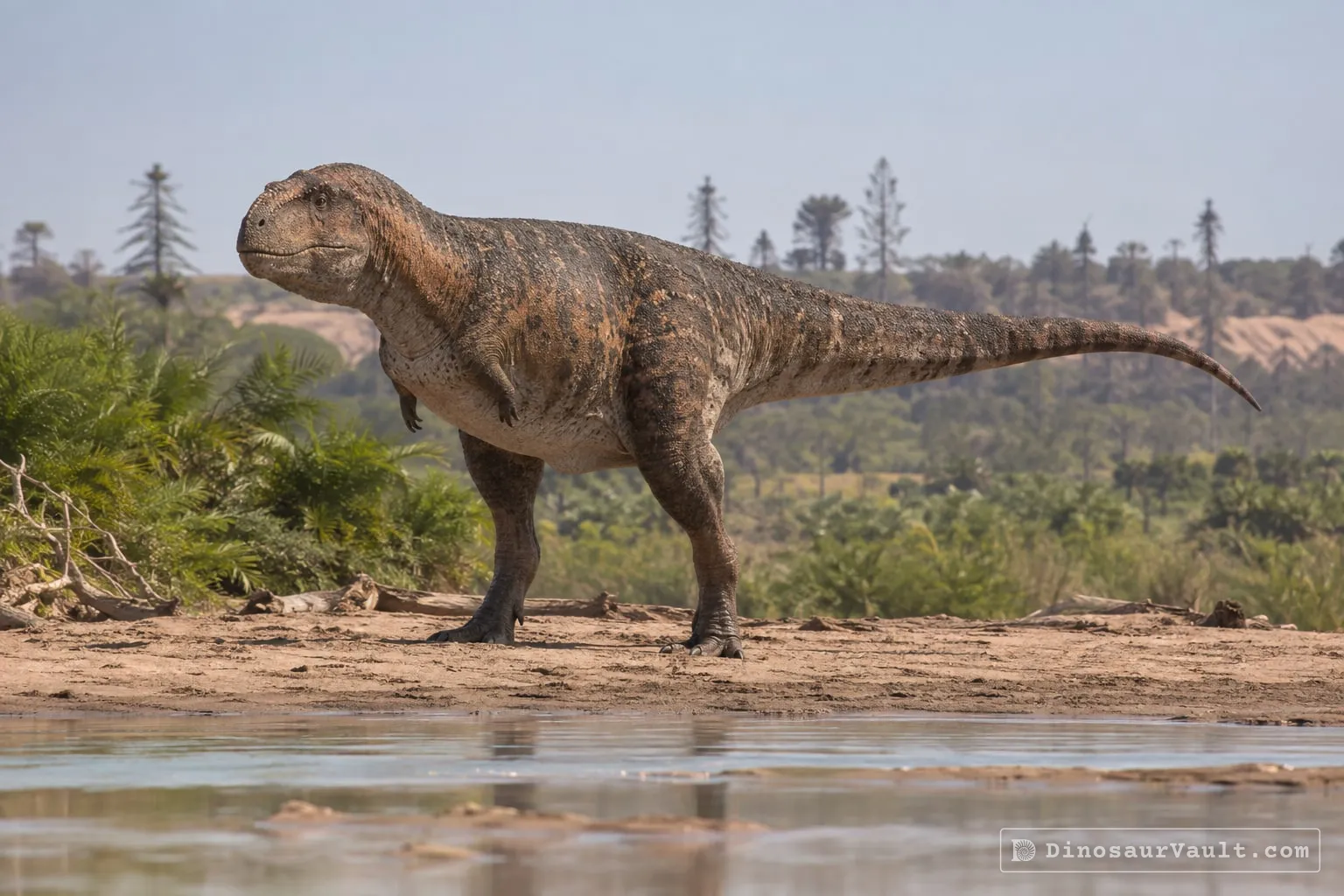
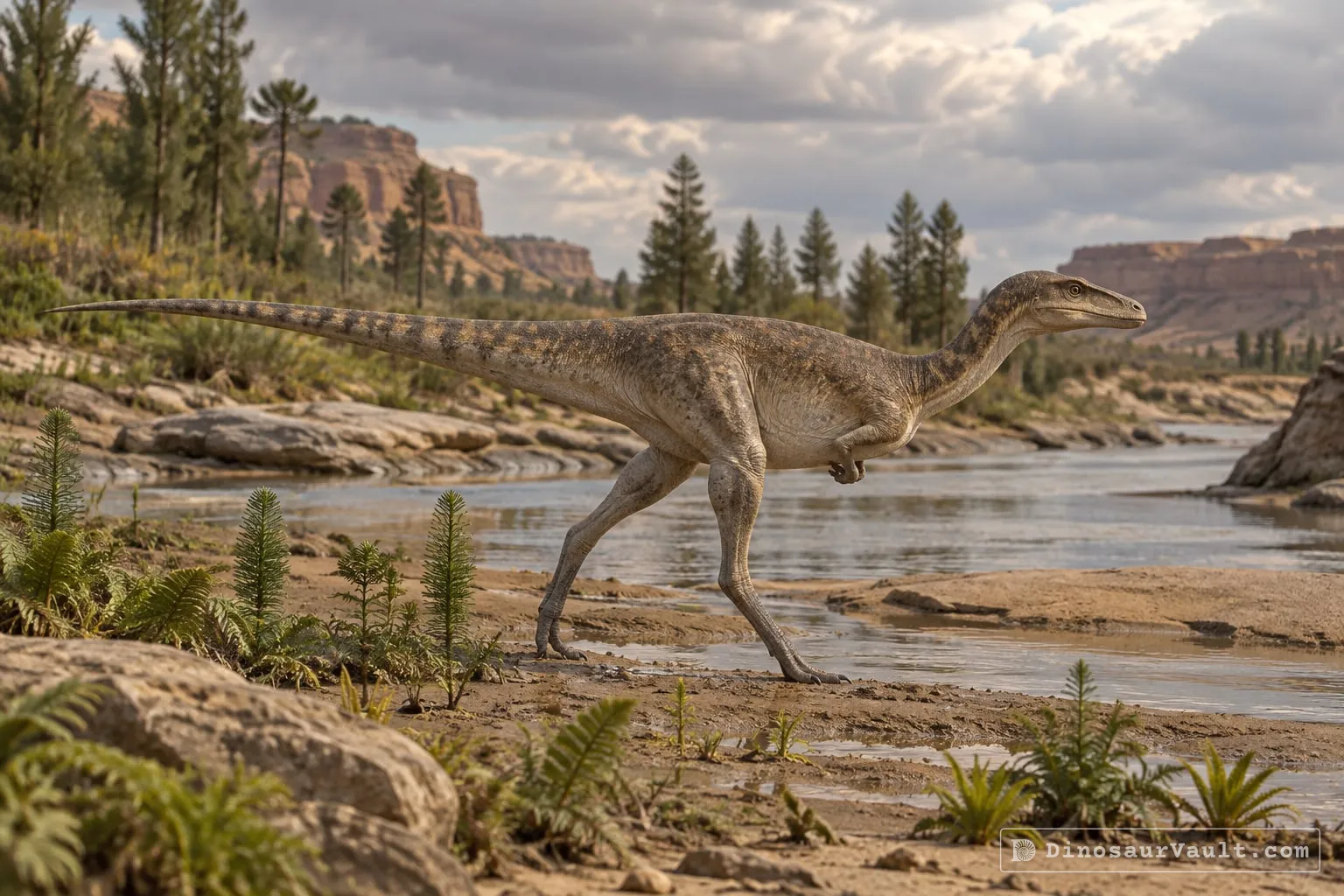
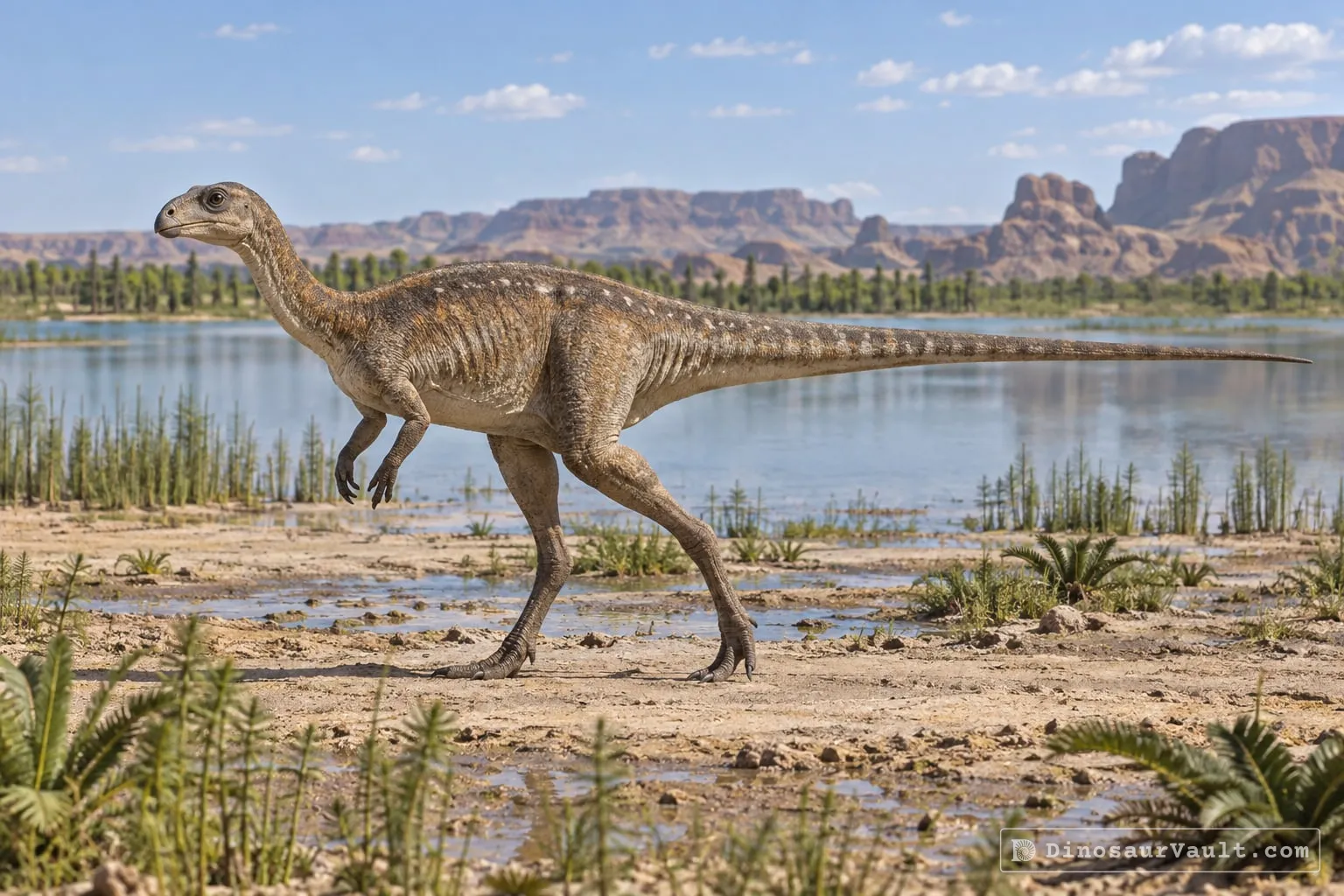
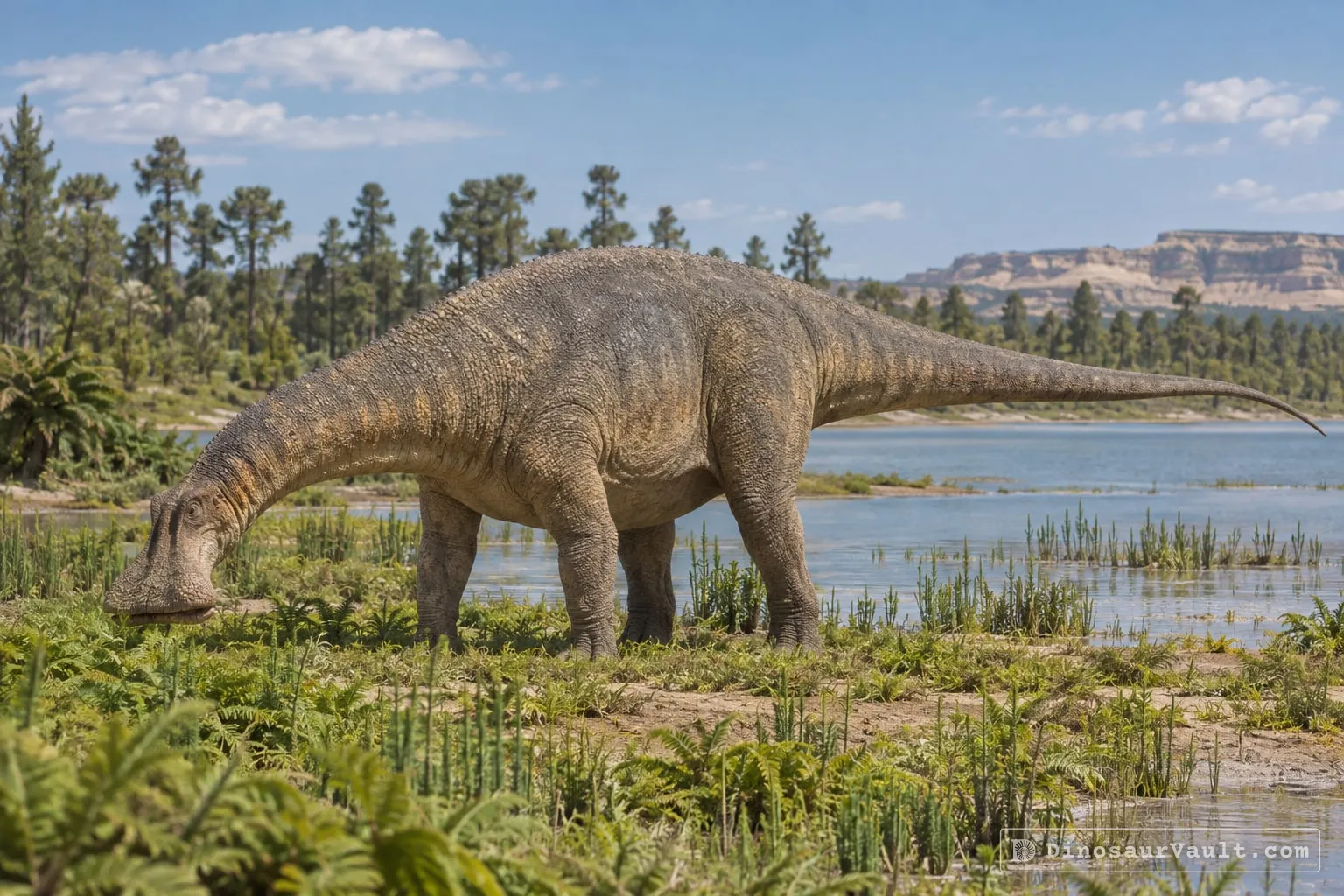


A rock formation can hold fossils laid down millions of years apart, so not every animal here met Suchomimus.
The evidence
The science behind Suchomimus
Which parts of the picture come from its own bones, and which come from its relatives.
From its own fossils
- A partial skeleton and additional bones show long, narrow jaws with an expanded tip and many cone-shaped teeth.
- Strong arms carried three clawed fingers, with an especially large claw on each thumb.
- Raised spinal bones supported a low ridge along the back.
Borrowed from relatives
- Baryonyx helps restore missing bones and interpret the long jaws and large hand claws.
- Lips and a mostly scaly covering are inferred from other large theropods.
Still unknown
- The exact shape of the skin and muscle over its raised backbones.
- Its color and skin pattern.
- How its snout, claws and back ridge changed as it grew.
Often drawn wrong
- A tall sail like that of Spinosaurus exaggerates its much lower back ridge.
- A deep paddle-shaped tail fin borrows a feature from Spinosaurus.
- Its palms faced inward, rather than down like a bear's paws.
Discovery timeline
- 1998Named itSereno et al.
- 2021Family treeBarker et al.
- 2022How it fedFabbri et al.
- 2023Close relativeCullen et al.
- 2024How it fedMyhrvold et al.
Key papers
The research behind what we know of Suchomimus
Named it
Named Suchomimus from bones in Niger, describing its long snout, large thumb claws and place in the spinosaur family.
A Long-Snouted Predatory Dinosaur from Africa and the Evolution of Spinosaurids. Science 282: 1298-1302
Read the paper : A Long-Snouted Predatory Dinosaur from Africa and the Evolution of Spinosaurids (opens in a new tab)Family tree
Placed Suchomimus close to Ceratosuchops and Riparovenator, newly named spinosaurids from England.
New spinosaurids from the Wessex Formation (Early Cretaceous, UK) and the European origins of Spinosauridae. Scientific Reports 11
Read the paper : New spinosaurids from the Wessex Formation (Early Cretaceous, UK) and the European origins of Spinosauridae (opens in a new tab)How it fed
Compared bone density across animals and proposed that Suchomimus foraged without diving, unlike Spinosaurus and Baryonyx.
Subaqueous foraging among carnivorous dinosaurs. Nature 603: 852-857
Read the paper : Subaqueous foraging among carnivorous dinosaurs (opens in a new tab)Close relative
Supported lips covering theropod teeth, helping guide the restoration of the long mouth of Suchomimus.
Theropod dinosaur facial reconstruction and the importance of soft tissues in paleobiology. Science 379: 1348-1352
Read the paper : Theropod dinosaur facial reconstruction and the importance of soft tissues in paleobiology (opens in a new tab)How it fed
Found problems in bone-density methods used to separate diving spinosaurids from Suchomimus and illustrated a thigh bone assigned to a young individual.
Diving dinosaurs? Caveats on the use of bone compactness and pFDA for inferring lifestyle. PLOS ONE 19: e0298957
Read the paper : Diving dinosaurs? Caveats on the use of bone compactness and pFDA for inferring lifestyle (opens in a new tab)
Close relatives
Other members of Spinosauridae


Sources: Wikidata