Ouranosaurus
oo-RAH-no-SORE-us
- Lived
- 121 to 101 million years ago, Early Cretaceous
- Diet
- Herbivore
- Length
- about 7 m (23 ft)
- Group
- Ornithopods
- Found in
- Niger and Tunisia
- Named by
- Taquet 1972
Size comparison
To scale


Scale in meters
Where its fossils were found
The evidence
Today

110 million years ago
Habitat
Rivers and floodplains stretched across what is now Niger. Nigersaurus, Lurdusaurus and Suchomimus were regional neighbors.
Field notes
About Ouranosaurus
What it was like
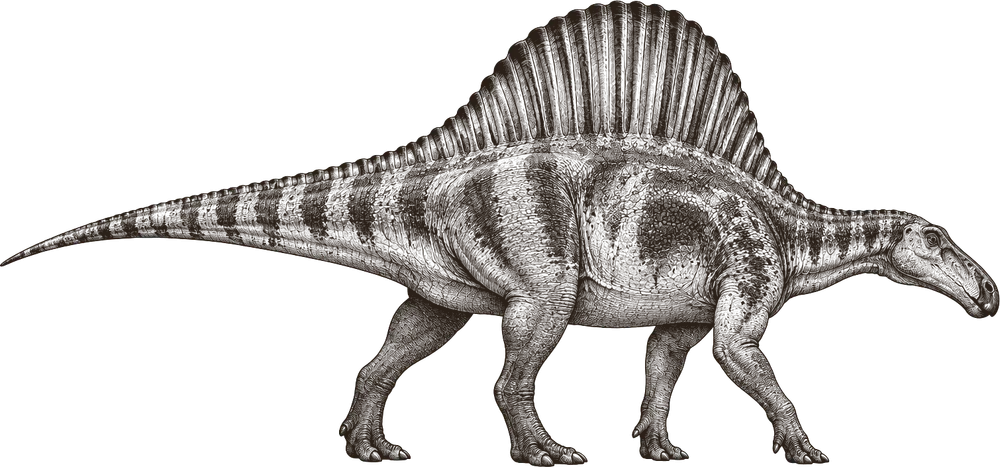
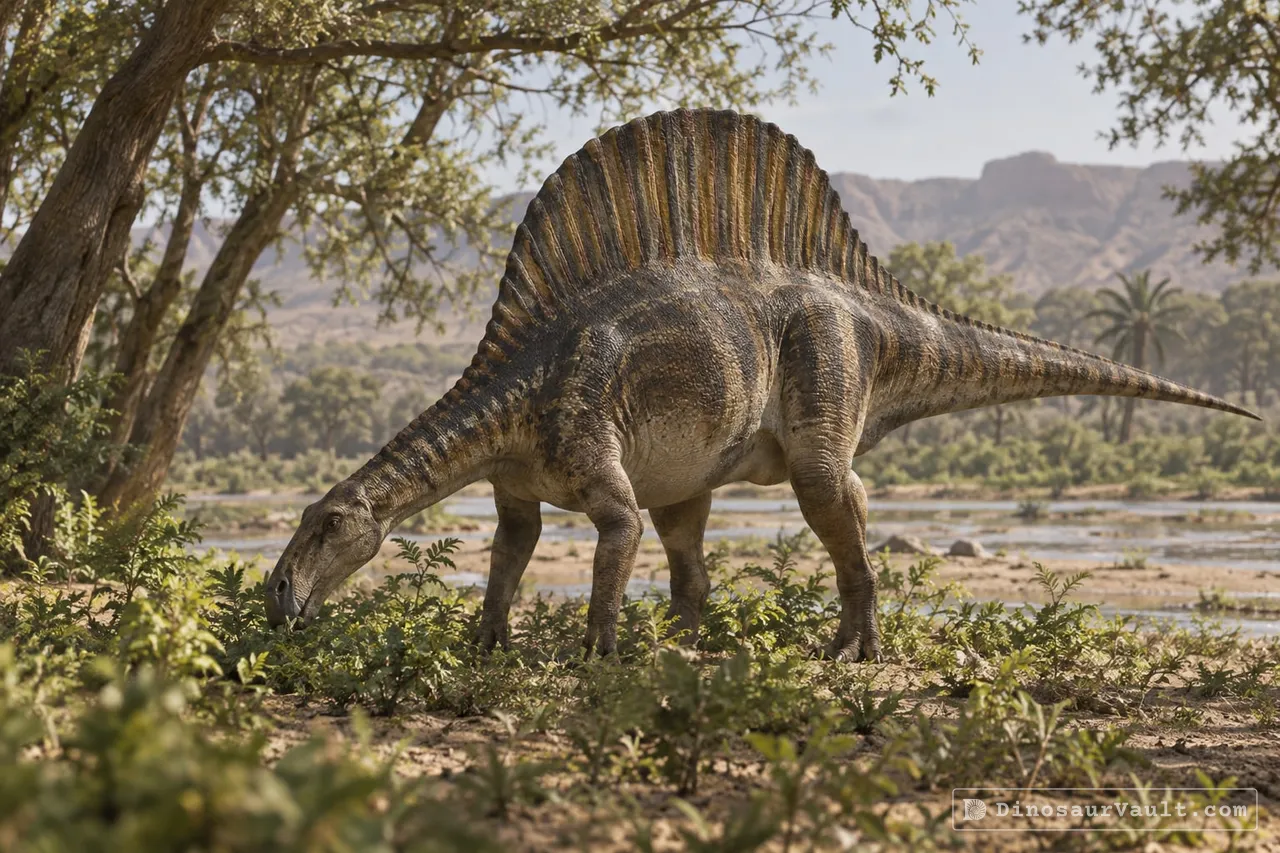
Ouranosaurus was a plant-eating ornithopod that grew to about 7 meters (23 feet) long, with a long, low snout ending in a broad, flattened beak. Tall spines rose from the bones of its back, and scientists debate whether these supported a thin sail of skin or a fleshy hump for storing fat, similar to a camel. It had thumb spikes on its hands, like some of its relatives, and probably moved on both two and four legs depending on its speed.
Its world
Ouranosaurus lived in what is now Niger and Tunisia during the Early Cretaceous, between about 121 and 101 million years ago. It shared its river and floodplain habitat with large predators including Carcharodontosaurus and Spinosaurus, as well as the fish-eating Suchomimus, and smaller plant eaters such as Elrhazosaurus and the heavily built Lurdusaurus.
How it was found
Taquet named Ouranosaurus in 1972, based on fossils from the Elrhaz Formation. About 5 separate fossil finds are known today, making it one of the better documented dinosaurs of its time and place.
Field gallery
More views of Ouranosaurus
Scenes reconstructed from the available fossil evidence.
1 of 7
Lived alongside
Found in the same rock formations
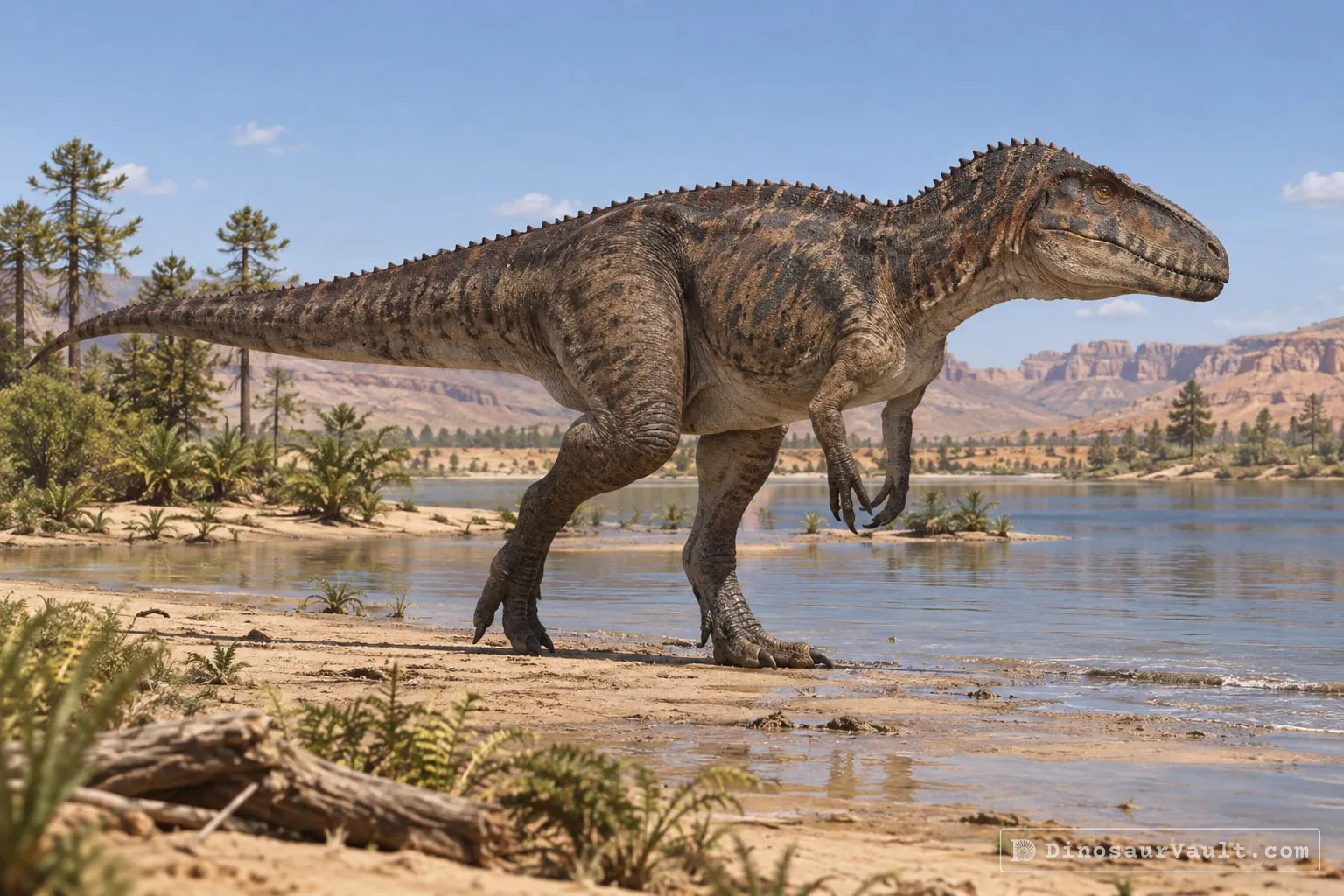
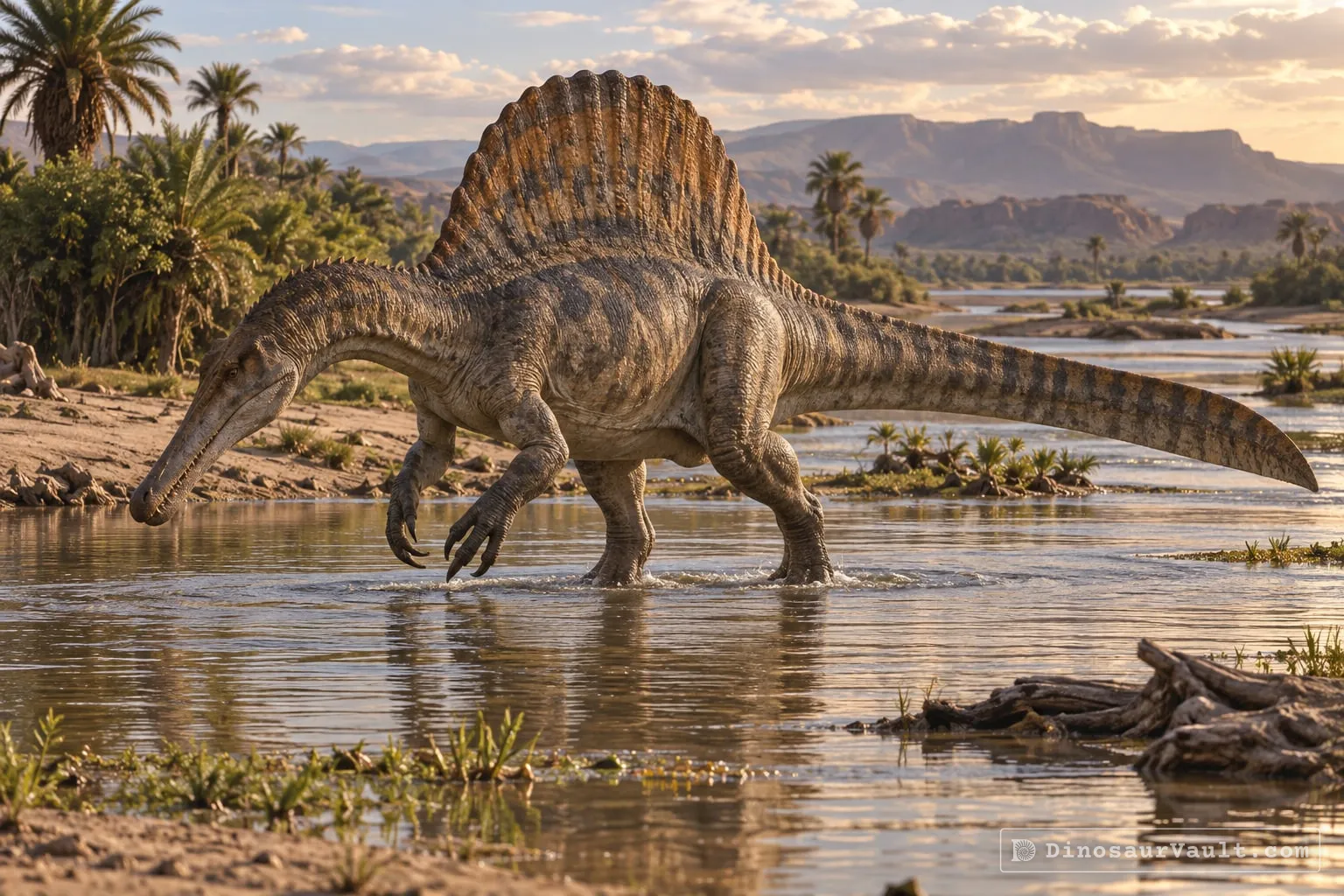
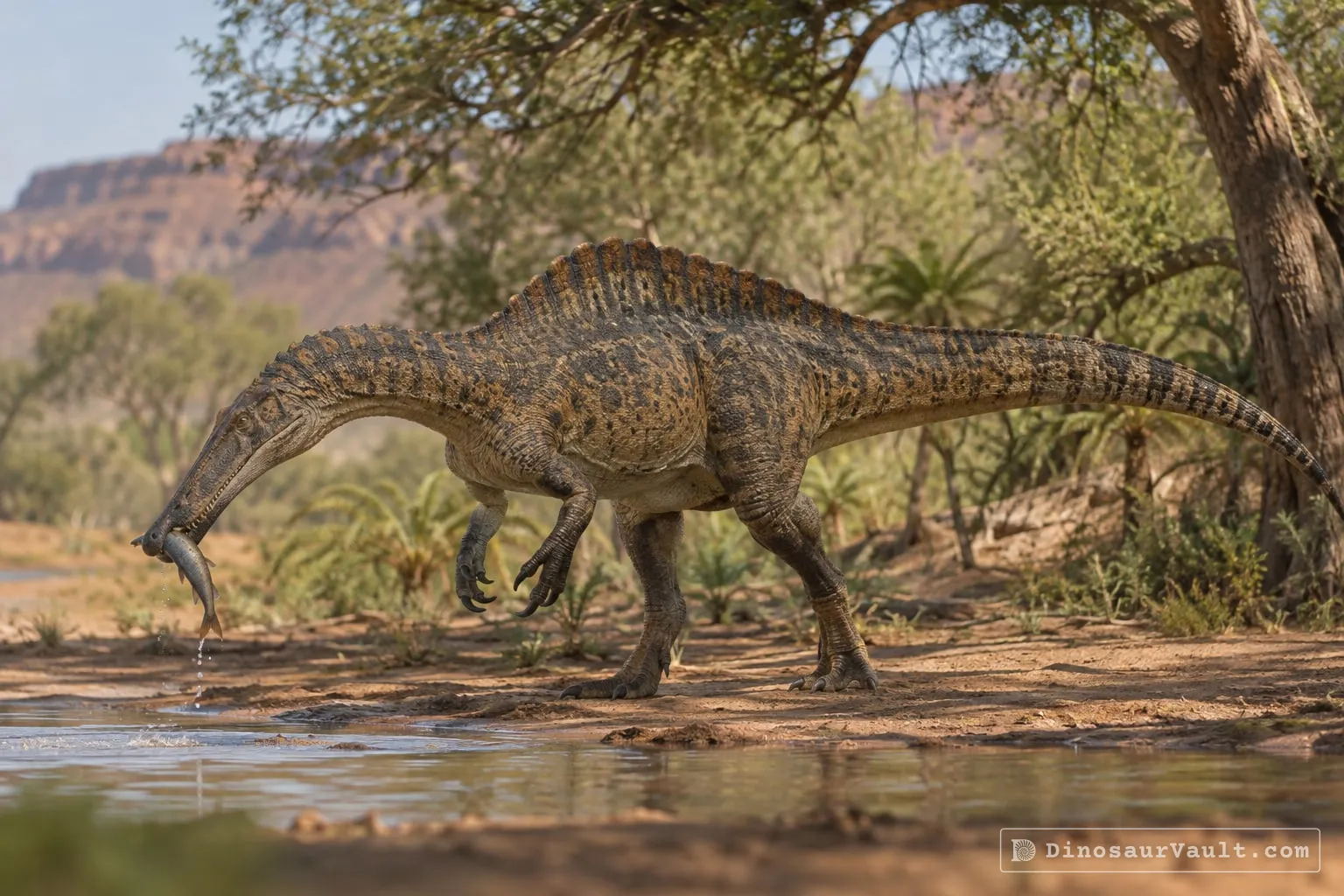
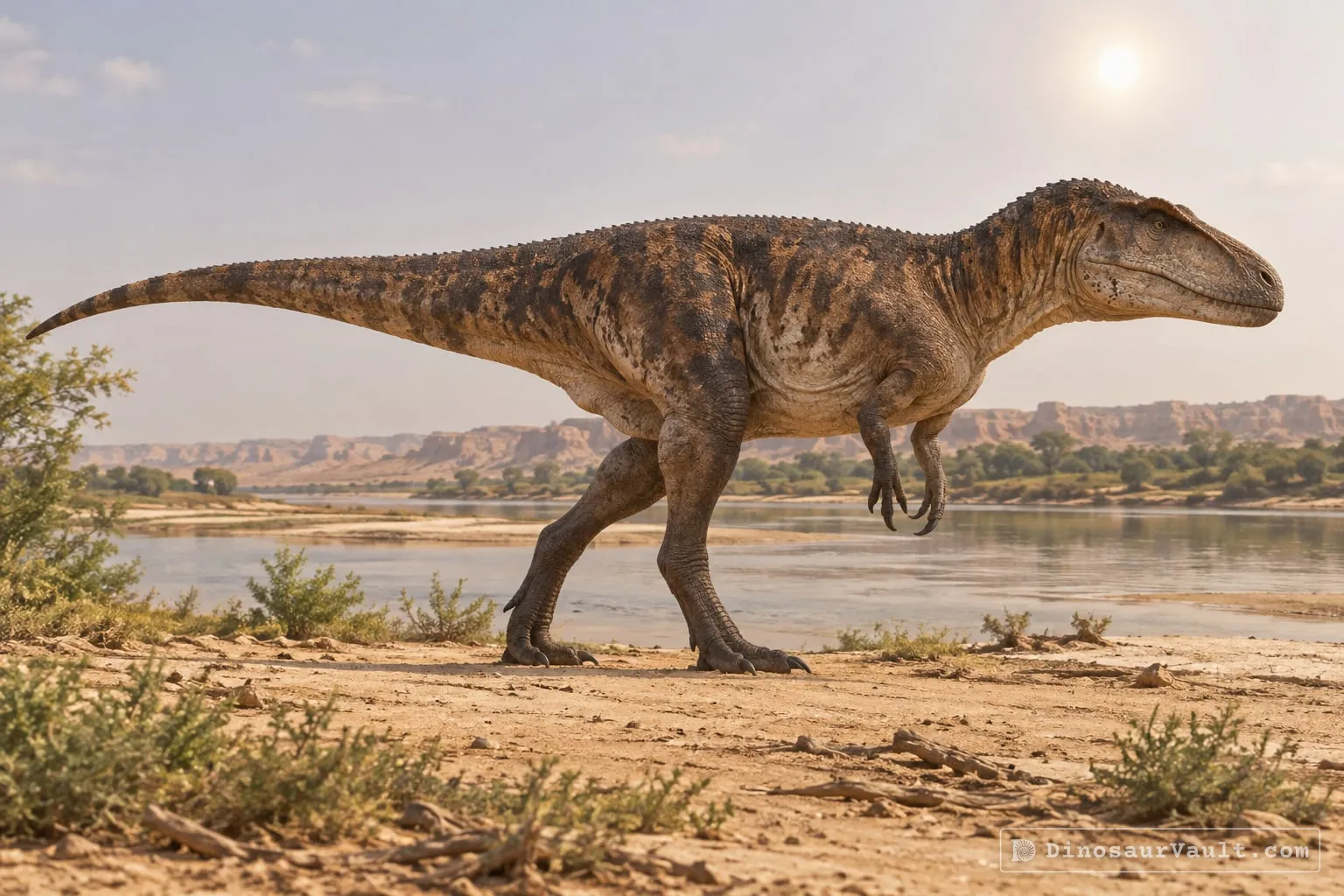
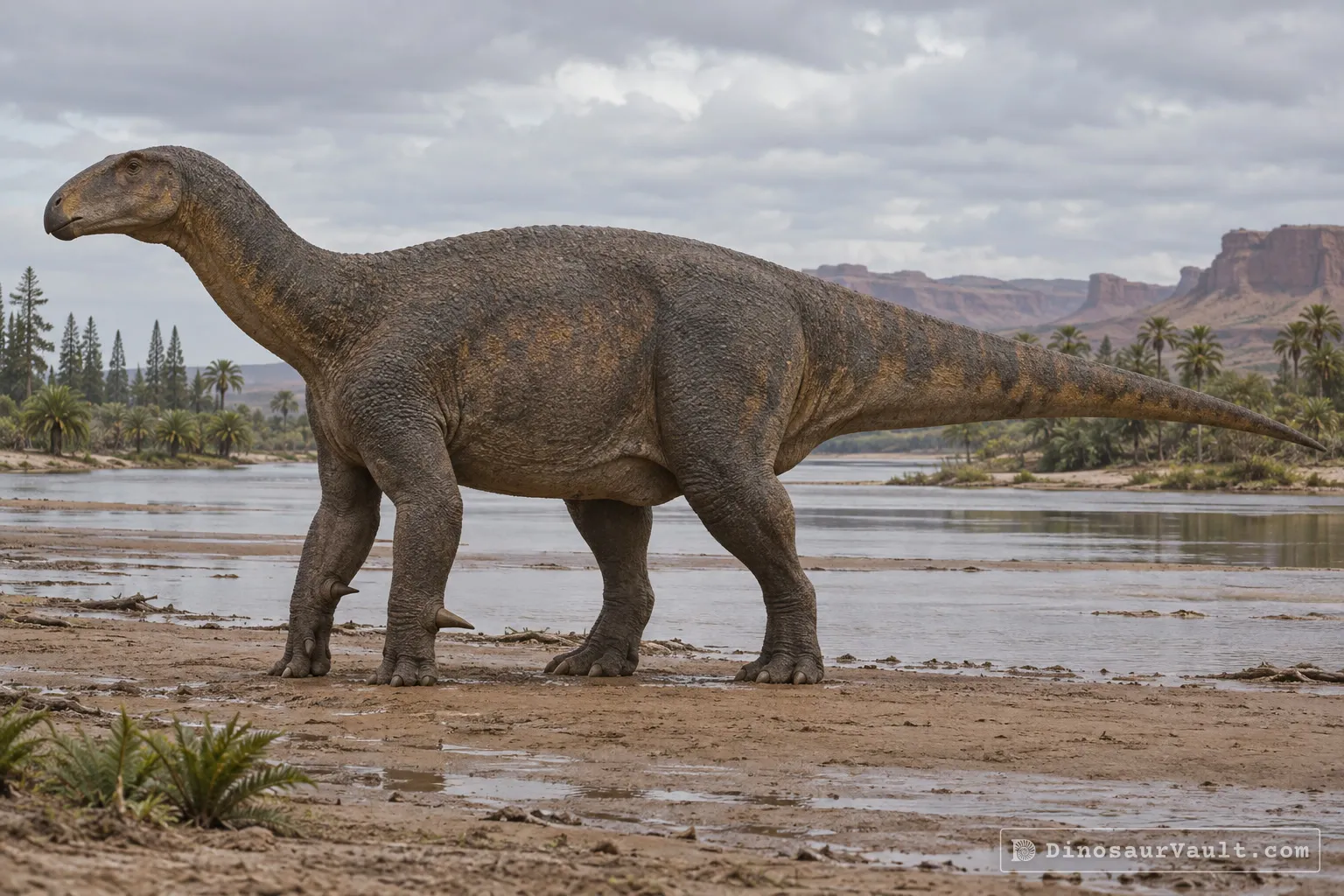
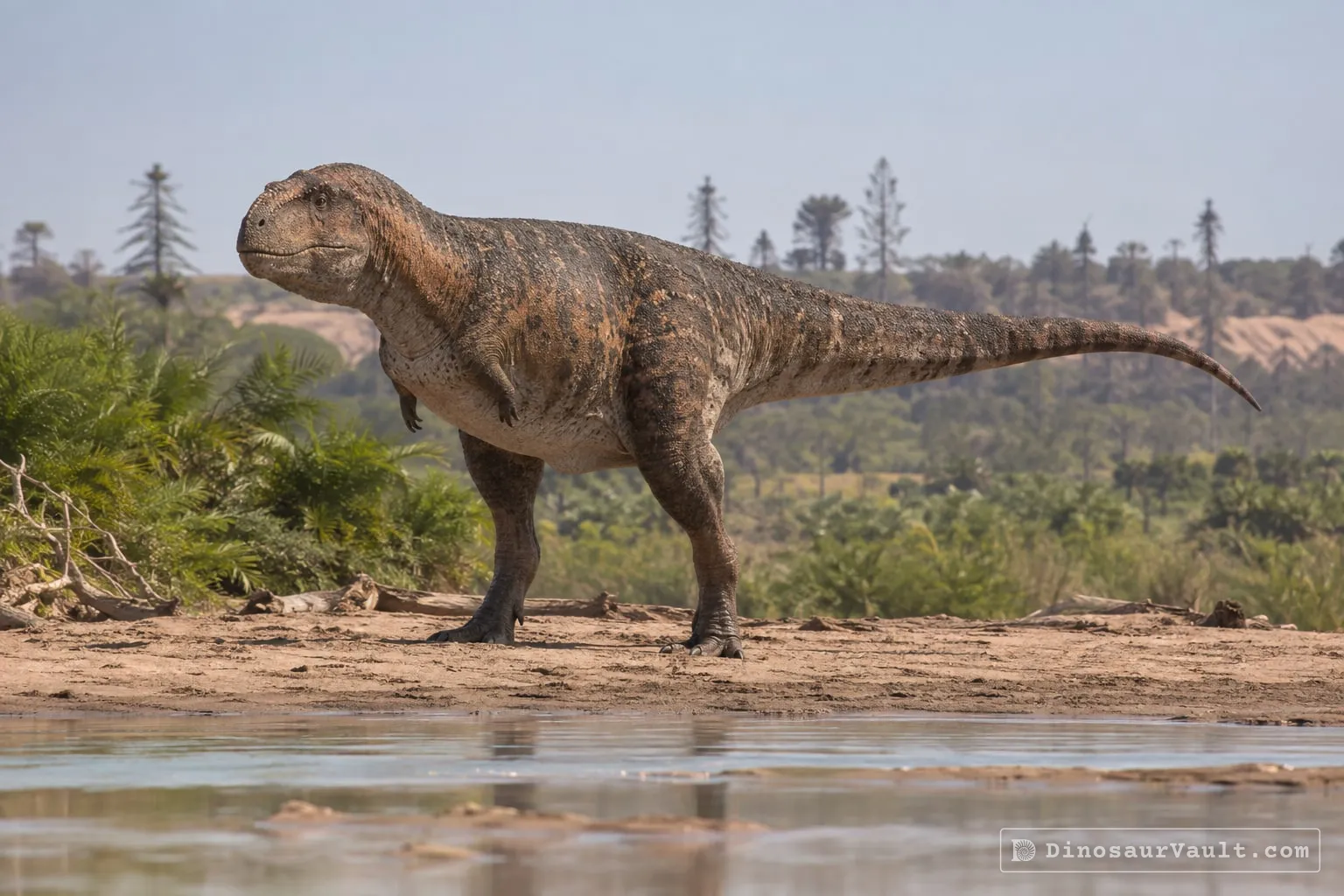
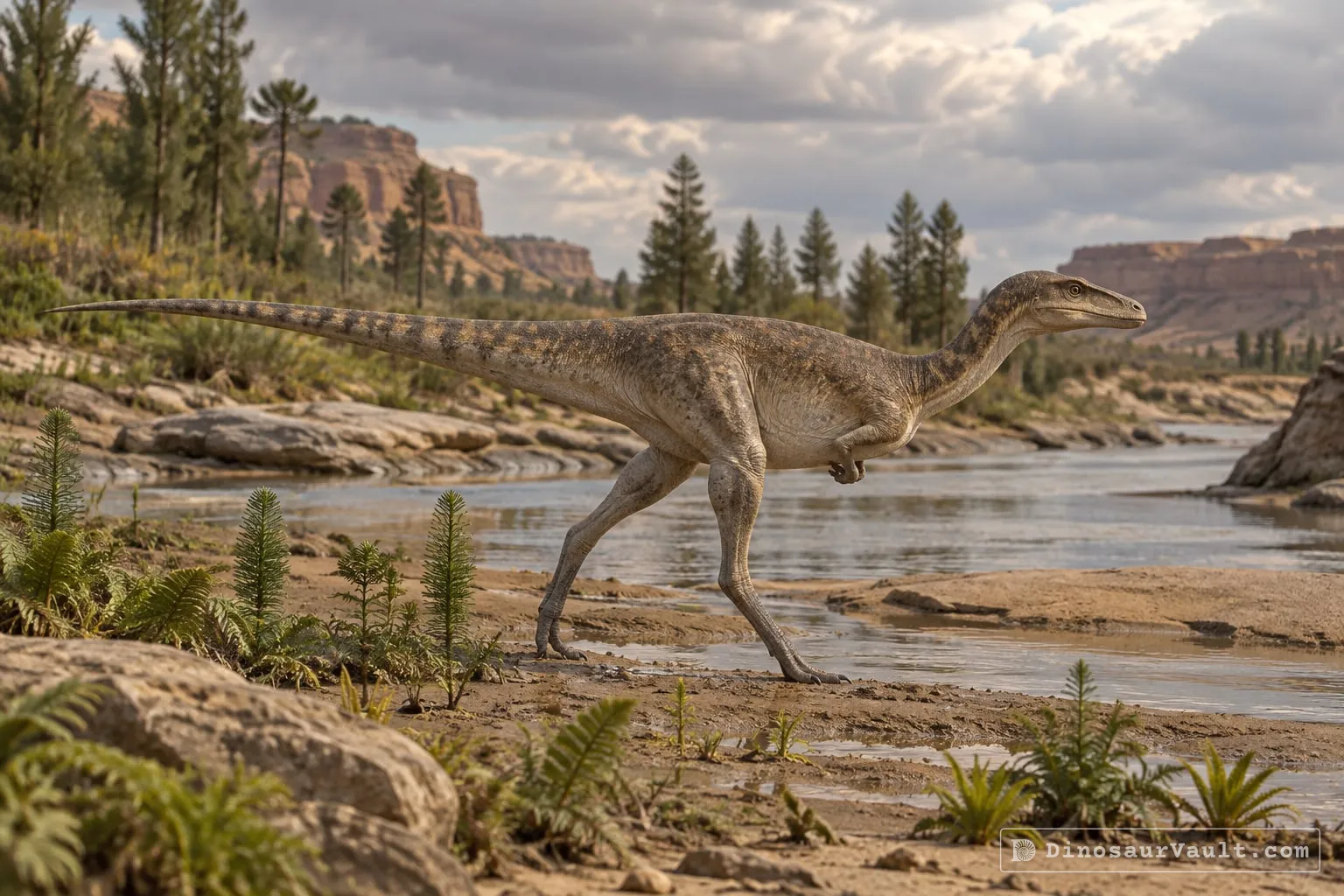
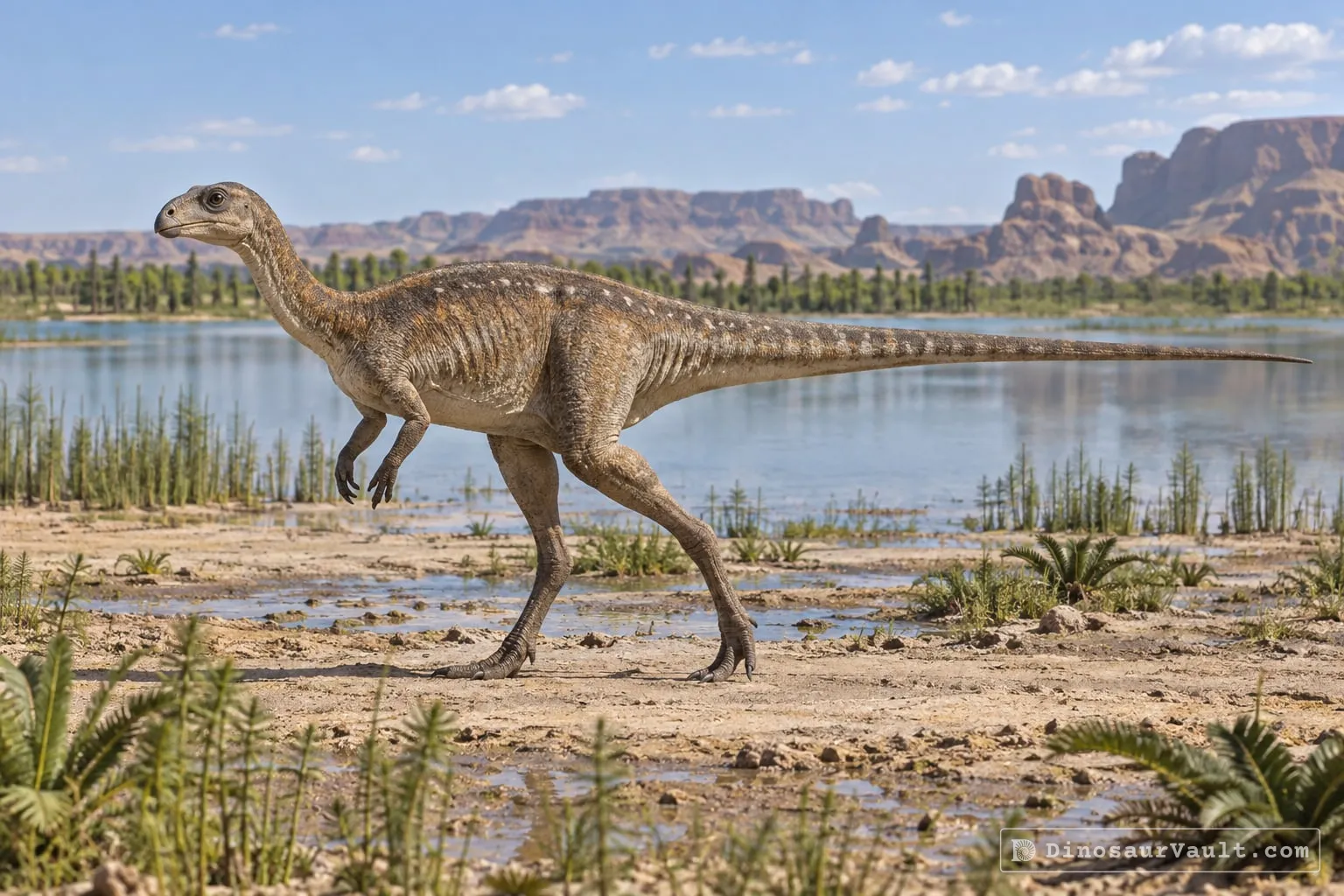


A rock formation can hold fossils laid down millions of years apart, so not every animal here met Ouranosaurus.
The evidence
The science behind Ouranosaurus
Which parts of the picture come from its own bones, and which come from its relatives.
From its own fossils
- Nearly complete skeletons preserve a broad, flattened snout and tall spines rising from the backbone.
- The hands had thumb spikes and fingers suited to bearing weight.
- Microscopic study of a skeleton's bones identified an animal that was not yet fully grown.
Borrowed from relatives
- Most of the skeleton is known from its own bones.
- The beak's outer covering and scaly skin are inferred from other iguanodontians, including Iguanodon.
Still unknown
- Whether the tall back spines supported a thin sail, a fleshy hump or another shape.
- What the raised back was used for.
- Its color and the appearance of hatchlings.
Discovery timeline
- 1972Named itTaquet
- 2007Same rocksSereno et al.
- 2017Full descriptionBertozzo, Dalla Vecchia & Fabbri
Key papers
The research behind what we know of Ouranosaurus
Named it
Introduced Ouranosaurus from dinosaur-bearing rocks in Niger.
Il giacimento di Gadoufaoua [The locality of Gadoufaoua]. I Dinosauri del Teneré 41: 51-60
No link available
Same rocks
Described the broad muzzle and tooth batteries of Nigersaurus, a plant eater from the same regional river deposits.
Structural Extremes in a Cretaceous Dinosaur. PLoS ONE 2: e1230
Read the paper : Structural Extremes in a Cretaceous Dinosaur (opens in a new tab)Full description
Restudied a nearly complete skeleton and its bone tissue, identifying a subadult with the characteristic tall back spines.
The Venice specimen of Ouranosaurus nigeriensis (Dinosauria, Ornithopoda). PeerJ 5: e3403
Read the paper : The Venice specimen of Ouranosaurus nigeriensis (Dinosauria, Ornithopoda) (opens in a new tab)
Close relatives
Other members of Neoiguanodontia


Sources: Wikidata