Carcharodontosaurus
kar-KAR-oh-DON-toh-SORE-us
"shark-toothed lizard"
- Lived
- 121 to 94 million years ago, Early Cretaceous to Late Cretaceous
- Diet
- Carnivore
- Length
- about 12 m (39 ft)
- Group
- Theropods, Carcharodontosauridae
- Found in
- Algeria, Morocco, Niger and Tunisia
- Named by
- Stromer 1931
Size comparison
To scale
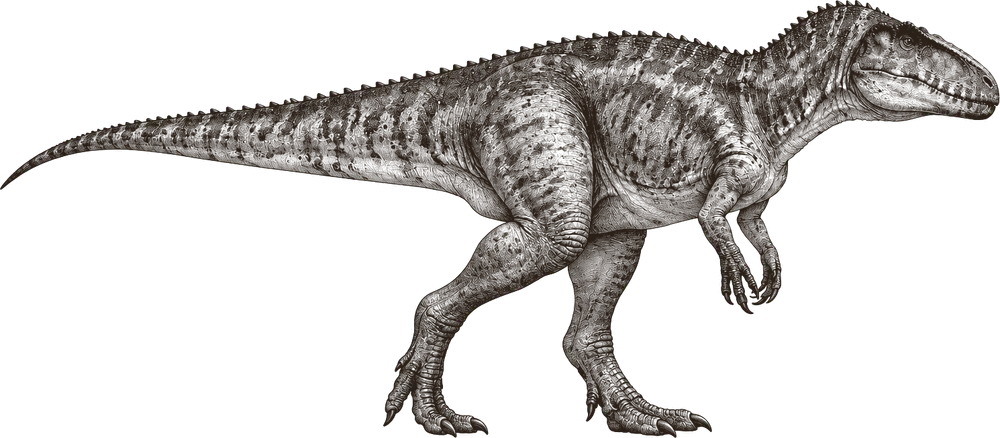


Scale in meters
Where its fossils were found
The evidence
Today

110 million years ago
Also reported from Brazil and Egypt.
Habitat
In Morocco, rivers crossed a low coastal plain with channels, ponds and wetlands. Spinosaurus, Deltadromeus and Rebbachisaurus were other dinosaurs of the region.
Field notes
About Carcharodontosaurus
What it was like
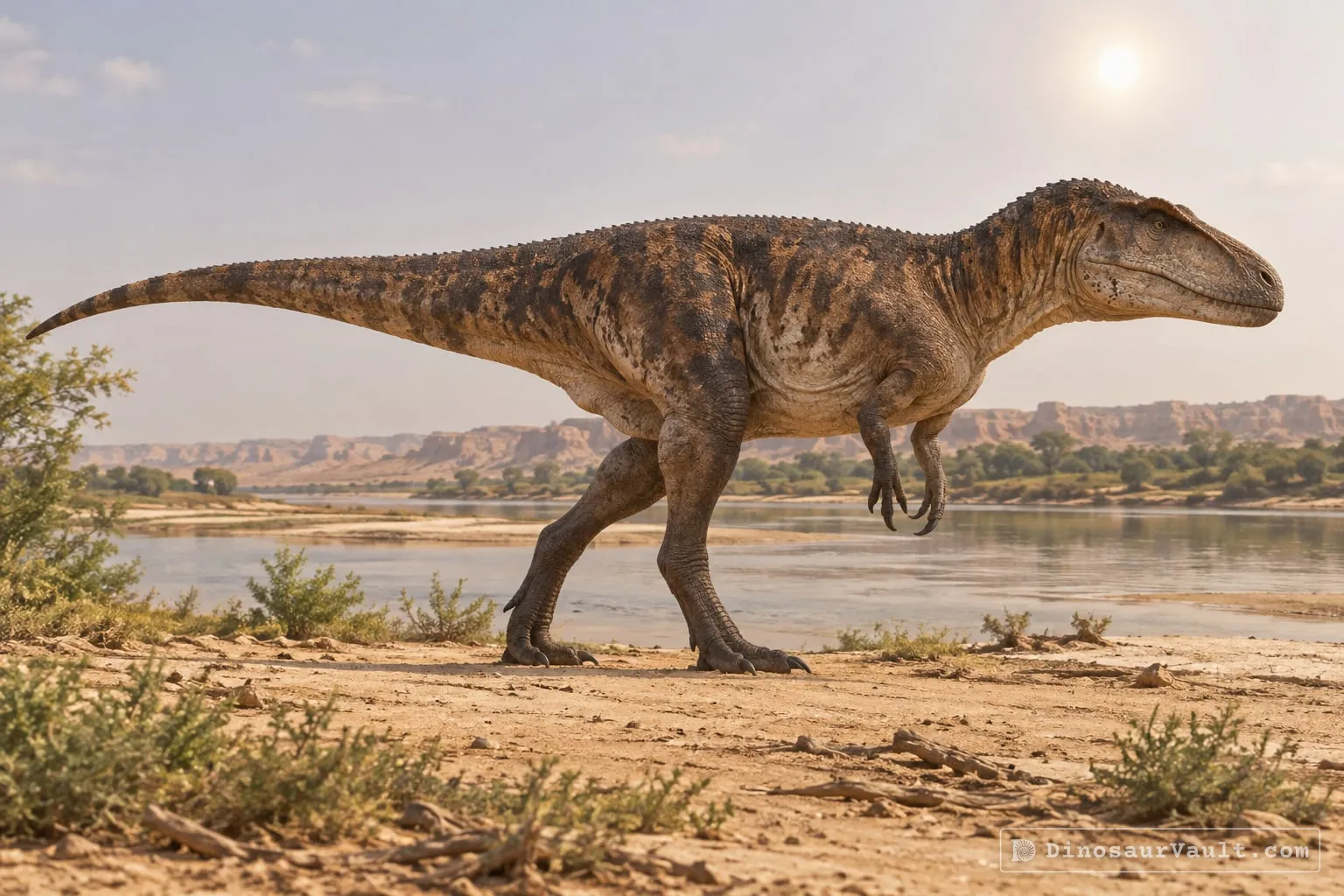
Carcharodontosaurus was one of the largest meat-eating dinosaurs known, growing to roughly 12 meters (39 feet) long. Its skull was long and lightly built, with large openings that saved weight, and its jaws held rows of flattened, serrated teeth shaped more for slicing than for crushing bone.
Its arms were small compared to its powerful legs, and a long, muscular tail balanced its body as it moved. Like its close relatives, it probably relied on quick, slashing bites rather than a single crushing one to bring down prey.
Its world
Carcharodontosaurus lived from about 121 to 94 million years ago, spanning the Early and Late Cretaceous, in what is now North Africa. Its fossils come from Algeria, Morocco, Niger, and Tunisia, with possible finds also reported from Brazil and Egypt.
It shared its habitat with other huge predators, including Spinosaurus and Suchomimus, as well as plant eaters such as Ouranosaurus and the armored Lurdusaurus. Rivers and wetlands across the region supported a rich mix of fish, crocodile relatives, and other animals.
How it was found
Stromer named Carcharodontosaurus in 1931 from fossils found in North Africa. Around 36 finds are now known, a solid record for such a large predator, and its closest relatives, including Giganotosaurus, Mapusaurus, and Acrocanthosaurus, were also huge meat eaters found on other continents.
Field gallery
More views of Carcharodontosaurus
Scenes reconstructed from the available fossil evidence.
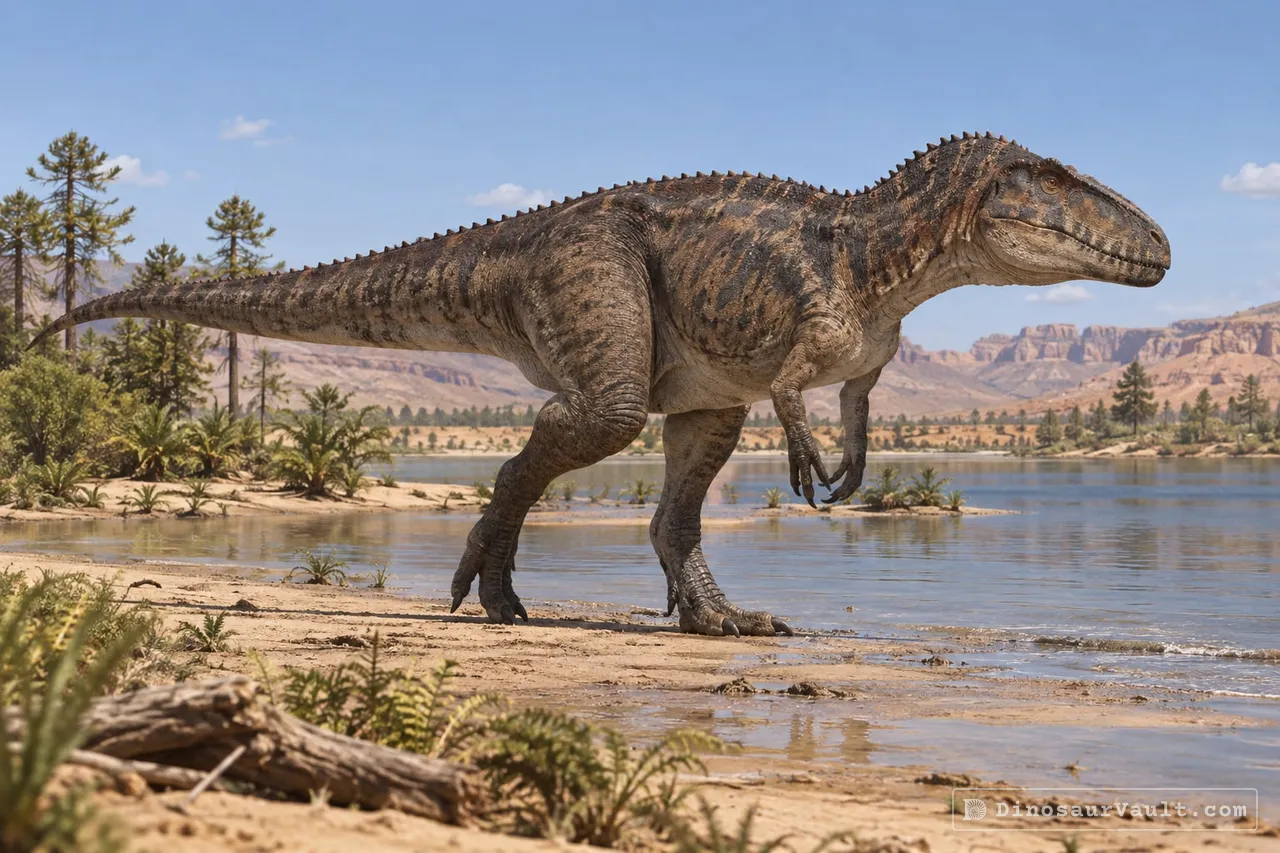
1 of 7
Lived alongside
Found in the same rock formations
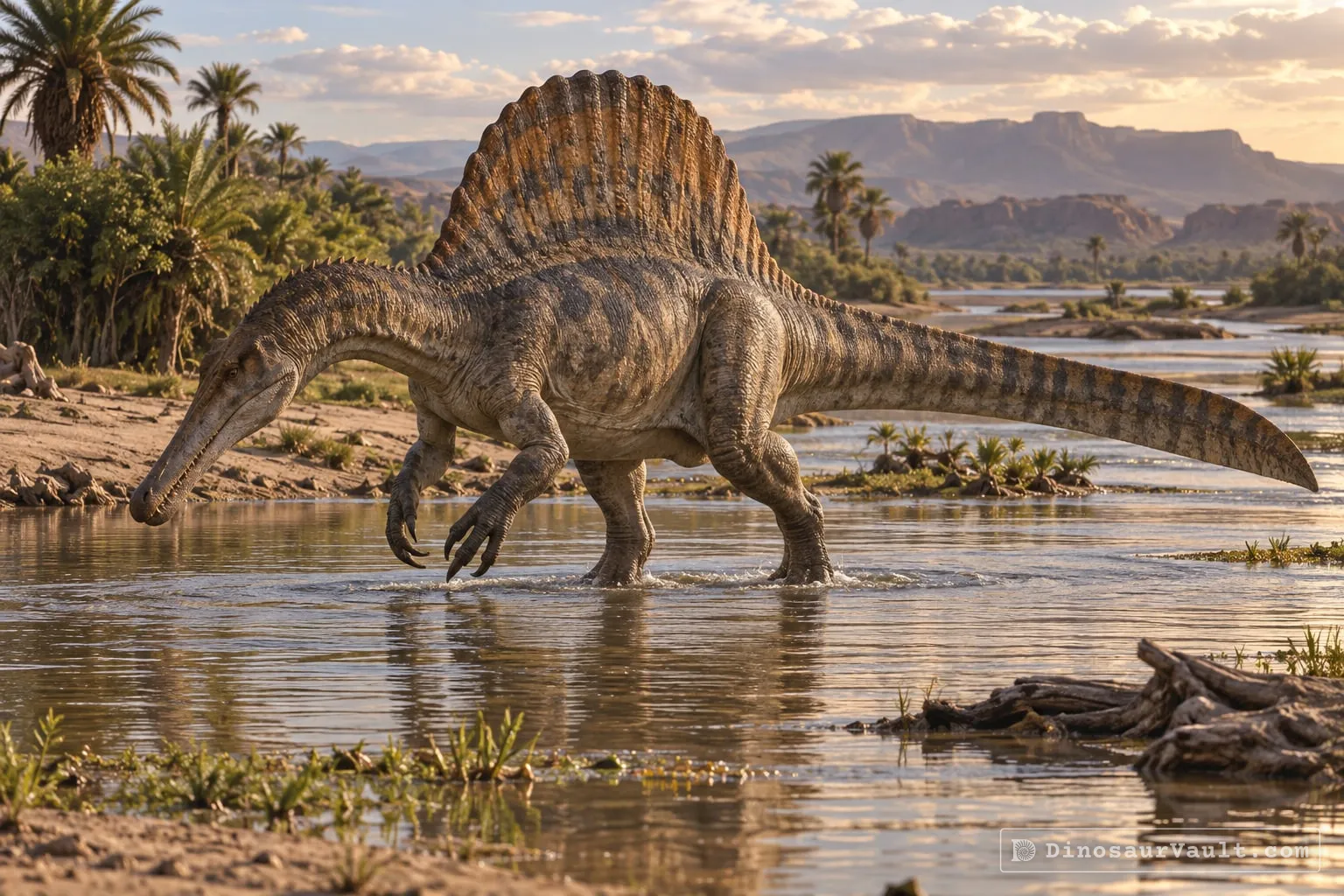
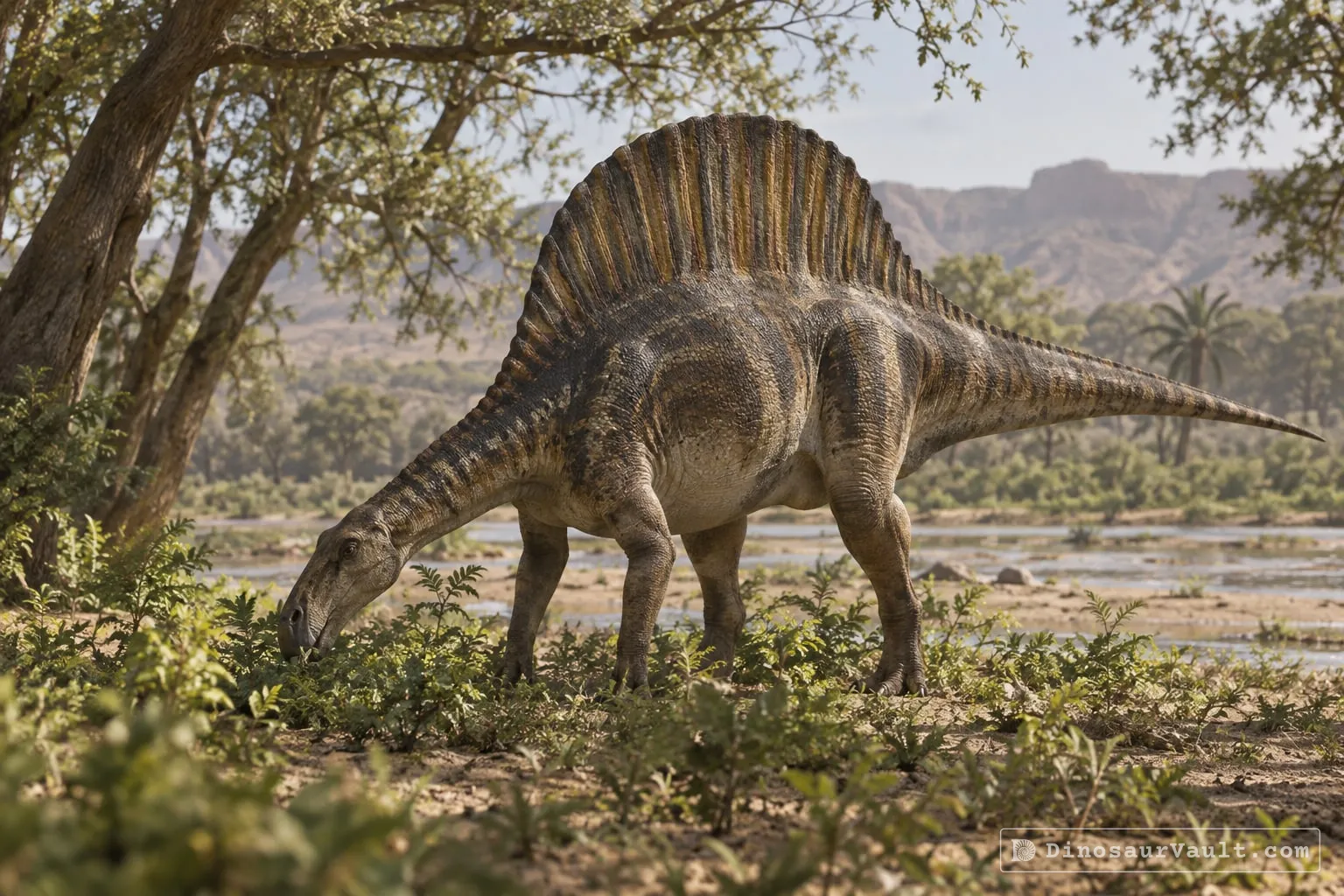
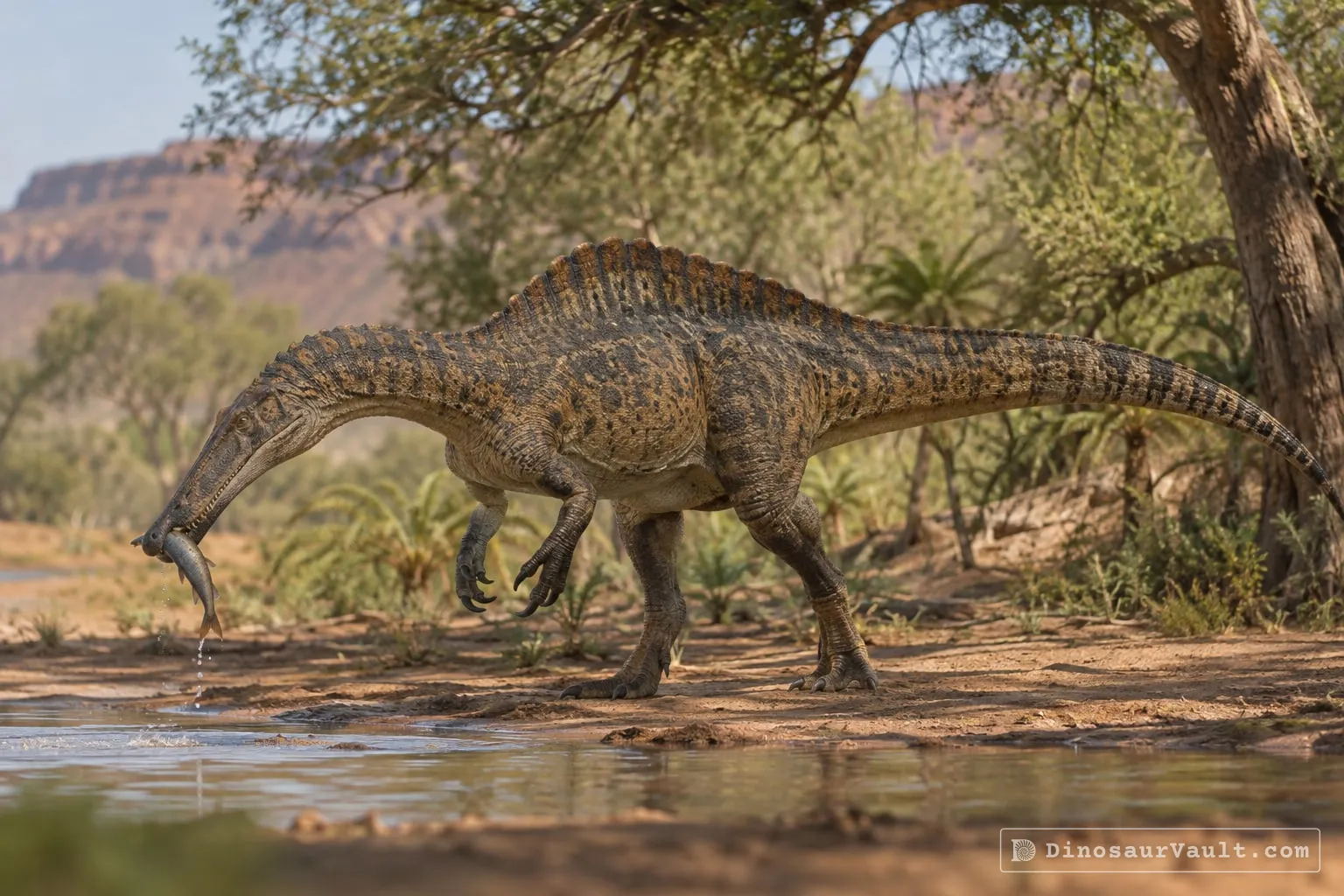
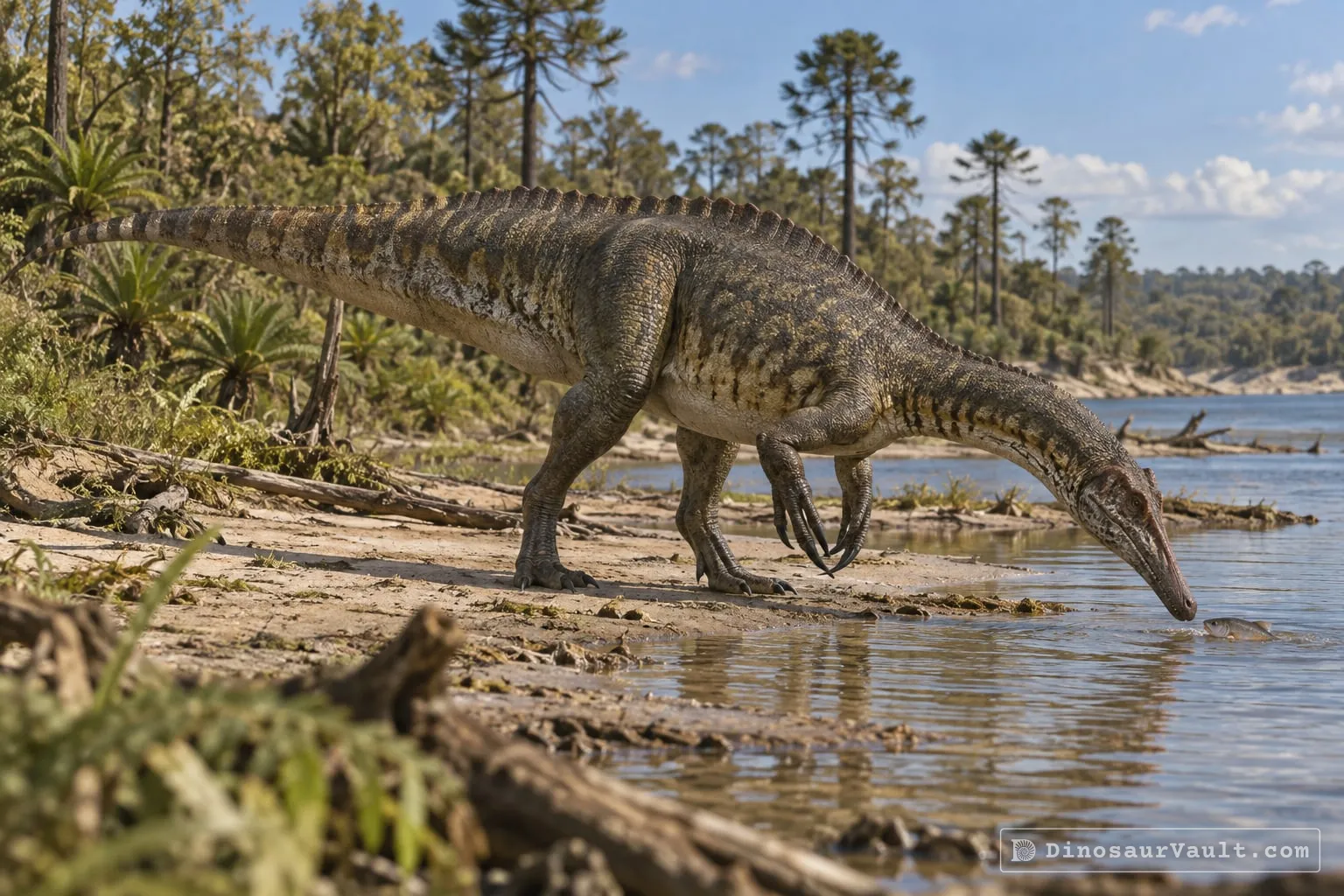
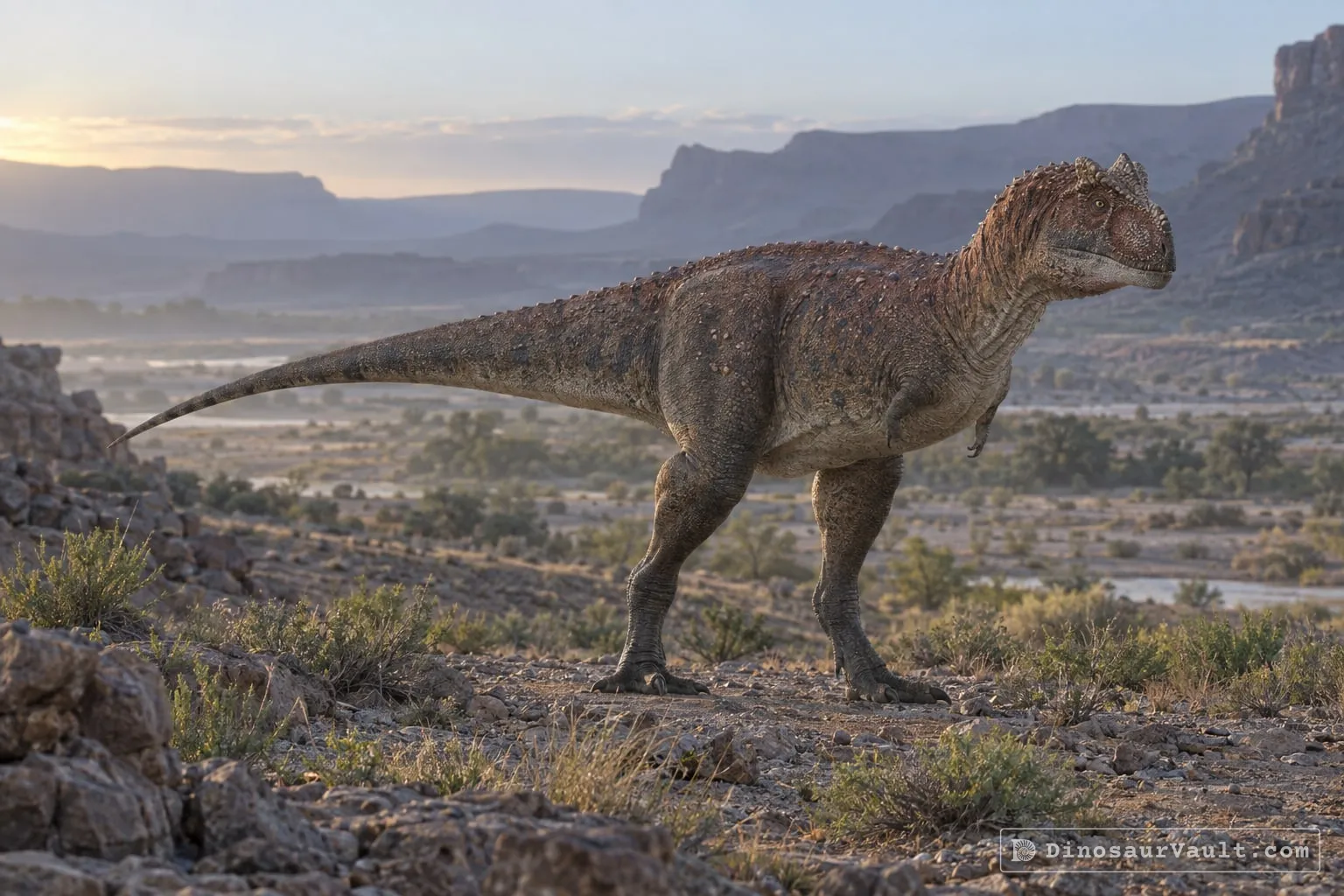
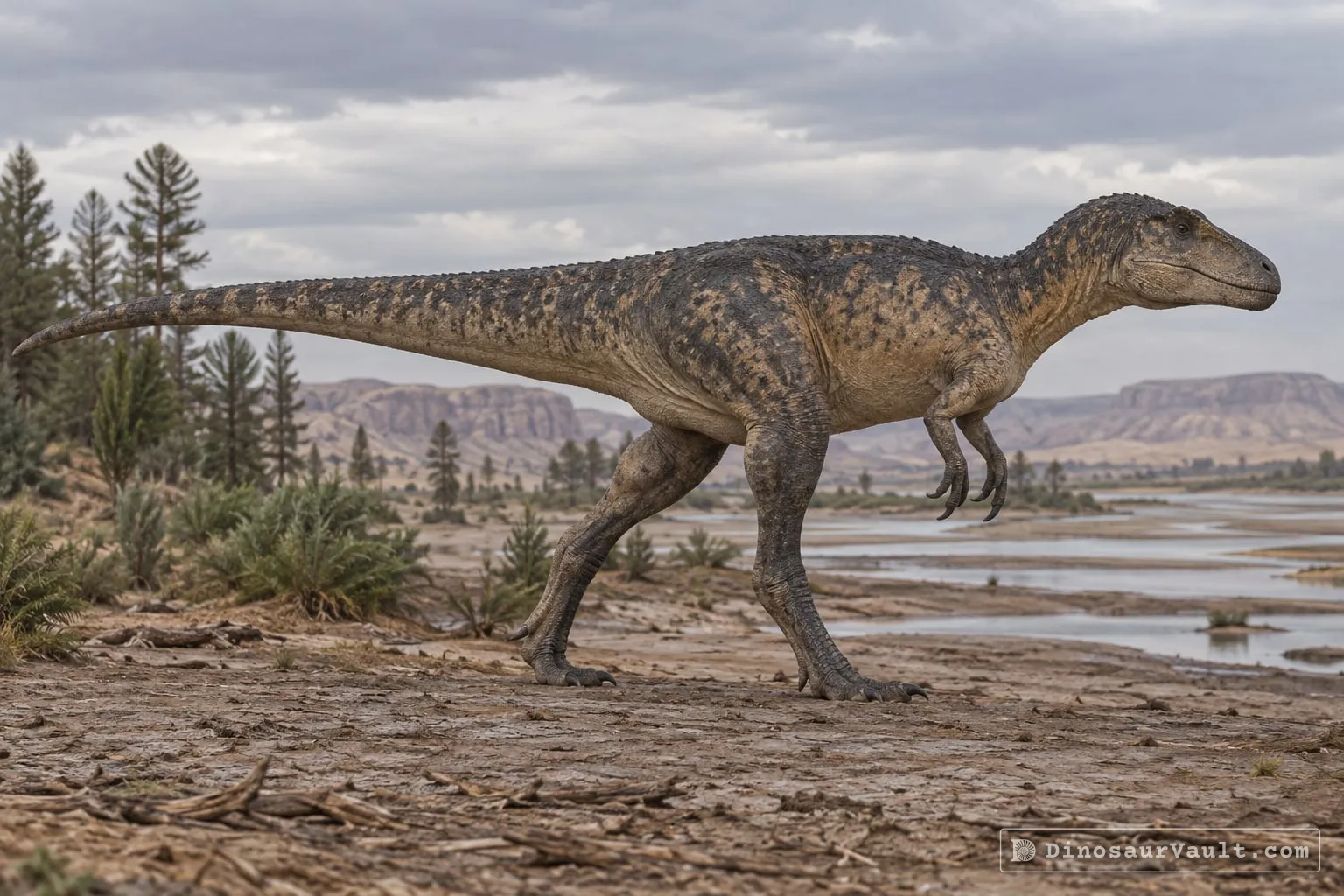
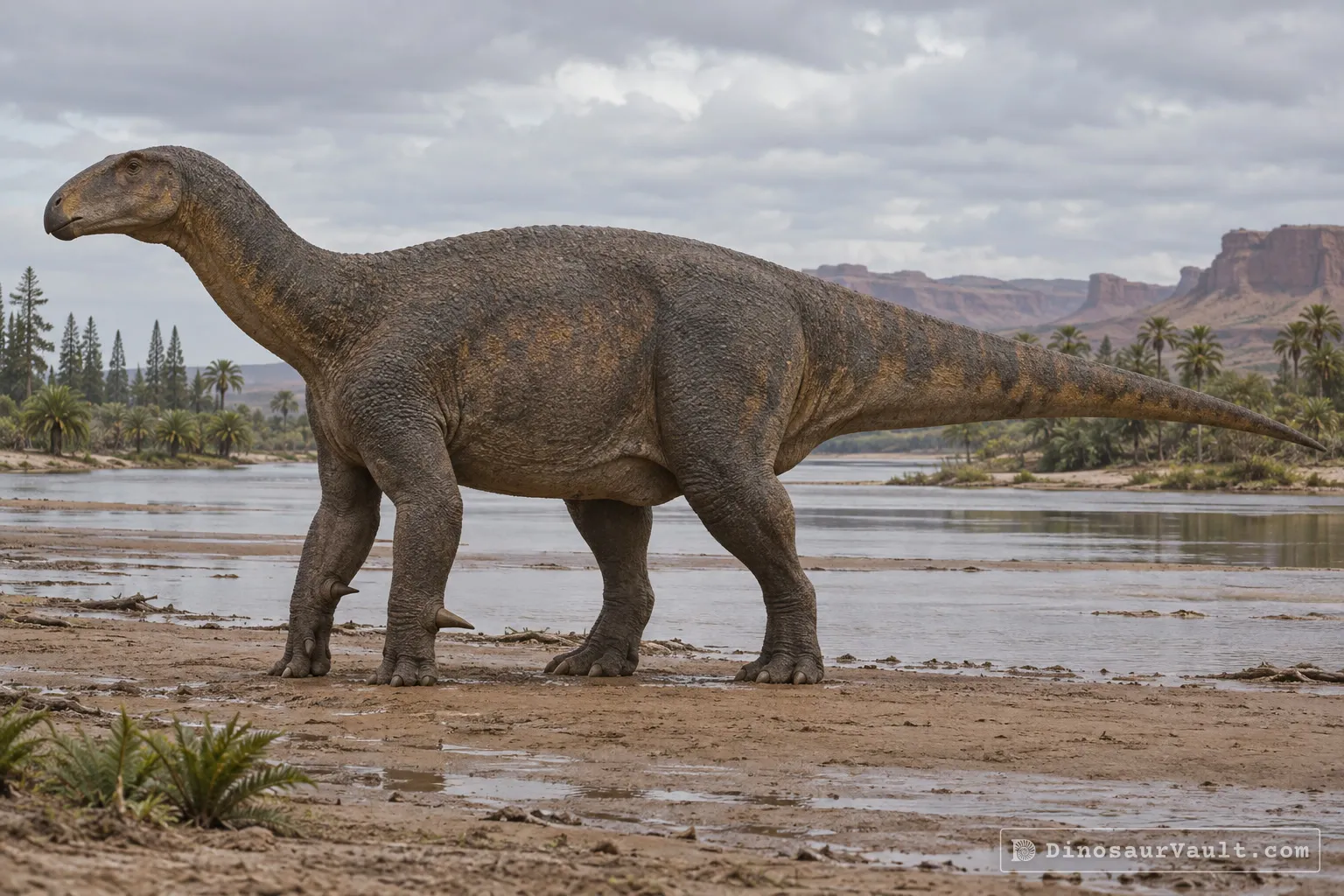


A rock formation can hold fossils laid down millions of years apart, so not every animal here met Carcharodontosaurus.
The evidence
The science behind Carcharodontosaurus
Which parts of the picture come from its own bones, and which come from its relatives.
From its own fossils
- A partial skull from Morocco shows a long head with large openings in the bone.
- Its flattened teeth have serrated edges suited to slicing flesh.
Borrowed from relatives
- Giganotosaurus and Acrocanthosaurus help restore the body behind the better-known skull.
- Its three-fingered hands and probable lips are inferred from other theropods.
Still unknown
- Its skin covering and color.
- The proportions of its complete body.
- How its young looked and whether adults lived in groups.
Often drawn wrong
- A deep, rounded Tyrannosaurus head replaces its much longer skull.
- Two-fingered arms copy tyrannosaurs; its relatives support three-fingered hands.
- A tall sail on its back belongs to Spinosaurus.
Discovery timeline
- 1931Named itStromer
- 2007SkullBrusatte & Sereno
- 2020Its worldIbrahim et al.
- 2023Close relativeCullen et al.
- 2025RedescriptionKellermann, Cuesta & Rauhut
Key papers
The research behind what we know of Carcharodontosaurus
Named it
Established Carcharodontosaurus as a separate genus for a large North African predator.
Ergebnisse der Forschungsreisen Prof. E. Stromers in den Wüsten Ägyptens. II. Wirbeltier-Reste der Baharîjestufe (unterstes Cenoman). 10. Ein Skelett-Rest von Carcharodontosaurus nov. gen. Abhandlungen der Bayerischen Akademie der Wissenschaften Mathematisch-naturwissenschaftliche Abteilung, Neue Folge 9: 1-23
No link available
Skull
Made the Moroccan skull the reference specimen for Carcharodontosaurus saharicus and described a distinct skull from Niger.
A new species ofCarcharodontosaurus(Dinosauria: Theropoda) from the Cenomanian of Niger and a revision of the genus. Journal of Vertebrate Paleontology 27: 902-916
Read the paper : A new species ofCarcharodontosaurus(Dinosauria: Theropoda) from the Cenomanian of Niger and a revision of the genus (opens in a new tab)Its world
Reconstructed a river and delta landscape with abundant fish, crocodile relatives and several large predatory dinosaurs.
Geology and paleontology of the Upper Cretaceous Kem Kem Group of eastern Morocco. ZooKeys 928: 1-216
Read the paper : Geology and paleontology of the Upper Cretaceous Kem Kem Group of eastern Morocco (opens in a new tab)Close relative
Comparisons of theropod teeth and living reptiles support lips covering the teeth when the mouth closed.
Theropod dinosaur facial reconstruction and the importance of soft tissues in paleobiology. Science 379: 1348-1352
Read the paper : Theropod dinosaur facial reconstruction and the importance of soft tissues in paleobiology (opens in a new tab)Redescription
Reassigned the Egyptian skeleton formerly called Carcharodontosaurus to Tameryraptor, distinguishing it from the Moroccan skull.
Re-evaluation of the Bahariya Formation carcharodontosaurid (Dinosauria: Theropoda) and its implications for allosauroid phylogeny. PLOS ONE 20: e0311096
Read the paper : Re-evaluation of the Bahariya Formation carcharodontosaurid (Dinosauria: Theropoda) and its implications for allosauroid phylogeny (opens in a new tab)
Close relatives
Other members of Carcharodontosauridae


Sources: Wikidata