Outline: a typical theropod
Aucasaurus
Type species Aucasaurus garridoi
- Lived
- 84 to 72 million years ago, Late Cretaceous
- Diet
- Carnivore
- Length
- about 5 m (16 ft)
- Group
- Theropods, Abelisauridae
- Found in
- Argentina
- Named by
- Coria et al. 2002
Size comparison
To scale

Scale in metersOutline: typical theropod shape
Where its fossils were found
The evidence
Today

80 million years ago
Field notes
About Aucasaurus
What it was like
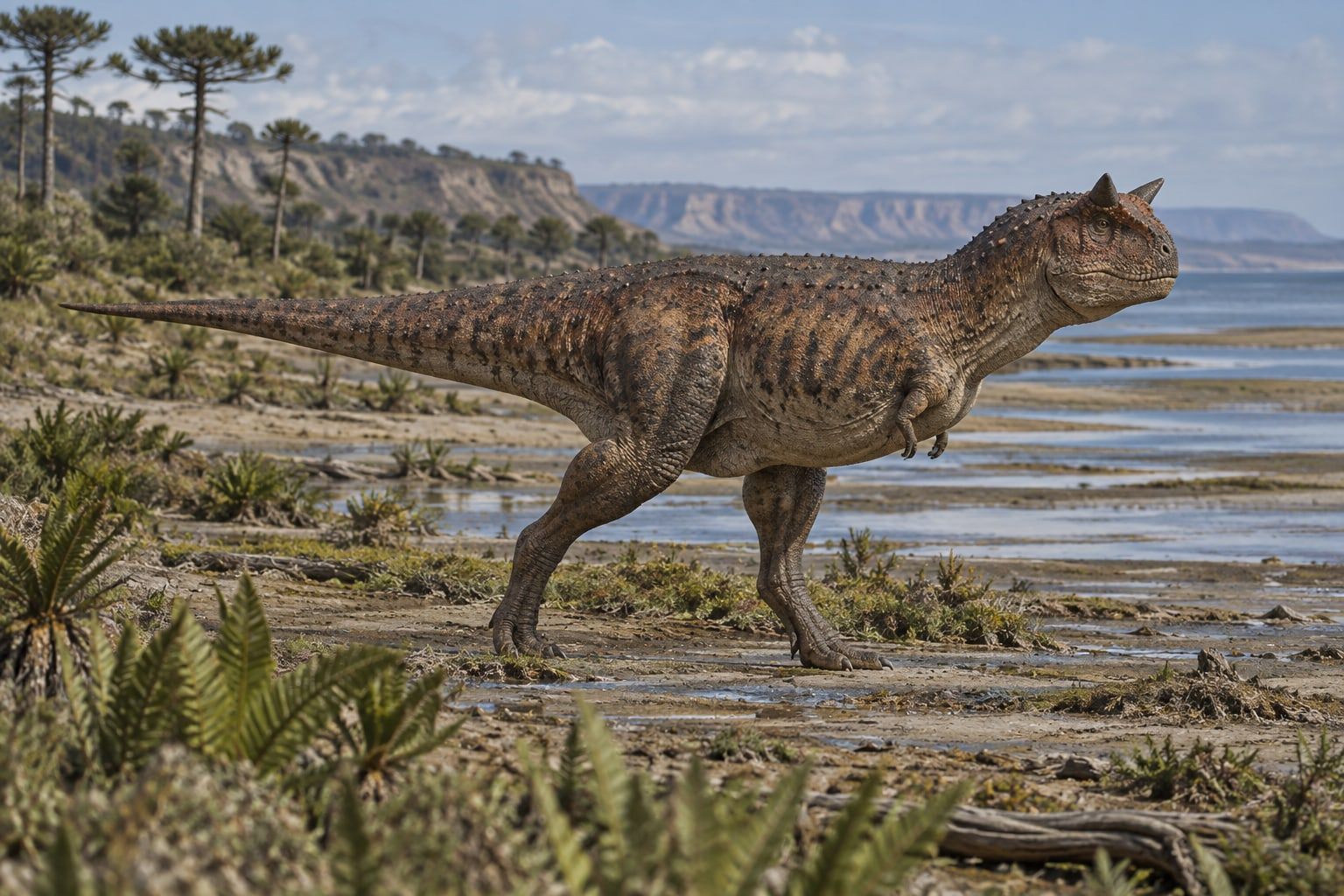
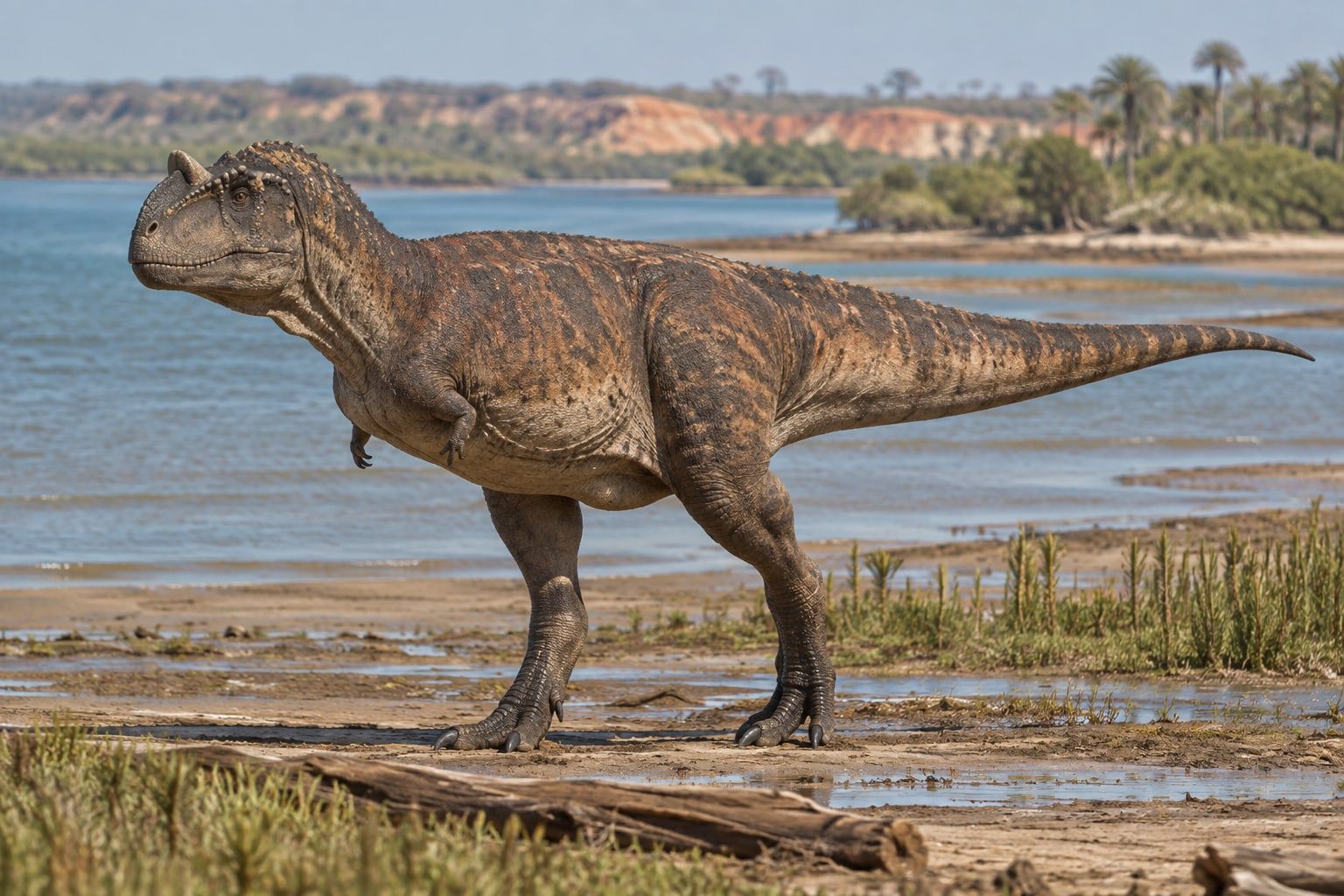
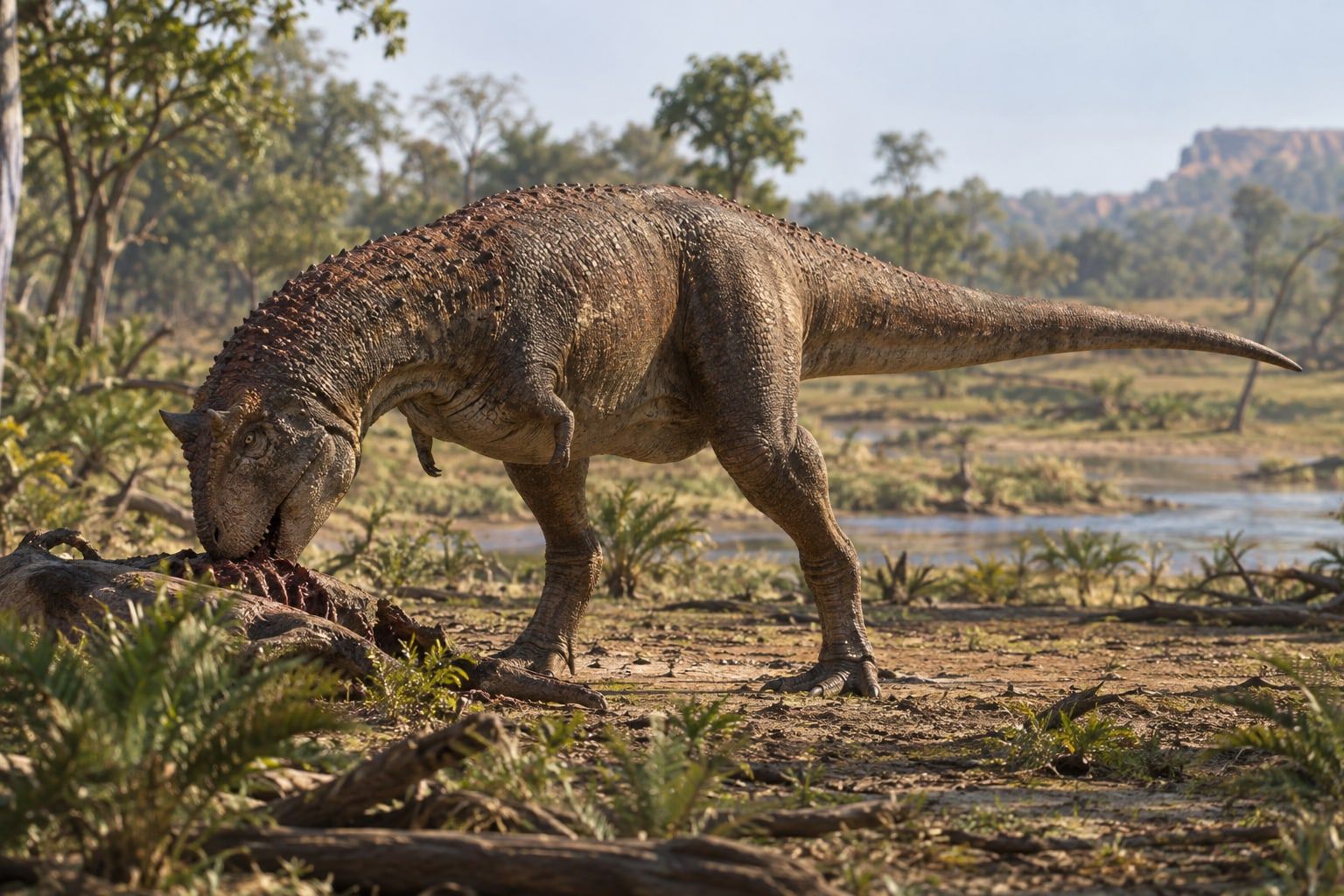
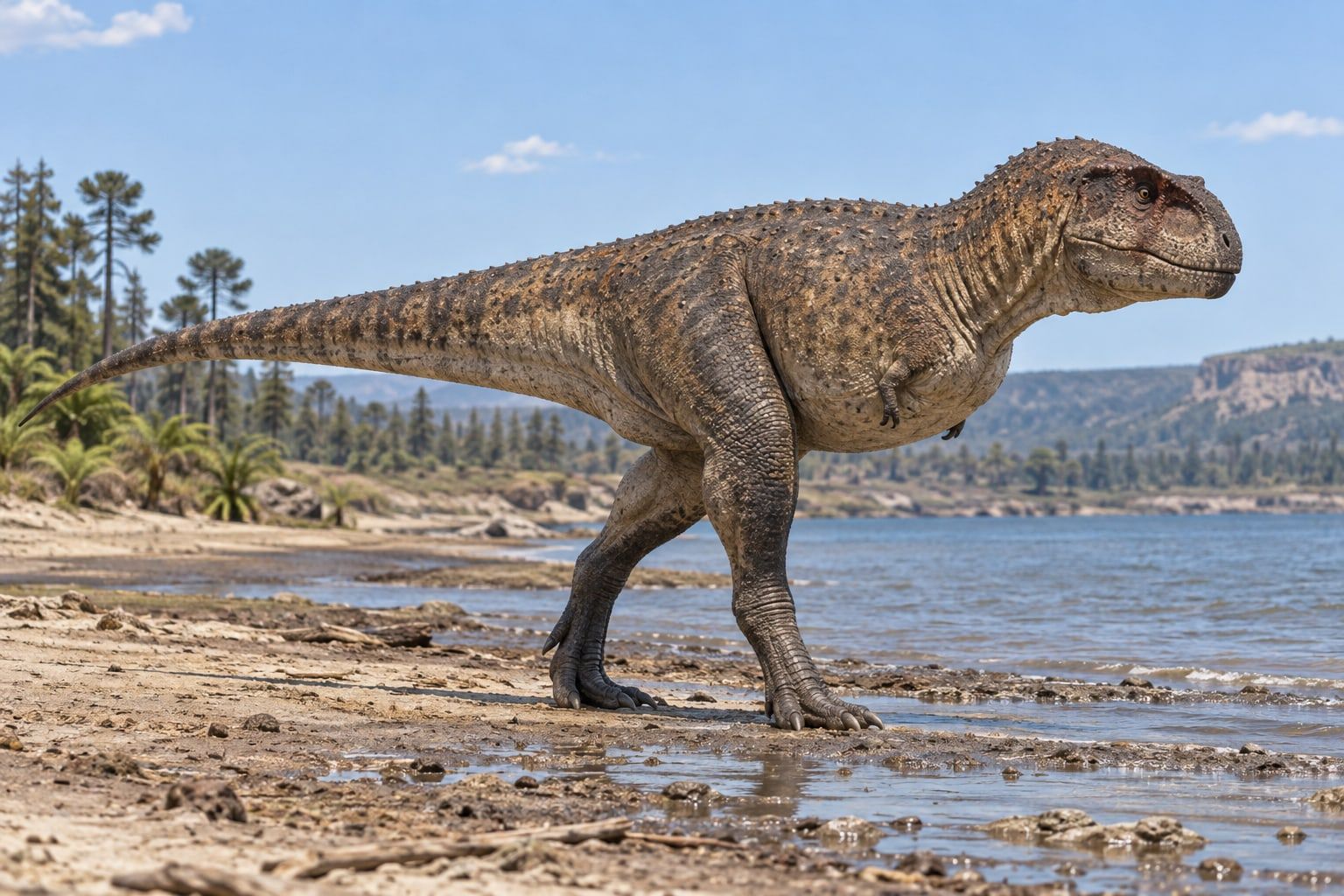
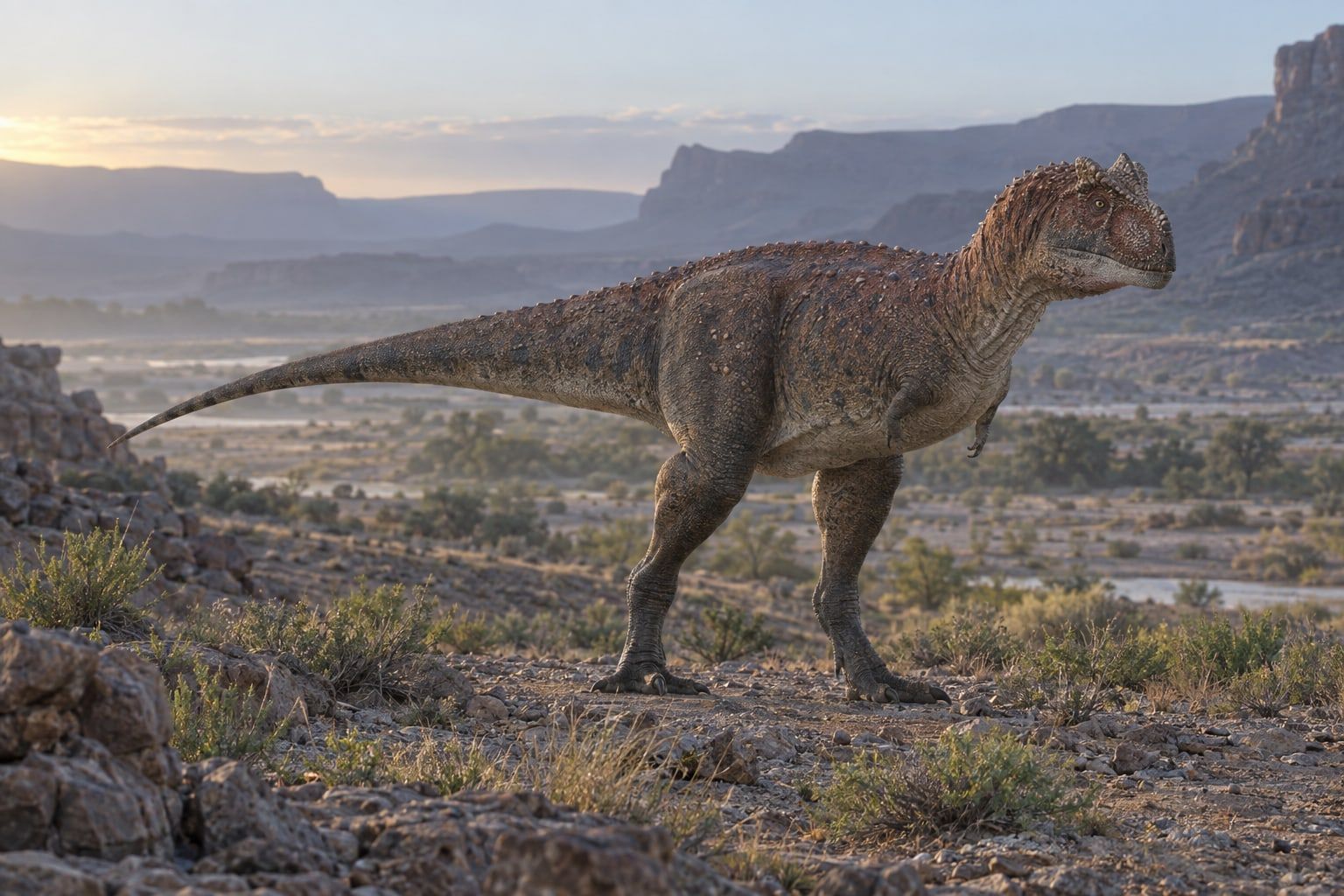
Aucasaurus was an abelisaurid, a two-legged meat eater with a short, deep skull and tiny arms. It was about 5 meters (16 feet) long, smaller than its close relative Carnotaurus.
Its arms were even more reduced than those of Carnotaurus, with barely any fingers. Its skeleton is one of the most complete of its family.
Its world
It lived about 84 to 72 million years ago, in the Late Cretaceous, in what is now Argentina. Its bones come from the Anacleto Formation, a place famous for huge nesting grounds of titanosaurs. It lived beside the megaraptoran Aerosteon, the small plant eater Gasparinisaura and titanosaurs such as Neuquensaurus.
How it was found
Coria and colleagues named Aucasaurus in 2002. The type species is Aucasaurus garridoi. The one known skeleton has a damaged skull, which some scientists think may be an injury from a fight.
Lived alongside
Found in the same rock formations
Close relatives
Other members of Abelisauridae
Sources: WikidataNamed in: R. A. Coria, L. M. Chiappe, and L. Dingus. 2002. A new close relative of <i>Carnotaurus sastrei</i> Bonaparte 1985 (Theropoda: Abelisauridae) from the Late Cretaceous of Patagonia. Journal of Vertebrate Paleontology 22(2):460-465