Abelisaurus
uh-BEE-lih-SORE-us
"Abel's lizard"
- Lived
- 72 to 66 million years ago, Late Cretaceous
- Diet
- Carnivore
- Group
- Theropods, Abelisauridae
- Found in
- Argentina
- Named by
- Bonaparte 1984
Where its fossils were found
The evidence
Today

70 million years ago
Habitat
It probably inhabited seasonal landscapes in Argentina. Dinosaurs recorded from the Allen Formation include Austroraptor, Aeolosaurus and Patagopelta.
Field notes
About Abelisaurus
What it was like
Abelisaurus is known only from a single partial skull, so most of what can be said about it is inferred from close relatives. Like other abelisaurids, it was probably a bipedal carnivore with a short, deep skull, tiny arms, and rough, thickened bone on its face. A skull alone cannot establish the length of the whole animal with confidence.
Its world
Abelisaurus lived from about 72 to 66 million years ago, at the very end of the Late Cretaceous, in what is now Argentina. Its remains come from the Allen Formation.
It shared this world with other unusual predators such as the raptor Austroraptor, and with plant eaters including the titanosaur Aeolosaurus and the armored Patagopelta.
How it was found
Bonaparte named Abelisaurus in 1984, and it later gave its name to the whole family Abelisauridae. Close relatives such as Carnotaurus, Majungasaurus, and Rugops share its short, deep skull, and studying them has helped fill in details that the single skull of Abelisaurus cannot show on its own.
Field gallery
More views of Abelisaurus
Scenes reconstructed from the available fossil evidence.
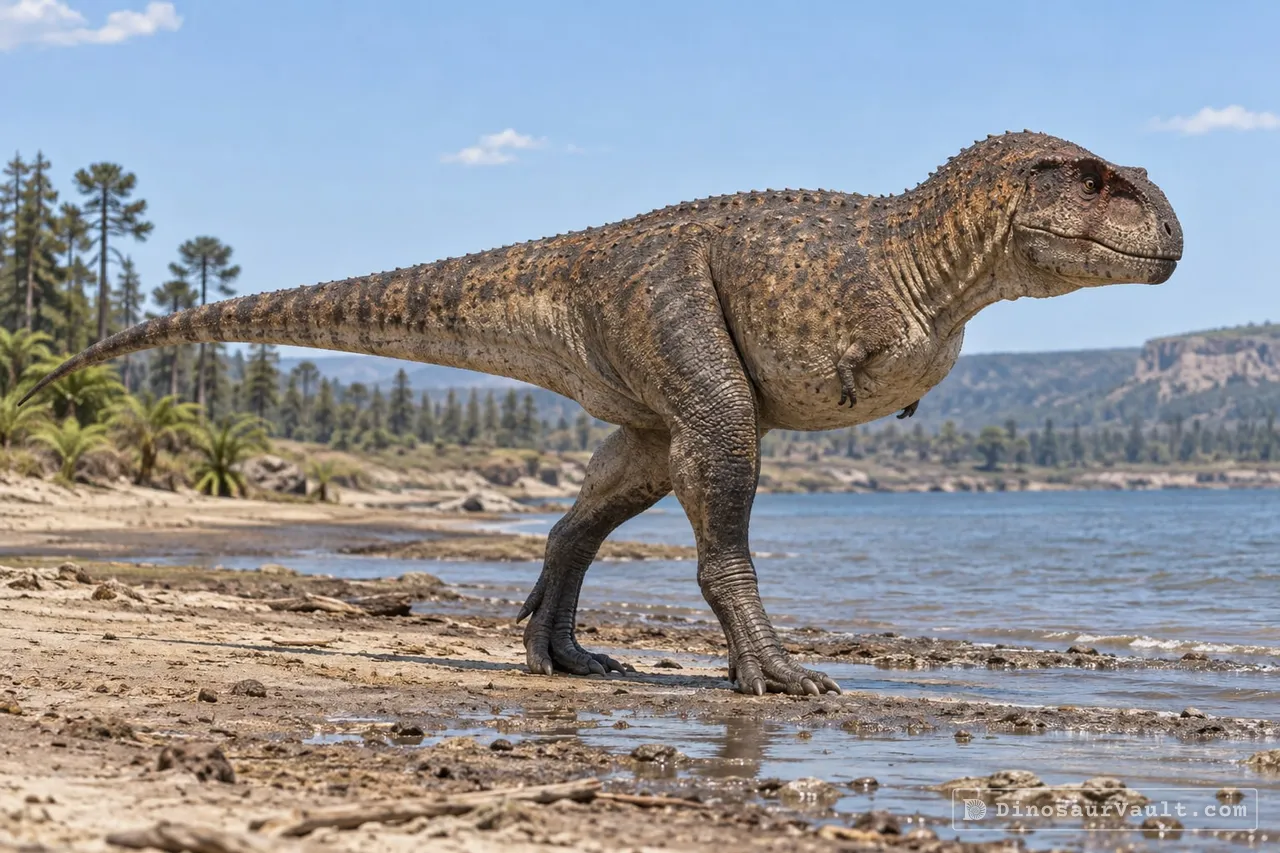
1 of 4
Lived alongside
Found in the same rock formations
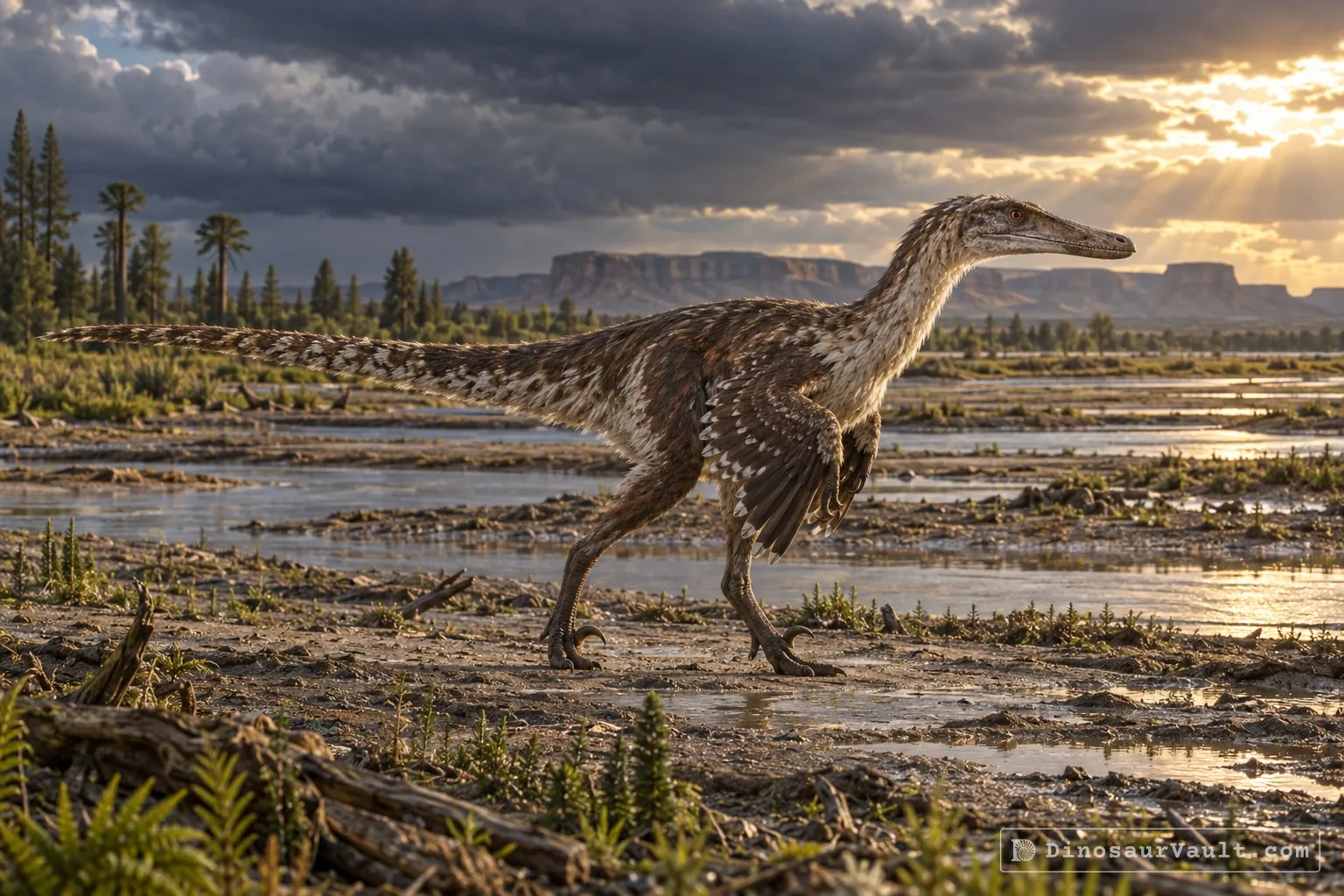
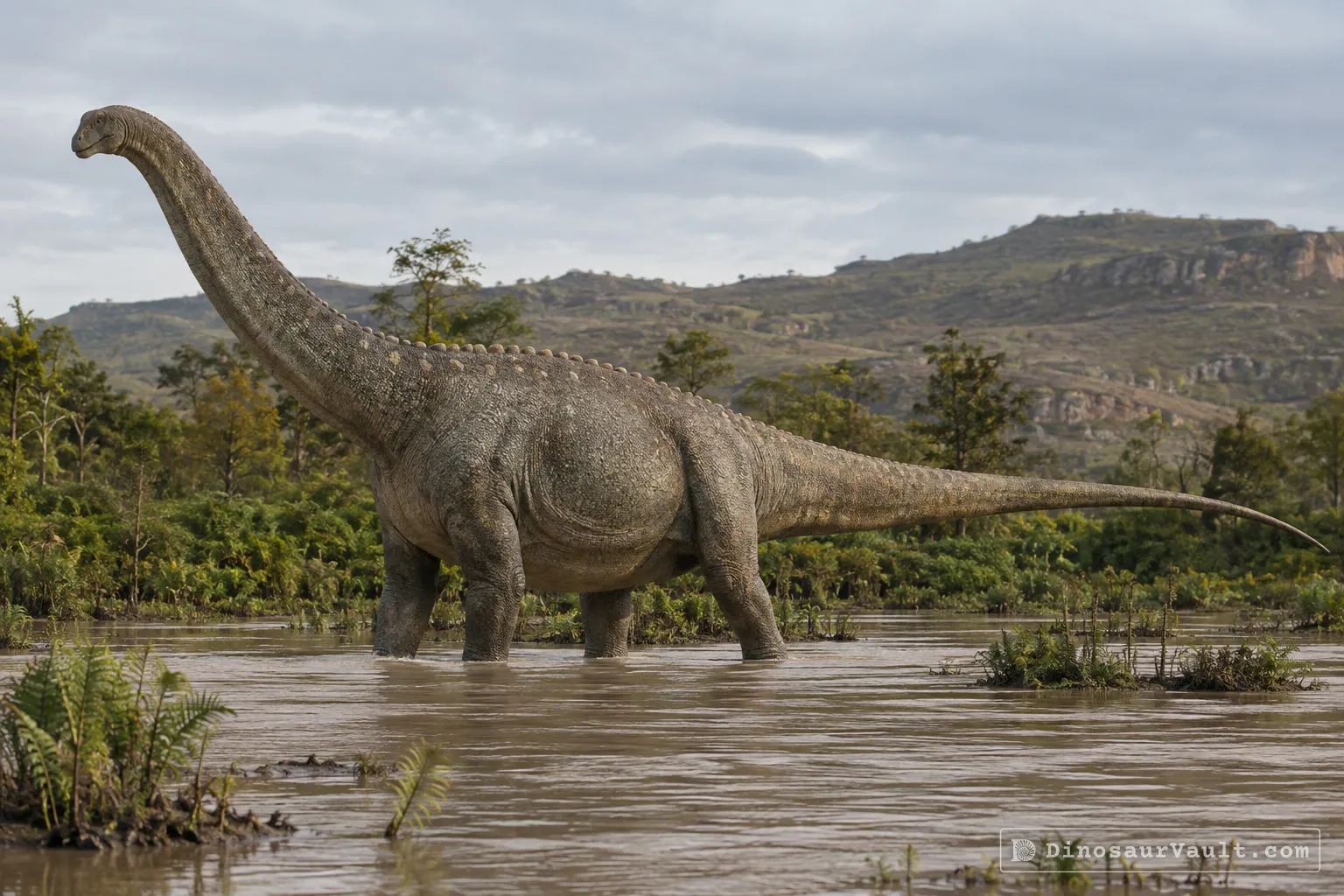
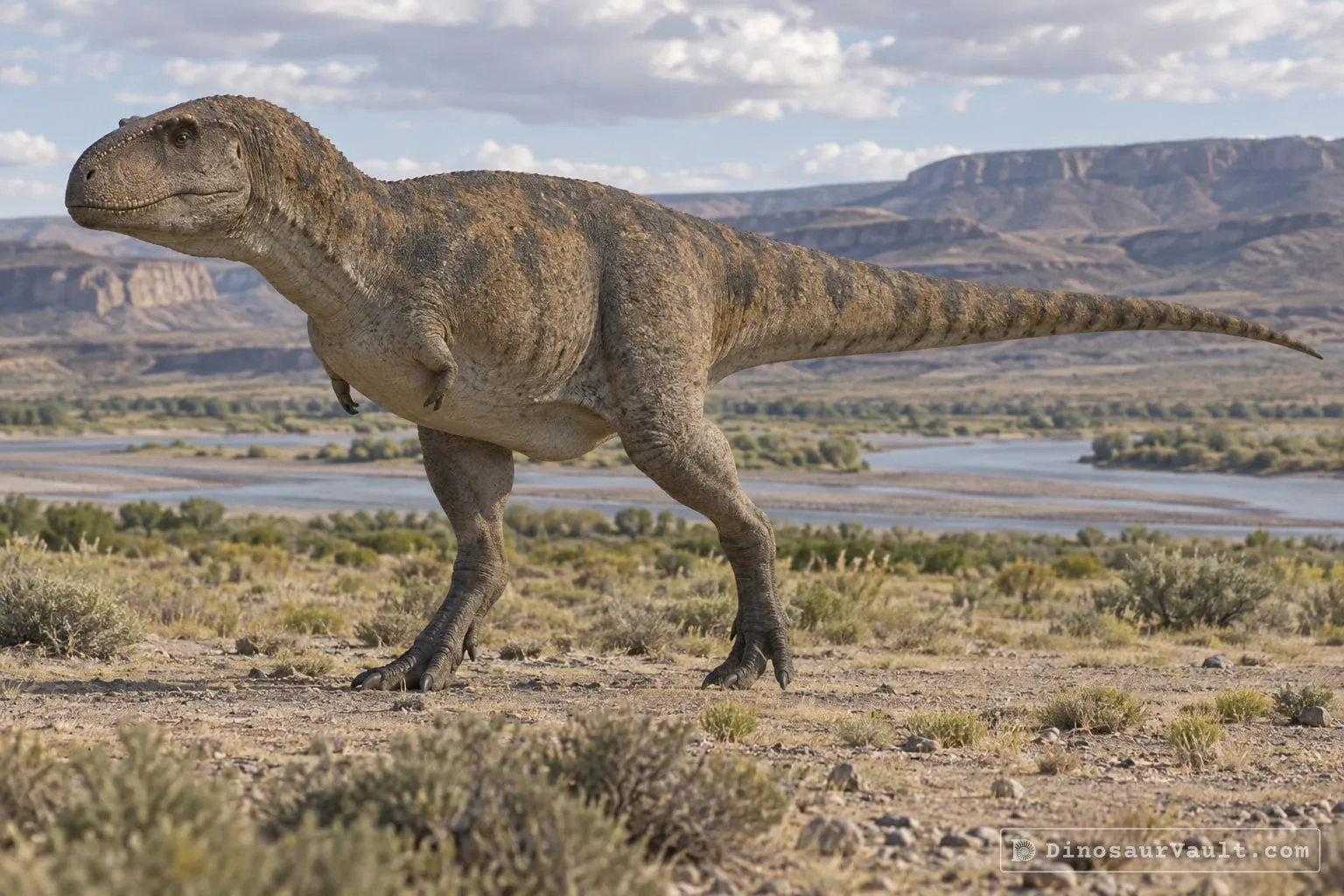
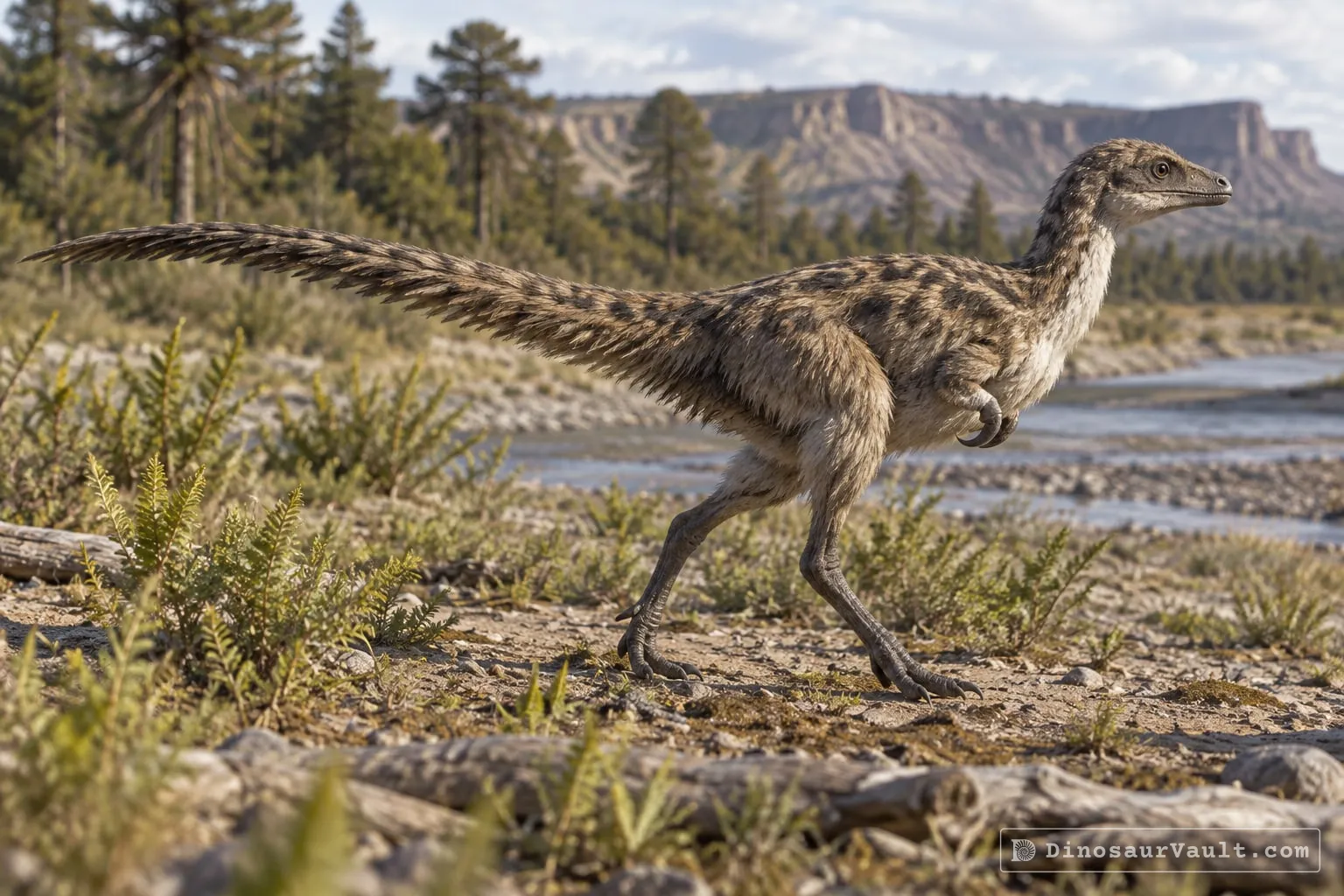
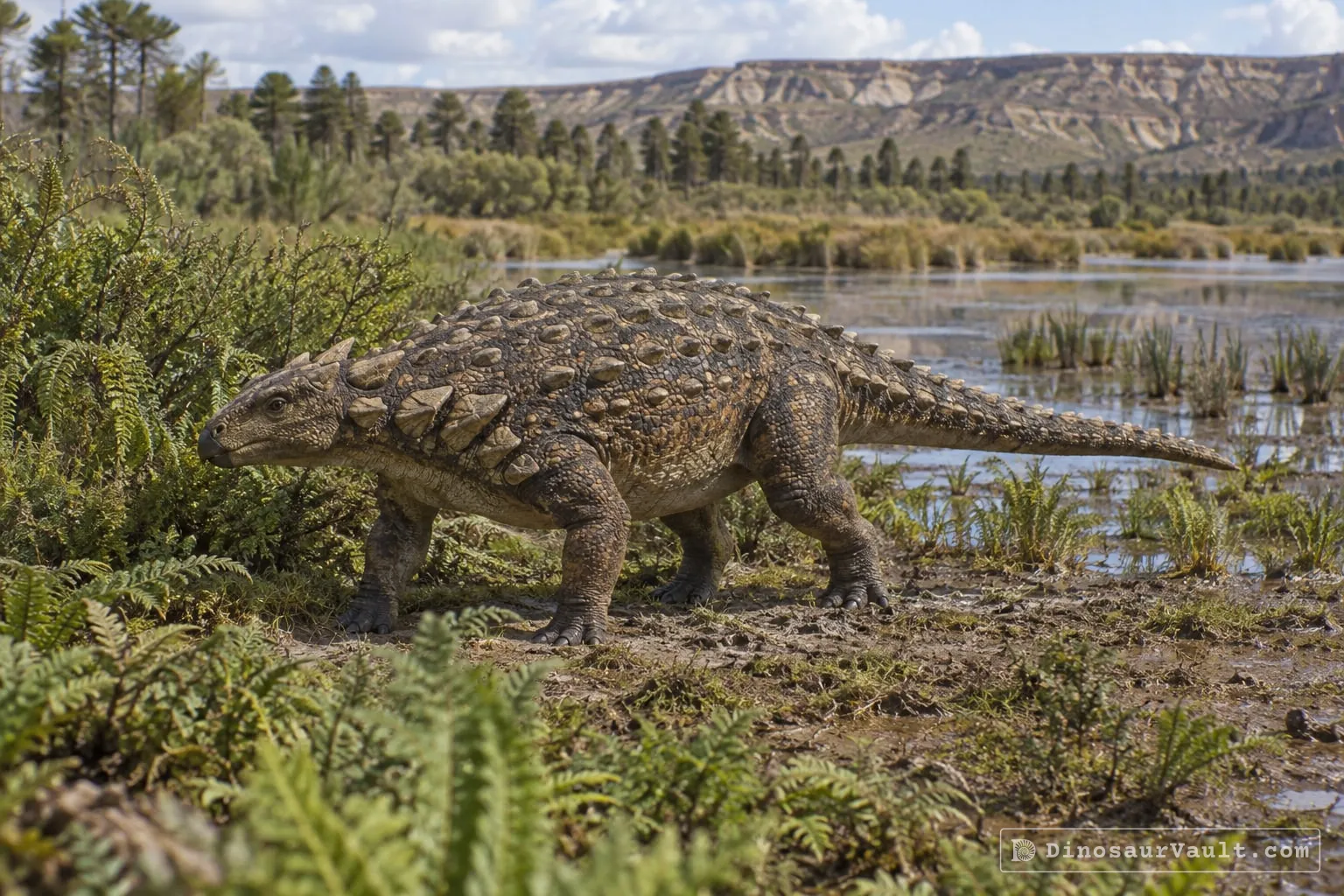
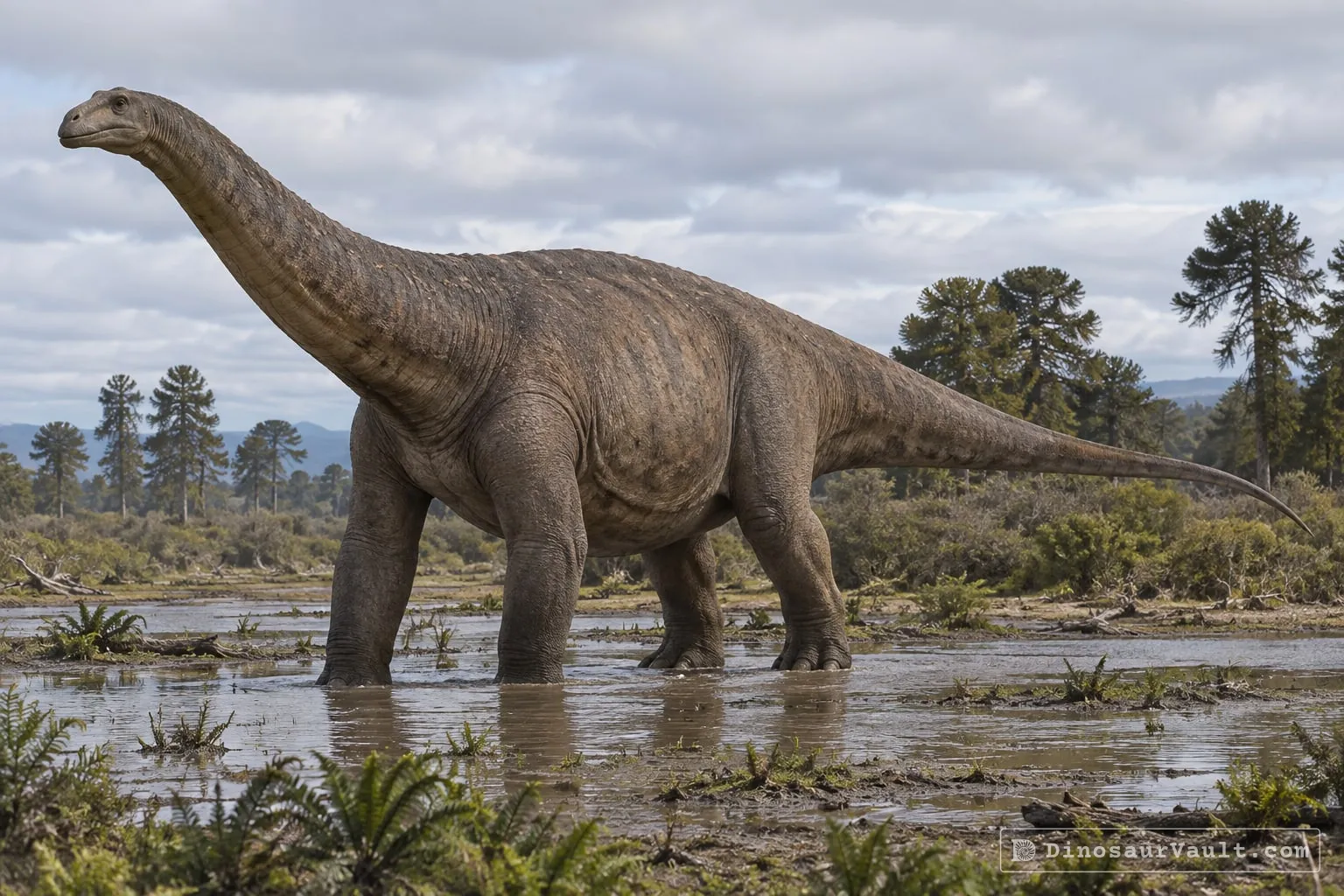
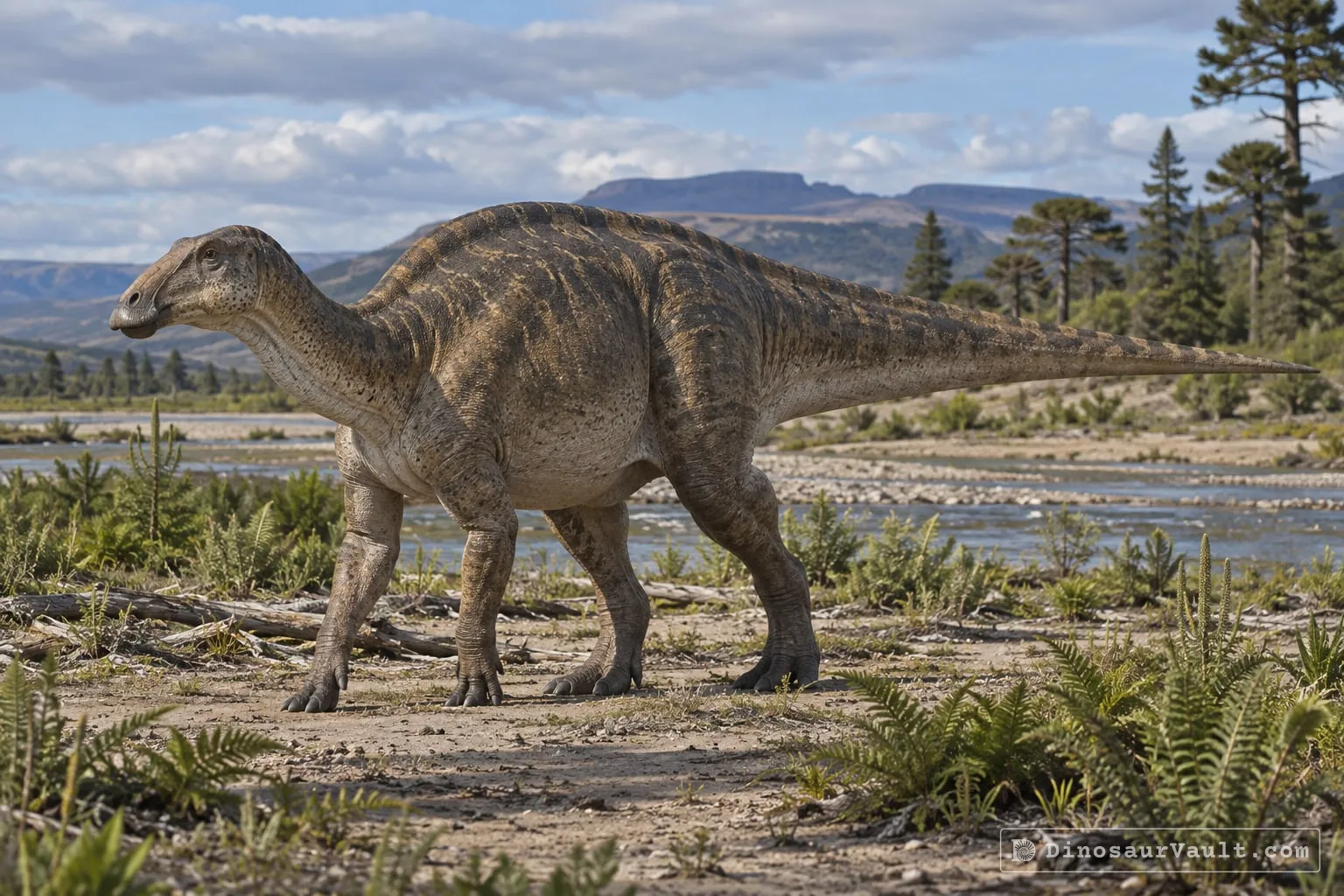


A rock formation can hold fossils laid down millions of years apart, so not every animal here met Abelisaurus.
The evidence
The science behind Abelisaurus
Which parts of the picture come from its own bones, and which come from its relatives.
From its own fossils
- A single incomplete skull preserves the shape of the snout and the openings behind it.
- The facial bones have rough surfaces, without the paired brow horns of Carnotaurus.
Borrowed from relatives
- The legs, tail and tiny arms are restored from better-known abelisaurids such as Carnotaurus and Aucasaurus.
- Lips covering the closed jaws follow comparisons with other large theropods.
Still unknown
- Its full body proportions and skin color.
- Which rock formation originally held the skull.
- How its appearance changed as it grew.
Often drawn wrong
- Paired brow horns like those of Carnotaurus do not belong on its skull.
Discovery timeline
- 1984Named itBonaparte
- 2008Family treeCarrano & Sampson
- 2023Close relativeCullen et al.
Key papers
The research behind what we know of Abelisaurus
Named it
Introduced Abelisaurus, a large meat eater known from an incomplete skull from Argentina.
I dinosauri dell’Argentina [. Sulle Orme dei Dinosauri.
No link available
Family tree
Compared ceratosaur bones and placed Abelisaurus within the abelisaurid branch of the family tree.
The Phylogeny of Ceratosauria (Dinosauria: Theropoda). Journal of Systematic Palaeontology 6: 183-236
Read the paper : The Phylogeny of Ceratosauria (Dinosauria: Theropoda) (opens in a new tab)Close relative
Tooth wear and skull comparisons support lips covering the teeth of large theropods when their mouths closed.
Theropod dinosaur facial reconstruction and the importance of soft tissues in paleobiology. Science 379: 1348-1352
Read the paper : Theropod dinosaur facial reconstruction and the importance of soft tissues in paleobiology (opens in a new tab)
Close relatives
Other members of Abelisauridae


Sources: Wikidata