Outline: a typical theropod
Shuvuuia
"bird"
- Lived
- 84 to 72 million years ago, Late Cretaceous
- Diet
- Carnivore
- Length
- about 0.6 m (2 ft)
- Group
- Theropods, Alvarezsauridae
- Found in
- Mongolia
- Named by
- Chiappe et al. 1998
Size comparison
To scale

Scale in metersOutline: typical theropod shape
Where its fossils were found
The evidence
Today
80 million years ago
Field notes
About Shuvuuia
What it was like
Shuvuuia was a small alvarezsaur, a bird-like theropod about 0.6 meters (2 feet) long. It had long legs, a light skull, tiny teeth and very short, strong arms with one large claw. That claw may have been used to break into insect nests.
Its world
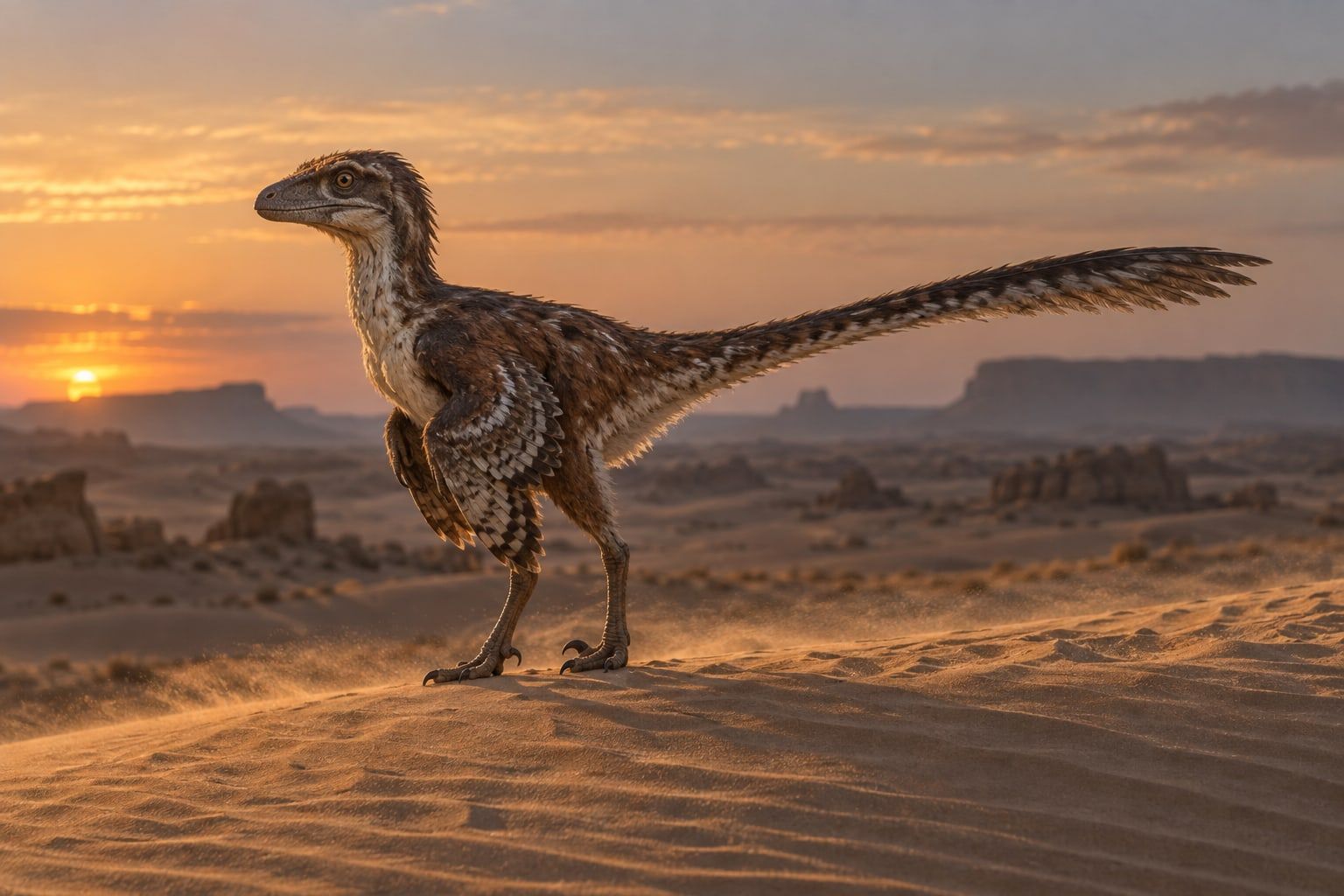
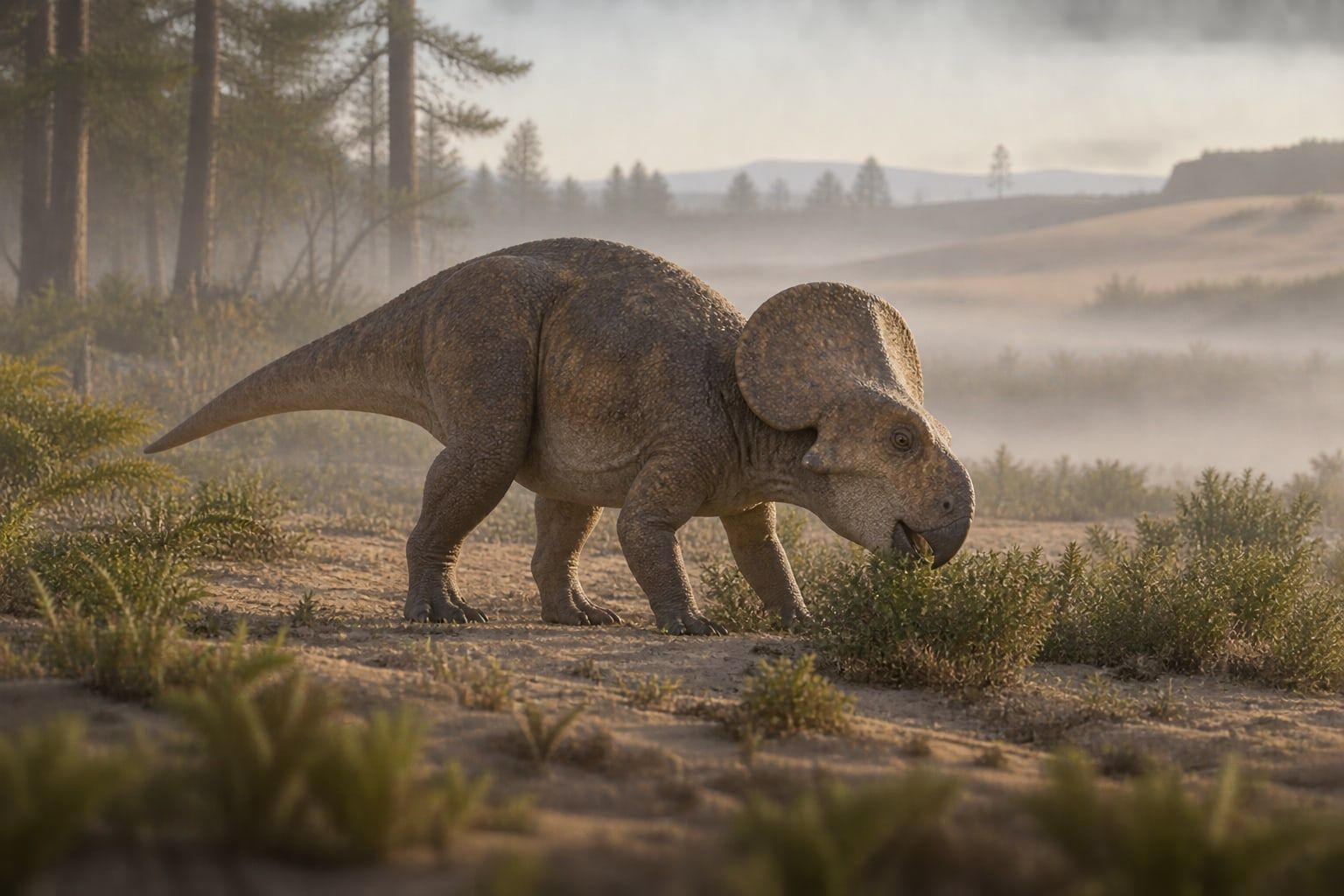
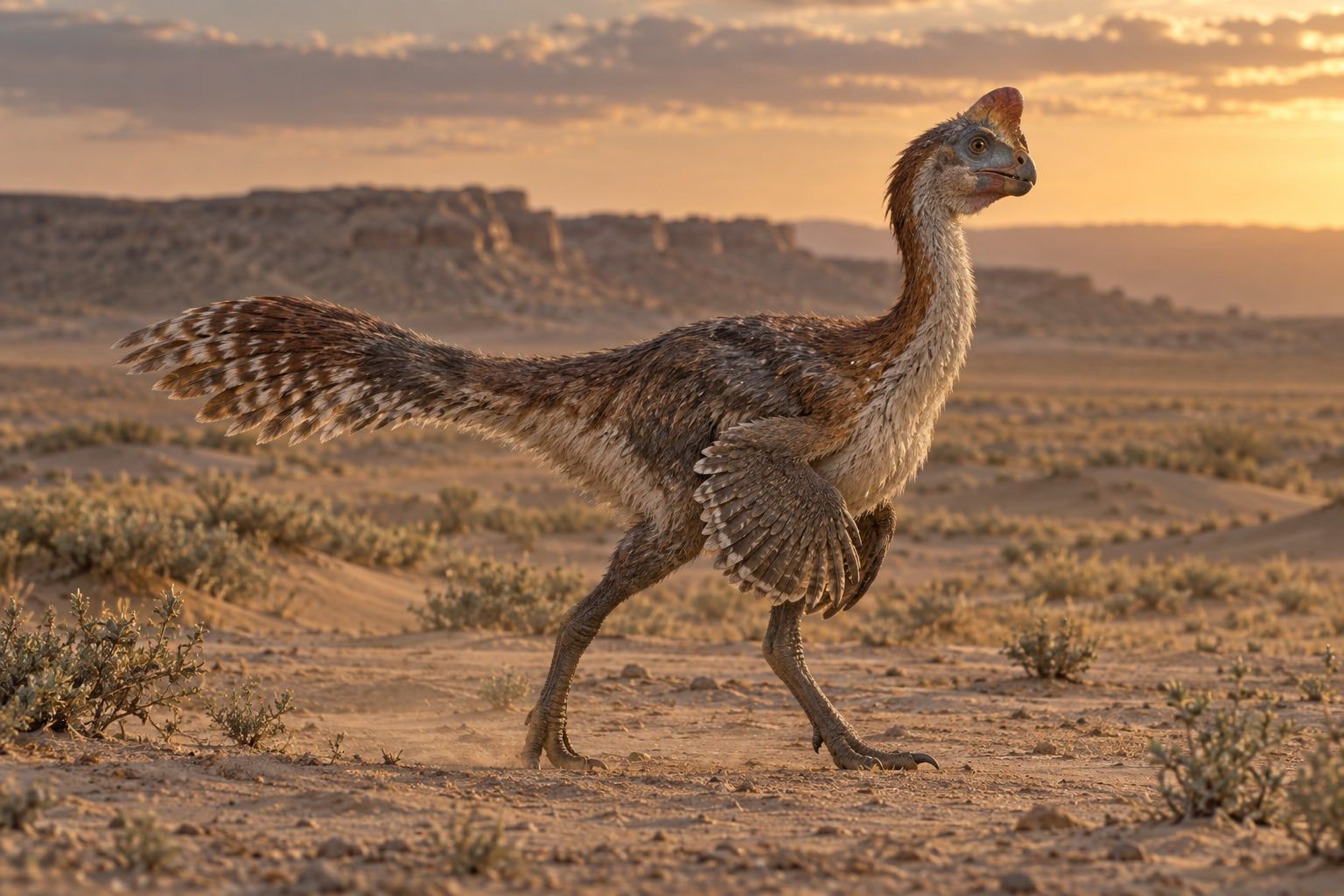
It lived in the Late Cretaceous, in what is now Mongolia. It comes from the Djadokhta Formation, a sandy land shared with Velociraptor, Protoceratops, the oviraptorid Citipati and the armored Pinacosaurus.
Its eyes and ears suggest it could see in dim light and hear very well, so it may have hunted at night.
How it was found
Chiappe and colleagues named Shuvuuia in 1998. The name comes from the Mongolian word for bird. Well preserved skulls have made it one of the best known alvarezsaurs.
Lived alongside
Found in the same rock formations
Close relatives
Other members of Alvarezsauridae
Sources: WikidataNamed in: L. M. Chiappe, M. A. Norell, and J. M. Clark. 1998. The skull of a relative of the stem-group bird Mononykus. Nature 392:275-278