Ruixinia
Type species Ruixinia zhangi
- Lived
- 126 to 120 million years ago, Early Cretaceous
- Diet
- Herbivore
- Group
- Sauropods, Euhelopodidae
- Found in
- China
- Named by
- Mo et al. 2023
Where its fossils were found
The evidence
Today

125 million years ago
Habitat
Its skeleton was buried in lake sediments mixed with volcanic material in the Yixian Formation of China. Sinosauropteryx, Beipiaosaurus and Psittacosaurus also lived in this region.
Field notes
About Ruixinia
What it was like
Ruixinia was a long-necked, four-legged plant eater, known from a partial skeleton with a long, nearly complete tail. It was a relative of Euhelopus.
Its world
It lived in the Early Cretaceous in what is now northeastern China. Its bones come from the Yixian Formation, better known for its small feathered dinosaurs, such as Sinosauropteryx and Beipiaosaurus.
How it was found
Mo and colleagues named Ruixinia in 2023, from a single find.
Field gallery
More views of Ruixinia
Scenes reconstructed from the available fossil evidence.
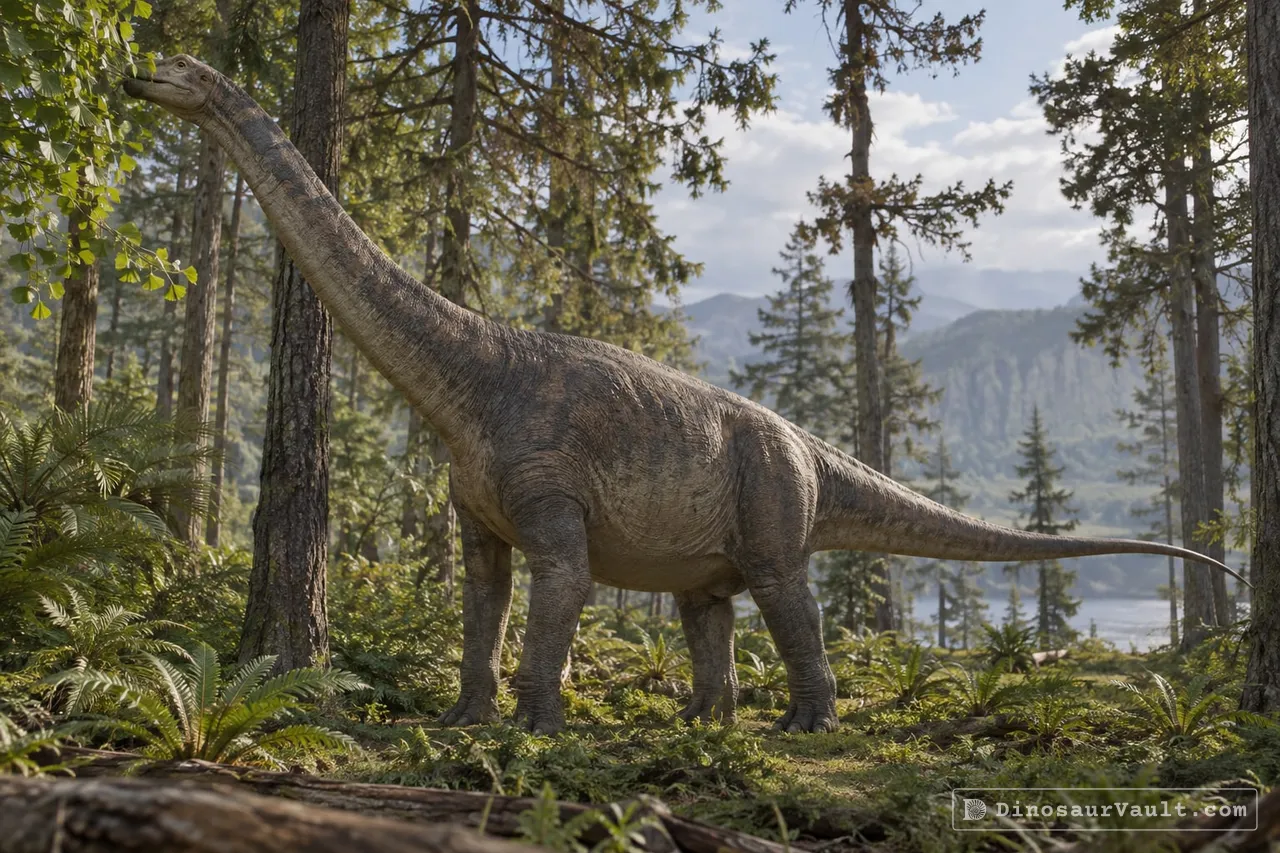
1 of 3
Lived alongside
Found in the same rock formations
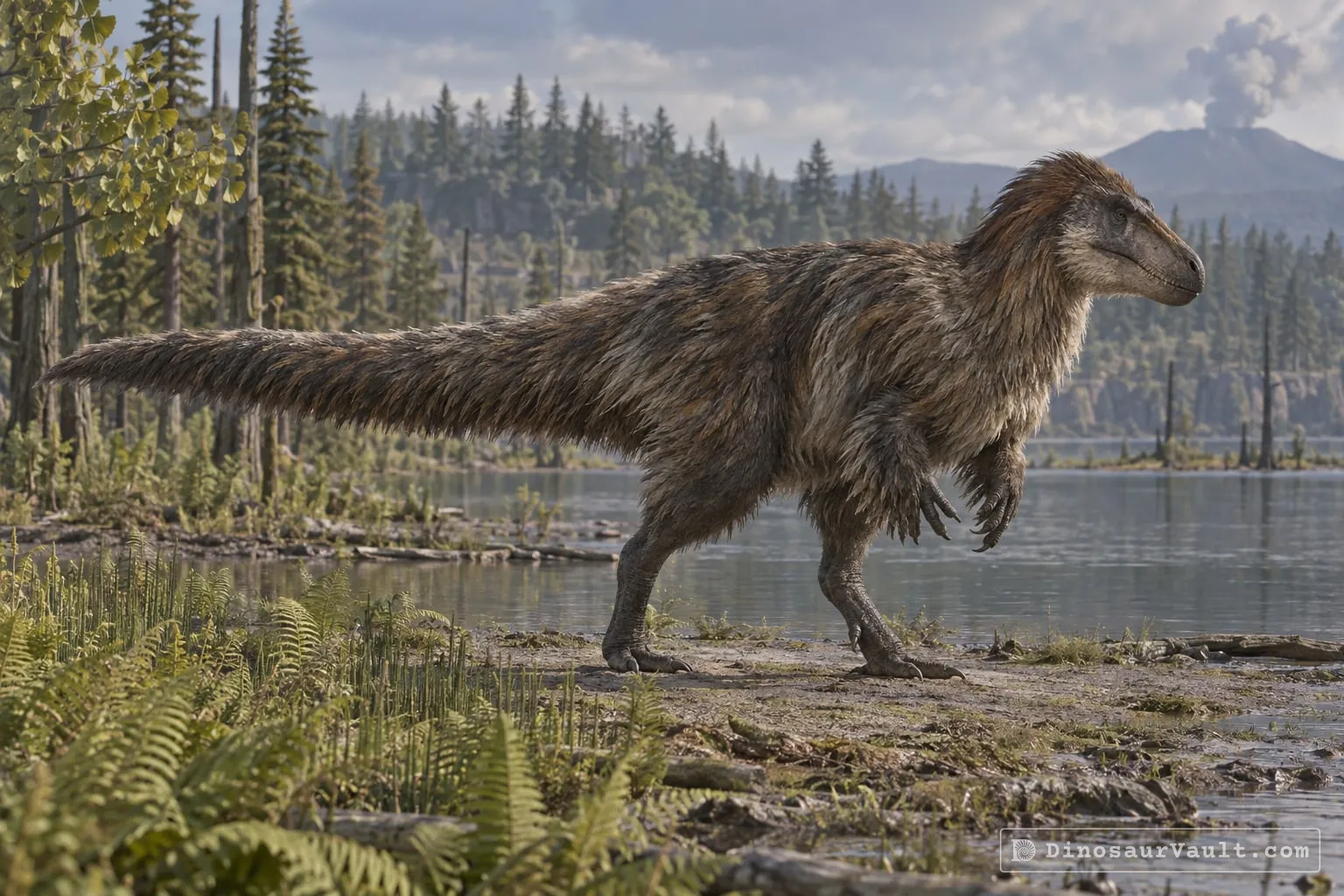
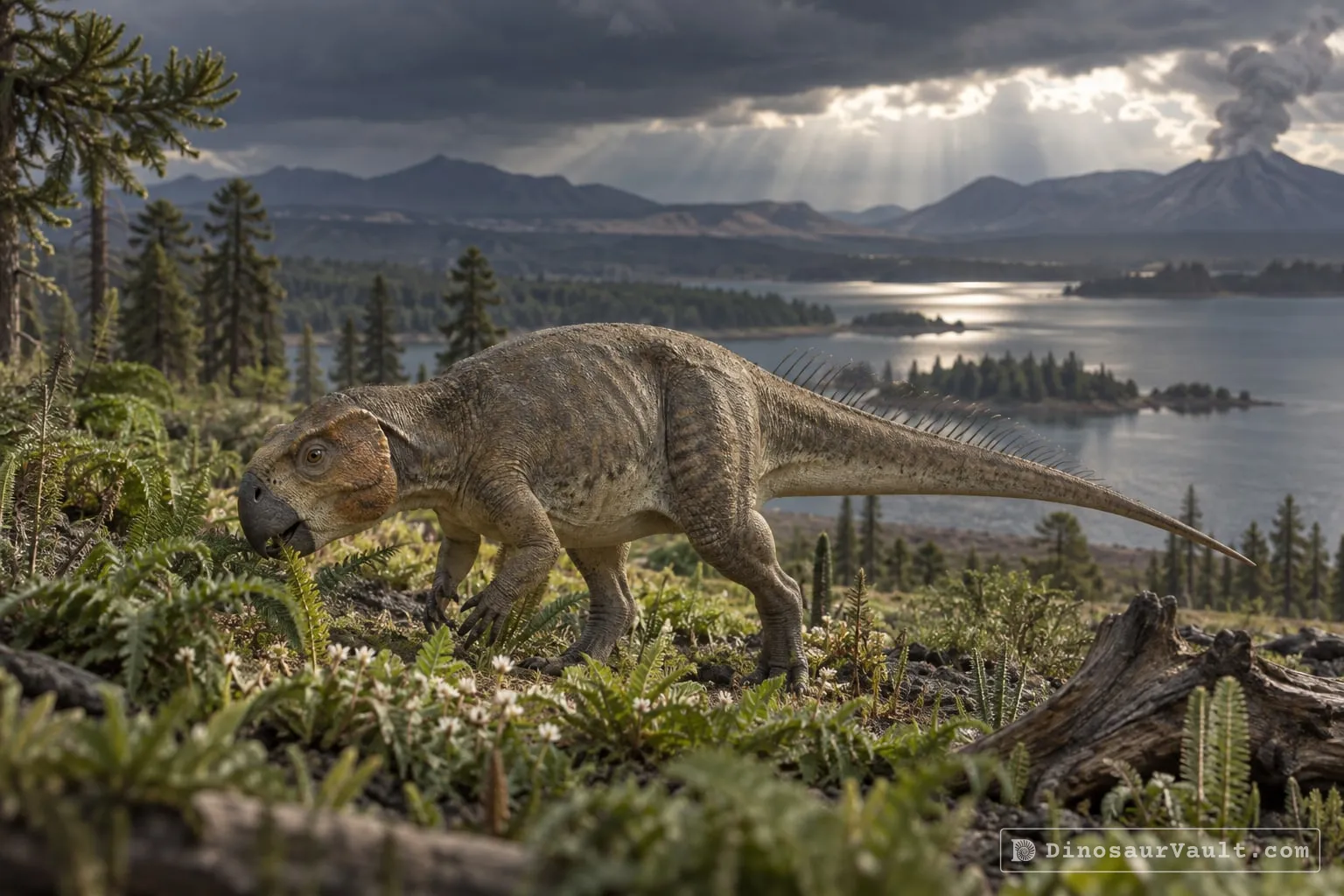
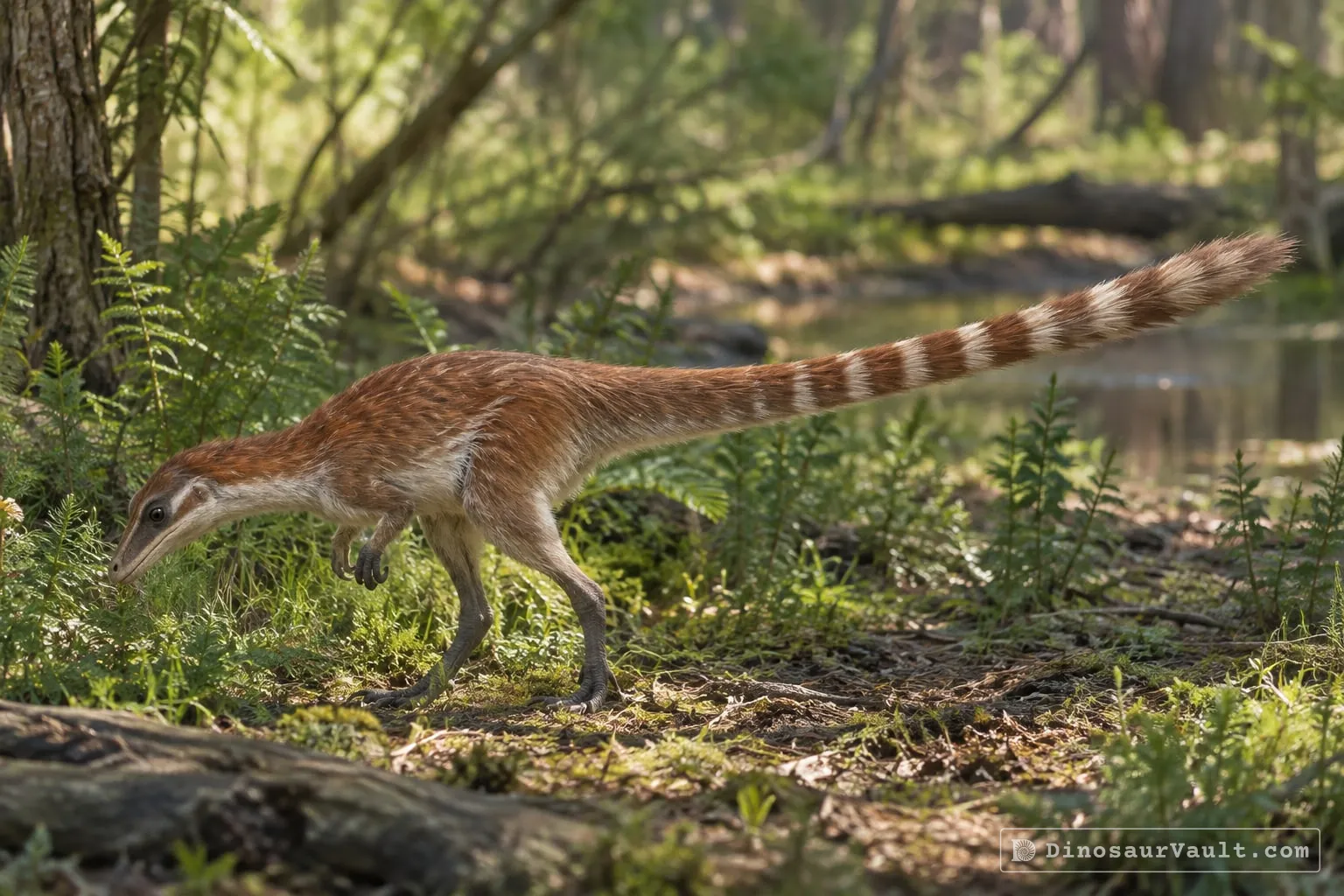
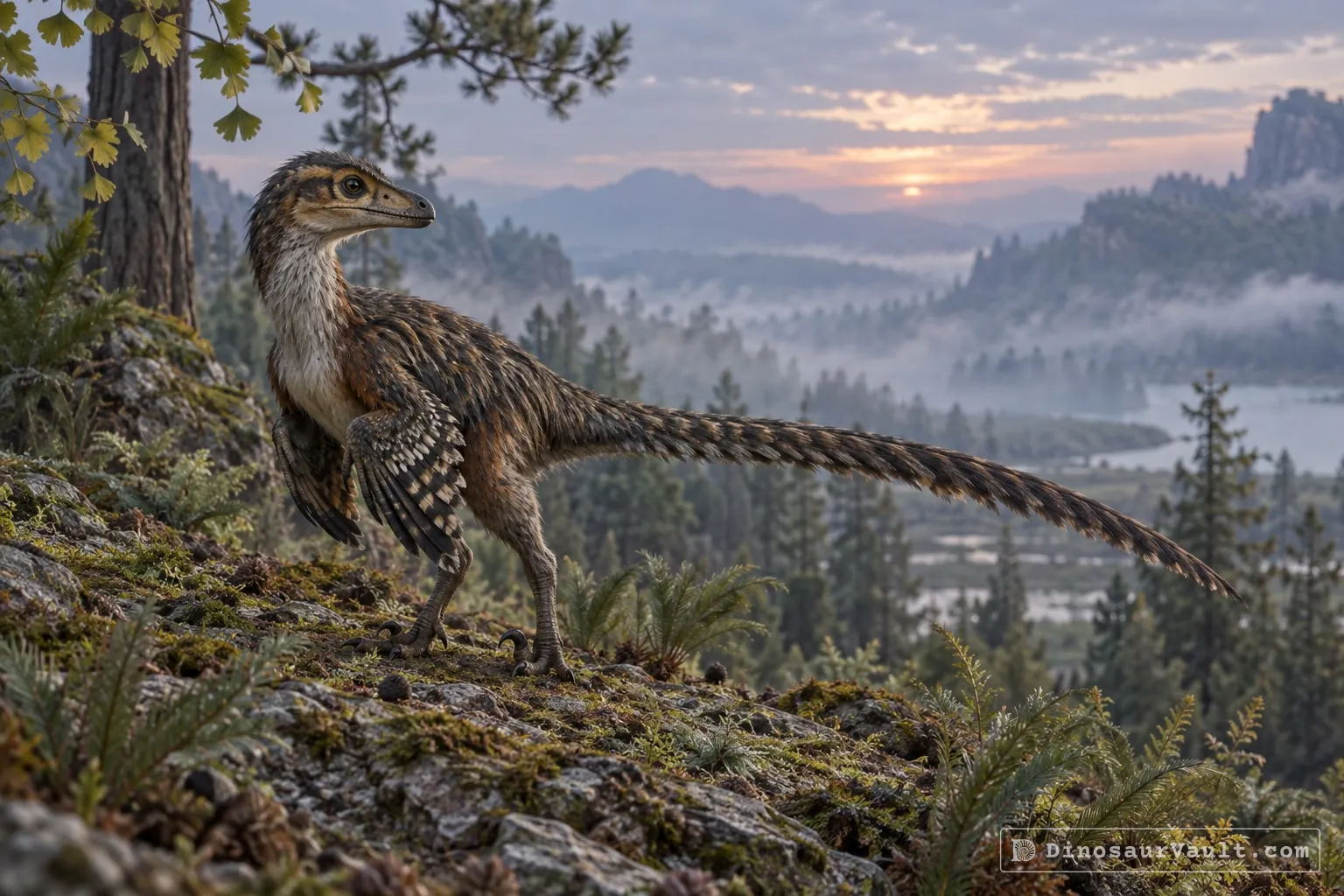
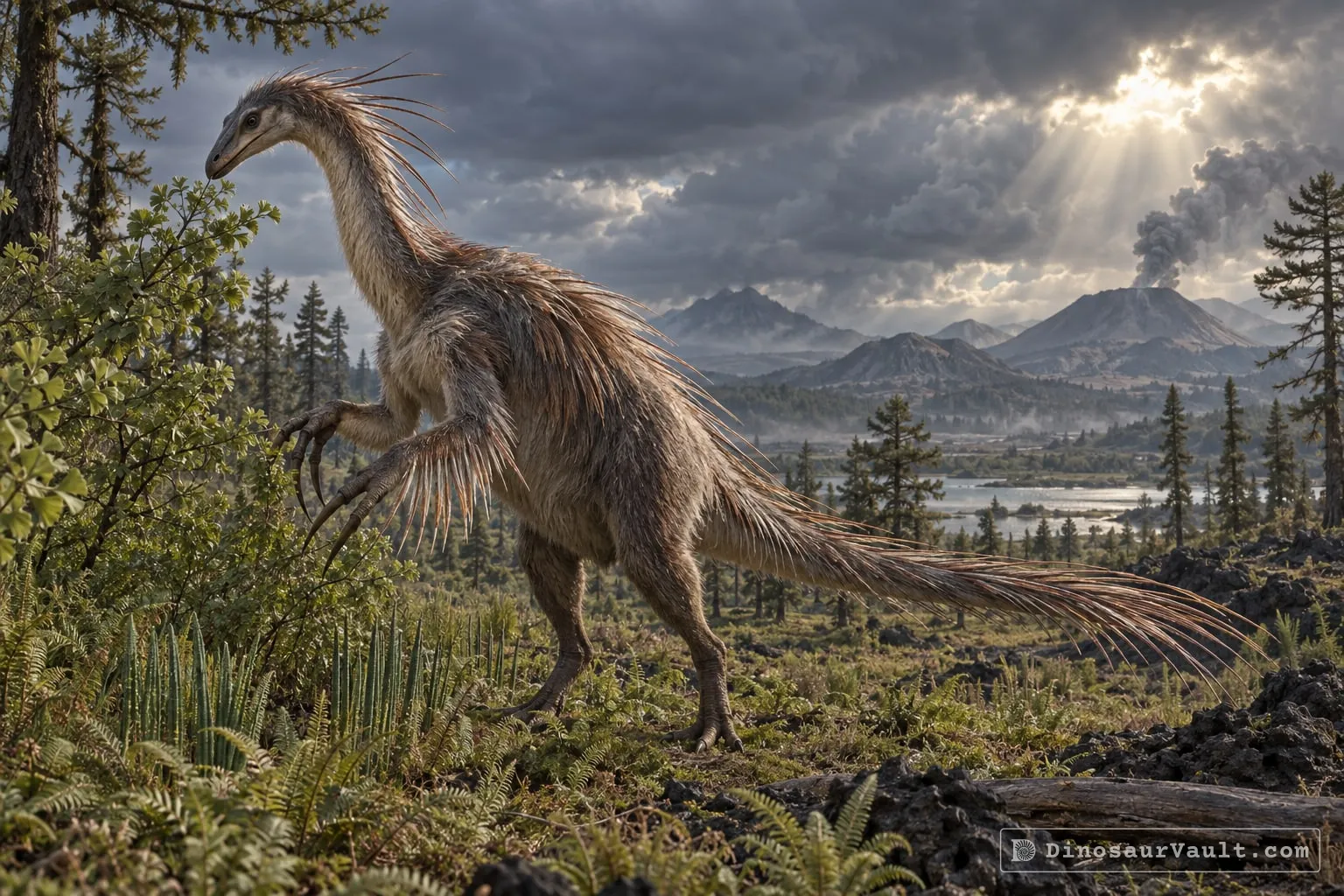
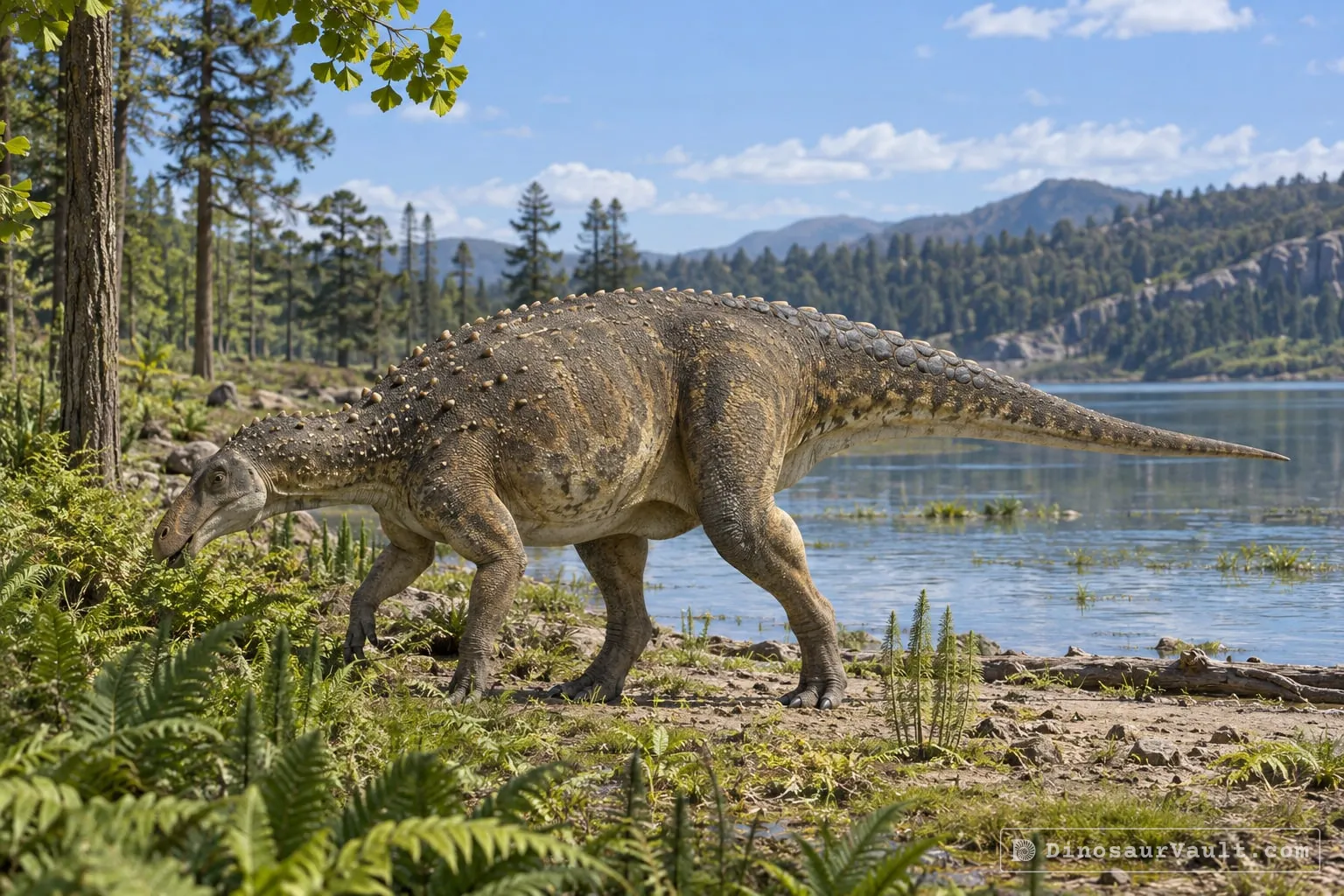
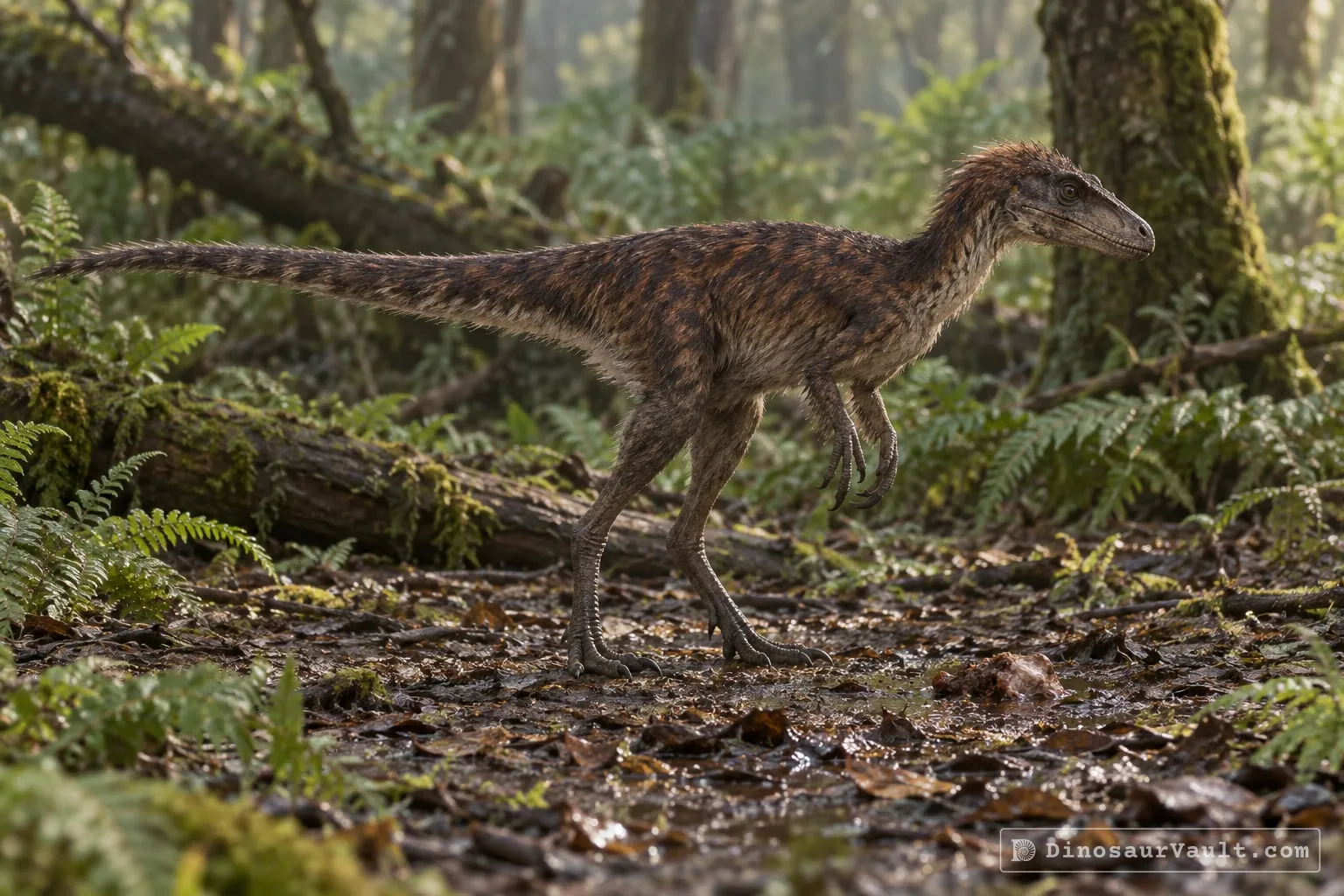


A rock formation can hold fossils laid down millions of years apart, so not every animal here met Ruixinia.
The evidence
The science behind Ruixinia
Which parts of the picture come from its own bones, and which come from its relatives.
From its own fossils
- The partial skeleton includes a long neck, much of the backbone, the tail, hip bones and a hind leg.
- The small, rod-like bones at the tip of its tail were fused together. One later study interpreted the last preserved bone as the end of the tail.
- Bony projections above the front of the tail split into paired branches.
Borrowed from relatives
- Euhelopus provides a comparison for the missing skull.
- Mnyamawamtuka provides comparisons for the missing shoulder, upper arm and parts of the forearm.
Still unknown
- The shape of its head.
- Its skin covering and color.
- Why the tip of its tail was fused.
Discovery timeline
- 2009Close relativeWilson & Upchurch
- 2013SkullPoropat & Kear
- 2019Family treeGorscak & O’Connor
- 2023Named itMo et al.
- 2025Same rocksShan
- 2026New findvan der Linden et al.
Key papers
The research behind what we know of Ruixinia
Close relative
Restudied Euhelopus and reassessed its place among sauropods, providing an anatomical comparison for Ruixinia.
Redescription and reassessment of the phylogenetic affinities of euhelopus zdanskyi (Dinosauria: Sauropoda) from the early cretaceous of China. Journal of Systematic Palaeontology 7: 199-239
Read the paper : Redescription and reassessment of the phylogenetic affinities of euhelopus zdanskyi (Dinosauria: Sauropoda) from the early cretaceous of China (opens in a new tab)Skull
Reconstructed the skull of Euhelopus and identified additional skull bones, providing a comparison for the missing head of Ruixinia.
Photographic Atlas and Three-Dimensional Reconstruction of the Holotype Skull of Euhelopus zdanskyi with Description of Additional Cranial Elements. PLoS ONE 8: e79932
Read the paper : Photographic Atlas and Three-Dimensional Reconstruction of the Holotype Skull of Euhelopus zdanskyi with Description of Additional Cranial Elements (opens in a new tab)Family tree
Described Mnyamawamtuka, whose shoulder and limb bones provide a broader comparison for missing parts of Ruixinia.
A new African Titanosaurian Sauropod Dinosaur from the middle Cretaceous Galula Formation (Mtuka Member), Rukwa Rift Basin, Southwestern Tanzania. PLOS ONE 14: e0211412
Read the paper : A new African Titanosaurian Sauropod Dinosaur from the middle Cretaceous Galula Formation (Mtuka Member), Rukwa Rift Basin, Southwestern Tanzania (opens in a new tab)Named it
Described a sauropod with a well-preserved tail, including split bony projections near the base and fused bones at the tip.
A new titanosauriform sauropod with an unusual tail from the Lower Cretaceous of northeastern China. Cretaceous Research 144: 105449
Read the paper : A new titanosauriform sauropod with an unusual tail from the Lower Cretaceous of northeastern China (opens in a new tab)Same rocks
Restudied Liaoningotitan from the same formation and found a mix of skull features linking different stages of sauropod evolution.
The re-description of Liaoningotitan sinensis Zhou et al., 2018. PeerJ 13: e19154
Read the paper : The re-description of Liaoningotitan sinensis Zhou et al., 2018 (opens in a new tab)New find
Studied another sauropod's tail tip and interpreted the last preserved bone of Ruixinia as the tail's end, without a bony club.
A case report of a pathology in the ‘whip’ of a flagellicaudatan sauropod. The Science of Nature 113
Read the paper : A case report of a pathology in the ‘whip’ of a flagellicaudatan sauropod (opens in a new tab)
Close relatives
Other members of Euhelopodidae


Sources: Wikidata