Maiasaura
my-uh-SORE-uh
"good mother lizard"
- Lived
- 84 to 72 million years ago, Late Cretaceous
- Diet
- Herbivore
- Length
- about 9 m (30 ft)
- Group
- Ornithopods, Hadrosauridae
- Found in
- United States
- Named by
- Horner and Makela 1979
Size comparison
To scale
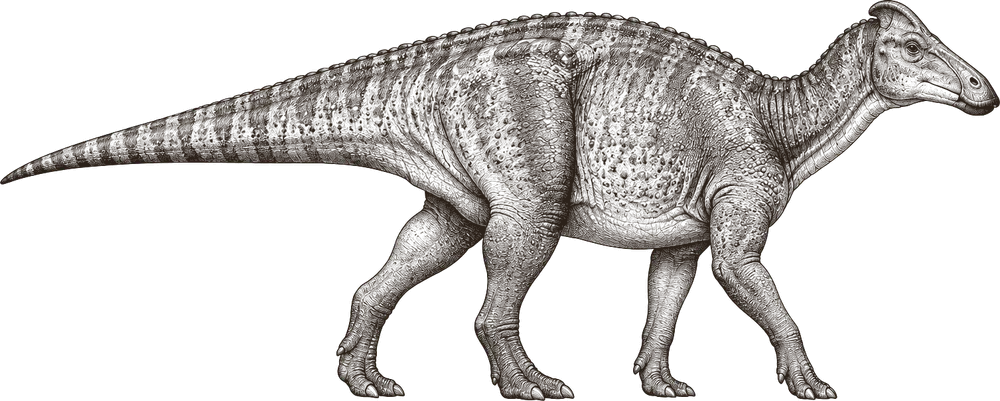


Scale in meters
Where its fossils were found
The evidence
Today

80 million years ago
Field notes
About Maiasaura
What it was like
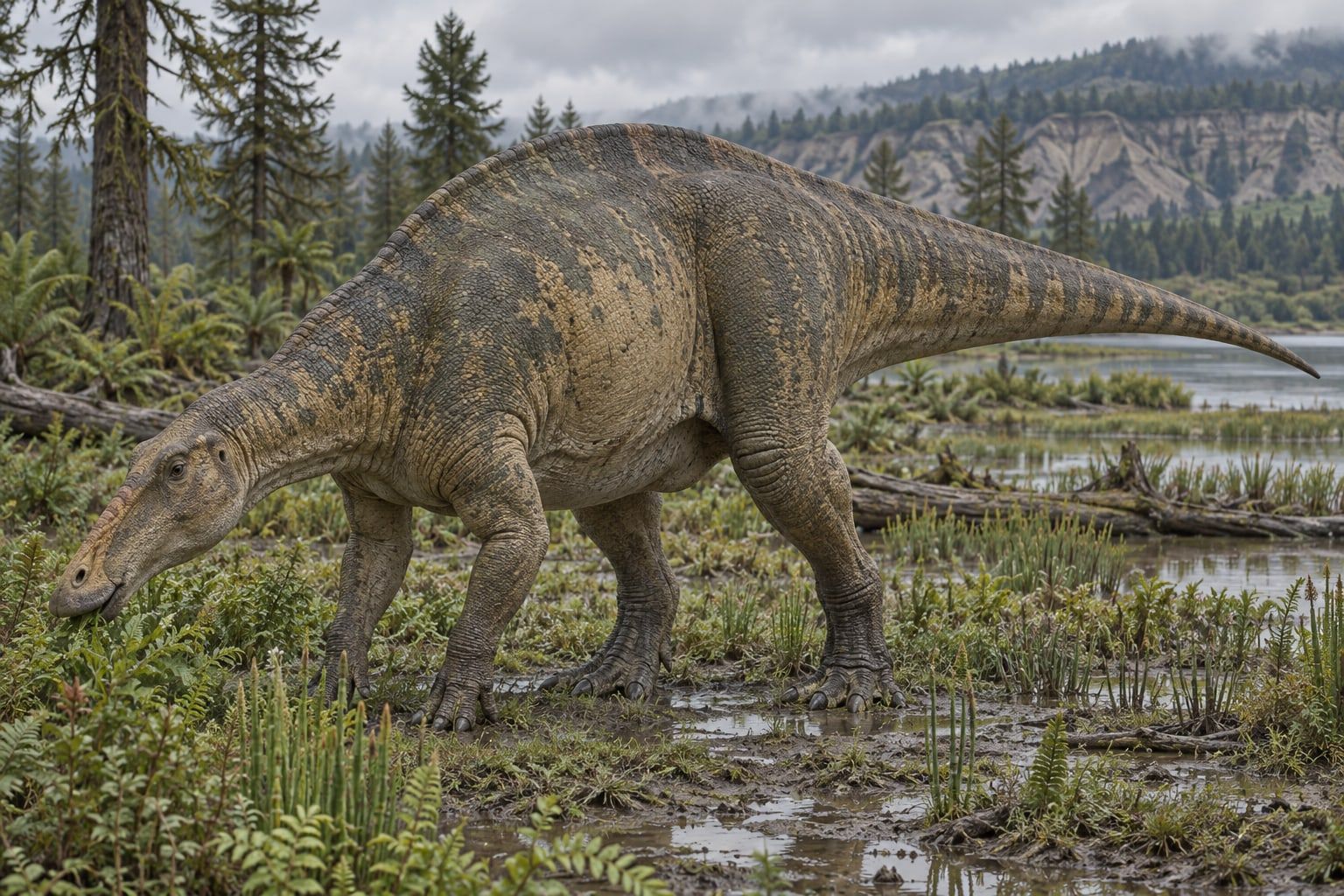
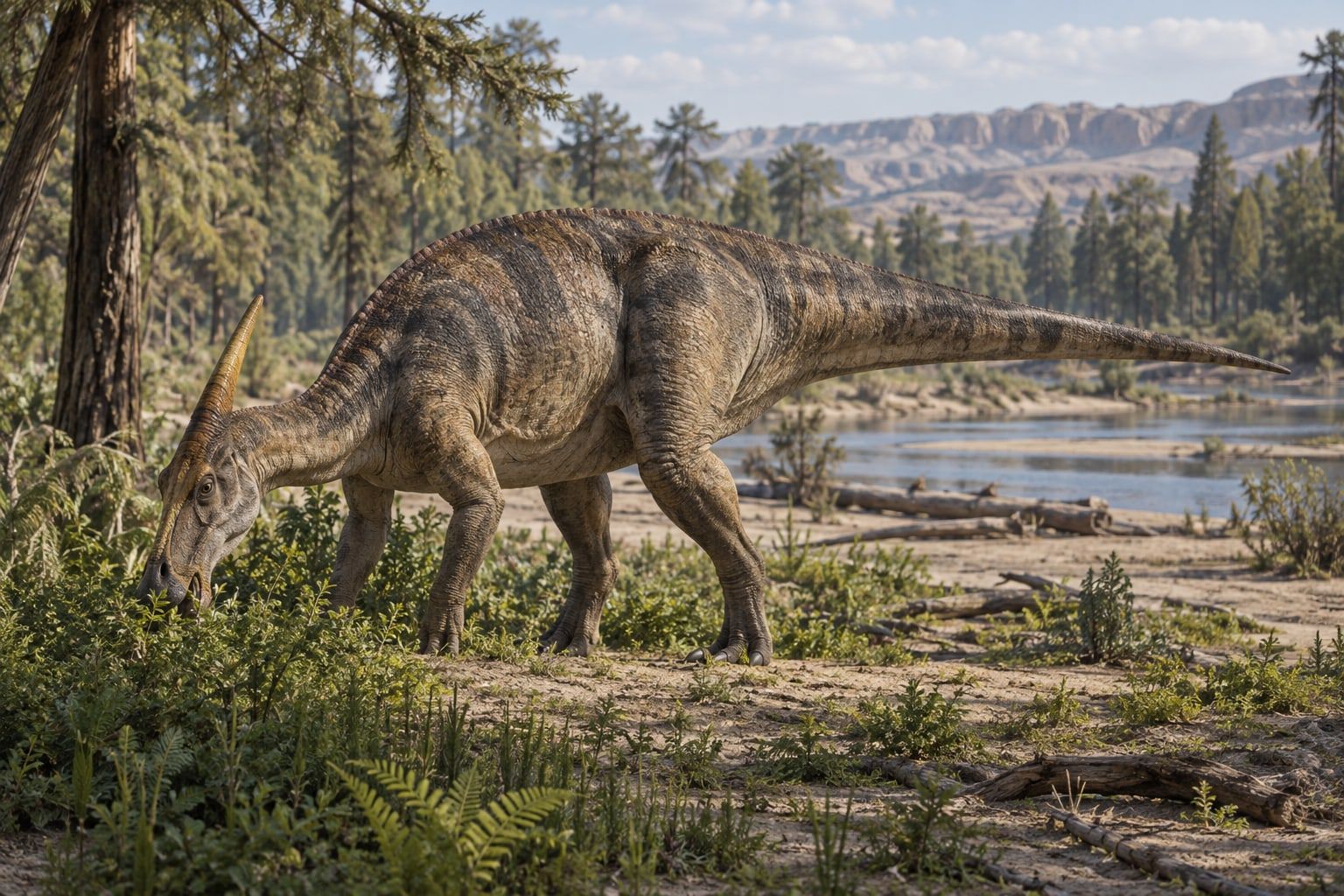
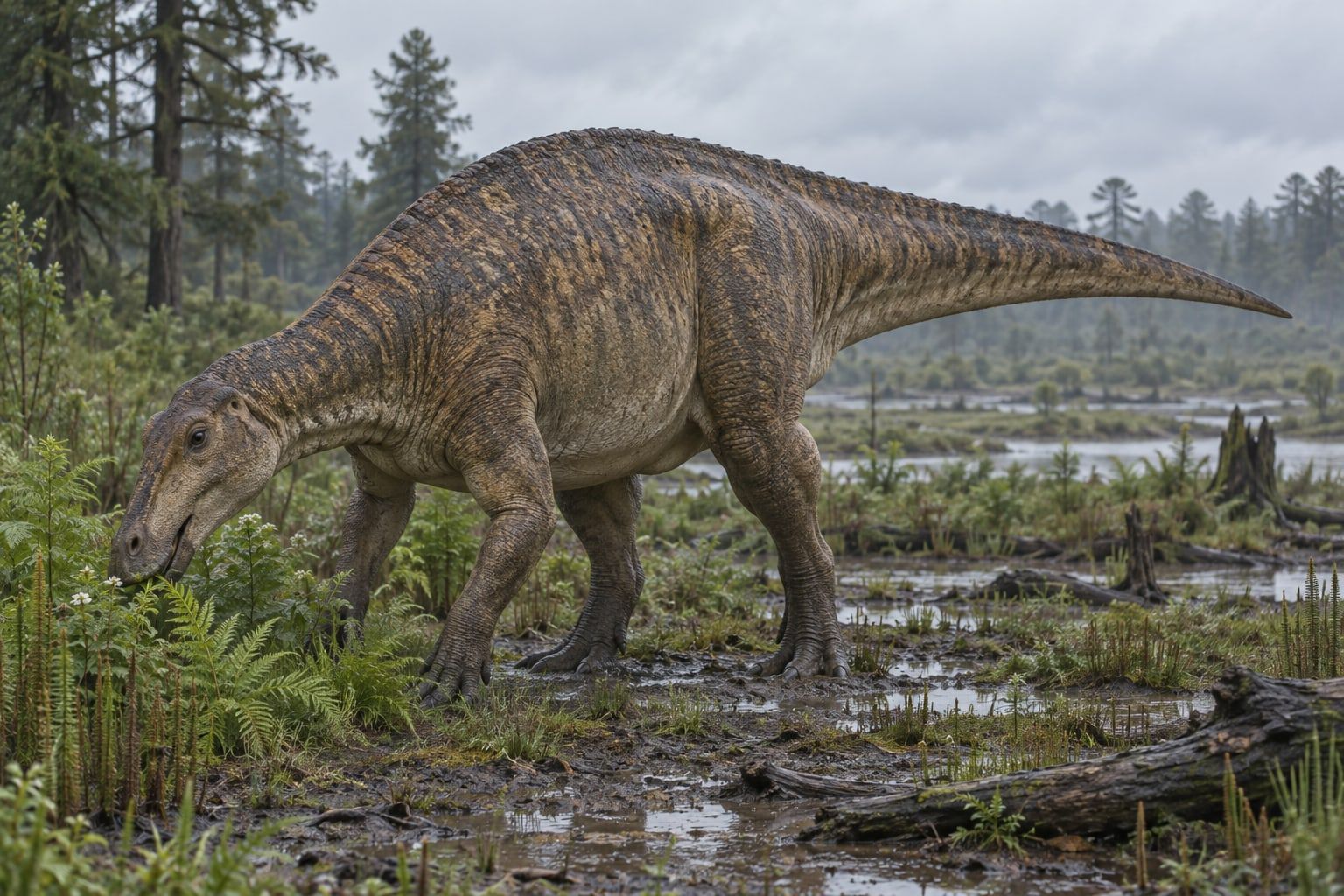
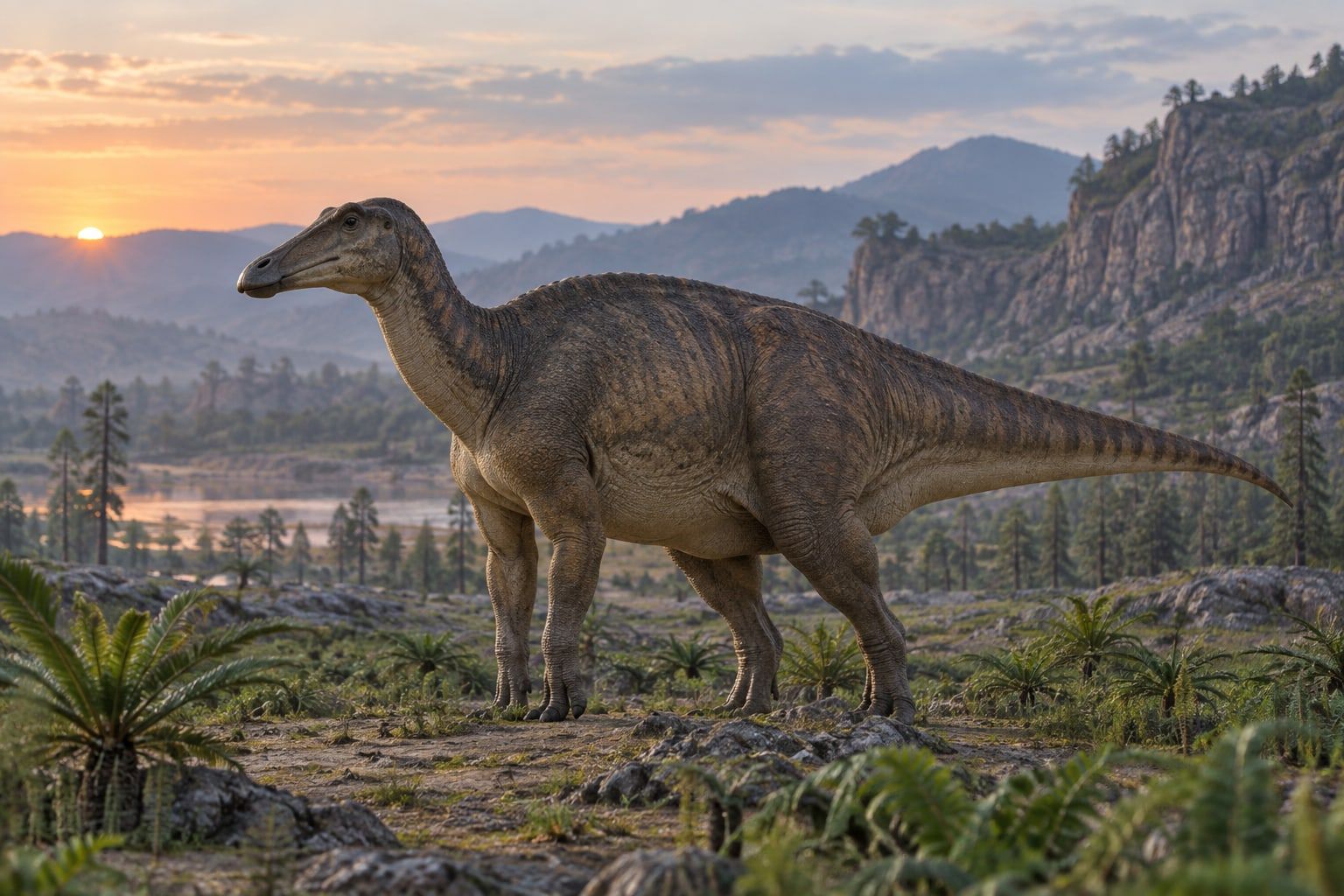
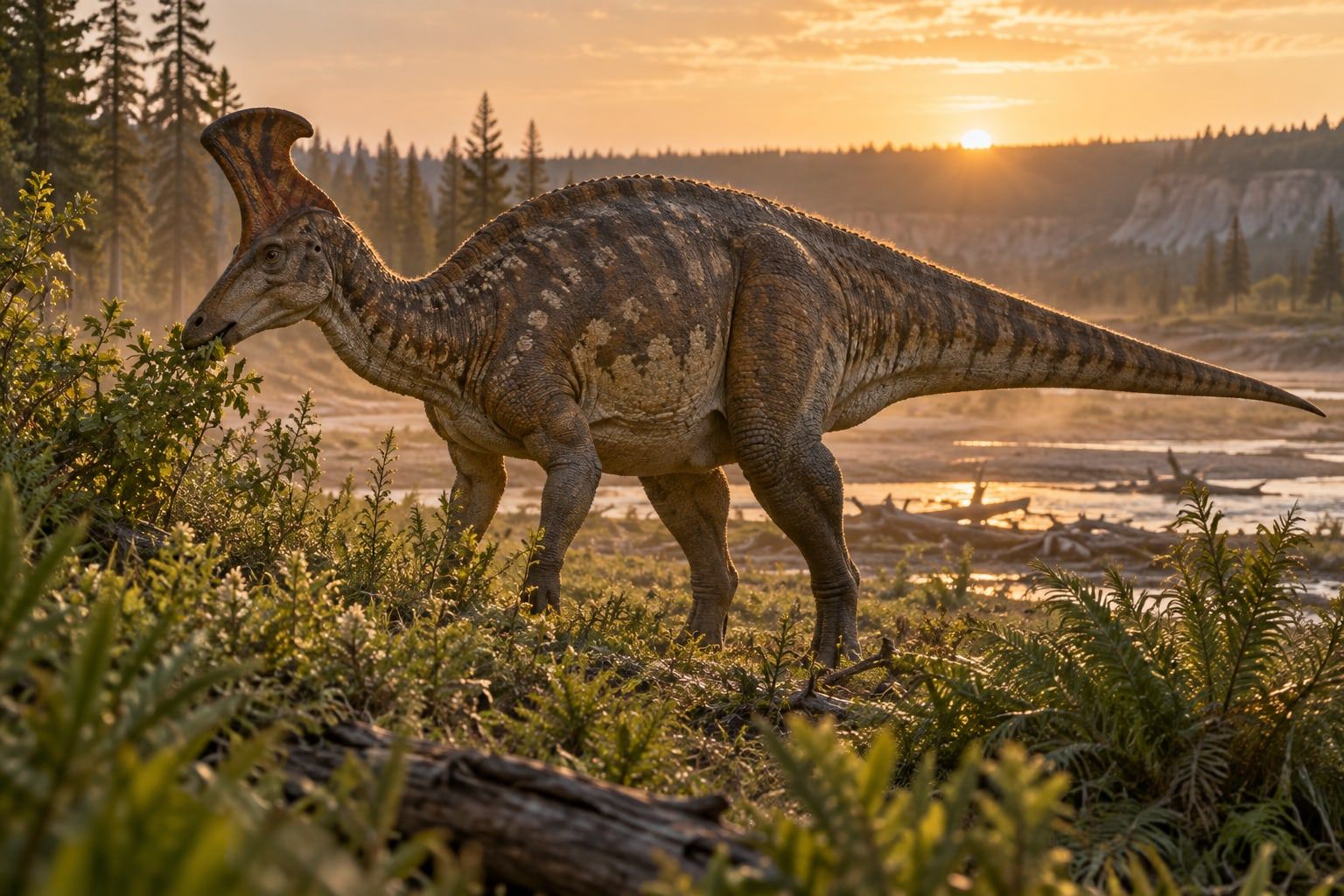
Maiasaura was a duck-billed plant eater with a broad, flat beak and rows of grinding teeth for chewing tough plants. It grew to about 9 meters (30 feet) long and likely moved on two legs or four, depending on its speed.
It is best known for evidence of parental care: nests, eggs, and young at different growth stages found together suggest that Maiasaura fed and protected its hatchlings in the nest rather than leaving them to fend for themselves.
Its world
Maiasaura lived in what is now Montana about 84 to 72 million years ago, during the Late Cretaceous, on a floodplain crossed by rivers and dotted with conifer forests. Its fossils come from the Two Medicine Formation.
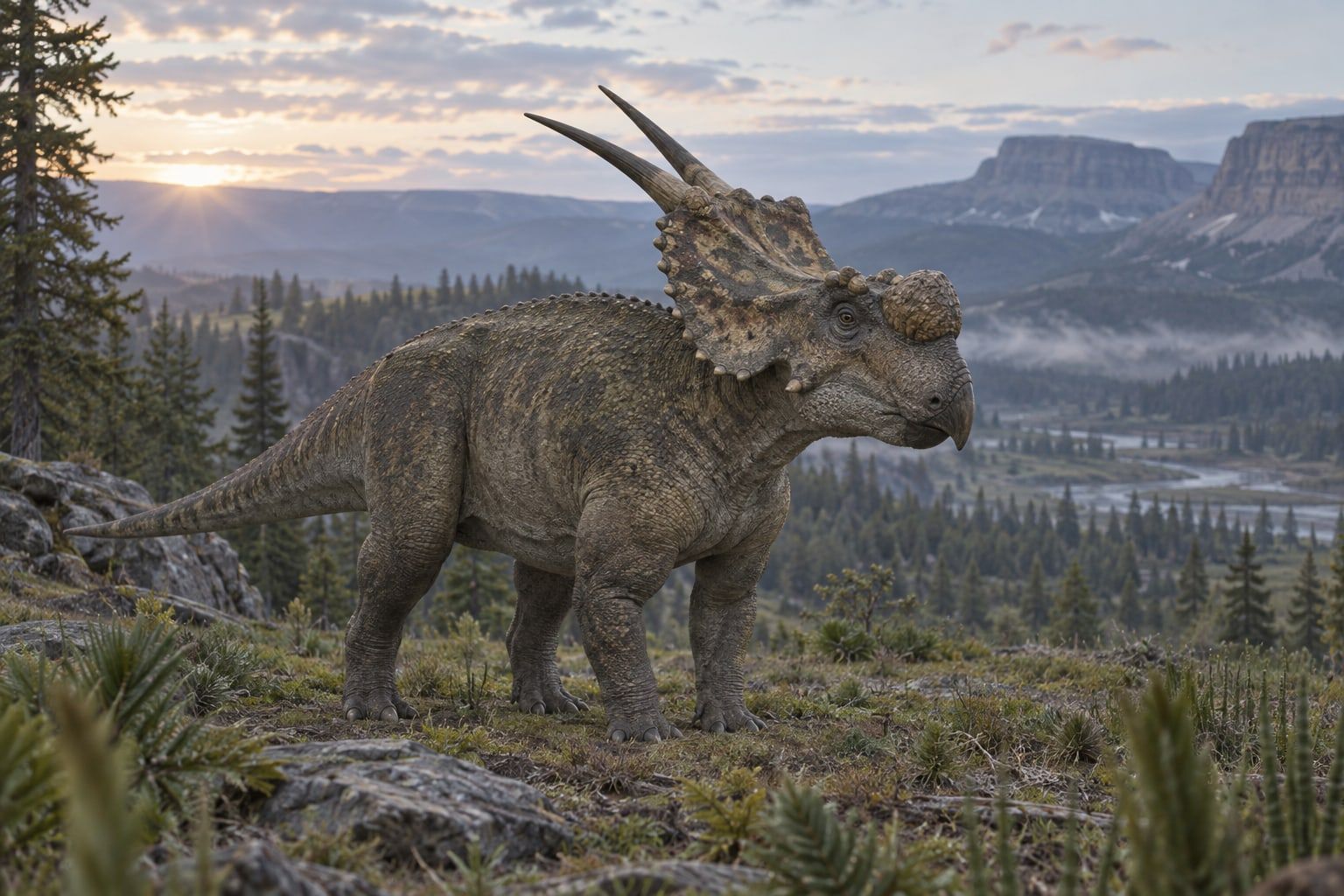
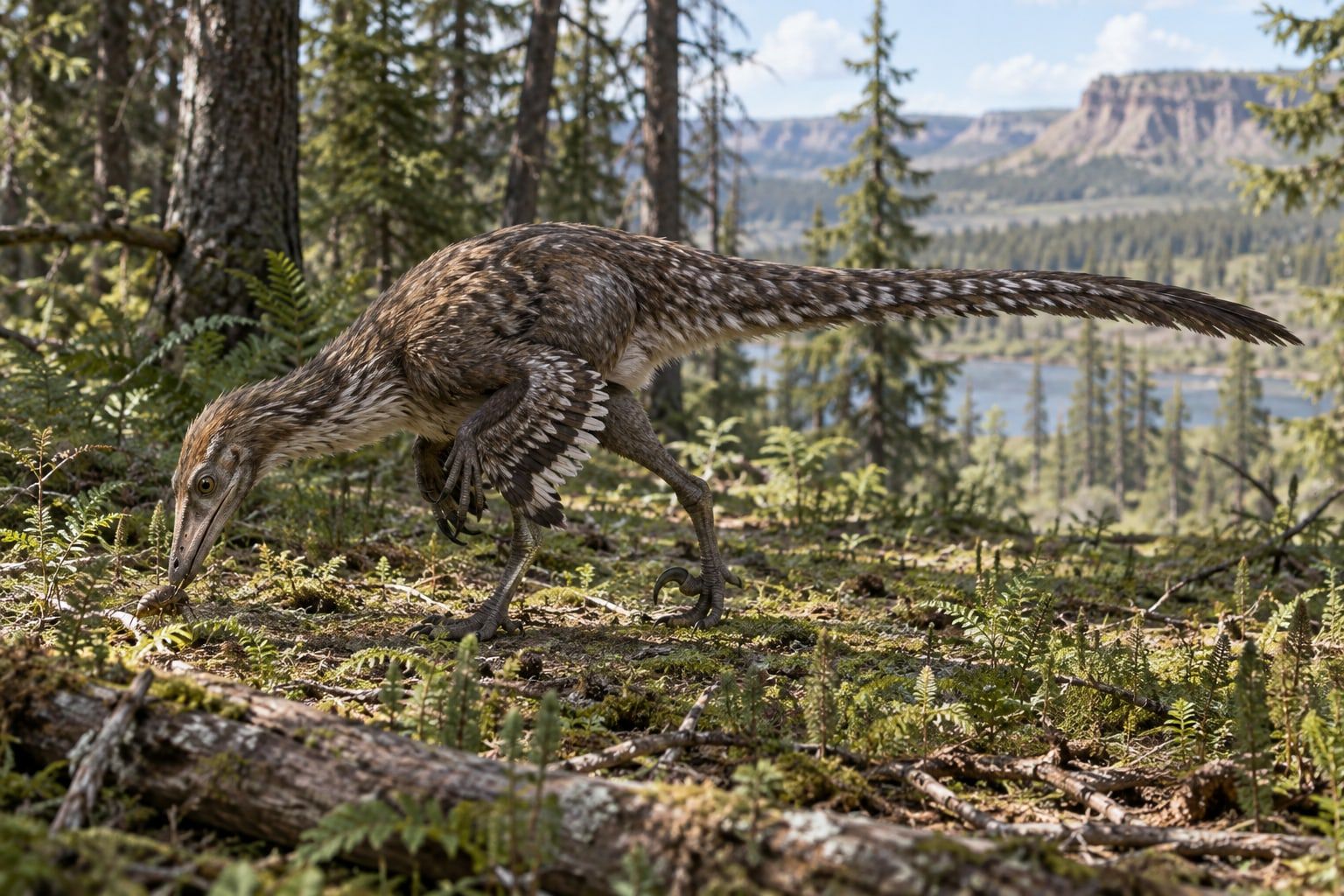
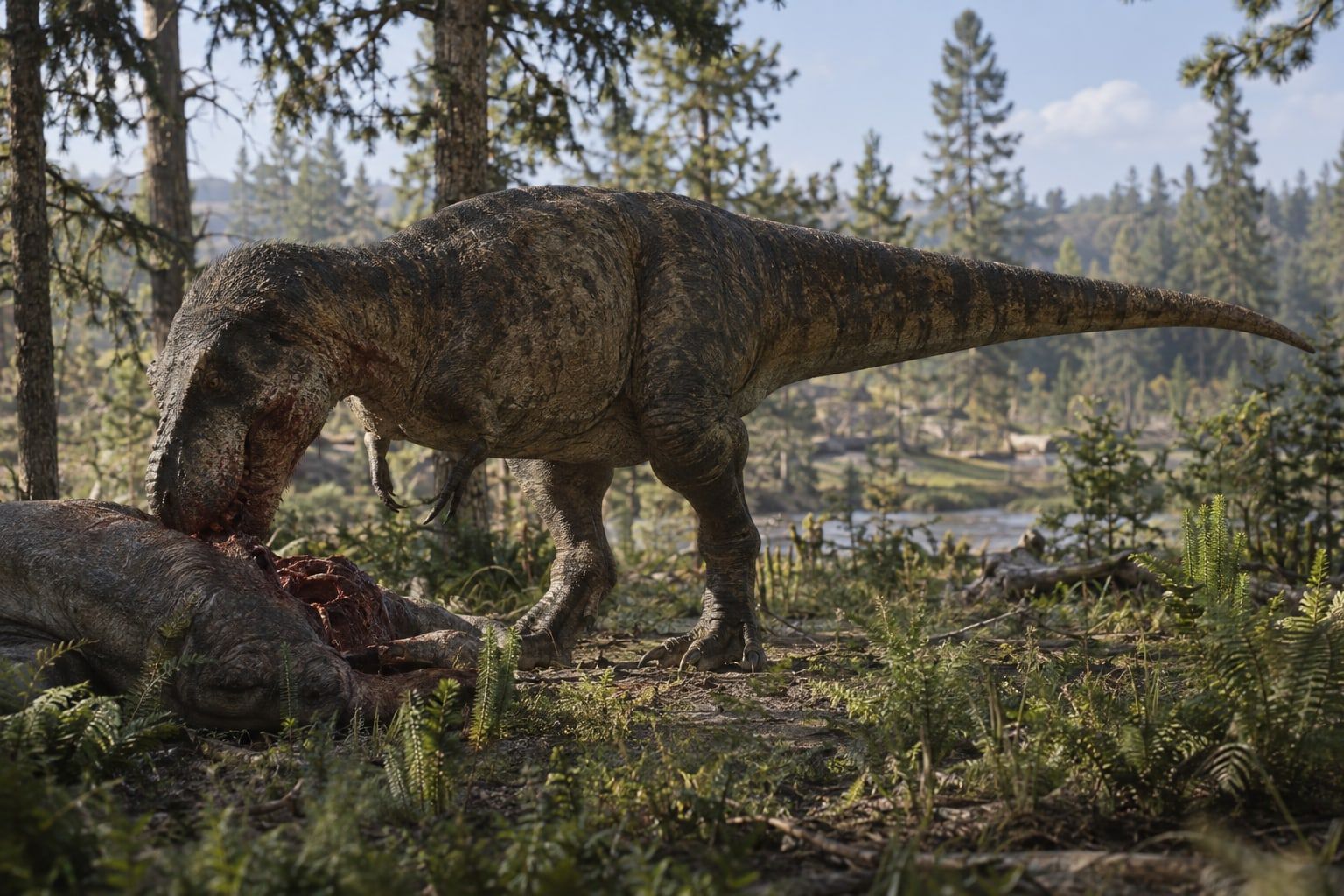
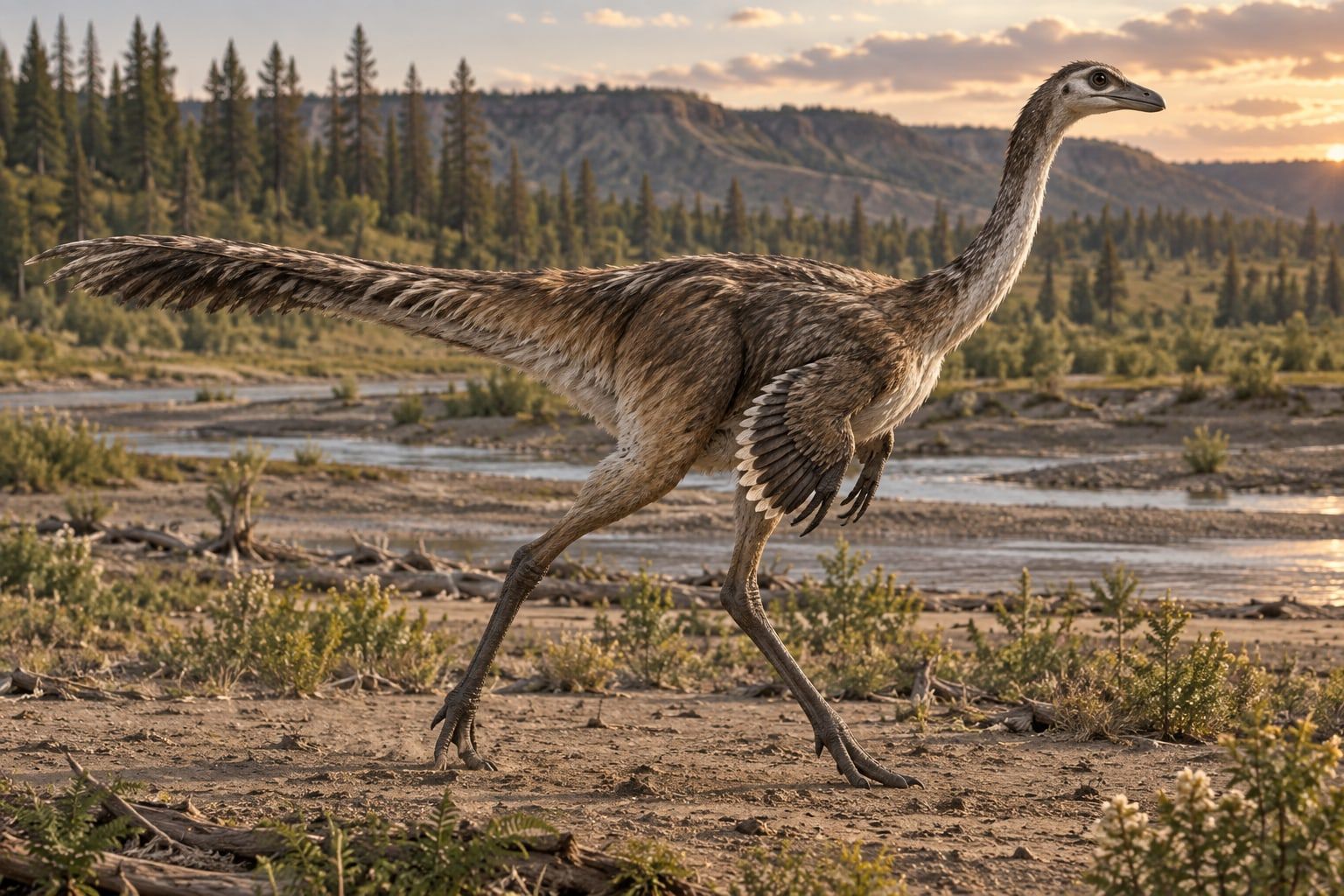
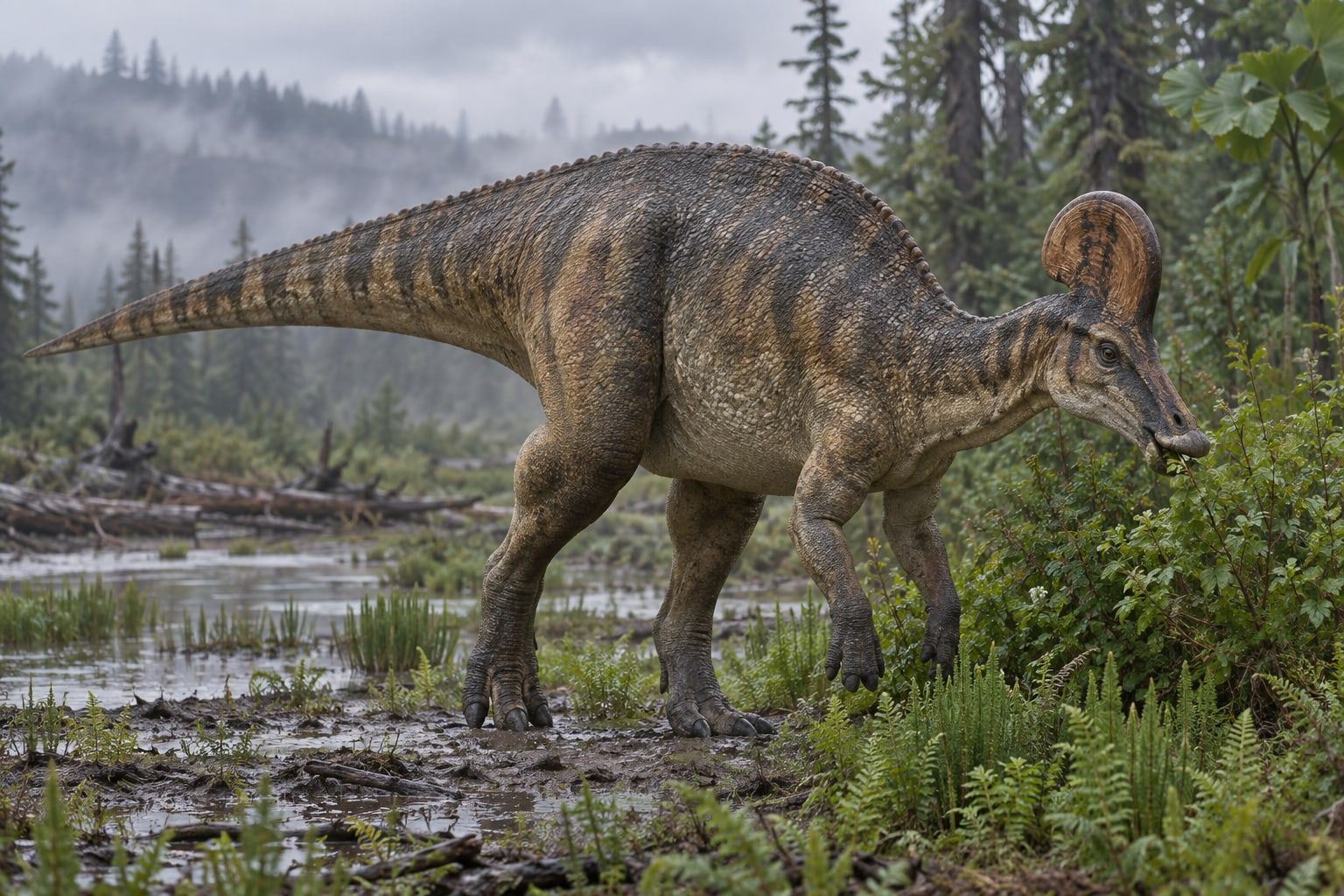
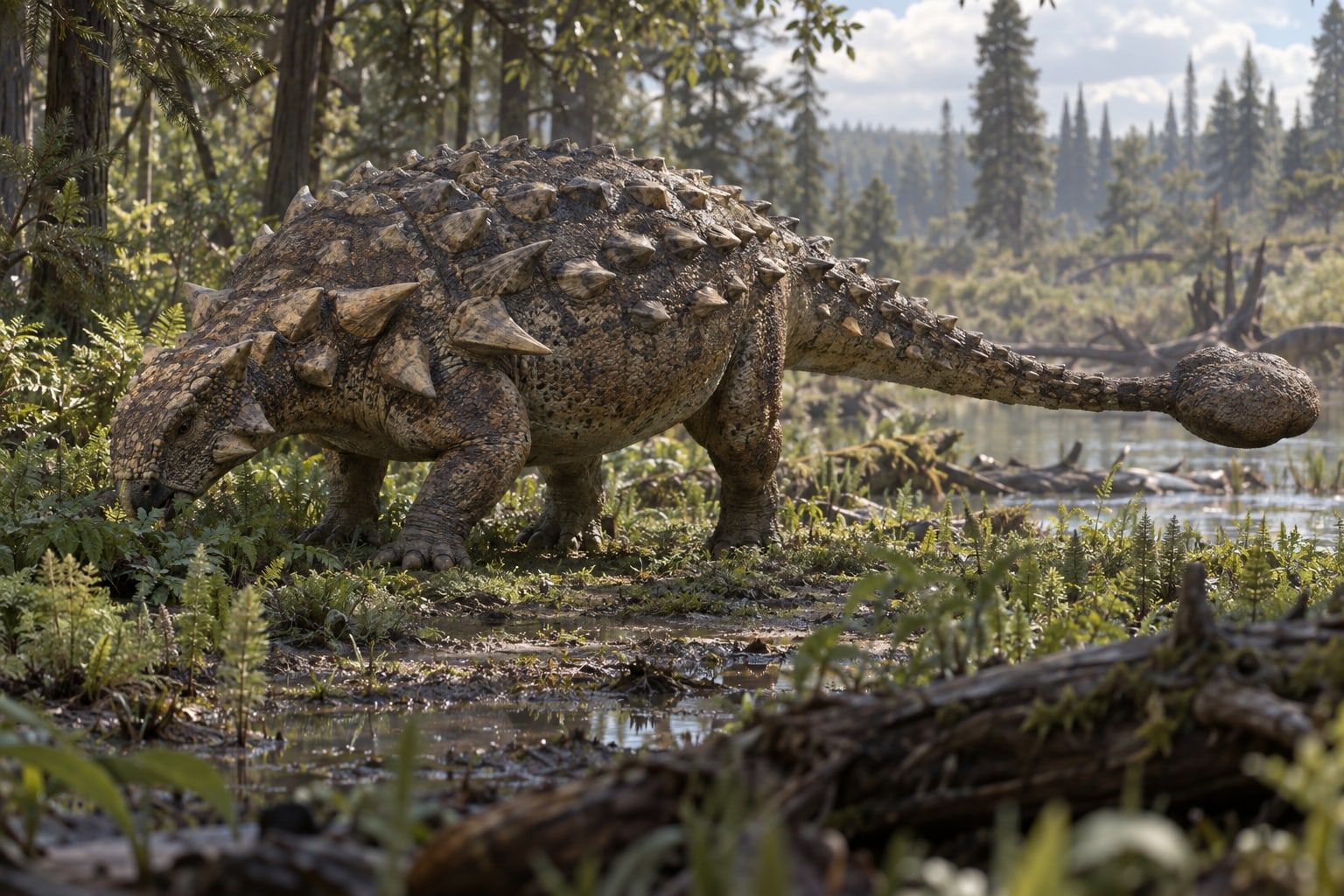
It shared its floodplain habitat with the horned Achelousaurus and Einiosaurus, the armored Euoplocephalus, and predators including Daspletosaurus and Troodon.
How it was found
Horner and Makela named Maiasaura in 1979, after finding a nesting site in Montana with eggs, hatchlings, and adults together. Only 5 finds of the genus are formally recorded, but the original nesting site remains one of the most important discoveries in dinosaur research.
Lived alongside
Found in the same rock formations
Close relatives
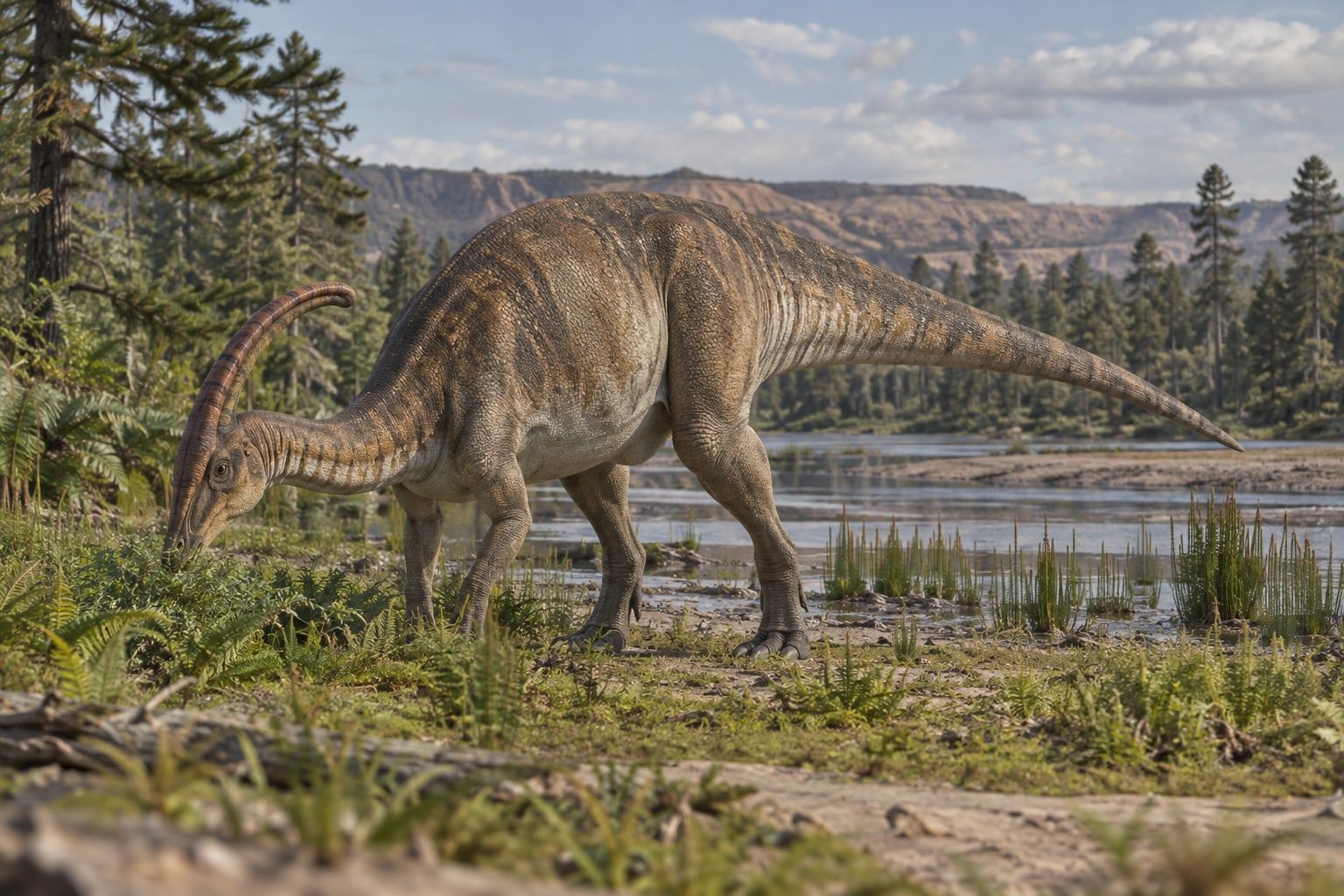
Other members of Hadrosauridae
Sources: WikidataNamed in: J. R. Horner and R. Makela. 1979. Nest of juveniles provides evidence of family structure among dinosaurs. Nature 282:296-298