Outline: a typical ceratopsian
Pentaceratops
PEN-tuh-SER-uh-tops
"five-horned face"
- Lived
- 84 to 66 million years ago, Late Cretaceous
- Diet
- Herbivore
- Length
- about 6.8 m (22 ft)
- Group
- Ceratopsians, Ceratopsidae
- Found in
- United States
- Named by
- Osborn 1923
Size comparison
To scale

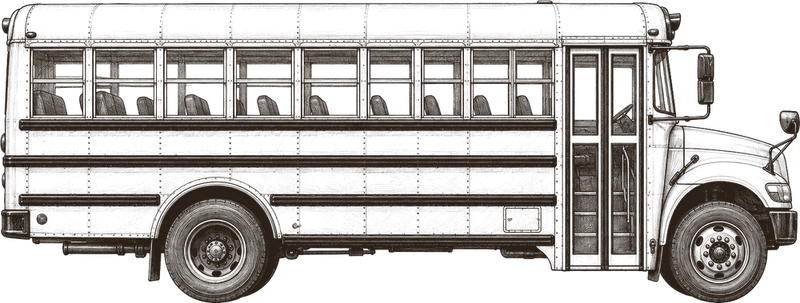
Scale in metersOutline: typical ceratopsian shape
Where its fossils were found
The evidence
Today
75 million years ago
Field notes
About Pentaceratops
What it was like
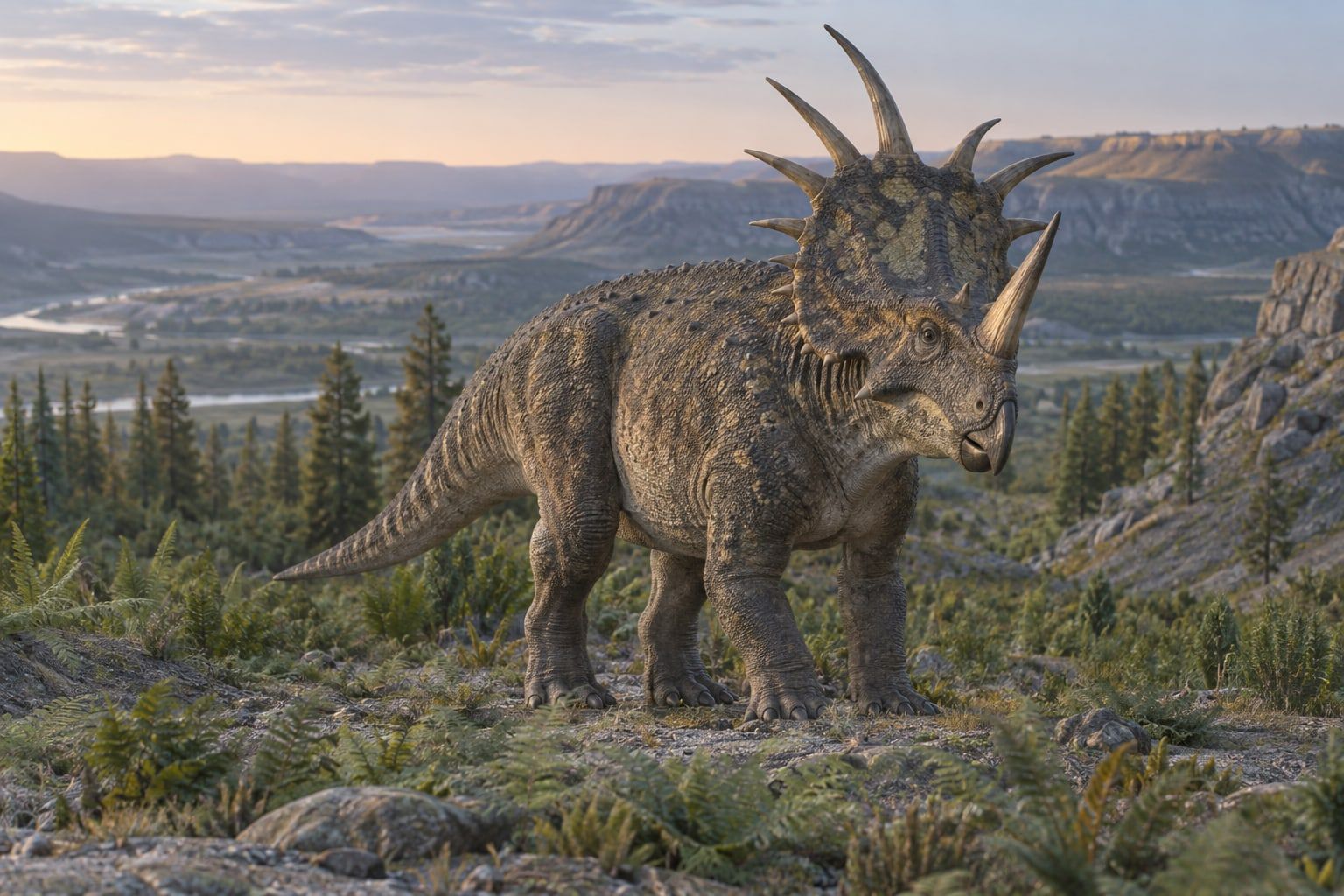
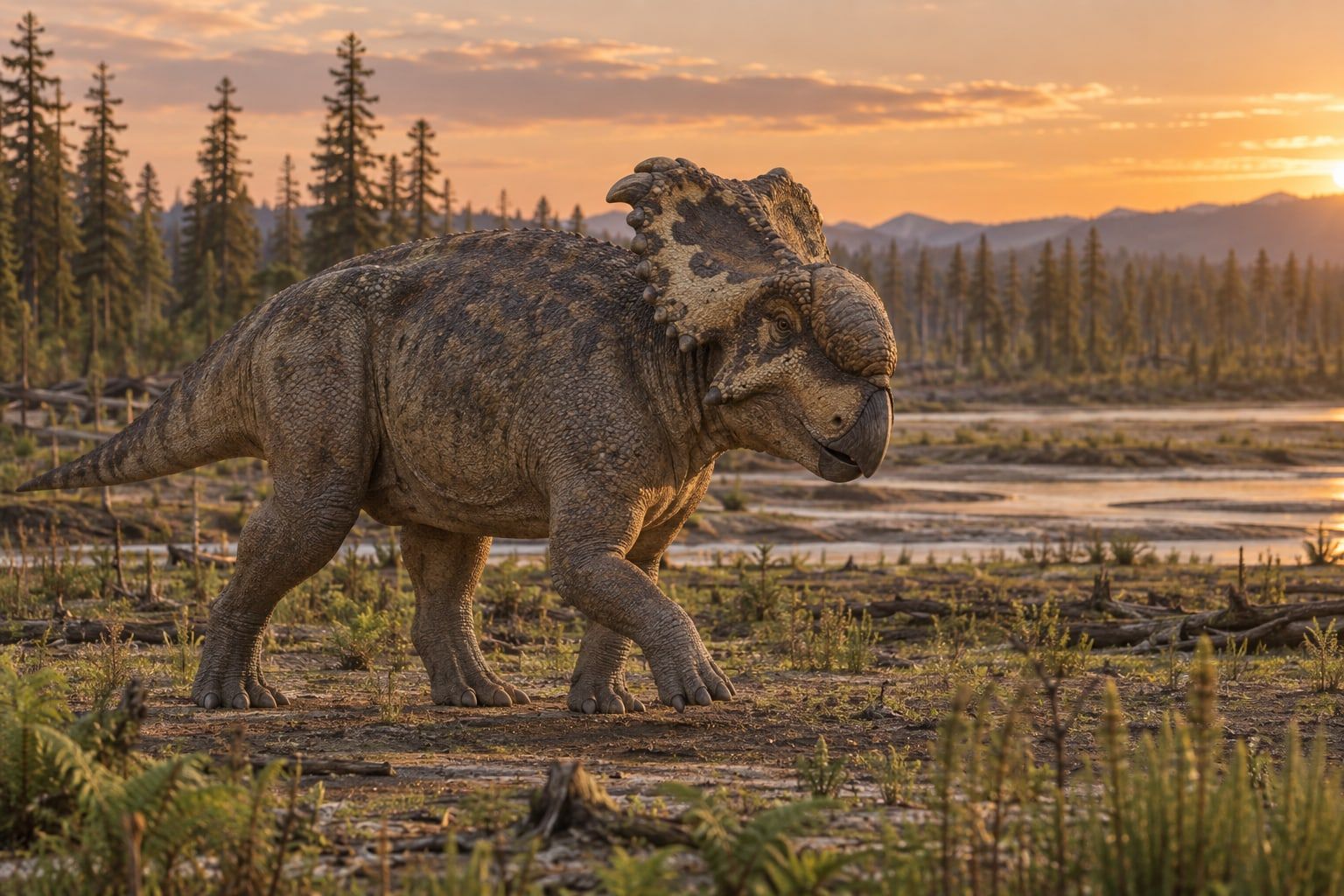
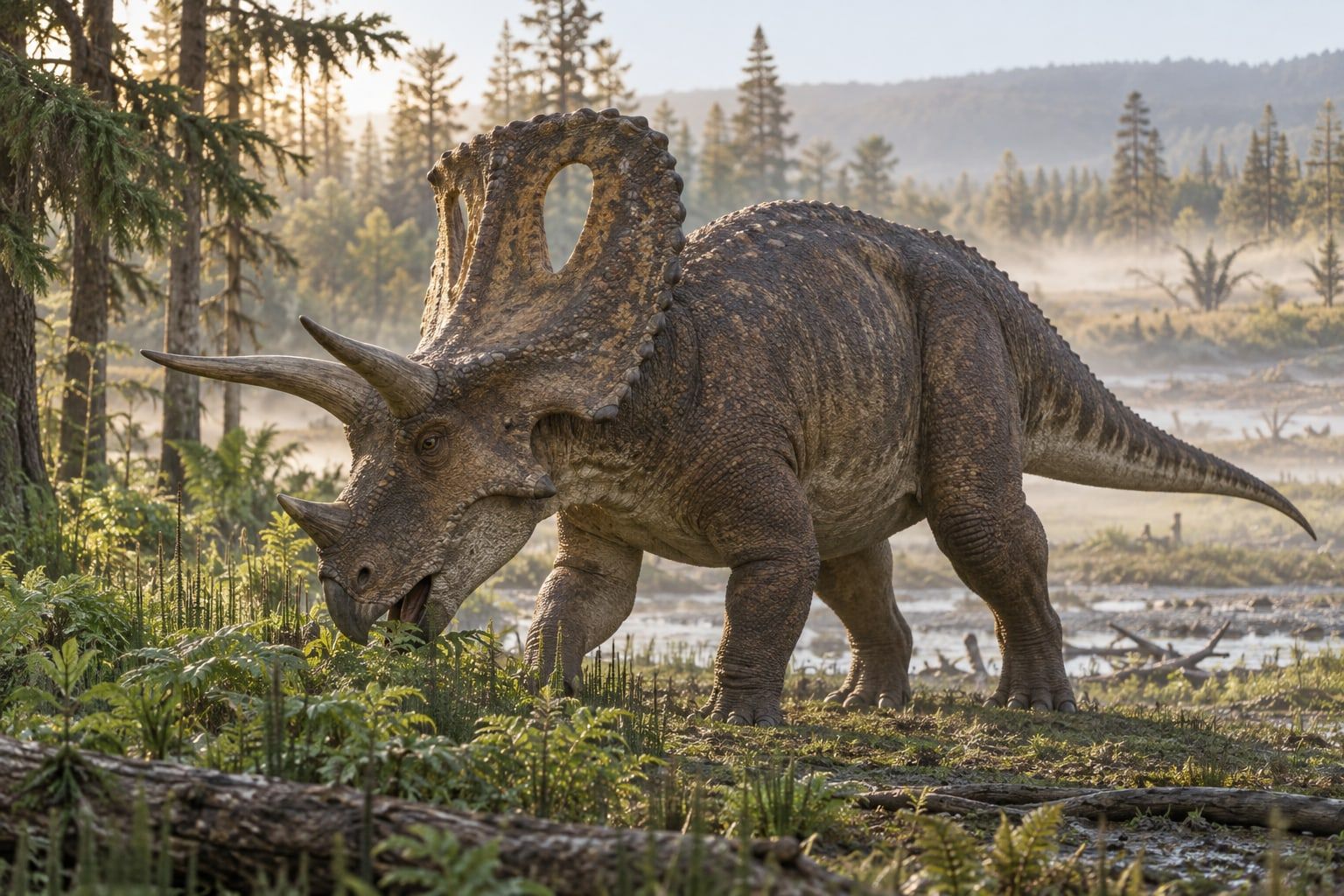
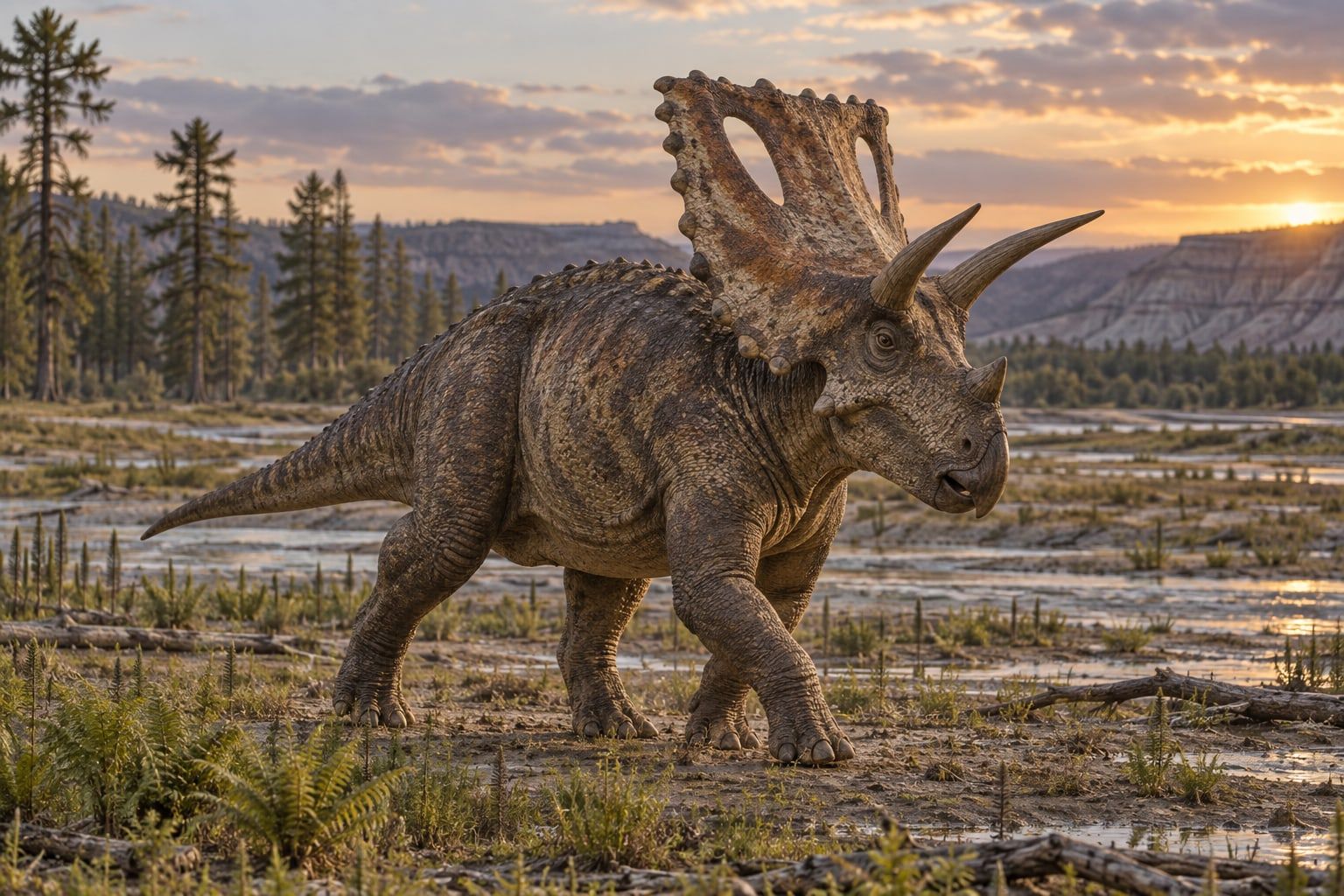
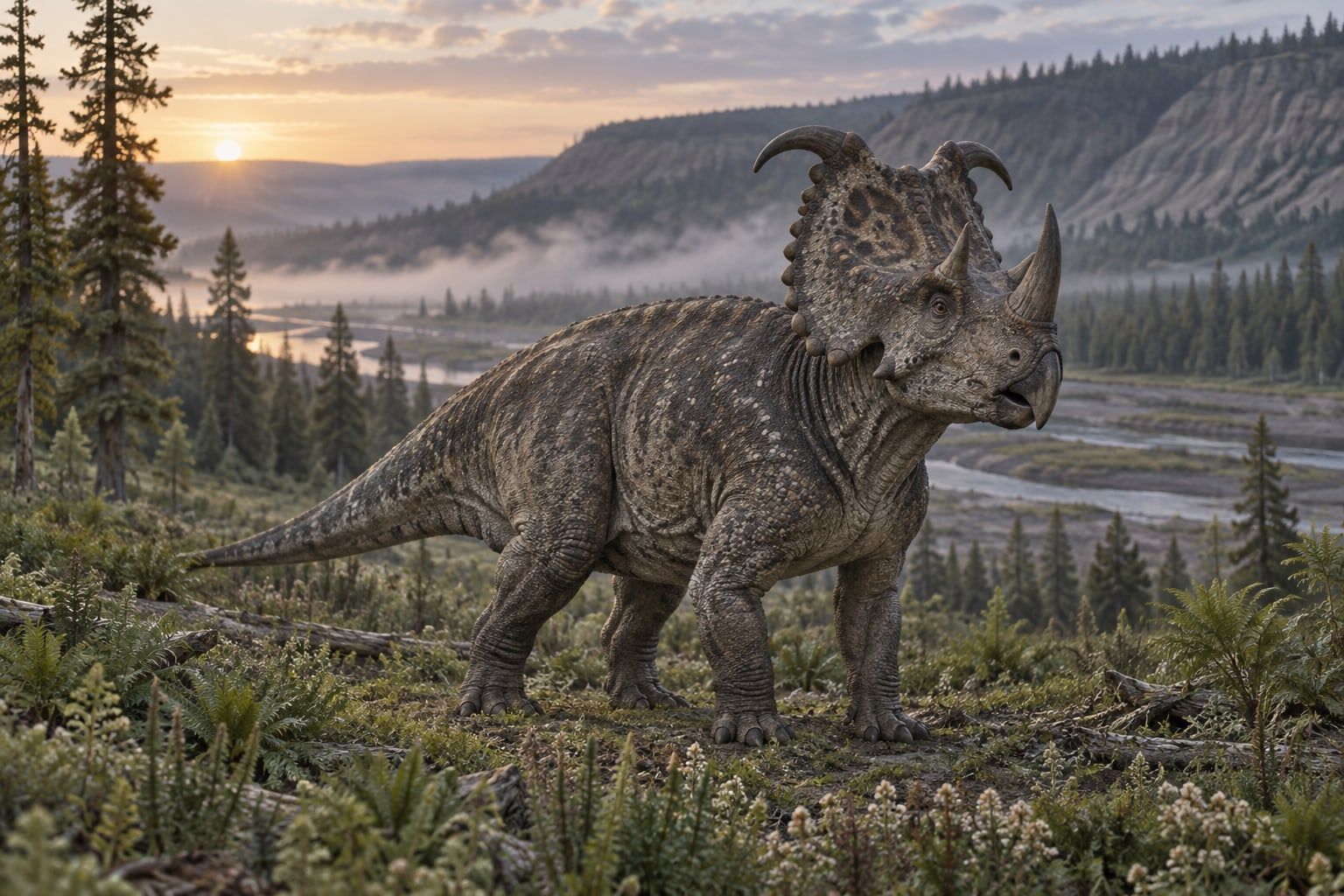
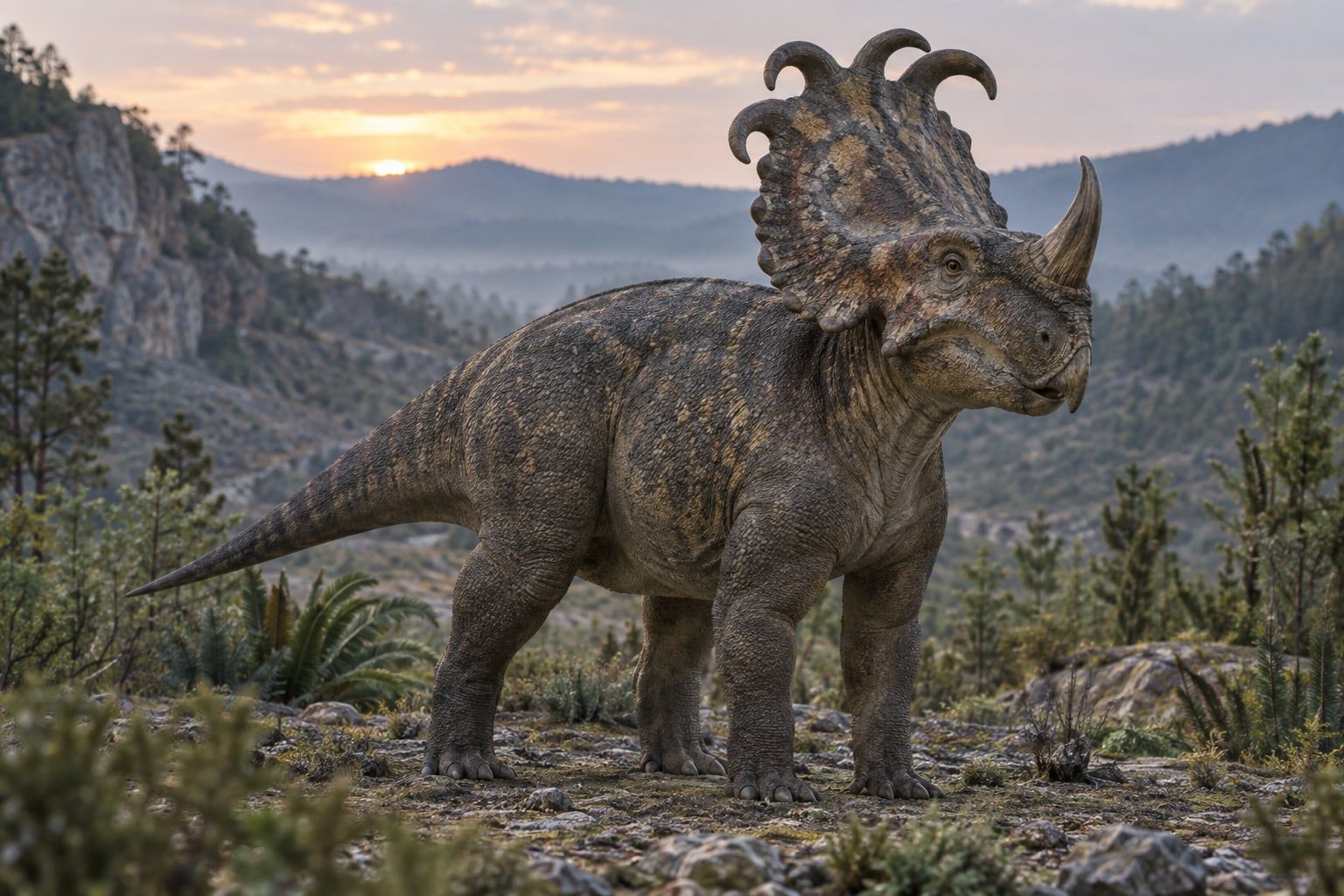
Pentaceratops was a horned plant eater about 6.8 meters (22 feet) long, with one of the largest skulls of any land animal. It had two long brow horns, a short nose horn and a huge frill edged with small points.
Its name means five-horned face. The extra two horns are really pointed cheekbones, one under each eye.
Its world
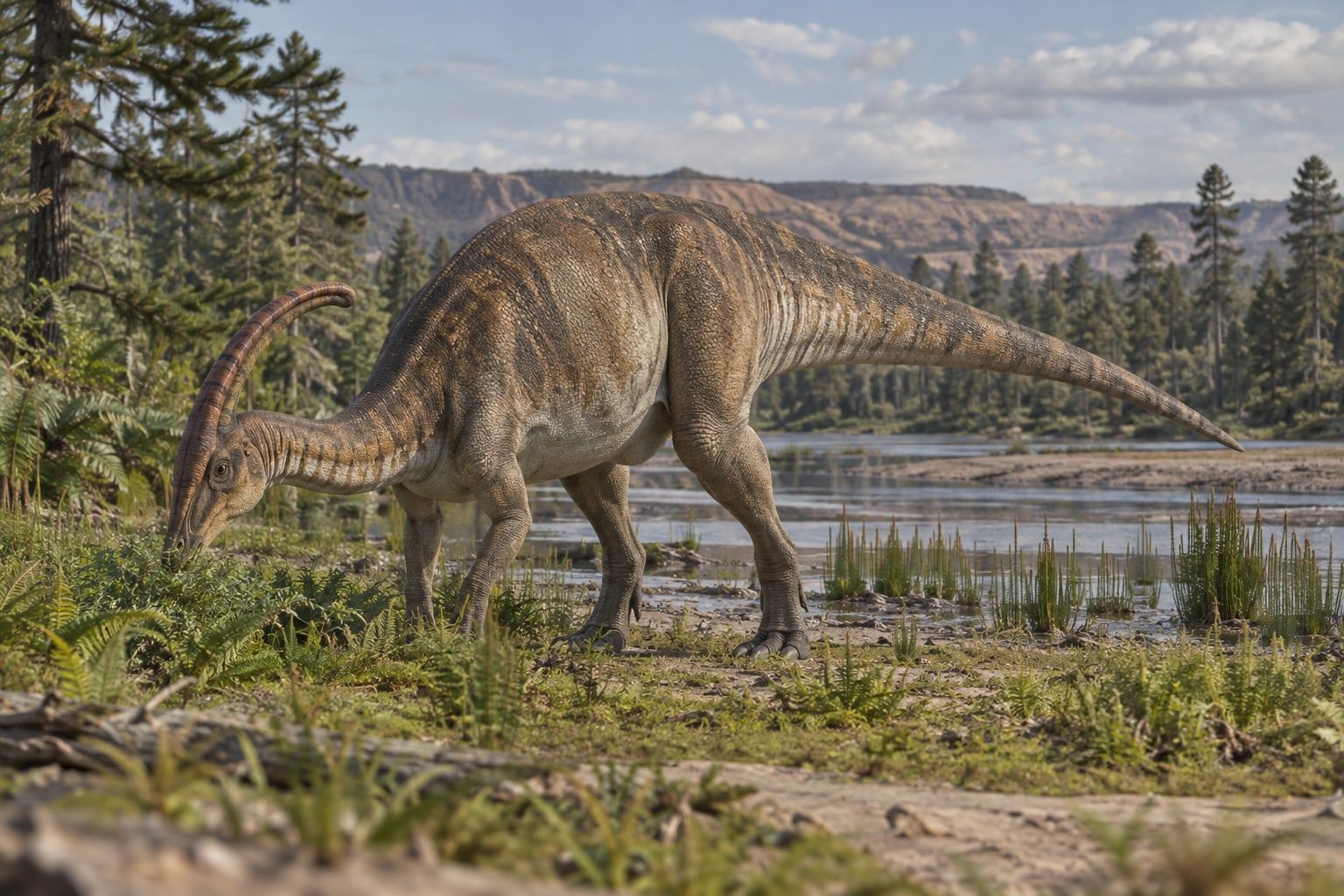
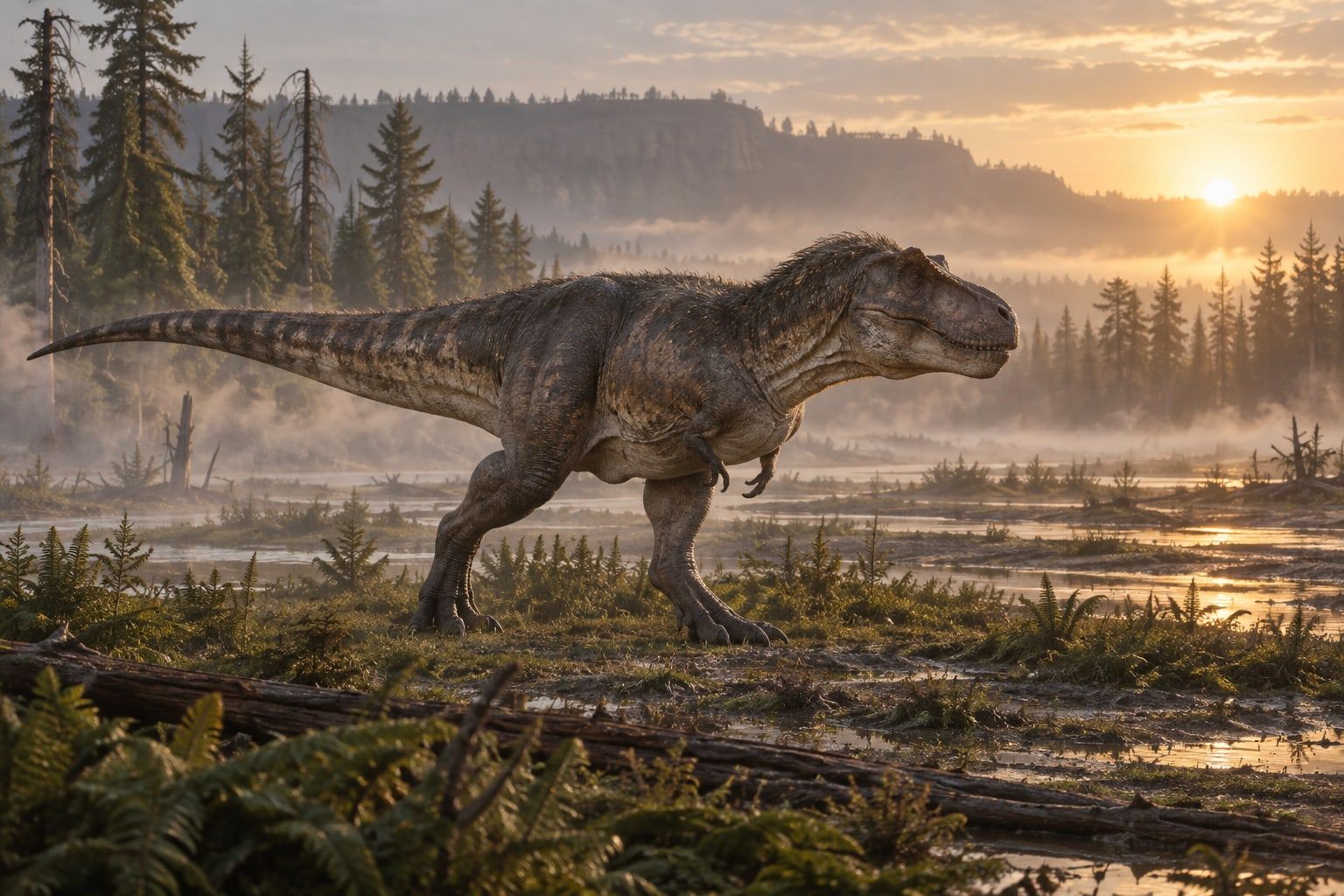
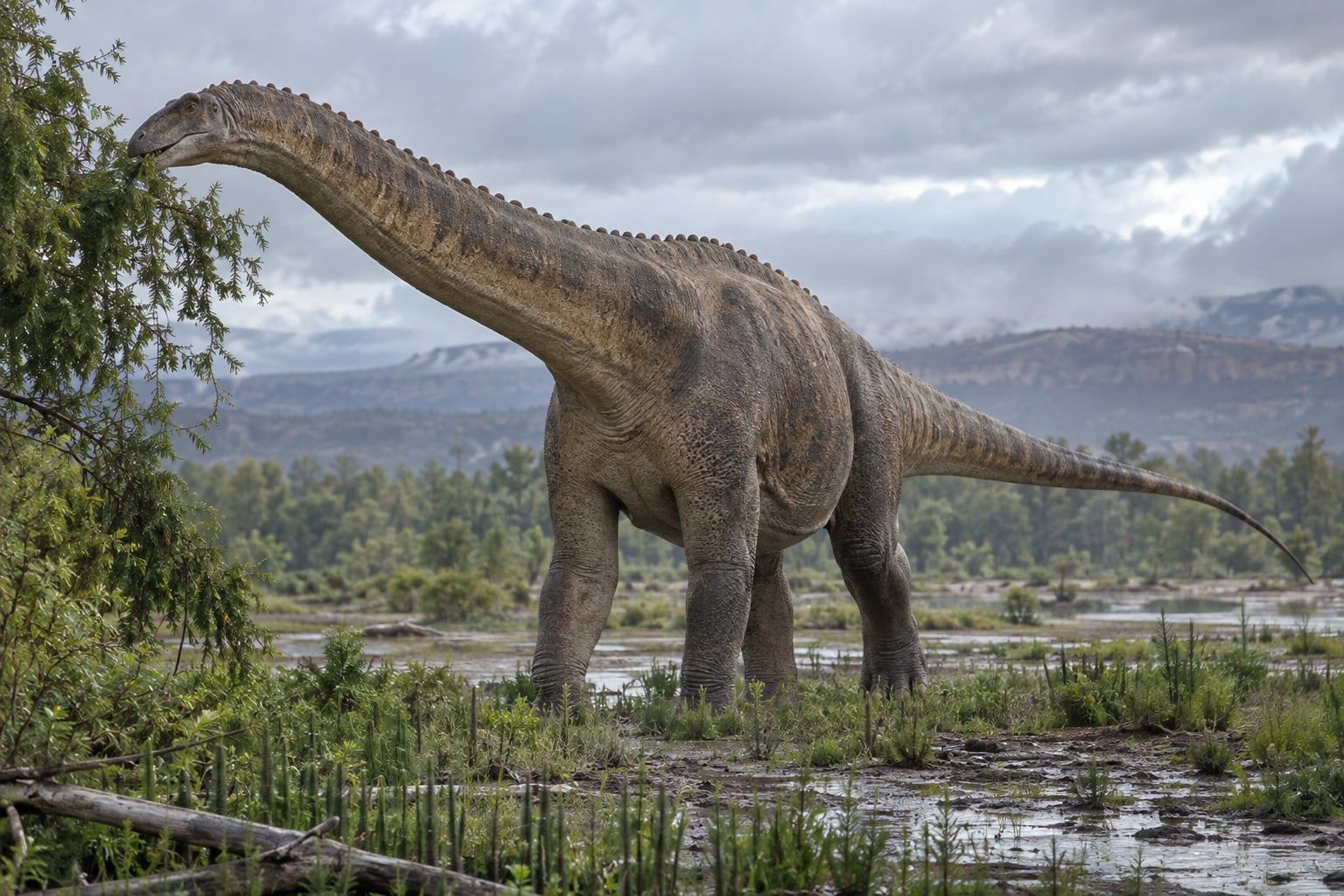
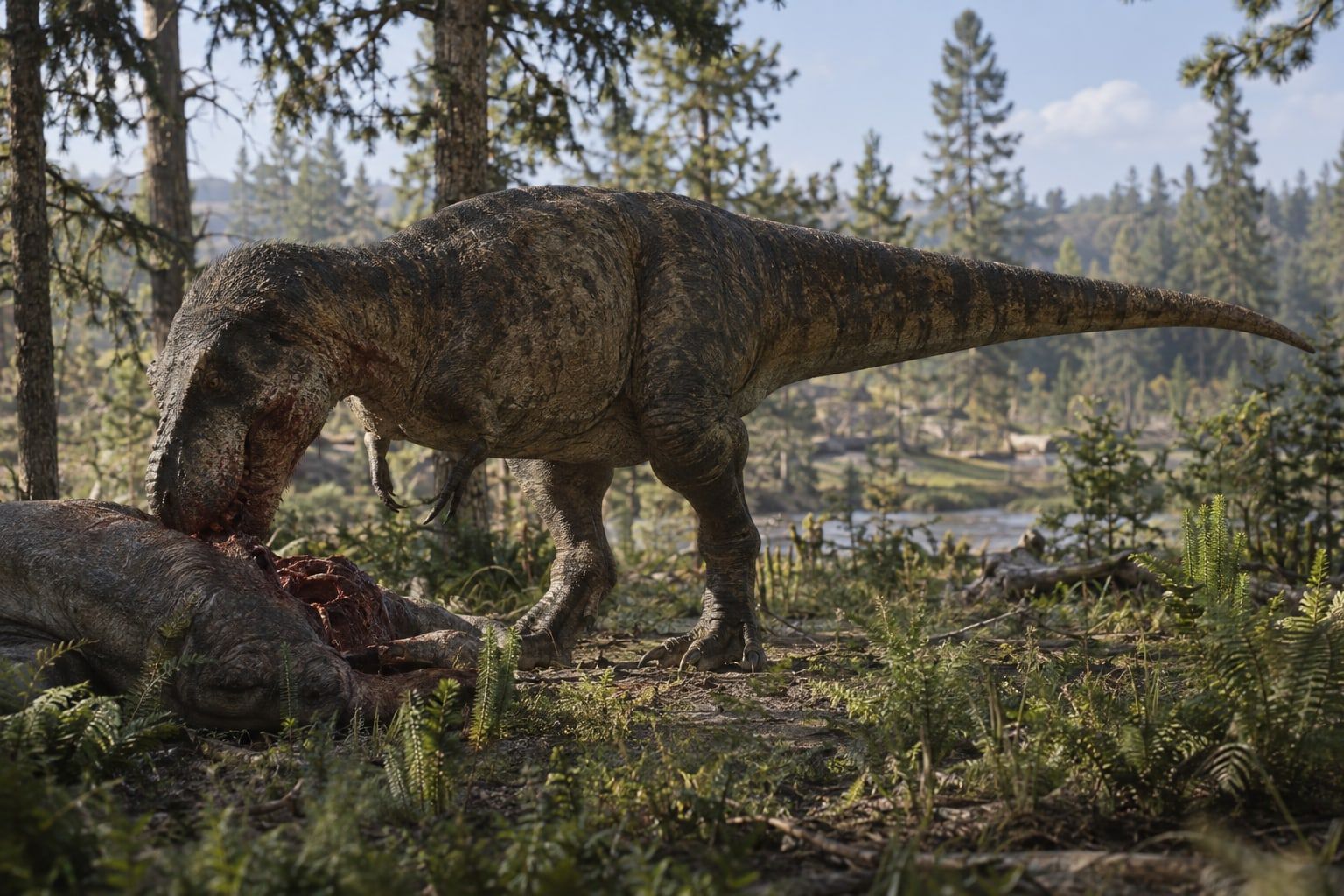
It lived in the Late Cretaceous, mostly in what is now New Mexico, with some remains from Colorado. Its fossils come from the Kirtland and Fruitland formations, where it lived with the duck-bills Parasaurolophus and Kritosaurus, the dome-headed Stegoceras, and the tyrannosaur Bistahieversor.
How it was found
Osborn named Pentaceratops in 1923. Eight finds are known, including several skulls, so its anatomy is well understood.
Lived alongside
Found in the same rock formations
Close relatives
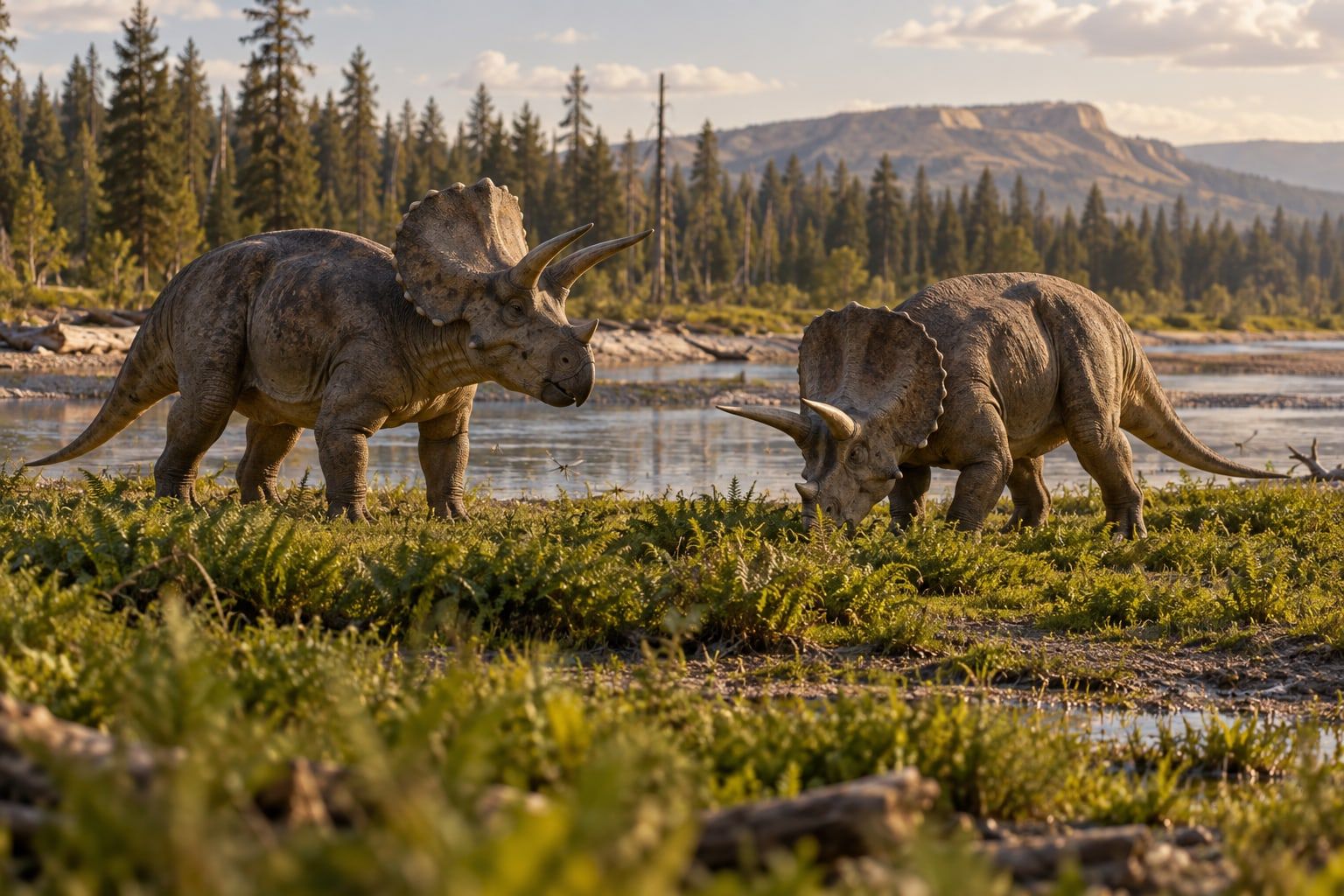
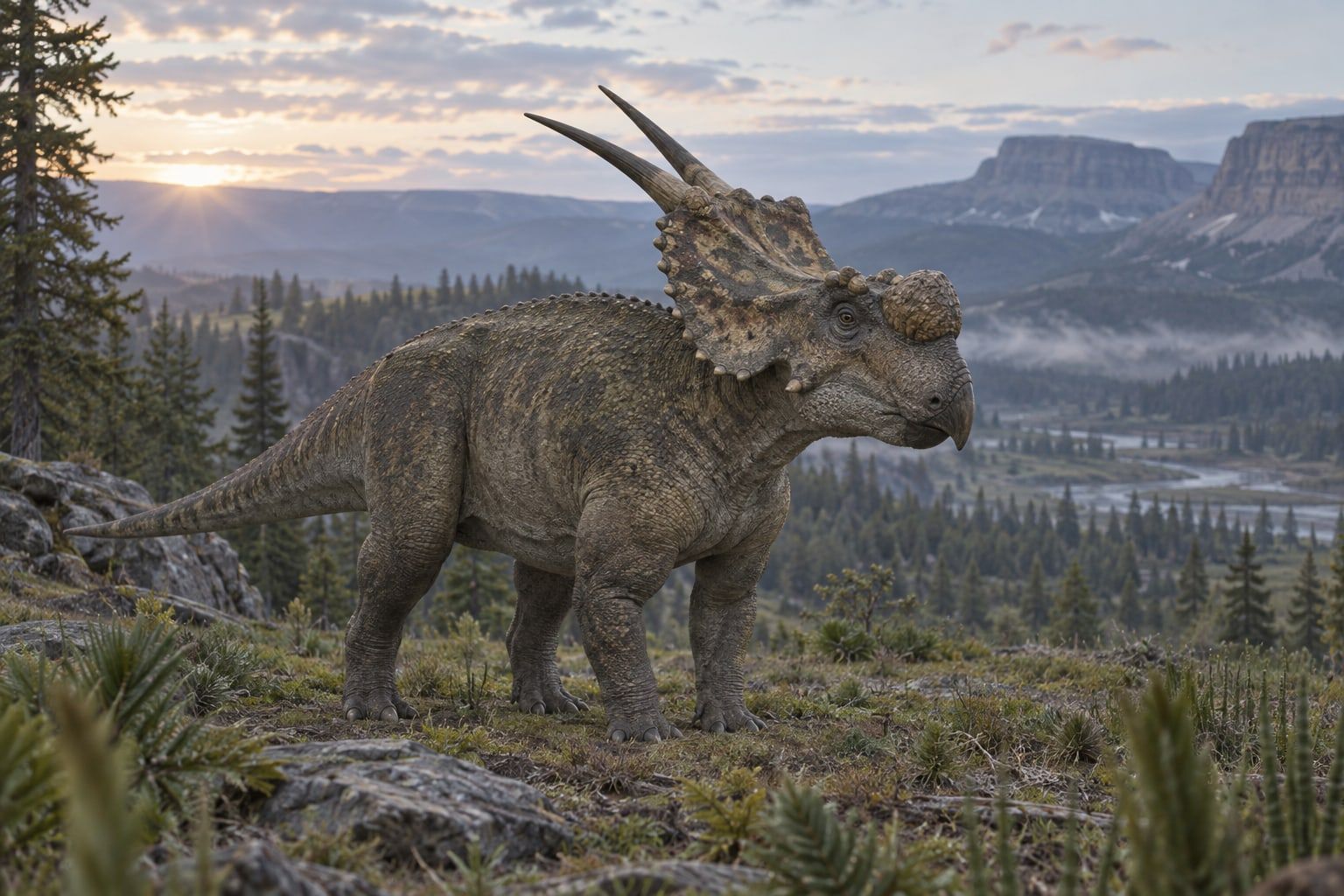
Other members of Ceratopsidae
Sources: WikidataNamed in: H. F. Osborn. 1923. A new genus and species of Ceratopsia from New Mexico, Pentaceratops sternbergii. American Museum Novitates 93:1-3