Notohypsilophodon
"southern Hypsilophodon"
- Lived
- 101 to 90 million years ago, Late Cretaceous
- Diet
- Herbivore
- Group
- Ornithopods
- Found in
- Argentina
- Named by
- Martínez 1998
Where its fossils were found
The evidence
Today

95 million years ago
Habitat
It lived on a river floodplain with conifers and flowering plants. Other dinosaurs from the Bajo Barreal Formation include Epachthosaurus, Sarmientosaurus and Xenotarsosaurus.
Field notes
About Notohypsilophodon
What it was like
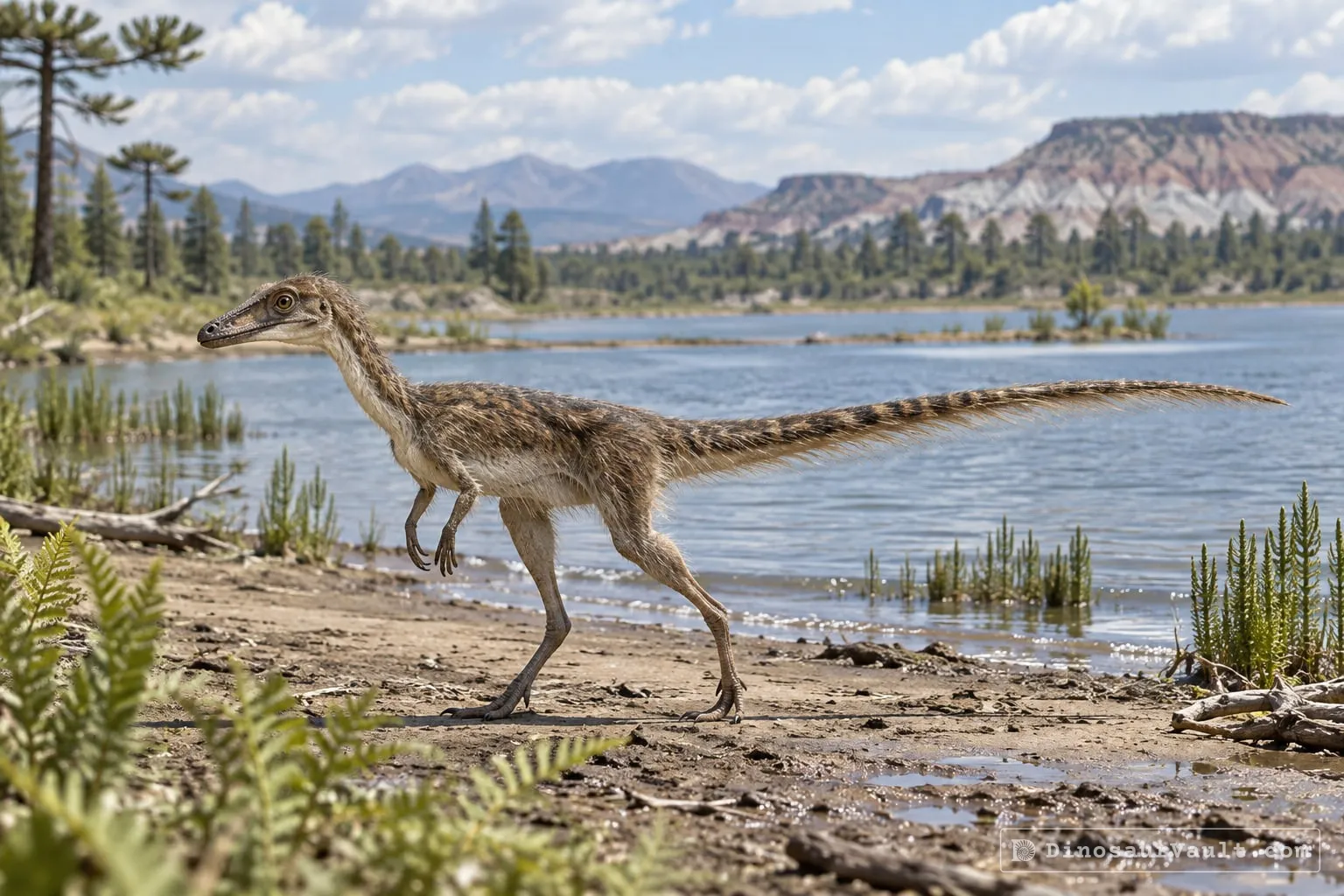
Notohypsilophodon was a small, two-legged plant eater known from a partial skeleton. It was named as a southern relative of Hypsilophodon, but its exact place among the ornithopods is debated.
Its world
It lived in the Late Cretaceous in what is now Argentina. Its bones come from the Bajo Barreal Formation, where it shared the land with the titanosaurs Epachthosaurus and Sarmientosaurus.
How it was found
Martínez named it in 1998 from one find.
Field gallery
More views of Notohypsilophodon
Scenes reconstructed from the available fossil evidence.
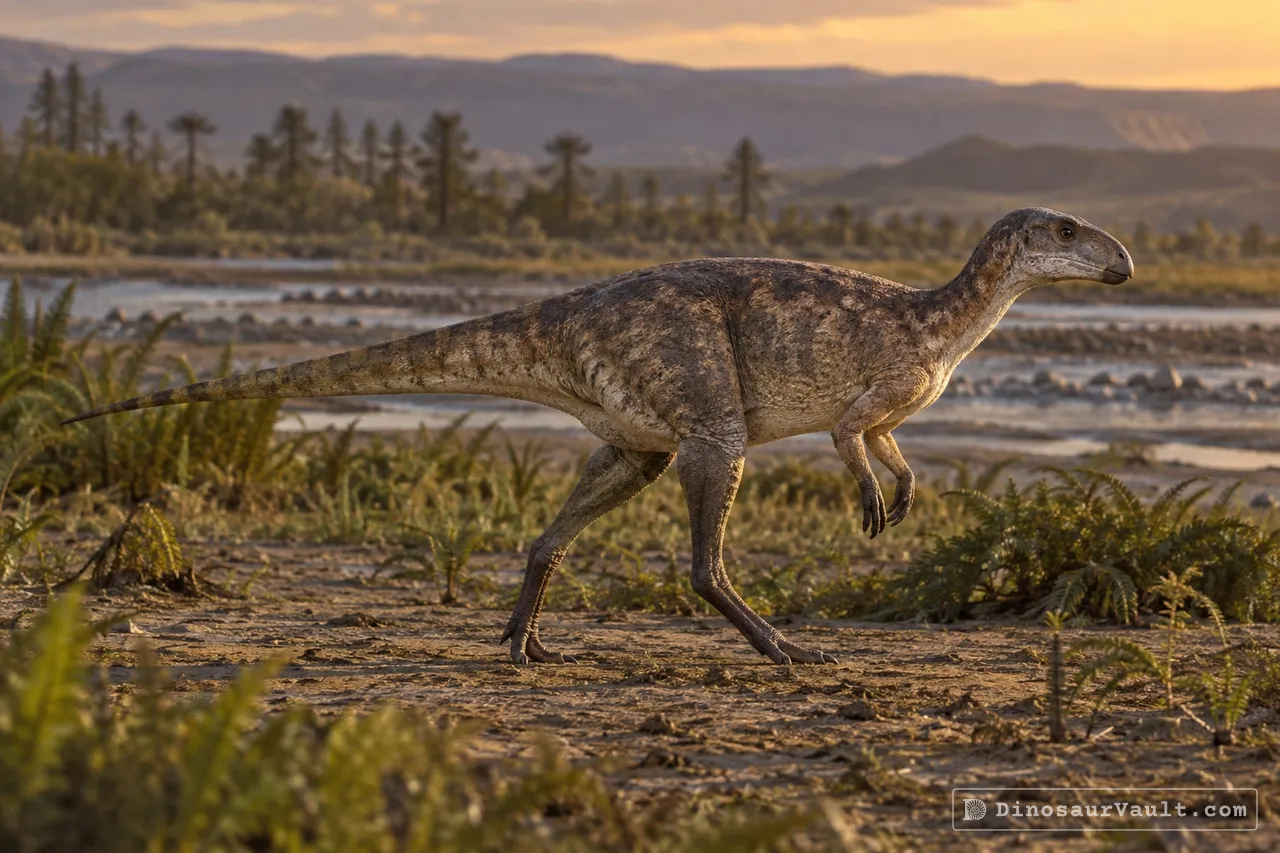
1 of 3
Lived alongside
Found in the same rock formations
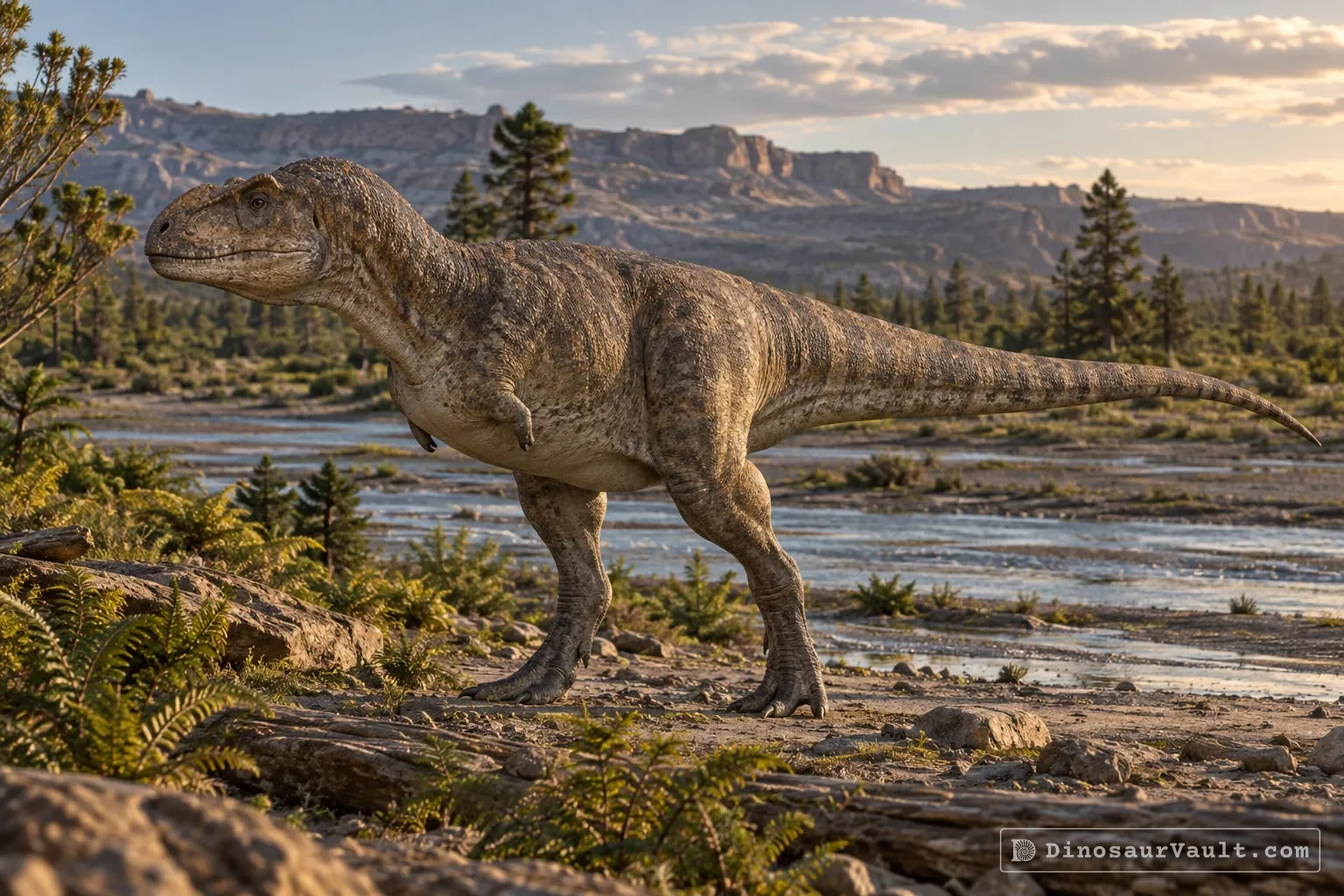
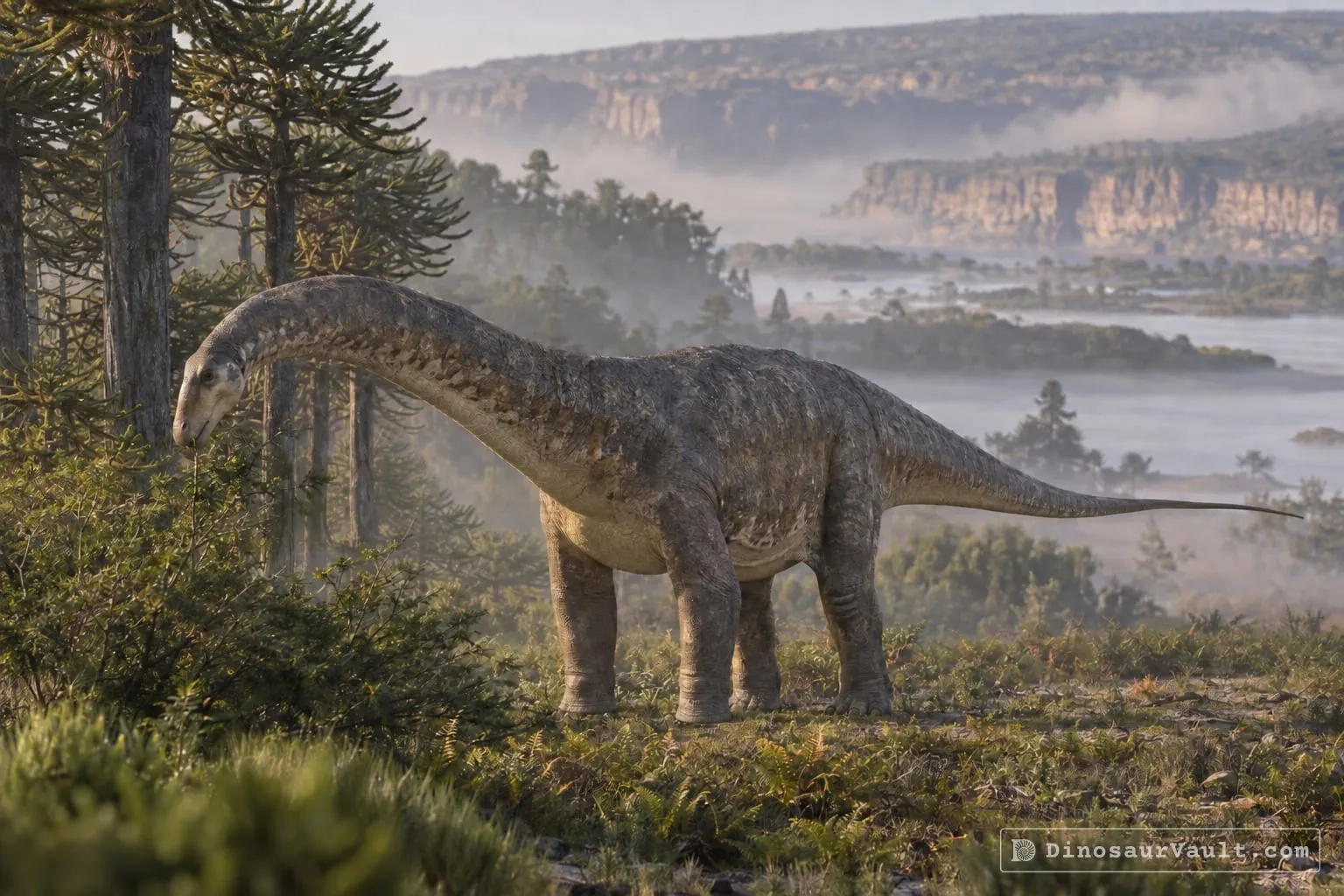
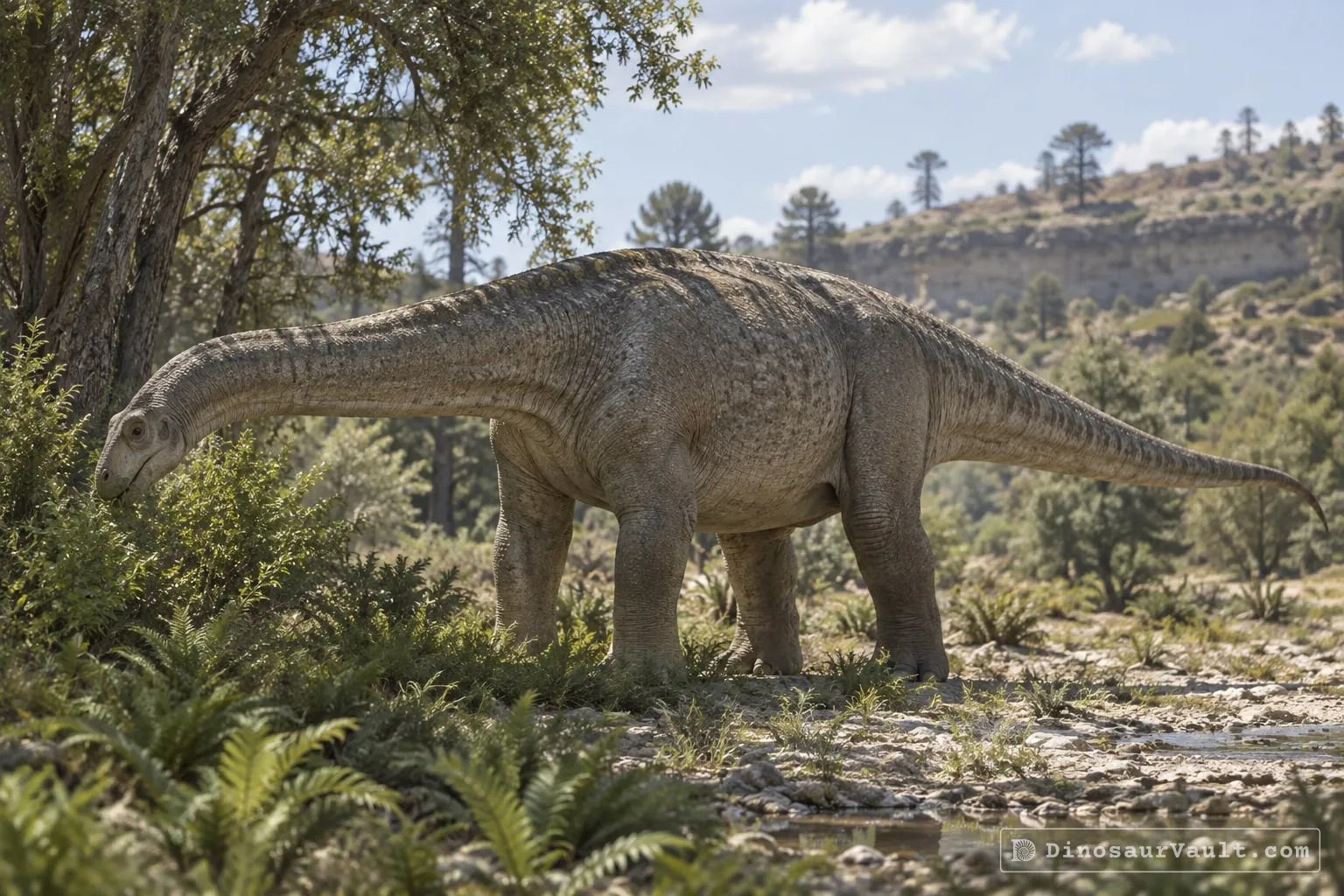
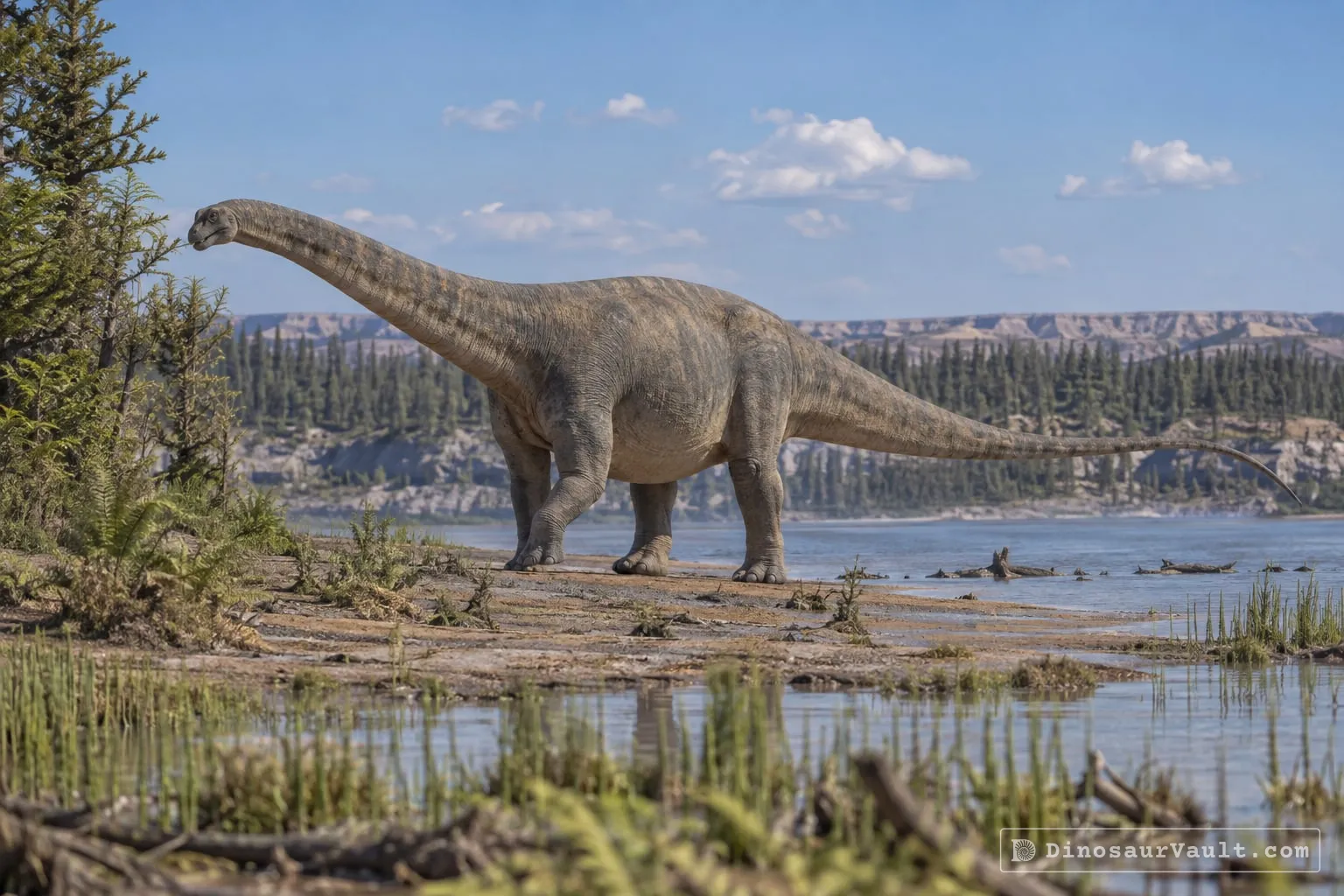
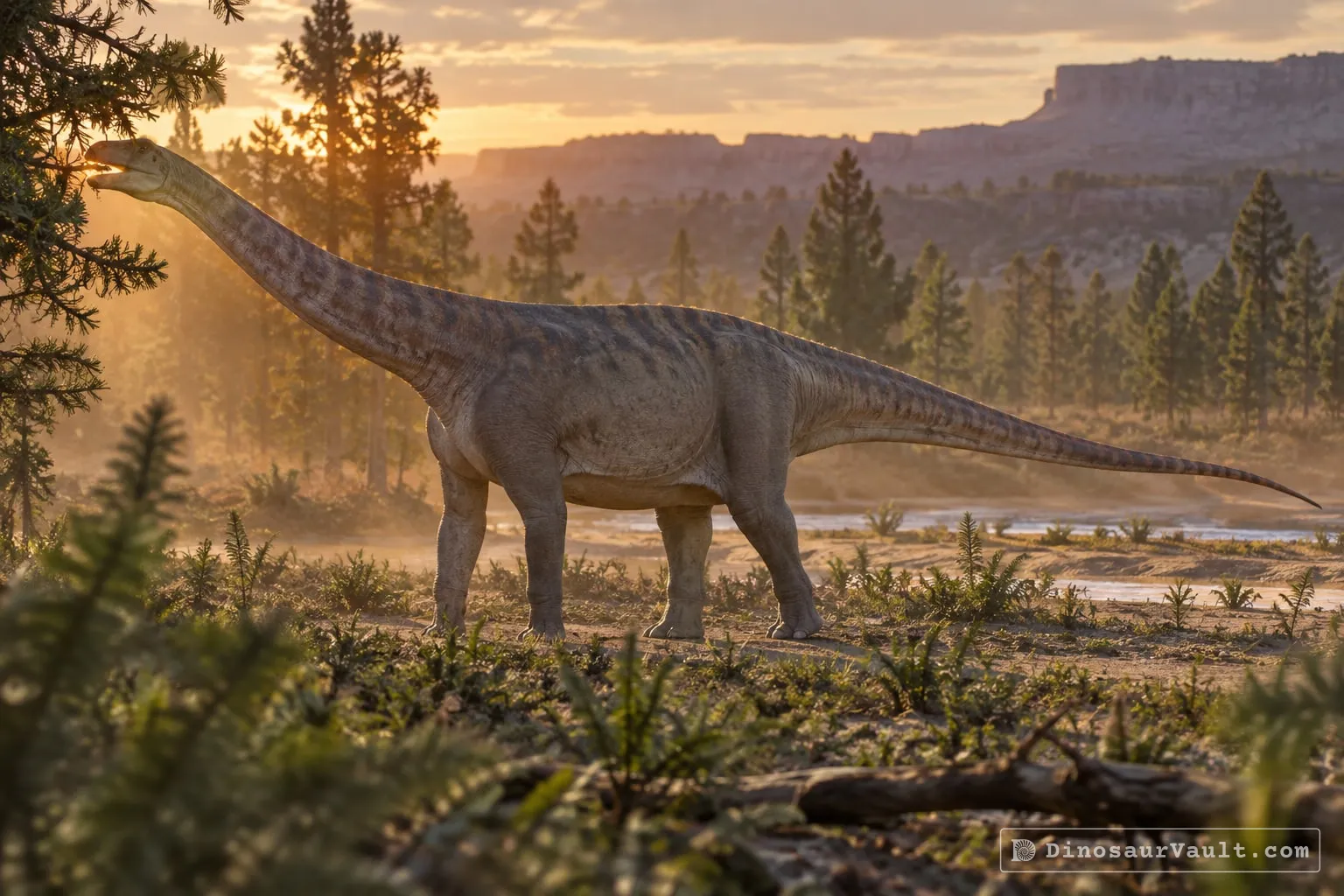


A rock formation can hold fossils laid down millions of years apart, so not every animal here met Notohypsilophodon.
The evidence
The science behind Notohypsilophodon
Which parts of the picture come from its own bones, and which come from its relatives.
From its own fossils
- A partial skeleton preserves vertebrae from the neck to the base of the tail, ribs, part of a shoulder blade and coracoid, an upper arm bone, both ulnae, part of a thigh bone, both shins, ankle bones and toe bones. No skull or hip bones were found.
- The upper arm bone is slender, bowed and slightly twisted, with a much reduced crest for the shoulder muscles. Its shinbone is straight and slender, with a distinctive bulge near the upper end.
- Its toe claws are pointed and triangular, with flat undersides.
Borrowed from relatives
- The missing head is restored from Lesothosaurus, the neck and the end of the tail from Agilisaurus, and the hips from Hexinlusaurus.
- Its missing radius and the long bones of its feet follow Agilisaurus, and its hands follow Minimocursor, while its own slender limb bones and toe claws set their shape.
Still unknown
- The shape of its skull and teeth.
- Its exact place in the ornithopod family tree. It was first placed among the hypsilophodontids, which are no longer treated as a natural group.
- Whether the stones found with its bones were swallowed to help process food.
Discovery timeline
- 1998Named itMartínez
- 2014RedescriptionIBIRICU et al.
- 2016Same rocksMartínez et al.
Key papers
The research behind what we know of Notohypsilophodon
Named it
Named a small ornithopod from a partial skeleton with distinctive leg and ankle bones.
Notohypsilophodon comodorensis gen. et sp. nov. un Hypsilophodontidae (Ornitischia: Ornithopoda) del Cretácico Superior de Chubut, Patagonia central, Argentina [Notohypsilophodon comodorensis gen. et sp. nov., a Hypsilophodontidae (Ornithischia: Ornithopoda) from the Upper Cretaceous of Chubut, central Patagonia, Argentina]. Acta Geologica Leopoldensia 21: 119-135
No link available
Redescription
Reexamined the skeleton and strengthened its diagnosis, finding a reduced rather than missing arm crest and pointed, flat-bottomed toe claws. It treated the possible stomach stones as weak evidence.
<strong>A reappraisal of <em>Notohypshilophodon</em> <em>comodorensis</em> (Ornithischia: Ornithopoda) from the Late Cretaceous of Patagonia, Argentina</strong>. Zootaxa 3786: 401
Read the paper : <strong>A reappraisal of <em>Notohypshilophodon</em> <em>comodorensis</em> (Ornithischia: Ornithopoda) from the Late Cretaceous of Patagonia, Argentina</strong> (opens in a new tab)Same rocks
Described the skull of Sarmientosaurus from the same formation and reviewed local dinosaurs, plants and floodplain habitats.
A Basal Lithostrotian Titanosaur (Dinosauria: Sauropoda) with a Complete Skull: Implications for the Evolution and Paleobiology of Titanosauria. PLOS ONE 11: e0151661
Read the paper : A Basal Lithostrotian Titanosaur (Dinosauria: Sauropoda) with a Complete Skull: Implications for the Evolution and Paleobiology of Titanosauria (opens in a new tab)
Close relatives
Other members of Elasmaria


Sources: Wikidata