Katepensaurus
"hole lizard"
Type species Katepensaurus goicoecheai
- Lived
- 101 to 90 million years ago, Late Cretaceous
- Diet
- Herbivore
- Group
- Sauropods, Rebbachisauridae
- Found in
- Argentina
- Named by
- Ibiricu et al. 2013
Where its fossils were found
The evidence
Today

95 million years ago
Habitat
It lived on a floodplain crossed by branching rivers in Argentina. Other dinosaurs from the Bajo Barreal Formation include Xenotarsosaurus, Epachthosaurus and Sarmientosaurus.
Field notes
About Katepensaurus
What it was like
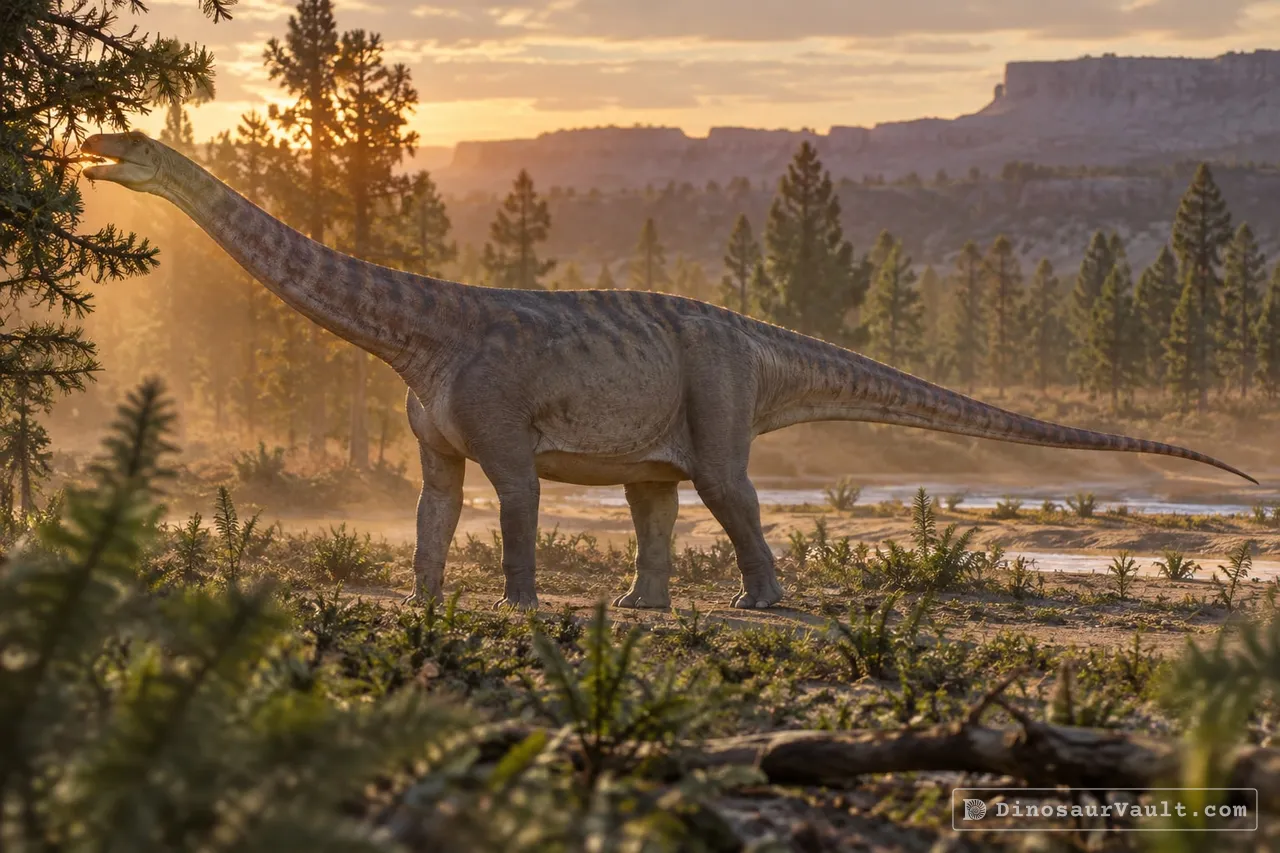
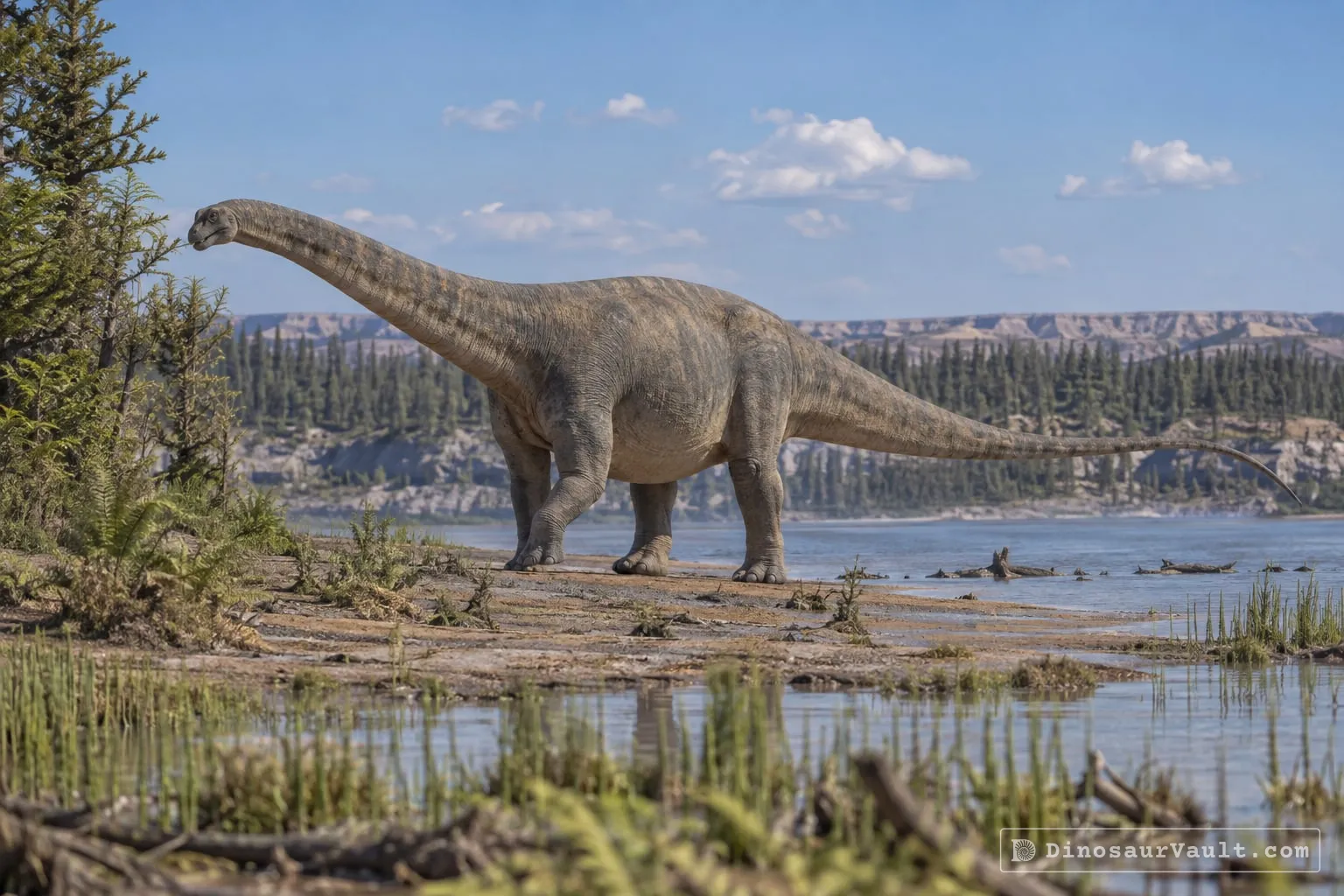
Katepensaurus was a rebbachisaurid, one of the long-necked sauropods. Its exact place within that group remains uncertain. It is known from neck, back and tail vertebrae, with large openings in the back bones that gave it its name.
Its world
It lived in the Late Cretaceous, in what is now Argentina. It comes from the Bajo Barreal Formation, where it shared the land with the abelisaur Xenotarsosaurus and the titanosaurs Epachthosaurus and Sarmientosaurus.
How it was found
Ibiricu and colleagues named Katepensaurus in 2013. The type species is Katepensaurus goicoecheai.
Field gallery
More views of Katepensaurus
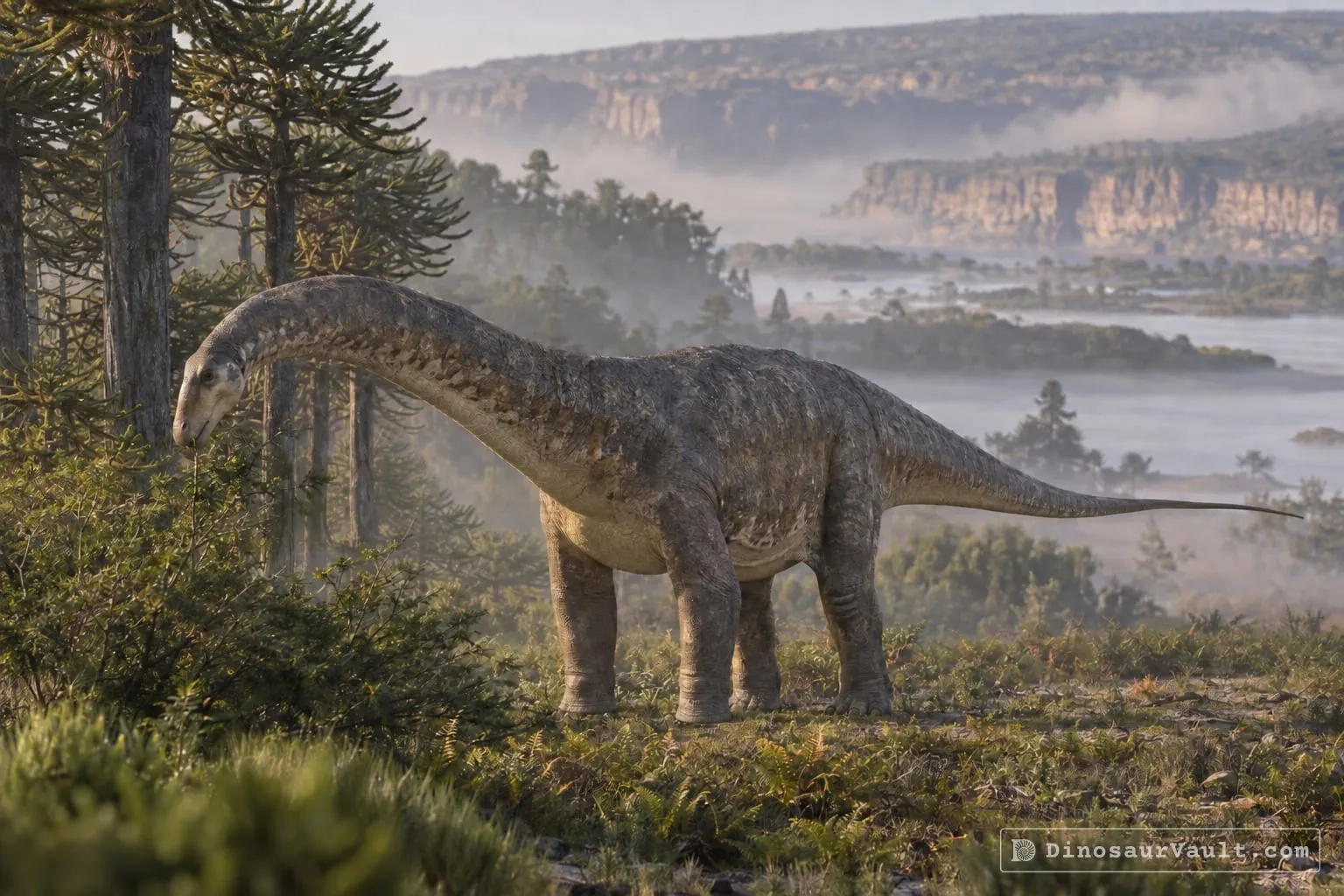
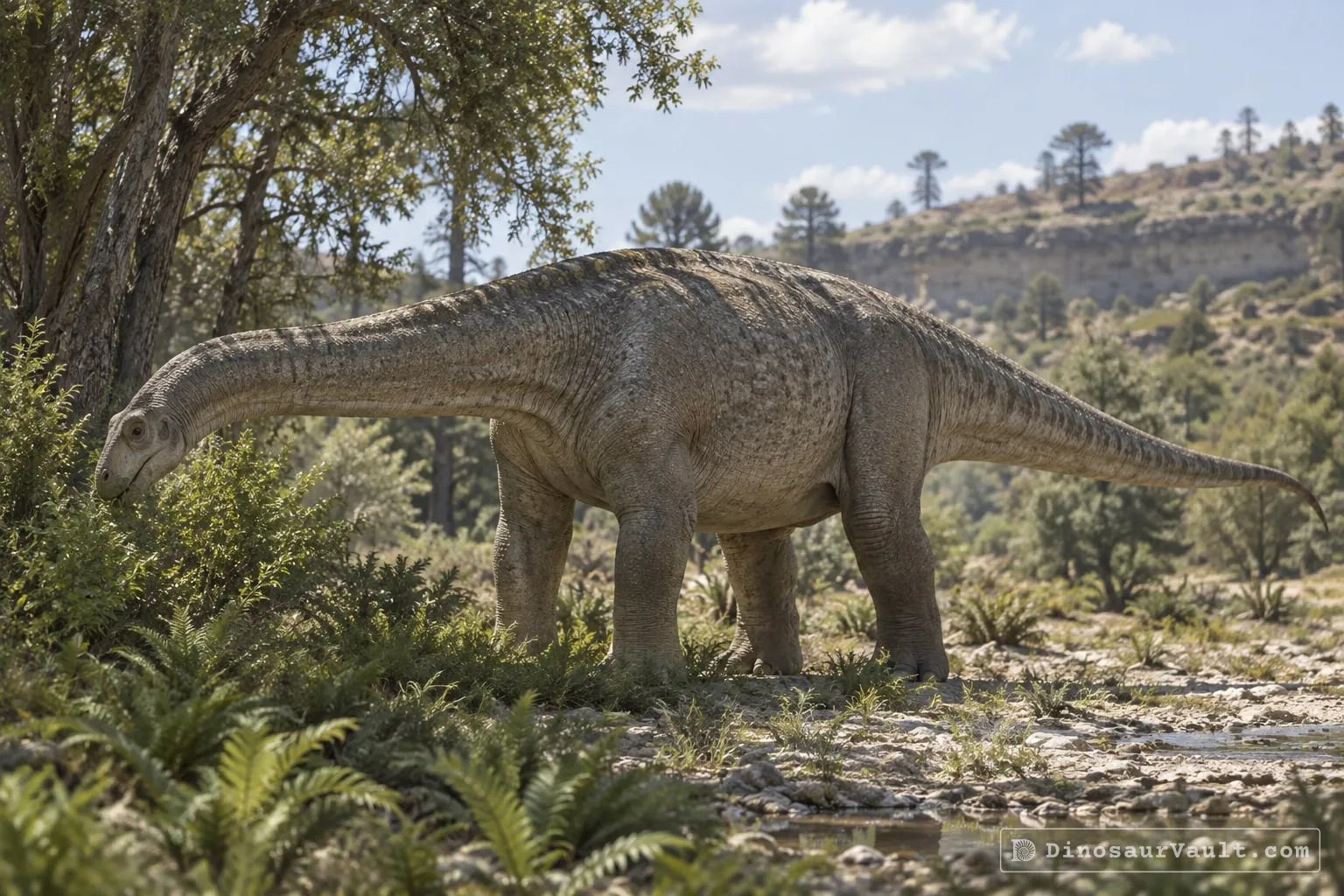
Scenes reconstructed from the available fossil evidence.
1 of 3
Lived alongside
Found in the same rock formations
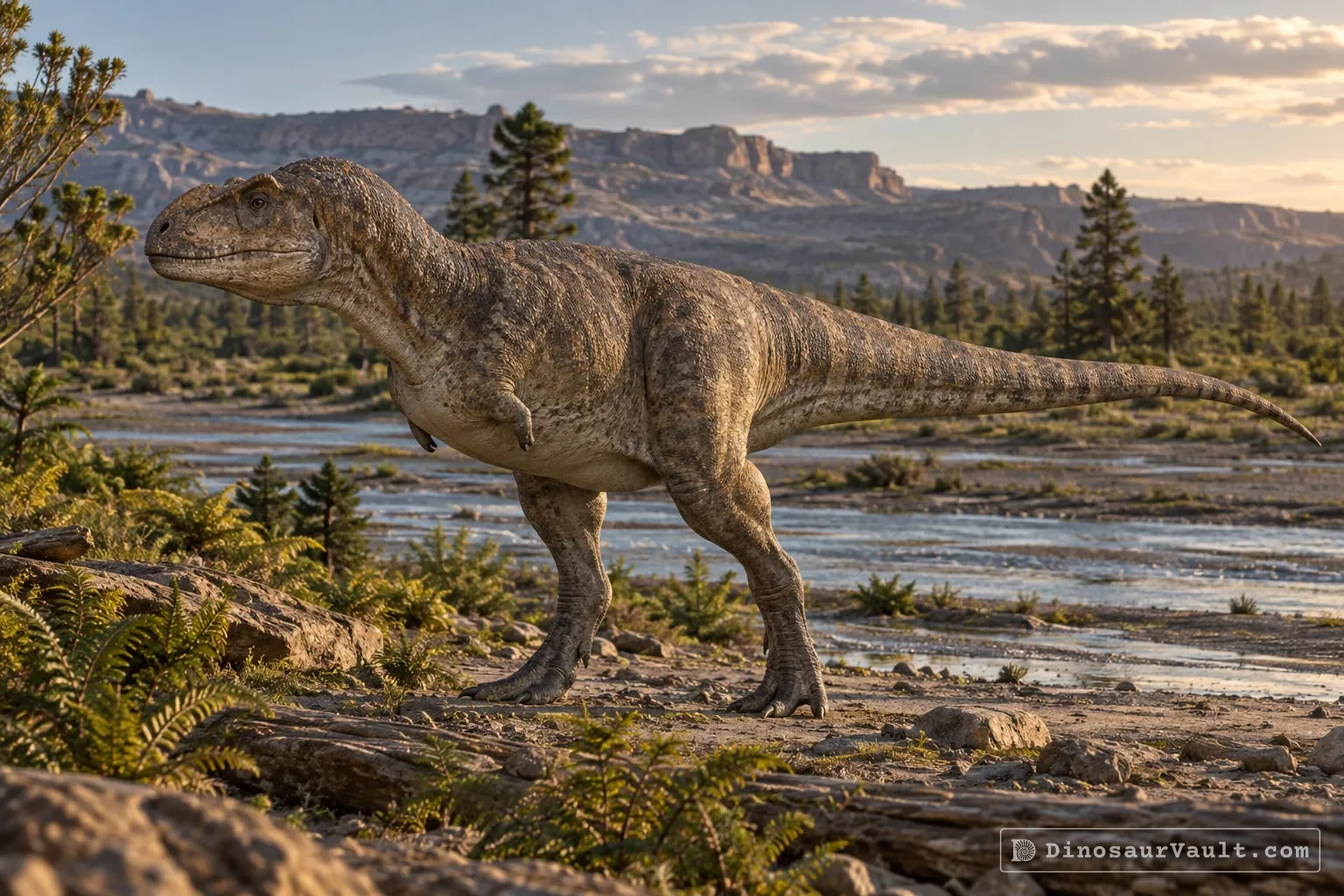
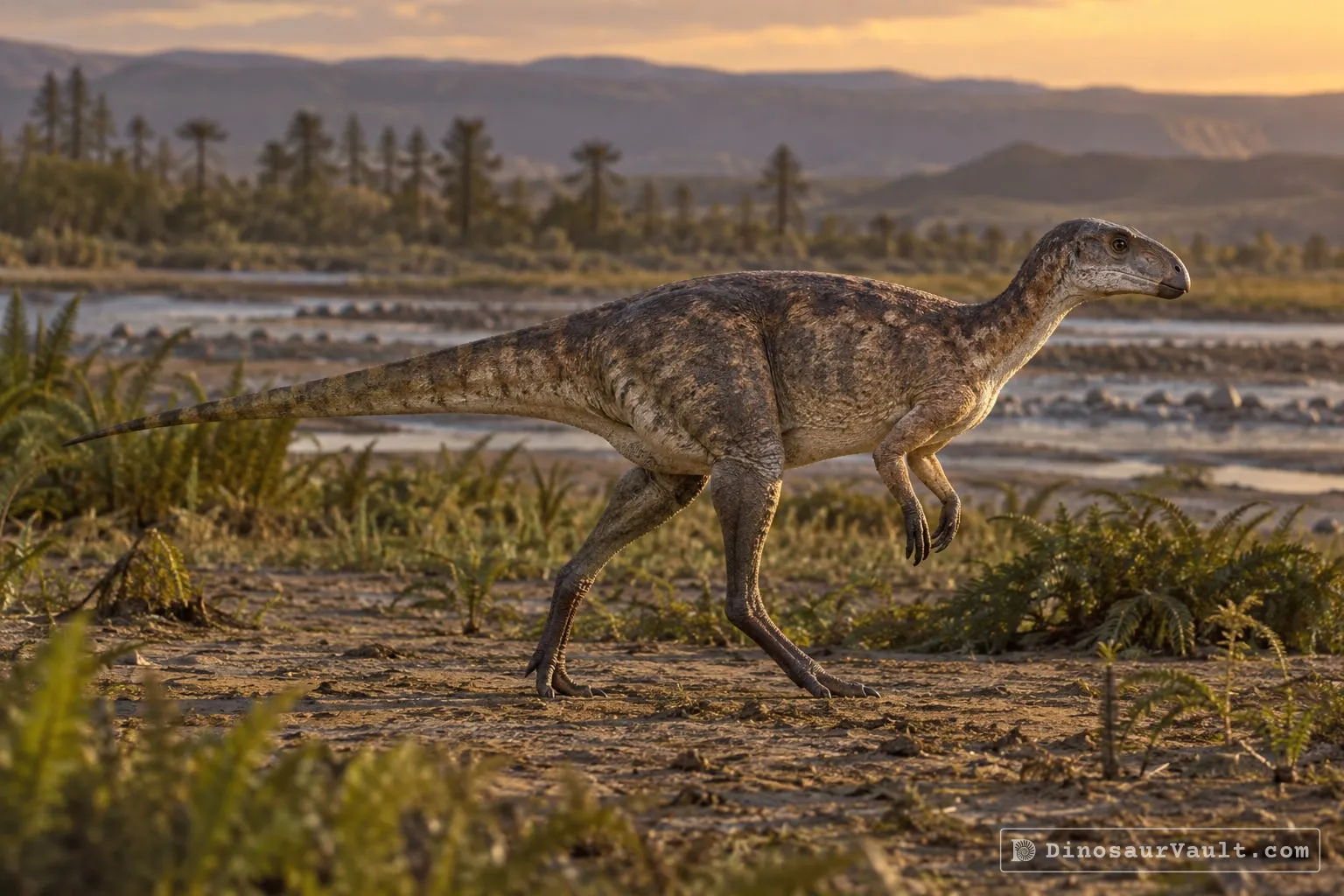
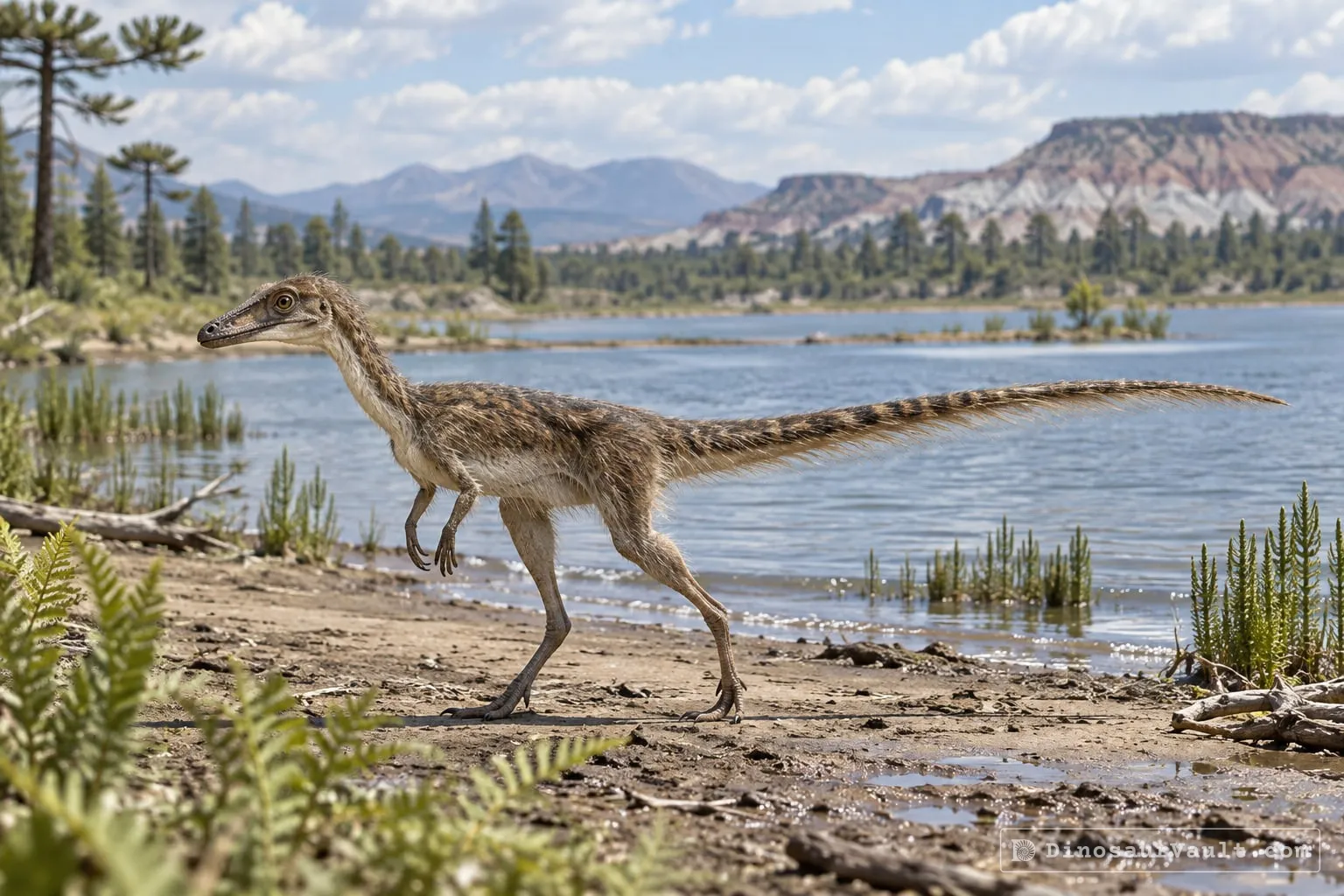


A rock formation can hold fossils laid down millions of years apart, so not every animal here met Katepensaurus.
The evidence
The science behind Katepensaurus
Which parts of the picture come from its own bones, and which come from its relatives.
From its own fossils
- The type skeleton includes three neck vertebrae, three back vertebrae and two tail vertebrae, found together. The neck bones are damaged and distorted.
- The side branches of its back vertebrae contain connected openings and air-filled chambers.
- Later digging added a piece of the skull roof above the eye, neck ribs and more back vertebrae, assigned to the same skeleton because they lay close by in the same layer and match in size.
Borrowed from relatives
- The missing face and jaws, and the general shape of the neck and shoulders, are restored from Lavocatisaurus, a rebbachisaurid known from skull bones and parts of the skeleton.
- The body, hips and upper legs follow Mnyamawamtuka, a titanosaur, in general shape only.
Still unknown
- The complete shape of its skull and jaws.
- Its full body length and limb proportions.
- Its exact place among rebbachisaurids. Studies arrange the branches of the group in different ways.
Discovery timeline
- 2013Named itIbiricu et al.
- 2015New findIbiricu et al.
- 2017Full descriptionIbiricu et al.
- 2018Close relativeCanudo et al.
Key papers
The research behind what we know of Katepensaurus
Named it
Described a rebbachisaurid with distinctive openings in its back vertebrae from a partial backbone.
Katepensaurus goicoecheai, gen. et sp. nov., a Late Cretaceous rebbachisaurid (Sauropoda, Diplodocoidea) from central Patagonia, Argentina. Journal of Vertebrate Paleontology 33: 1351-1366
Read the paper : Katepensaurus goicoecheai, gen. et sp. nov., a Late Cretaceous rebbachisaurid (Sauropoda, Diplodocoidea) from central Patagonia, Argentina (opens in a new tab)New find
Described a piece of skull roof, neck ribs and back vertebrae assigned to the type skeleton, and revised the features that set Katepensaurus apart.
New Material of Katepensaurus goicoecheai (Sauropoda: Diplodocoidea) and Its Significance for the Morphology and Evolution of Rebbachisauridae. Ameghiniana 52: 430
Read the paper : New Material of Katepensaurus goicoecheai (Sauropoda: Diplodocoidea) and Its Significance for the Morphology and Evolution of Rebbachisauridae (opens in a new tab)Full description
Found interconnected air chambers in the branches of its back vertebrae, showing an unusually lightweight skeleton.
A novel form of postcranial skeletal pneumaticity in a sauropod dinosaur: implications for the paleobiology of Rebbachisauridae. Acta Palaeontologica Polonica 62
Read the paper : A novel form of postcranial skeletal pneumaticity in a sauropod dinosaur: implications for the paleobiology of Rebbachisauridae (opens in a new tab)Close relative
Named Lavocatisaurus from skull bones and parts of the skeleton, giving a rare look at the long face and jaws of a rebbachisaurid.
A new rebbachisaurid sauropod from the Aptian–Albian, Lower Cretaceous Rayoso Formation, Neuquén, Argentina. Acta Palaeontologica Polonica 63
Read the paper : A new rebbachisaurid sauropod from the Aptian–Albian, Lower Cretaceous Rayoso Formation, Neuquén, Argentina (opens in a new tab)
Close relatives
Other members of Rebbachisauridae


Sources: Wikidata