Xenotarsosaurus
"strange ankle lizard"
Type species Xenotarsosaurus bonapartei
- Lived
- 101 to 90 million years ago, Late Cretaceous
- Diet
- Carnivore
- Group
- Theropods, Abelisauridae
- Found in
- Argentina
- Named by
- Martínez et al. 1986
Where its fossils were found
The evidence
Today

95 million years ago
Habitat
Rivers crossed low floodplains in what is now Argentina. Epachthosaurus, Sarmientosaurus and Notohypsilophodon are recorded from the Bajo Barreal Formation.
Field notes
About Xenotarsosaurus
What it was like
Xenotarsosaurus was an abelisaur, a predator related to Carnotaurus. It is known from part of the backbone and a hind leg. Its ankle bones were fused in an unusual way, which gave it its name.
Its world
It lived in the Late Cretaceous, in what is now Argentina. It comes from the Bajo Barreal Formation, where it shared the land with the titanosaurs Epachthosaurus and Sarmientosaurus.
How it was found
Martínez and colleagues named Xenotarsosaurus in 1986. The type species is Xenotarsosaurus bonapartei.
Field gallery
More views of Xenotarsosaurus
Scenes reconstructed from the available fossil evidence.
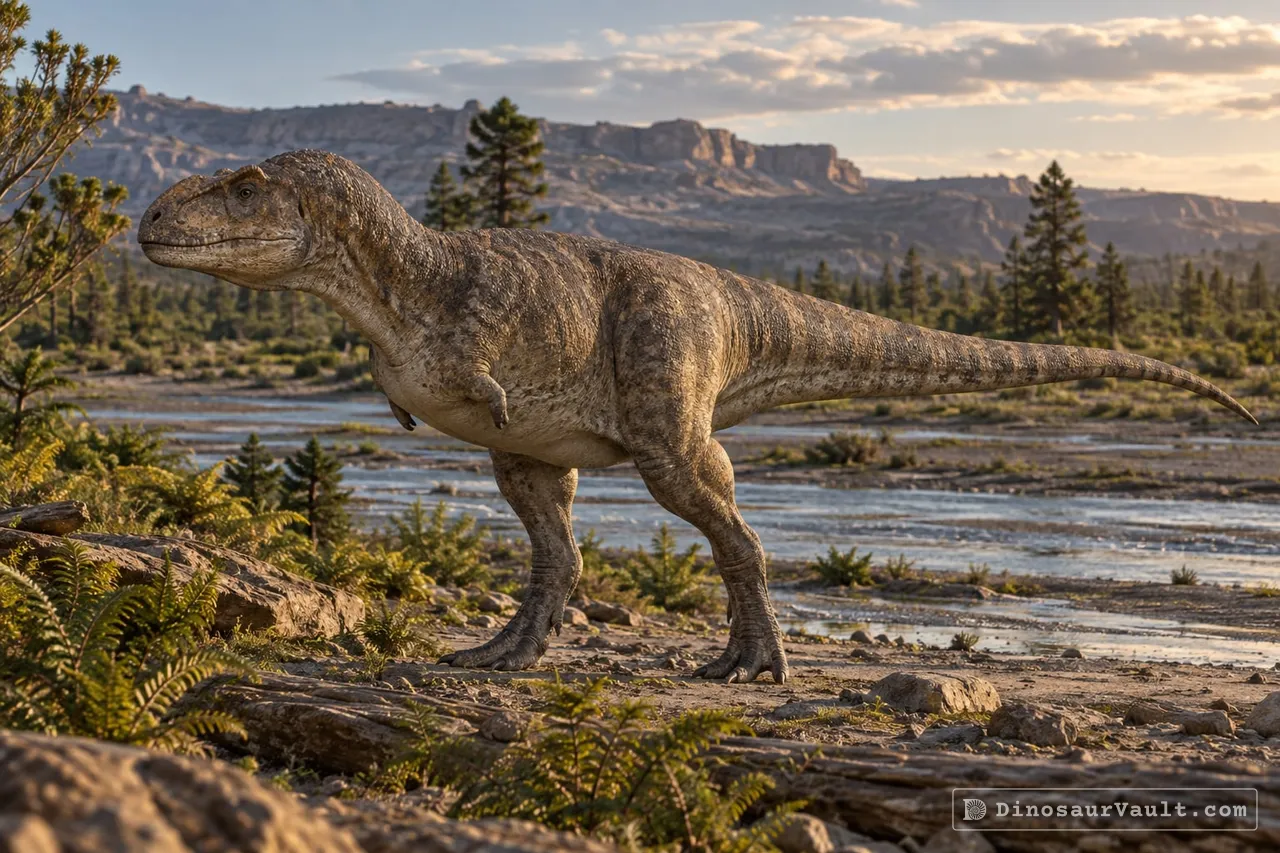
1 of 3
Lived alongside
Found in the same rock formations
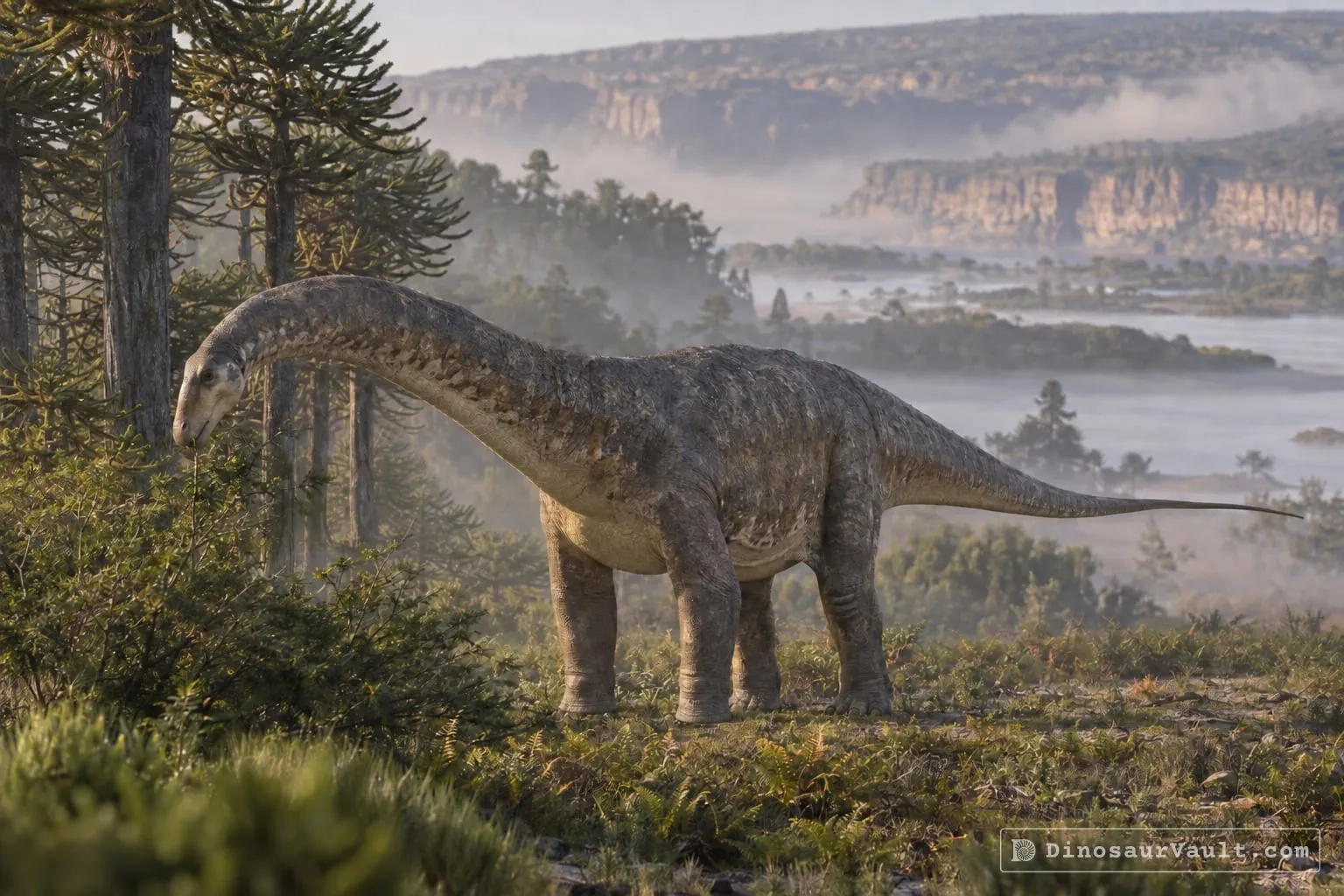
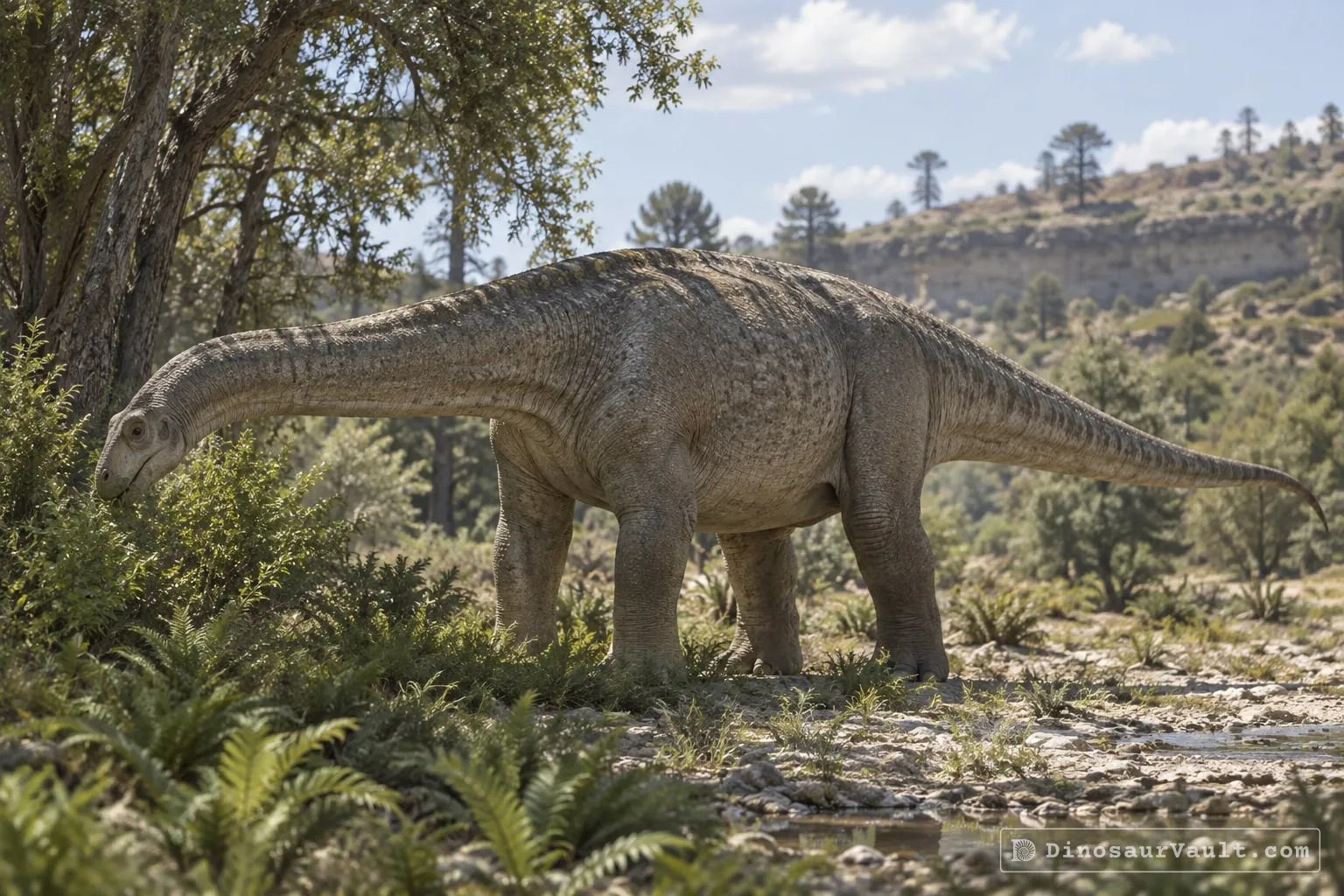
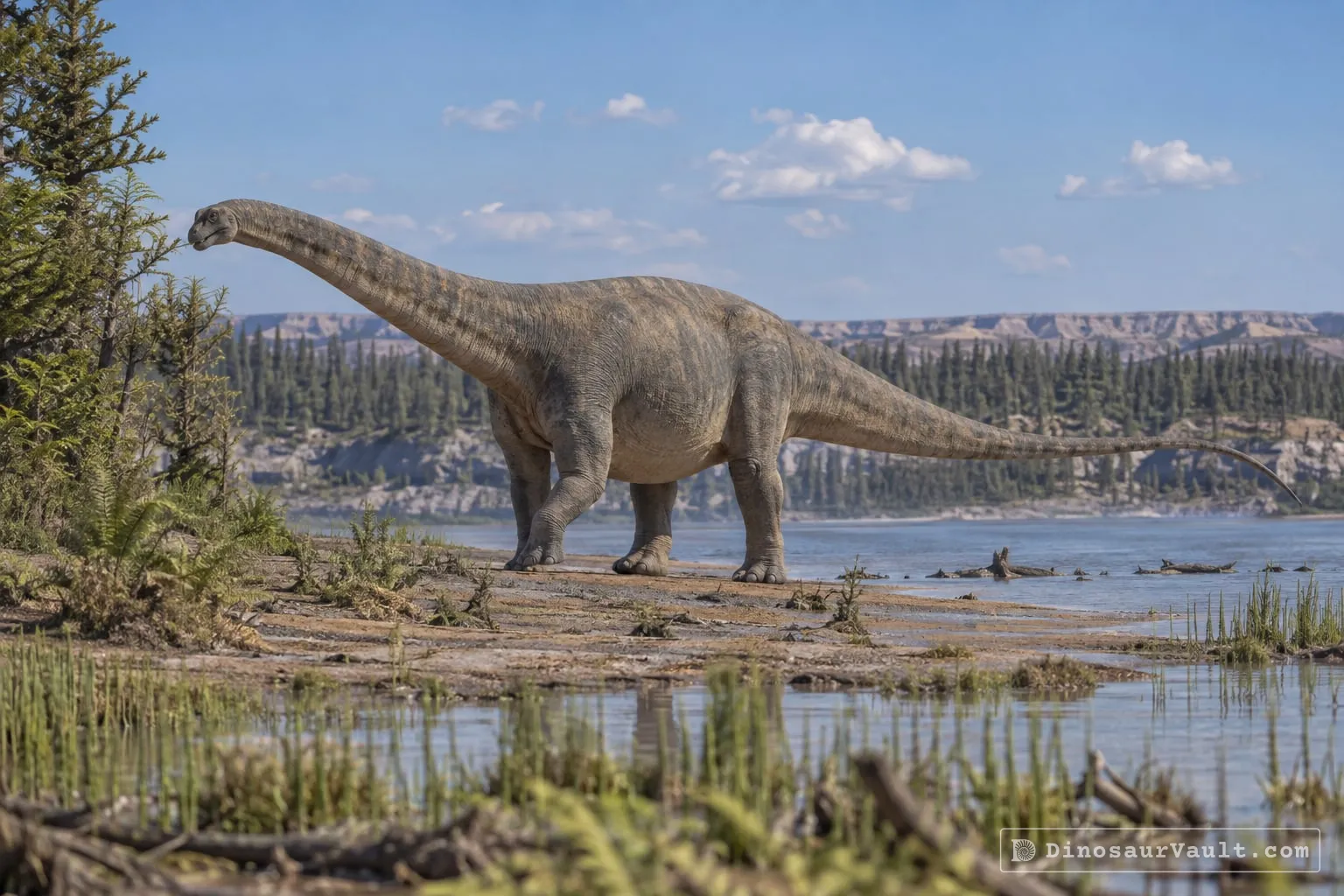
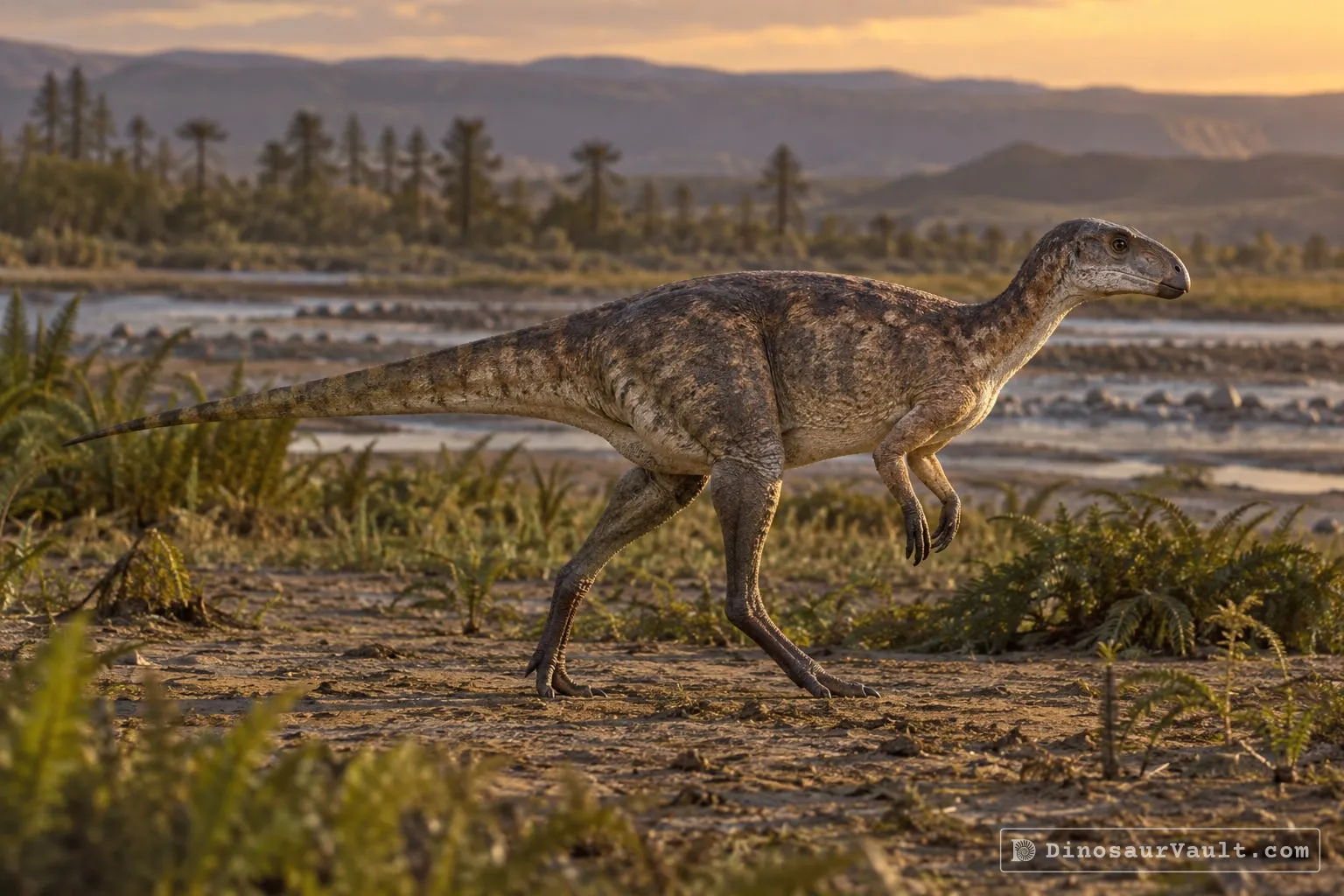
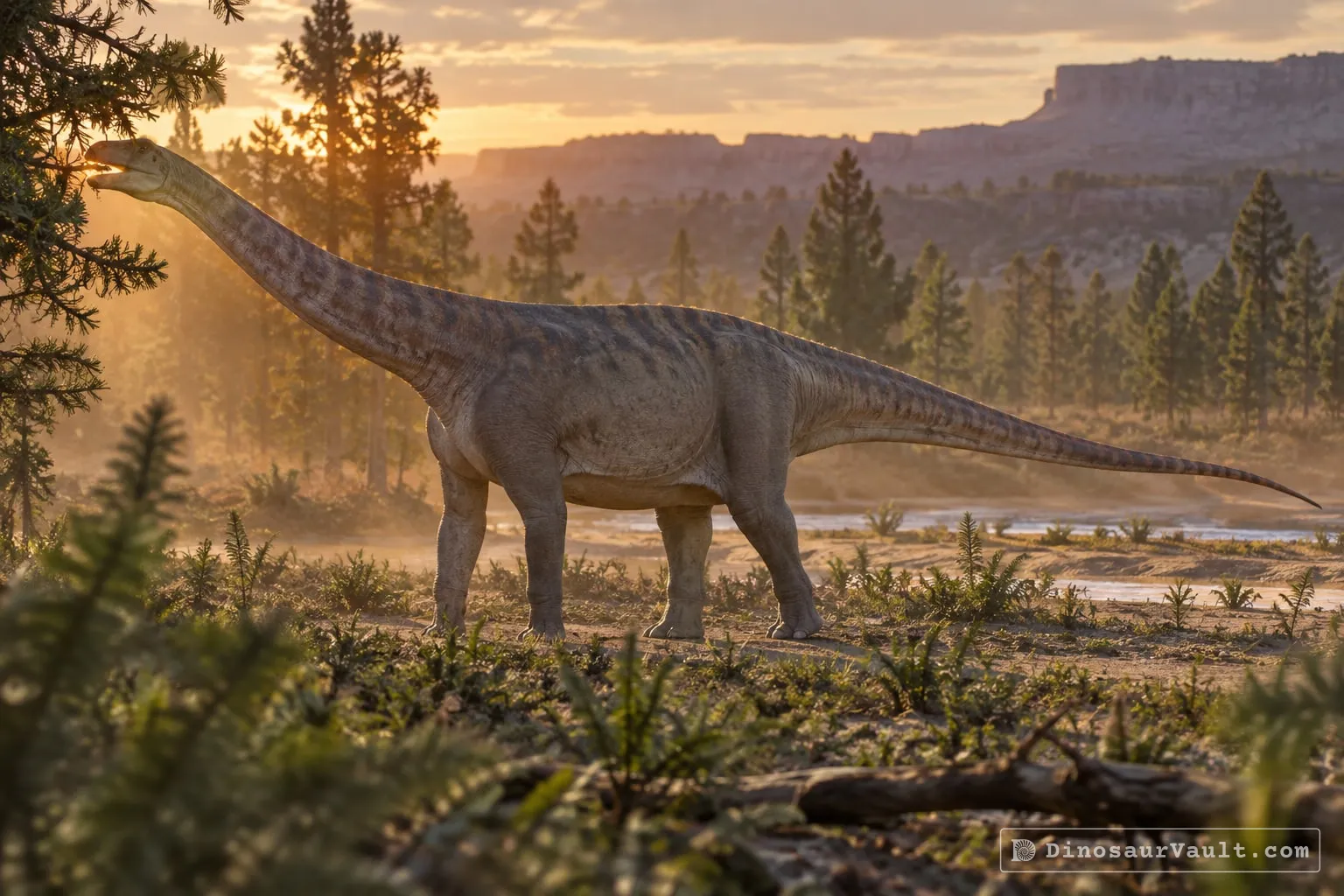
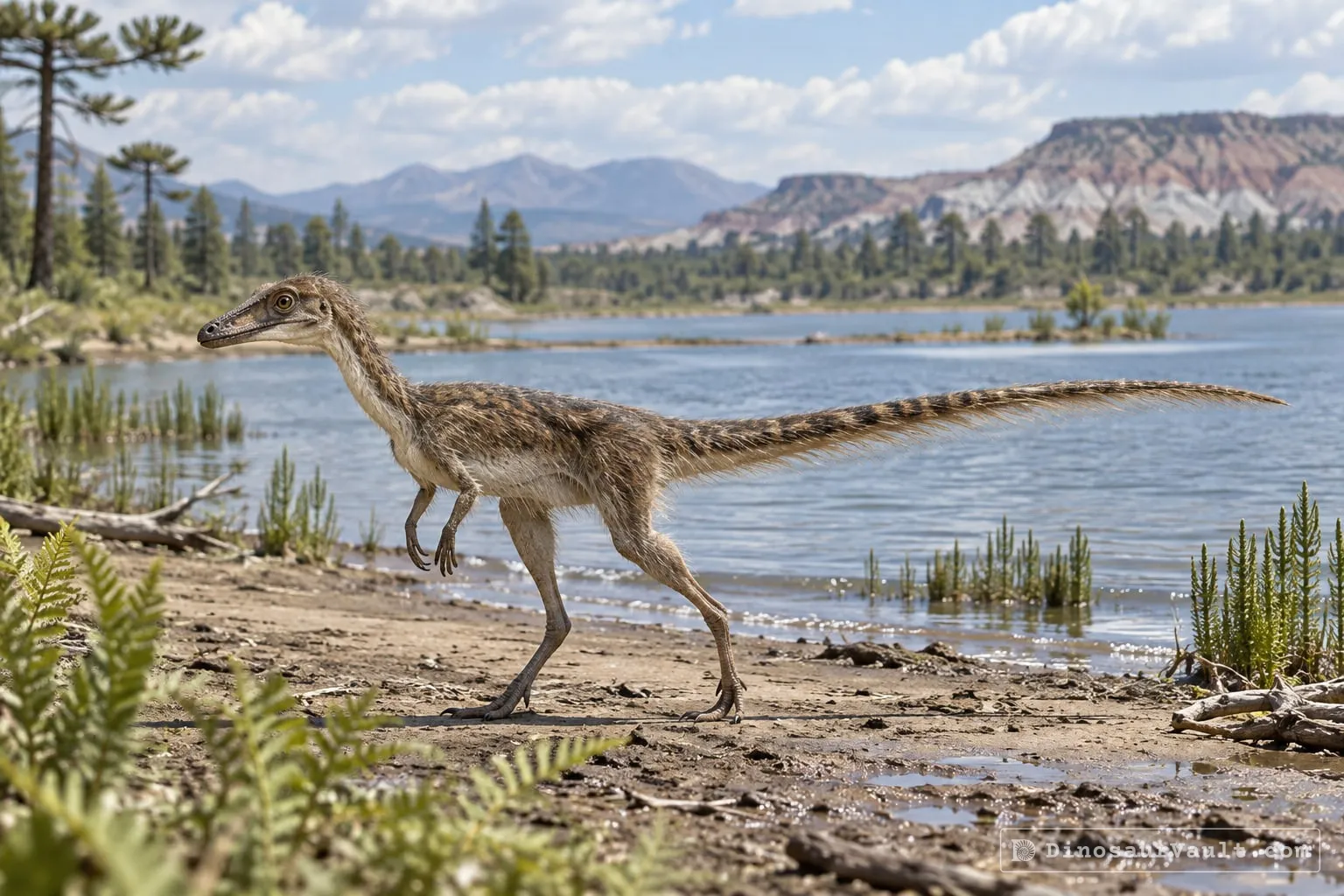


A rock formation can hold fossils laid down millions of years apart, so not every animal here met Xenotarsosaurus.
The evidence
The science behind Xenotarsosaurus
Which parts of the picture come from its own bones, and which come from its relatives.
From its own fossils
- The original skeleton preserves partial back vertebrae and a nearly complete right hind limb.
- Its ankle bones are fused, and distinctive grooves and joint shapes mark the thigh and lower leg bones.
Borrowed from relatives
- Majungasaurus supplies a model for the missing deep skull and sturdy neck.
- Its short arms and reduced hands are inferred from Majungasaurus and other abelisaurids.
Still unknown
- The shape of its skull and any horns or ridges it carried.
- The exact proportions of its arms and hands.
- Its skin covering and color.
Often drawn wrong
- A horned head copied from Carnotaurus gives it ornaments that have never been found in Xenotarsosaurus.
- The unusual ankle belongs inside the leg, rather than forming an outward-pointing spur.
Discovery timeline
- 1986Named itMartínez et al.
- 2017Close relativeBurch
- 2021RedescriptionIbiricu et al.
Key papers
The research behind what we know of Xenotarsosaurus
Named it
Named Xenotarsosaurus from partial back bones and a hind limb with an unusual fused ankle.
Xenotarsosaurus bonapartei nov. gen. et sp. (Carnosauria, Abelisauridae), un nuevo Theropoda de la Formacion Bajo Barreal, Chubut, Argentina [Xenotarsosaurus bonapartei nov. gen. et sp. (Carnosauria, Abelisauridae), a new Theropoda from the Bajo Barreal Formation, Chubut, Argentina]. IV Congreso Argentino de Paleontologia y Bioestratigrafia 1: 23-31
No link available
Close relative
Reconstructed the muscles of the short Majungasaurus arms, providing a comparison for the missing forelimbs of Xenotarsosaurus.
Myology of the forelimb of Majungasaurus crenatissimus (Theropoda, Abelisauridae) and the morphological consequences of extreme limb reduction. Journal of Anatomy 231: 515-531
Read the paper : Myology of the forelimb of Majungasaurus crenatissimus (Theropoda, Abelisauridae) and the morphological consequences of extreme limb reduction (opens in a new tab)Redescription
Restudied the original bones and identified Xenotarsosaurus as an early branch of the abelisaurid family.
A detailed osteological description of Xenotarsosaurus bonapartei (Theropoda: Abelisauridae): implications for abelisauroid phylogeny. Cretaceous Research 124: 104829
Read the paper : A detailed osteological description of Xenotarsosaurus bonapartei (Theropoda: Abelisauridae): implications for abelisauroid phylogeny (opens in a new tab)
Close relatives
Other members of Abelisauridae


Sources: Wikidata