Aniksosaurus
"spring lizard"
- Lived
- 101 to 90 million years ago, Late Cretaceous
- Diet
- Carnivore
- Group
- Theropods, Compsognathidae
- Found in
- Argentina
- Named by
- Martínez and Novas 2006
Where its fossils were found
The evidence
Today

95 million years ago
Habitat
It lived on a river plain in what is now Argentina, where flowing water buried the bones in sand. Xenotarsosaurus, Epachthosaurus and Sarmientosaurus are known from the Bajo Barreal Formation.
Field notes
About Aniksosaurus
What it was like
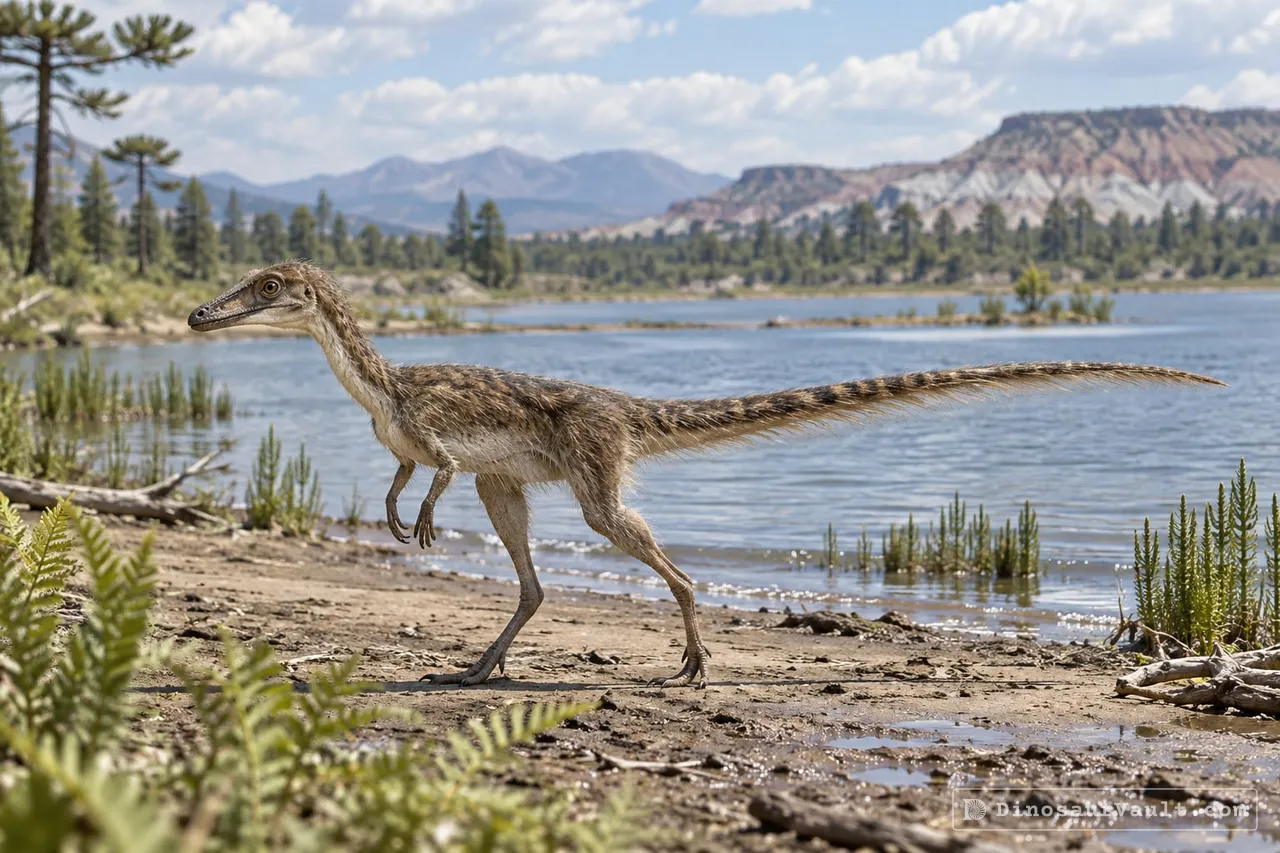
Aniksosaurus was a small, lightly built meat eater, known from bones of several animals, mostly legs and backbones.
Its place among the theropods is uncertain.
Its world
It lived in the Late Cretaceous in what is now southern Argentina. Its bones come from the Bajo Barreal Formation, where it shared the land with the hunter Xenotarsosaurus and the titanosaurs Epachthosaurus and Sarmientosaurus.
How it was found
Martínez and Novas named Aniksosaurus in 2006. Its name refers to the spring equinox, the day when the bones were found.
Field gallery
More views of Aniksosaurus
Scenes reconstructed from the available fossil evidence.
1 of 3
Lived alongside
Found in the same rock formations
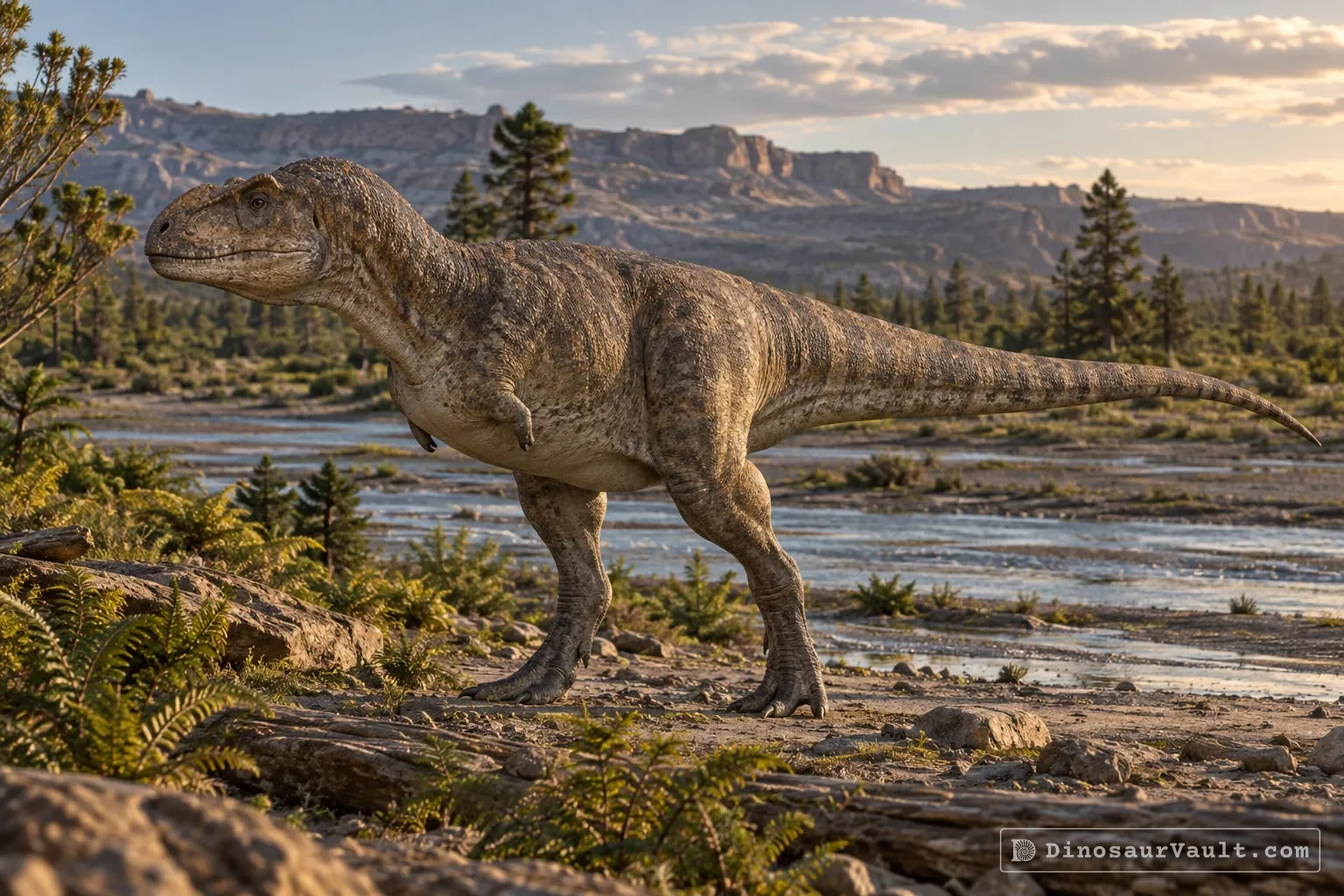
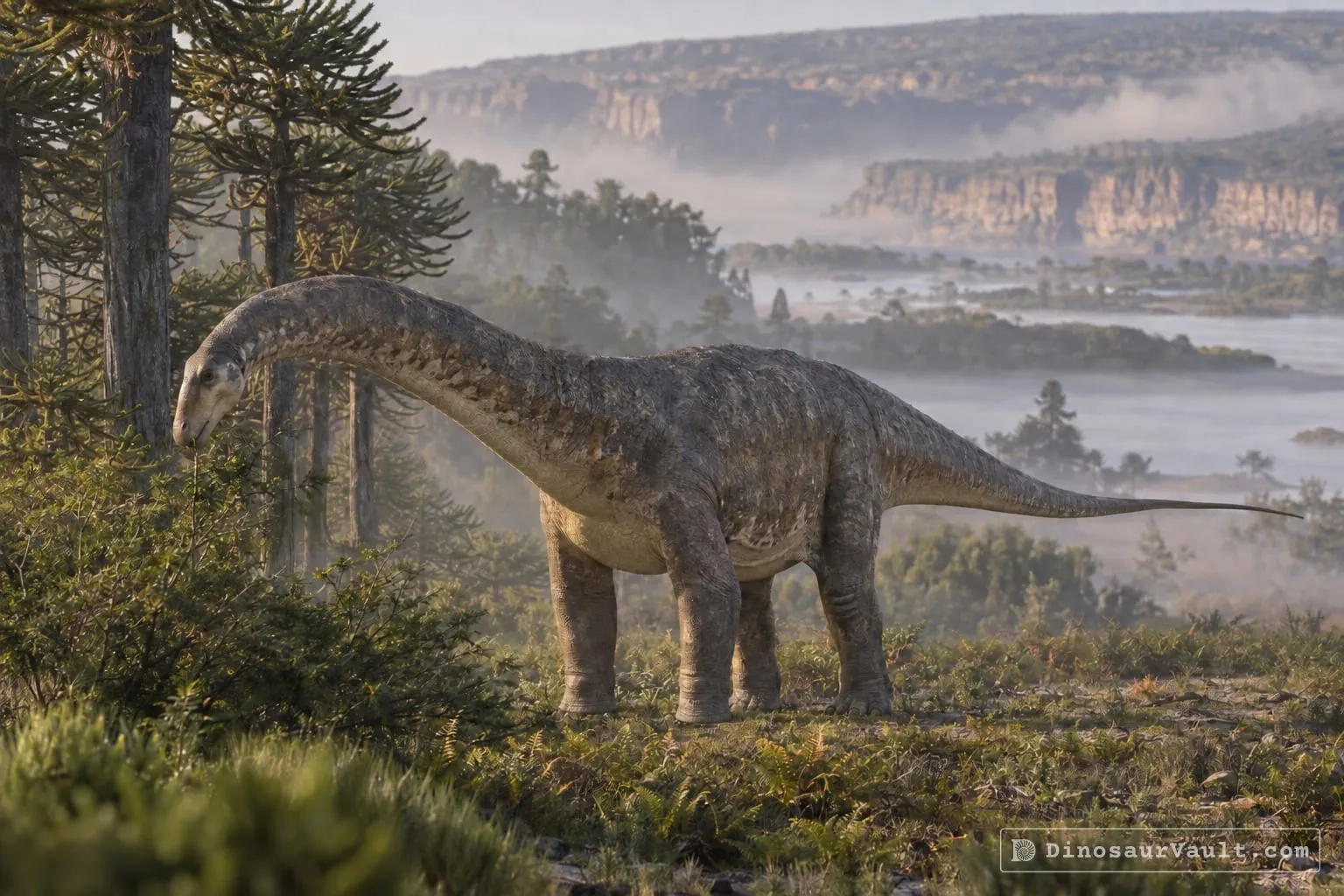
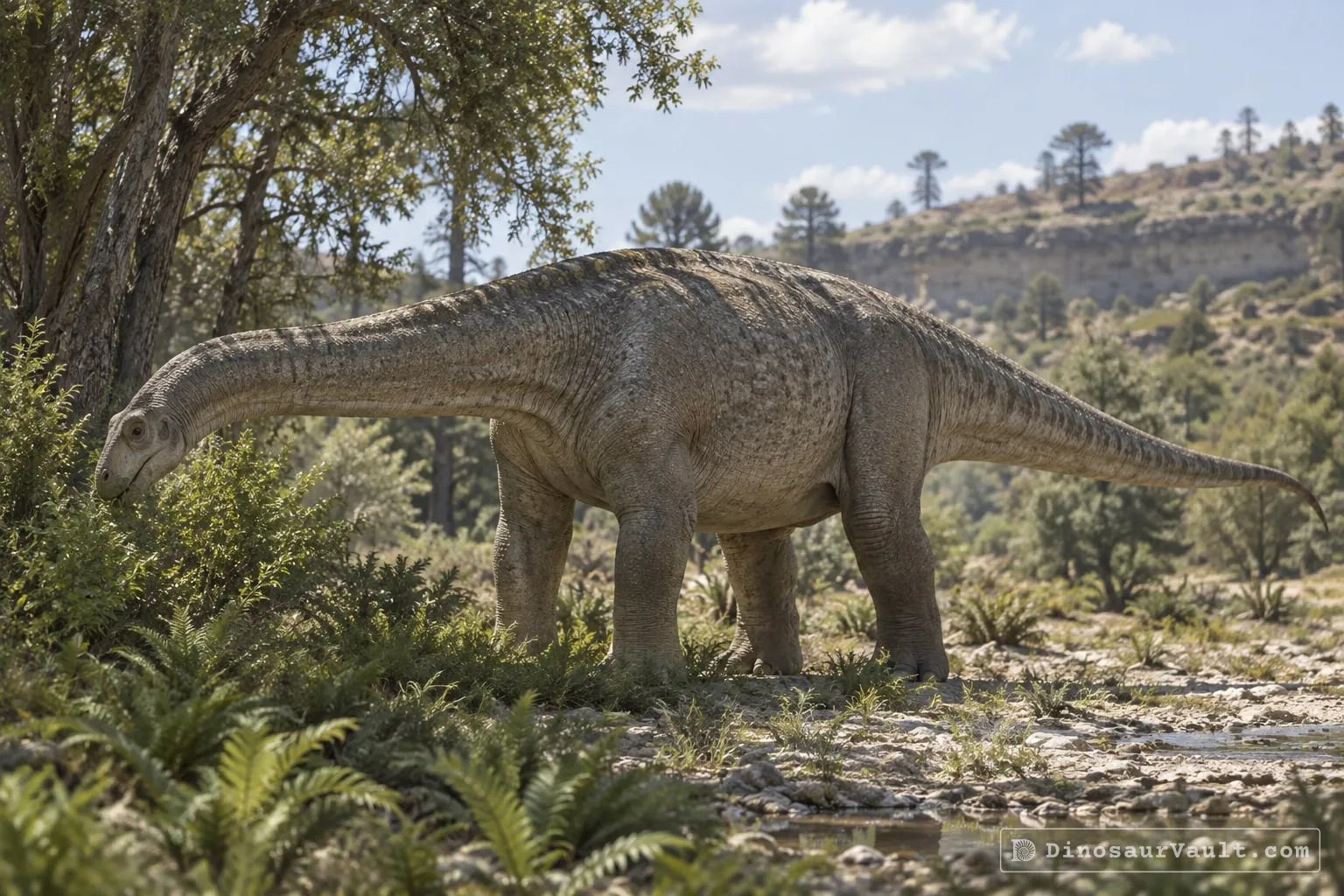
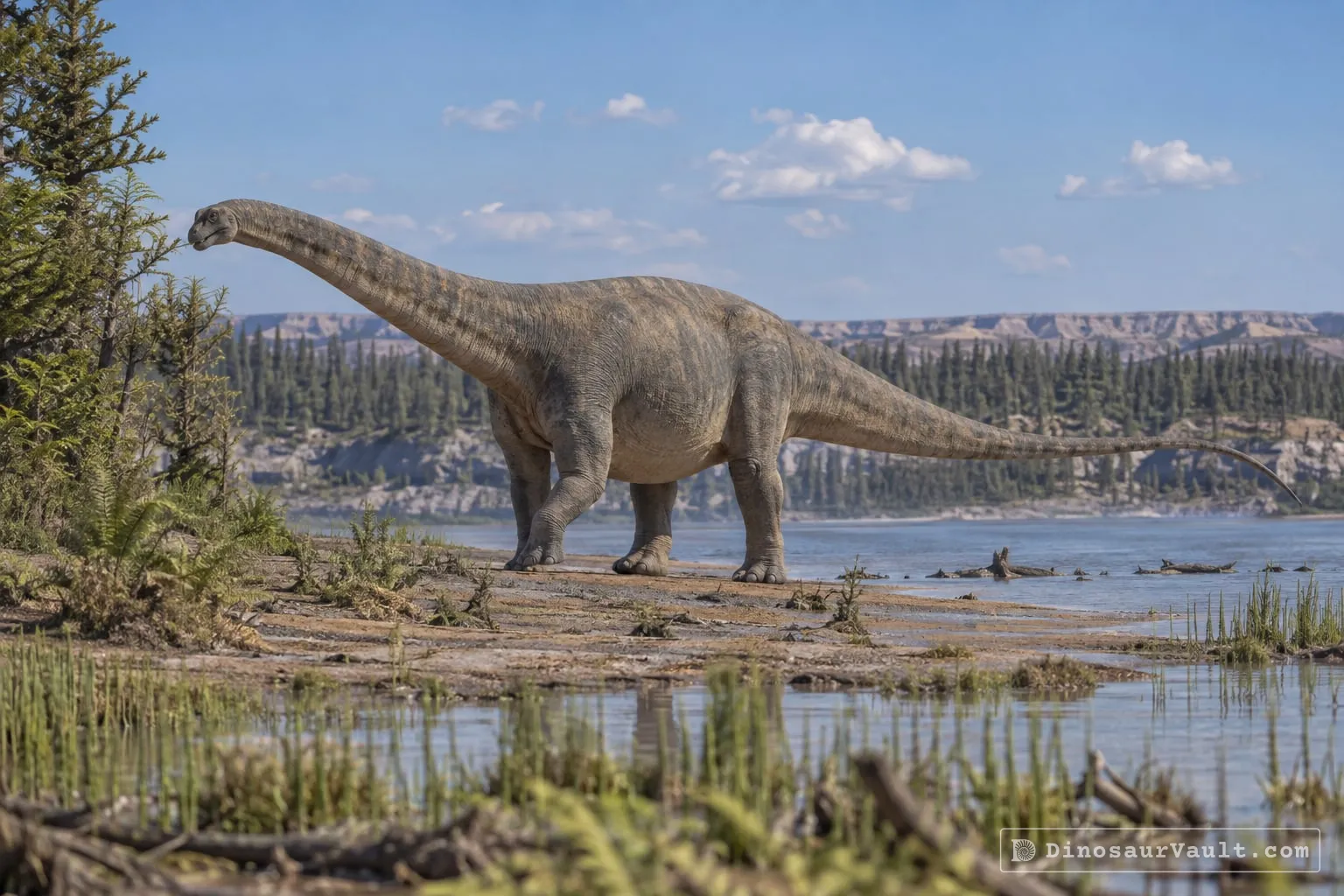
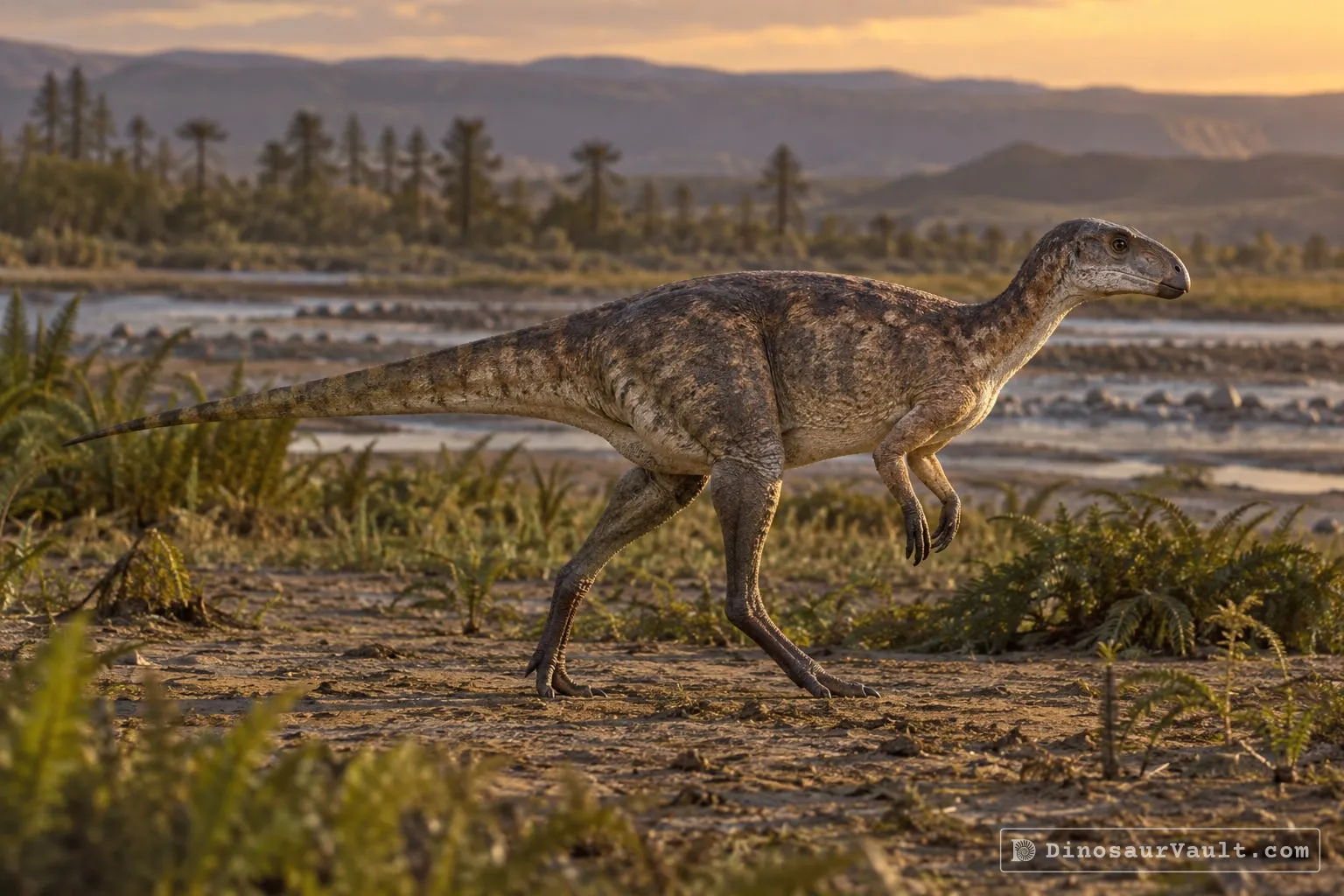
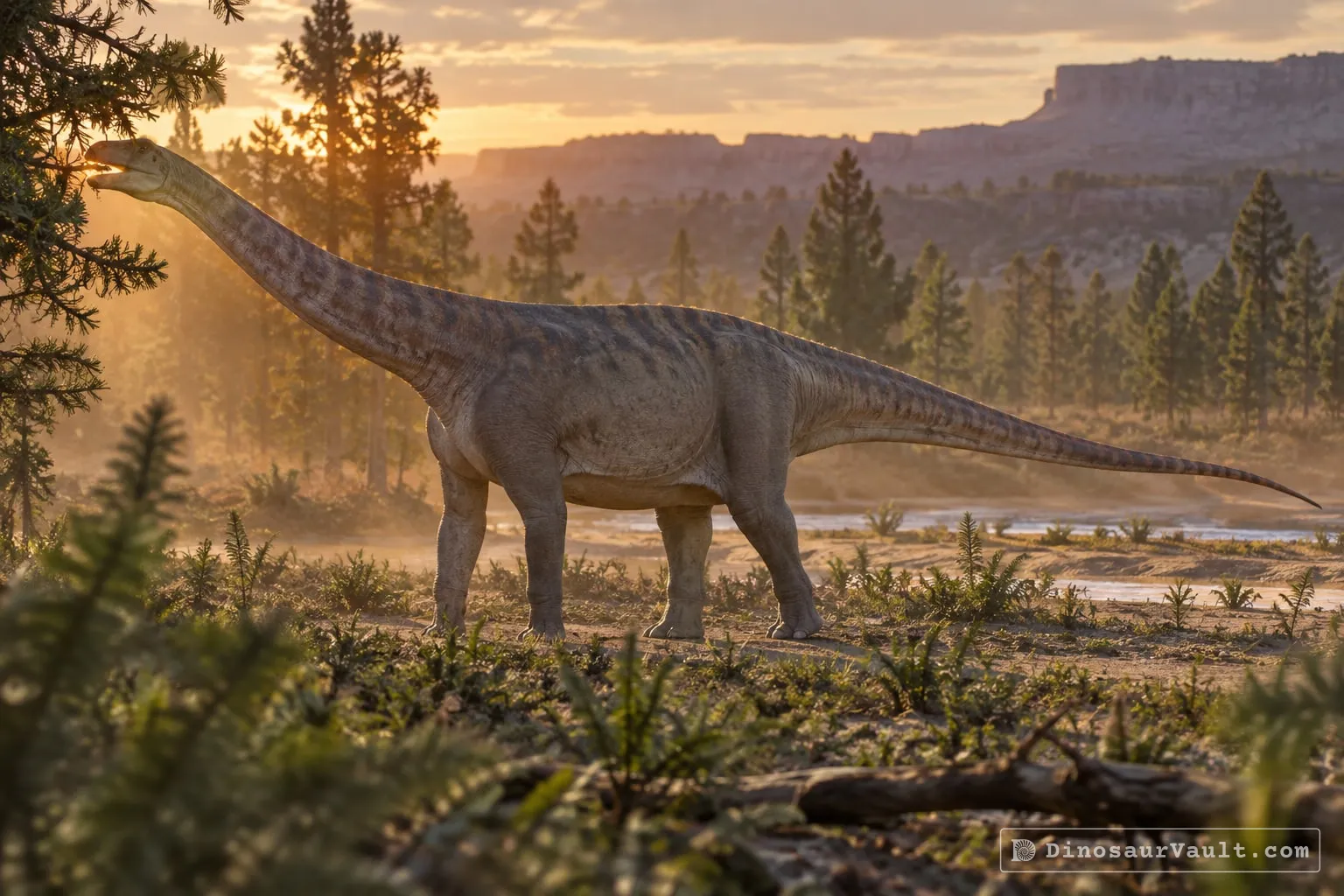


A rock formation can hold fossils laid down millions of years apart, so not every animal here met Aniksosaurus.
The evidence
The science behind Aniksosaurus
Which parts of the picture come from its own bones, and which come from its relatives.
From its own fossils
- A single bonebed holds parts of five animals, mostly vertebrae, limb bones and hips, buried together after only limited movement by water. The type specimen is a right hind leg with its bones still joined.
- Upper arm bones from the bonebed are sturdy and bent in a double curve. An isolated hand claw, probably from the first finger, is thick, strongly curved and large next to the arm bones found with it.
- Thigh bones from the bonebed are sturdy and relatively short, while the shin bone of the type specimen is longer, slender and straight.
Borrowed from relatives
- The missing skull is restored by comparison with early coelurosaurs: Zuolong for the upper face, and Guanlong for the cheek and lower jaw. Zuolong also guides the overall shape of the neck and body.
- Guanlong's wrist and hand guide the missing hand bones, while the thick, curved claw comes from Aniksosaurus itself.
Still unknown
- Its closest relatives. It was first described as an early coelurosaur, while one recent family-tree analysis placed it near the base of the ornithomimosaurs.
- Whether the animals regularly lived in groups or gathered only briefly.
- Its skin covering and color.
Discovery timeline
- 2006Named itMartínez & Novas
- 2012Family treeNovas et al.
- 2013Growing upIbiricu et al.
- 2025Family treeFoth et al.
Key papers
The research behind what we know of Aniksosaurus
Named it
Named a small theropod from a bonebed and described distinctive features of its vertebrae, limbs and hips, including a thick, strongly curved hand claw.
Aniksosaurus darwini gen. et sp. nov., a new coelurosaurian theropod from the Early Late Cretaceous of Central Patagonia, Argentina. Revista del Museo Argentino de Ciencias Naturales 8: 243-259
Read the paper : Aniksosaurus darwini gen. et sp. nov., a new coelurosaurian theropod from the Early Late Cretaceous of Central Patagonia, Argentina (opens in a new tab)Family tree
Compared Bicentenaria and other early coelurosaurs, including Aniksosaurus, and linked their early evolution to a decrease in body size.
New Patagonian Cretaceous theropod sheds light about the early radiation of Coelurosauria. Revista del Museo Argentino de Ciencias Naturales 14: 57-81
Read the paper : New Patagonian Cretaceous theropod sheds light about the early radiation of Coelurosauria (opens in a new tab)Growing up
Bone structure identified young and nearly adult animals, while the burial pattern suggested they may have gathered as a group.
The Behavioral Implications of a Multi-Individual Bonebed of a Small Theropod Dinosaur. PLoS ONE 8: e64253
Read the paper : The Behavioral Implications of a Multi-Individual Bonebed of a Small Theropod Dinosaur (opens in a new tab)Family tree
A family-tree analysis built for a new Archaeopteryx specimen included Aniksosaurus and, in one reduced consensus tree, placed it near the base of the ornithomimosaurs.
A new Archaeopteryx from the lower Tithonian Mörnsheim Formation at Mühlheim (Late Jurassic). Fossil Record 28: 17-43
Read the paper : A new Archaeopteryx from the lower Tithonian Mörnsheim Formation at Mühlheim (Late Jurassic) (opens in a new tab)
Close relatives
Other members of Compsognathidae


Sources: Wikidata