Epachthosaurus
"heavy lizard"
- Lived
- 101 to 90 million years ago, Late Cretaceous
- Diet
- Herbivore
- Group
- Sauropods
- Found in
- Argentina
- Named by
- Powell 1990
Where its fossils were found
The evidence
Today

95 million years ago
Habitat
It lived in the region now called Argentina, where sand and volcanic ash accumulated in the Bajo Barreal Formation. Neighbors included Xenotarsosaurus, Sarmientosaurus and Notohypsilophodon.
Field notes
About Epachthosaurus
What it was like
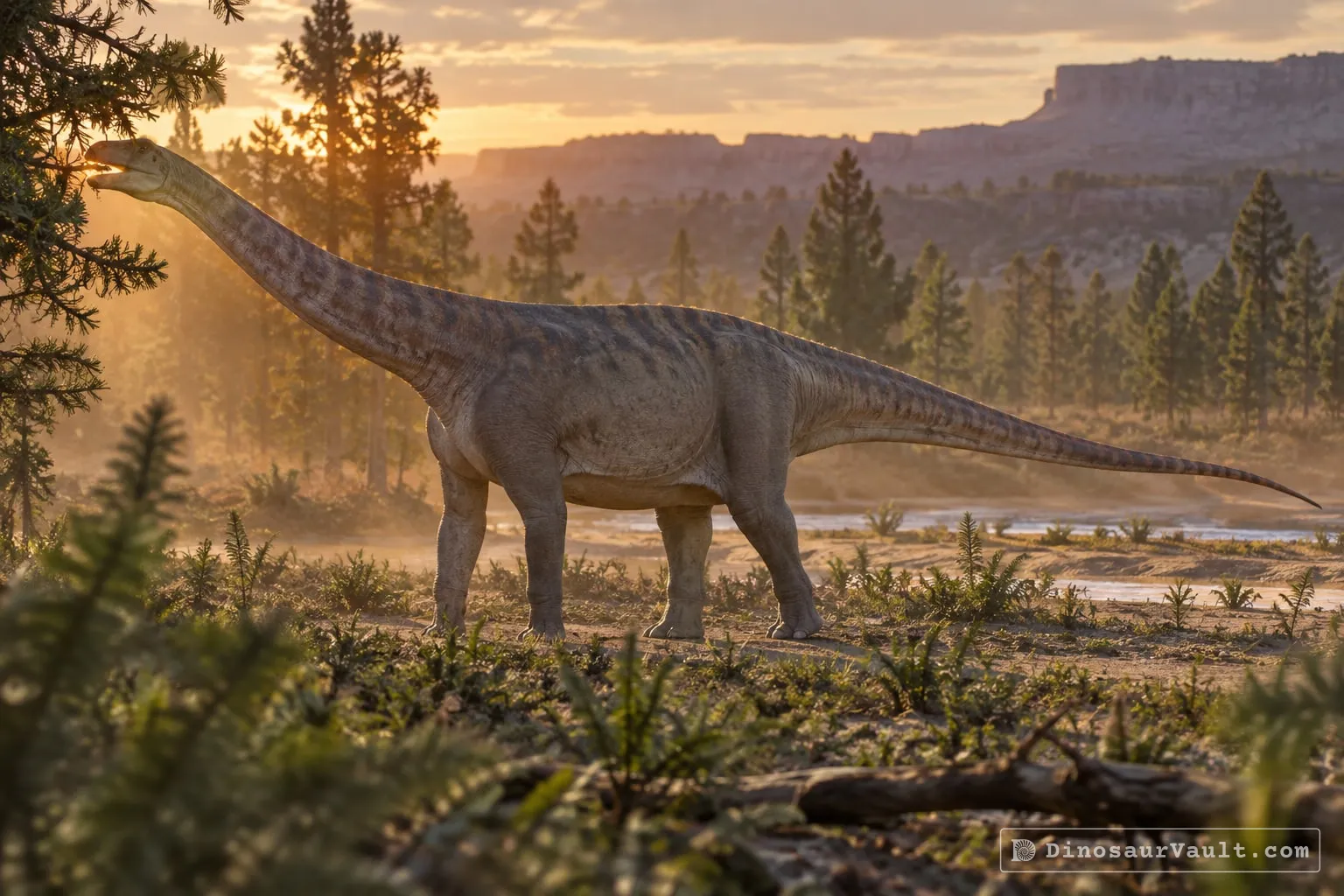
Epachthosaurus was a titanosaur, a long-necked plant eater. One skeleton is nearly complete from the neck to the tail, with most of its limbs.
Its world
It lived in the Late Cretaceous, in what is now Argentina. It comes from the Bajo Barreal Formation, where it shared the land with the abelisaur Xenotarsosaurus and the titanosaur Sarmientosaurus.
How it was found
Powell named Epachthosaurus in 1990.
Field gallery
More views of Epachthosaurus
Scenes reconstructed from the available fossil evidence.
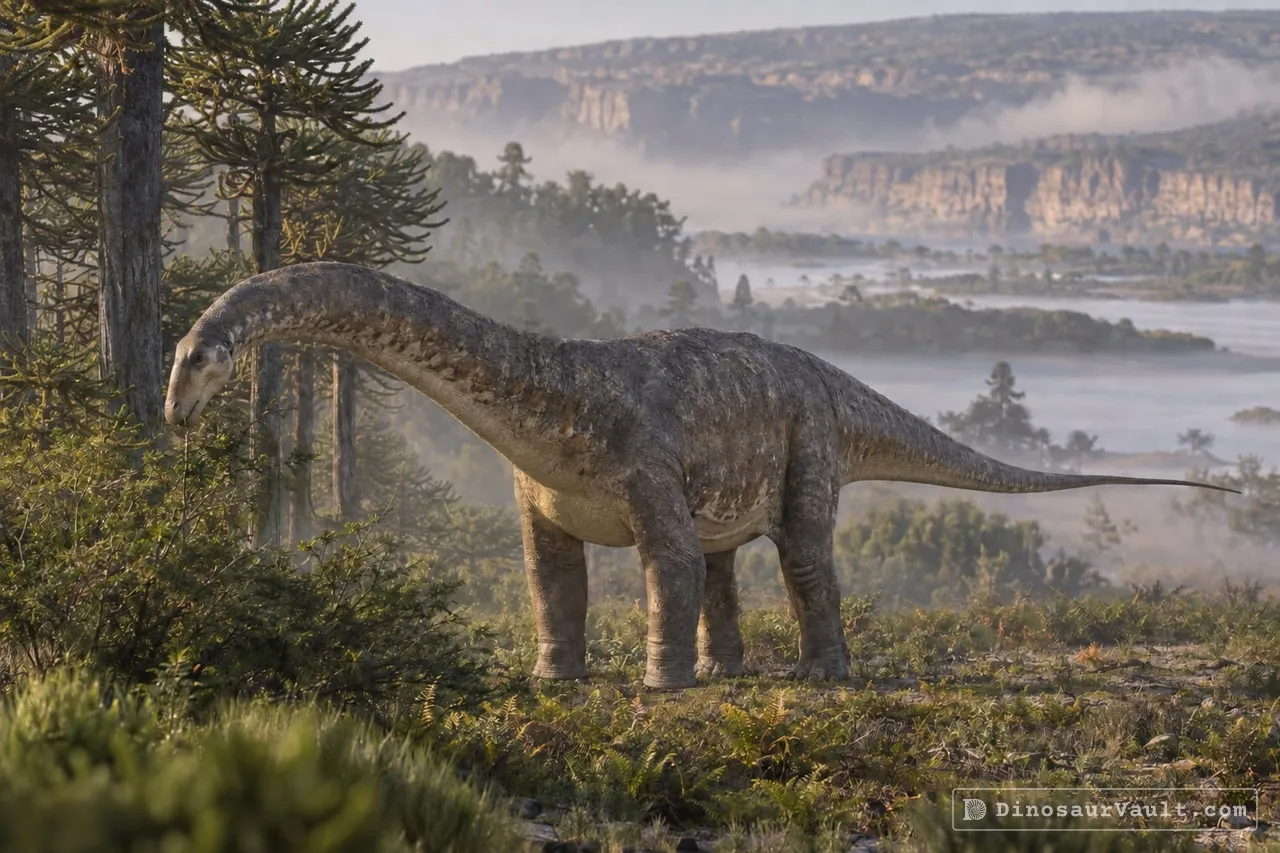
1 of 3
Lived alongside
Found in the same rock formations
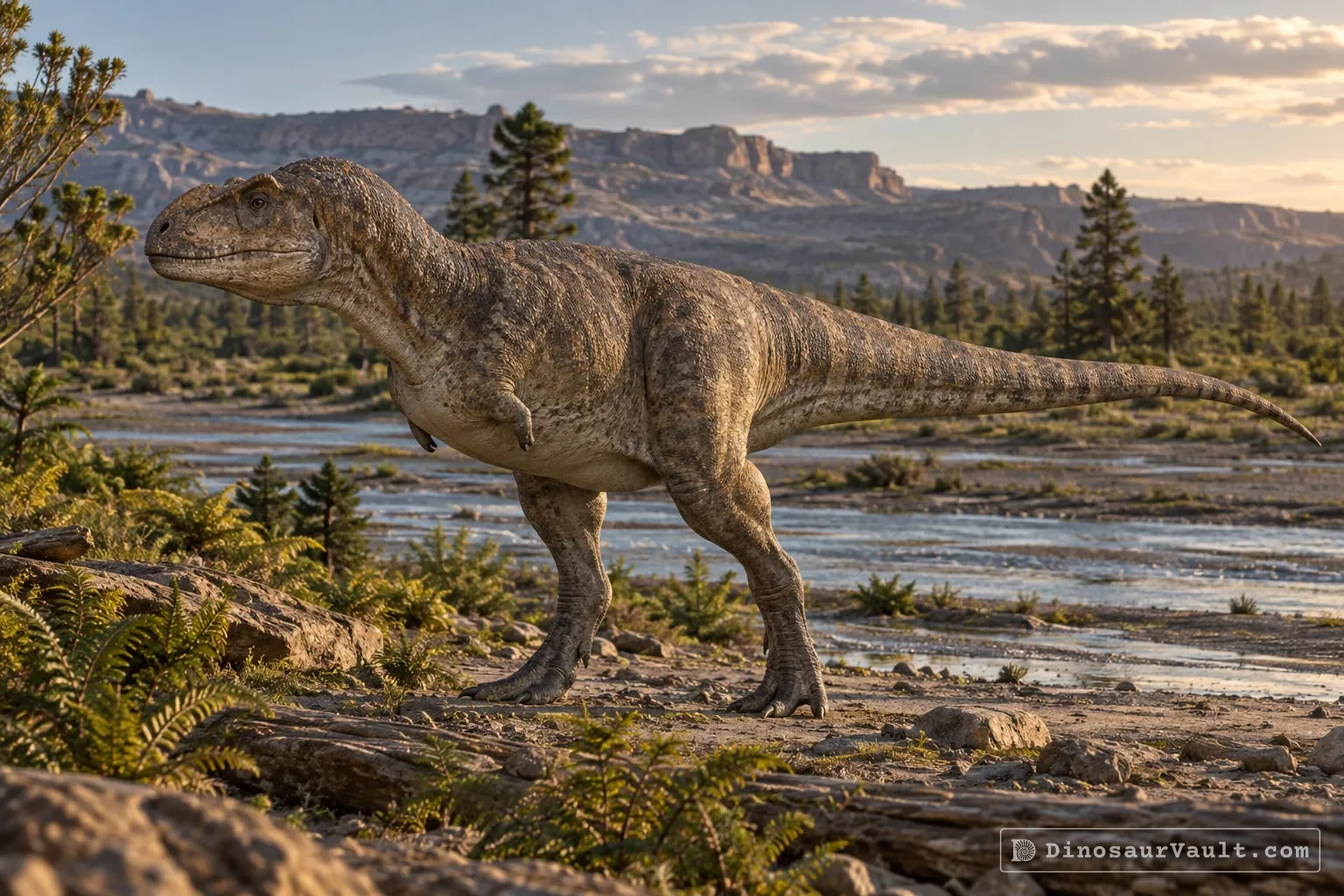
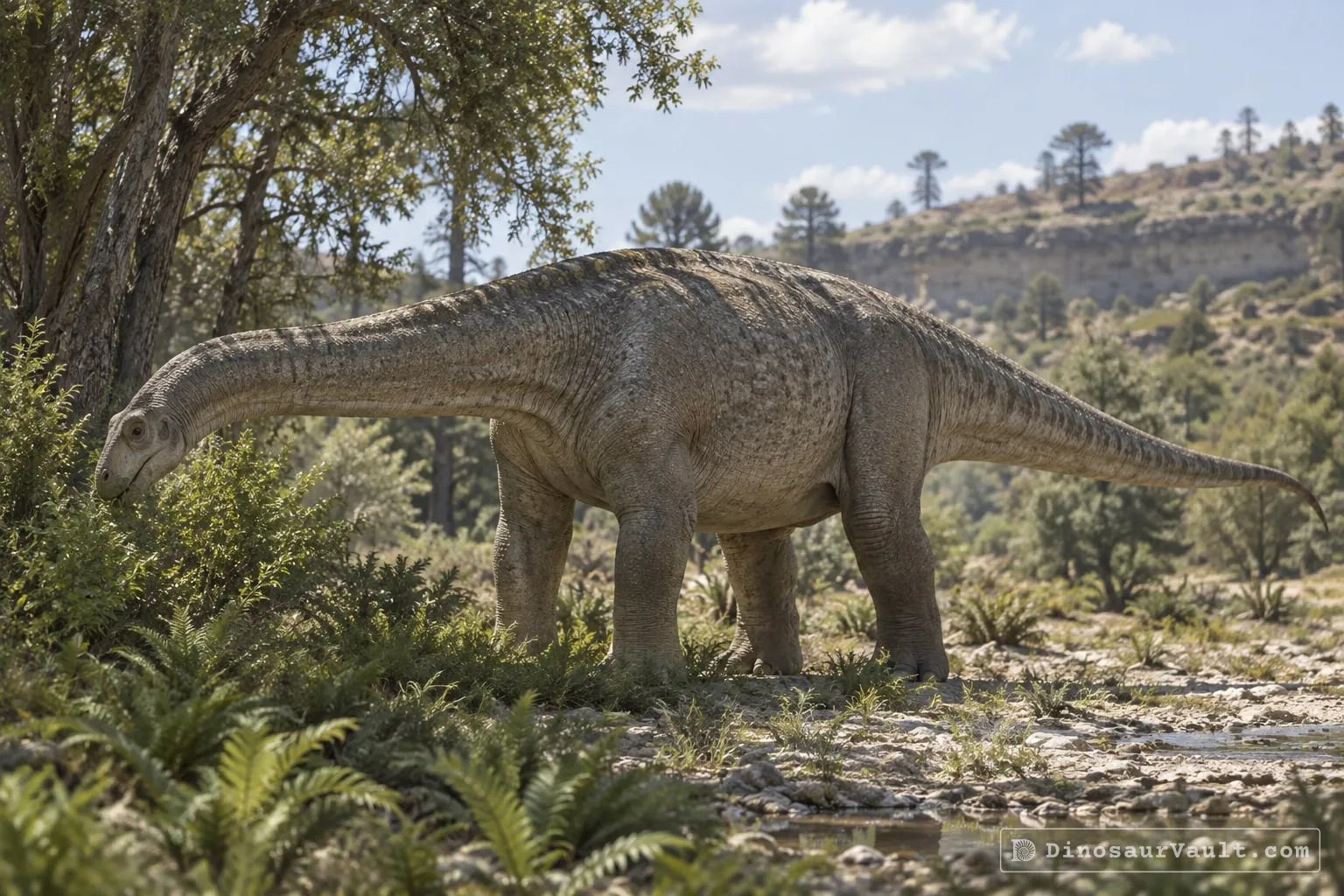
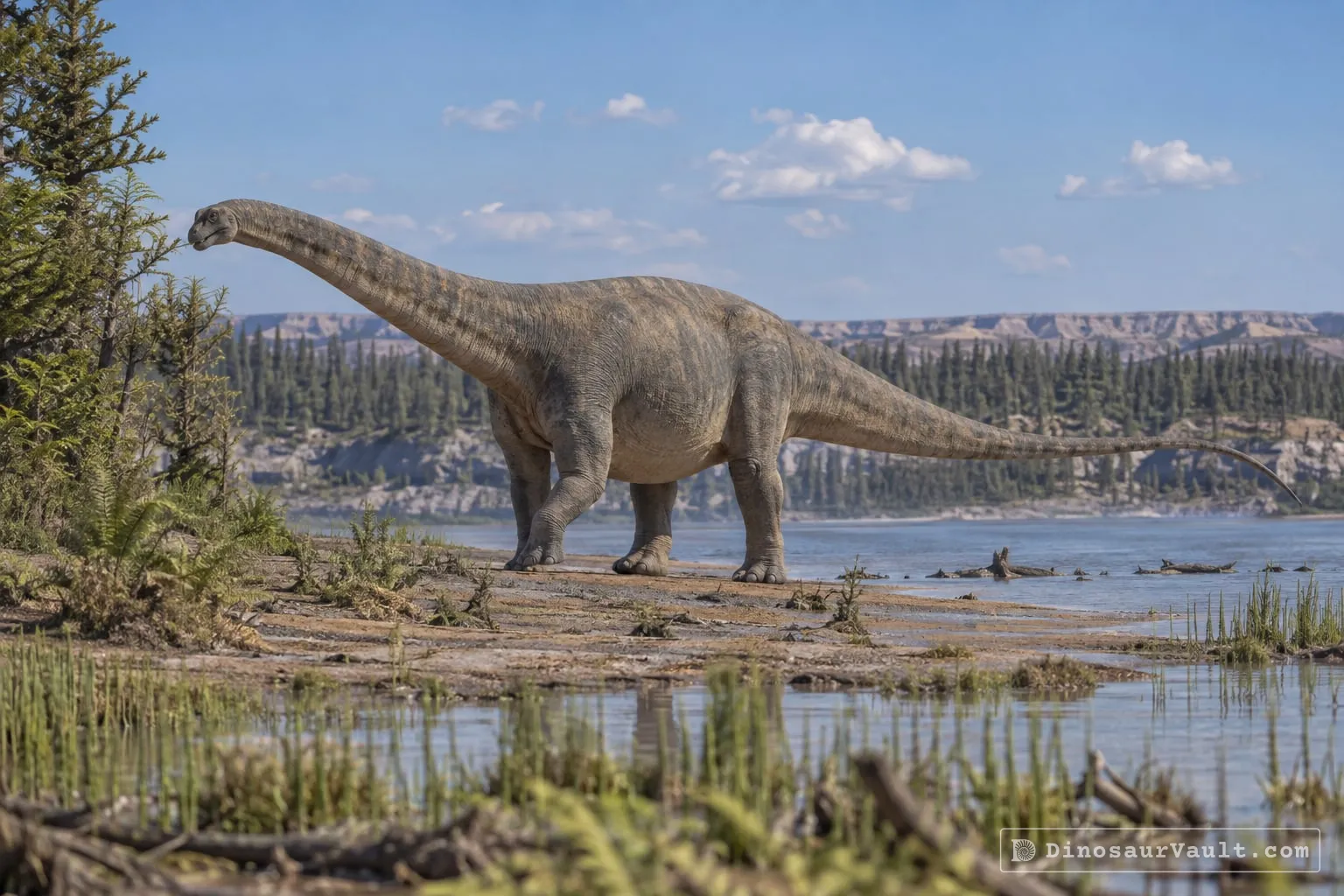
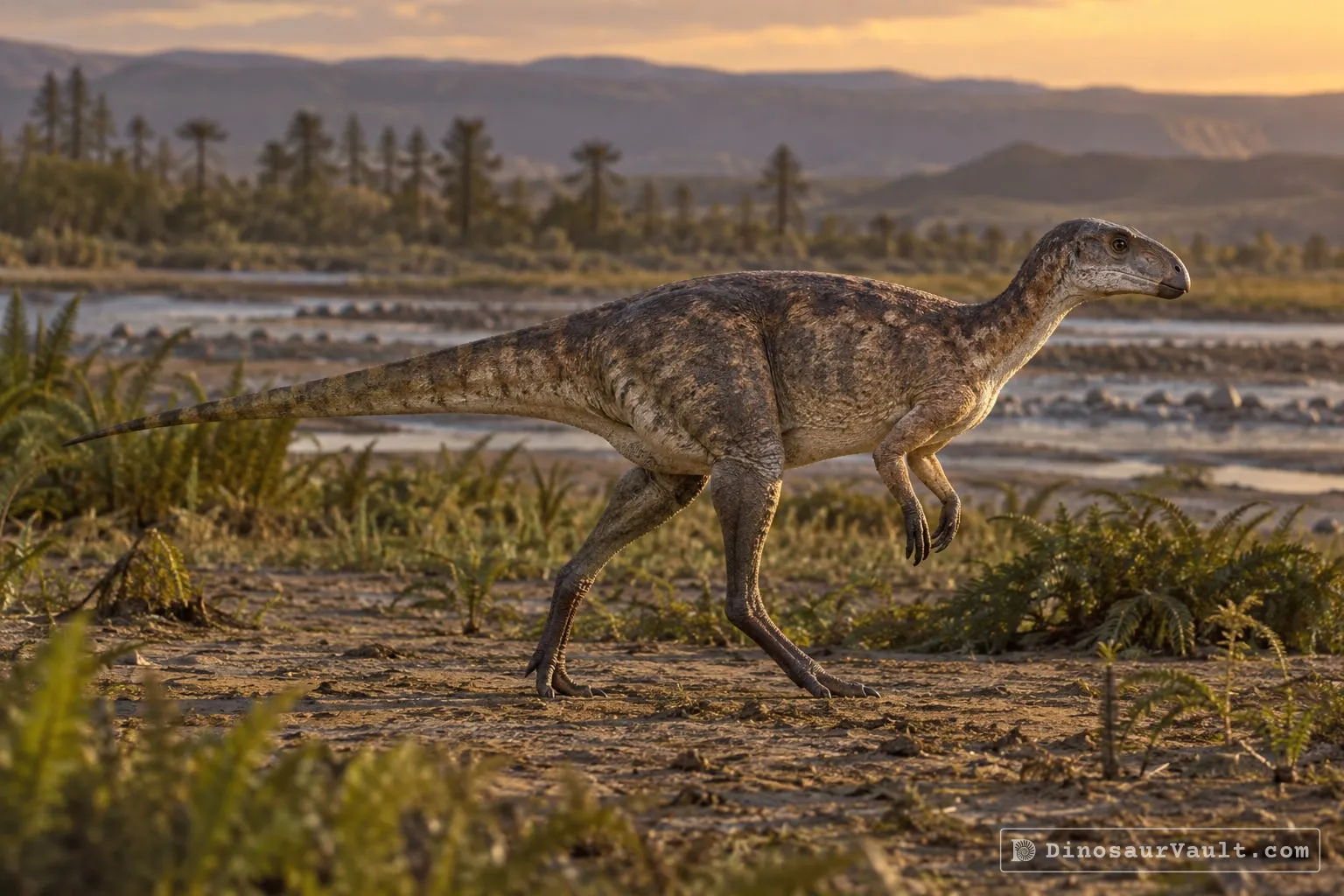
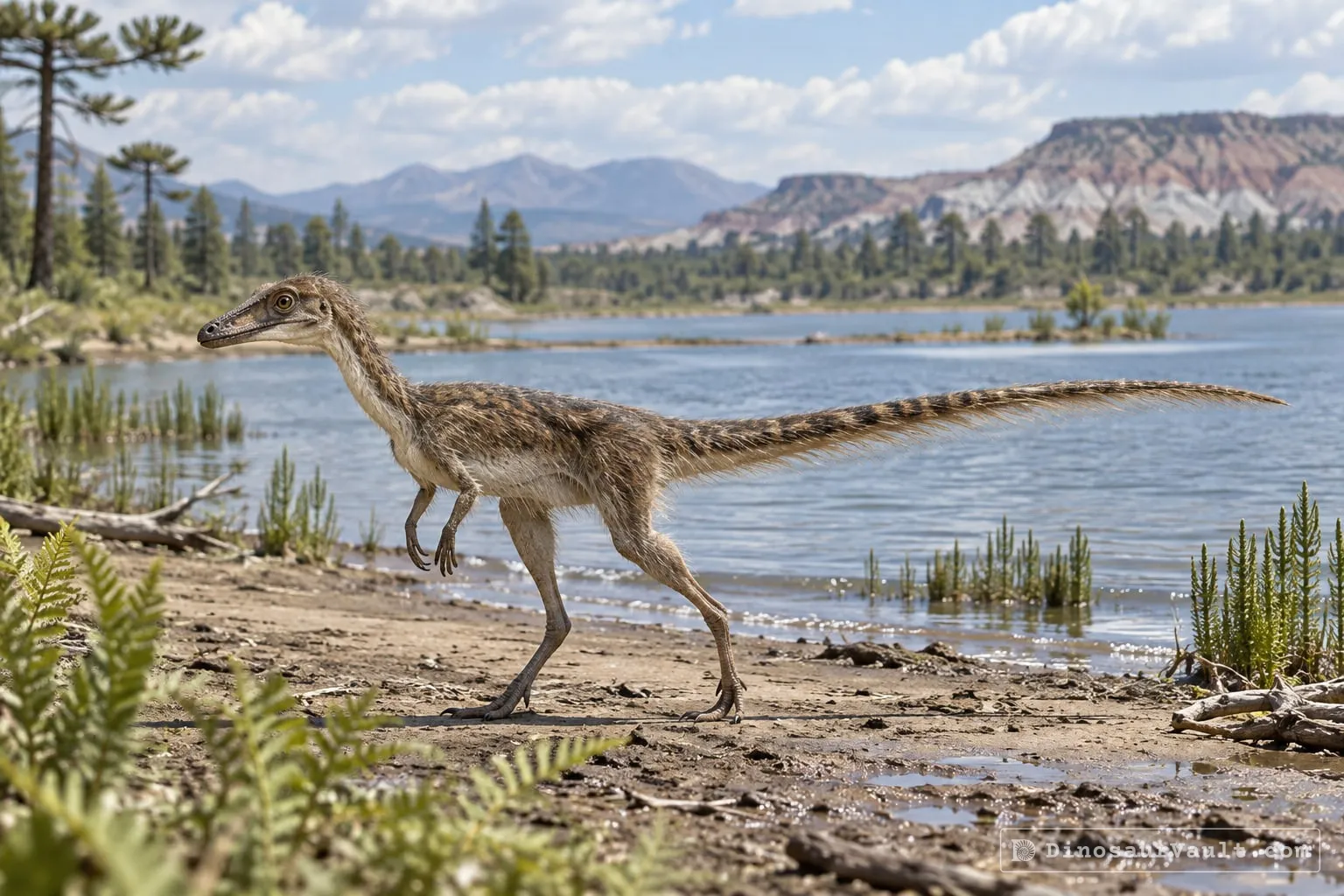


A rock formation can hold fossils laid down millions of years apart, so not every animal here met Epachthosaurus.
The evidence
The science behind Epachthosaurus
Which parts of the picture come from its own bones, and which come from its relatives.
From its own fossils
- A skeleton referred to Epachthosaurus preserves much of the backbone, pelvis and limbs, including the hands and feet.
- The referred skeleton has tail vertebrae with ball-and-socket joints and extra bracing connections.
- The referred skeleton has column-like hand bones with only a tiny fused finger bone. Its two inner foot claws are about equal in size, with a smaller third claw.
Borrowed from relatives
- Most of the body is known from a skeleton referred to Epachthosaurus.
- The missing head is restored after Tapuiasaurus, and the missing neck after Mendozasaurus.
Still unknown
- The shape of its skull and neck.
- Its color and skin covering.
- Whether it lived in herds.
Discovery timeline
- 1990Named itPowell
- 2004Full descriptionMartínez et al.
- 2010New findCasal & Ibiricu
Key papers
The research behind what we know of Epachthosaurus
Named it
Named Epachthosaurus from distinctive backbone material found in Argentina.
Epachthosaurus sciuttoi (gen. et sp. nov.), un dinosaurio sauropodo del Cretácico de Patagonia (Provincia de Chubut, Argentina) [Epachthosaurus sciuttoi (gen. et sp. nov.), a sauropod dinosaur from the Cretaceous of Patagonia (Chubut province, Argentina)]. Actas del V Congreso Argentino de Paleontologia y Bioestratigrafia, Tucumán, Argentina 1: 123-128
No link available
Full description
Linked an articulated skeleton to Epachthosaurus through shared back-vertebra features and described its limbs, feet and unusual backbone bracing.
An articulated specimen of the basal titanosaurian (Dinosauria: Sauropoda)Epachthosaurus sciuttoifrom the early Late Cretaceous Bajo Barreal Formation of Chubut Province, Argentina. Journal of Vertebrate Paleontology 24: 107-120
Read the paper : An articulated specimen of the basal titanosaurian (Dinosauria: Sauropoda)Epachthosaurus sciuttoifrom the early Late Cretaceous Bajo Barreal Formation of Chubut Province, Argentina (opens in a new tab)New find
Described a large back vertebra assigned to Epachthosaurus and pelvic bones from the same formation.
Assignable material to Epachthosaurus Powell, 1990 (Sauropoda: Titanosauria), from the Bajo Barreal Formation, Upper Cretaceous, Chubut, Argentina. Revista Brasileira de Paleontologia 13: 247-256
Read the paper : Assignable material to Epachthosaurus Powell, 1990 (Sauropoda: Titanosauria), from the Bajo Barreal Formation, Upper Cretaceous, Chubut, Argentina (opens in a new tab)
Close relatives
Other members of Lithostrotia


Sources: Wikidata