Sarmientosaurus
"Sarmiento lizard"
- Lived
- 101 to 90 million years ago, Late Cretaceous
- Diet
- Herbivore
- Group
- Sauropods
- Found in
- Argentina
- Named by
- Martínez et al. 2016
Where its fossils were found
The evidence
Today

95 million years ago
Habitat
Rivers crossed a floodplain in what is now Argentina. The Bajo Barreal Formation also preserves Xenotarsosaurus, Epachthosaurus and Notohypsilophodon.
Field notes
About Sarmientosaurus
What it was like
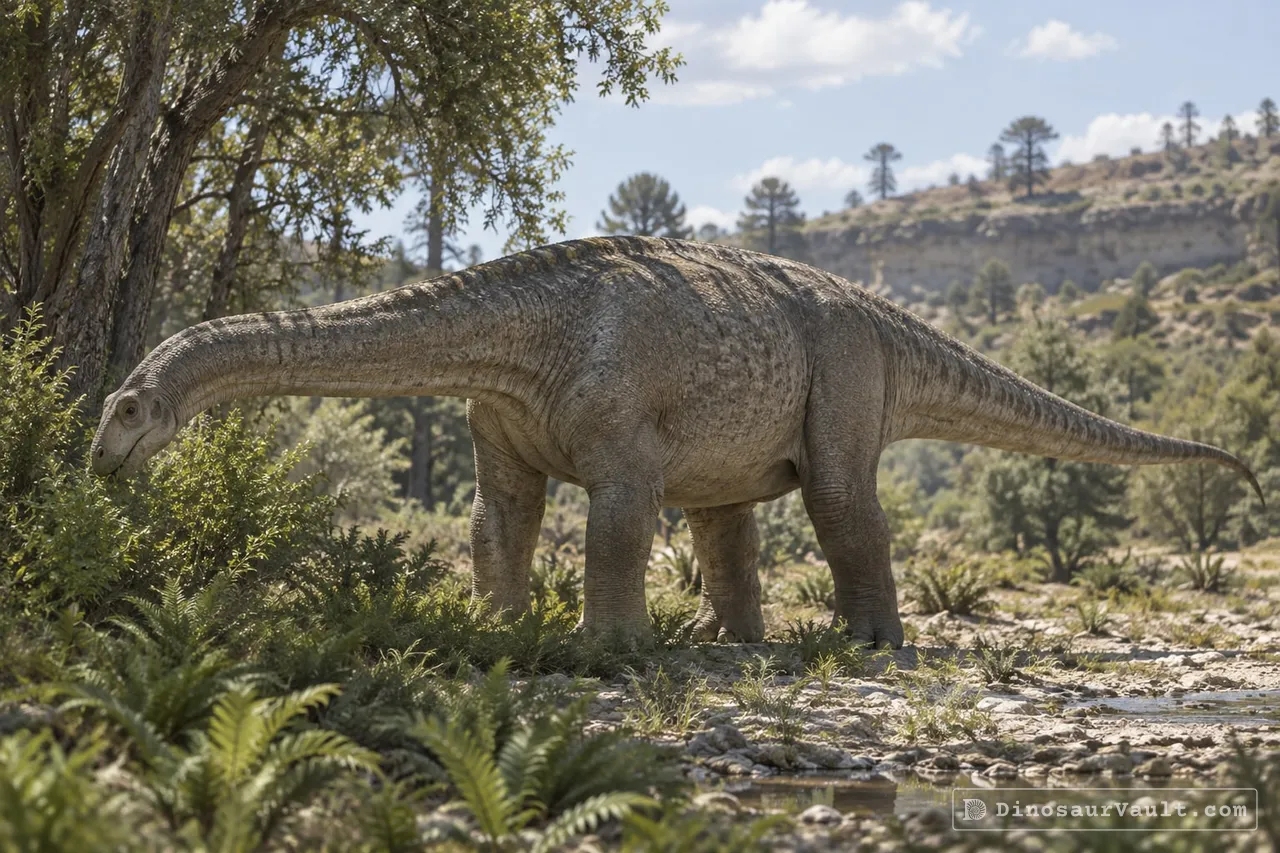
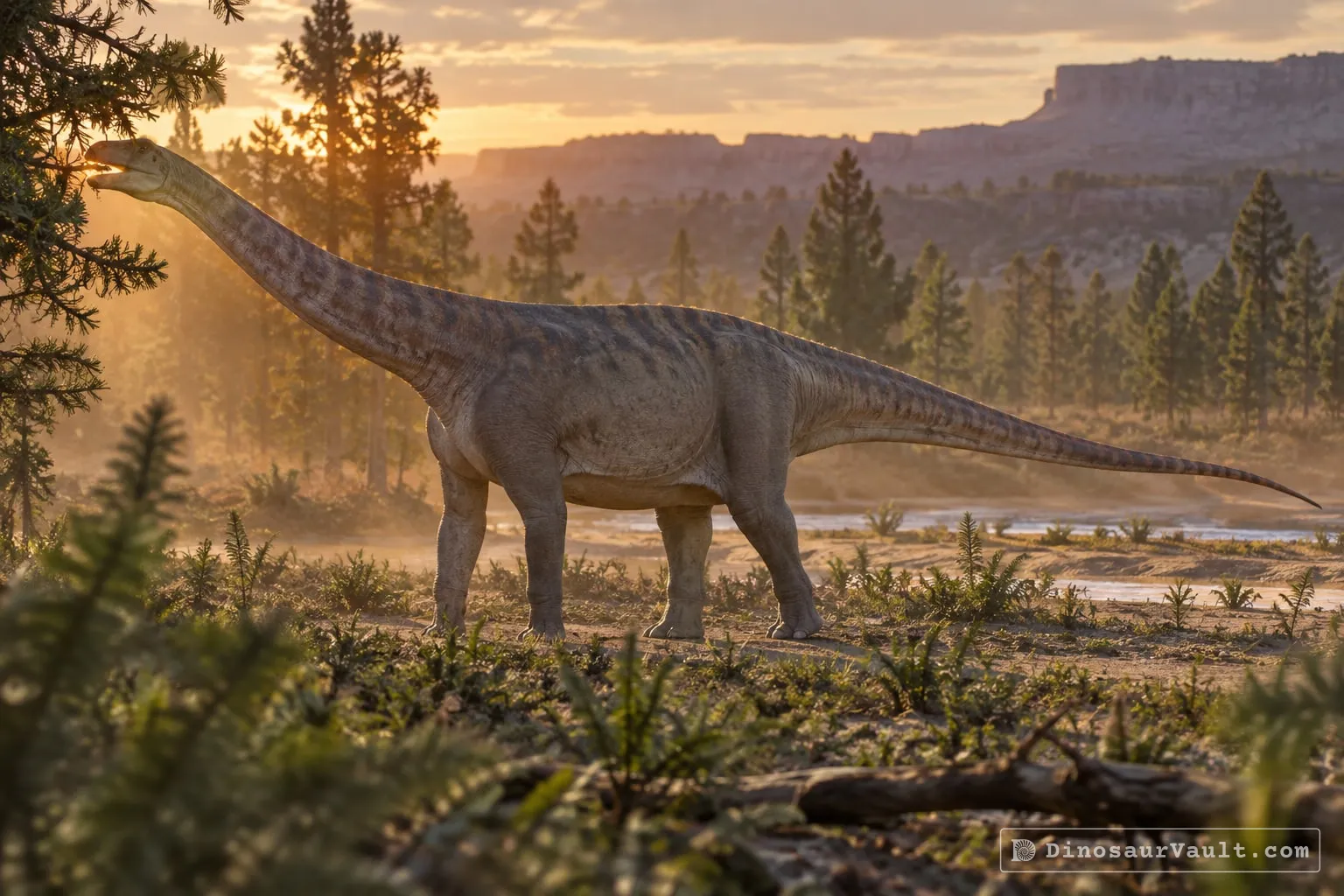
Sarmientosaurus was a titanosaur, a long-necked, four-legged plant eater, known from a complete skull and part of the neck. Its large eye sockets and brain scans suggest it had good eyesight.
Its inner ears suggest it usually held its head low, feeding on plants close to the ground.
Its world
It lived in the Late Cretaceous in what is now southern Argentina. Its bones come from the Bajo Barreal Formation, where it shared the land with the hunter Xenotarsosaurus and the titanosaurs Epachthosaurus and Drusilasaura.
How it was found
Martínez and colleagues named Sarmientosaurus in 2016. Its skull is one of the most complete of any titanosaur.
Field gallery
More views of Sarmientosaurus
Scenes reconstructed from the available fossil evidence.
1 of 3
Lived alongside
Found in the same rock formations
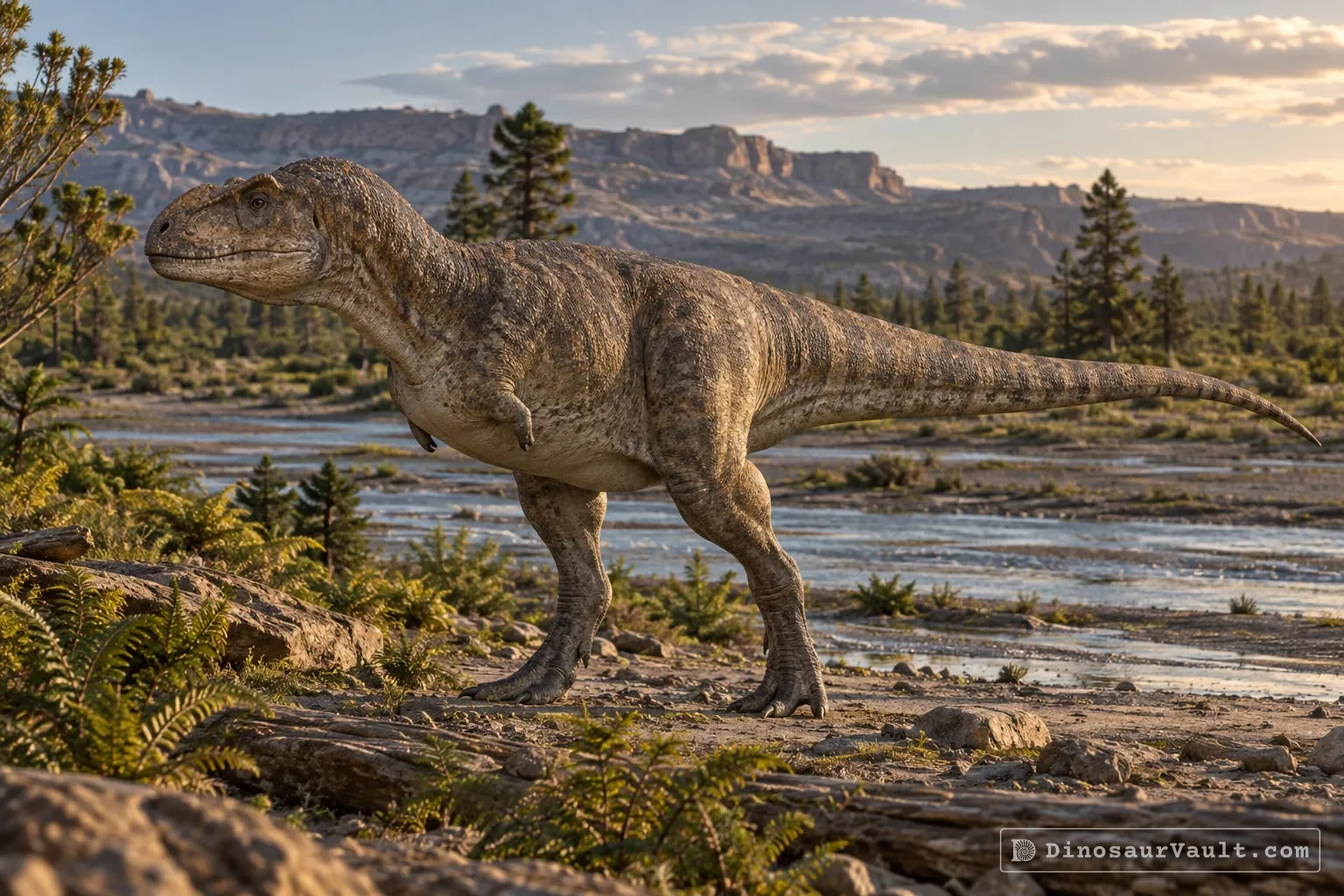
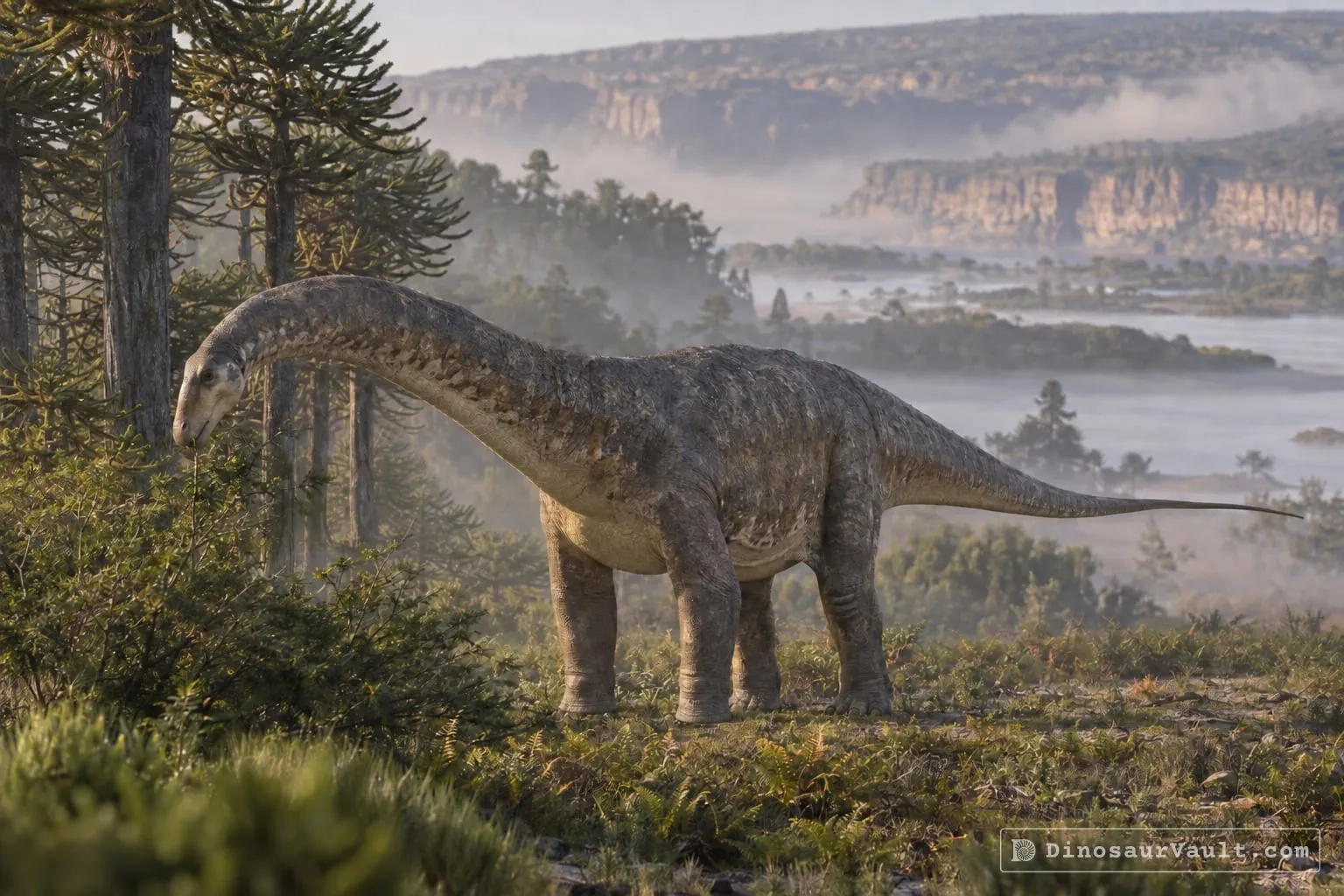
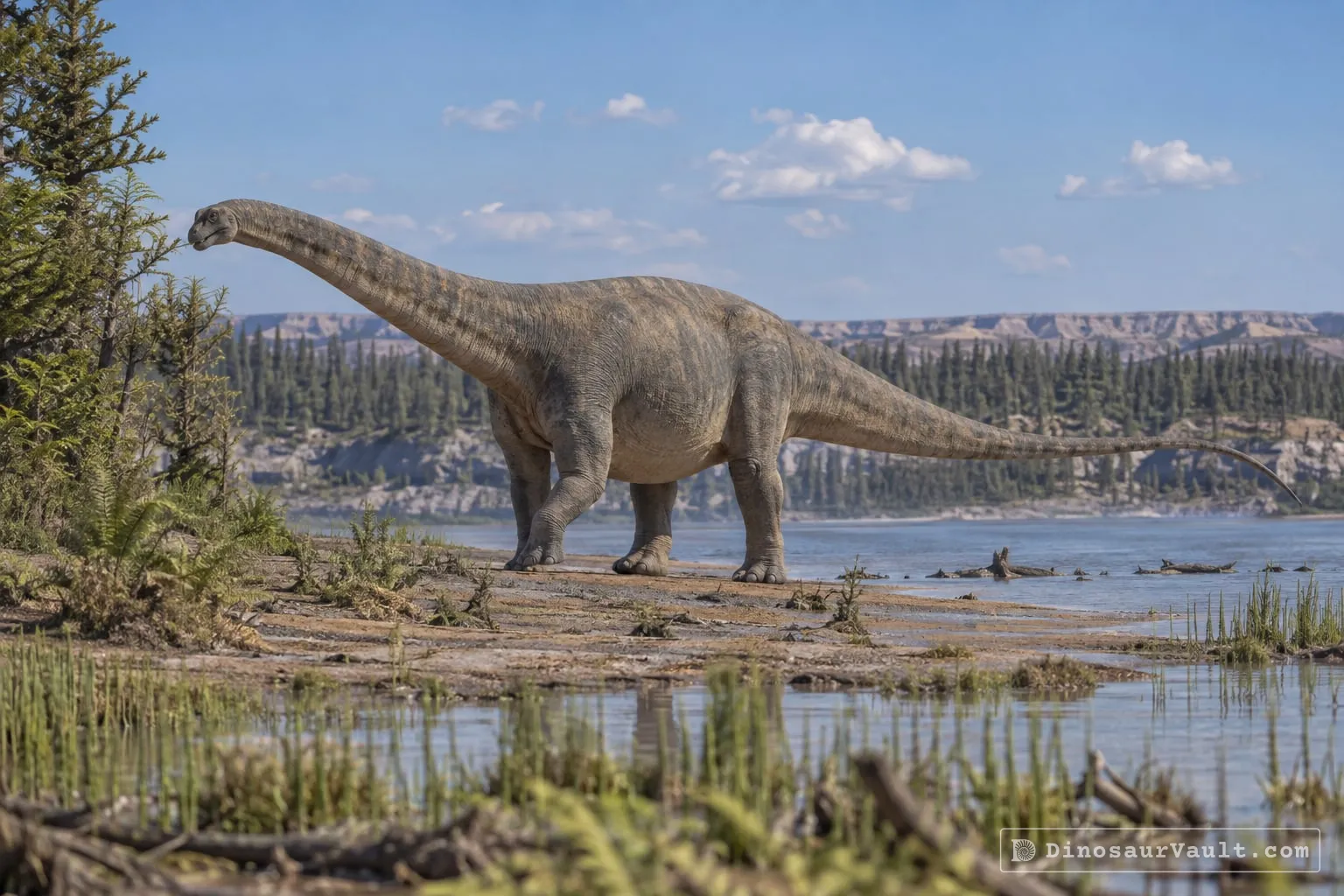
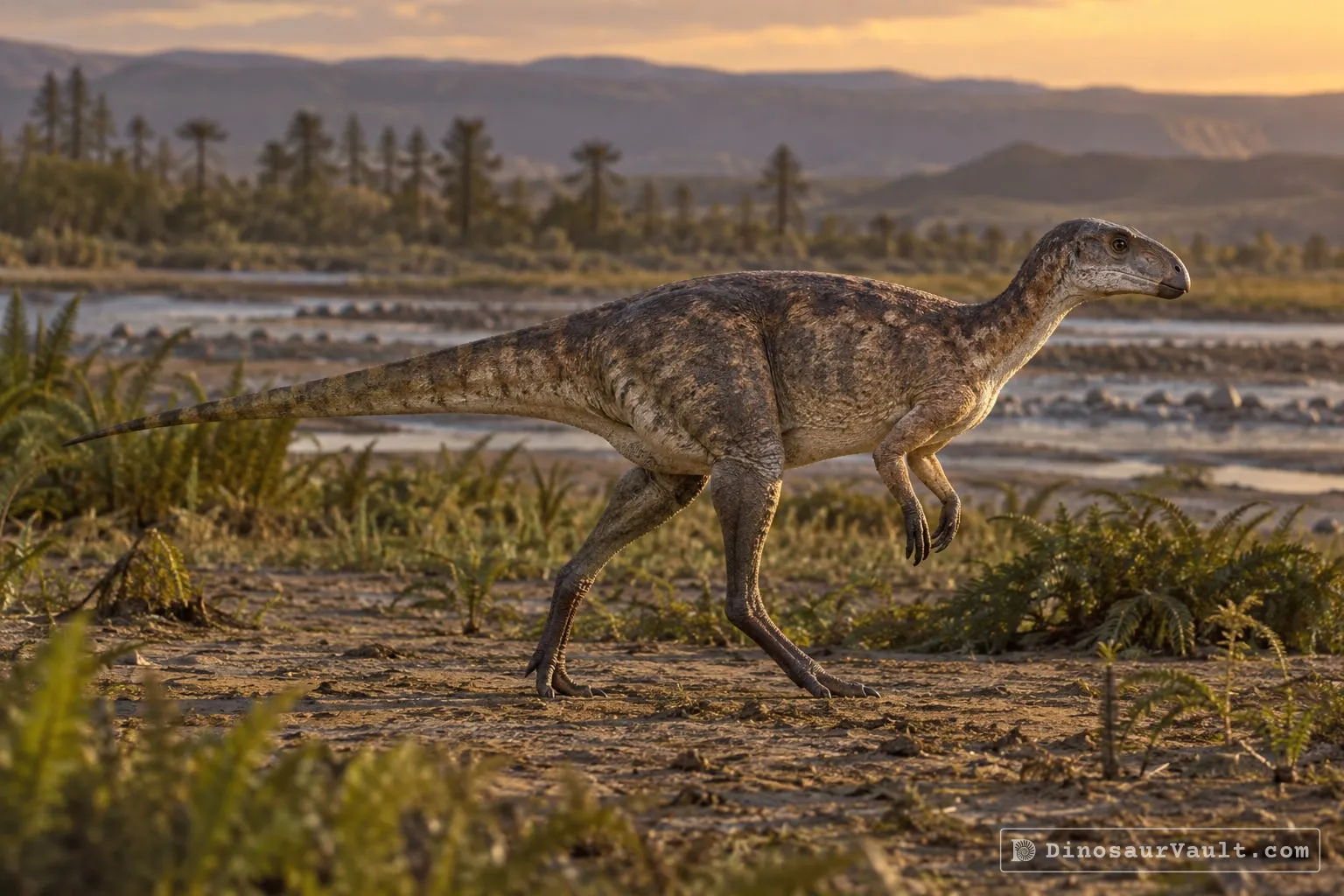
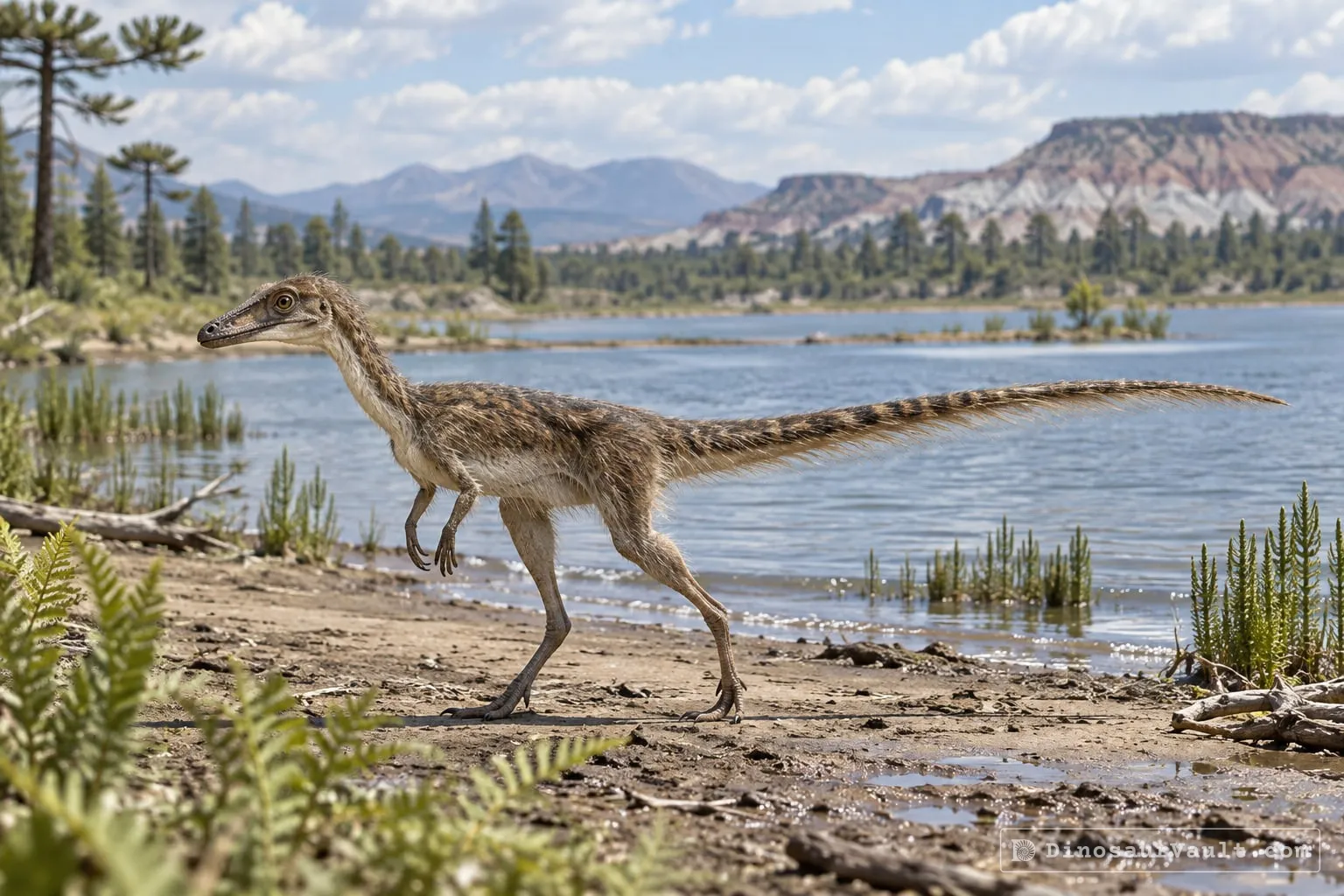


A rock formation can hold fossils laid down millions of years apart, so not every animal here met Sarmientosaurus.
The evidence
The science behind Sarmientosaurus
Which parts of the picture come from its own bones, and which come from its relatives.
From its own fossils
- A nearly complete skull and part of the neck preserve large eye sockets and teeth that lean in different directions along the jaws.
- Scans reveal the spaces for the brain and inner ears inside the skull.
- The inner-ear anatomy suggests it usually held its snout downward.
Borrowed from relatives
- Diamantinasaurus and other long-necked relatives guide restorations of the missing trunk, legs and tail.
Still unknown
- Its full body size and proportions.
- Its skin covering and color.
- Exactly which plants it ate.
Discovery timeline
- 2016Named itMartínez et al.
- 2021Family treePoropat et al.
- 2024SkullBarbosa, da Silva Junior & Montefeltro
Key papers
The research behind what we know of Sarmientosaurus
Named it
Described the skull and neck, including scans of the brain cavity and inner ears that suggest a downward-pointing snout.
A Basal Lithostrotian Titanosaur (Dinosauria: Sauropoda) with a Complete Skull: Implications for the Evolution and Paleobiology of Titanosauria. PLOS ONE 11: e0151661
Read the paper : A Basal Lithostrotian Titanosaur (Dinosauria: Sauropoda) with a Complete Skull: Implications for the Evolution and Paleobiology of Titanosauria (opens in a new tab)Family tree
Identified shared skull features linking Sarmientosaurus with Diamantinasaurus and Savannasaurus in a newly named group.
Second specimen of the Late Cretaceous Australian sauropod dinosaurDiamantinasaurus matildaeprovides new anatomical information on the skull and neck of early titanosaurs. Zoological Journal of the Linnean Society 192: 610-674
Read the paper : Second specimen of the Late Cretaceous Australian sauropod dinosaurDiamantinasaurus matildaeprovides new anatomical information on the skull and neck of early titanosaurs (opens in a new tab)Skull
Restored the skull digitally to repair damage and provide a model for studies of its shape and function.
Digital reconstruction of the skull of Sarmientosaurus musacchioi, a titanosaur (Sauropoda, Dinosauria) from the Upper Cretaceous of Argentina. MorphoMuseuM 10: e248
Read the paper : Digital reconstruction of the skull of Sarmientosaurus musacchioi, a titanosaur (Sauropoda, Dinosauria) from the Upper Cretaceous of Argentina (opens in a new tab)
Close relatives
Other members of Diamantinasauria


Sources: Wikidata