Nasutoceratops
nah-SOO-toh-SER-ah-tops
"big-nosed horned face"
Type species Nasutoceratops titusi
- Lived
- 84 to 72 million years ago, Late Cretaceous
- Diet
- Herbivore
- Length
- about 4.5 m (15 ft)
- Group
- Ceratopsians, Ceratopsidae
- Found in
- United States
- Named by
- Sampson et al. 2013
Size comparison
To scale


Scale in metersOutline: typical ceratopsian shape
Where its fossils were found
The evidence
Today

80 million years ago
Habitat
It lived on a wet floodplain with lakes and wetlands. Neighbors in the Kaiparowits Formation included Kosmoceratops, Parasaurolophus and Teratophoneus.
Field notes
About Nasutoceratops
What it was like
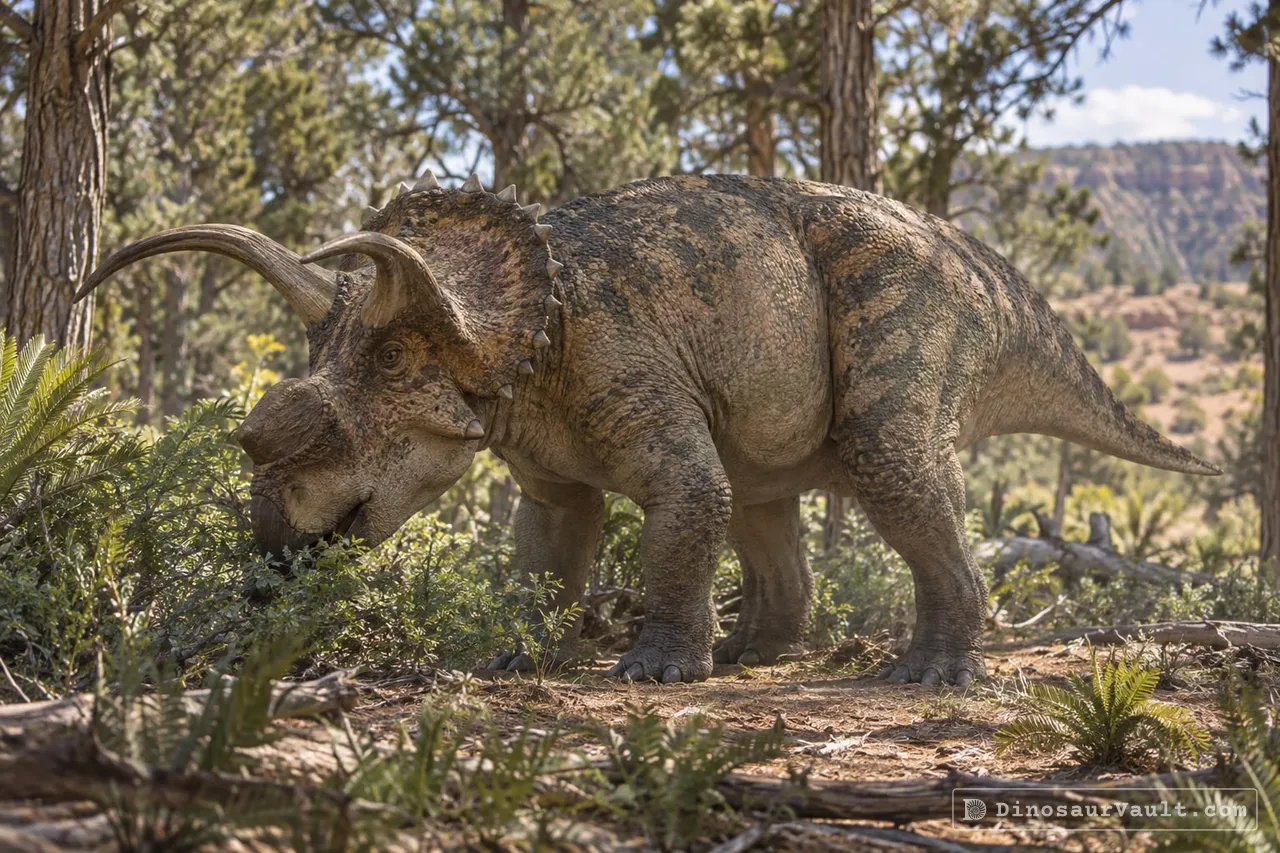
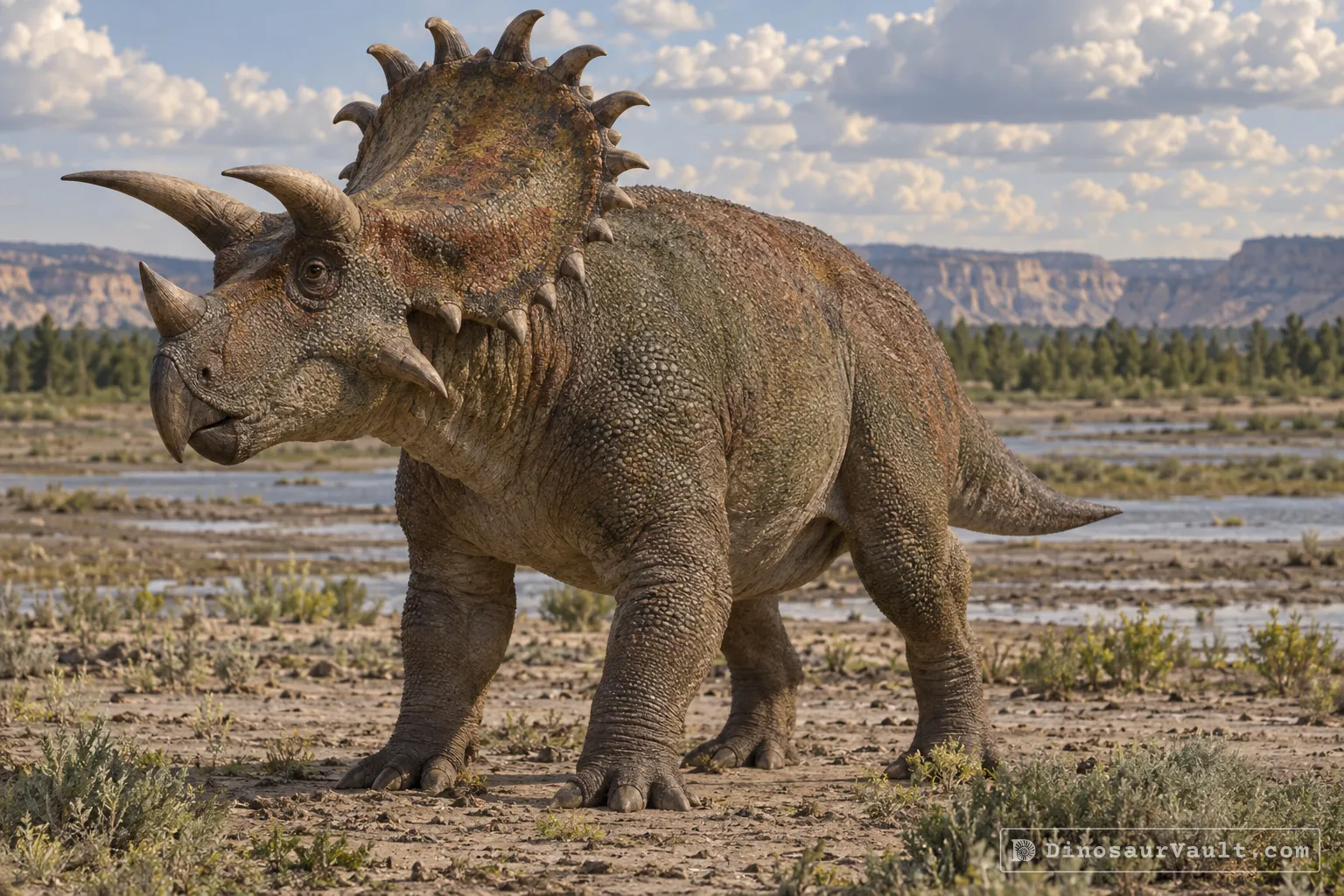
Nasutoceratops was a horned dinosaur about 4.5 meters (15 feet) long, with a very large nose and long, curving horns over its eyes that swept forward, a little like those of a bull.
Its frill was plain, without the spikes of many of its relatives.
Its world
It lived in the Late Cretaceous in what is now Utah, in the United States. Its bones come from the Kaiparowits Formation, where it shared the land with the horned Kosmoceratops and Utahceratops, the crested Parasaurolophus and the tyrannosaur Teratophoneus.
How it was found
Sampson and colleagues named Nasutoceratops in 2013, from a single find with a nearly complete skull. Skin impressions found with it show small, rounded scales.
Field gallery
More views of Nasutoceratops
Scenes reconstructed from the available fossil evidence.
1 of 3
Lived alongside
Found in the same rock formations
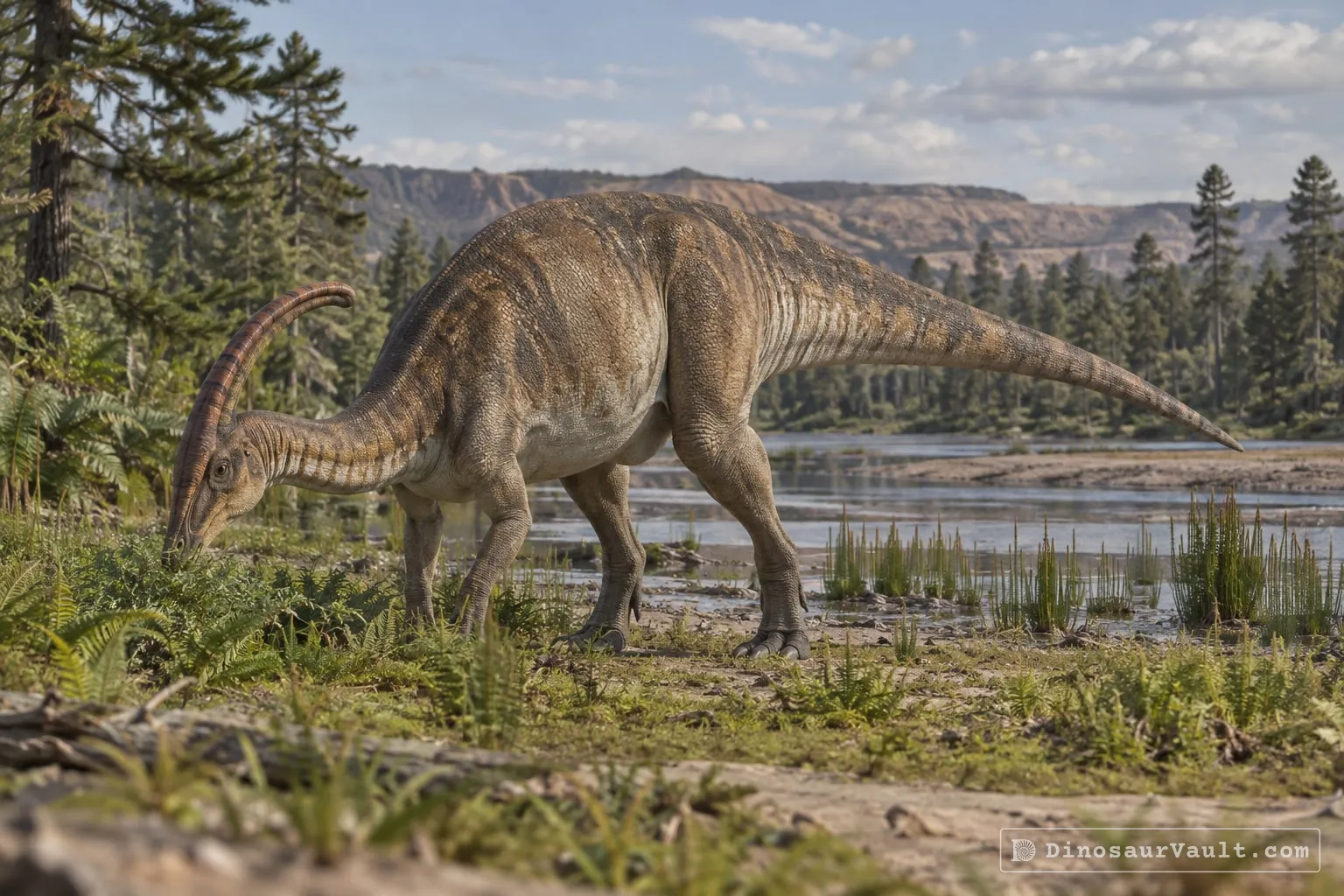
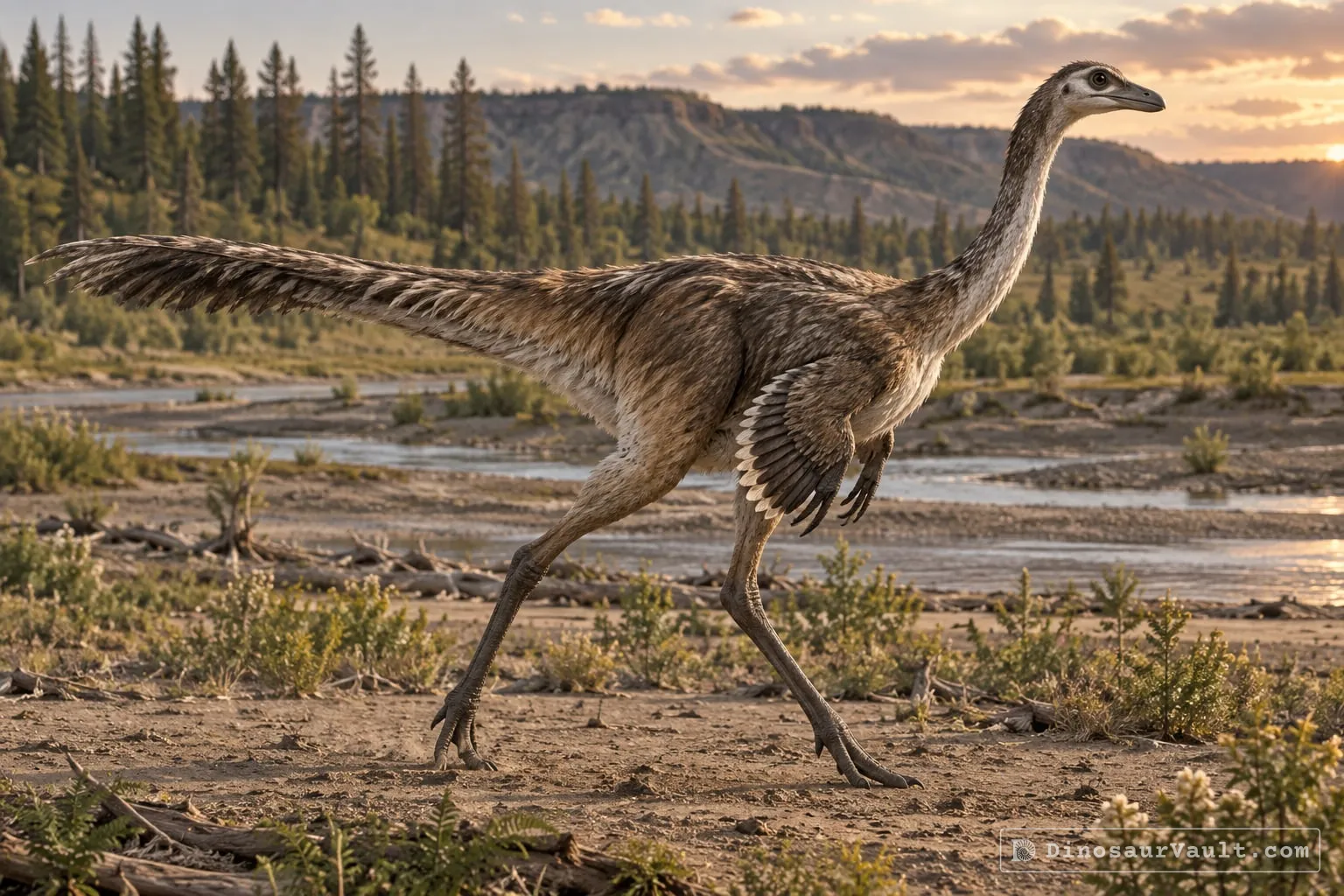
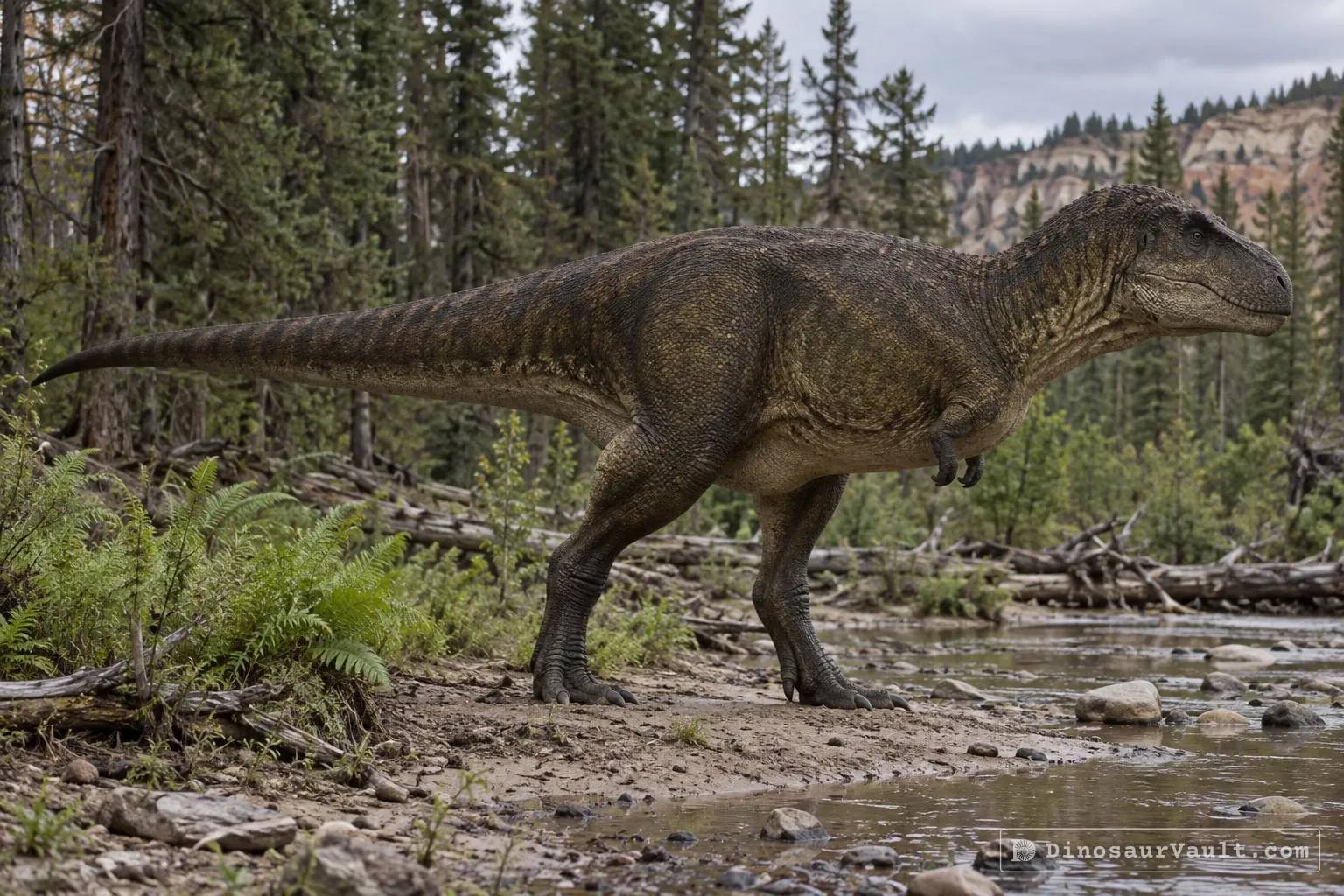
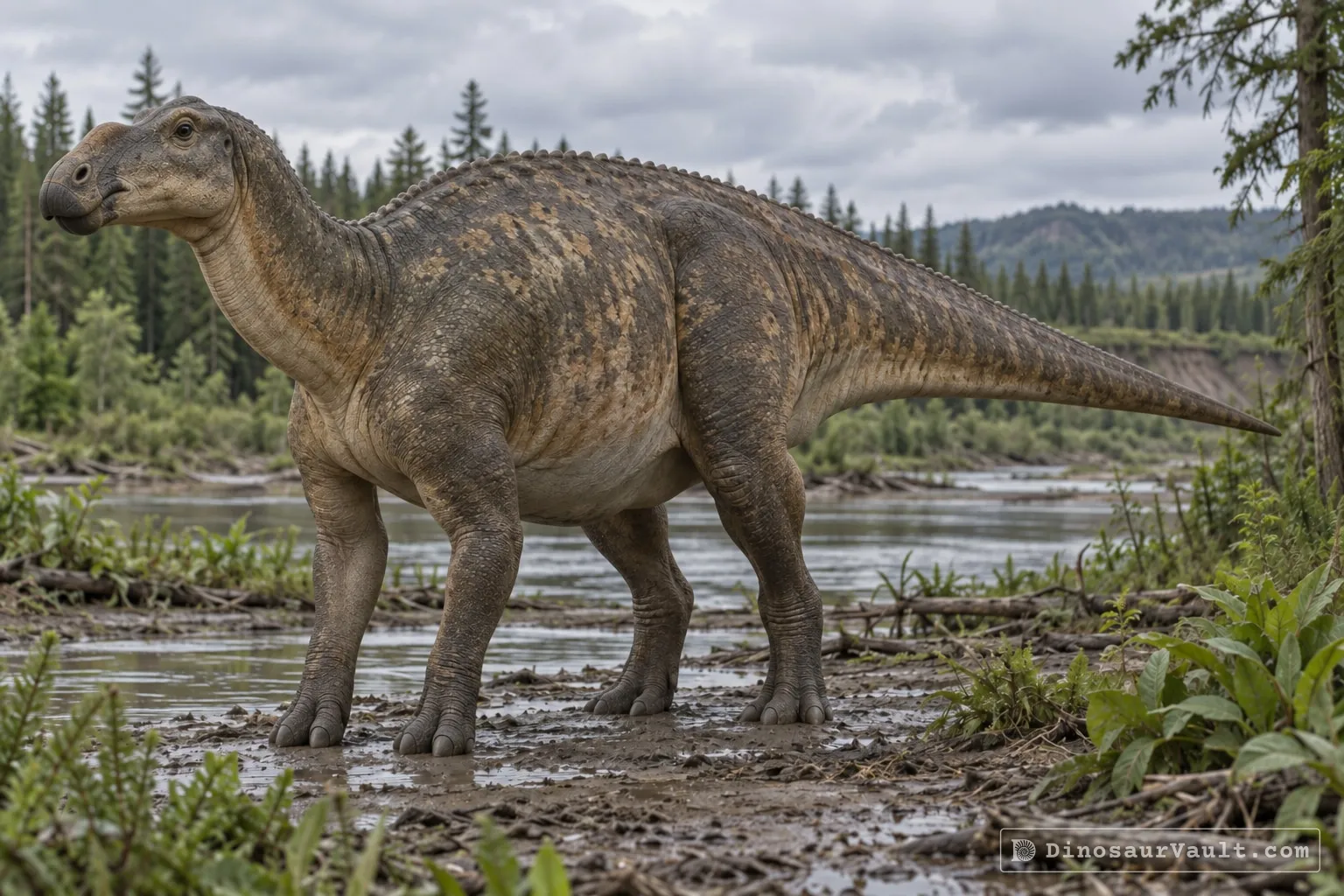
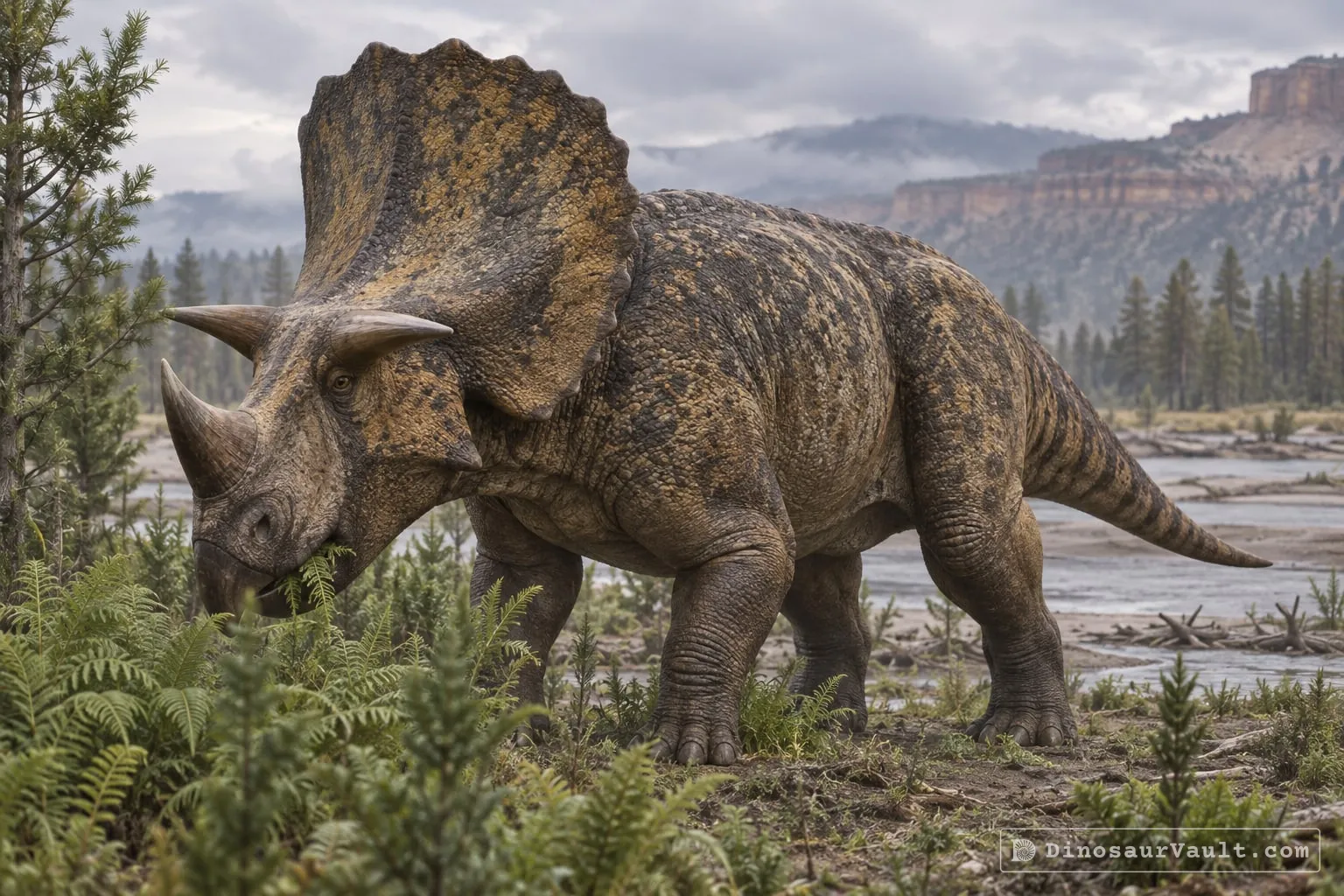
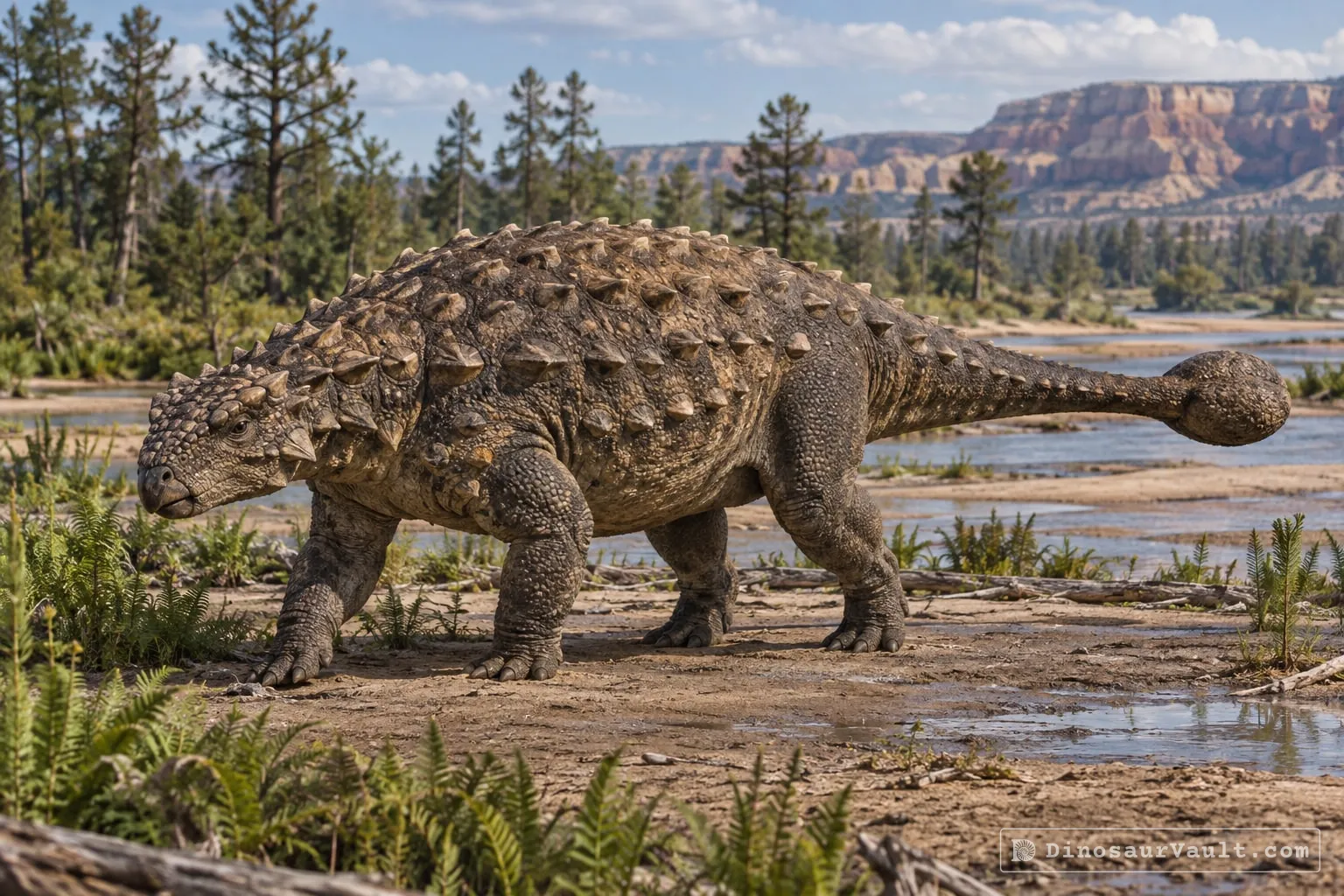


A rock formation can hold fossils laid down millions of years apart, so not every animal here met Nasutoceratops.
The evidence
The science behind Nasutoceratops
Which parts of the picture come from its own bones, and which come from its relatives.
From its own fossils
- A nearly complete skull shows an unusually short, deep snout and long brow horns that curve forward.
- Its rounded frill has small ornaments along the edge rather than large spikes or hooks.
- Skin near the shoulder and upper arm preserves rounded scales and a patch of large hexagonal scales bordered by smaller triangular ones.
Borrowed from relatives
- The missing hindquarters and tail are restored using other horned dinosaurs such as Centrosaurus.
Still unknown
- The purpose of the air spaces inside its nasal bones.
- Its color.
- How its horns changed from hatchling to adult.
Discovery timeline
- 2013Named itSampson et al.
- 2016Full descriptionLund, Sampson & Loewen
- 2017Family treeRyan et al.
Key papers
The research behind what we know of Nasutoceratops
Named it
Introduced a horned dinosaur with a deep snout, long forward-curving brow horns and a frill without large spikes.
A remarkable short-snouted horned dinosaur from the Late Cretaceous (late Campanian) of southern Laramidia. Proceedings of the Royal Society B: Biological Sciences 280: 20131186
Read the paper : A remarkable short-snouted horned dinosaur from the Late Cretaceous (late Campanian) of southern Laramidia (opens in a new tab)Full description
Detailed the skull and associated body bones, including the air-filled nasal bones, and recovered Avaceratops as its closest relative.
Nasutoceratops titusi (Ornithischia, Ceratopsidae), a basal centrosaurine ceratopsid from the Kaiparowits Formation, southern Utah. Journal of Vertebrate Paleontology 36
Read the paper : Nasutoceratops titusi (Ornithischia, Ceratopsidae), a basal centrosaurine ceratopsid from the Kaiparowits Formation, southern Utah (opens in a new tab)Family tree
Recognized a group of short-faced, long-horned relatives of Nasutoceratops, with members in both northern and southern Laramidia.
A basal ceratopsid (Centrosaurinae: Nasutoceratopsini) from the Oldman Formation (Campanian) of Alberta, Canada. Canadian Journal of Earth Sciences 54: 1-14
Read the paper : A basal ceratopsid (Centrosaurinae: Nasutoceratopsini) from the Oldman Formation (Campanian) of Alberta, Canada (opens in a new tab)
Close relatives
Other members of Ceratopsidae


Sources: Wikidata