Achelousaurus
ah-KEL-oh-SORE-us
"Achelous's lizard"
Type species Achelousaurus horneri
- Lived
- 84 to 72 million years ago, Late Cretaceous
- Diet
- Herbivore
- Length
- about 6 m (20 ft)
- Group
- Ceratopsians, Ceratopsidae
- Found in
- United States
- Named by
- Sampson 1994
Size comparison
To scale


Scale in meters
Where its fossils were found
The evidence
Today

80 million years ago
Habitat
Rivers crossed a floodplain that experienced seasonal dry spells in the Two Medicine Formation. Maiasaura, Einiosaurus and Daspletosaurus lived in the wider region.
Field notes
About Achelousaurus
What it was like
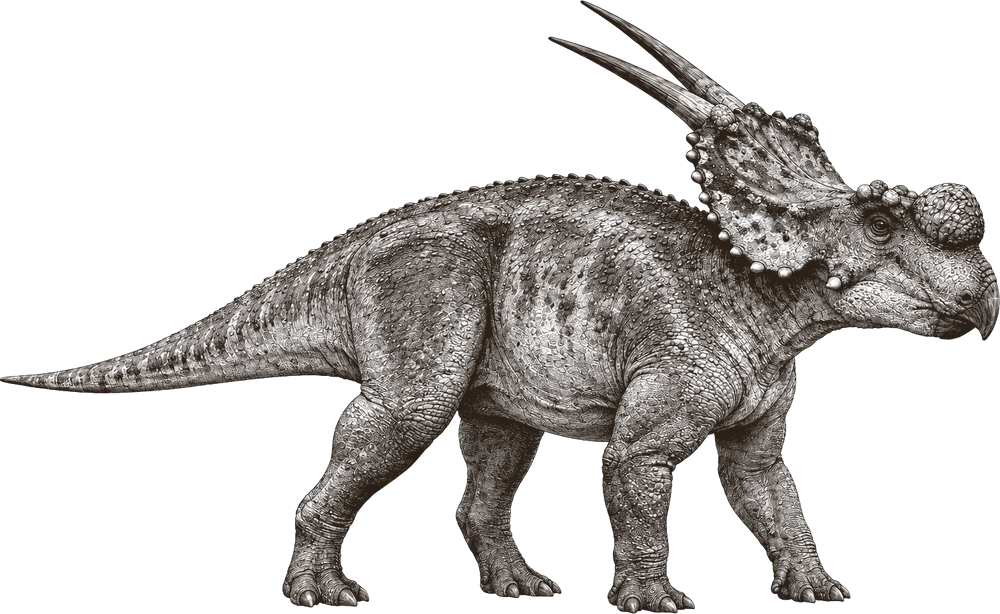
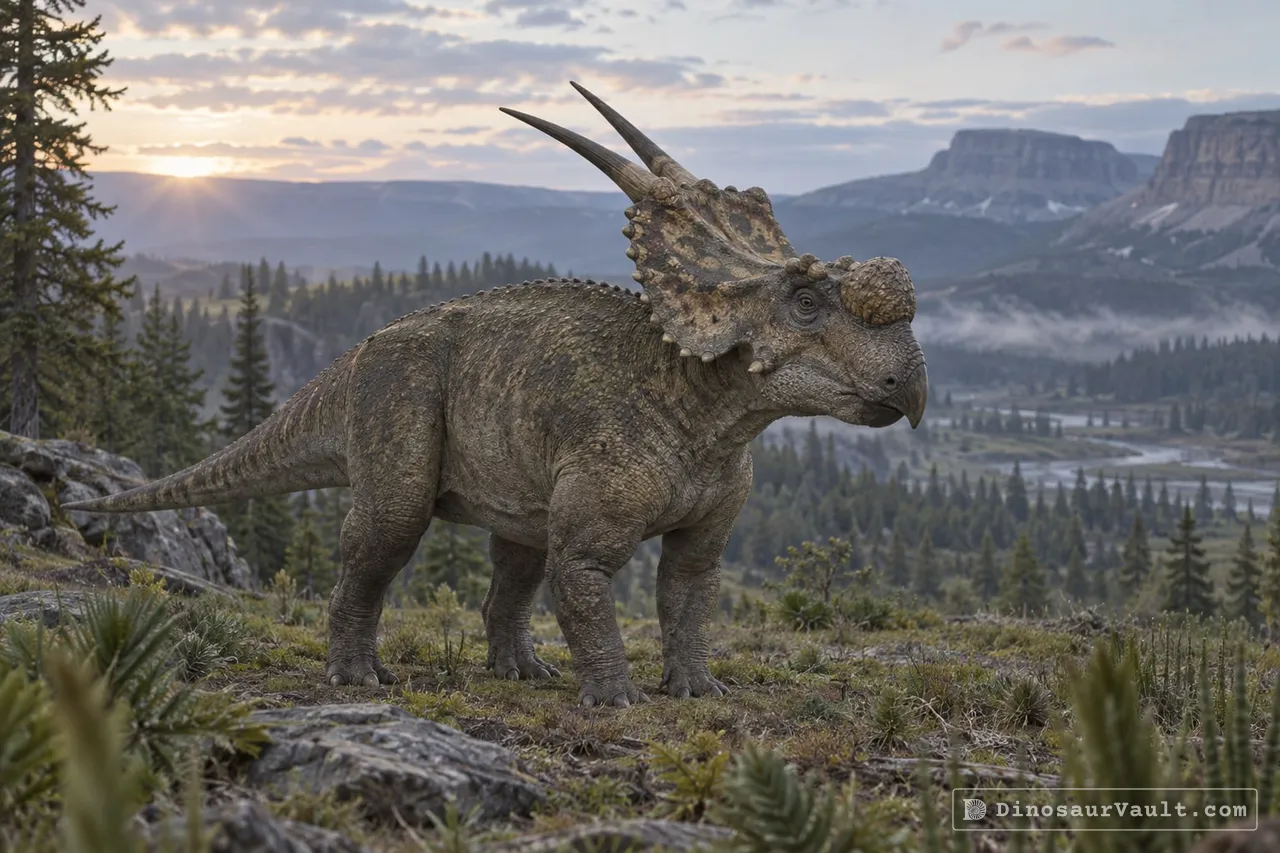
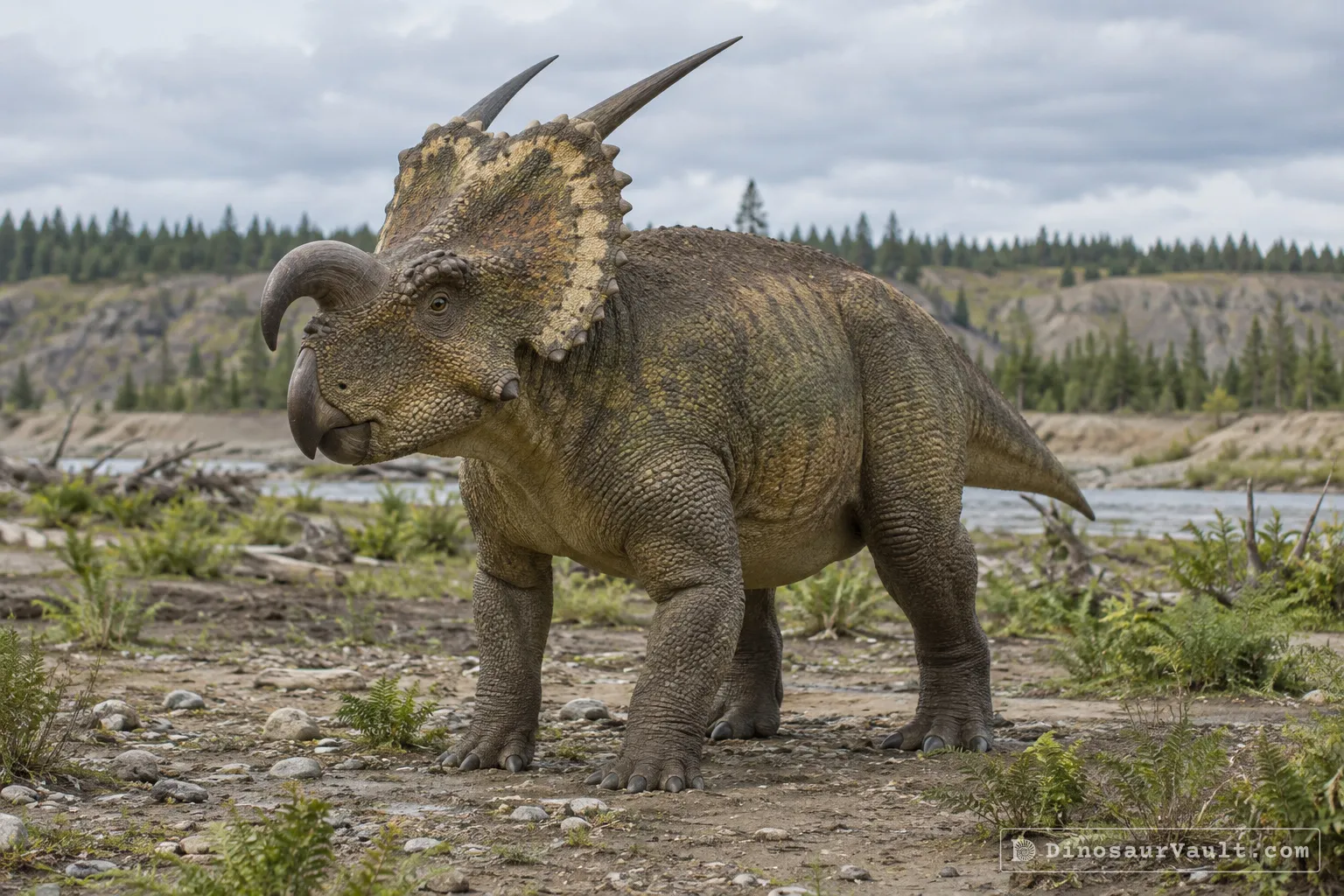
Achelousaurus was a plant-eating dinosaur that walked on four legs and carried a large head with a beak at the front, much like other ceratopsians. It grew to about 6 meters (20 feet) long. Where many of its relatives had horns above the eyes and on the nose, Achelousaurus instead had rough, thickened bosses in those spots.
A bony frill extended from the back of its skull, with a pair of curved spikes at the edge. The bosses were probably covered in a tough layer of keratin in life, and some researchers think animals may have used them to butt heads or to show off to rivals.
Its world
Achelousaurus lived from about 84 to 72 million years ago, during the Late Cretaceous, in what is now Montana in the United States. Its fossils come from the Two Medicine Formation.
It shared its world with other plant eaters such as Maiasaura and Einiosaurus, as well as predators including Daspletosaurus and Troodon. Armored Euoplocephalus and fast-moving Saurornitholestes also lived in the same region.
How it was found
Sampson named Achelousaurus in 1994, based on fossils collected in Montana. Only two finds are known, mostly skull material from animals at different ages, from juveniles to adults. Its closest relatives include Styracosaurus, Pachyrhinosaurus, and Triceratops, and some researchers think Achelousaurus may represent a stage between horned and bossed ceratopsians, though this idea is debated.
Field gallery
More views of Achelousaurus
Scenes reconstructed from the available fossil evidence.
1 of 7
Lived alongside
Found in the same rock formations
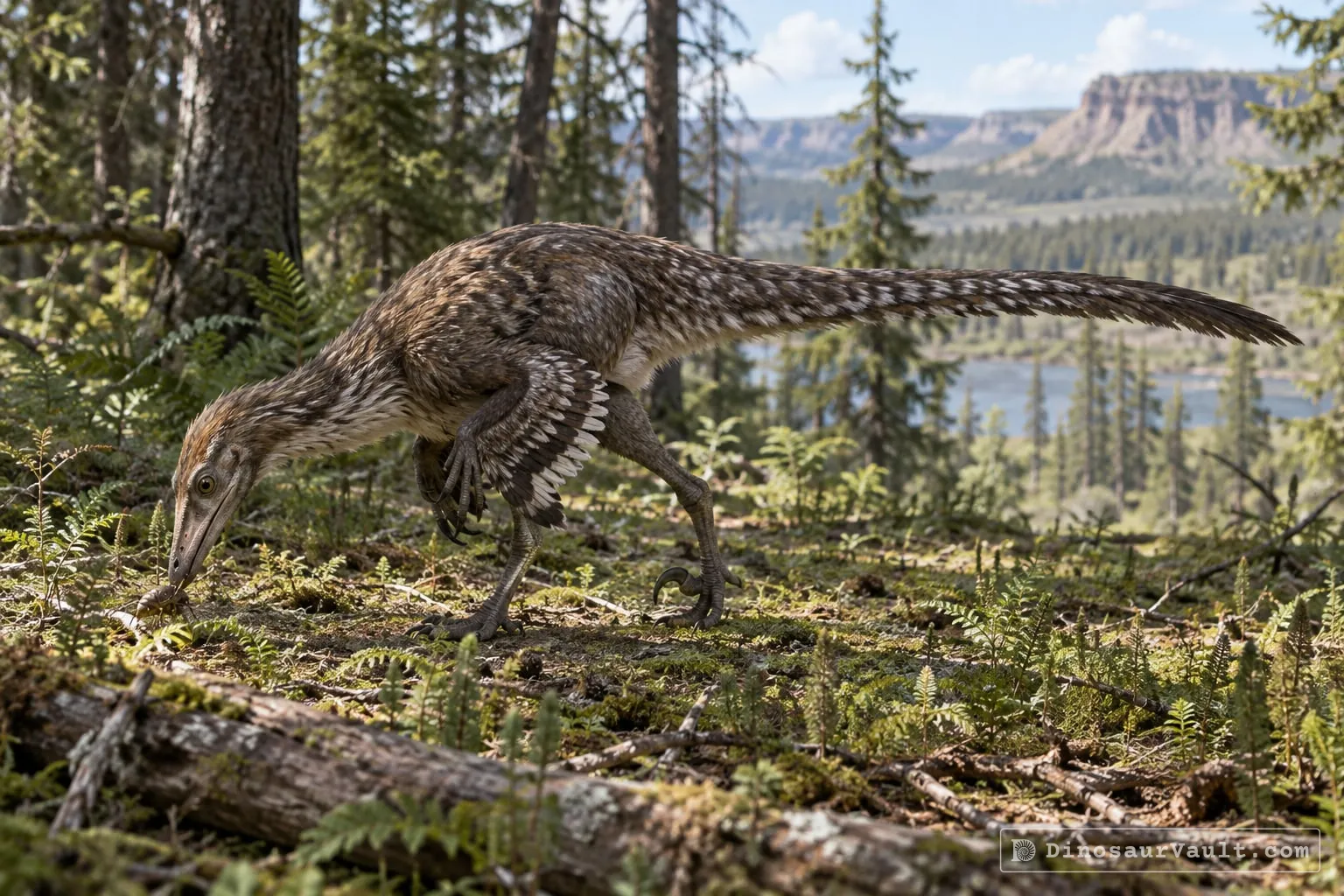
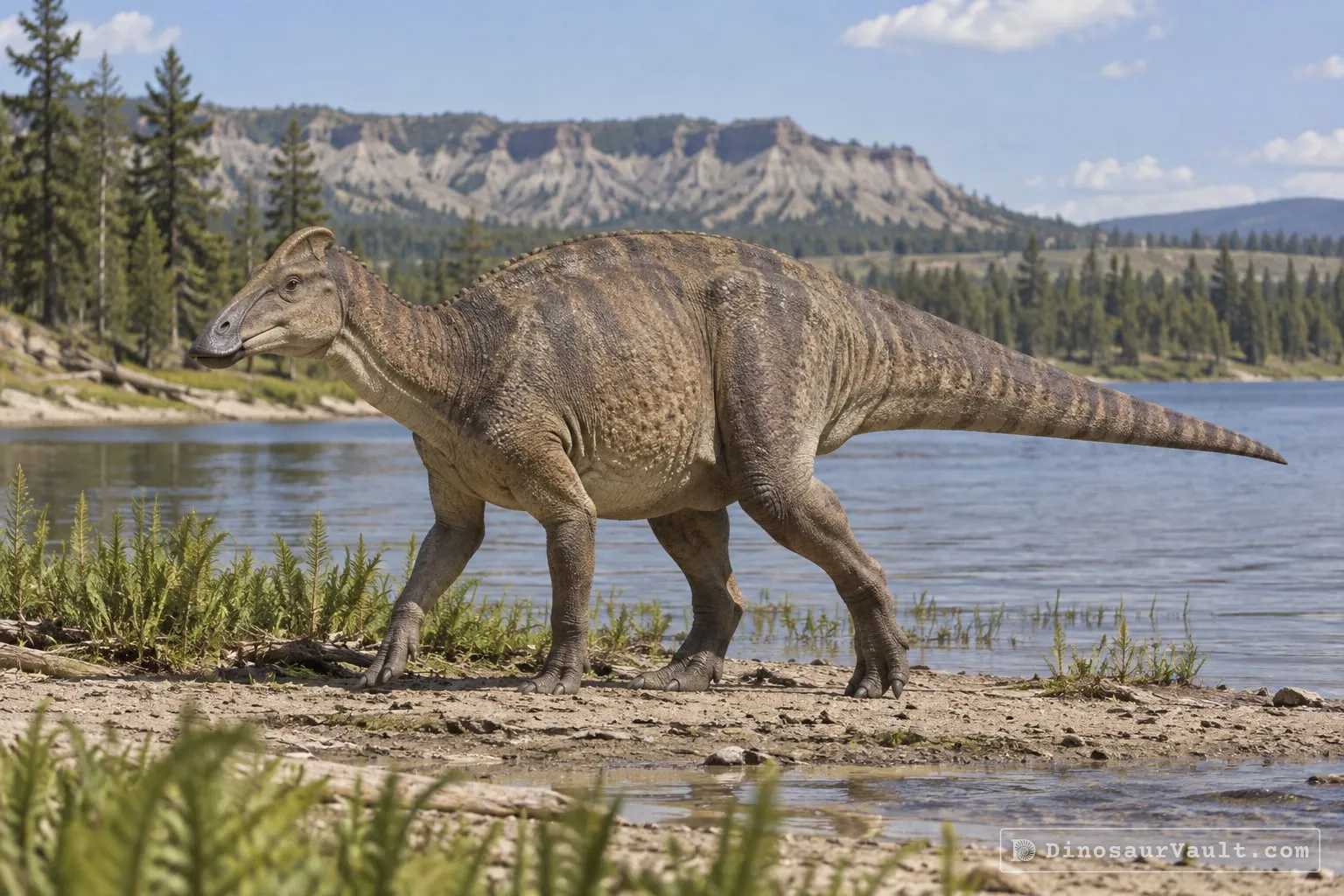
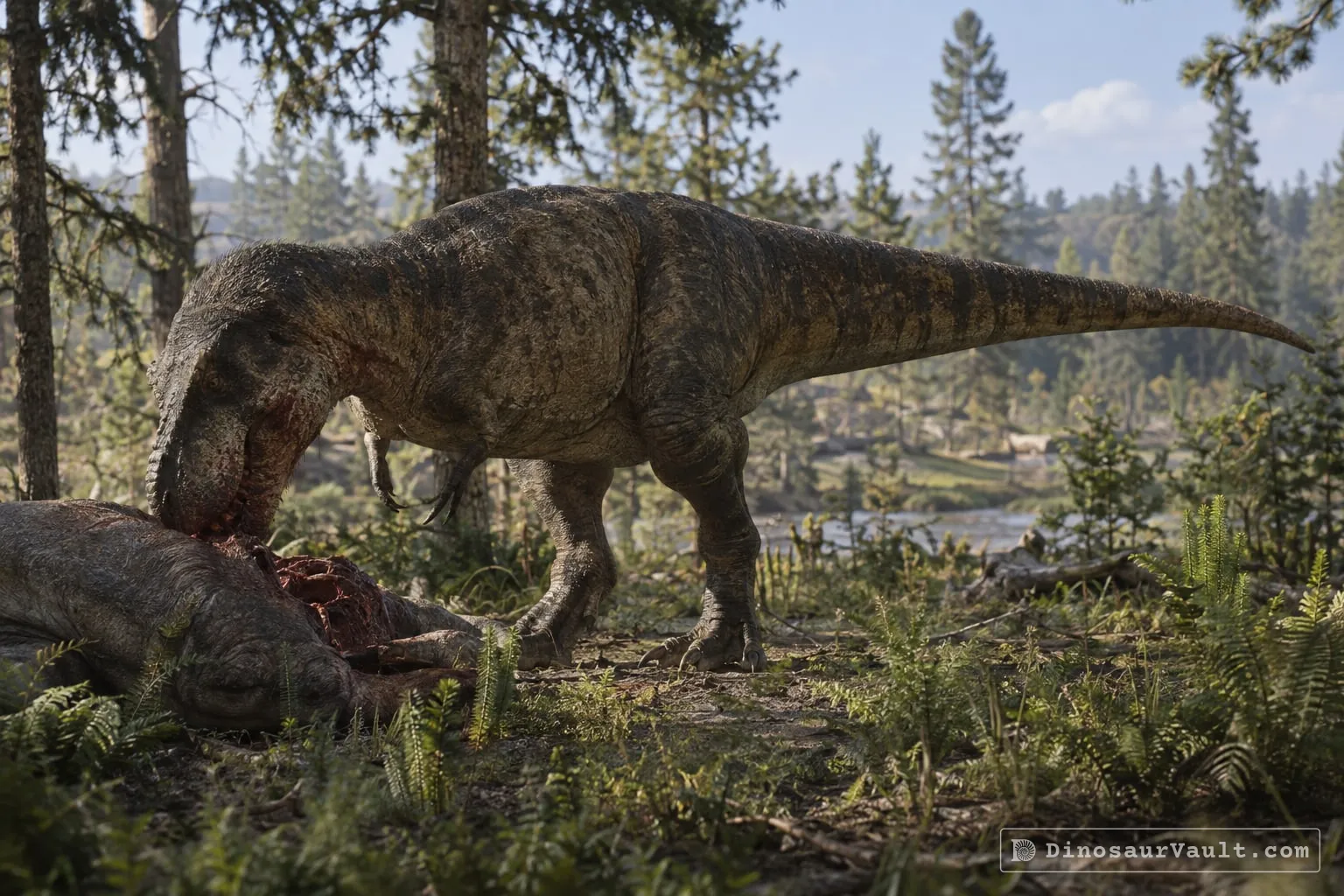
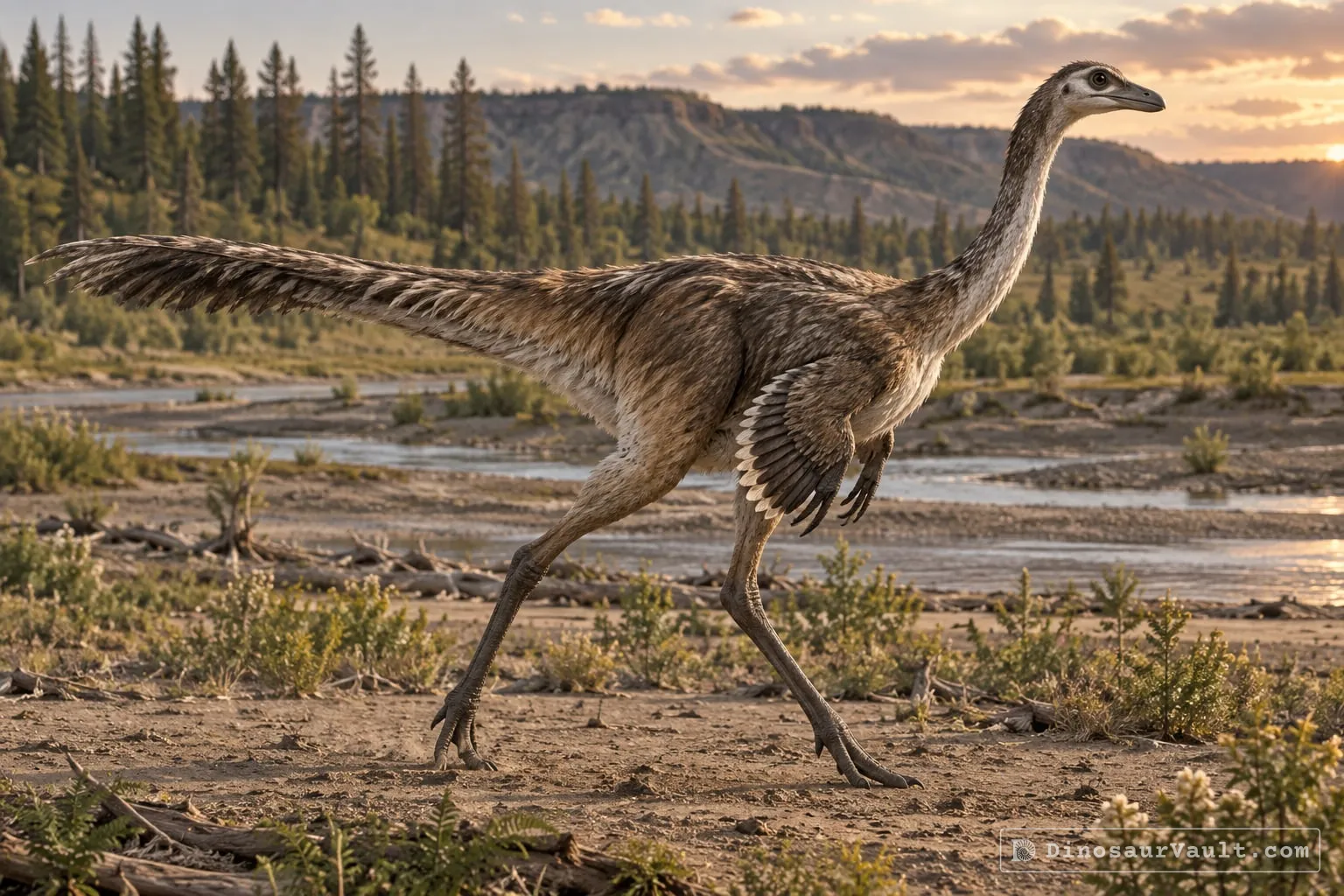
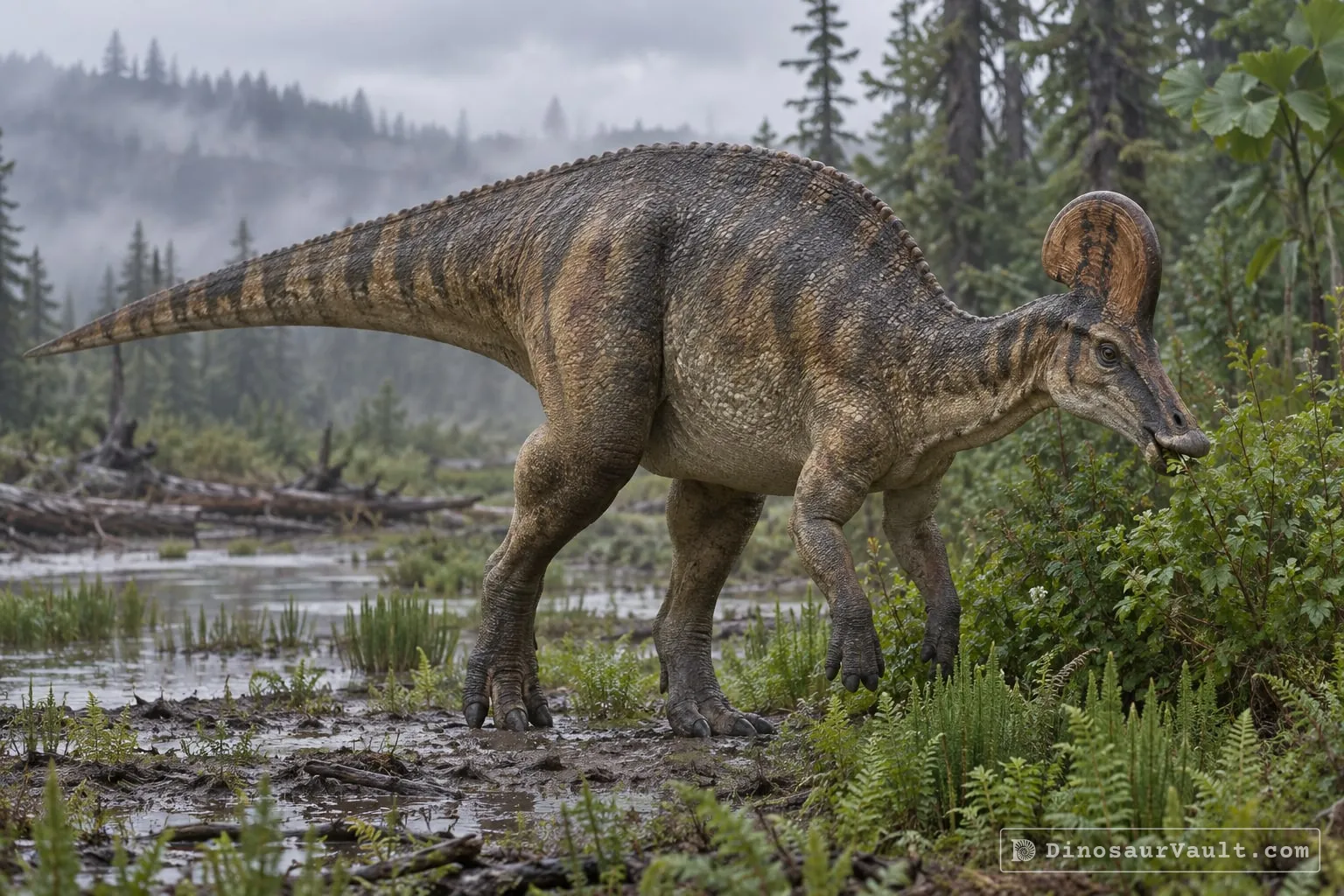
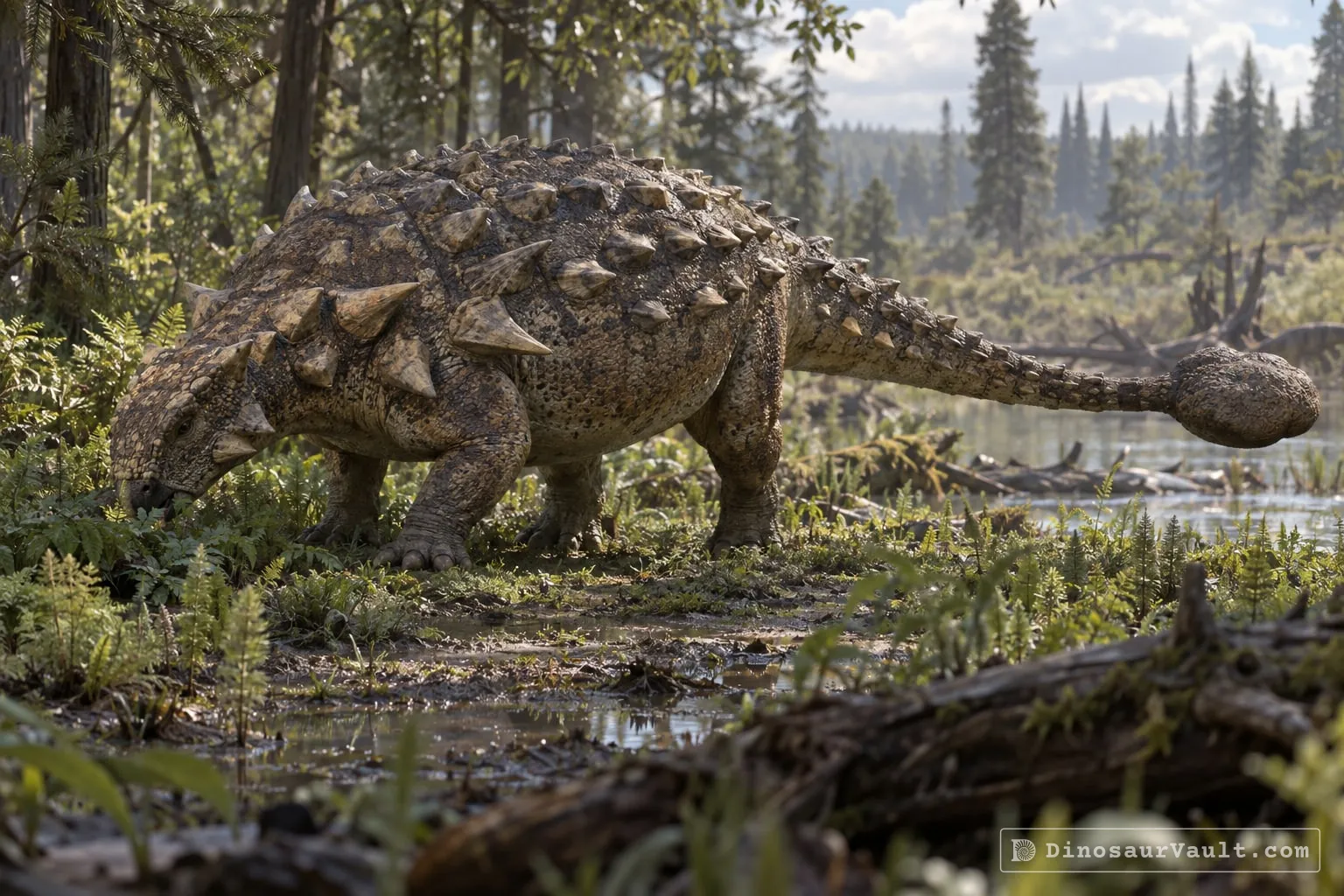
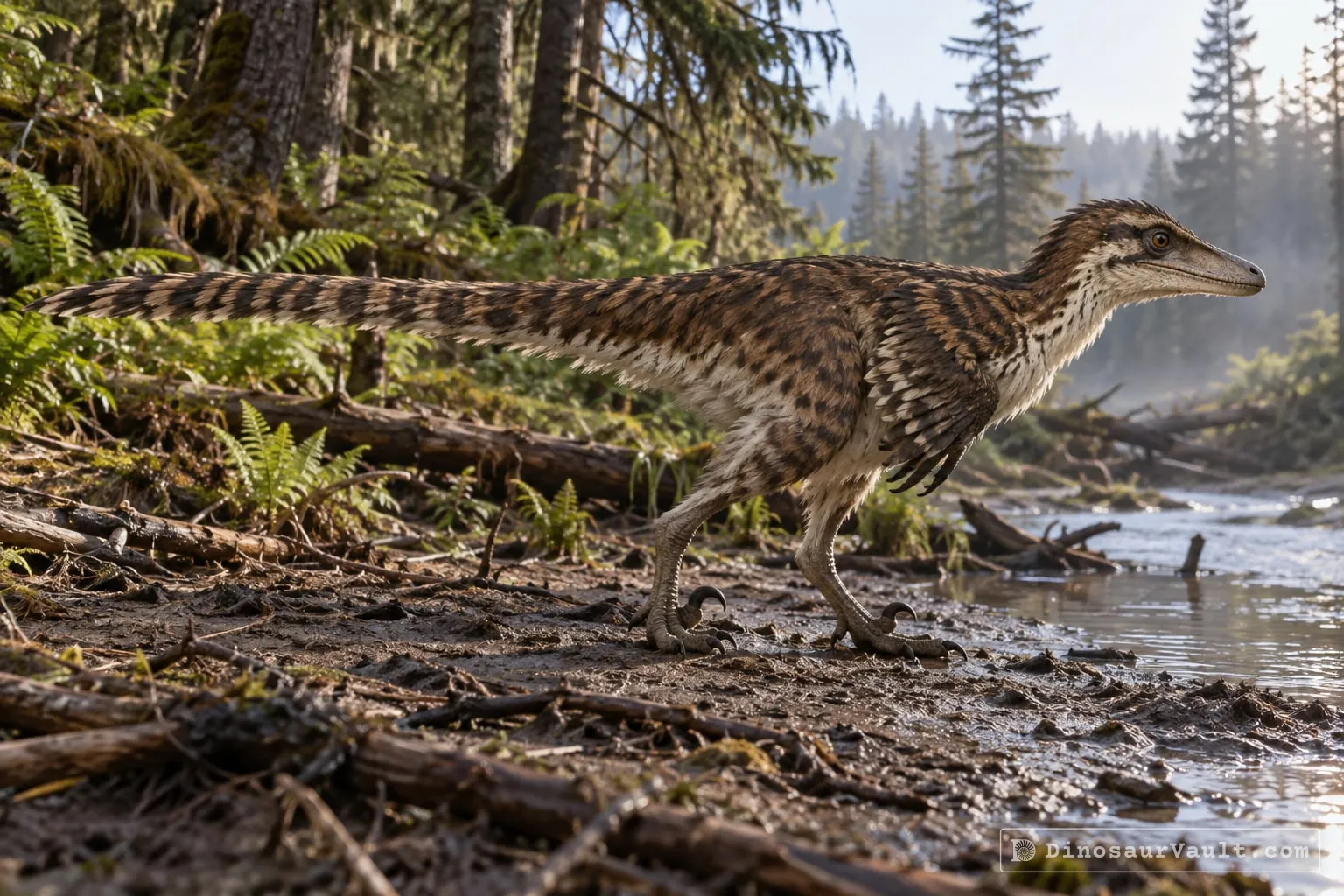


A rock formation can hold fossils laid down millions of years apart, so not every animal here met Achelousaurus.
The evidence
The science behind Achelousaurus
Which parts of the picture come from its own bones, and which come from its relatives.
From its own fossils
- Skulls have rough bony bosses on the nose and above the eyes, in place of long facial horns.
- A broad frill carries a pair of long spikes at its rear edge.
- The texture of the facial bosses supports a covering of thick, tough keratin pads.
Borrowed from relatives
- Einiosaurus and Pachyrhinosaurus help fill gaps in its heavy, four-legged body.
- Body scales are inferred from other horned dinosaurs.
Still unknown
- The exact shape and thickness of the pads over its facial bosses.
- How the bosses and frill spikes developed in the youngest animals.
- Its color and how it used its head ornaments.
Often drawn wrong
- Long brow horns like those of Triceratops replace its low, rough bosses.
- A pointed nose horn replaces its broad nasal boss.
- The openings in its bony frill were covered by tissue, rather than being open holes through the living animal.
Discovery timeline
- 1994Named itSampson
- 1995Full descriptionSampson
- 1997Growing upSAMPSON, RYAN & TANKE
- 2009SkinHieronymus et al.
- 2017Same rocksCarr et al.
Key papers
The research behind what we know of Achelousaurus
Named it
Announced Achelousaurus, a horned dinosaur with rough facial bosses and long frill spikes.
Two new horned dinosaurs (Ornithischia: Ceratopsidae) from the Upper Cretaceous Two Medicine Formation, Montana, USA. Journal of Vertebrate Paleontology 14: 44A
No link available
Full description
Described the skulls of Achelousaurus and Einiosaurus and linked both to Pachyrhinosaurus.
Two new horned dinosaurs from the upper Cretaceous Two Medicine Formation of Montana; with a phylogenetic analysis of the Centrosaurinae (Ornithischia: Ceratopsidae). Journal of Vertebrate Paleontology 15: 743-760
Read the paper : Two new horned dinosaurs from the upper Cretaceous Two Medicine Formation of Montana; with a phylogenetic analysis of the Centrosaurinae (Ornithischia: Ceratopsidae) (opens in a new tab)Growing up
Showed that elaborate horns and frills developed late in the growth of this group of horned dinosaurs.
Craniofacial ontogeny in centrosaurine dinosaurs (Ornithischia: Ceratopsidae): taxonomic and behavioral implications. Zoological Journal of the Linnean Society 121: 293-337
Read the paper : Craniofacial ontogeny in centrosaurine dinosaurs (Ornithischia: Ceratopsidae): taxonomic and behavioral implications (opens in a new tab)Skin
Compared skull surfaces with living animals and inferred thick keratin pads over the facial bosses of Achelousaurus.
The Facial Integument of Centrosaurine Ceratopsids: Morphological and Histological Correlates of Novel Skin Structures. The Anatomical Record 292: 1370-1396
Read the paper : The Facial Integument of Centrosaurine Ceratopsids: Morphological and Histological Correlates of Novel Skin Structures (opens in a new tab)Same rocks
Described Daspletosaurus horneri from the Two Medicine Formation, a large predator in the same region.
A new tyrannosaur with evidence for anagenesis and crocodile-like facial sensory system. Scientific Reports 7
Read the paper : A new tyrannosaur with evidence for anagenesis and crocodile-like facial sensory system (opens in a new tab)
Close relatives
Other members of Ceratopsidae


Sources: Wikidata