Torosaurus
TOR-oh-SORE-us
"perforated lizard"
Type species Torosaurus latus
- Lived
- 84 to 66 million years ago, Late Cretaceous
- Diet
- Herbivore
- Length
- about 7.5 m (25 ft)
- Group
- Ceratopsians, Ceratopsidae
- Found in
- United States
- Named by
- Marsh 1891
Size comparison
To scale
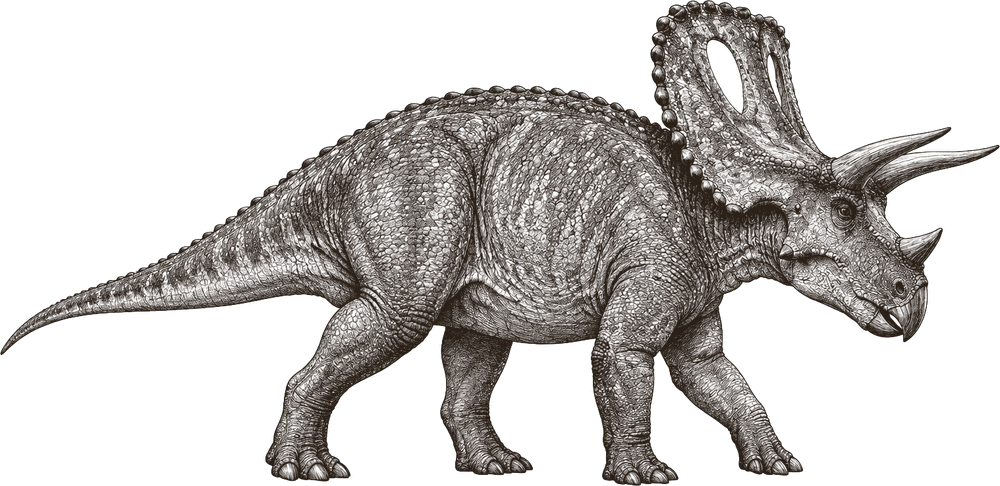


Scale in meters
Where its fossils were found
The evidence
Today

75 million years ago
Habitat
Wooded river plains with shallow channels and open patches of low vegetation. Tyrannosaurus, Triceratops and Ankylosaurus lived in the same region.
Field notes
About Torosaurus
What it was like
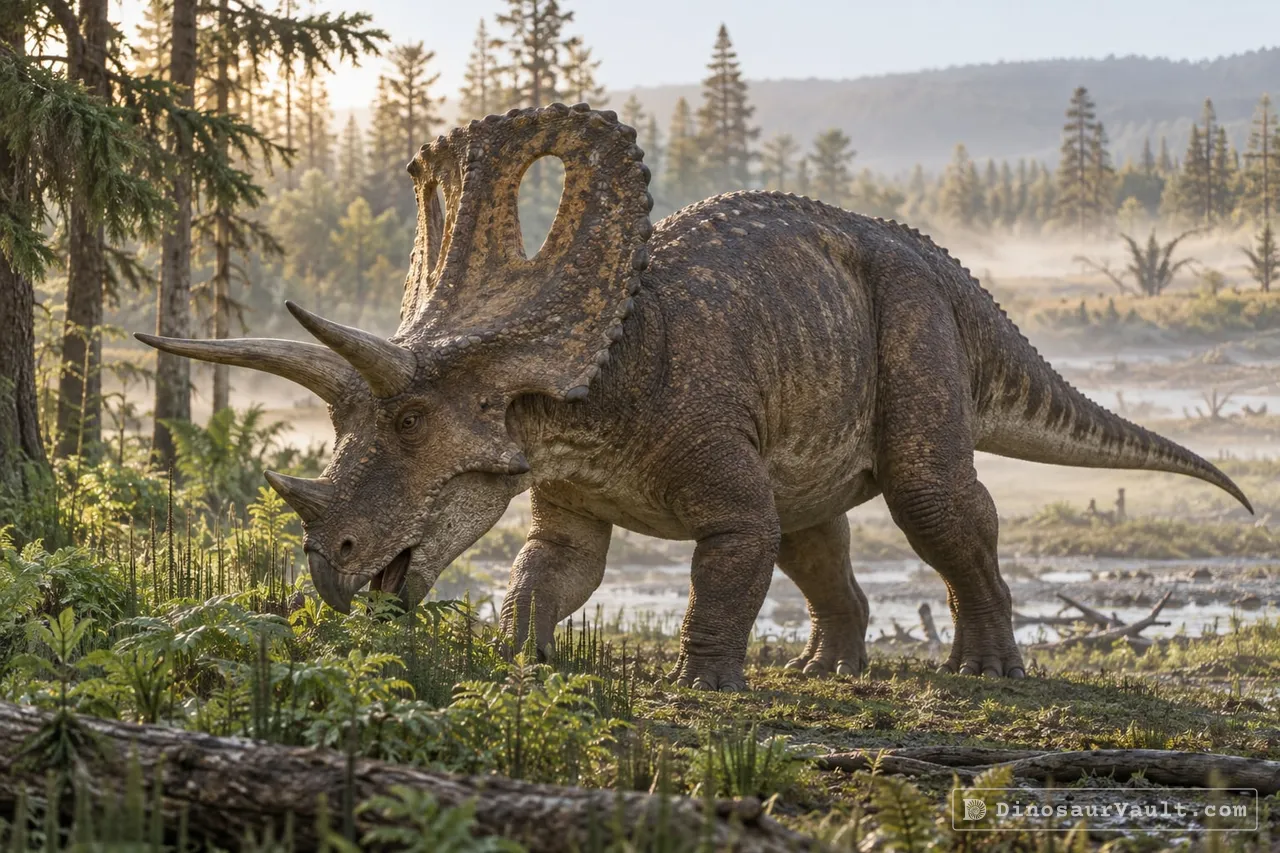
Torosaurus was a large, plant-eating ceratopsian with a huge, bony frill extending back from its skull, pierced by two large openings, and a short horn above its nose. It grew to about 7.5 meters (25 feet) long and likely used its beaked mouth to crop tough, fibrous plants.
Its frill was thin and lightweight, supported mostly along its outer edge, and carried at least five pairs of small hornlets along the back margin. Scientists still debate whether Torosaurus was truly a separate genus or simply a fully grown Triceratops, since the two look similar apart from the frill.
Its world
Torosaurus lived from about 84 to 66 million years ago, in the Late Cretaceous, across what is now the western United States, including South Dakota, Wyoming, New Mexico, and North Dakota.
It lived alongside Tyrannosaurus, Triceratops, the armored Ankylosaurus, and the dome-headed Pachycephalosaurus, in an ecosystem thick with large, plant-eating ceratopsians.
How it was found
Marsh named Torosaurus in 1891. Around six fossil finds are known, and the question of whether Torosaurus represents a mature Triceratops rather than its own genus remains unresolved among paleontologists. Its close relatives include Triceratops, Styracosaurus, and Pentaceratops, all members of the horned dinosaur family Ceratopsidae.
Field gallery
More views of Torosaurus
Scenes reconstructed from the available fossil evidence.
1 of 7
Lived alongside
Found in the same rock formations
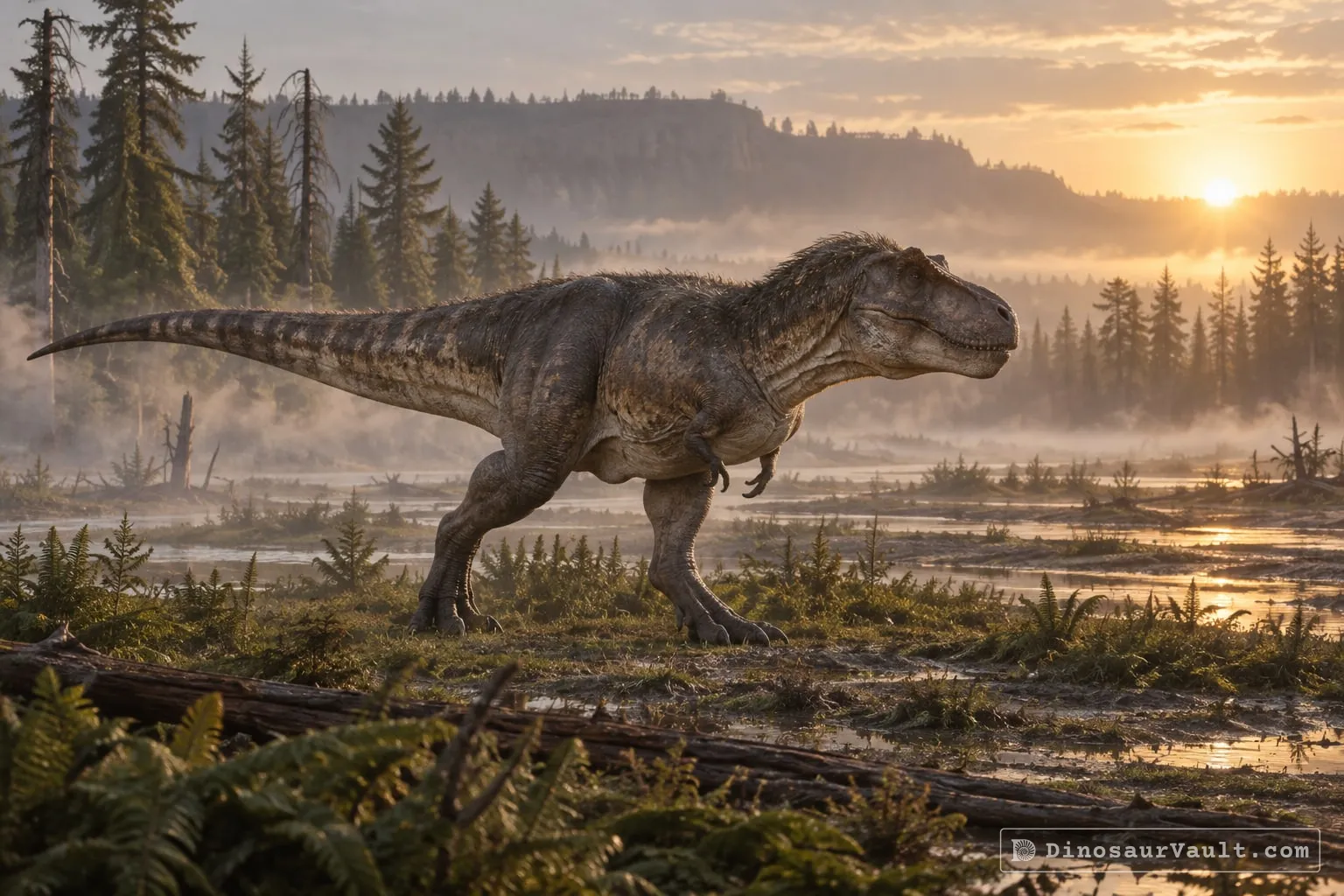
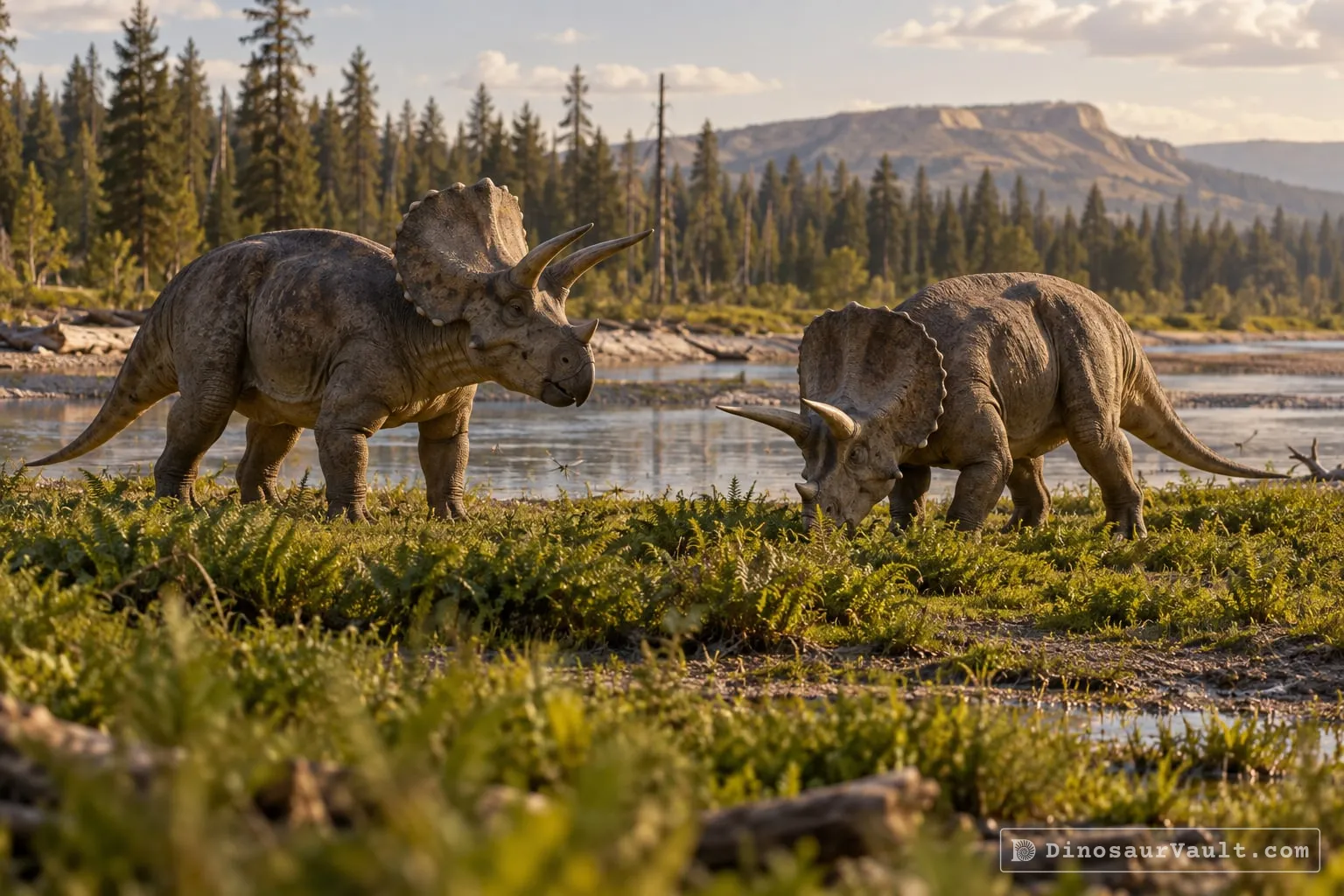
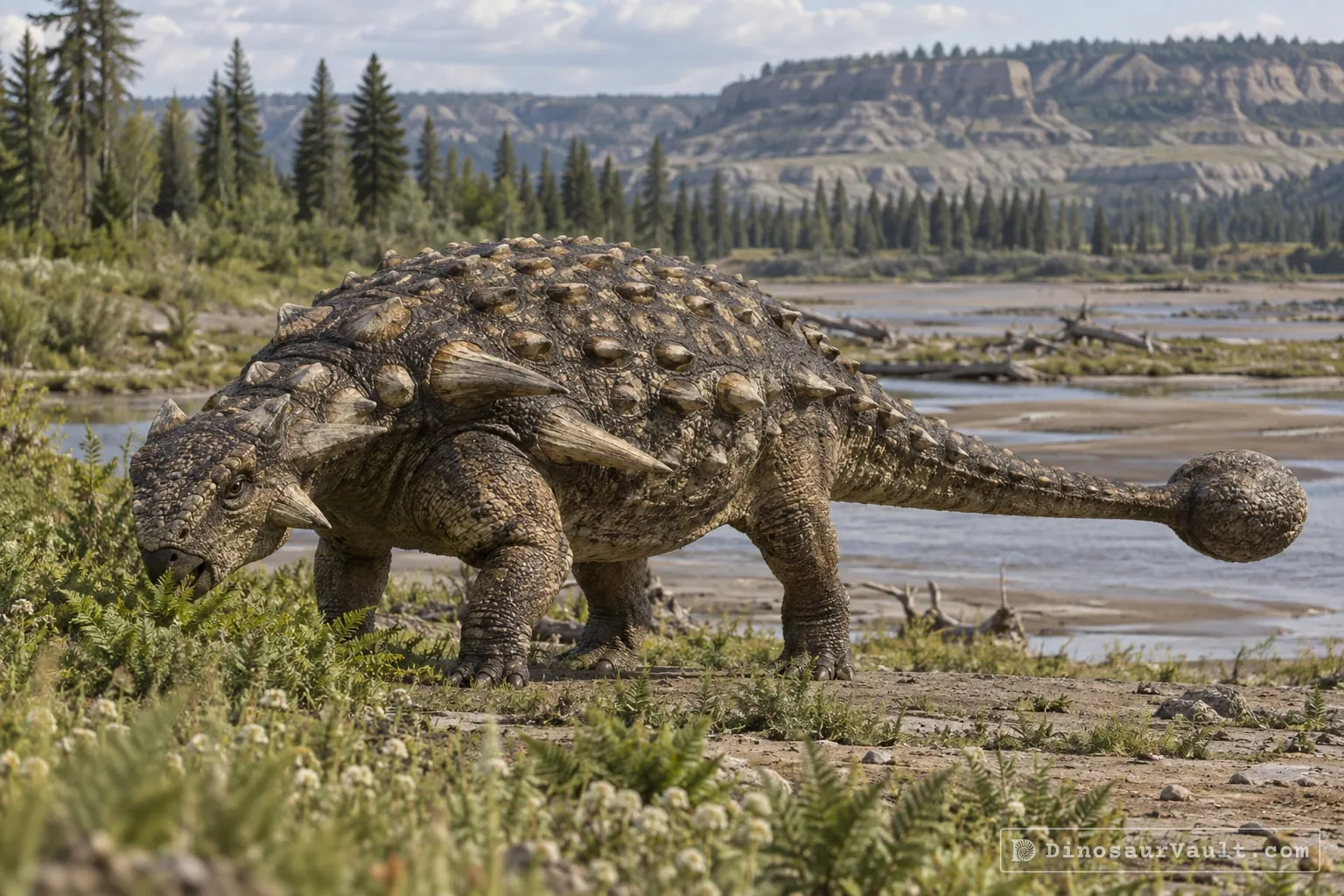
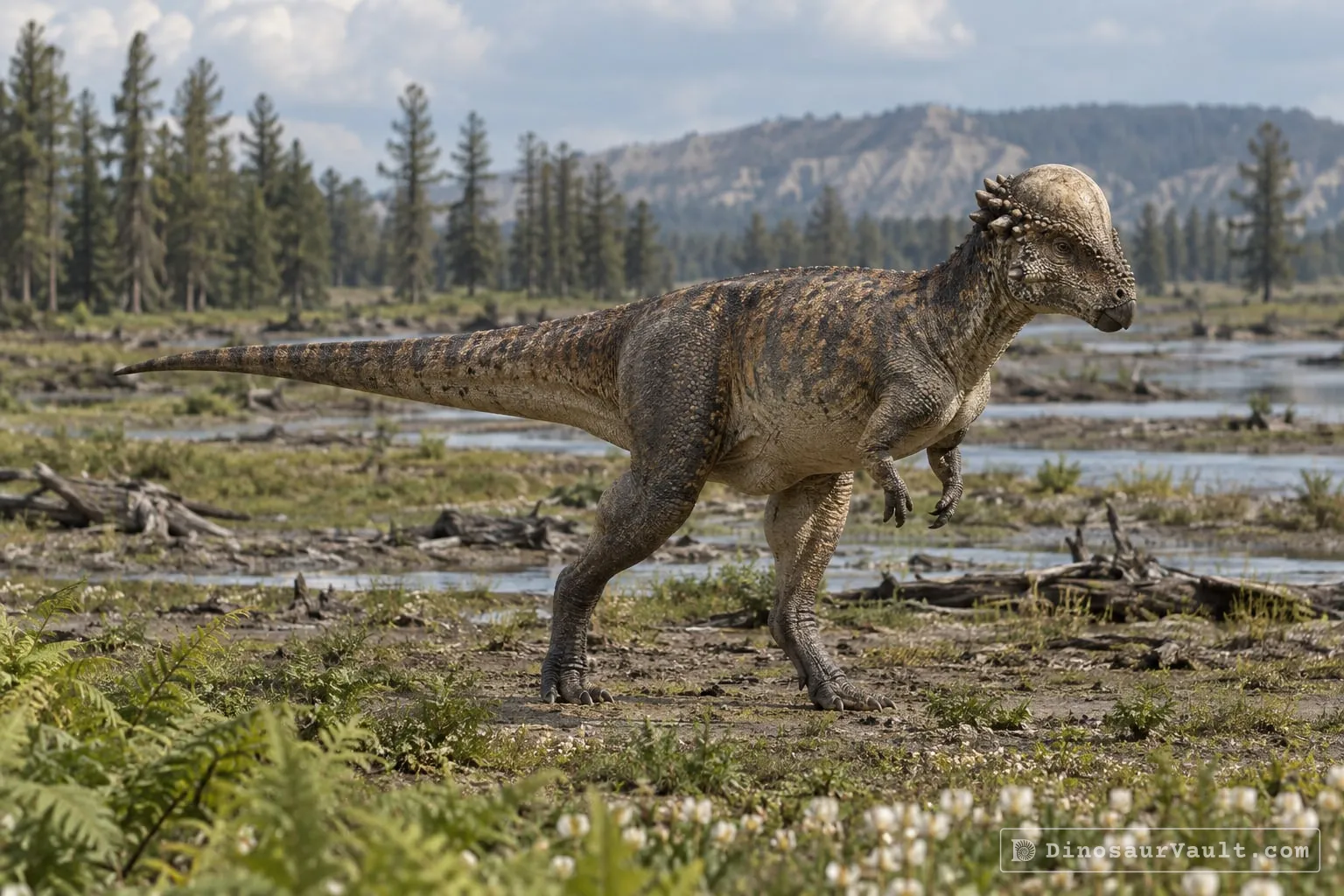
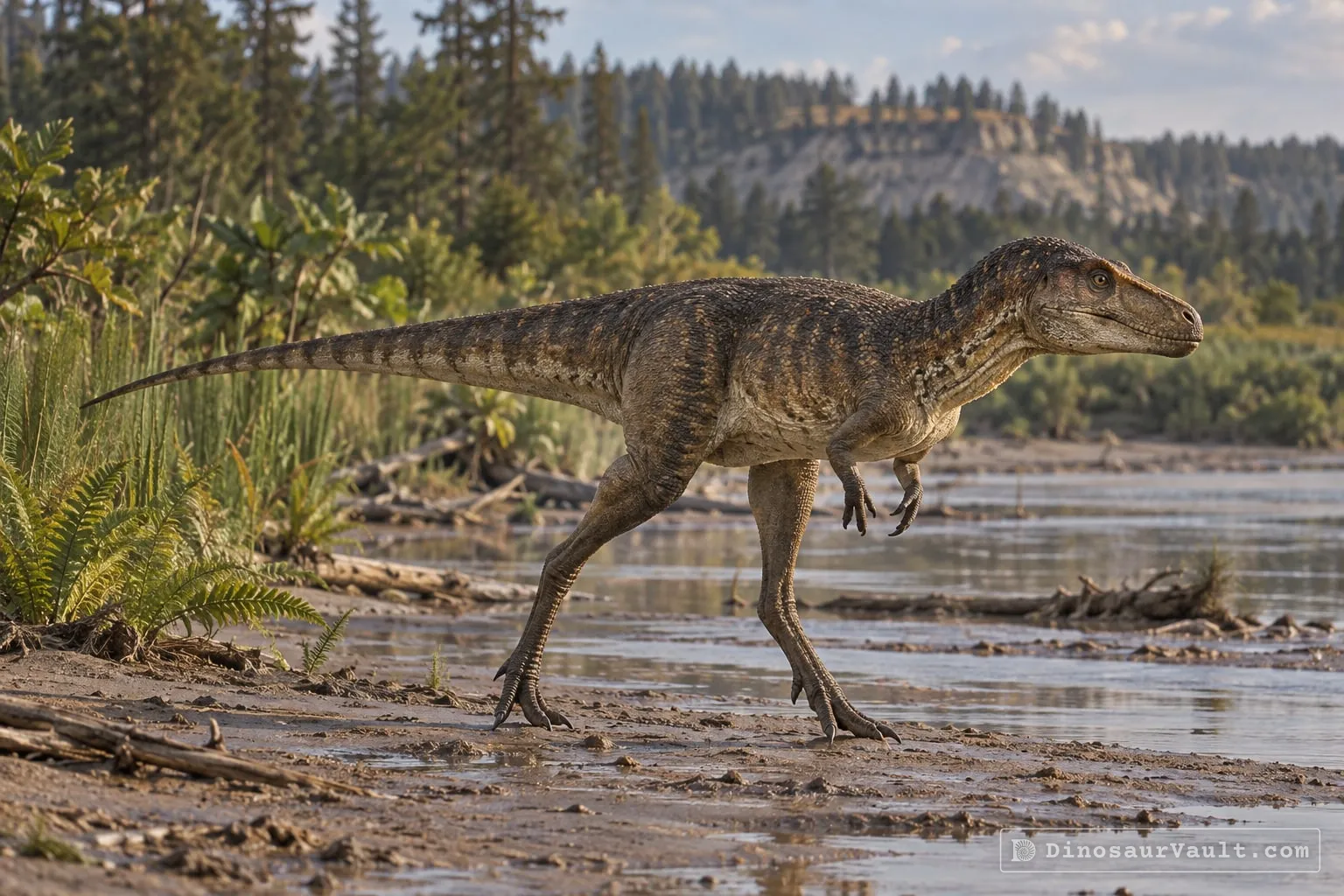
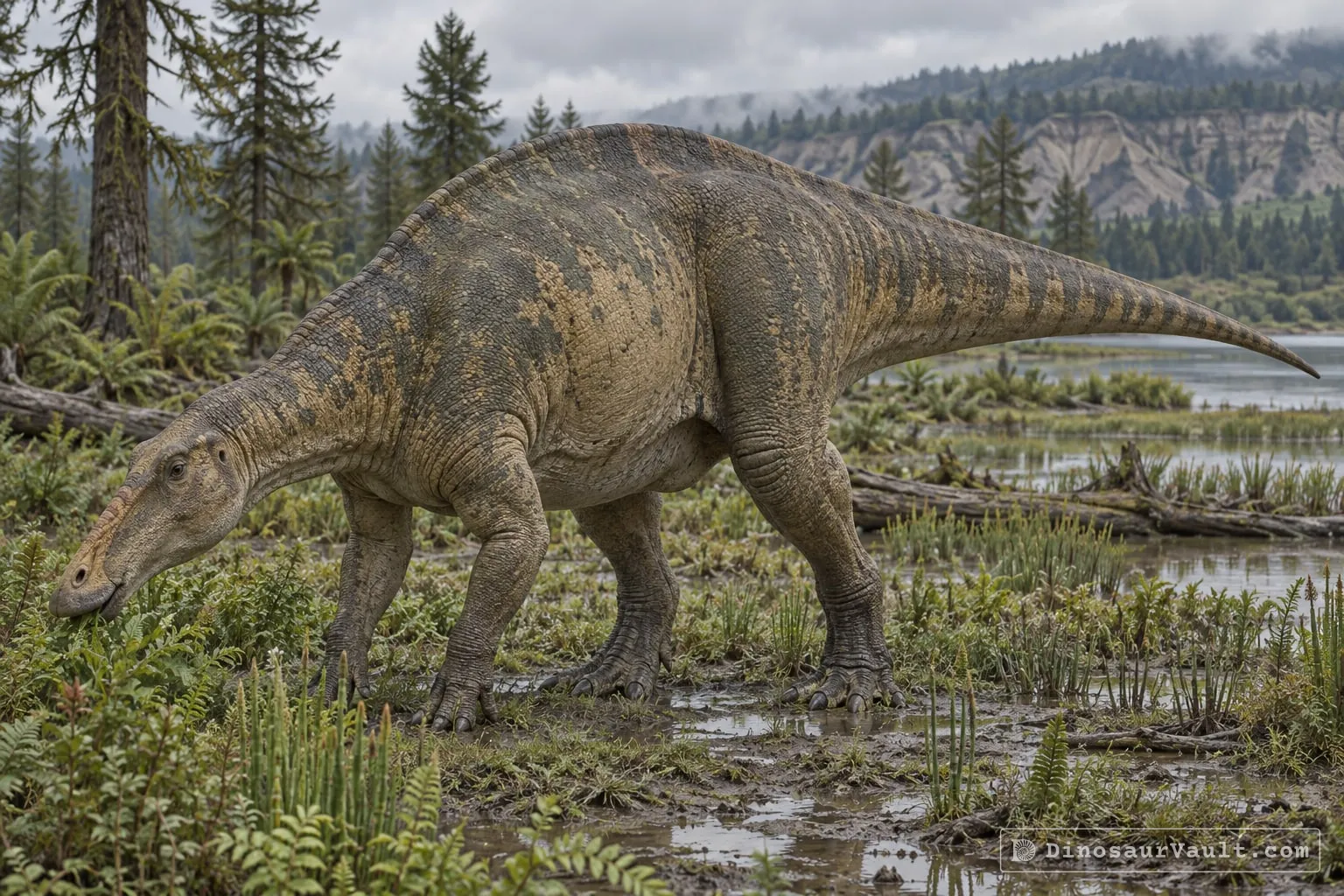


A rock formation can hold fossils laid down millions of years apart, so not every animal here met Torosaurus.
The evidence
The science behind Torosaurus
Which parts of the picture come from its own bones, and which come from its relatives.
From its own fossils
- Skulls show a long frill with large openings in the bone, long brow horns and a smaller nose horn.
- The broad beak and tightly packed cheek teeth formed a plant-cropping and slicing mouth.
- A thigh bone associated with a frill shows that at least one Torosaurus was still growing.
Borrowed from relatives
- Triceratops and other horned dinosaurs help fill gaps in the body and limbs.
- Skin probably covered the openings in the bony frill, as in other horned dinosaurs.
Still unknown
- Whether Torosaurus was a separate genus or a growth stage of Triceratops.
- Its color and the exact shape of the skin over the frill.
- How the horns and frill changed from hatchling to adult.
Often drawn wrong
- The openings in the frill bone should be covered with skin, rather than shown as holes through the living animal.
- The frill edge carried small hornlets rather than a crown of long spikes.
Discovery timeline
- 1891Named itMarsh
- 2012Growing upLongrich & Field
- 2013SkullMaiorino et al.
- 2016New findMcDonald, Campbell & Thomas
- 2022Growing upMallon et al.
Key papers
The research behind what we know of Torosaurus
Named it
Named Torosaurus from skulls with an elongated frill pierced by large openings in the bone.
Notice of new vertebrate fossils. American Journal of Science s3-42: 265-269
Read the paper : Notice of new vertebrate fossils (opens in a new tab)Growing up
Compared skull maturity and frill shape, arguing that Torosaurus and Triceratops were separate genera rather than stages of growth.
Torosaurus Is Not Triceratops: Ontogeny in Chasmosaurine Ceratopsids as a Case Study in Dinosaur Taxonomy. PLoS ONE 7: e32623
Read the paper : Torosaurus Is Not Triceratops: Ontogeny in Chasmosaurine Ceratopsids as a Case Study in Dinosaur Taxonomy (opens in a new tab)Skull
Measured differences in skull and frill shape and found support for keeping Torosaurus separate from Triceratops.
Is Torosaurus Triceratops? Geometric Morphometric Evidence of Late Maastrichtian Ceratopsid Dinosaurs. PLoS ONE 8: e81608
Read the paper : Is Torosaurus Triceratops? Geometric Morphometric Evidence of Late Maastrichtian Ceratopsid Dinosaurs (opens in a new tab)New find
Described another Torosaurus frill from the Hell Creek Formation, adding to the known variation in its shape and edge hornlets.
A New Specimen of the Controversial Chasmosaurine Torosaurus latus (Dinosauria: Ceratopsidae) from the Upper Cretaceous Hell Creek Formation of Montana. PLOS ONE 11: e0151453
Read the paper : A New Specimen of the Controversial Chasmosaurine Torosaurus latus (Dinosauria: Ceratopsidae) from the Upper Cretaceous Hell Creek Formation of Montana (opens in a new tab)Growing up
Reexamined Canadian frills and an associated thigh bone, finding a still-growing Torosaurus that supports its distinction from adult Triceratops.
The record ofTorosaurus(Ornithischia: Ceratopsidae) in Canada and its taxonomic implications. Zoological Journal of the Linnean Society 195: 157-171
Read the paper : The record ofTorosaurus(Ornithischia: Ceratopsidae) in Canada and its taxonomic implications (opens in a new tab)
Close relatives
Other members of Ceratopsidae


Sources: Wikidata