Megapnosaurus
"big dead lizard"
- Lived
- 201 to 193 million years ago, Early Jurassic
- Diet
- Carnivore
- Group
- Theropods, Coelophysidae
- Found in
- Zimbabwe and South Africa
- Named by
- Ivie et al. 2001
Where its fossils were found
The evidence
Today

195 million years ago
Habitat
Sandy river landscapes in southern Africa supported early dinosaurs. Massospondylus, Heterodontosaurus and Lesothosaurus lived in this region.
Field notes
About Megapnosaurus
What it was like
Megapnosaurus was a small, slender meat eater, a close relative of Coelophysis. It had a long neck, a narrow head with sharp teeth, and long legs for running. Adults were only a few meters long and lightly built.
Its world
It lived in the Early Jurassic in what is now Zimbabwe and South Africa. Its bones come from the Forest Sandstone and the Elliot Formation, where it shared the land with the long-necked plant eater Massospondylus and the small beaked Heterodontosaurus and Lesothosaurus.
How it was found
Its first name, given long ago, turned out to belong already to a beetle, so Ivie and colleagues gave it a new one in 2001. A bone bed in Zimbabwe holds the remains of many animals together, which suggests it may have lived or died in groups. Some scientists think it belongs in Coelophysis itself.
Field gallery
More views of Megapnosaurus
Scenes reconstructed from the available fossil evidence.
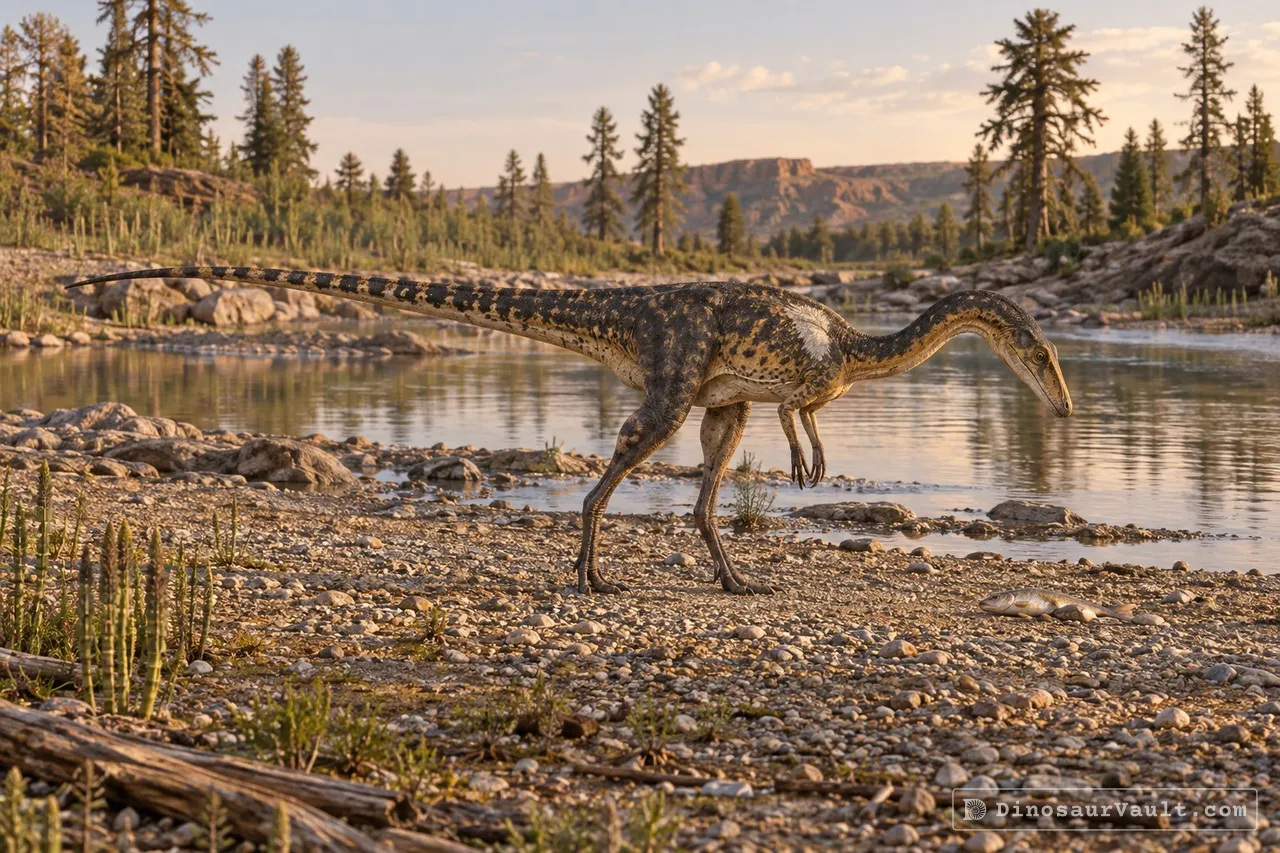
1 of 3
Lived alongside
Found in the same rock formations
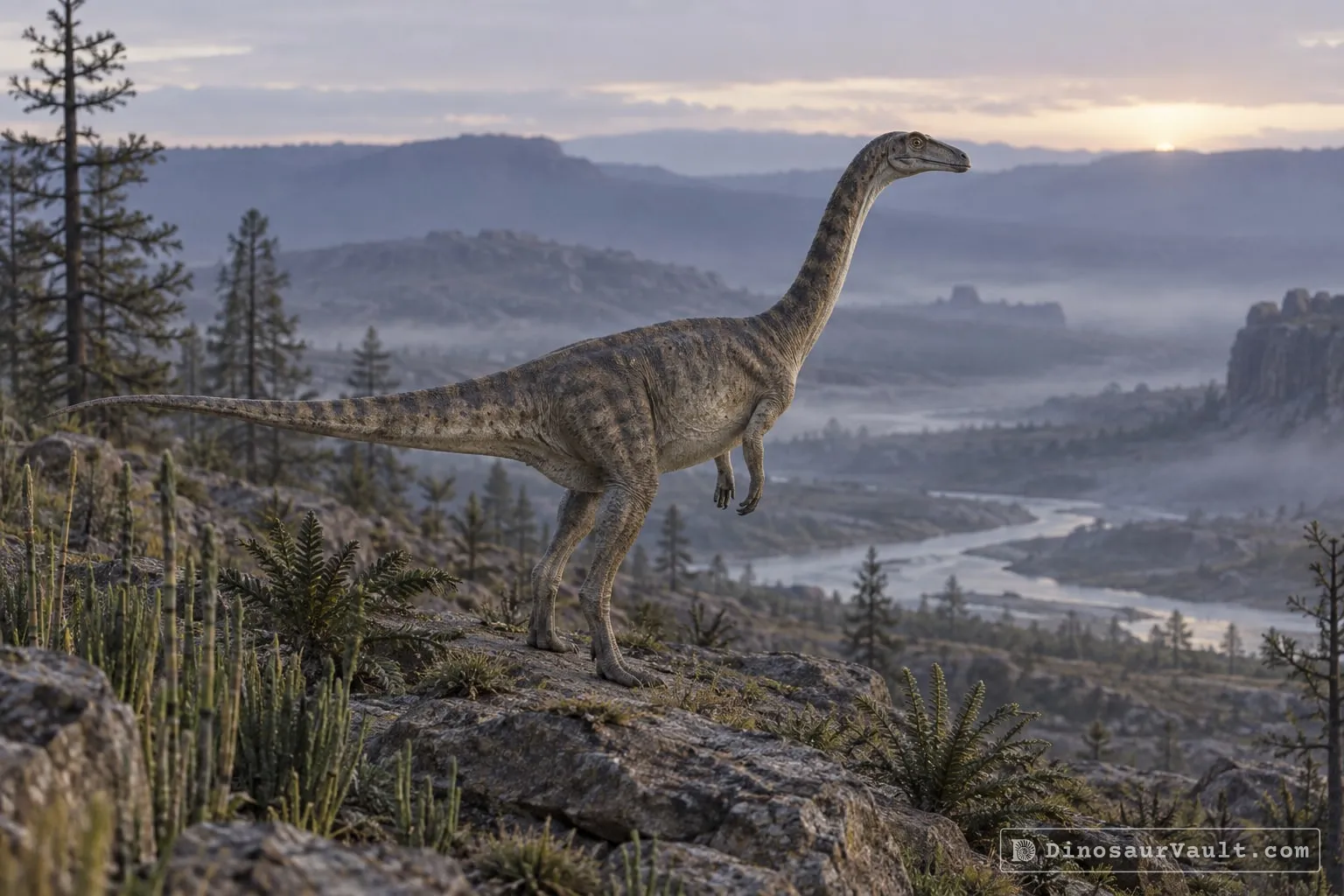
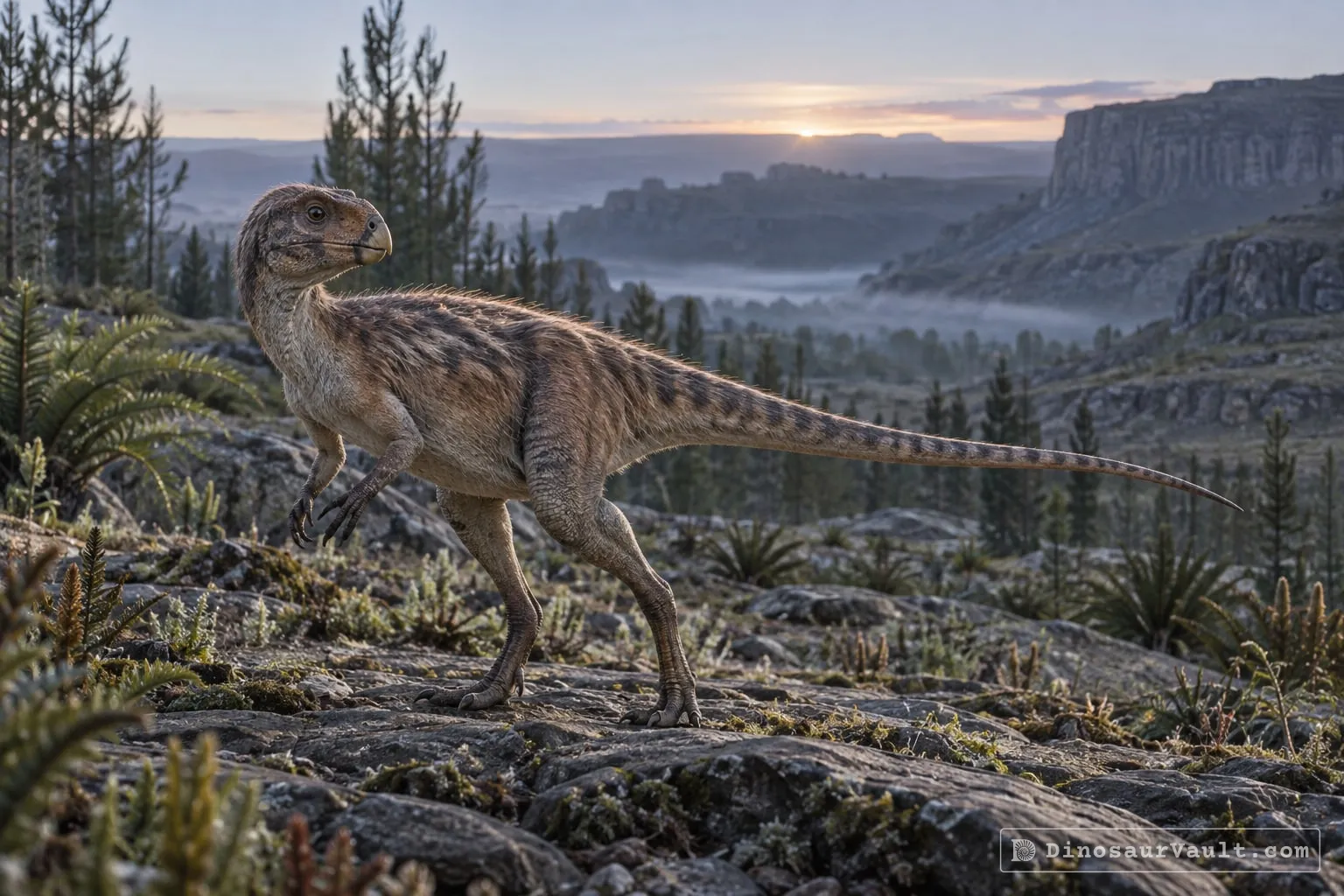
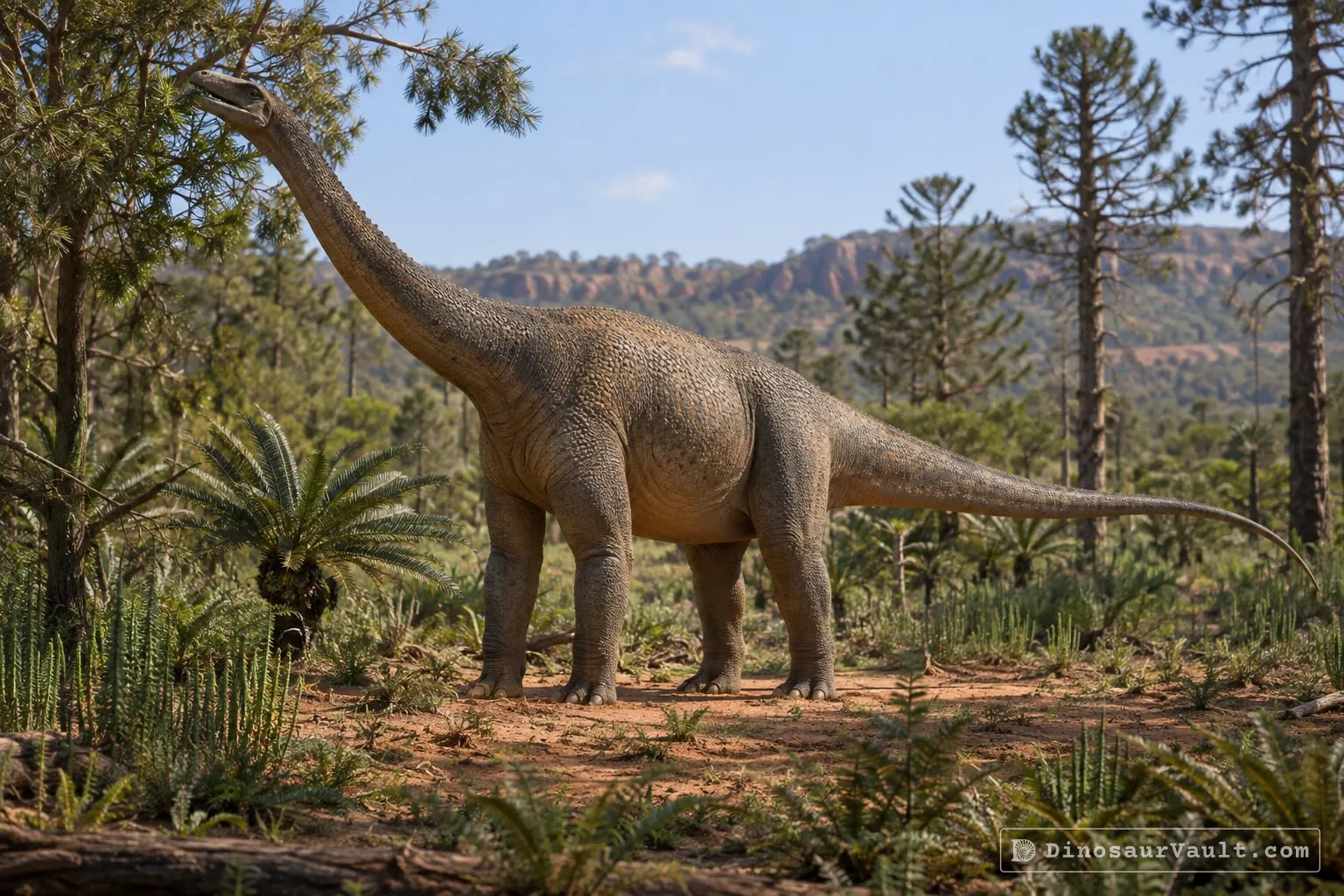
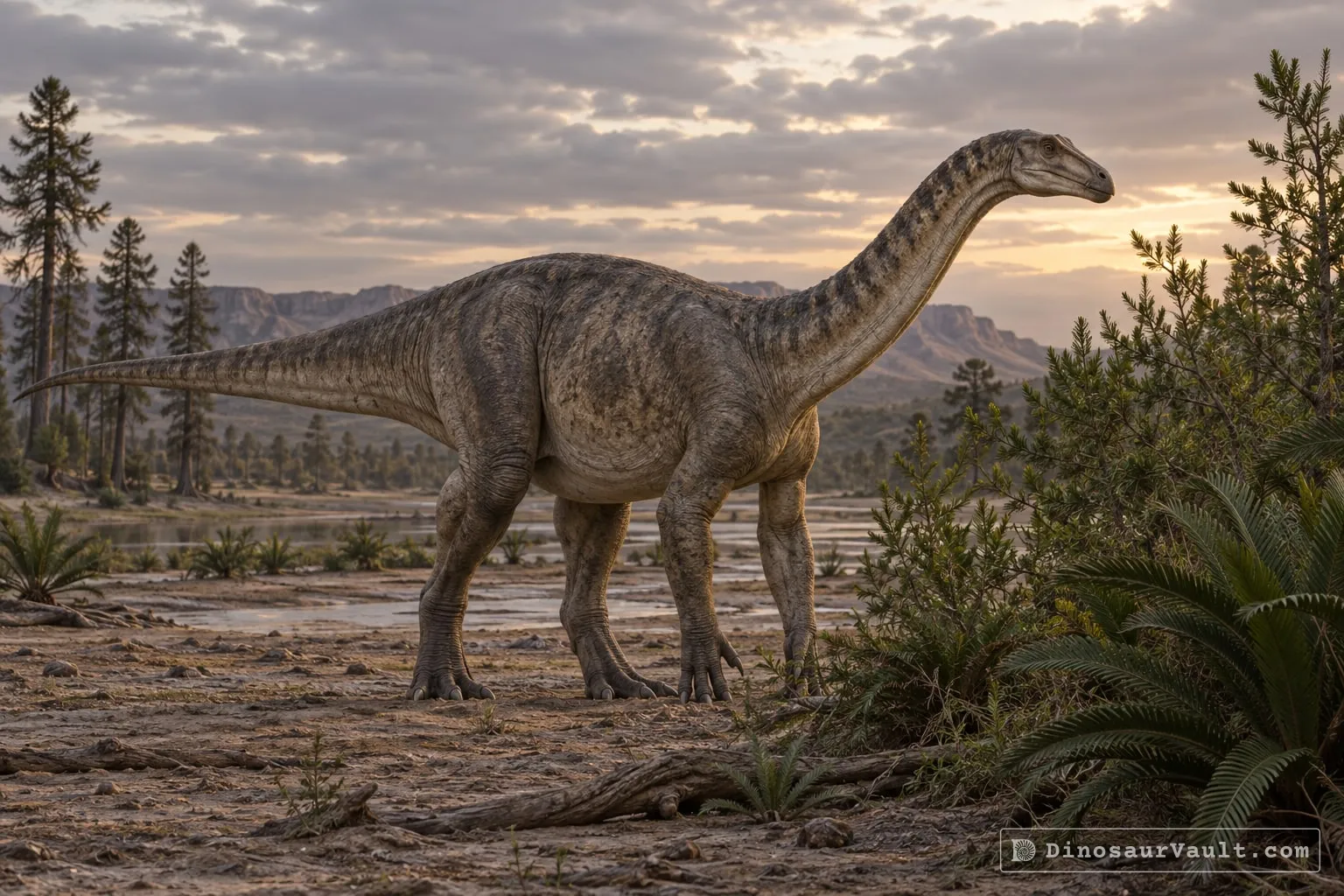
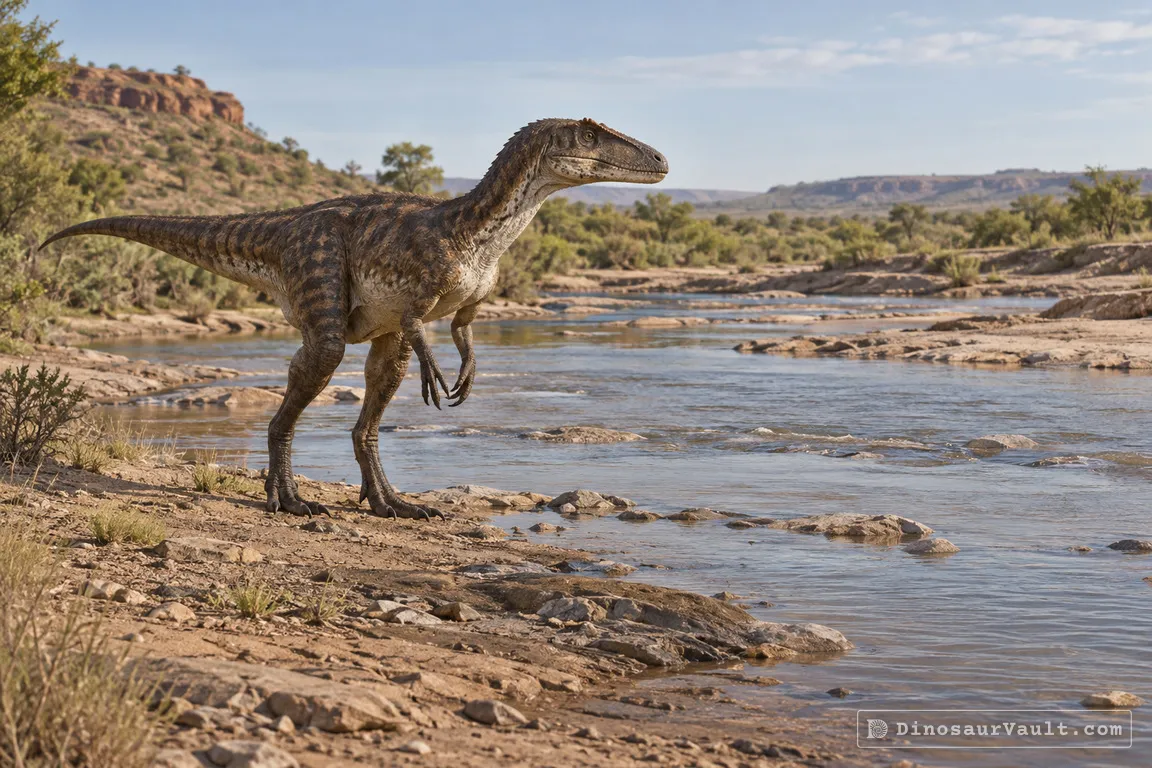
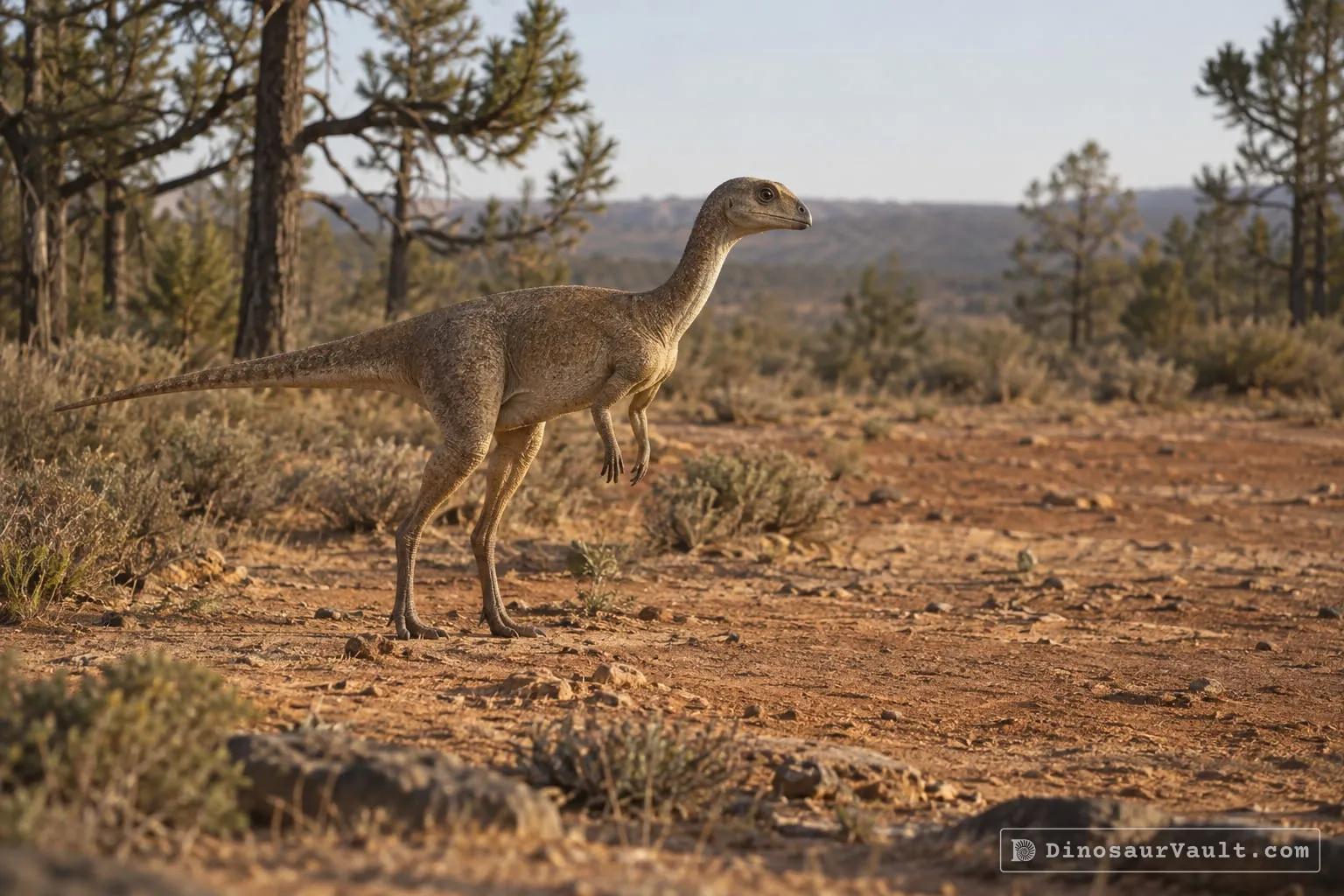
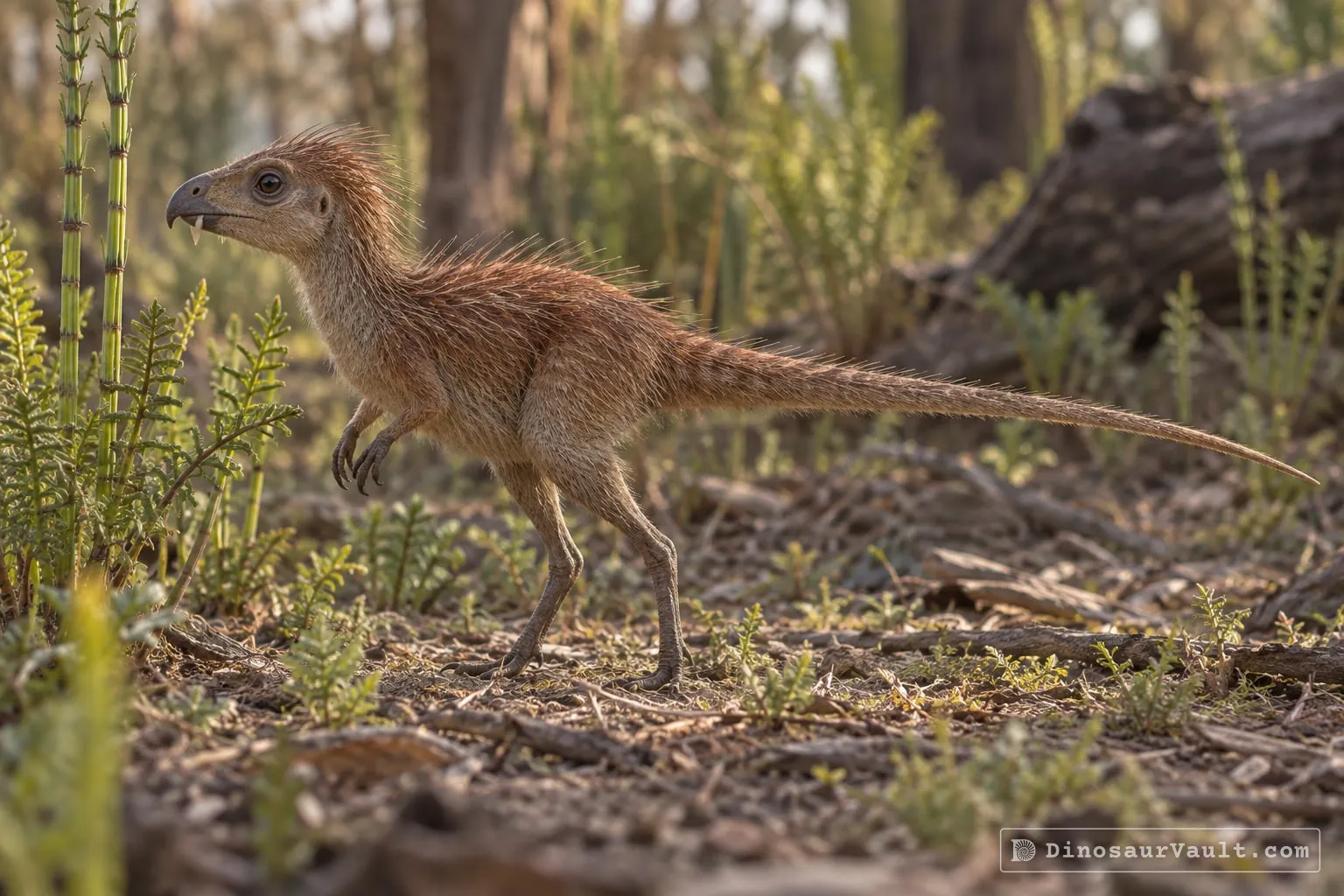


A rock formation can hold fossils laid down millions of years apart, so not every animal here met Megapnosaurus.
The evidence
The science behind Megapnosaurus
Which parts of the picture come from its own bones, and which come from its relatives.
From its own fossils
- Skull bones and skeleton parts from Zimbabwe show a lightly built predator with a narrow head.
- Its hands had three main clawed fingers and a reduced fourth finger without a claw.
- Bones from animals at different stages of growth show changes in muscle attachment marks and bone fusion.
Borrowed from relatives
- Coelophysis guides the restoration of missing snout bones and the overall shape of the body and feet.
- Skin and lips are restored from comparisons with other early theropods.
Still unknown
- Its skin covering and color.
- Whether differences between slender and more robust individuals reflect sex.
- Whether the animals buried together lived in groups.
Often drawn wrong
- A prominent crest on the young skull probably comes from bones displaced after death.
- The reduced fourth finger should not carry a large claw.
- Its palms faced inward, rather than toward the ground.
Discovery timeline
- 2001Named it
- 2017Full descriptionBarta, Nesbitt & Norell
- 2018Growing upGriffin
Key papers
The research behind what we know of Megapnosaurus
Full description
Compared early theropod hands, including the clawed main fingers and reduced outer finger of Megapnosaurus.
The evolution of the manus of early theropod dinosaurs is characterized by high inter‐ and intraspecific variation. Journal of Anatomy 232: 80-104
Read the paper : The evolution of the manus of early theropod dinosaurs is characterized by high inter‐ and intraspecific variation (opens in a new tab)Growing up
Compared growth in Megapnosaurus and Coelophysis, finding variation in when muscle attachment marks and bone fusions appeared.
Developmental patterns and variation among early theropods. Journal of Anatomy 232: 604-640
Read the paper : Developmental patterns and variation among early theropods (opens in a new tab)
Close relatives
Other members of Coelophysidae


Sources: Wikidata