Vulcanodon
vul-KAN-oh-don
"volcano tooth"
Type species Vulcanodon karibaensis
- Lived
- 200 to 184 million years ago, Early Jurassic
- Diet
- Herbivore
- Length
- about 6.5 m (21 ft)
- Group
- Sauropods
- Found in
- Zimbabwe
- Named by
- Raath 1972
Size comparison
To scale


Scale in meters
Where its fossils were found
The evidence
Today

190 million years ago
Habitat
It lived on land in Zimbabwe, where sand accumulated before widespread lava flows. Regional dinosaurs included Massospondylus and Megapnosaurus.
Field notes
About Vulcanodon
What it was like
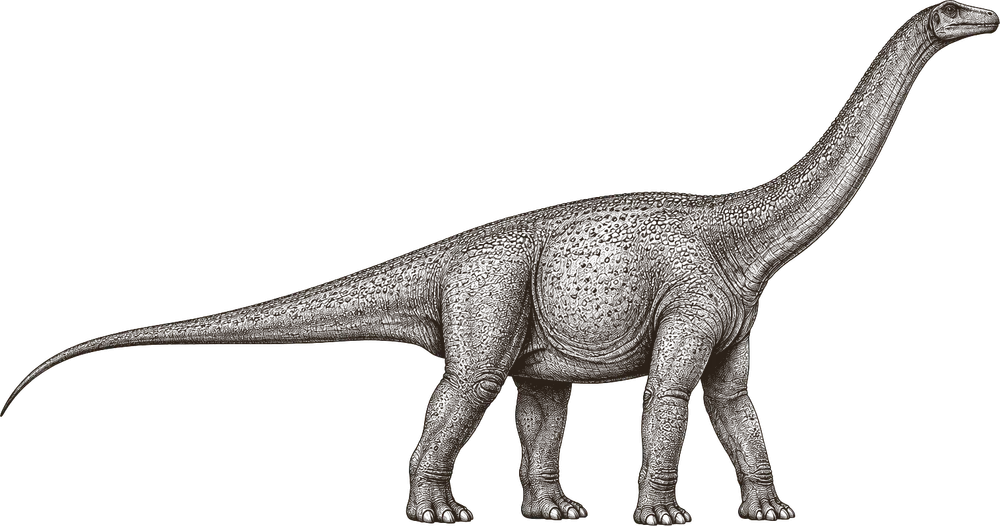
Vulcanodon was one of the earliest known sauropods, already built along familiar lines: four column-like legs, a long neck, and a long tail. At about 6.5 meters (21 feet) long, it was far smaller than the giant sauropods that came later in the Jurassic and Cretaceous.
Only a partial skeleton has been found, missing the skull and most of the neck and trunk. For years scientists mistook curved, blade-like teeth found near the bones for its own, and pictured Vulcanodon as an omnivore. Those teeth are now thought to belong to a meat-eating dinosaur that may have fed on the carcass, and Vulcanodon is understood to have been a plant eater like other sauropods.
Its world
Vulcanodon lived from about 200 to 184 million years ago, in the Early Jurassic, in what is now Zimbabwe. Its bones come from the Forest Sandstone.
It lived alongside early dinosaurs such as Massospondylus, Megapnosaurus, and Thecodontosaurus, at a time when sauropods and their close relatives were still working out the body plan that would carry the group through the rest of the Mesozoic.
How it was found
Raath named Vulcanodon in 1972, and the type species is Vulcanodon karibaensis. It is known from a single find, which has made comparisons with relatives such as Isanosaurus, Kotasaurus, and Ohmdenosaurus difficult, since none of these early sauropods and near-sauropods are known from complete skeletons either. Together they show that the classic sauropod body plan was already falling into place near the start of the Jurassic, even while much about each individual genus remains uncertain.
Field gallery
More views of Vulcanodon
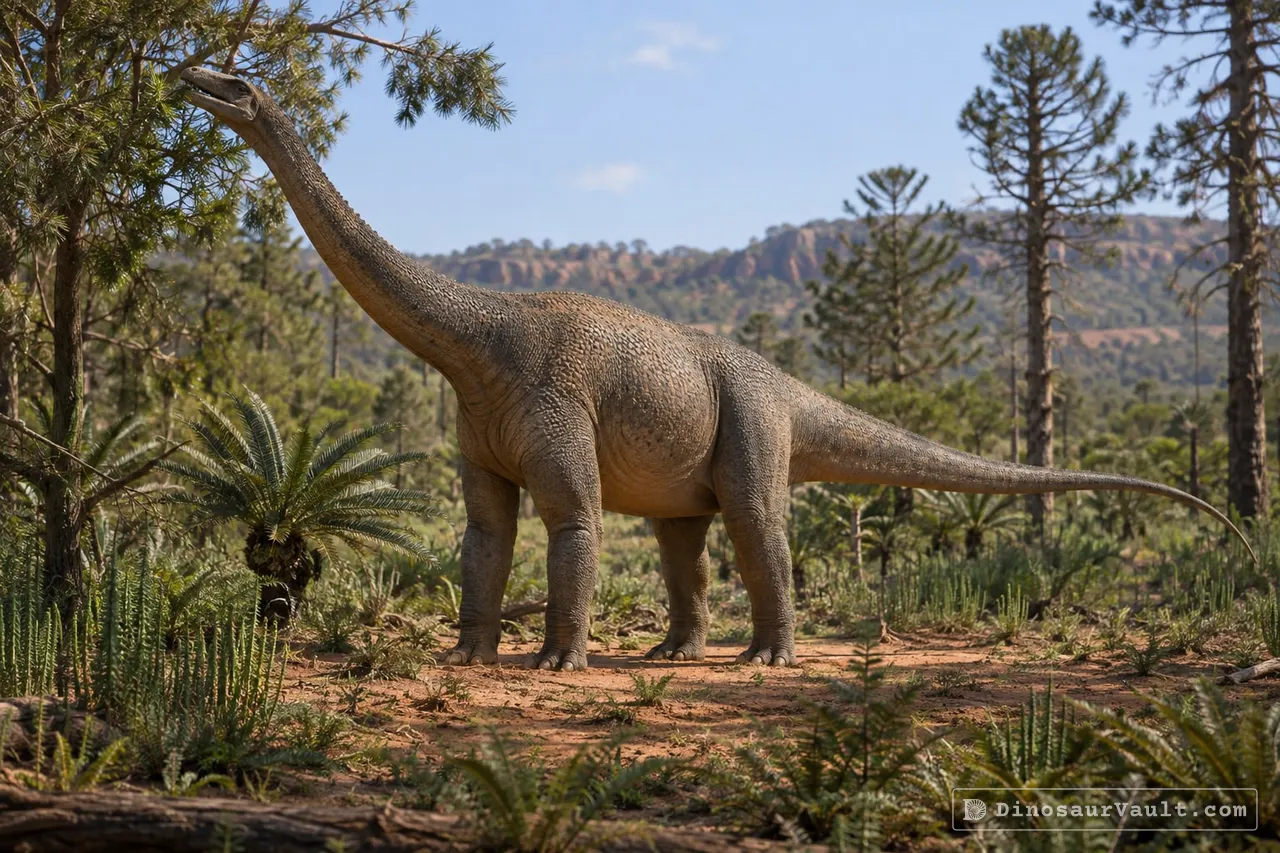
Scenes reconstructed from the available fossil evidence.
1 of 7
Lived alongside
Found in the same rock formations


A rock formation can hold fossils laid down millions of years apart, so not every animal here met Vulcanodon.
The evidence
The science behind Vulcanodon
Which parts of the picture come from its own bones, and which come from its relatives.
From its own fossils
- A partial skeleton preserves sturdy limbs and informative foot bones.
- Its foot had a prominent claw on the inner toe.
Borrowed from relatives
- Tazoudasaurus helps restore missing parts of the head and body of this early sauropod.
- The neck and tail follow early sauropods rather than the extreme proportions of Diplodocus.
Still unknown
- The shape of its complete skull.
- Its skin covering and color.
- How its young differed from adults.
Often drawn wrong
- The curved teeth found near its bones probably belonged to a meat eater, rather than to Vulcanodon.
- Titanosaur armor and a very long neck like that of Diplodocus belong to other kinds of sauropod.
Discovery timeline
- 1972Named itRaath
- 2004Close relativeAllain et al.
- 2018Fossil sitesViglietti et al.
Key papers
The research behind what we know of Vulcanodon
Named it
Named Vulcanodon from a partial skeleton in Zimbabwe, initially linking curved teeth found nearby to the animal.
Fossil vertebrate studies in Rhodesia: a new dinosaur (Reptilia: Saurischia) from near the Tria-Jurassic boundary. Arnoldia 5: 1-37
No link available
Close relative
Described Tazoudasaurus and found it closely related to Vulcanodon, adding missing pieces to the anatomy of early sauropods.
A basal sauropod dinosaur from the Early Jurassic of Morocco. Comptes Rendus Palevol 3: 199-208
Read the paper : A basal sauropod dinosaur from the Early Jurassic of Morocco (opens in a new tab)Fossil sites
Placed the skeleton in the uppermost Forest Sandstone, below the lava sequence, making it older than many earlier accounts suggested.
Stratigraphy of the Vulcanodon type locality and its implications for regional correlations within the Karoo Supergroup. Journal of African Earth Sciences 137: 149-156
Read the paper : Stratigraphy of the Vulcanodon type locality and its implications for regional correlations within the Karoo Supergroup (opens in a new tab)
Close relatives
Other members of Sauropoda


Sources: Wikidata