Heterodontosaurus
het-er-oh-DON-toh-SORE-us
"different-toothed lizard"
- Lived
- 201 to 193 million years ago, Early Jurassic
- Diet
- Herbivore
- Length
- about 1.2 m (4 ft)
- Group
- Early ornithischians, Heterodontosauridae
- Found in
- South Africa
- Named by
- Crompton and Charig 1962
Size comparison
To scale
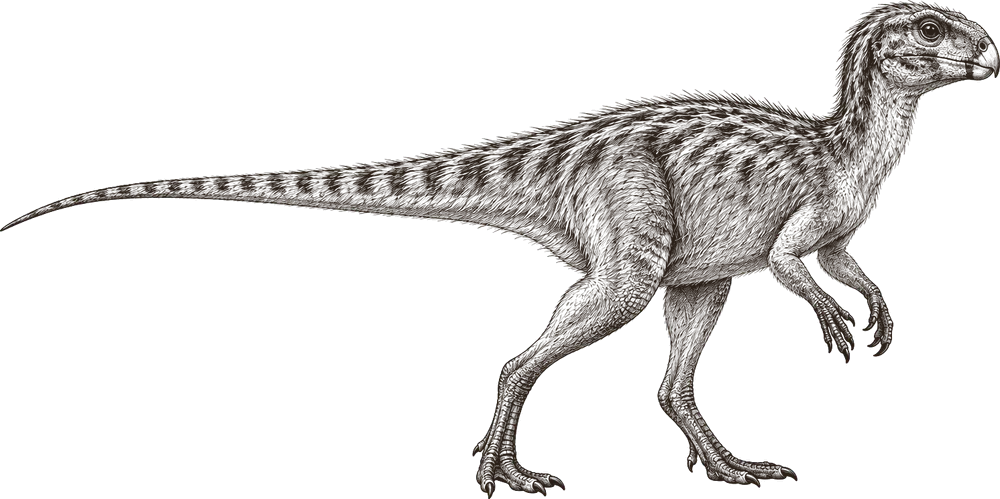

Scale in meters
Where its fossils were found
The evidence
Today

195 million years ago
Habitat
It lived on river plains in southern Africa that were dry for part of the year. Conifers and ferns probably grew there, alongside Massospondylus, Lesothosaurus and Dracovenator.
Field notes
About Heterodontosaurus
What it was like
Heterodontosaurus was a small plant eater with an unusual set of teeth, giving the whole family its name. At the front of its upper jaw sat small, incisor-like teeth, followed by a pair of long, canine-like tusks, then a gap before rows of chisel-shaped cheek teeth farther back. It grew to about 1.2 meters (4 feet) long, walked on two legs, and had slender hands with five fingers each. Despite the tusks, it was most likely a plant eater, or perhaps an occasional omnivore.
Its world
Heterodontosaurus lived in what is now South Africa during the Early Jurassic, about 193 million years ago. Its bones, five finds in all, come from the Elliot and Clarens formations. It shared its world with the long-necked Massospondylus, the early theropod Dracovenator, and its own smaller relative Lesothosaurus.
How it was found
Crompton and Charig named Heterodontosaurus in 1962. It is the namesake of Heterodontosauridae, a family of early ornithischians that also includes Pegomastax, Abrictosaurus, and Fruitadens. Several other heterodontosaurids are known from the same rock layers as Heterodontosaurus, making the group unusually well documented for such early dinosaurs.
Field gallery
More views of Heterodontosaurus
Scenes reconstructed from the available fossil evidence.
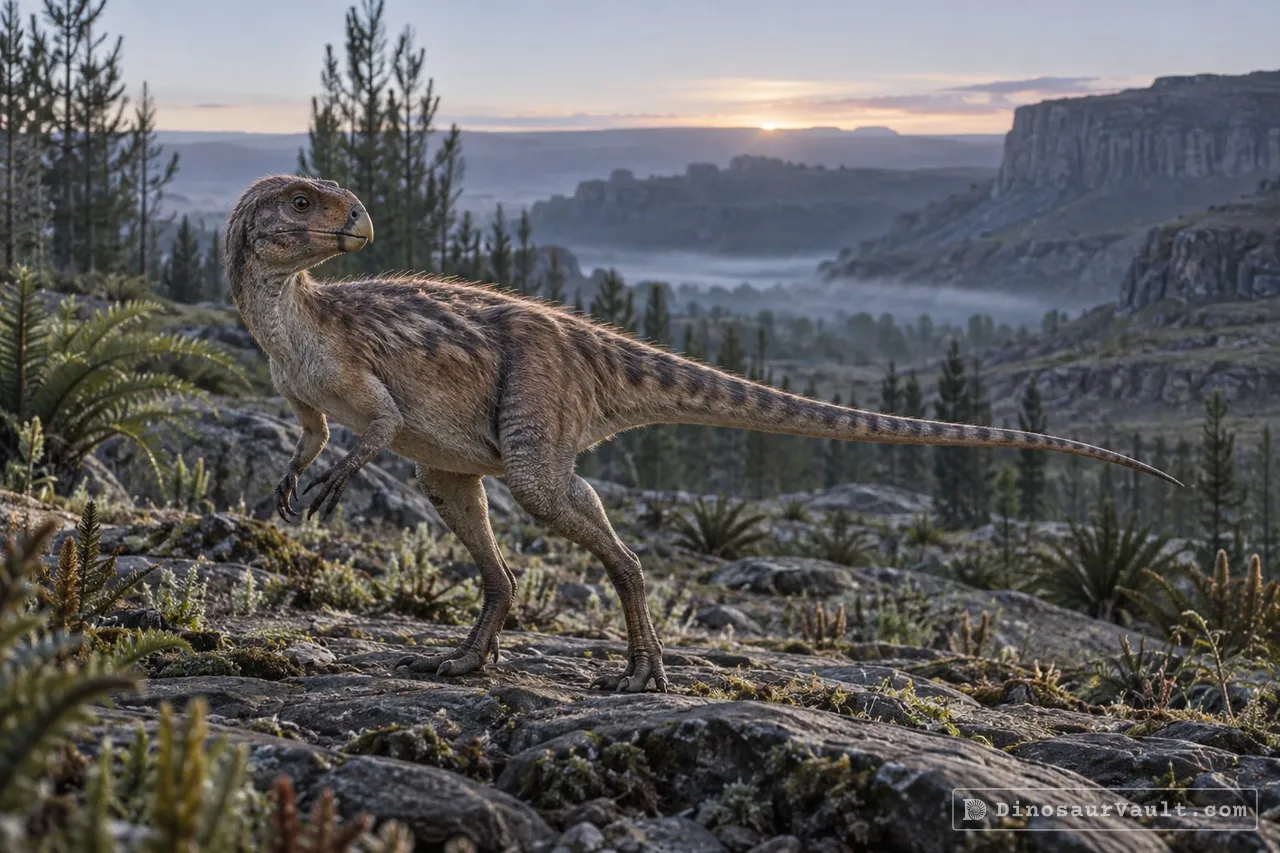
1 of 7
Lived alongside
Found in the same rock formations
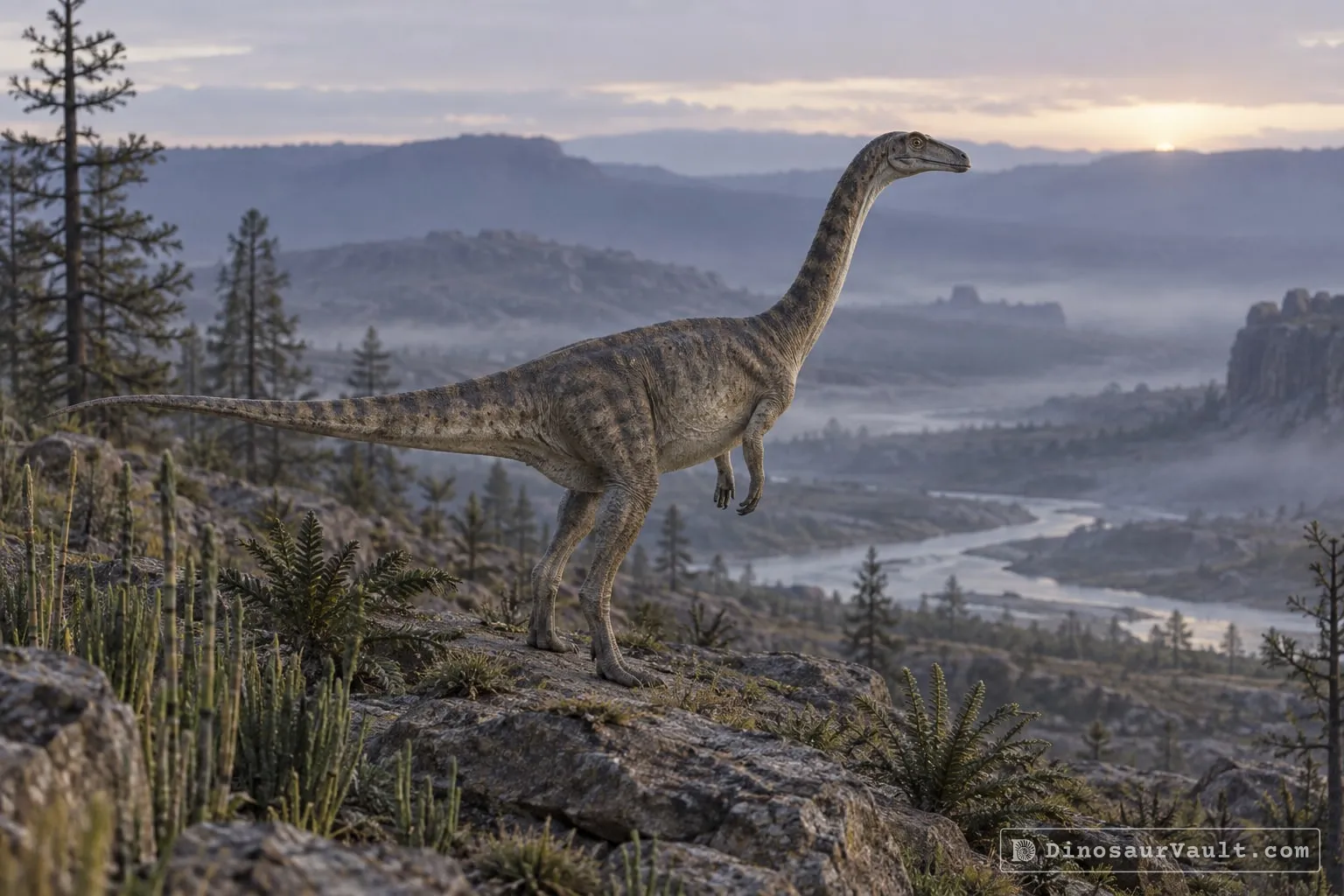
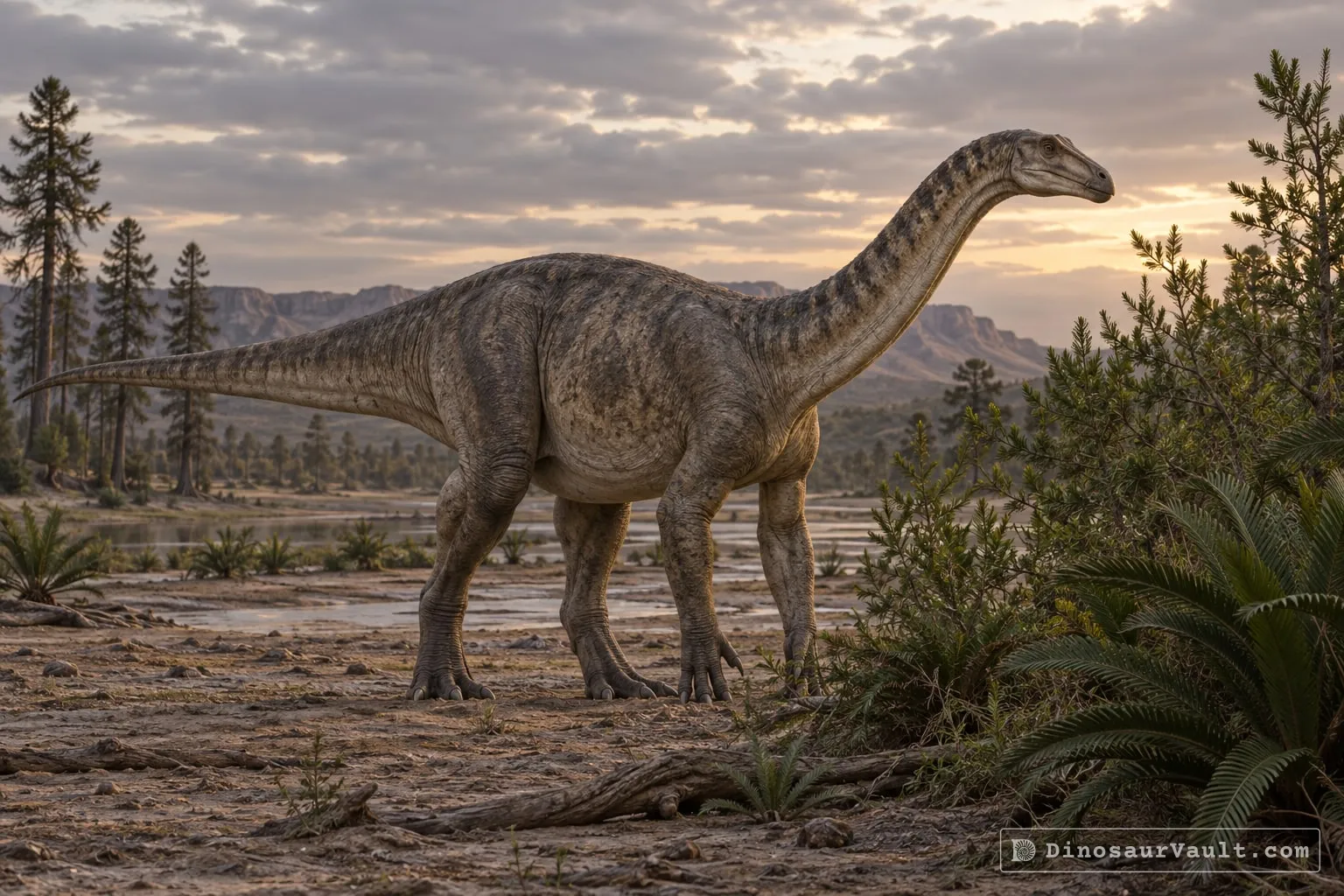
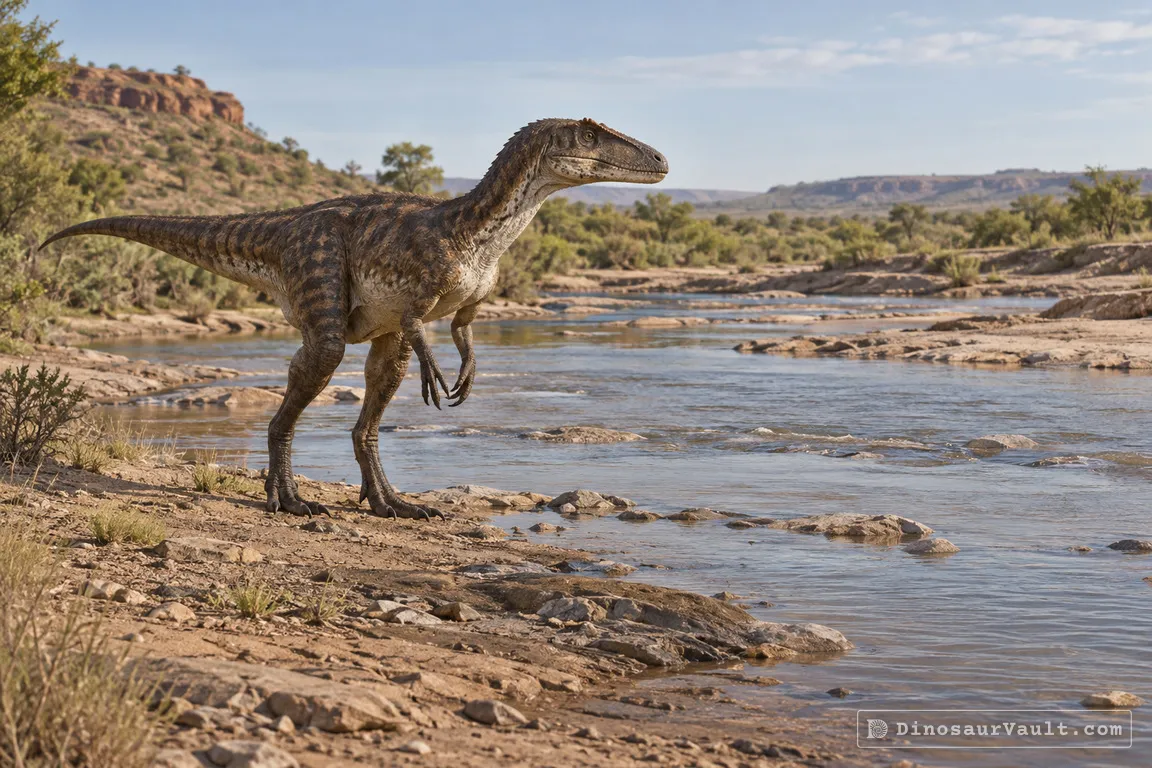
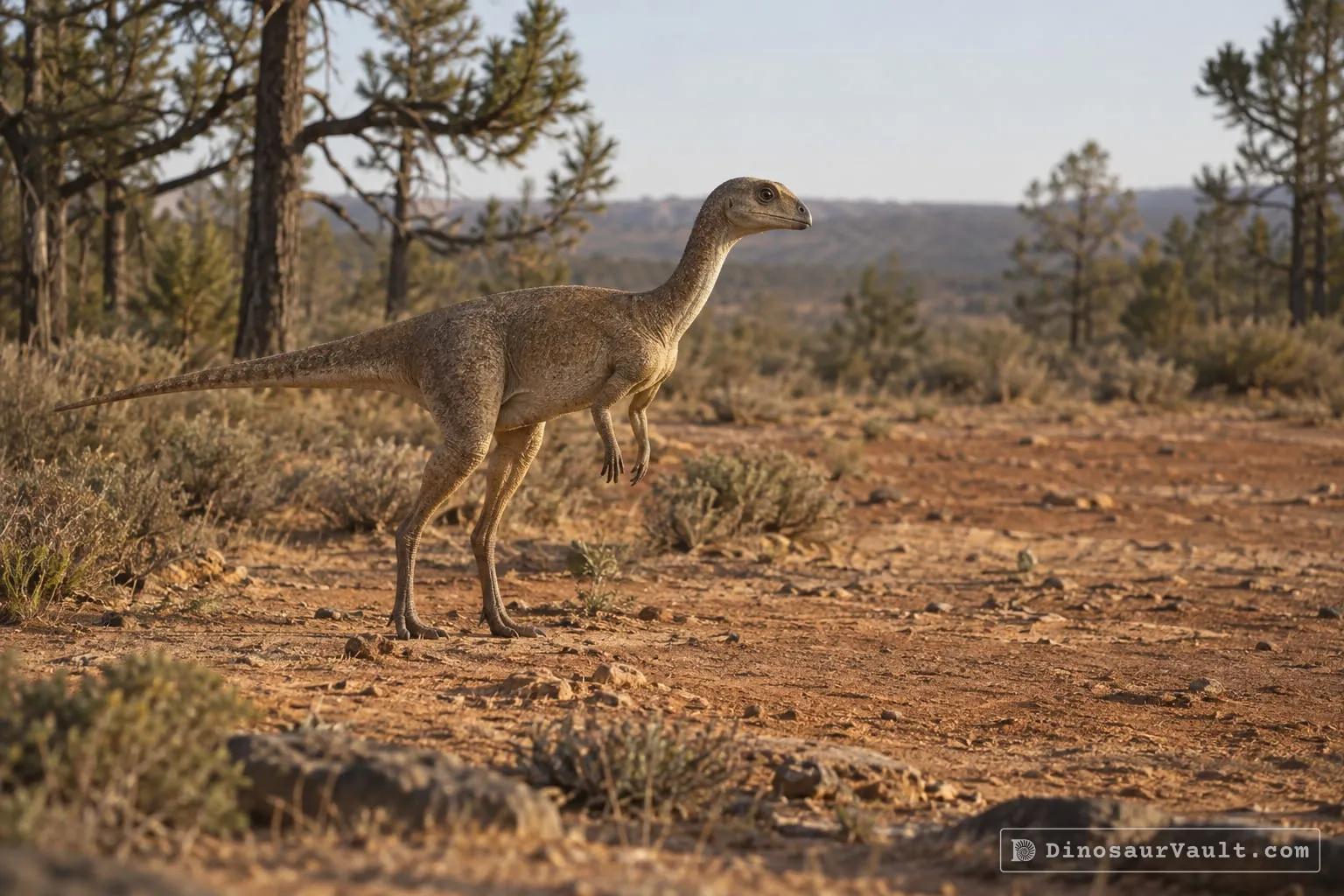
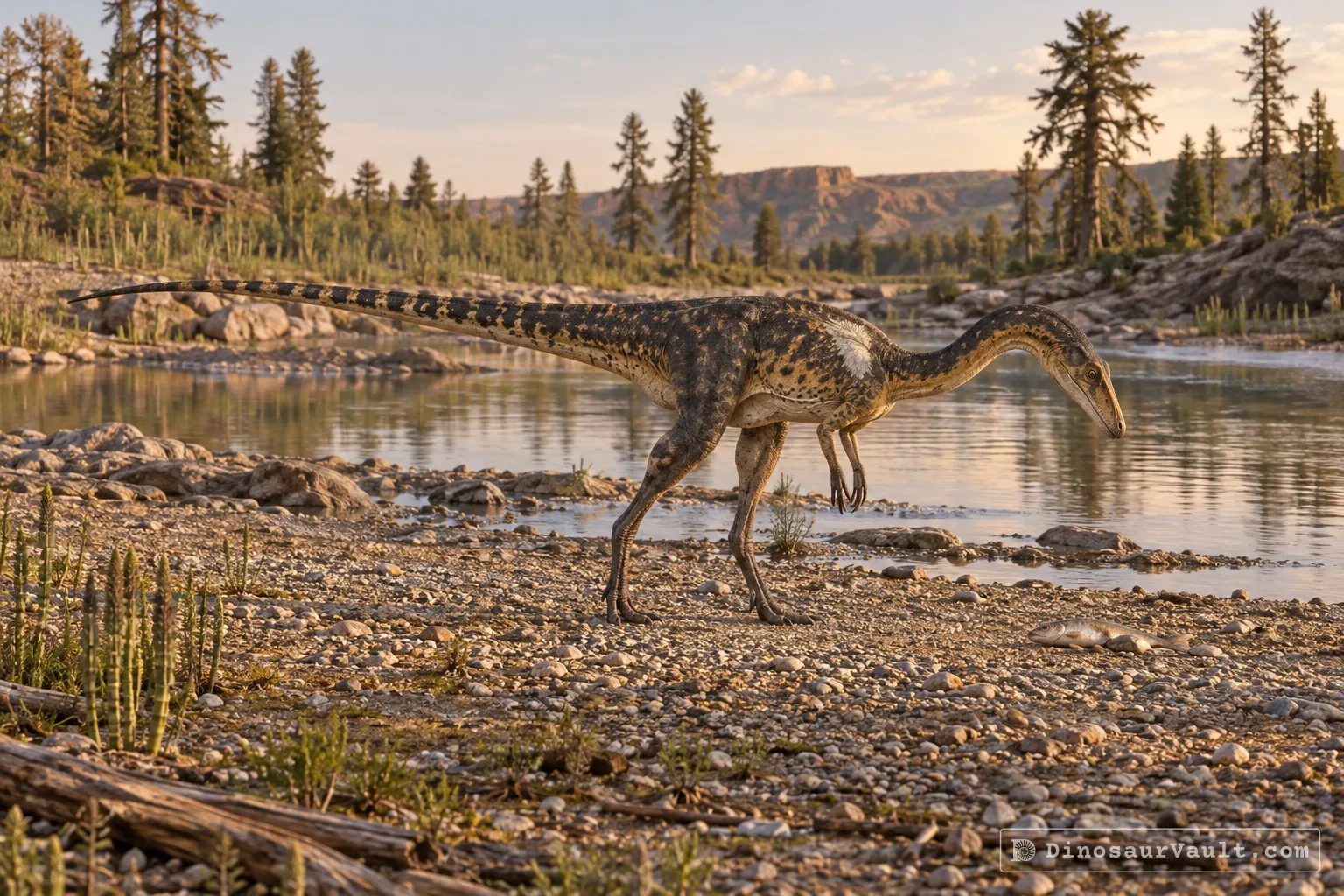
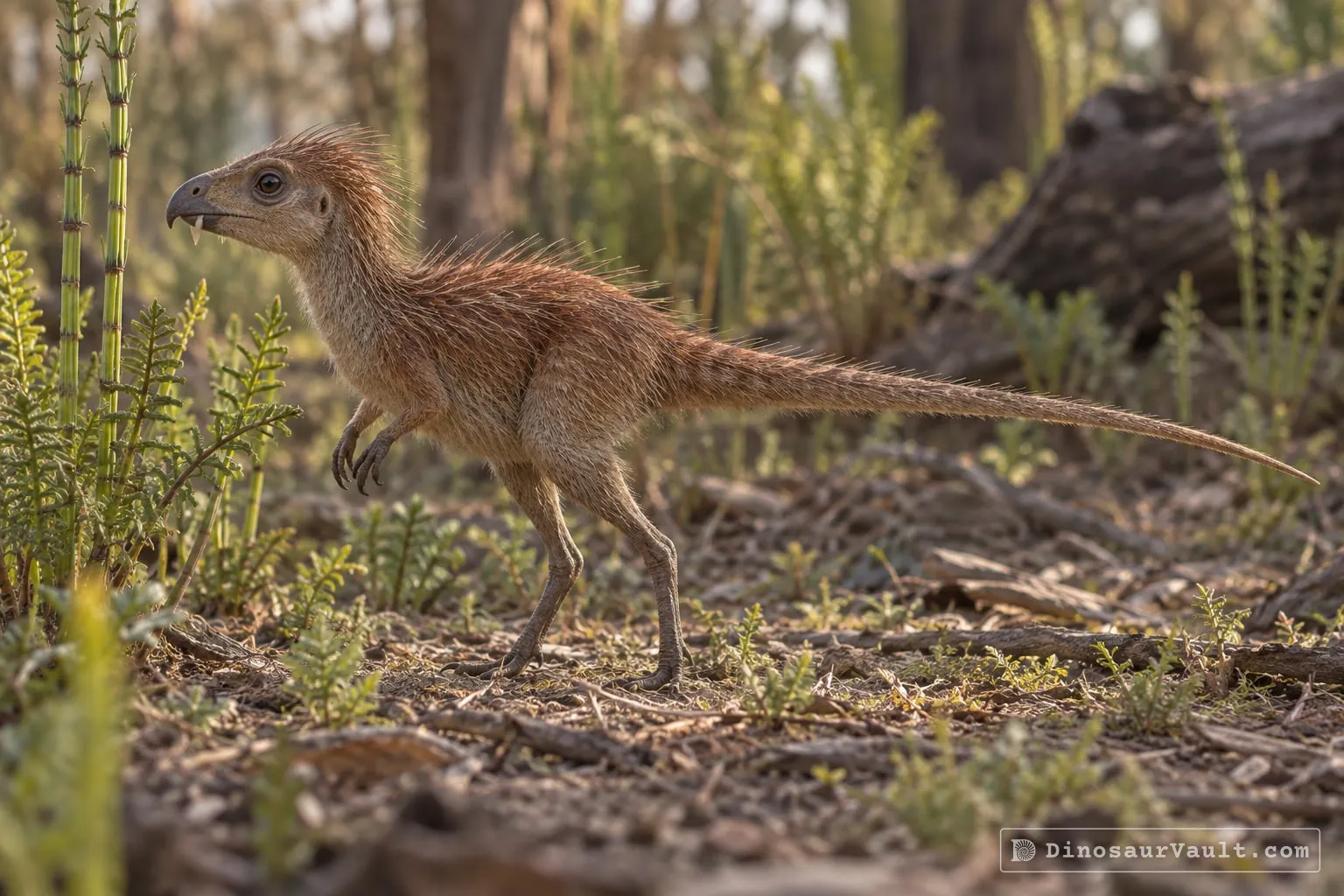


A rock formation can hold fossils laid down millions of years apart, so not every animal here met Heterodontosaurus.
The evidence
The science behind Heterodontosaurus
Which parts of the picture come from its own bones, and which come from its relatives.
From its own fossils
- Skulls show a beak, tusk-like teeth and tightly packed cheek teeth with worn cutting surfaces.
- An almost complete skeleton shows long hindlegs, a balancing tail and grasping hands with curved claws.
- A young skull already carries the distinctive tusk-like teeth.
Borrowed from relatives
- Almost the whole skeleton is known from its own bones.
- A covering of fine filaments is a possibility suggested by its relative Tianyulong, which preserves long, simple filaments.
Still unknown
- Whether its skin carried filaments.
- Its color and the plants it preferred to eat.
- The body proportions of its youngest animals.
Often drawn wrong
- Young animals should keep their tusk-like teeth, rather than being given toothless jaws.
- It walked on its hindlegs, with the tail held above the ground.
Discovery timeline
- 1962Named itCROMPTON & CHARIG
- 2008Growing upButler, Porro & Norman
- 2009Close relativeZheng et al.
- 2011SkullNORMAN et al.
- 2012How it fedSereno
Key papers
The research behind what we know of Heterodontosaurus
Named it
Named a small dinosaur from South Africa with an unusual mixture of tooth shapes.
A new Ornithischian from the Upper Triassic of South Africa. Nature 196: 1074-1077
Read the paper : A new Ornithischian from the Upper Triassic of South Africa (opens in a new tab)Growing up
Described a juvenile skull with tusk-like teeth already present, showing that these teeth developed early in life.
A juvenile skull of the primitive ornithischian dinosaurHeterodontosaurus tuckifrom the ‘Stormberg’ of southern Africa. Journal of Vertebrate Paleontology 28: 702-711
Read the paper : A juvenile skull of the primitive ornithischian dinosaurHeterodontosaurus tuckifrom the ‘Stormberg’ of southern Africa (opens in a new tab)Close relative
Described long, simple filaments on Tianyulong, a relative that helps explain why Heterodontosaurus may have had a filament covering.
An Early Cretaceous heterodontosaurid dinosaur with filamentous integumentary structures. Nature 458: 333-336
Read the paper : An Early Cretaceous heterodontosaurid dinosaur with filamentous integumentary structures (opens in a new tab)Skull
Described the skull in detail and compared its specialized jaws and teeth with those of other early plant-eating dinosaurs.
The Lower Jurassic ornithischian dinosaur Heterodontosaurus tucki Crompton & Charig, 1962: cranial anatomy, functional morphology, taxonomy, and relationships. Zoological Journal of the Linnean Society: no-no
Read the paper : The Lower Jurassic ornithischian dinosaur Heterodontosaurus tucki Crompton & Charig, 1962: cranial anatomy, functional morphology, taxonomy, and relationships (opens in a new tab)How it fed
Compared the family and showed that the angle of contact between opposing cheek teeth changed as Heterodontosaurus grew.
Taxonomy, morphology, masticatory function and phylogeny of heterodontosaurid dinosaurs. ZooKeys 226: 1-225
Read the paper : Taxonomy, morphology, masticatory function and phylogeny of heterodontosaurid dinosaurs (opens in a new tab)
Close relatives
Other members of Heterodontosauridae


Sources: Wikidata