Camposaurus
KAMP-oh-SORE-us
"Camp's lizard"
Type species Camposaurus arizonensis
- Lived
- 227 to 206 million years ago, Late Triassic
- Diet
- Carnivore
- Group
- Theropods, Coelophysidae
- Found in
- United States
- Named by
- Hunt et al. 1998
Where its fossils were found
The evidence
Today

220 million years ago
Habitat
Rivers and forests covered the Chinle landscape, with conifers on the floodplains and ferns in wetter areas. Other dinosaurs from these rocks include Chindesaurus and Coelophysis.
Field notes
About Camposaurus
What it was like
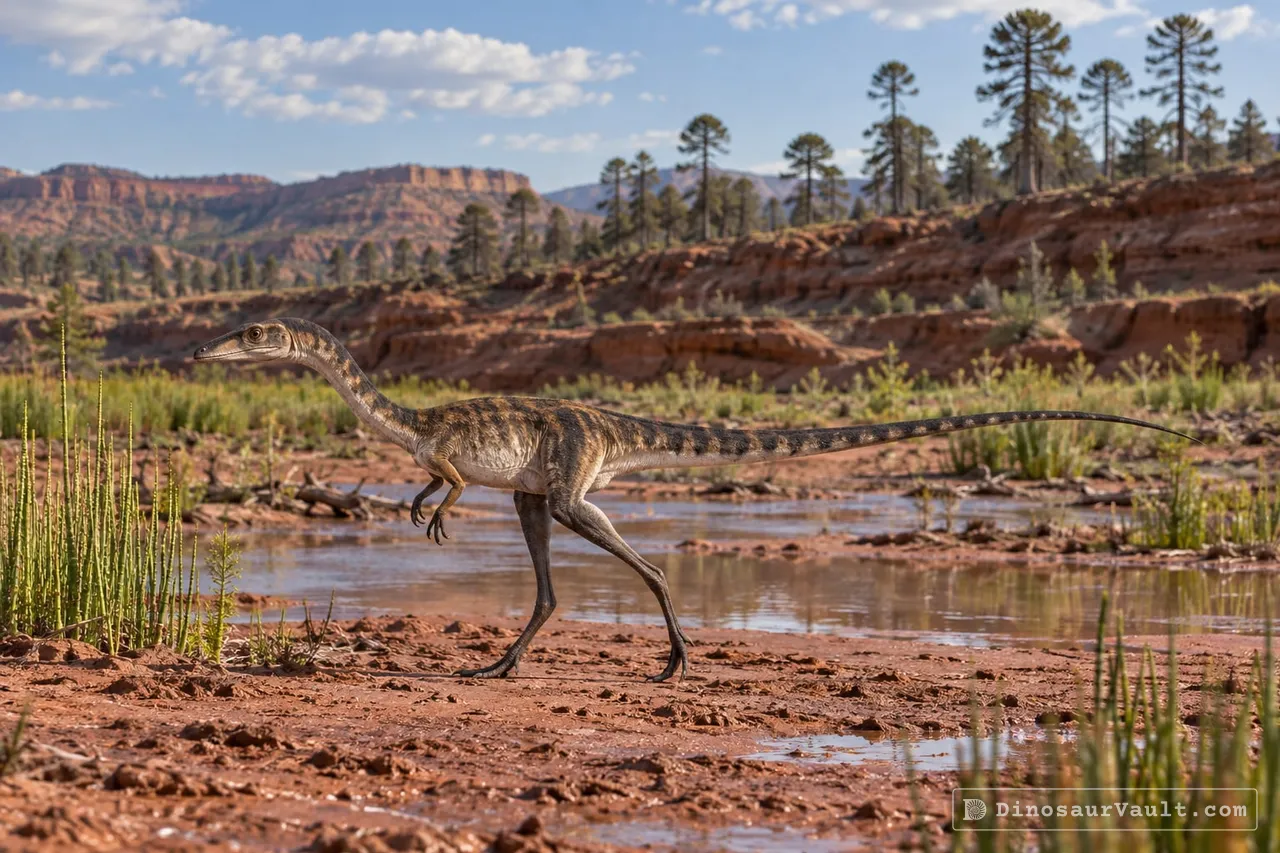
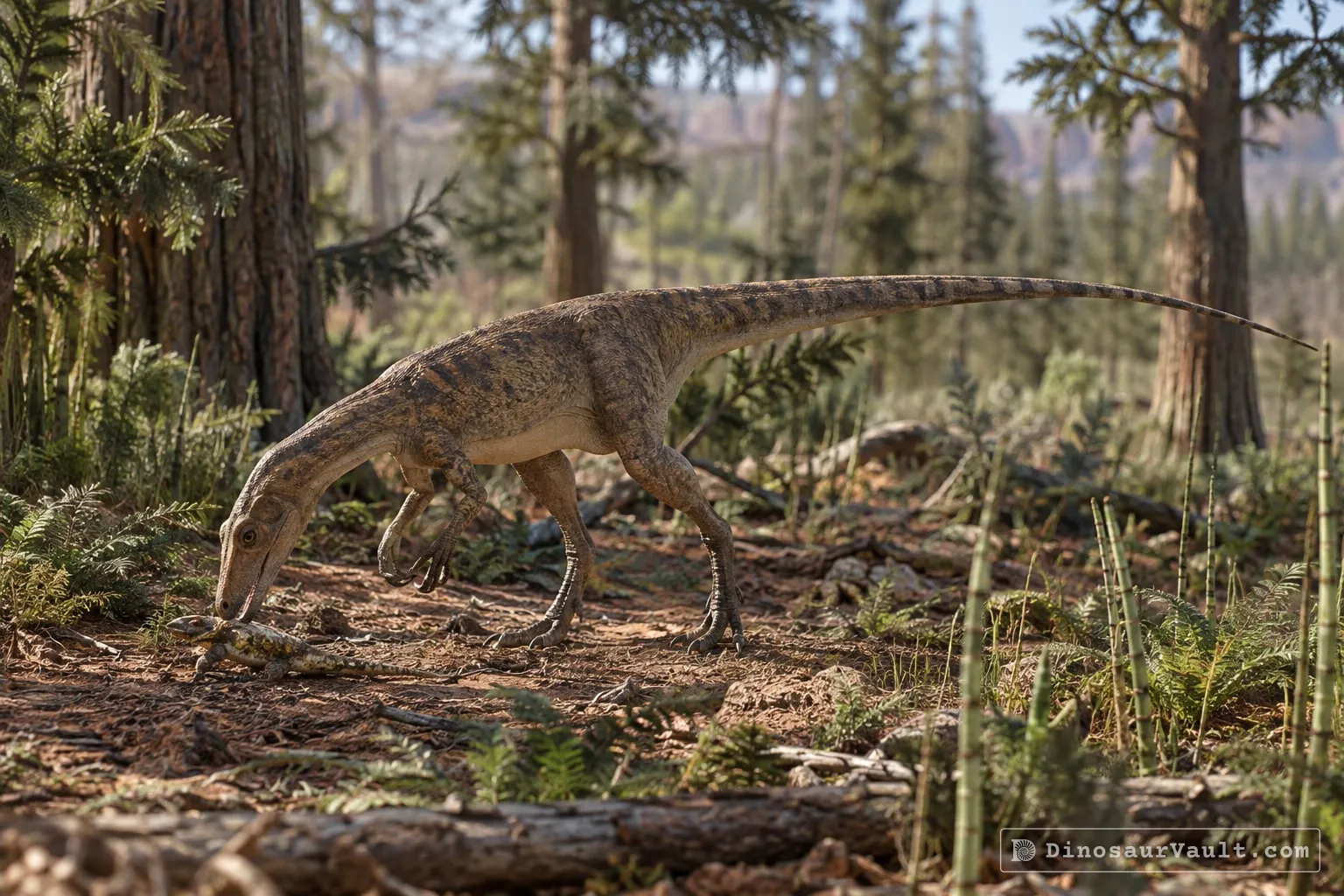
Camposaurus was a small, slender predator related to Coelophysis. It is known only from parts of the lower legs and ankle. It may be one of the oldest known members of the neotheropods, the group that includes all later meat-eating dinosaurs.
Its world
It lived in the Late Triassic in what is now Arizona. Its bones come from the Chinle Formation, a land of rivers and forests where early dinosaurs such as Chindesaurus lived alongside much larger reptiles.
How it was found
Hunt and colleagues named it in 1998 from one find. The type species is Camposaurus arizonensis.
Field gallery
More views of Camposaurus
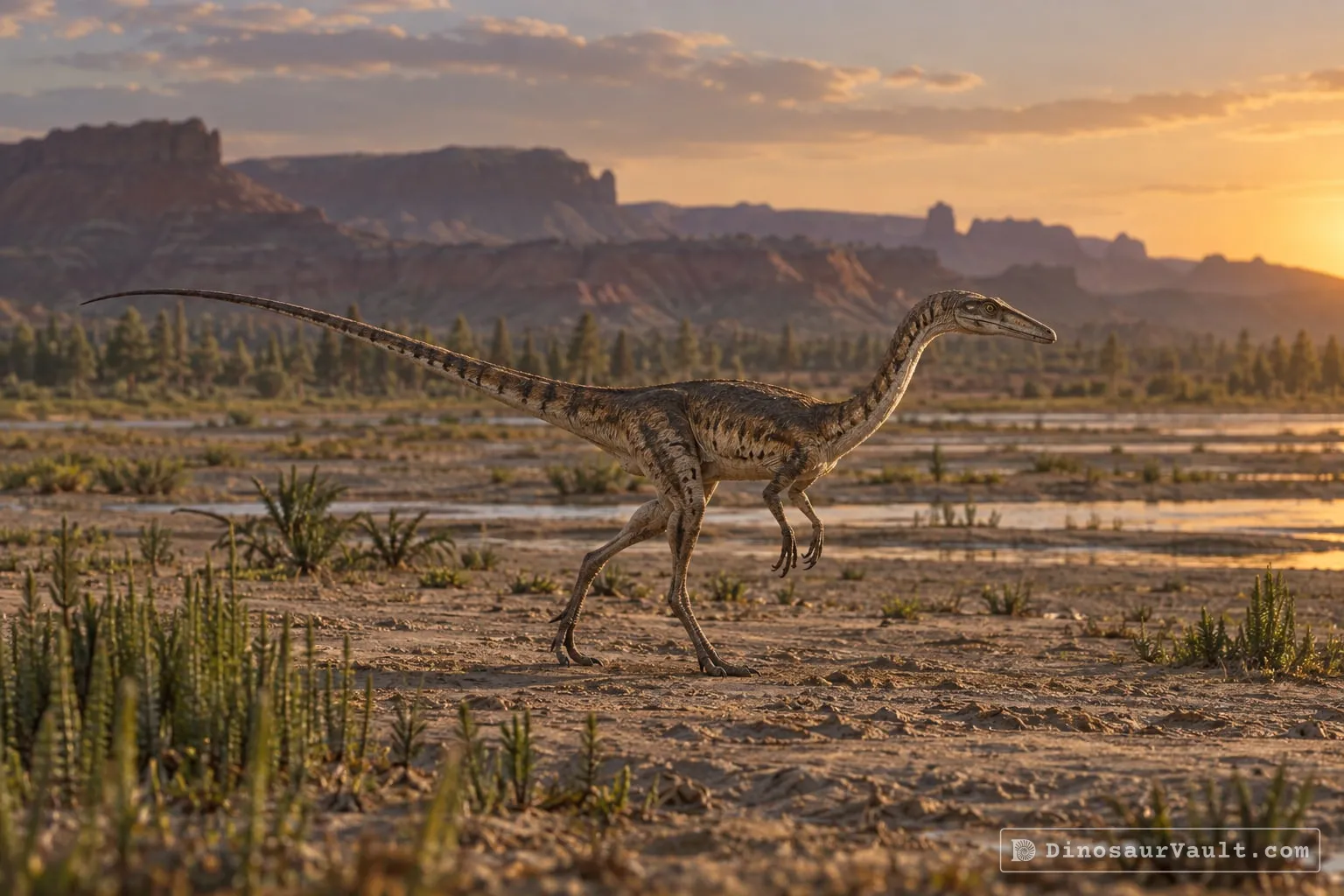
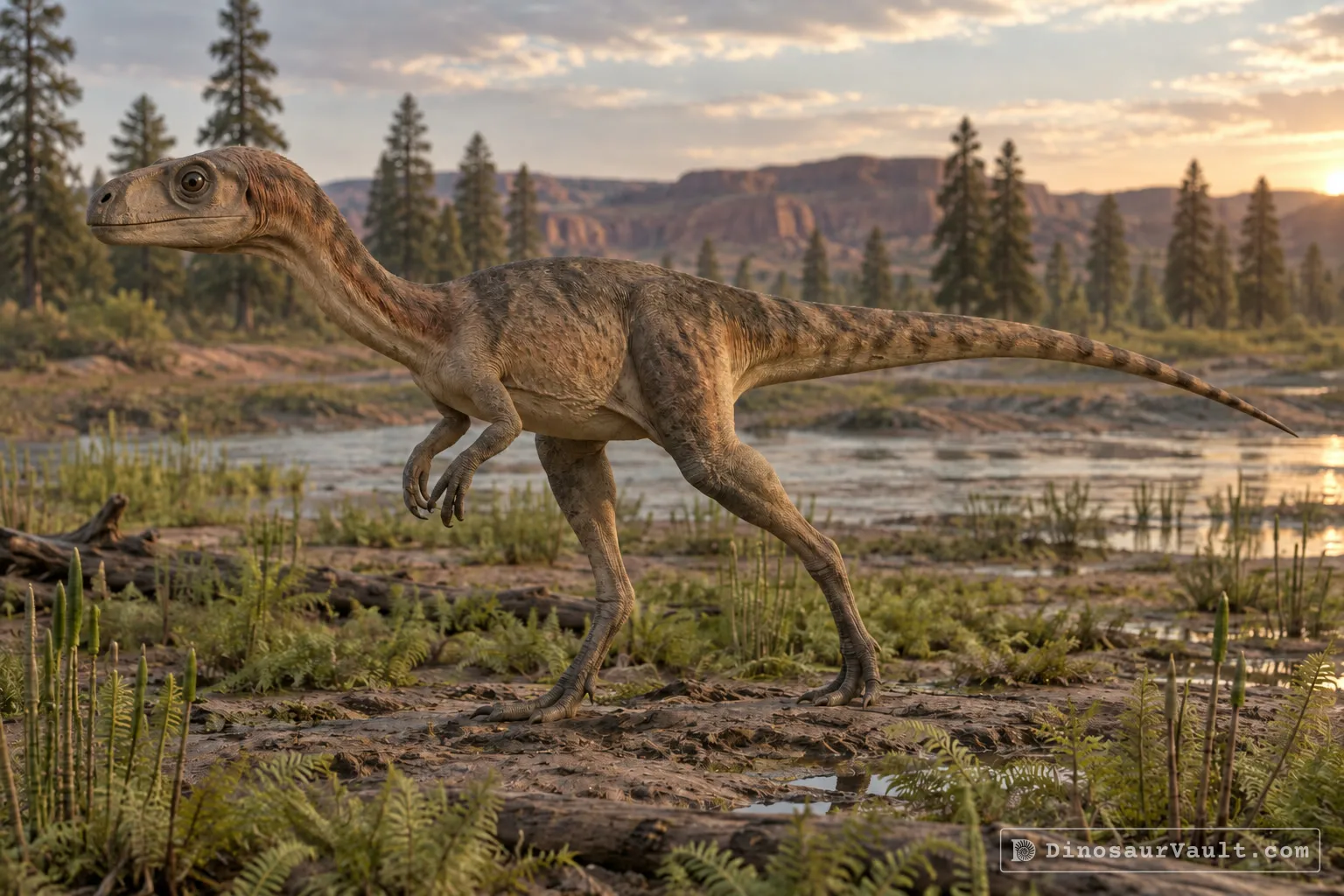
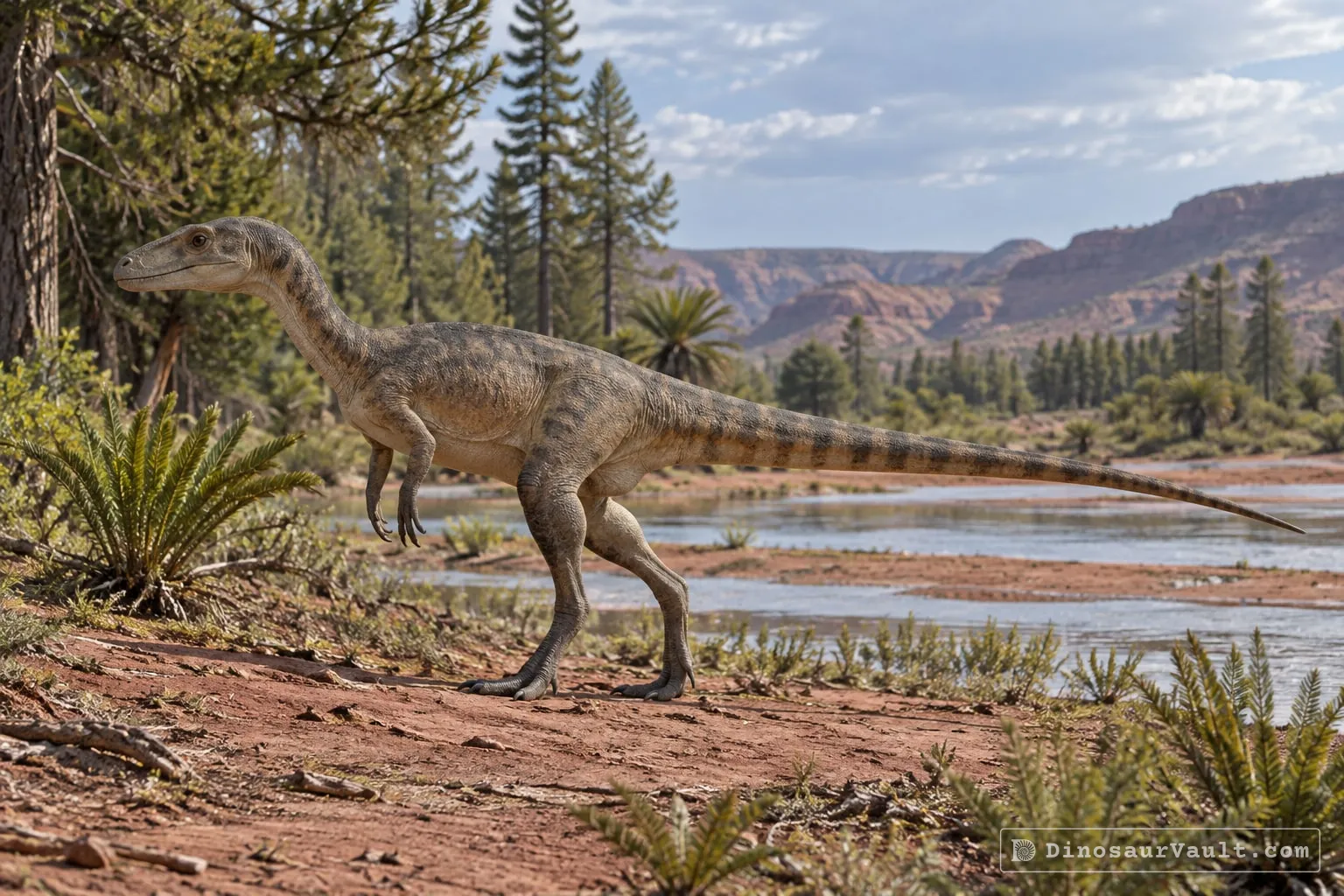
Scenes reconstructed from the available fossil evidence.
1 of 3
Lived alongside
Found in the same rock formations
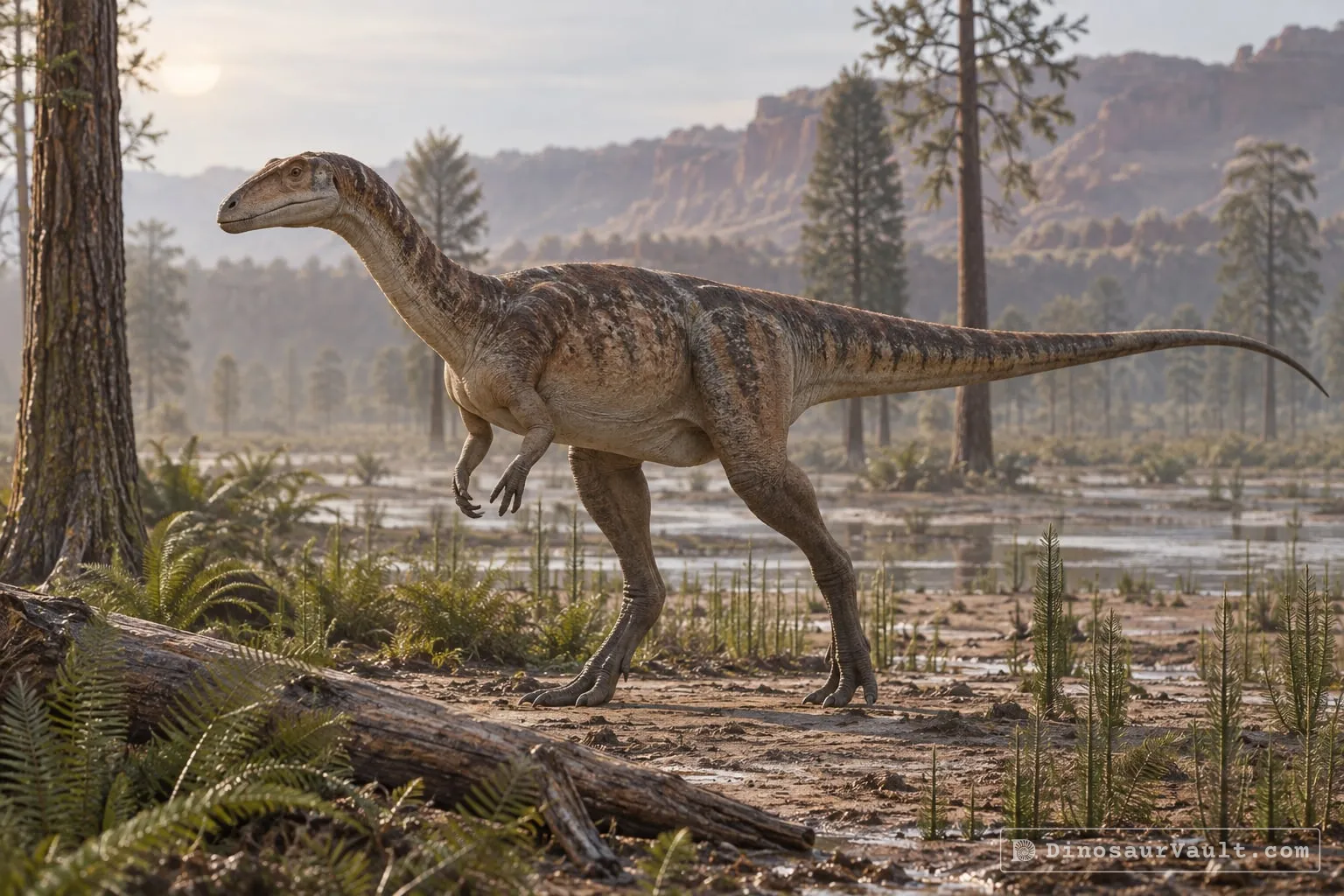
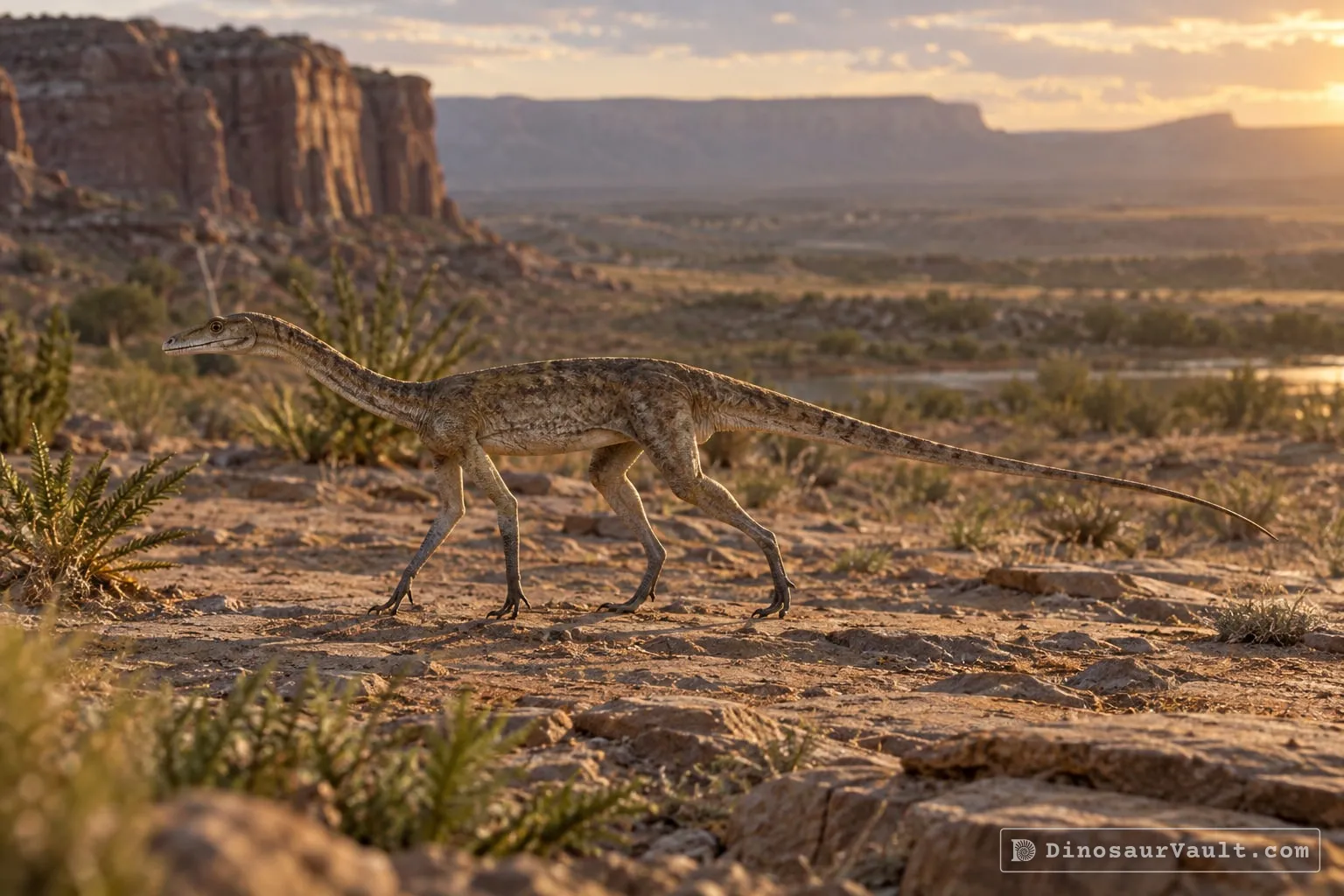
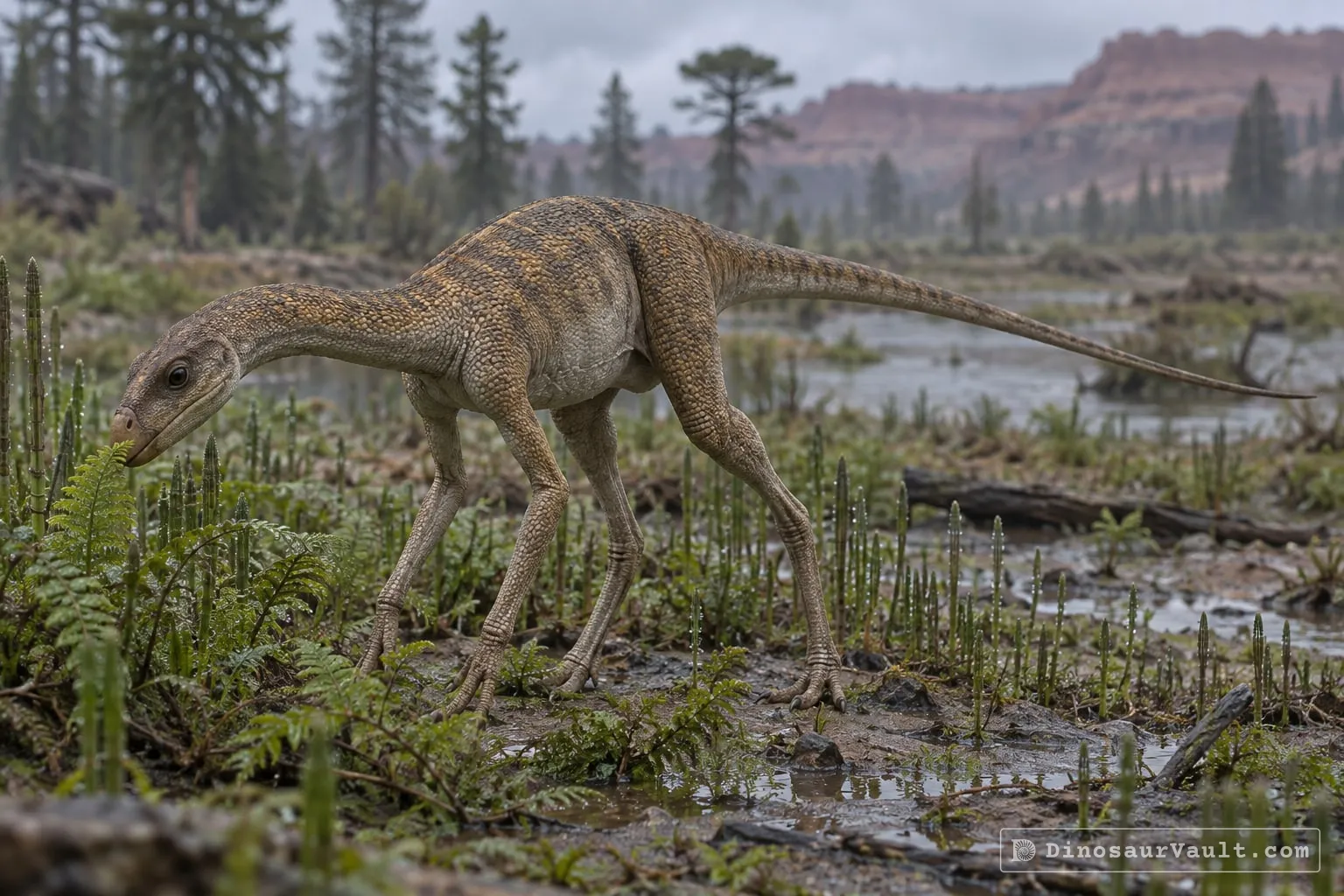
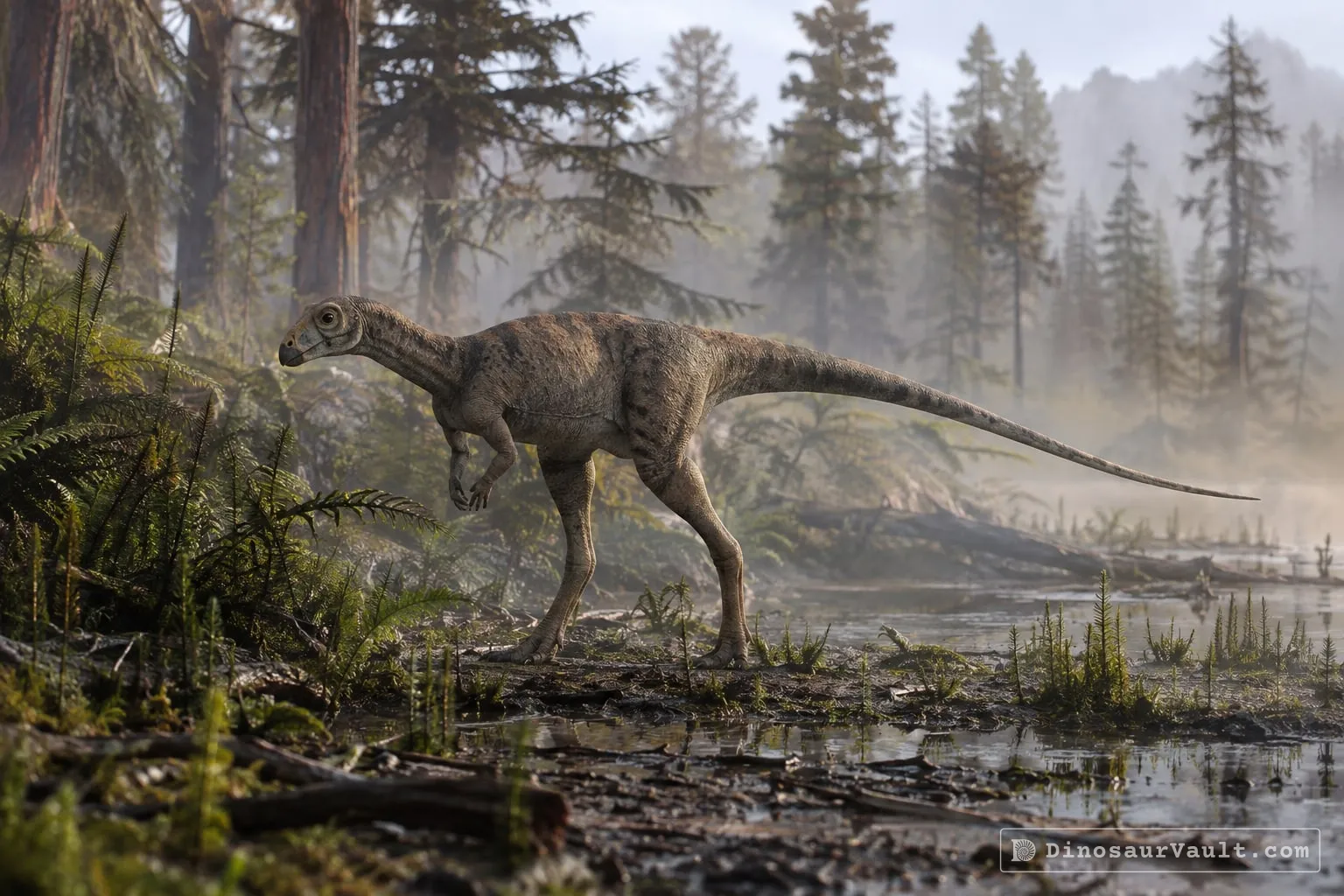


A rock formation can hold fossils laid down millions of years apart, so not every animal here met Camposaurus.
The evidence
The science behind Camposaurus
Which parts of the picture come from its own bones, and which come from its relatives.
From its own fossils
- The ends of the lower leg bones are fused to the ankle bones.
- A sharp ridge on the shin bone and the shape of an ankle bone distinguish it from other early meat eaters.
Borrowed from relatives
- Megapnosaurus and Coelophysis guide the reconstruction of its missing head, slender body and long tail.
- Hands restored from Megapnosaurus have strong grasping fingers and a much smaller outer finger.
- Coelophysis and Segisaurus help guide the shape of the missing feet.
Still unknown
- Its body length and the proportions of its head and limbs.
- Its skin covering and color.
- How old the known animal was when it died.
Often drawn wrong
- Its hands should face inward, following the grasping hands of other early theropods.
- A large head crest is an invented feature.
Discovery timeline
- 1998Named itHunt et al.
- 2011RedescriptionEZCURRA & BRUSATTE
- 2017Close relativeBarta, Nesbitt & Norell
Key papers
The research behind what we know of Camposaurus
Named it
Named Camposaurus from lower leg and ankle bones found in Arizona.
Late Triassic dinosaursfrom the western United States. Geobios 31: 511-531
Read the paper : Late Triassic dinosaursfrom the western United States (opens in a new tab)Redescription
Identified distinctive ankle features that support Camposaurus as a valid genus and linked it closely to the animal now called Megapnosaurus.
Taxonomic and phylogenetic reassessment of the early neotheropod dinosaur Camposaurus arizonensis from the Late Triassic of North America. Palaeontology 54: 763-772
Read the paper : Taxonomic and phylogenetic reassessment of the early neotheropod dinosaur Camposaurus arizonensis from the Late Triassic of North America (opens in a new tab)Close relative
Found variation in the hands of early theropods, including close relatives used to restore the missing hands of Camposaurus.
The evolution of the manus of early theropod dinosaurs is characterized by high inter‐ and intraspecific variation. Journal of Anatomy 232: 80-104
Read the paper : The evolution of the manus of early theropod dinosaurs is characterized by high inter‐ and intraspecific variation (opens in a new tab)
Close relatives
Other members of Coelophysidae


Sources: Wikidata