Panguraptor
- Lived
- 201 to 200 million years ago, Early Jurassic
- Diet
- Carnivore
- Group
- Theropods, Coelophysidae
- Found in
- China
- Named by
- You et al. 2014
Where its fossils were found
The evidence
Today

200 million years ago
Habitat
Lakes formed part of the landscape recorded in the Lufeng Formation, where conifers grew. Its neighbors included Lufengosaurus, Yunnanosaurus and the larger predator Sinosaurus.
Field notes
About Panguraptor
What it was like
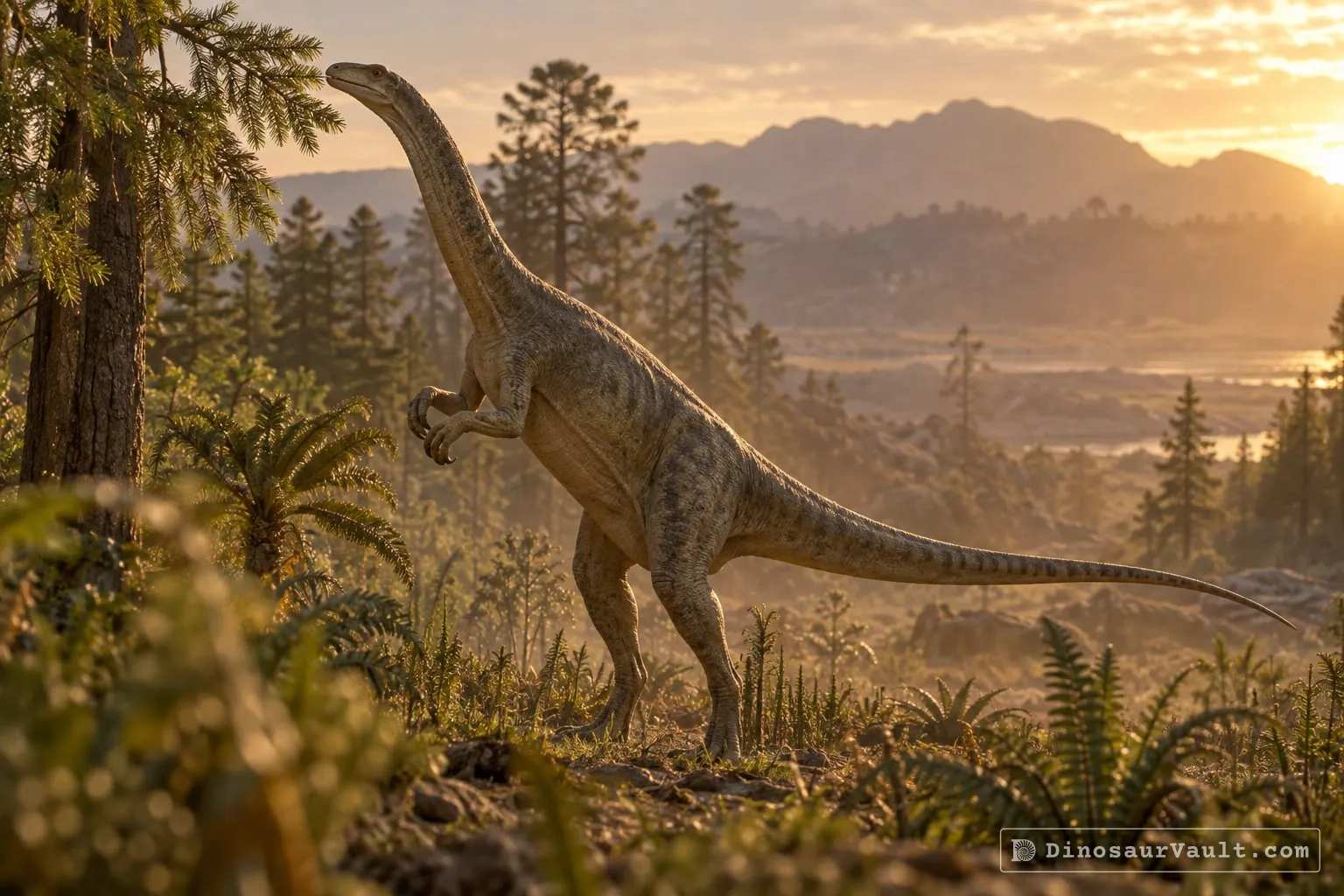
Panguraptor was a small coelophysid, a slender, two-legged meat eater related to Coelophysis. Its skeleton is nearly complete.
Its world
It lived in the Early Jurassic, in what is now China. It comes from the Lufeng Formation, where it shared the land with the plant eaters Lufengosaurus and Yunnanosaurus and the larger crested predator Sinosaurus.
How it was found
You and colleagues named Panguraptor in 2014. The name refers to a figure in Chinese myth.
Field gallery
More views of Panguraptor
Scenes reconstructed from the available fossil evidence.
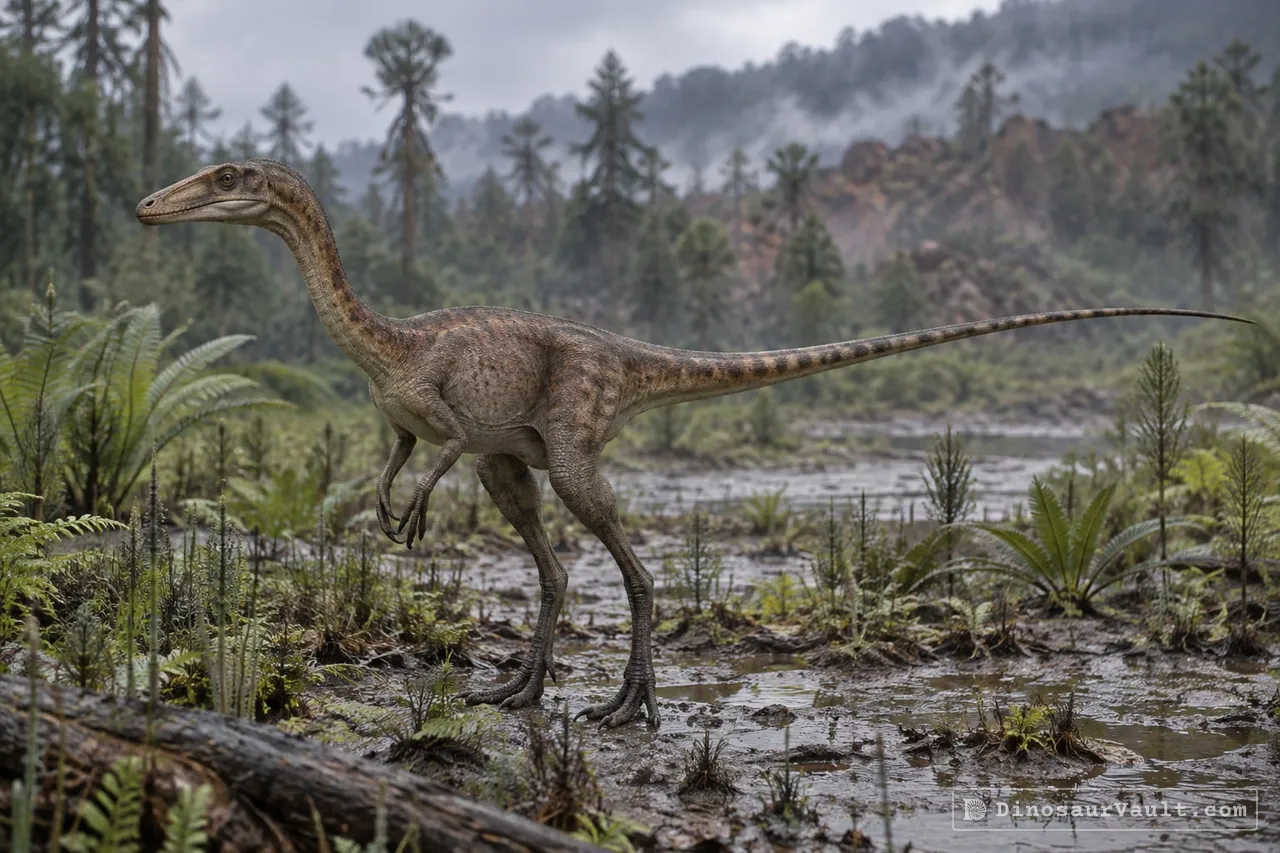
1 of 3
Lived alongside
Found in the same rock formations
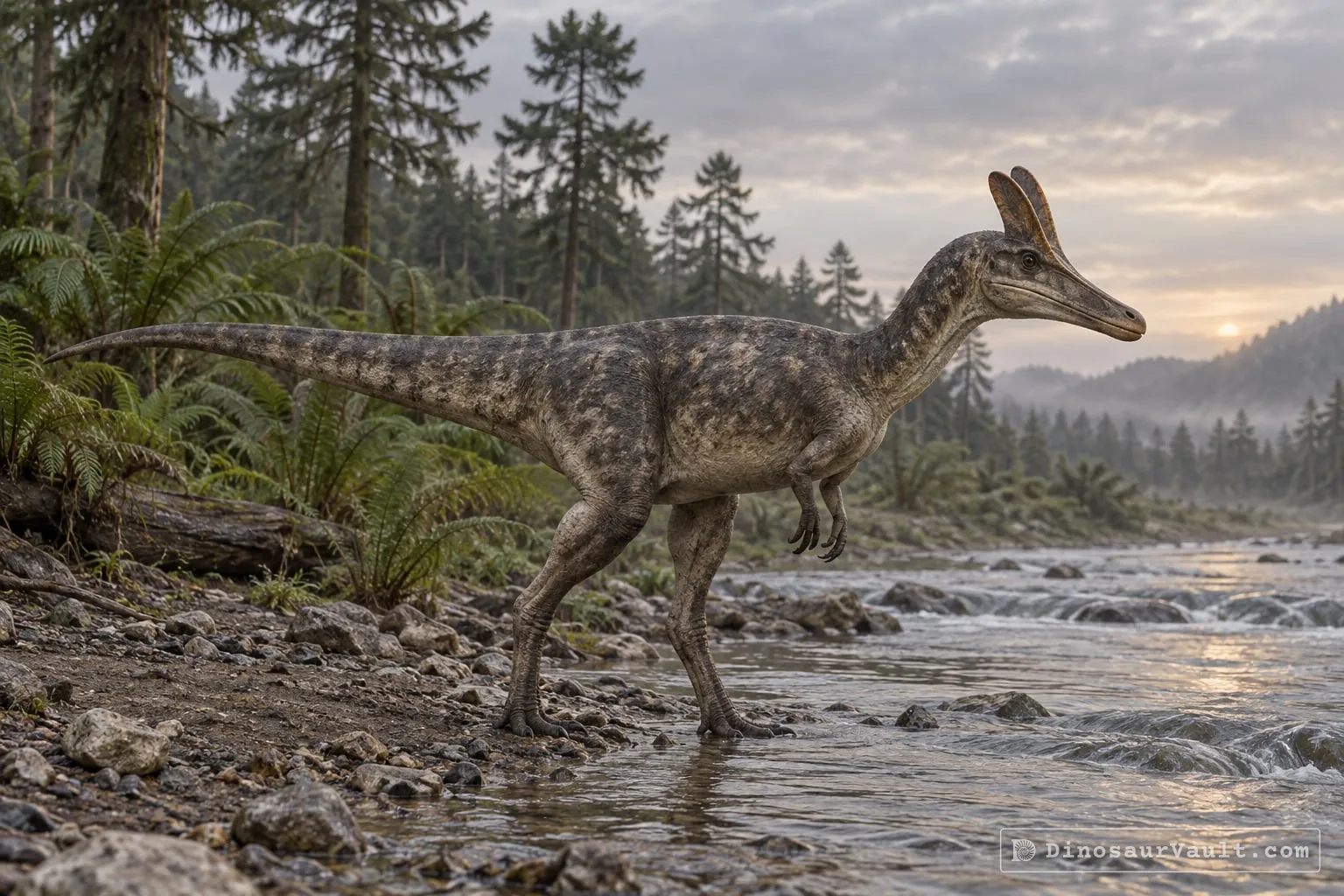
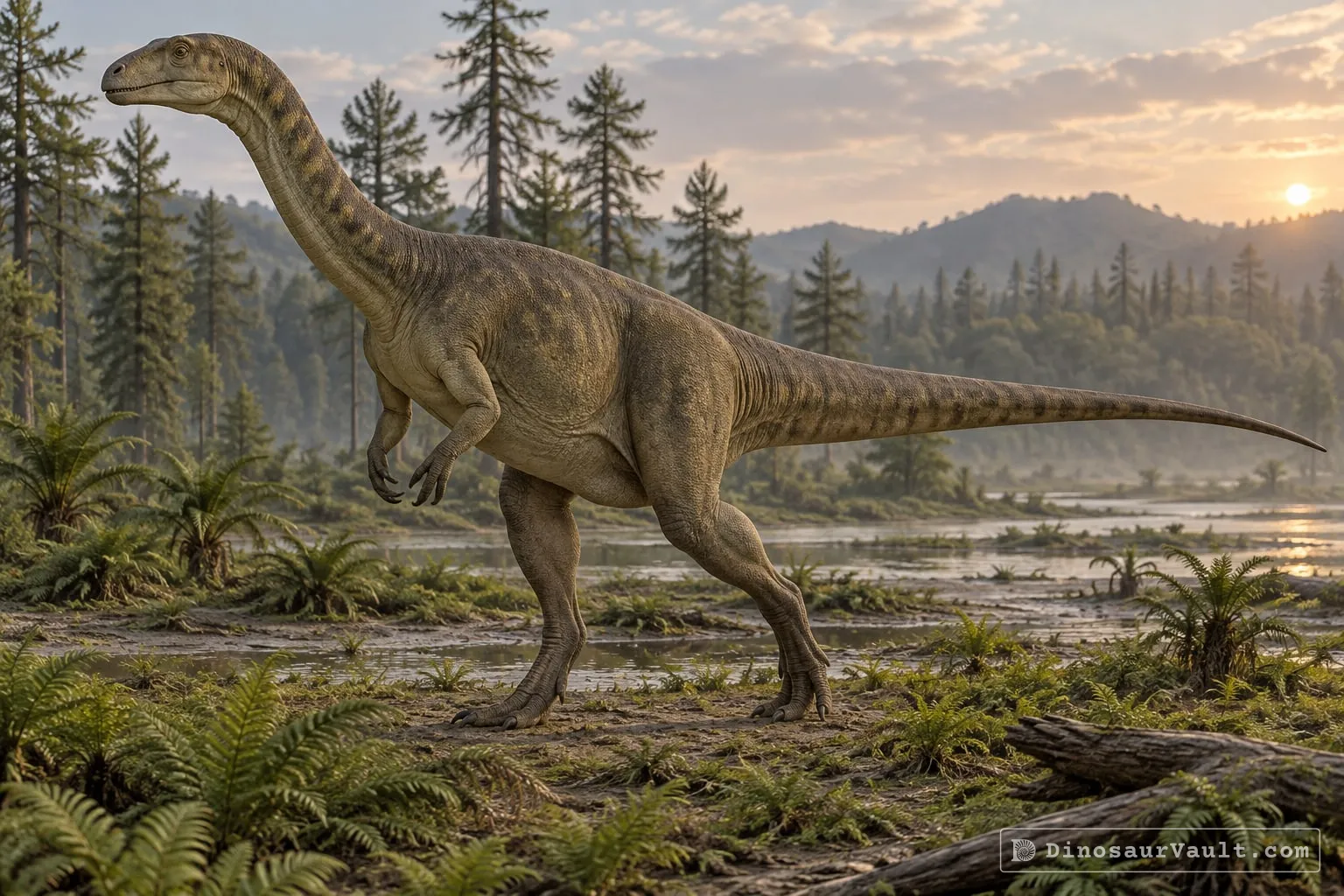
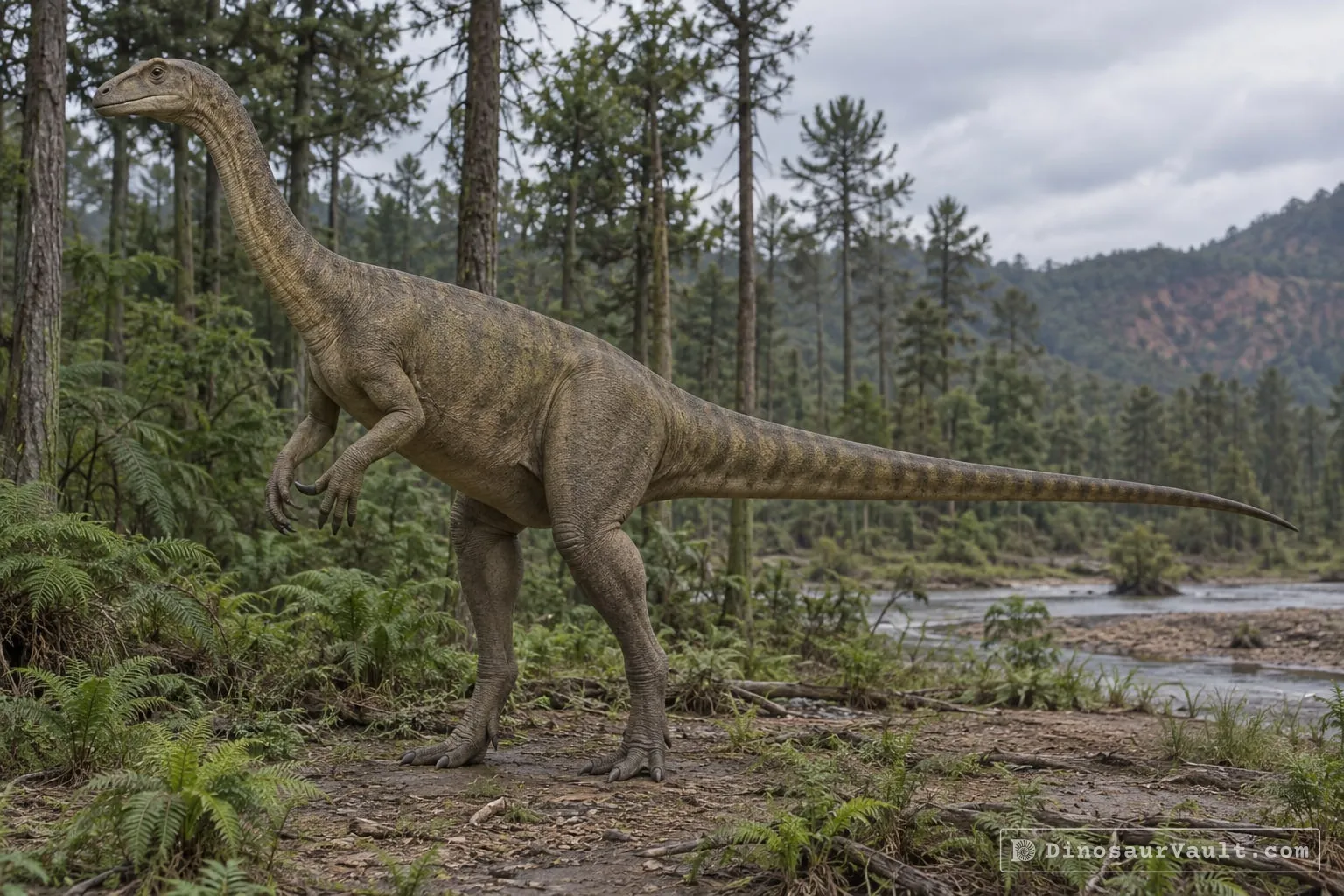
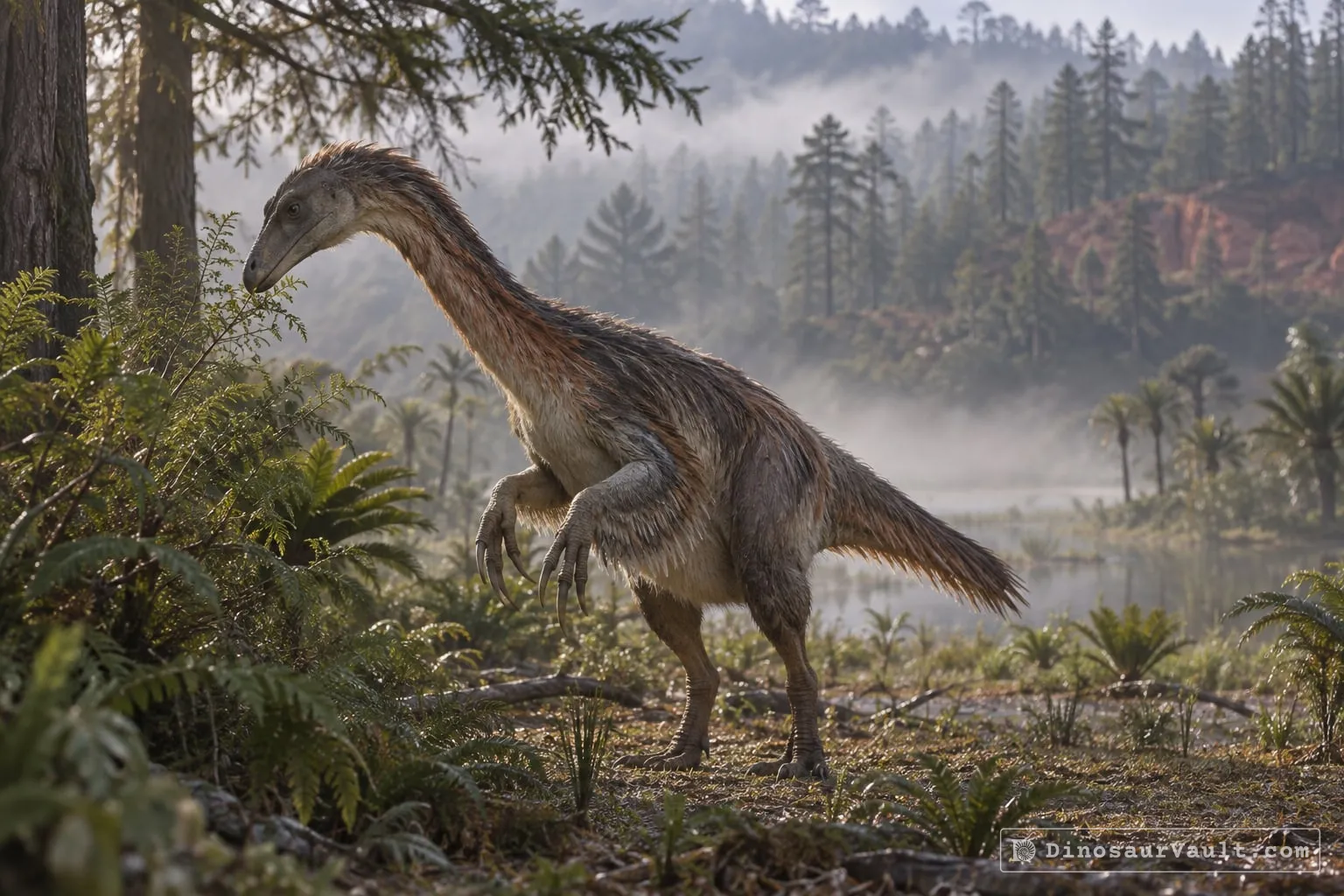
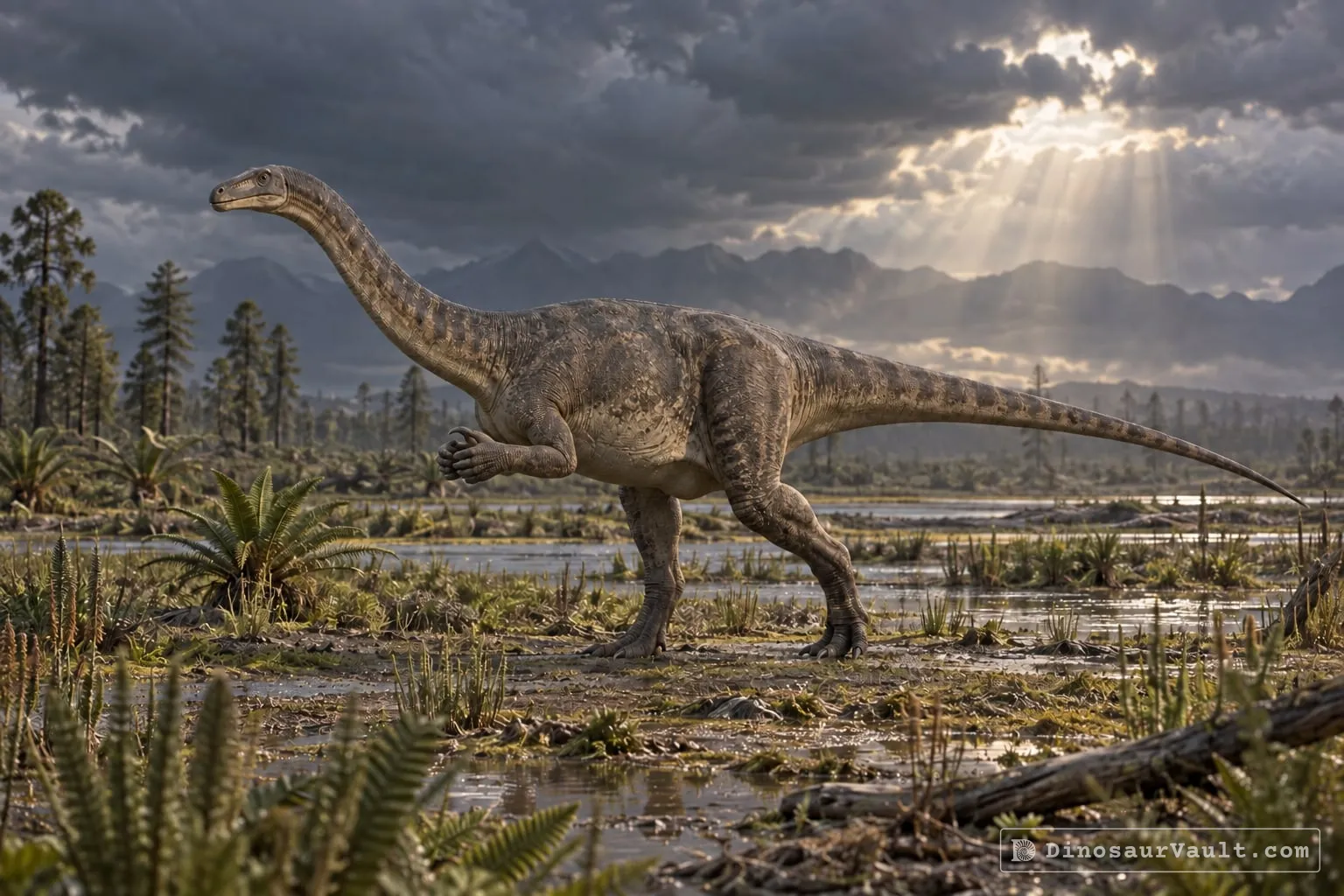
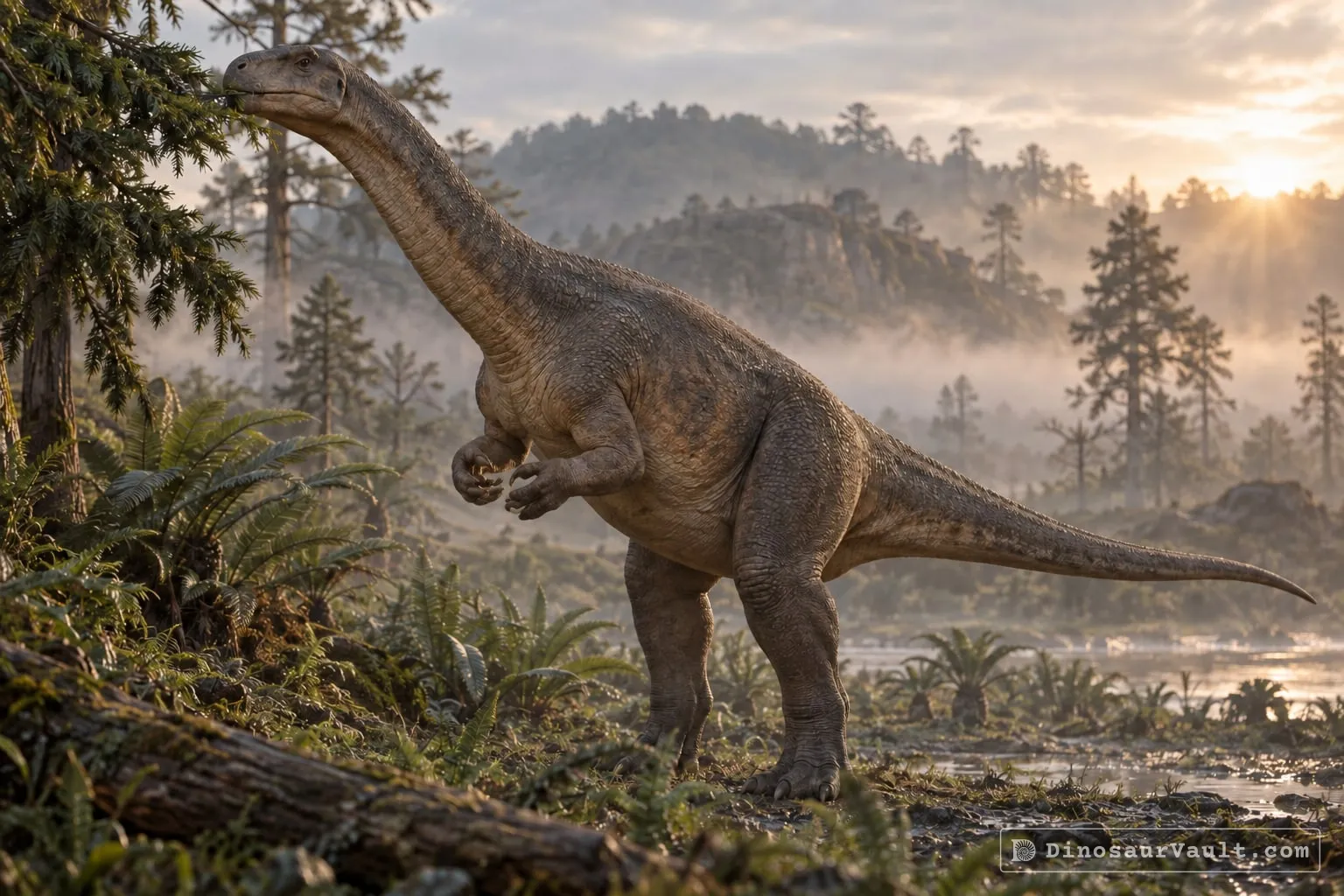
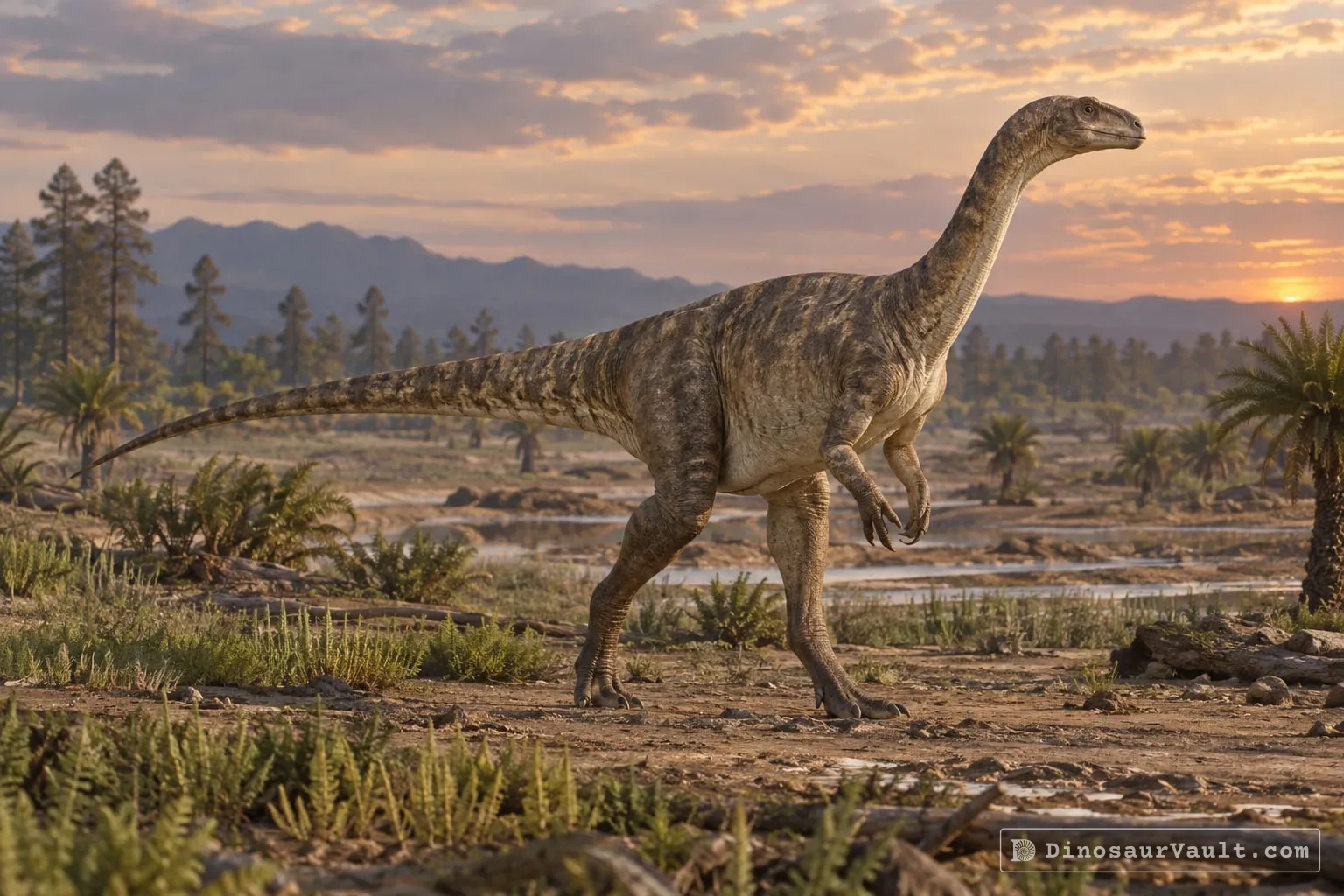


A rock formation can hold fossils laid down millions of years apart, so not every animal here met Panguraptor.
The evidence
The science behind Panguraptor
Which parts of the picture come from its own bones, and which come from its relatives.
From its own fossils
- Much of a skeleton preserves the skull and lower jaw, neck and trunk backbones, ribs and parts of the limbs.
- The upper jaw has a diagonal ridge and small oval openings ahead of the main skull opening in front of the eye.
Borrowed from relatives
- The tail is restored from other coelophysoids, such as Coelophysis.
- Its slender body follows its own skeleton, with comparisons to Coelophysis helping fill the missing parts.
Still unknown
- Its skin covering and color.
- Its full adult size.
- Whether it hunted alone or in groups.
Discovery timeline
- 2014Named itYOU et al.
- 2025Same rocksLi et al.
- 2026RedescriptionZhang et al.
Key papers
The research behind what we know of Panguraptor
Named it
Described Panguraptor from a well-preserved skeleton and placed it close to Coelophysis.
The first well-preserved coelophysoid theropod dinosaur from Asia. Zootaxa 3873
Read the paper : The first well-preserved coelophysoid theropod dinosaur from Asia (opens in a new tab)Same rocks
Described another partly grown predator from the Lufeng Formation, showing that its meat eaters included more than coelophysoids.
New material of a non-averostran neotheropod dinosaur from the Lower Jurassic Lufeng Formation of Yunnan, south-western China. Zoological Journal of the Linnean Society 204
Read the paper : New material of a non-averostran neotheropod dinosaur from the Lower Jurassic Lufeng Formation of Yunnan, south-western China (opens in a new tab)Redescription
Reexamined the skeleton, revised its distinguishing features and placed Panguraptor on an early branch of the coelophysoid family tree.
Redescription of the osteology and the systematics of Panguraptor lufengensis (Neotheropoda, Coelophysoidea). Swiss Journal of Palaeontology 145: 723-750
Read the paper : Redescription of the osteology and the systematics of Panguraptor lufengensis (Neotheropoda, Coelophysoidea) (opens in a new tab)
Close relatives
Other members of Coelophysidae


Sources: Wikidata