Powellvenator
"Powell's hunter"
- Lived
- 227 to 206 million years ago, Late Triassic
- Diet
- Carnivore
- Group
- Theropods, Coelophysidae
- Found in
- Argentina
- Named by
- Ezcurra 2017
Where its fossils were found
The evidence
Today

220 million years ago
Habitat
Rivers crossed floodplains in what is now Argentina. The Los Colorados Formation also contains Riojasaurus, Coloradisaurus and Zupaysaurus.
Field notes
About Powellvenator
What it was like
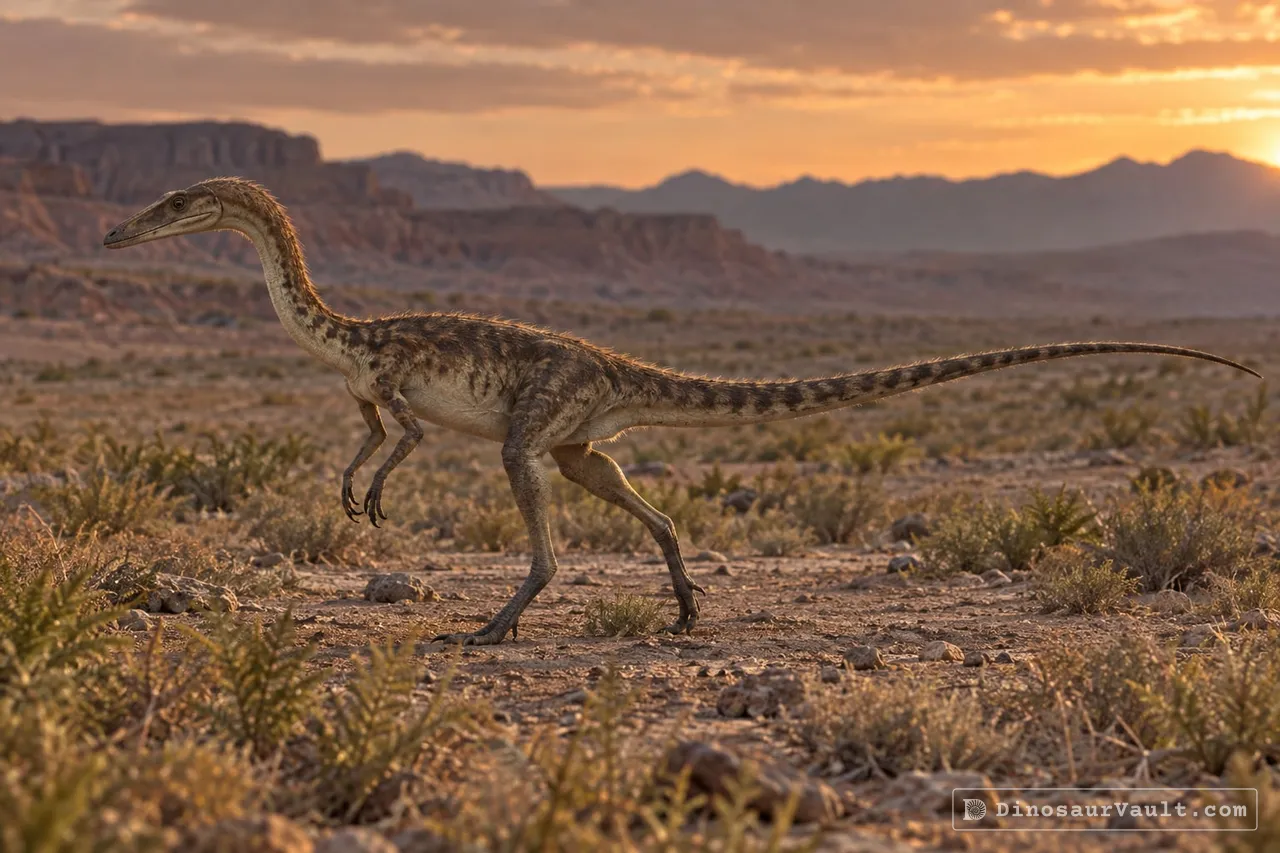
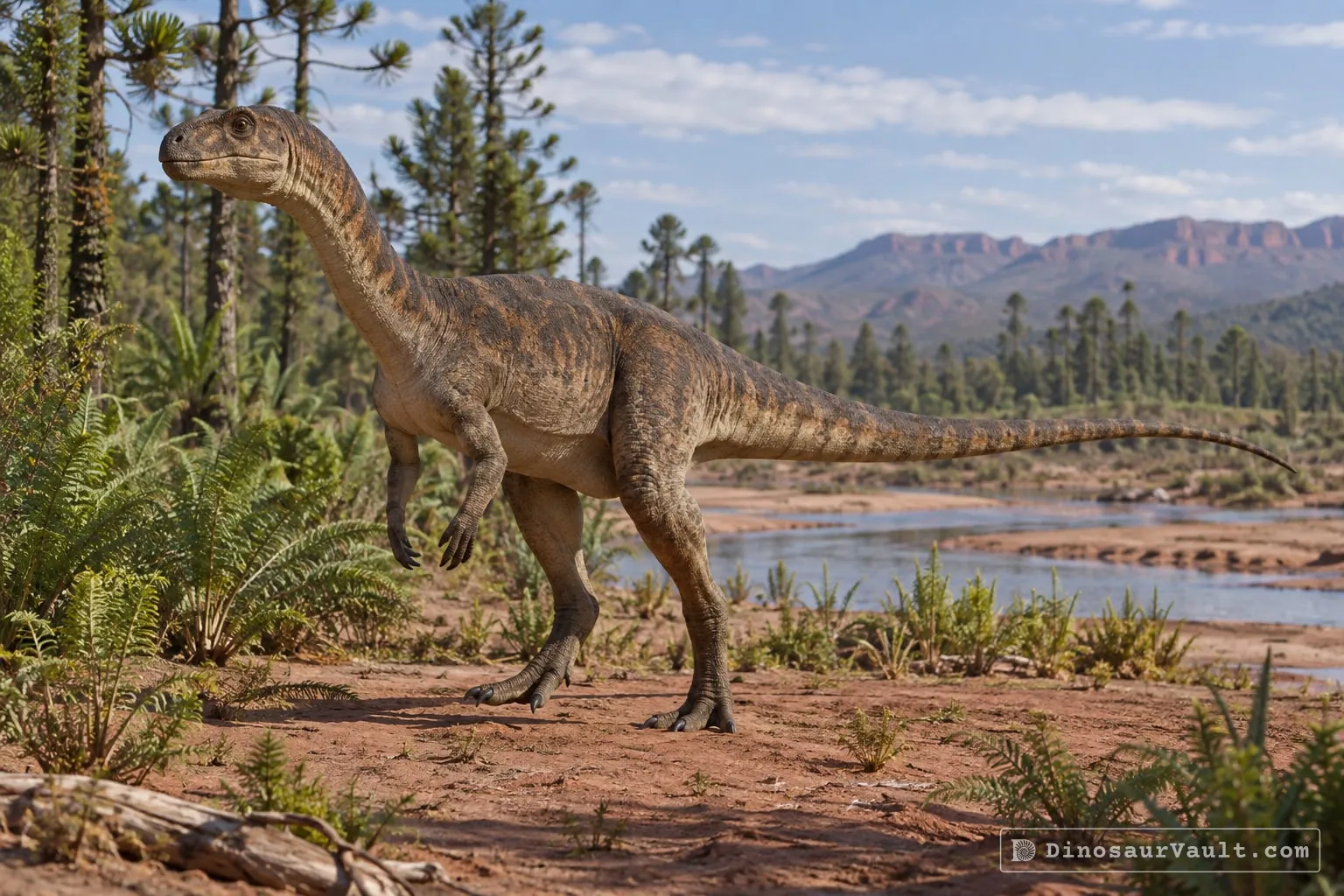
Powellvenator was a small, slender meat eater related to Coelophysis. It is known only from parts of its legs and feet.
Its world
It lived in the Late Triassic in what is now northwestern Argentina. Its bones come from the Los Colorados Formation, where it shared the land with the plant eaters Riojasaurus, Coloradisaurus and Lessemsaurus and the crested hunter Zupaysaurus.
How it was found
Ezcurra named Powellvenator in 2017, after a paleontologist from Argentina.
Field gallery
More views of Powellvenator
Scenes reconstructed from the available fossil evidence.
1 of 3
Lived alongside
Found in the same rock formations
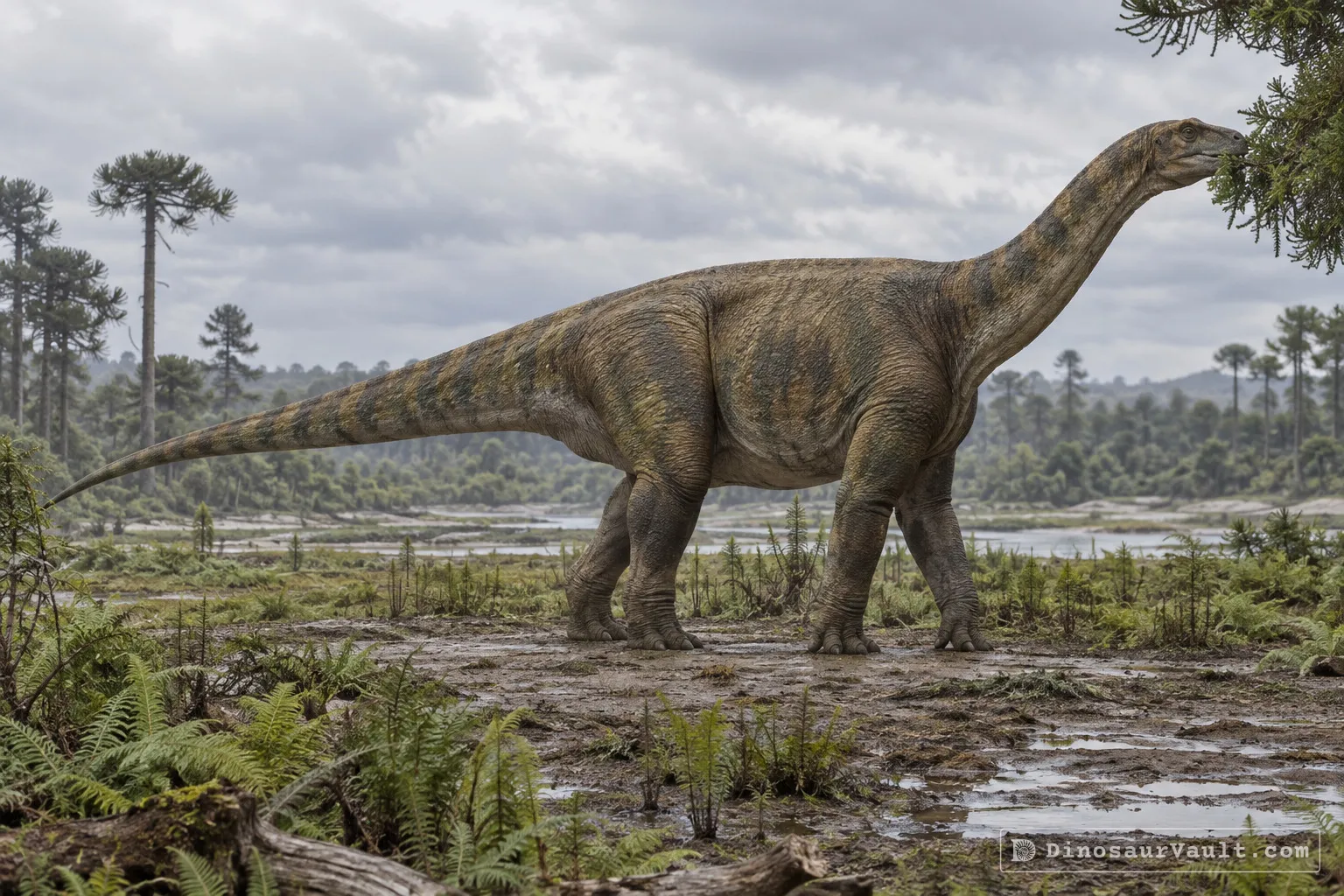
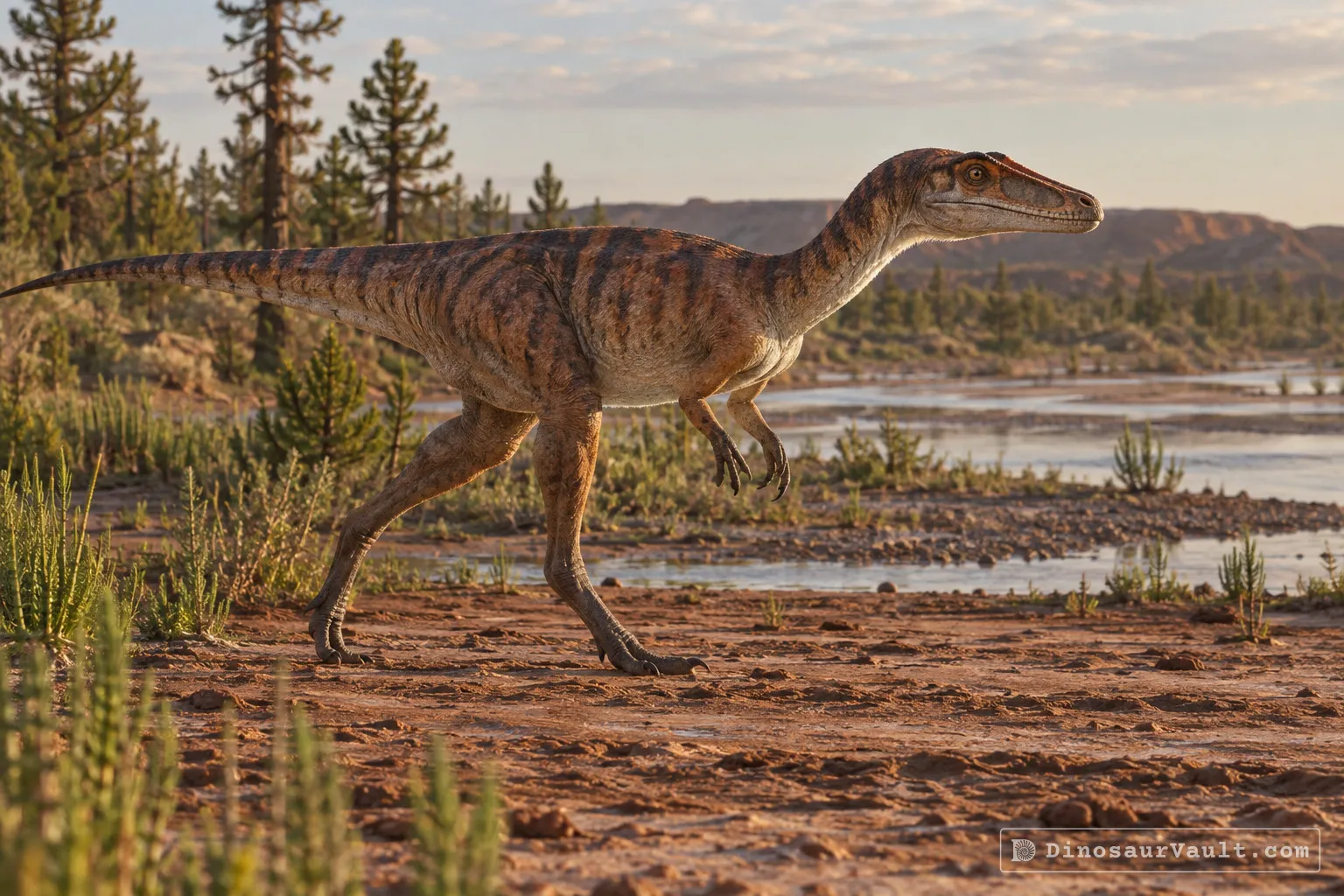
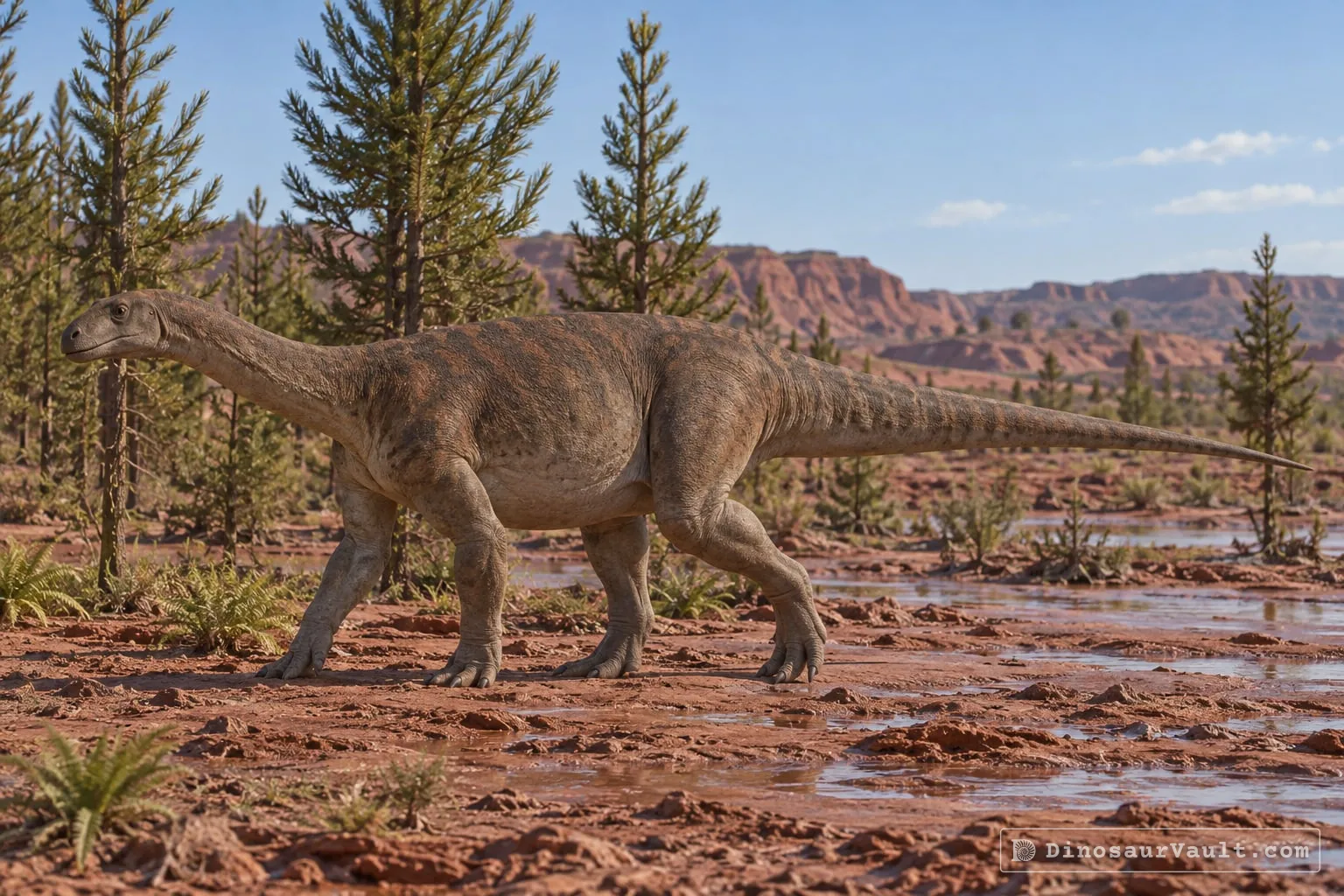


A rock formation can hold fossils laid down millions of years apart, so not every animal here met Powellvenator.
The evidence
The science behind Powellvenator
Which parts of the picture come from its own bones, and which come from its relatives.
From its own fossils
- The type specimen preserves an articulated right ankle and upper foot. Other hindlimb bones are tentatively referred to Powellvenator.
- Distinctive ankle shapes and a strongly reduced shaft in an inner foot bone distinguish it from other early dinosaurs.
Borrowed from relatives
- Its missing skull, neck, body and tail are compared with Coelophysis.
- Its missing hands are compared with Megapnosaurus, and its missing toe tips with Segisaurus.
Still unknown
- Its adult size and exact place among early theropods.
- The shape of its skull and arms.
- Its skin covering and color.
Discovery timeline
- 2017Named itEzcurra
- 2019Family treeZahner & Brinkmann
- 2021Family treeSpiekman et al.
Key papers
The research behind what we know of Powellvenator
Named it
Identified a new early theropod from hindlimb bones and placed it close to Coelophysis and its relatives.
A New Early Coelophysoid Neotheropod from the Late Triassic of Northwestern Argentina. Ameghiniana 54: 506
Read the paper : A New Early Coelophysoid Neotheropod from the Late Triassic of Northwestern Argentina (opens in a new tab)Family tree
Compared early theropods, including Powellvenator, while studying how the main predatory dinosaur branches separated.
A Triassic averostran-line theropod from Switzerland and the early evolution of dinosaurs. Nature Ecology & Evolution 3: 1146-1152
Read the paper : A Triassic averostran-line theropod from Switzerland and the early evolution of dinosaurs (opens in a new tab)Family tree
Named Pendraig and compared the relationships and body sizes of early theropods, including Powellvenator.
Pendraig milnerae, a new small-sized coelophysoid theropod from the Late Triassic of Wales. Royal Society Open Science 8
Read the paper : Pendraig milnerae, a new small-sized coelophysoid theropod from the Late Triassic of Wales (opens in a new tab)
Close relatives
Other members of Coelophysidae


Sources: Wikidata