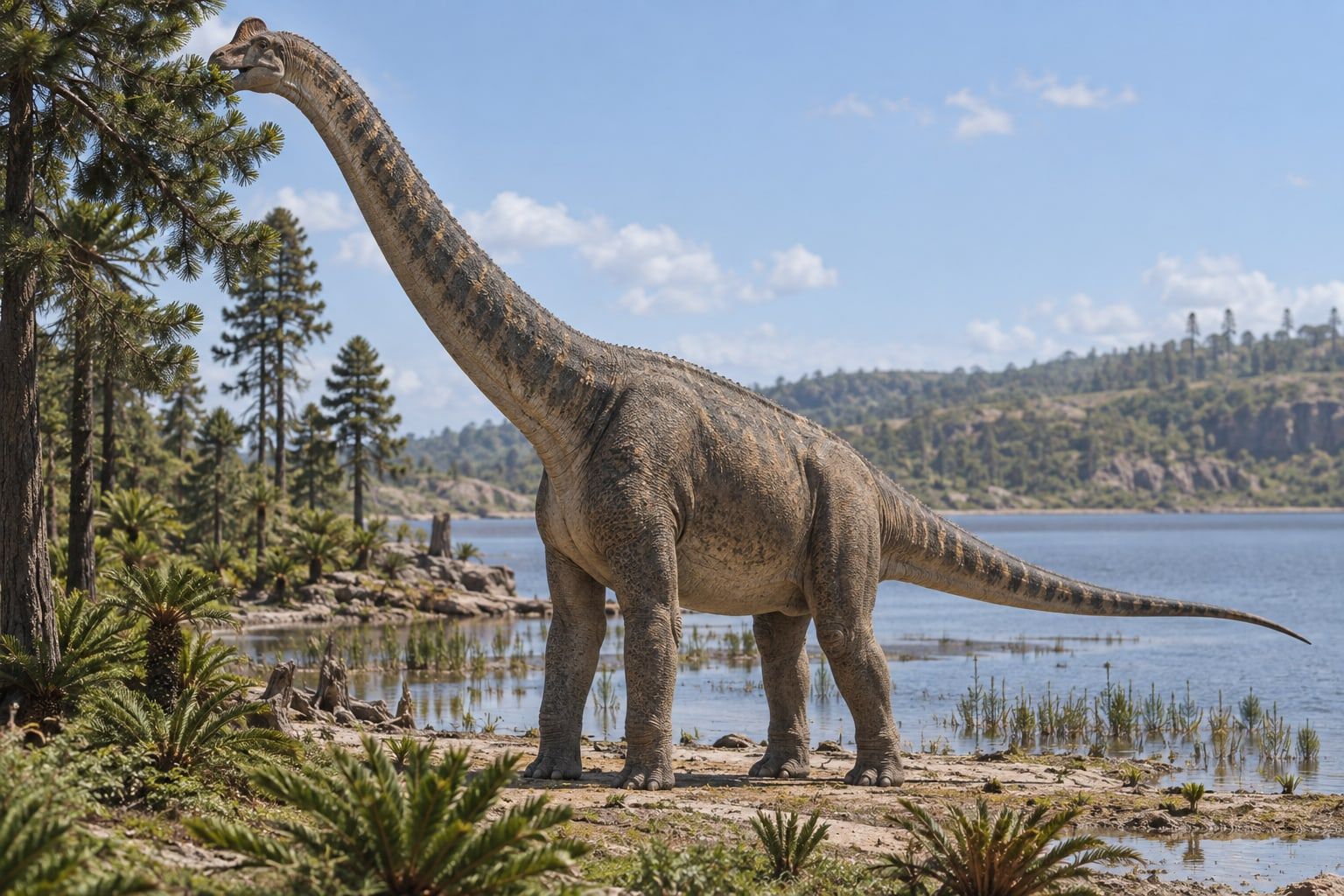
Giraffatitan
juh-RAF-uh-TY-tan
"giant giraffe"
- Lived
- 152 to 143 million years ago, Late Jurassic to Early Cretaceous
- Diet
- Herbivore
- Length
- about 23 m (75 ft)
- Group
- Sauropods, Brachiosauridae
- Found in
- Tanzania
- Named by
- Paul 1988
Size comparison
To scale
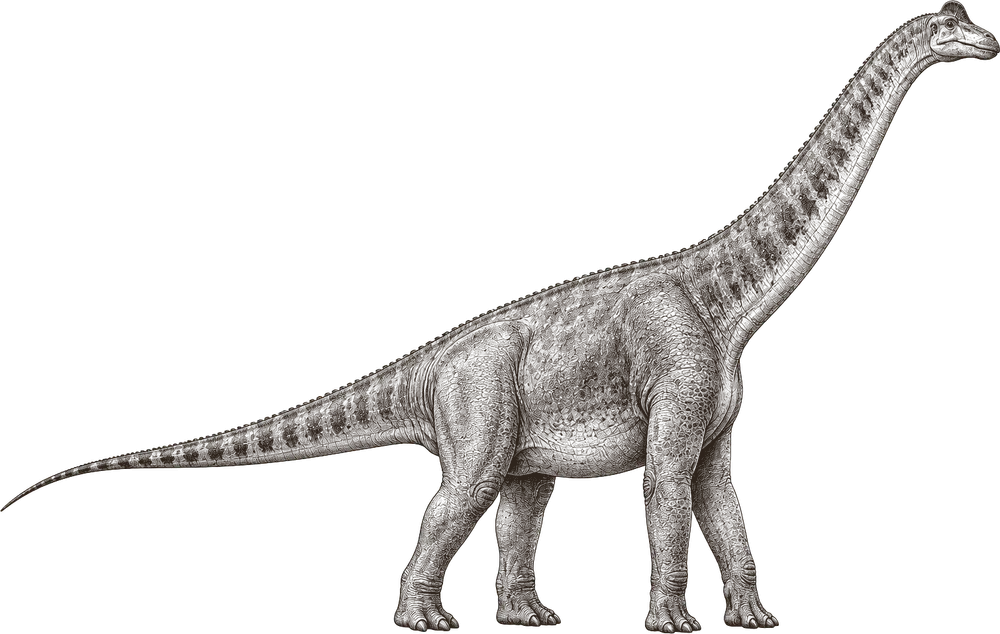

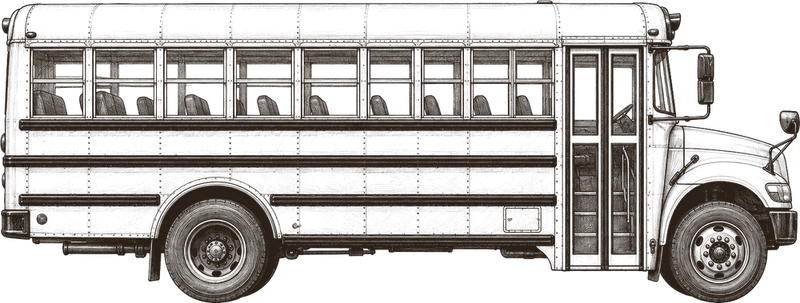
Scale in meters
Where its fossils were found
The evidence
Today
150 million years ago
Field notes
About Giraffatitan
What it was like
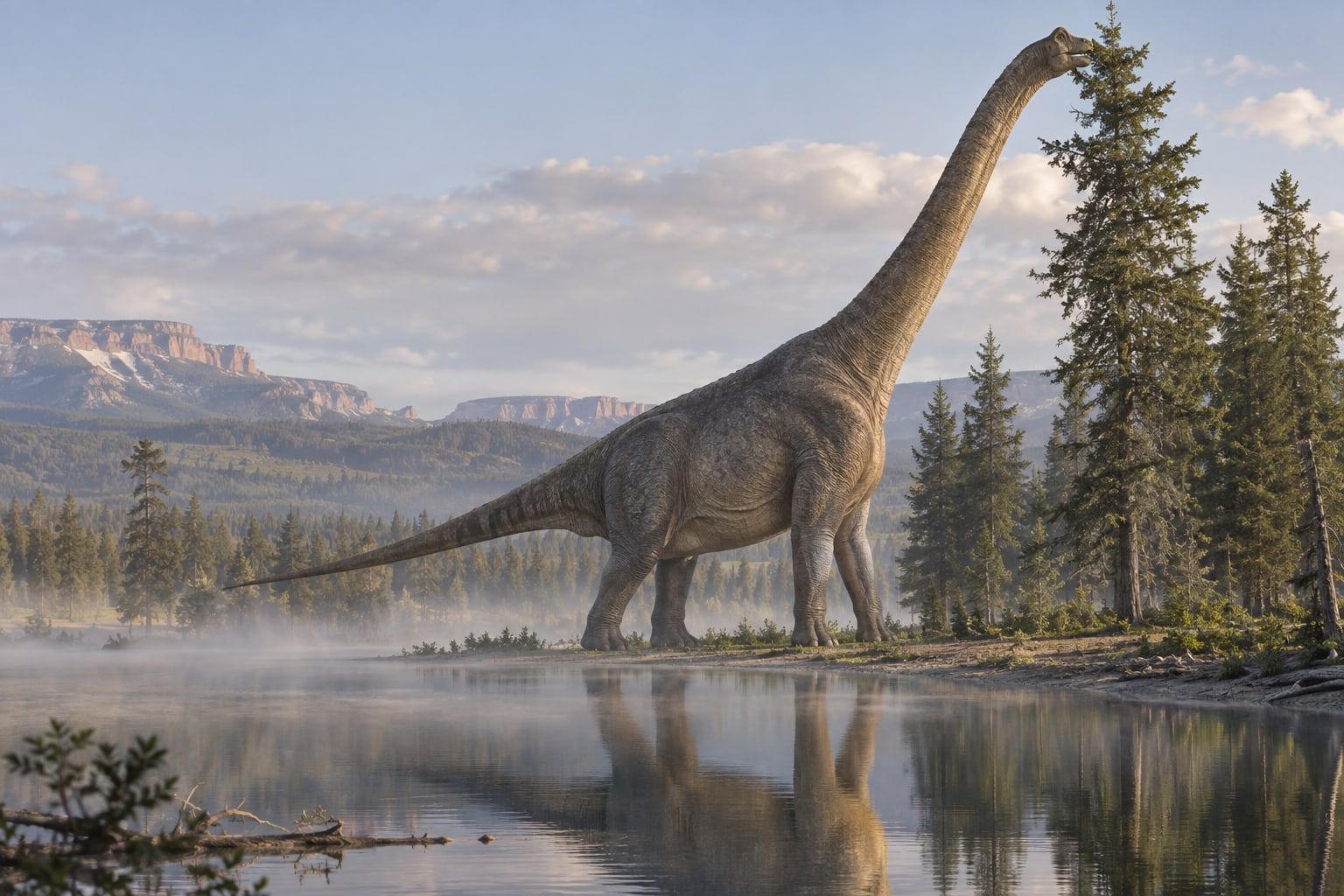
Giraffatitan was an enormous sauropod, reaching about 23 meters (75 feet) long, with front legs longer than its back legs, giving it a sloped back like a giraffe's and letting it hold its long neck high. It was a herbivore, likely browsing on leaves well above the reach of most other plant eaters.
For decades it was considered one of the largest dinosaurs known, though later discoveries of other giant sauropods showed several of those animals were even heavier.
Its world
Giraffatitan lived from about 152 to 143 million years ago, spanning the Late Jurassic and Early Cretaceous, in what is now Tanzania. Its fossils come from the Tendaguru Formation.
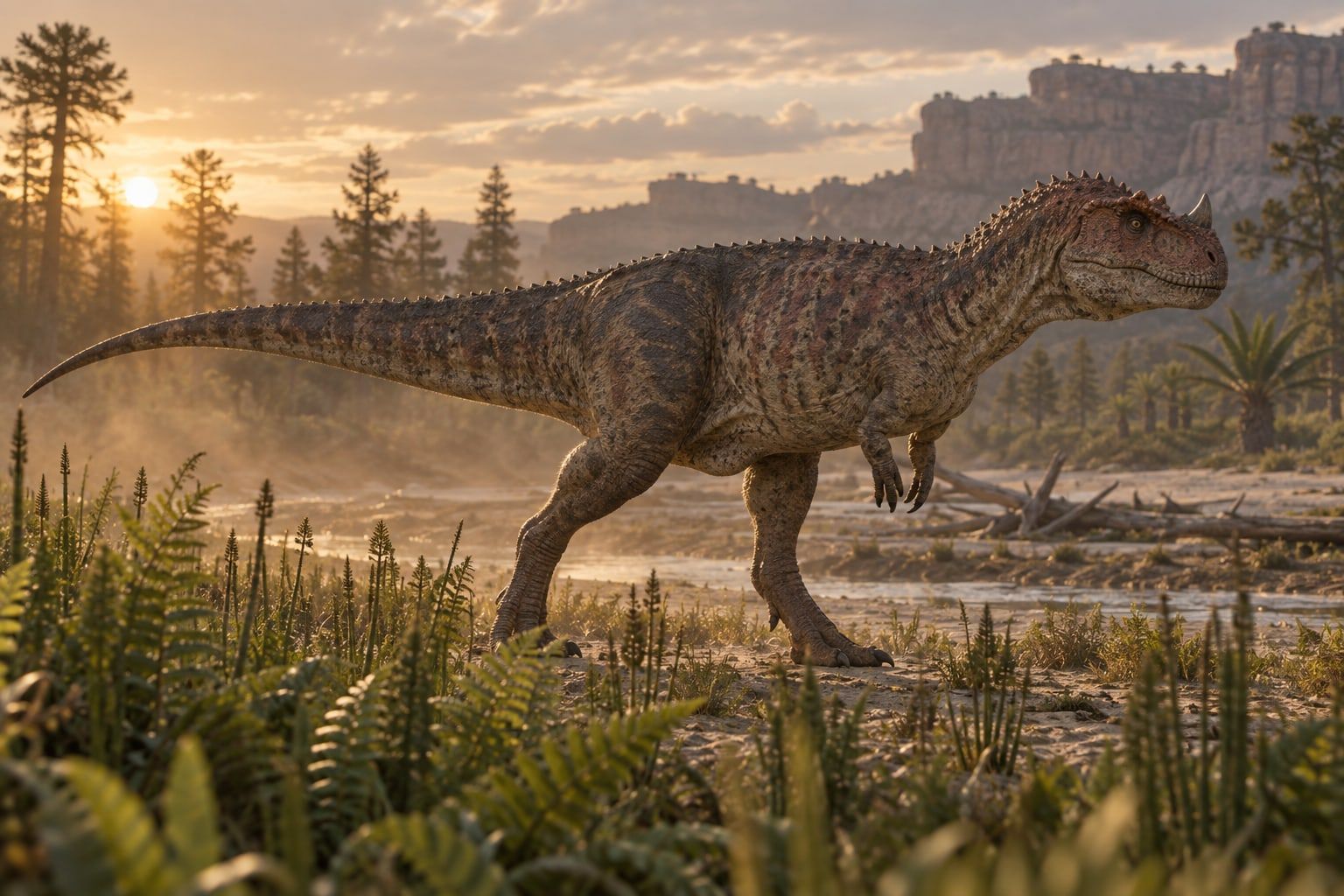
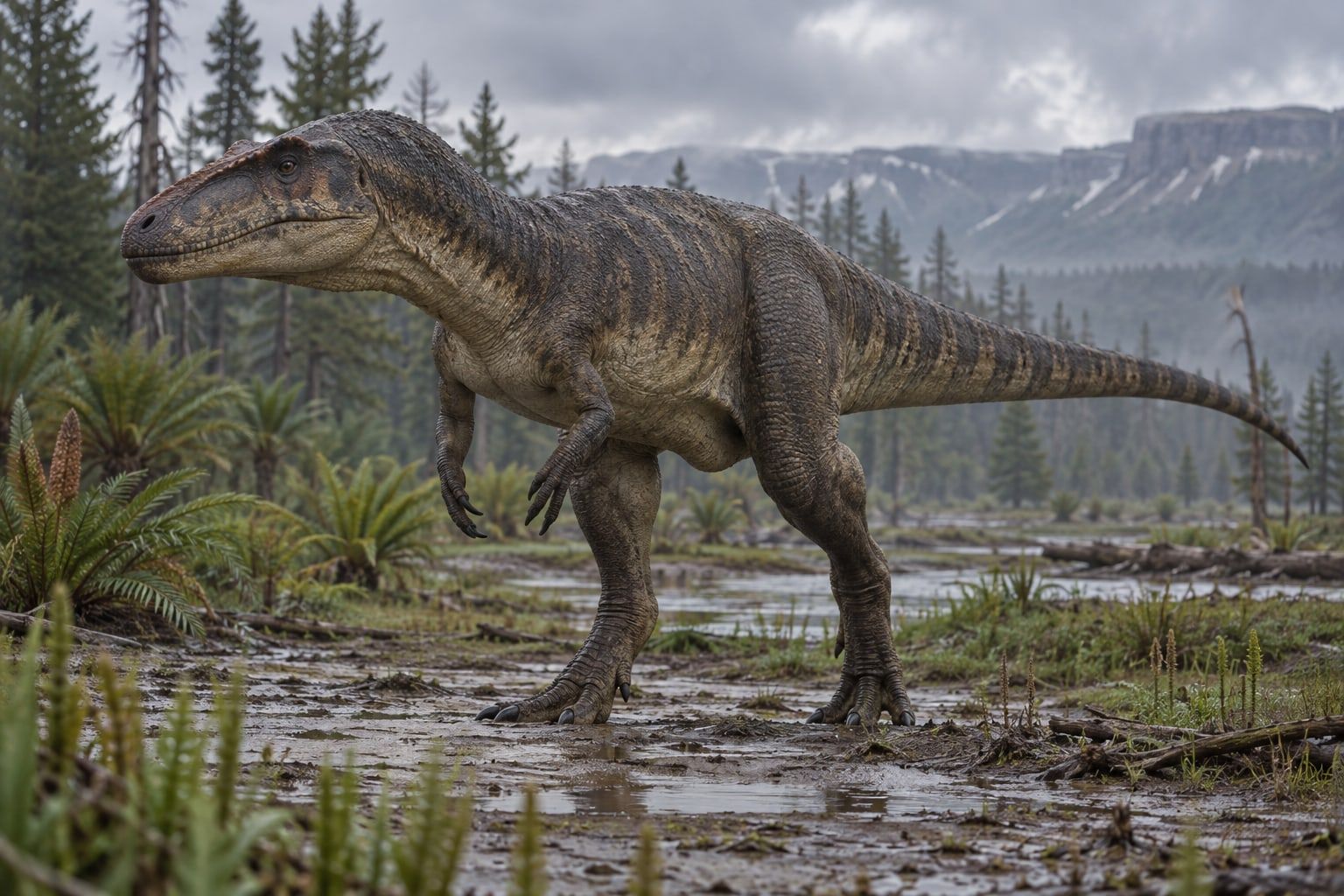
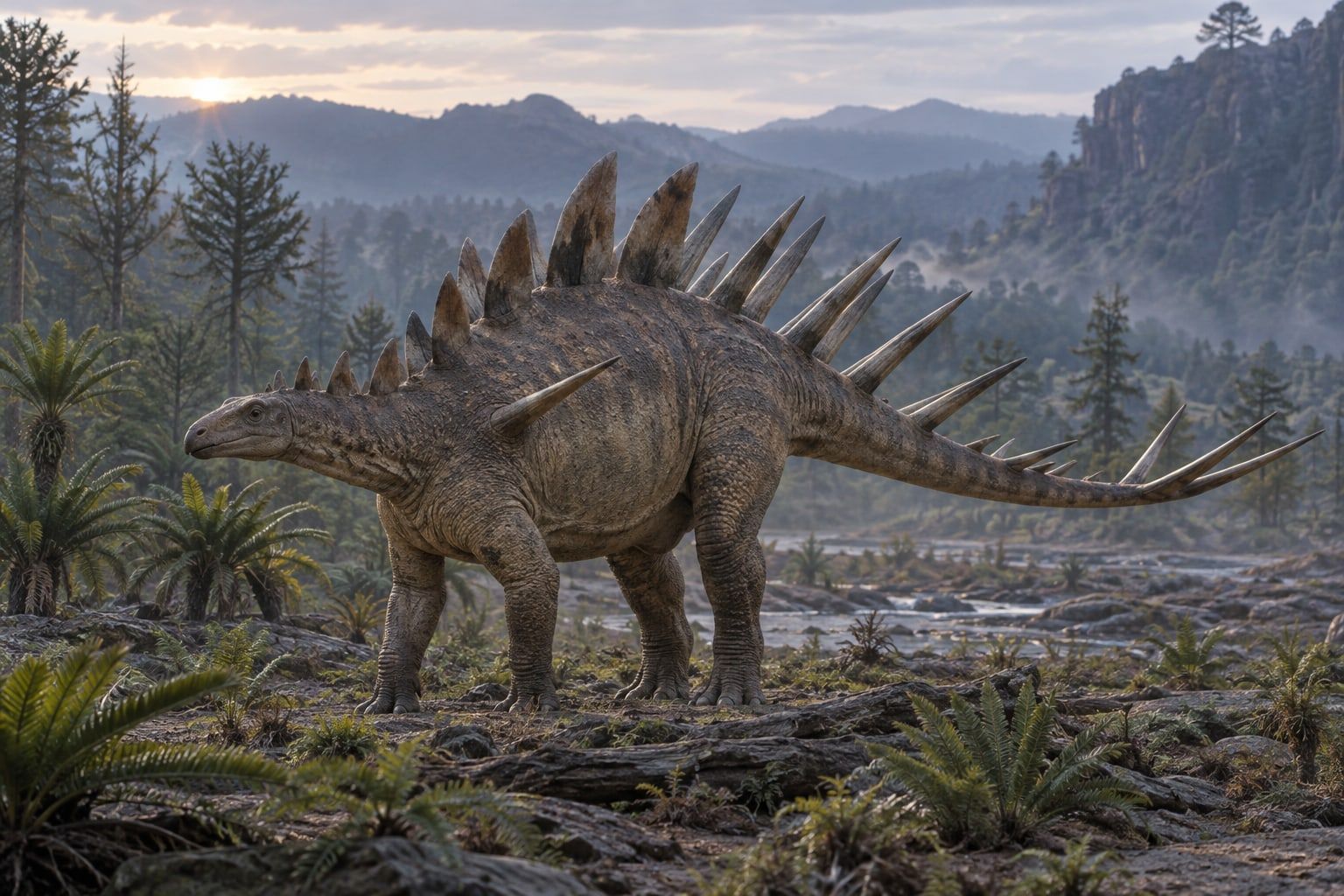
It shared its habitat with the plated Kentrosaurus, the predators Ceratosaurus, Torvosaurus, and Veterupristisaurus, the fast-running Elaphrosaurus, and other plant eaters including Dicraeosaurus, Dysalotosaurus, and Tornieria.
How it was found
Giraffatitan was first described as a species of Brachiosaurus, a sauropod originally found in North America, before later study showed enough differences to place it in its own genus, named by Paul in 1988. With about 41 fossil finds known, it is one of the best-documented giant sauropods from the Tendaguru Formation.
Lived alongside
Found in the same rock formations
Close relatives
Other members of Brachiosauridae
Sources: WikidataNamed in: G. S. Paul. 1988. The brachiosaur giants of the Morrison and Tendaguru with a description of a new subgenus, Giraffatitan, and a comparison of the world's largest dinosaurs. Hunteria 2(3):1-14