Liaoningotitan
"Liaoning titan"
Type species Liaoningotitan sinensis
- Lived
- 126 to 120 million years ago, Early Cretaceous
- Diet
- Herbivore
- Group
- Sauropods
- Found in
- China
- Named by
- Zhou et al. 2018
Where its fossils were found
The evidence
Today

125 million years ago
Habitat
The Yixian Formation records lakes and wooded landscapes with conifers. Psittacosaurus, Yutyrannus and Sinornithosaurus lived in this region.
Field notes
About Liaoningotitan
What it was like
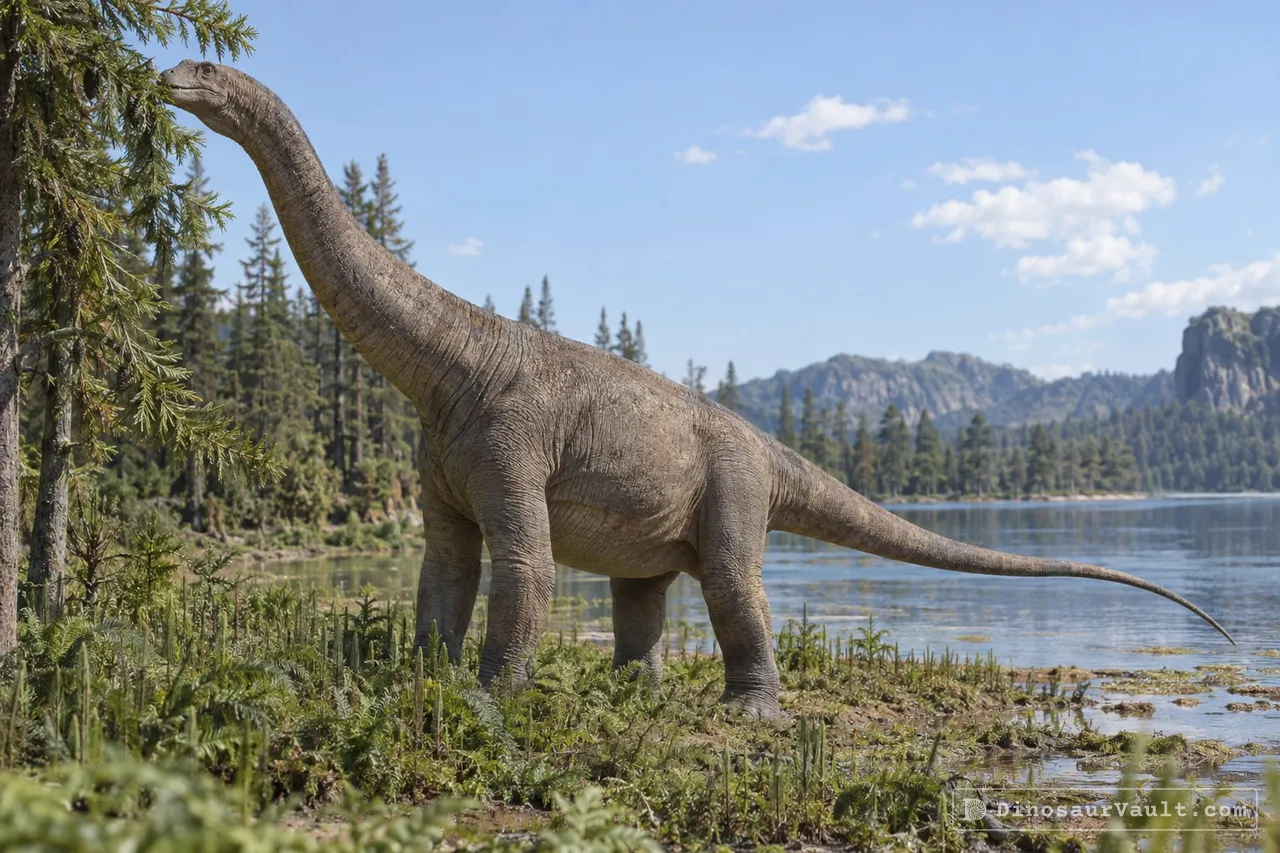
Liaoningotitan was a sauropod, a long-necked plant eater. It is known from a skull and part of the skeleton.
Its world
It lived in the Early Cretaceous, in what is now China. It comes from the Yixian Formation, where it shared the land with the feathered tyrannosaur Yutyrannus, the small predator Sinornithosaurus and the plant eater Psittacosaurus.
How it was found
Zhou and colleagues named Liaoningotitan in 2018. The type species is Liaoningotitan sinensis.
Field gallery
More views of Liaoningotitan
Scenes reconstructed from the available fossil evidence.
Lived alongside
Found in the same rock formations
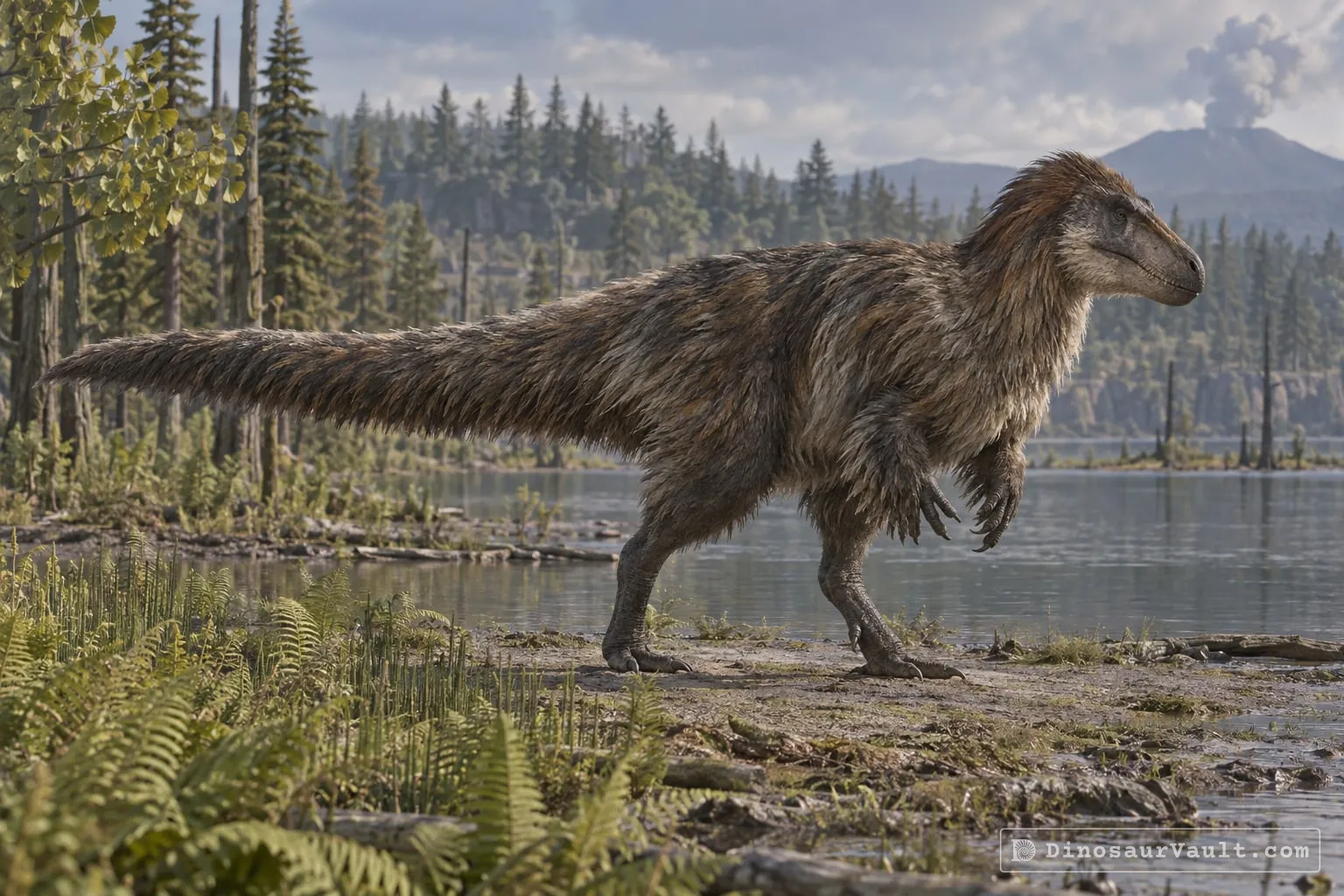
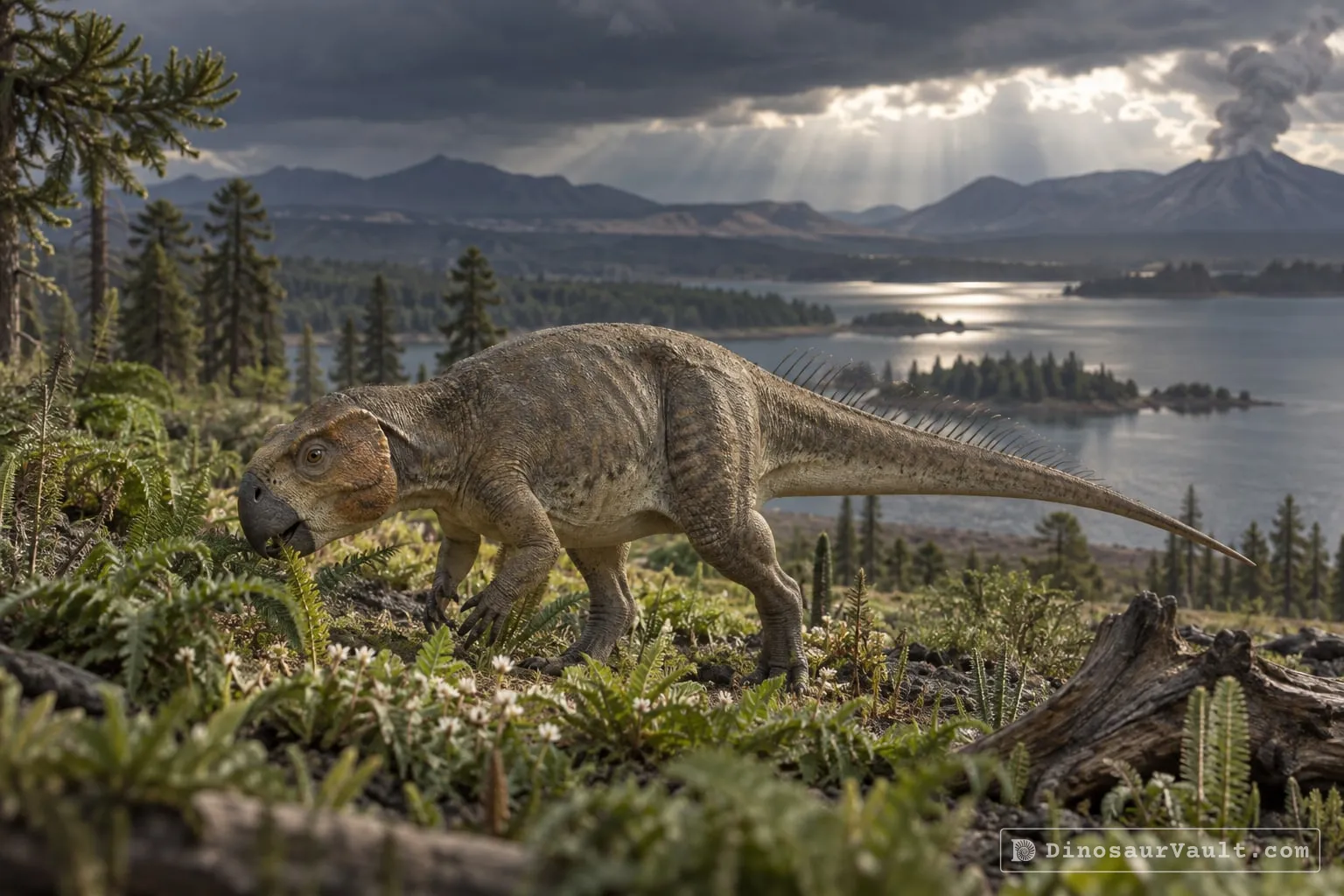
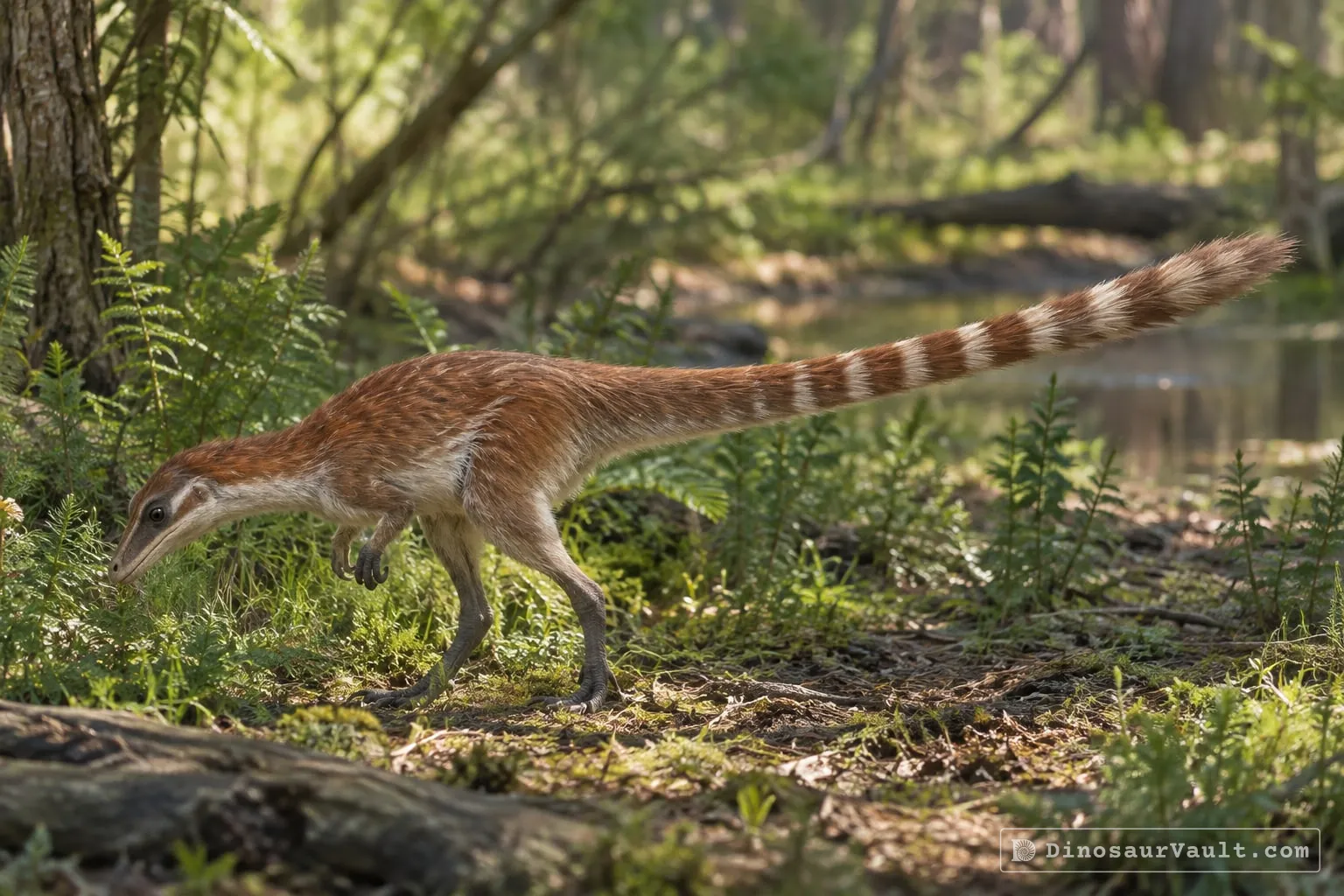
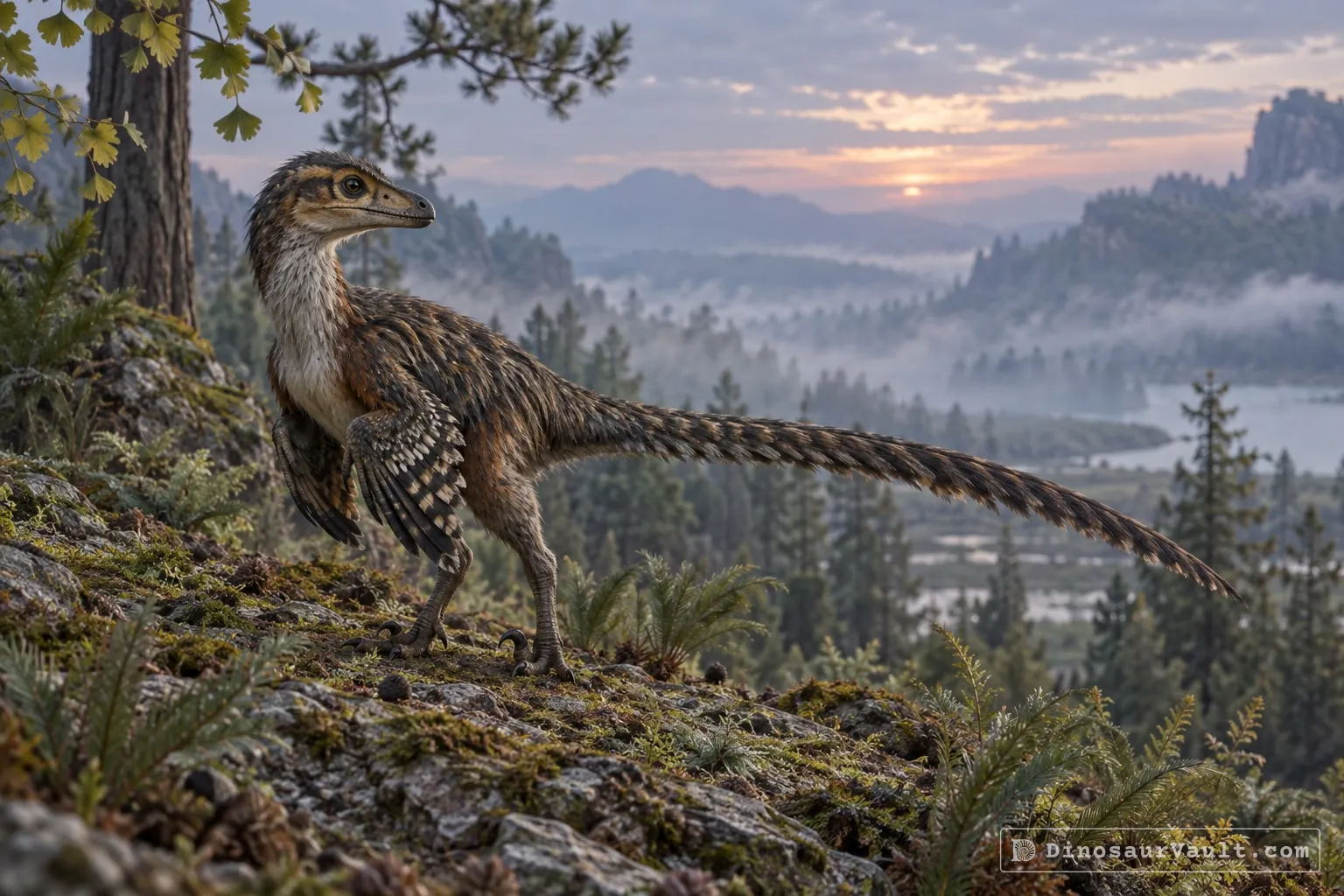
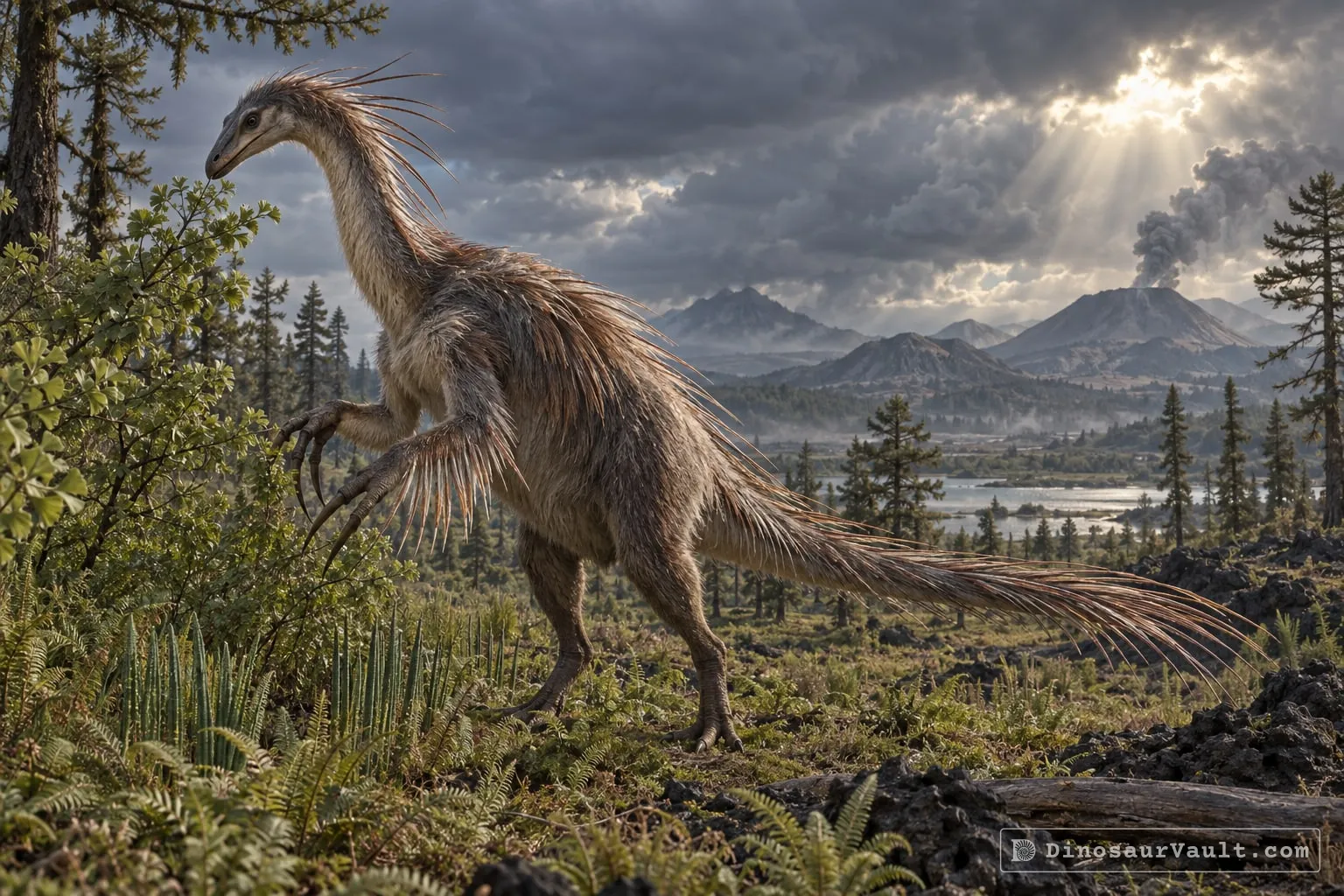
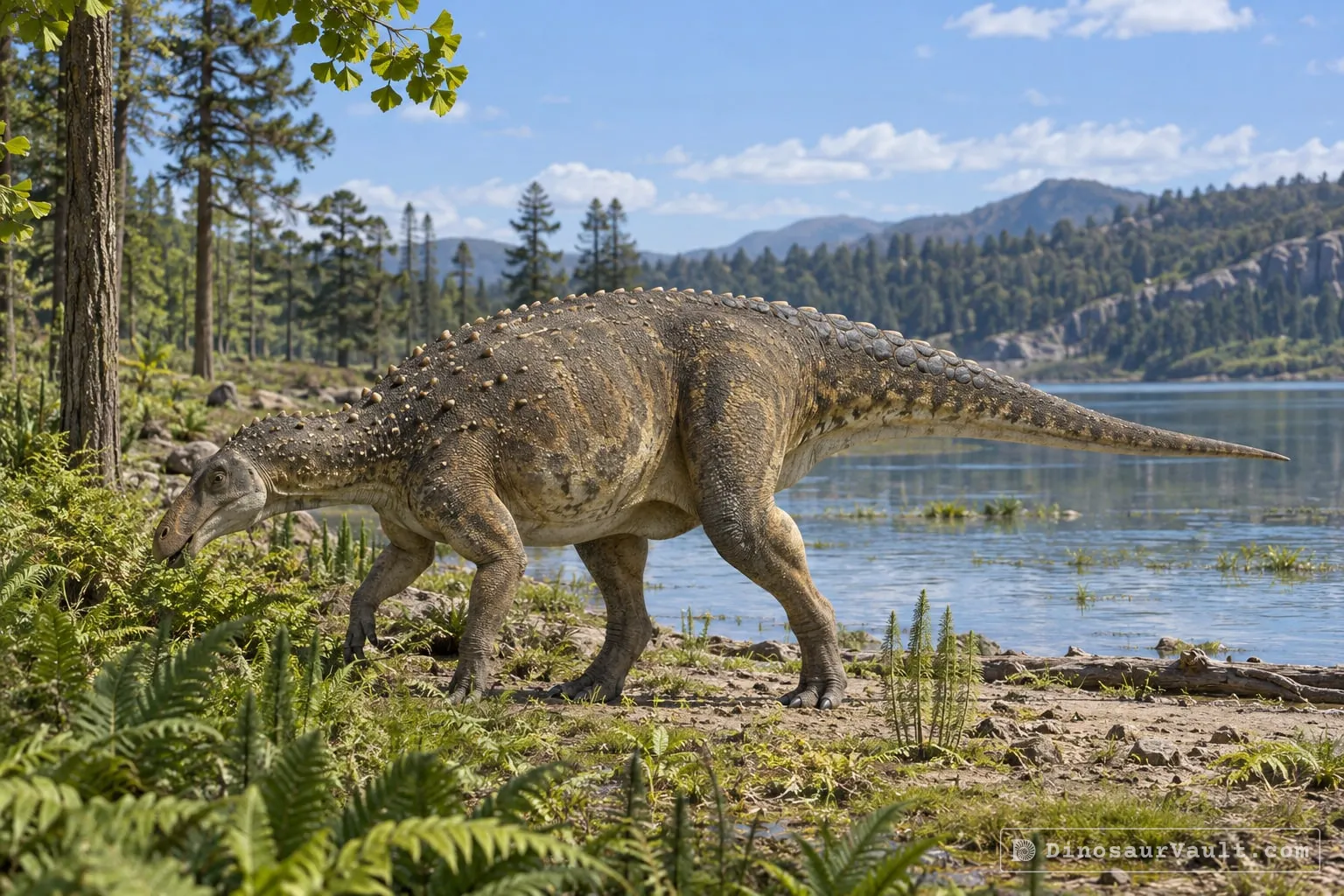
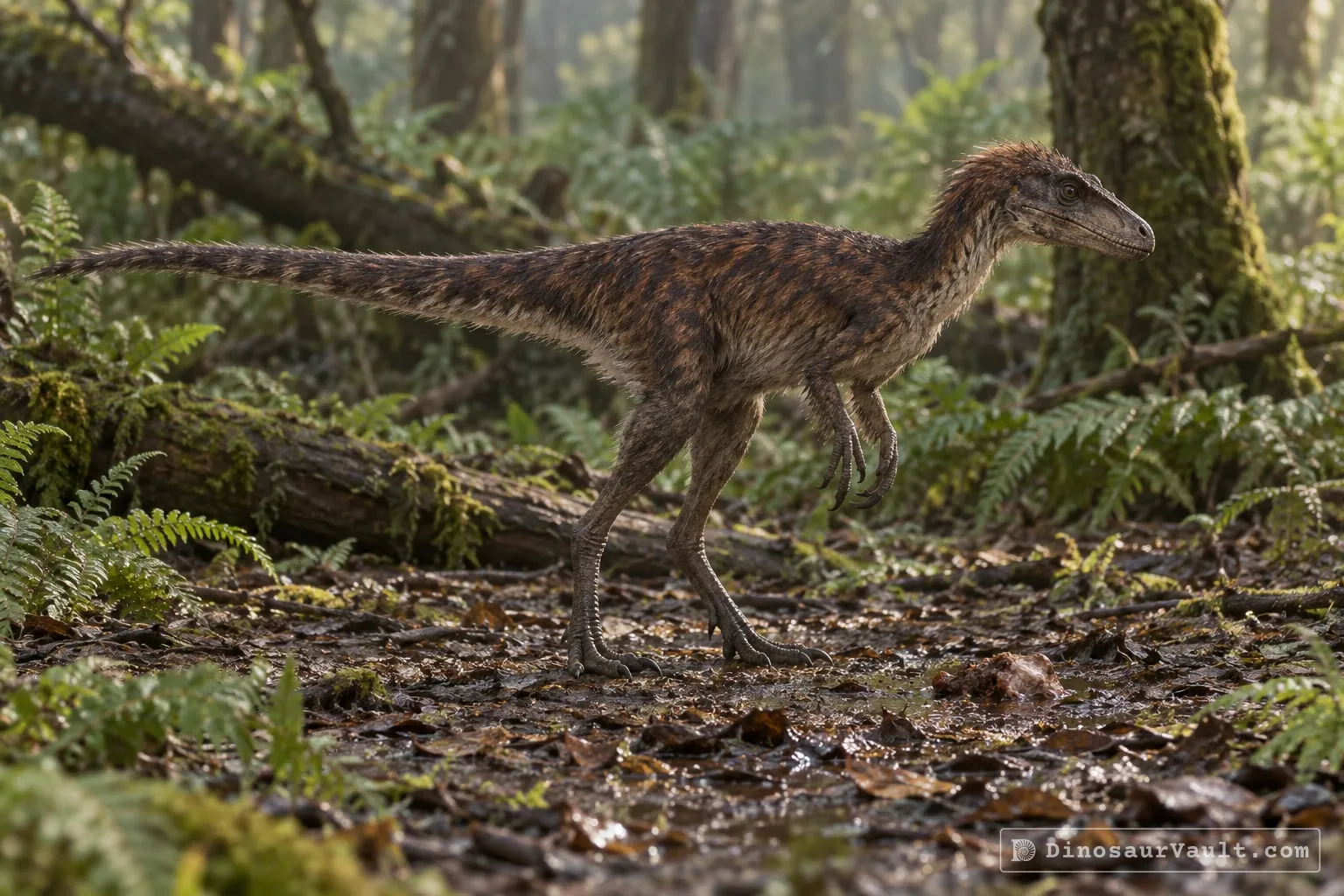


A rock formation can hold fossils laid down millions of years apart, so not every animal here met Liaoningotitan.
The evidence
The science behind Liaoningotitan
Which parts of the picture come from its own bones, and which come from its relatives.
From its own fossils
- The type skeleton includes a partial skull with lower jaws, backbone, hip bones and limb bones, including a stout, flattened foot claw.
- Its upper teeth have narrow, spoon-shaped crowns, while its lower teeth are smaller and differently shaped.
- The upper arm bone has a flat attachment area for a muscle near the shoulder.
Borrowed from relatives
- Euhelopus supplies a model for the missing nose and skull roof.
- Rapetosaurus supplies comparisons for the back of the skull; the bone behind the eye is unknown in Rapetosaurus too.
Still unknown
- The complete shape of the skull roof and eye socket.
- Its skin covering and color.
- How its body proportions changed as it grew.
Discovery timeline
- 2013SkullPoropat & Kear
- 2014Family treeLi et al.
- 2018Named itZhou et al.
- 2025RedescriptionShan
Key papers
The research behind what we know of Liaoningotitan
Skull
Documented skull bones of Euhelopus, providing comparisons for missing parts of the Liaoningotitan skull.
Photographic Atlas and Three-Dimensional Reconstruction of the Holotype Skull of Euhelopus zdanskyi with Description of Additional Cranial Elements. PLoS ONE 8: e79932
Read the paper : Photographic Atlas and Three-Dimensional Reconstruction of the Holotype Skull of Euhelopus zdanskyi with Description of Additional Cranial Elements (opens in a new tab)Family tree
Described Yongjinglong, a sauropod that one later analysis grouped with Liaoningotitan.
A New Titanosaurian Sauropod from the Hekou Group (Lower Cretaceous) of the Lanzhou-Minhe Basin, Gansu Province, China. PLoS ONE 9: e85979
Read the paper : A New Titanosaurian Sauropod from the Hekou Group (Lower Cretaceous) of the Lanzhou-Minhe Basin, Gansu Province, China (opens in a new tab)Named it
Named a sauropod from China using a skeleton with a skull, distinctive teeth, limb bones and hip bones.
[A new titanosauriformes dinosaur from Jehol Biota of western Liaoning, China]. Global Geology 37: 327-333
No link available
Redescription
Reexamined the skeleton, rebuilt missing skull regions using other sauropods and grouped it with Yongjinglong in one analysis.
The re-description of Liaoningotitan sinensis Zhou et al., 2018. PeerJ 13: e19154
Read the paper : The re-description of Liaoningotitan sinensis Zhou et al., 2018 (opens in a new tab)
Close relatives
Other members of Titanosauriformes


Sources: Wikidata