Fukuititan
"Fukui titan"
- Lived
- 121 to 113 million years ago, Early Cretaceous
- Diet
- Herbivore
- Group
- Sauropods
- Found in
- Japan
- Named by
- Azuma and Shibata 2010
Where its fossils were found
The evidence
Today

115 million years ago
Habitat
Meandering rivers crossed a floodplain with ferns and conifers. Fukuiraptor, Fukuisaurus and Koshisaurus also lived in the Kitadani Formation.
Field notes
About Fukuititan
What it was like
Fukuititan was a long-necked sauropod, a relative of the titanosaurs. It is known from parts of the limbs, tail and teeth.
Its world
It lived in the Early Cretaceous in what is now Japan. Its bones come from the Kitadani Formation, a rich site shared with the predator Fukuiraptor, the plant eaters Fukuisaurus and Koshisaurus and the ostrich-like Tyrannomimus.
How it was found
Azuma and Shibata named Fukuititan in 2010 from one find.
Field gallery
More views of Fukuititan
Scenes reconstructed from the available fossil evidence.
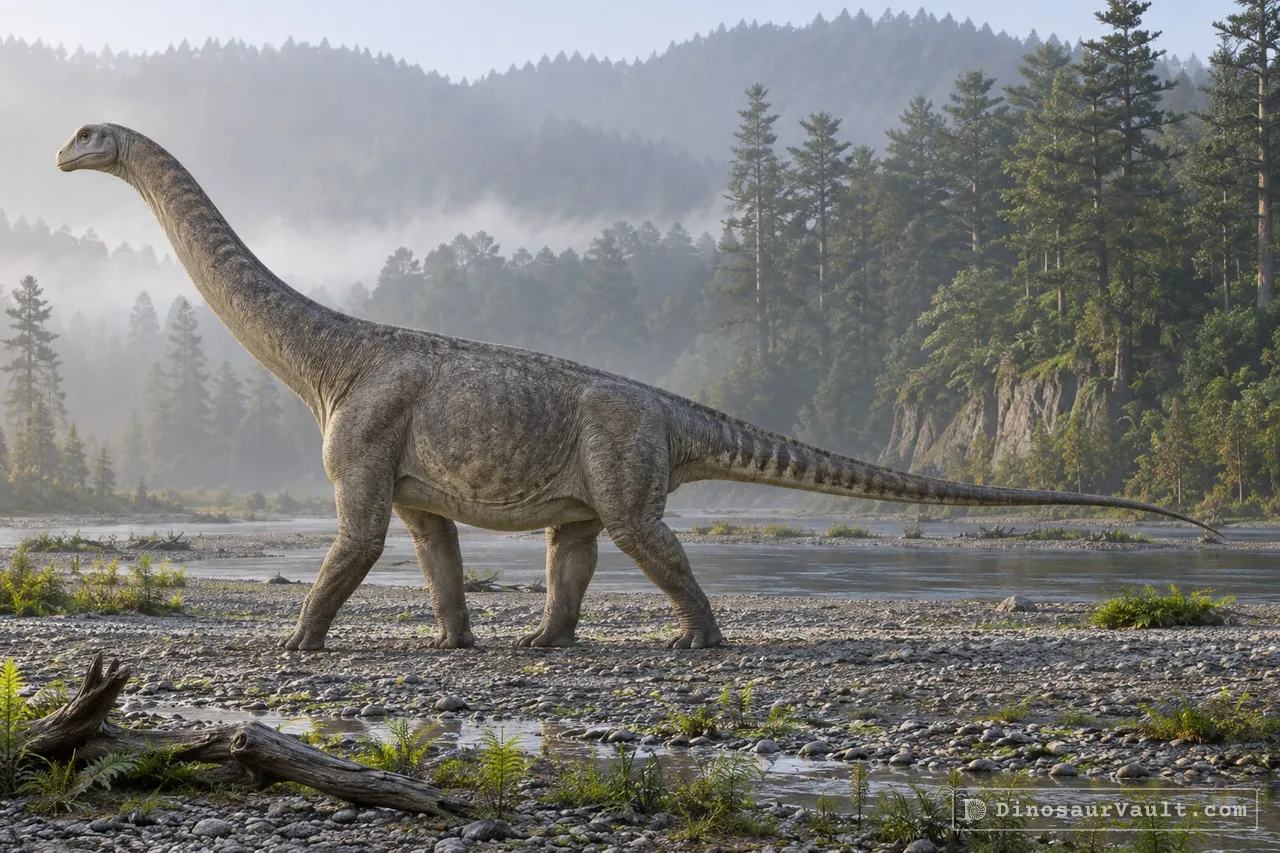
1 of 3
Lived alongside
Found in the same rock formations
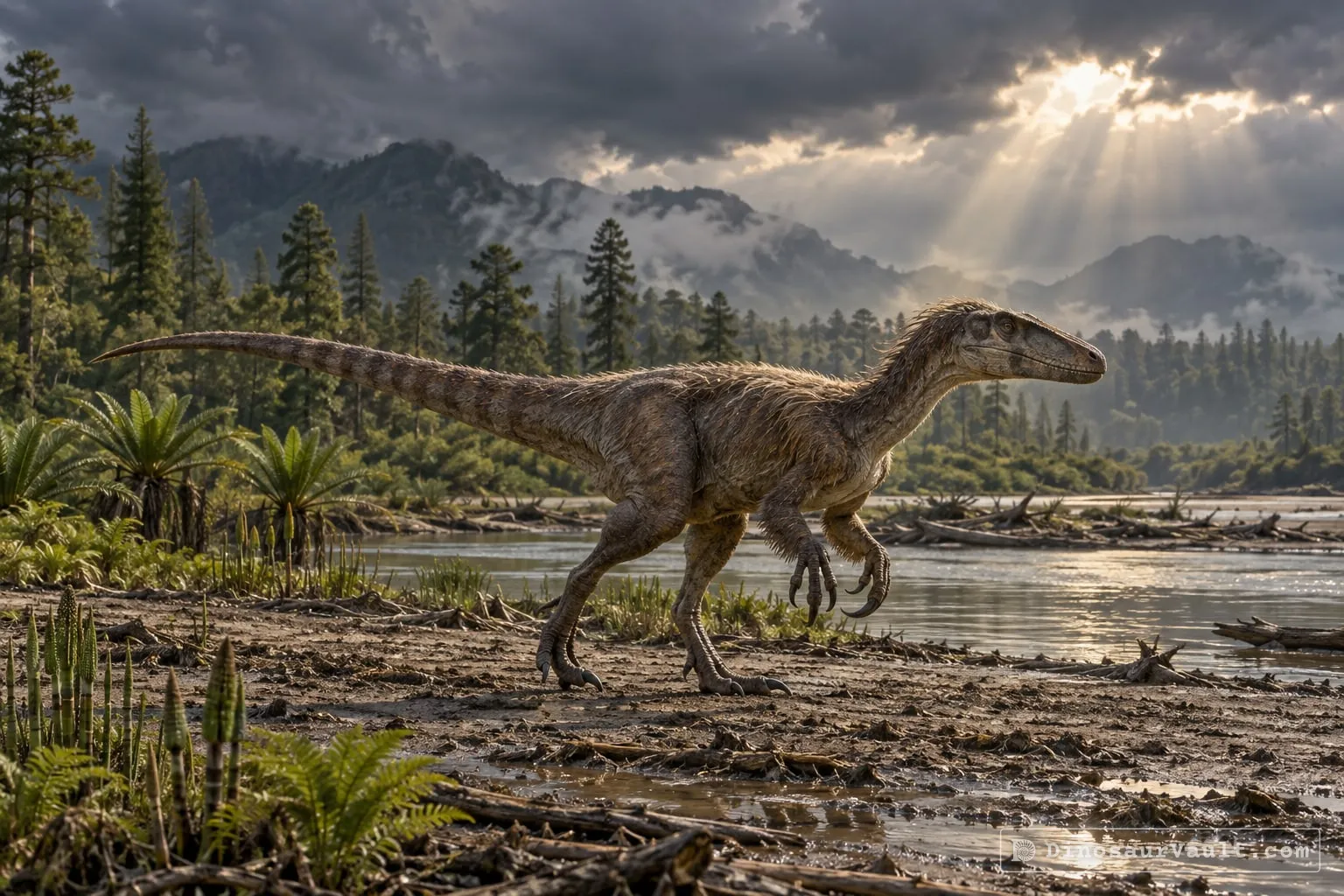
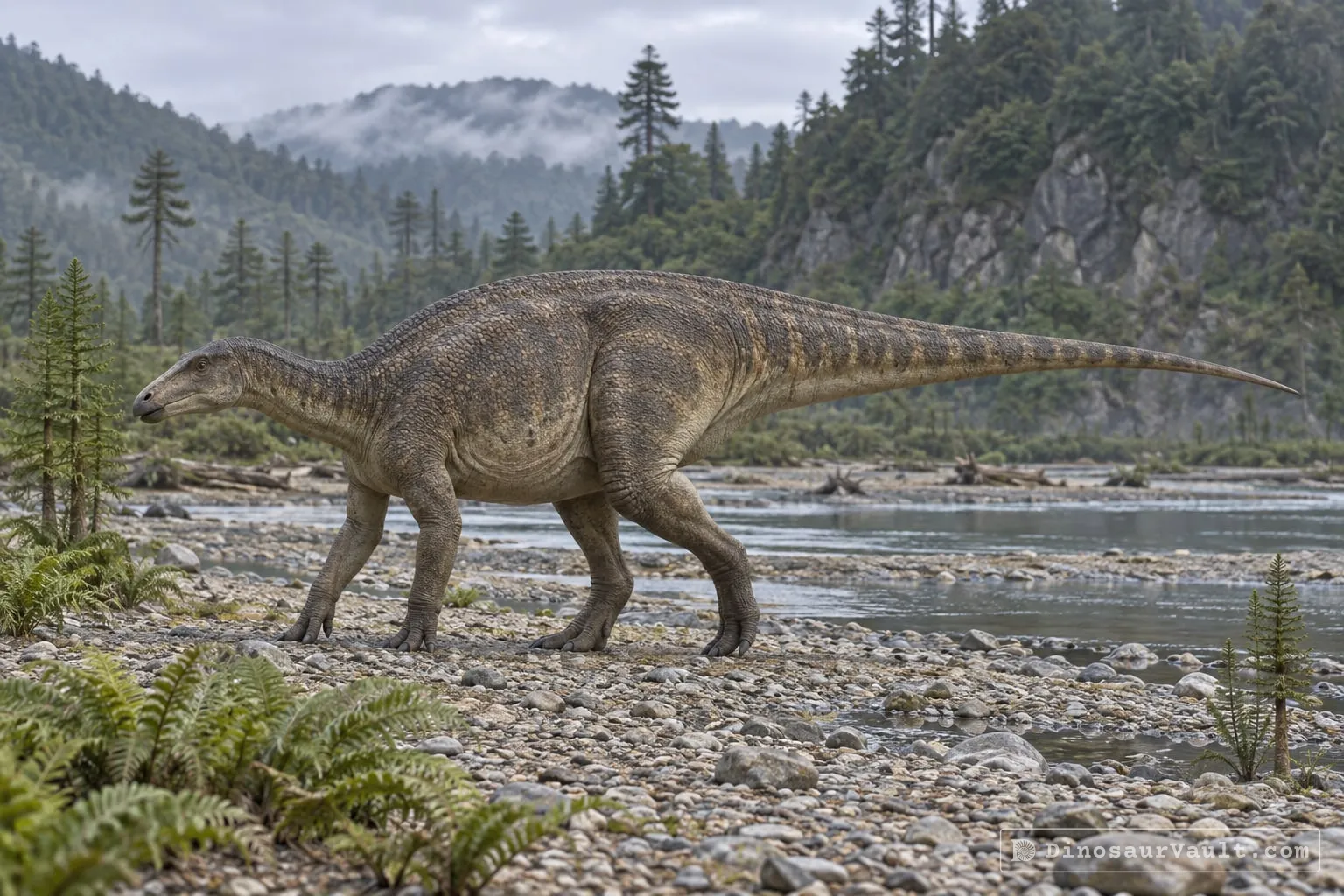
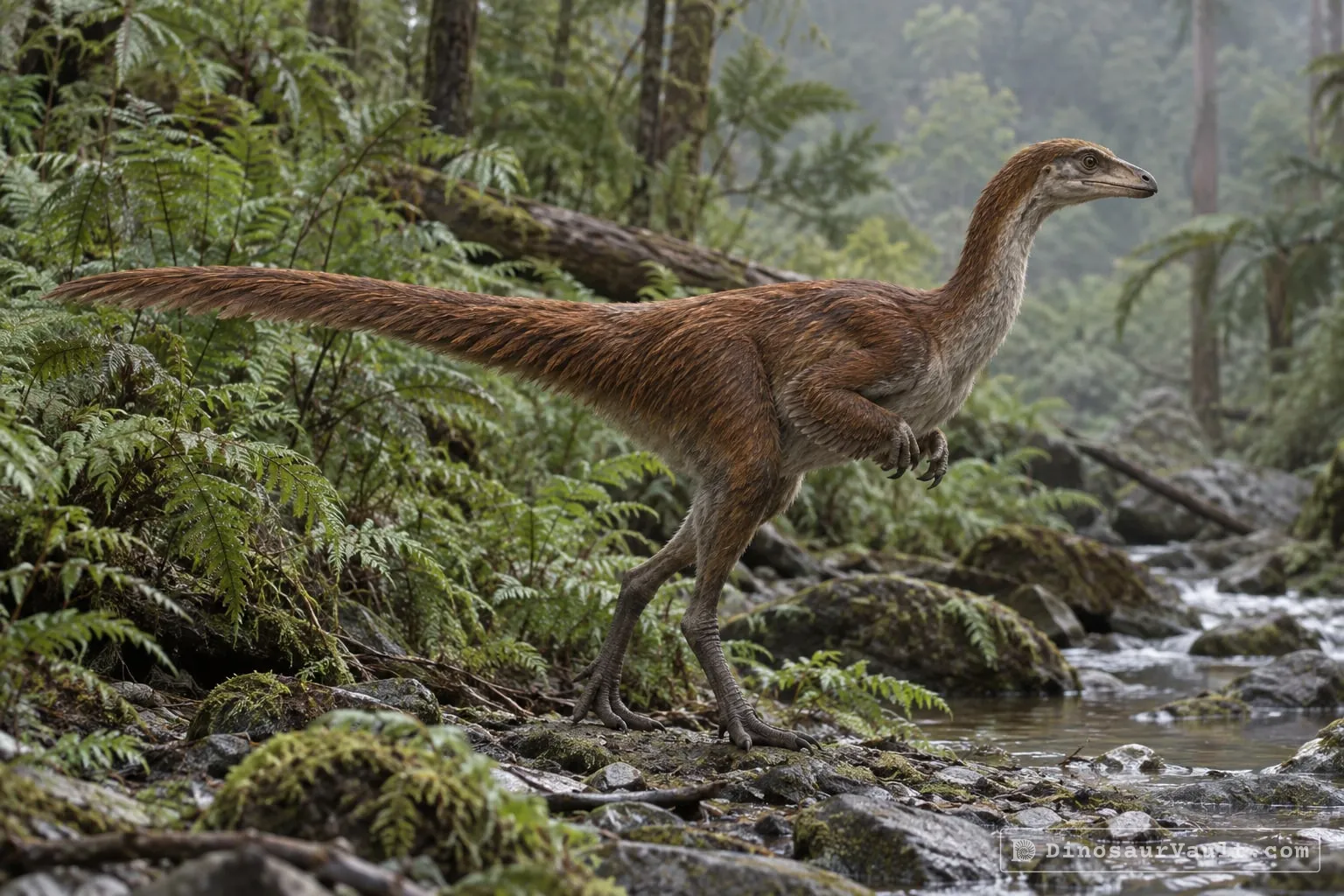
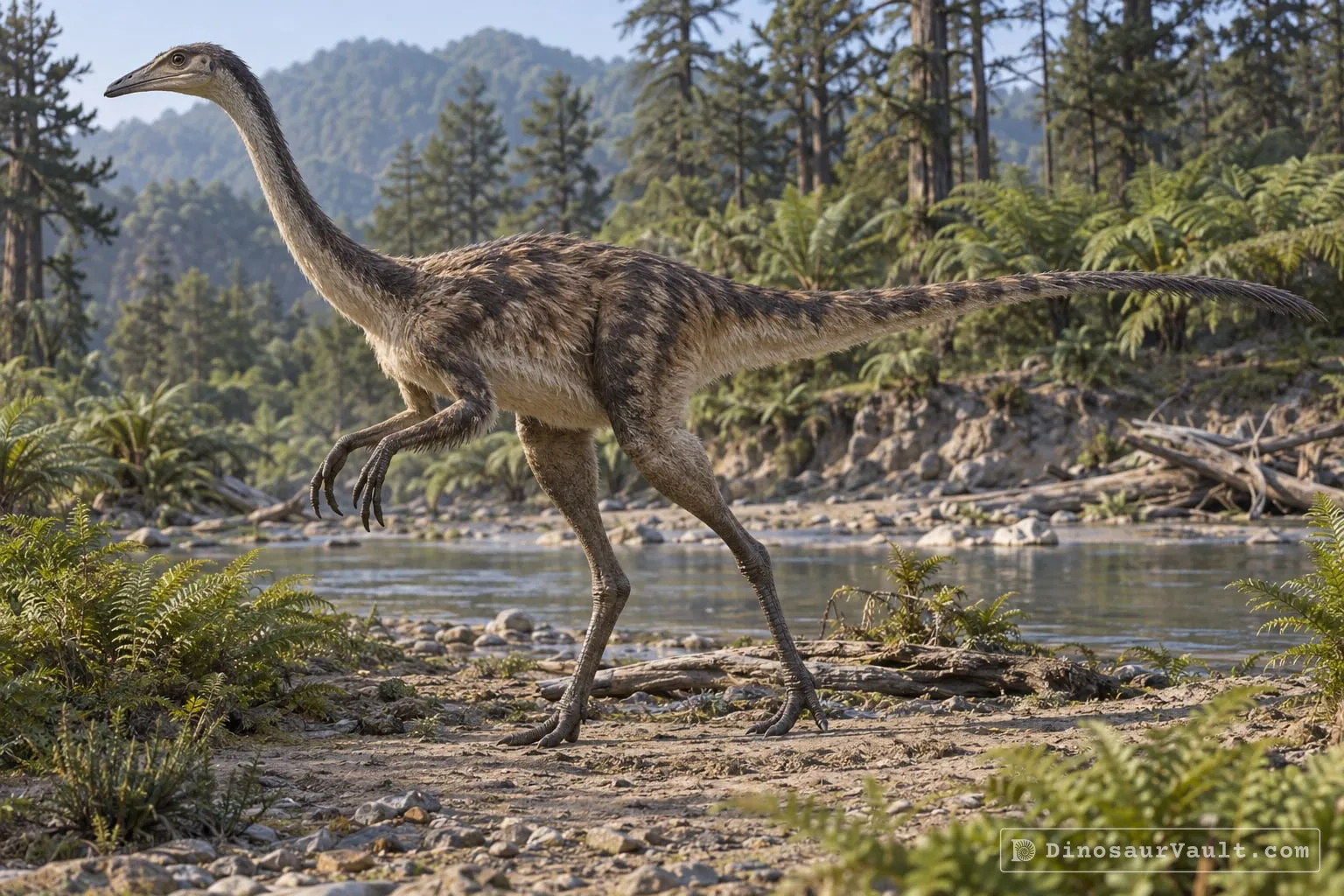
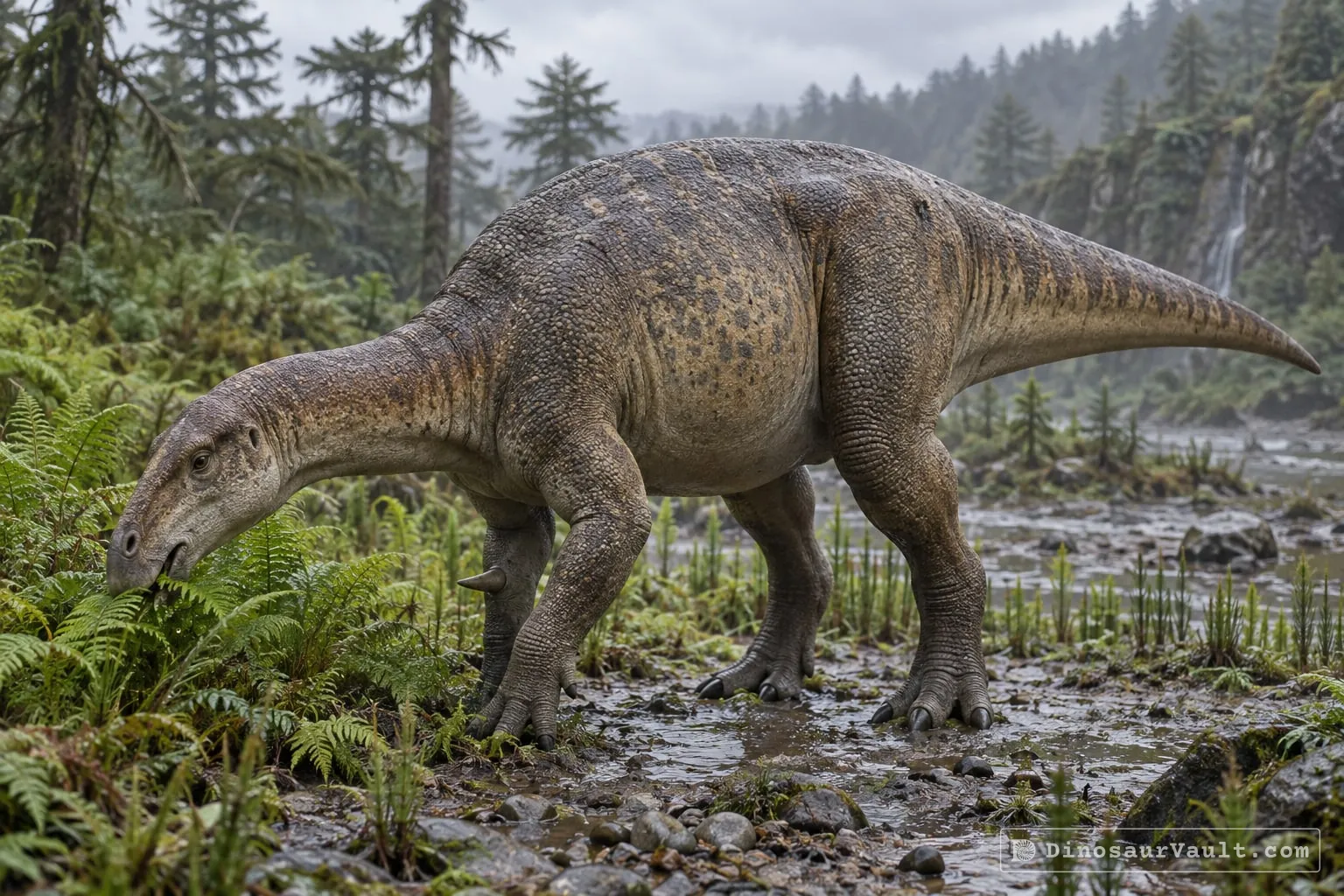


A rock formation can hold fossils laid down millions of years apart, so not every animal here met Fukuititan.
The evidence
The science behind Fukuititan
Which parts of the picture come from its own bones, and which come from its relatives.
From its own fossils
- An incomplete skeleton preserves teeth, vertebrae and parts of the limbs and pelvis.
- Its teeth have long, uneven crowns, and its neck vertebrae carry stalk-like projections.
- The long hand bones and slightly widened ends of the lower hip bones help distinguish it from other sauropods.
Borrowed from relatives
- Its small head, long neck and four-legged stance follow the body plan of other titanosauriform sauropods.
Still unknown
- The complete shape of its skull and the full length of its neck.
- Its skin texture and color.
- Which plants it ate.
Discovery timeline
- 2010Named itAZUMA & SHIBATA
- 2013Its worldLegrand et al.
- 2015Same rocksSHIBATA & AZUMA
Key papers
The research behind what we know of Fukuititan
Named it
Named a titanosauriform from an incomplete skeleton, recognizing distinctive teeth, neck vertebrae and limb proportions.
Fukuititan nipponensis, A New Titanosauriform Sauropod from the Early Cretaceous Tetori Group of Fukui Prefecture, Japan. Acta Geologica Sinica - English Edition 84: 454-462
Read the paper : Fukuititan nipponensis, A New Titanosauriform Sauropod from the Early Cretaceous Tetori Group of Fukui Prefecture, Japan (opens in a new tab)Its world
Identified fern spores, conifer pollen and freshwater algae from the dinosaur quarry, revealing vegetation around rivers and lakes.
Lower Cretaceous (Upper Barremian-Lower Aptian?) Palynoflora from the Kitadani Formation (Tetori Group, Inner Zone of Central Japan). Paleontological Research 17: 201-229
Read the paper : Lower Cretaceous (Upper Barremian-Lower Aptian?) Palynoflora from the Kitadani Formation (Tetori Group, Inner Zone of Central Japan) (opens in a new tab)Same rocks
Described Koshisaurus, another plant eater from the Kitadani Formation, and documented the quarry's dinosaur-bearing layers.
New basal hadrosauroid (Dinosauria: Ornithopoda) from the Lower Cretaceous Kitadani Formation, Fukui, central Japan. Zootaxa 3914
Read the paper : New basal hadrosauroid (Dinosauria: Ornithopoda) from the Lower Cretaceous Kitadani Formation, Fukui, central Japan (opens in a new tab)
Close relatives
Other members of Titanosauriformes


Sources: Wikidata