Fushanosaurus
Type species Fushanosaurus qitaiensis
- Lived
- 162 to 155 million years ago, Late Jurassic
- Diet
- Herbivore
- Group
- Sauropods
- Found in
- China
- Named by
- Wang et al. 2019
Where its fossils were found
The evidence
Today

160 million years ago
Habitat
River plains with marshy ground and stands of trees in what is now China. Mamenchisaurus, Sinraptor and Limusaurus are also known from the Shishugou Formation.
Field notes
About Fushanosaurus
What it was like
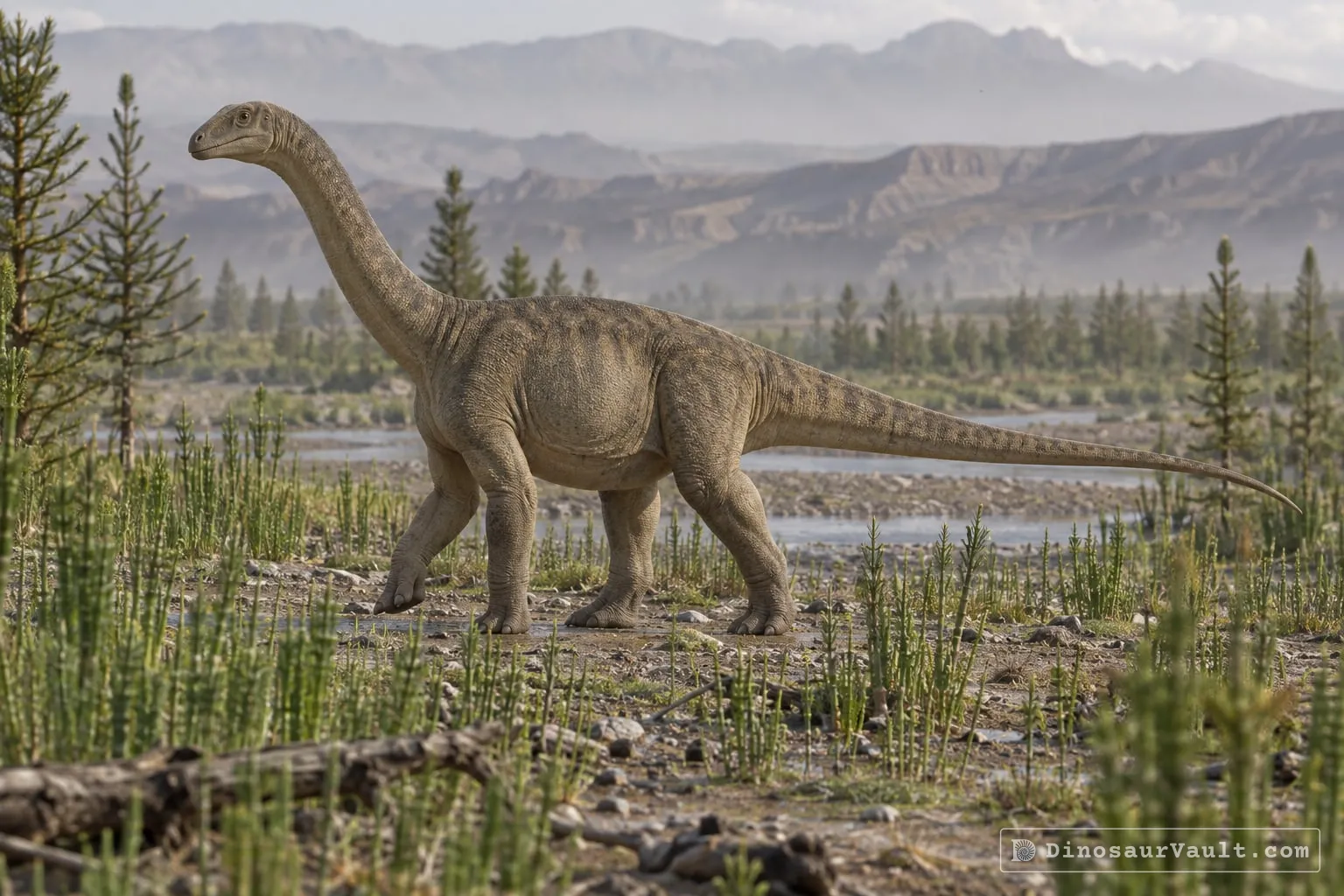
Fushanosaurus was a large sauropod known from a single thigh bone. It is one of the earliest members of the titanosauriforms, the group that later gave rise to the titanosaurs.
Its world
It lived in the Late Jurassic, in what is now China. It comes from the Shishugou Formation, where it shared the land with the long-necked Mamenchisaurus and the predators Sinraptor and Monolophosaurus.
How it was found
Wang and colleagues named Fushanosaurus in 2019. The type species is Fushanosaurus qitaiensis. Its name comes from the museum that holds it.
Field gallery
More views of Fushanosaurus
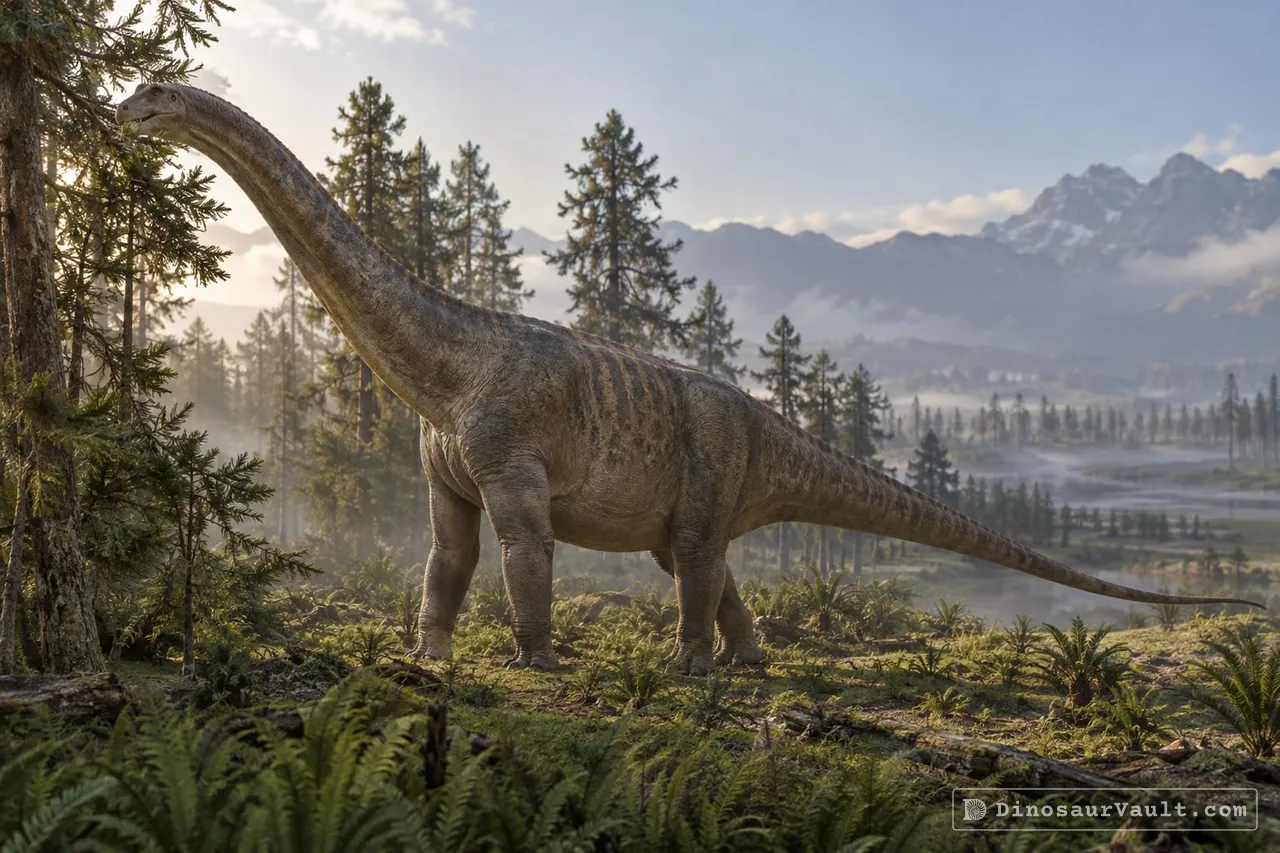
Scenes reconstructed from the available fossil evidence.
Lived alongside
Found in the same rock formations
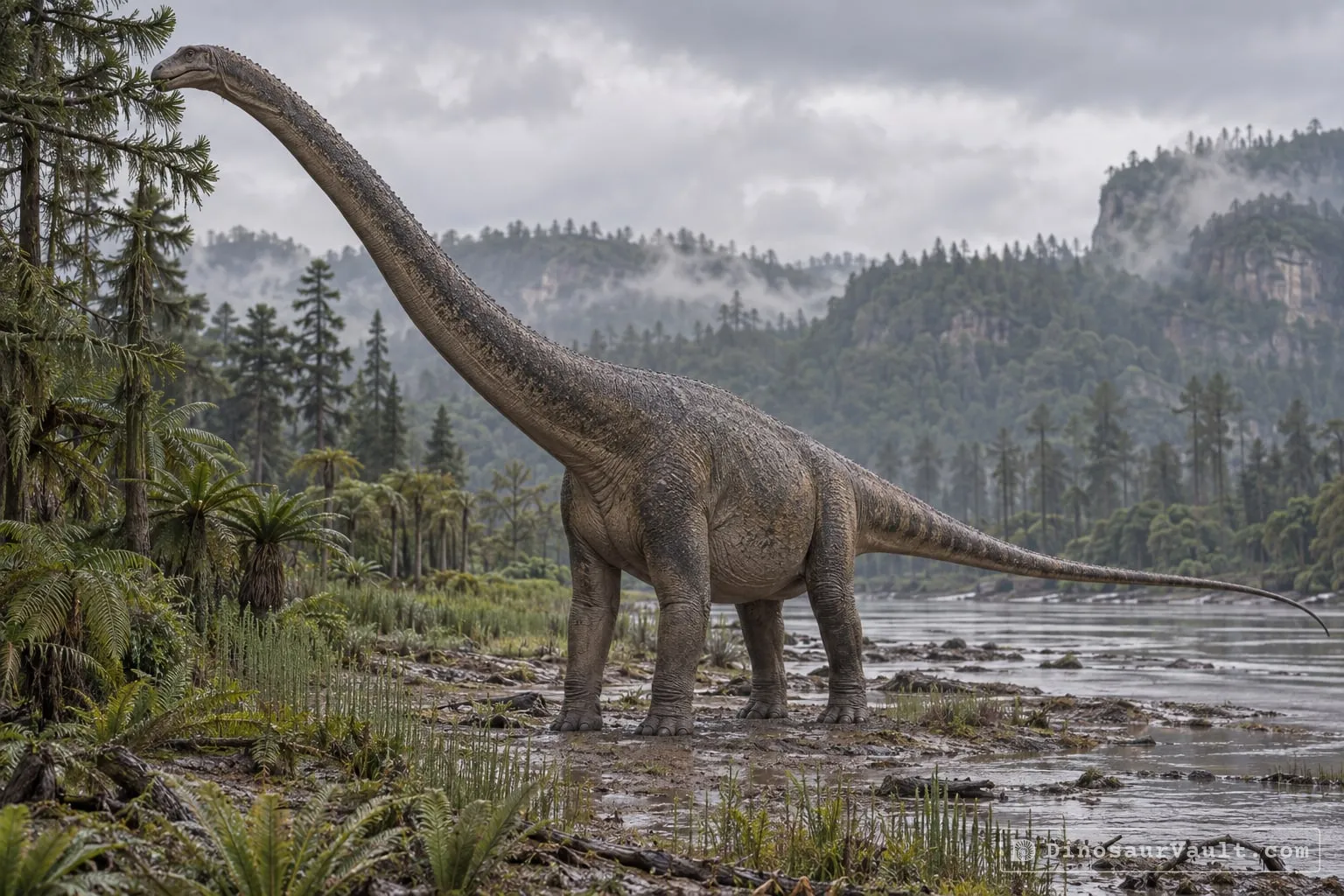
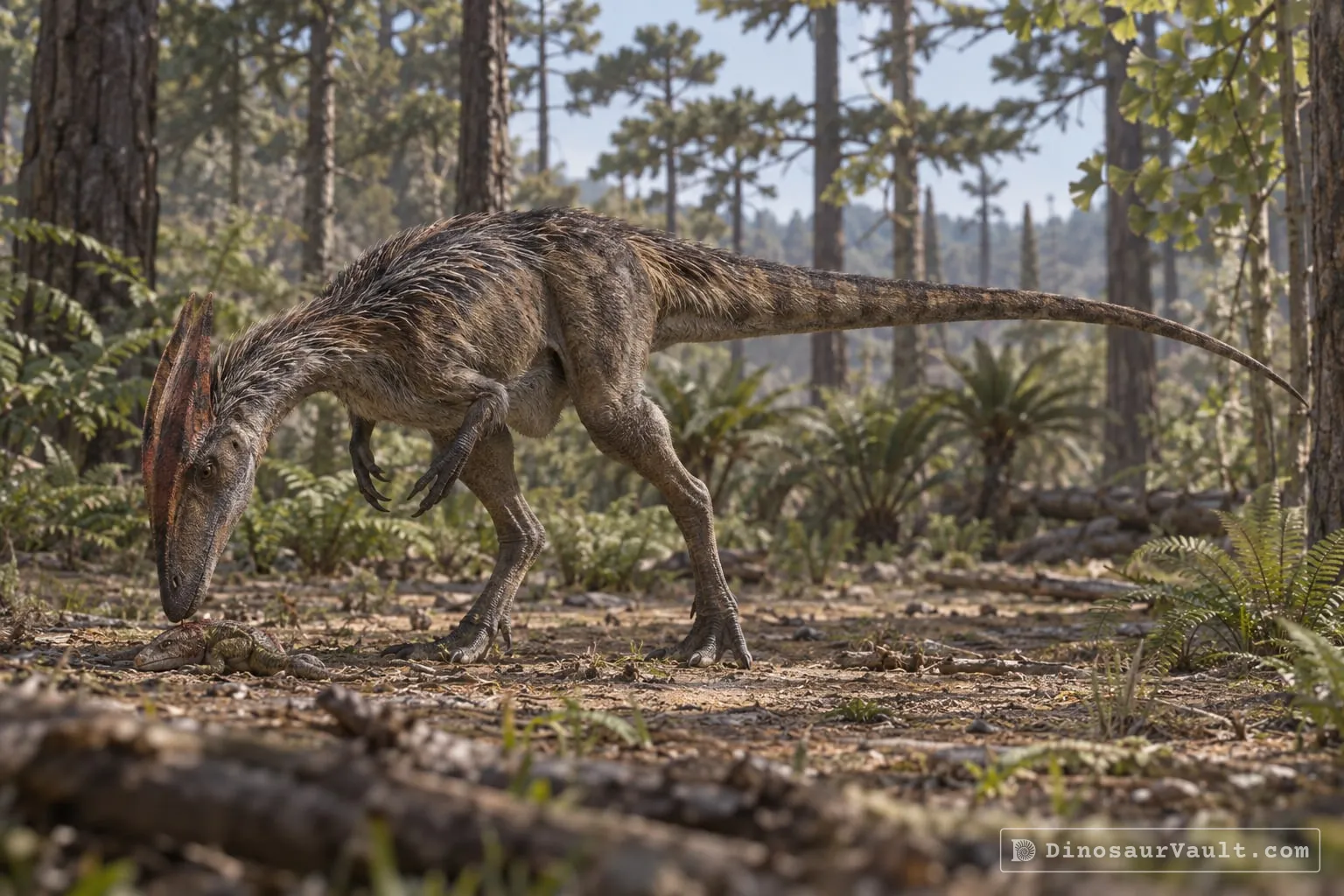
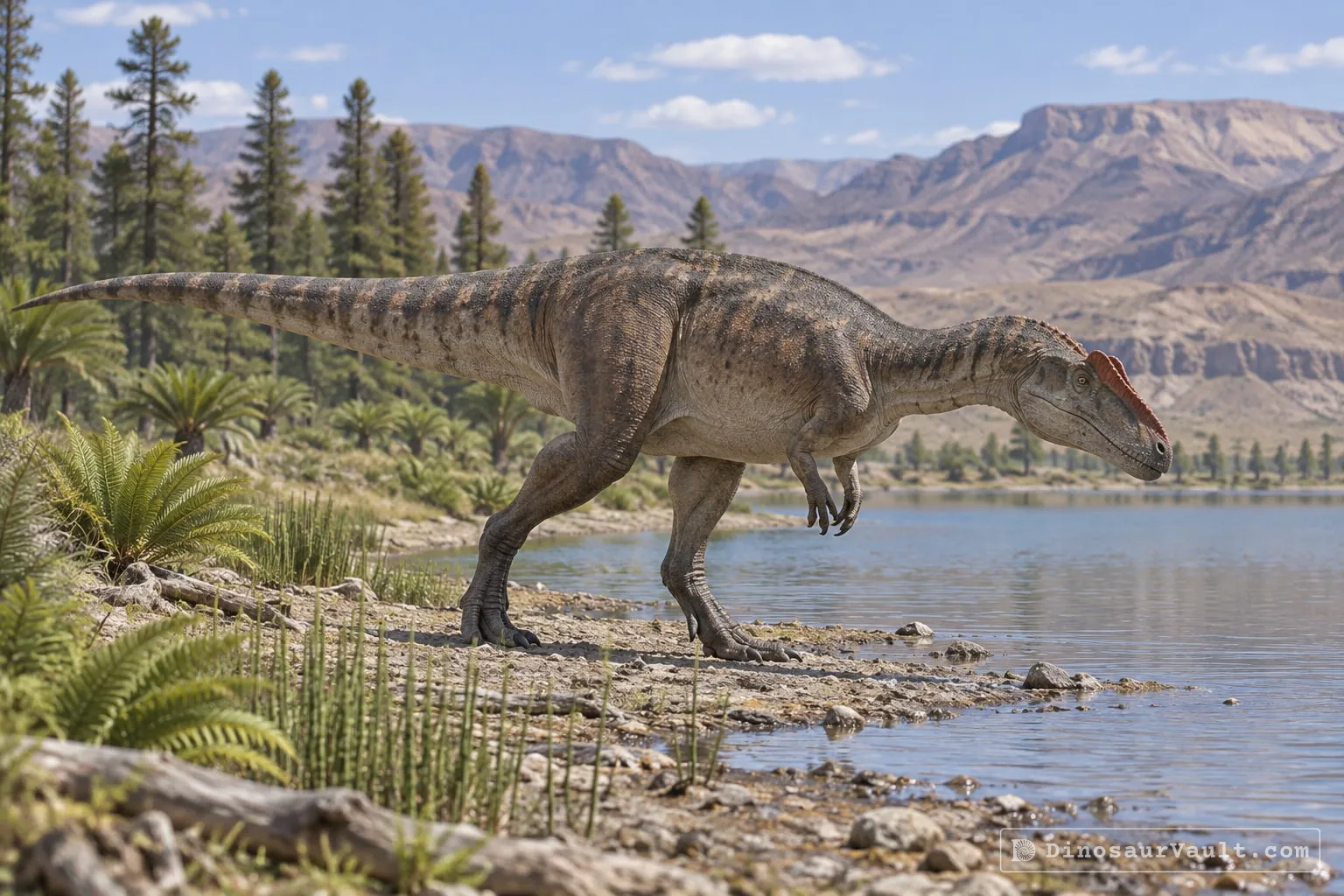
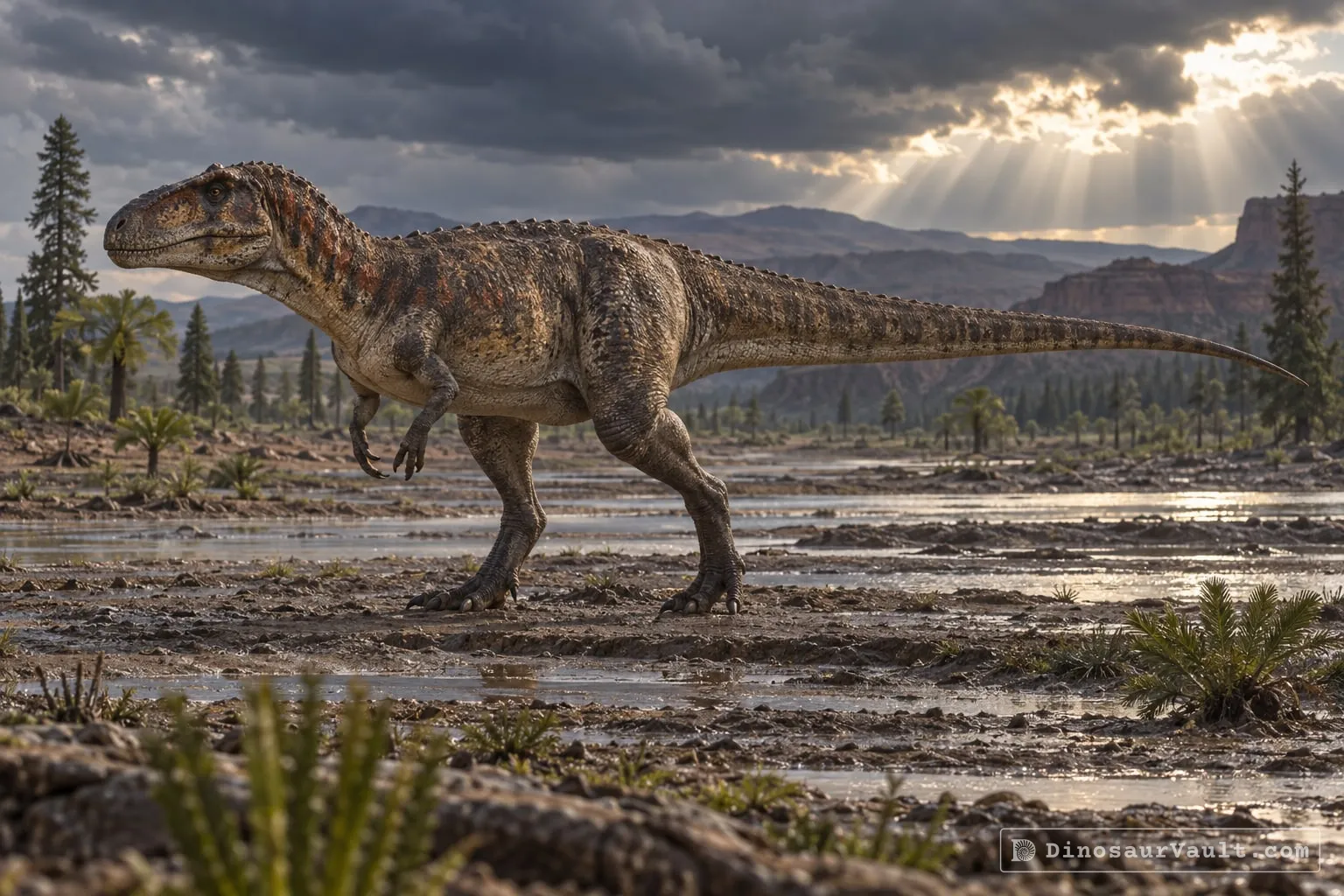
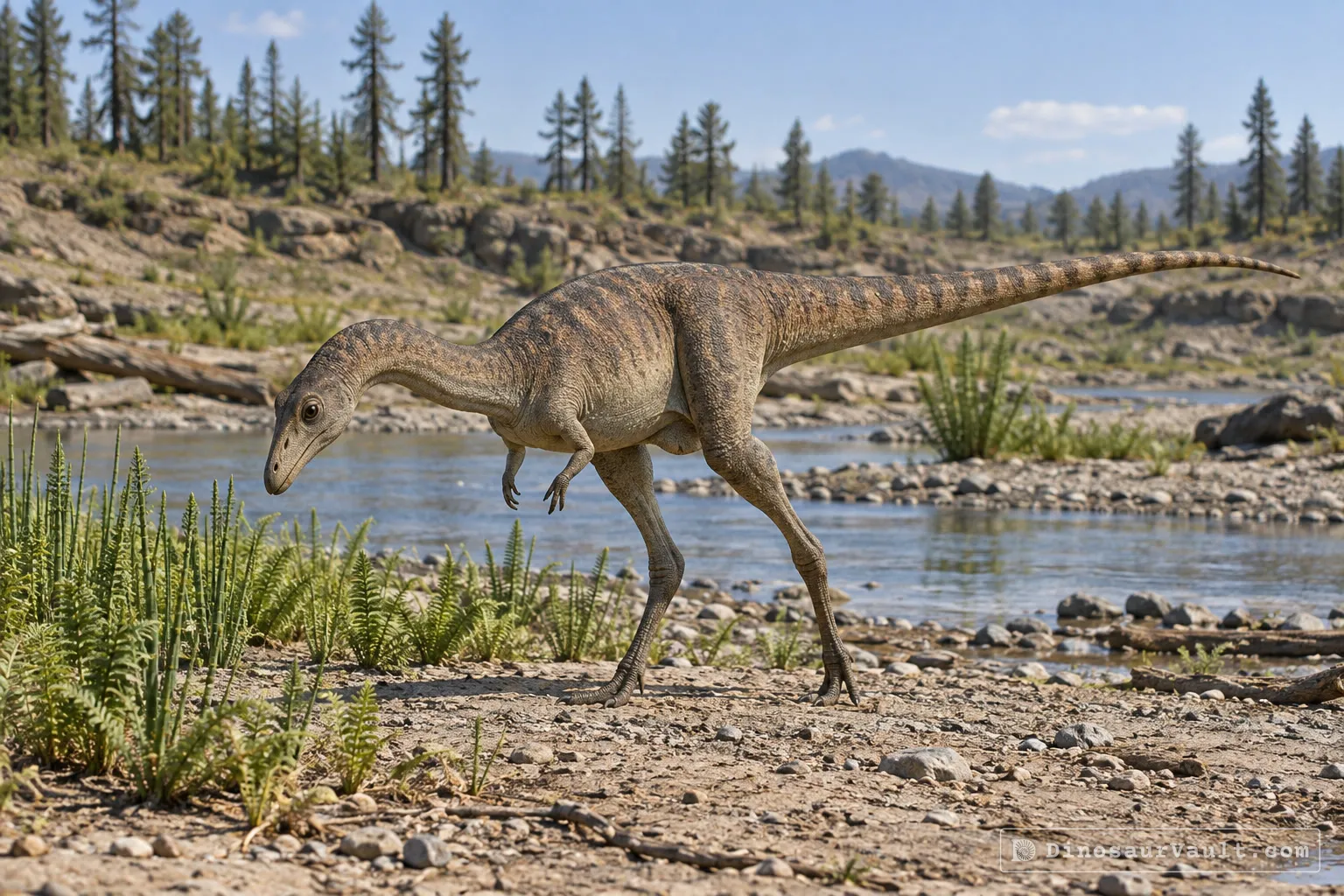
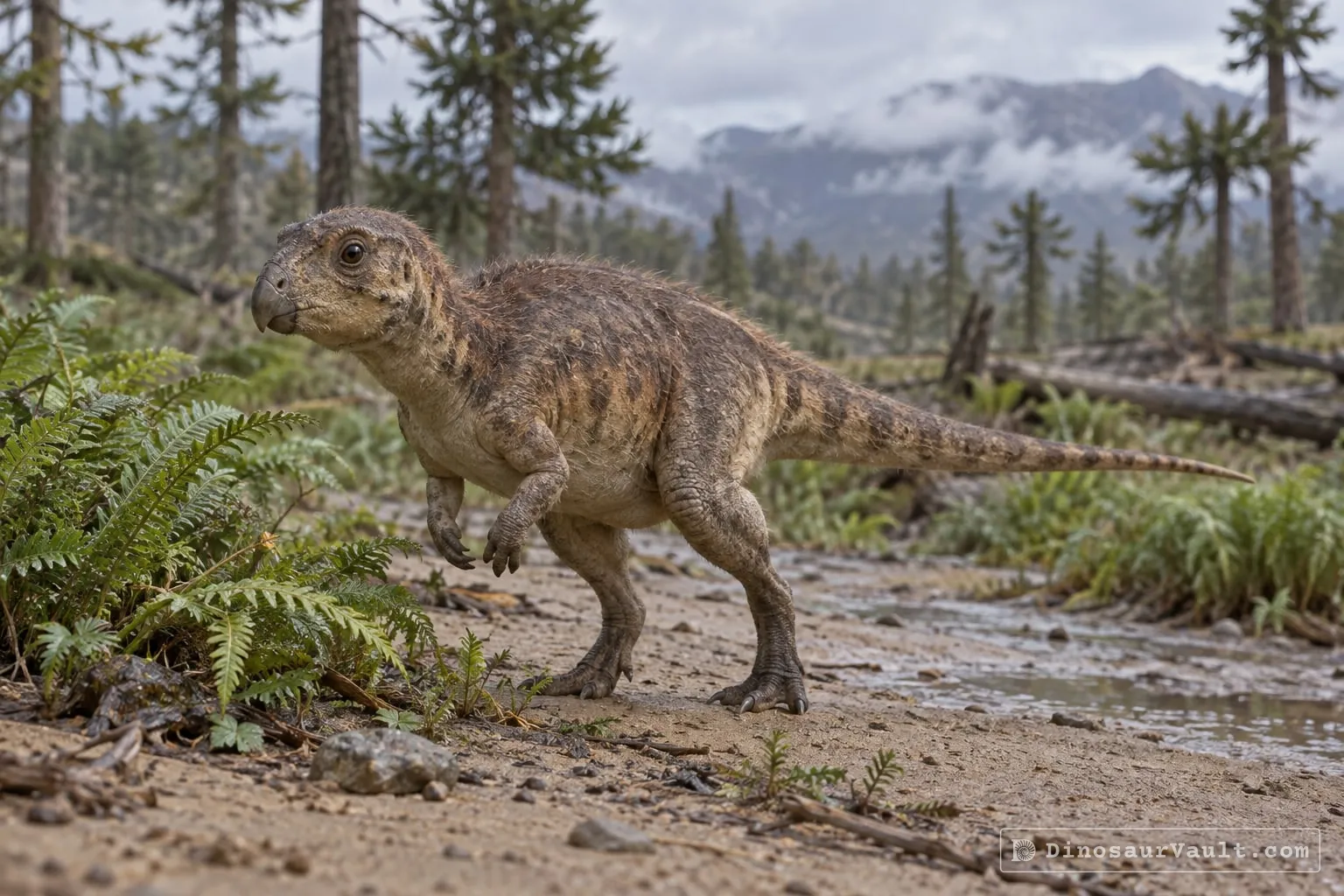
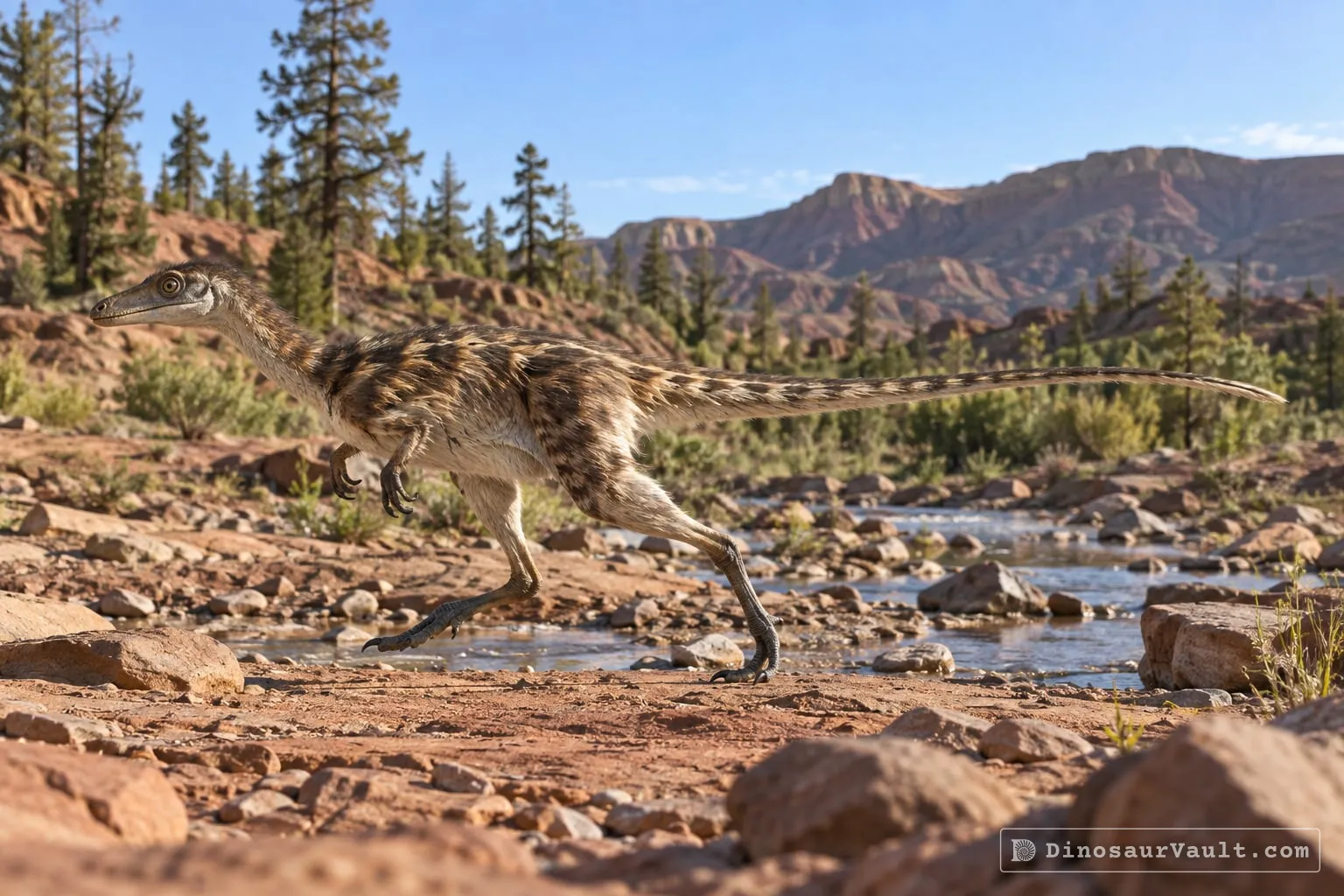


A rock formation can hold fossils laid down millions of years apart, so not every animal here met Fushanosaurus.
The evidence
The science behind Fushanosaurus
Which parts of the picture come from its own bones, and which come from its relatives.
From its own fossils
- A right thigh bone is the only known specimen.
Borrowed from relatives
- The missing head, neck and body are general sauropod guesses.
Still unknown
- Its total length and weight.
- The shape of its head, the length of its neck and the rest of its body.
- Whether it belongs among titanosauriforms: a later study called its identity uncertain, and another noted that the features cited for that placement occur in other sauropods.
Discovery timeline
- 2010Its worldEBERTH, XING & CLARK
- 2019Named itWang et al.
- 2020Same rocksMoore et al.
- 2023Family treeMoore et al.
Key papers
The research behind what we know of Fushanosaurus
Its world
Small dinosaurs in the Shishugou Formation became trapped in wet mud churned by larger animals.
DINOSAUR DEATH PITS FROM THE JURASSIC OF CHINA. PALAIOS 25: 112-125
Read the paper : DINOSAUR DEATH PITS FROM THE JURASSIC OF CHINA (opens in a new tab)Named it
Named a sauropod from a right thigh bone and proposed that it was a titanosauriform.
A new titanosauriform dinosaur (Dinosauria: Sauropoda) from Late Jurassic of Junggar Basin, Xinjiang. Global Geology 38: 581-588
No link available
Same rocks
Redescribed Klamelisaurus, another sauropod from the Shishugou Formation, and examined the relationships of Jurassic Chinese sauropods.
Osteology ofKlamelisaurus gobiensis(Dinosauria, Eusauropoda) and the evolutionary history of Middle–Late Jurassic Chinese sauropods. Journal of Systematic Palaeontology 18: 1299-1393
Read the paper : Osteology ofKlamelisaurus gobiensis(Dinosauria, Eusauropoda) and the evolutionary history of Middle–Late Jurassic Chinese sauropods (opens in a new tab)Family tree
Noted that the isolated thigh bone has not been tested in a family-tree analysis and that its identity is uncertain.
Re-assessment of the Late Jurassic eusauropod Mamenchisaurus sinocanadorum Russell and Zheng, 1993, and the evolution of exceptionally long necks in mamenchisaurids. Journal of Systematic Palaeontology 21
Read the paper : Re-assessment of the Late Jurassic eusauropod Mamenchisaurus sinocanadorum Russell and Zheng, 1993, and the evolution of exceptionally long necks in mamenchisaurids (opens in a new tab)
Close relatives
Other members of Titanosauriformes


Sources: Wikidata