Liaoceratops
"Liaoning horned face"
- Lived
- 126 to 120 million years ago, Early Cretaceous
- Diet
- Herbivore
- Group
- Ceratopsians
- Found in
- China
- Named by
- Xu et al. 2002
Where its fossils were found
The evidence
Today

125 million years ago
Habitat
Conifer forests and lakes formed part of the landscape preserved in the Yixian Formation in China. Psittacosaurus, Yutyrannus and Sinornithosaurus also lived in this region.
Field notes
About Liaoceratops
What it was like
Liaoceratops was a very small, early horned dinosaur, about the size of a small dog. It had a small frill and horn-like bumps on its cheeks. It is one of the earliest known members of the line that led to Triceratops.
Its world
It lived in the Early Cretaceous, in what is now China. It comes from the Yixian Formation, where it shared the land with Psittacosaurus, the feathered tyrannosaur Yutyrannus and the small hunter Sinornithosaurus.
How it was found
Xu and colleagues named Liaoceratops in 2002.
Field gallery
More views of Liaoceratops
Scenes reconstructed from the available fossil evidence.

1 of 3
Lived alongside
Found in the same rock formations
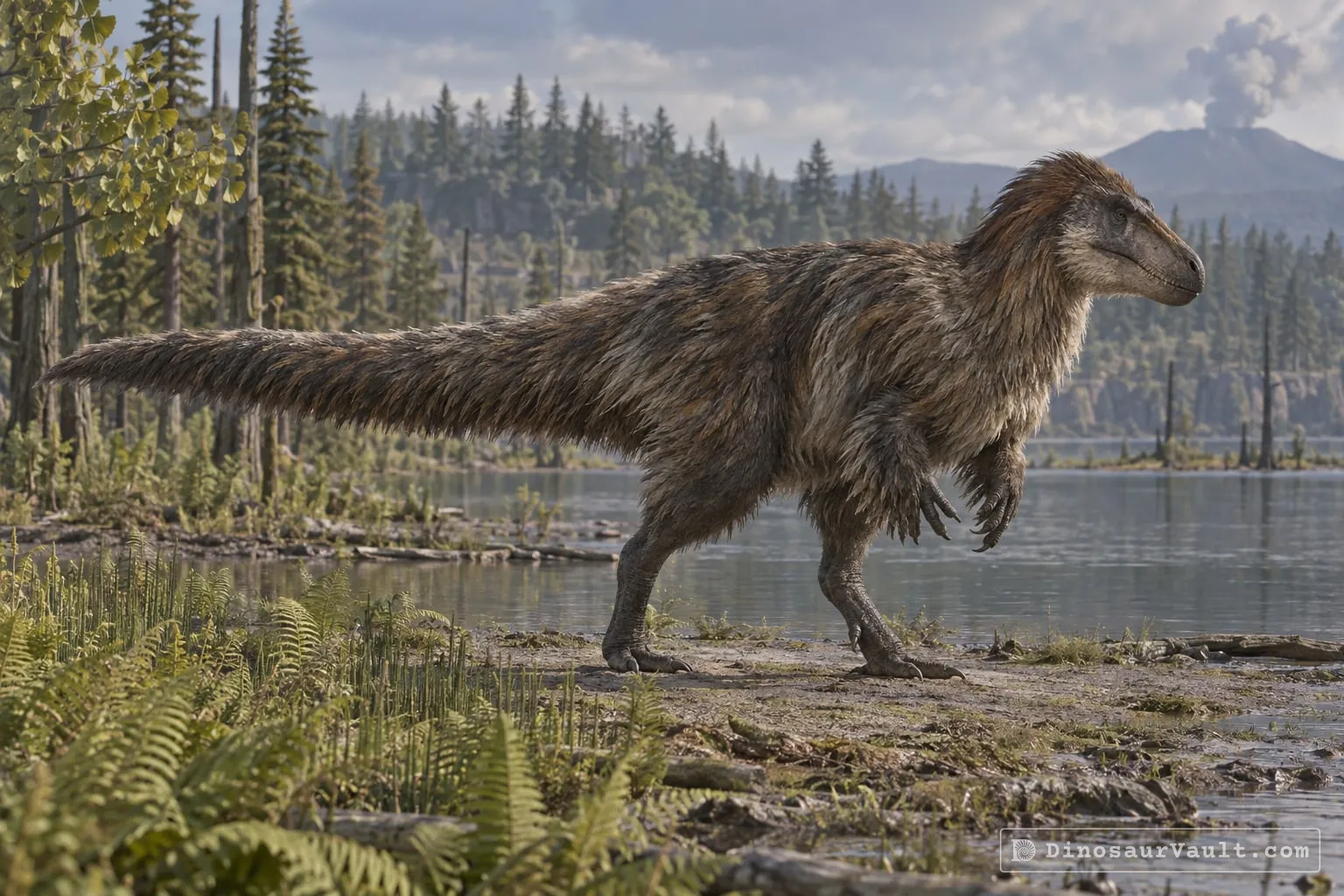

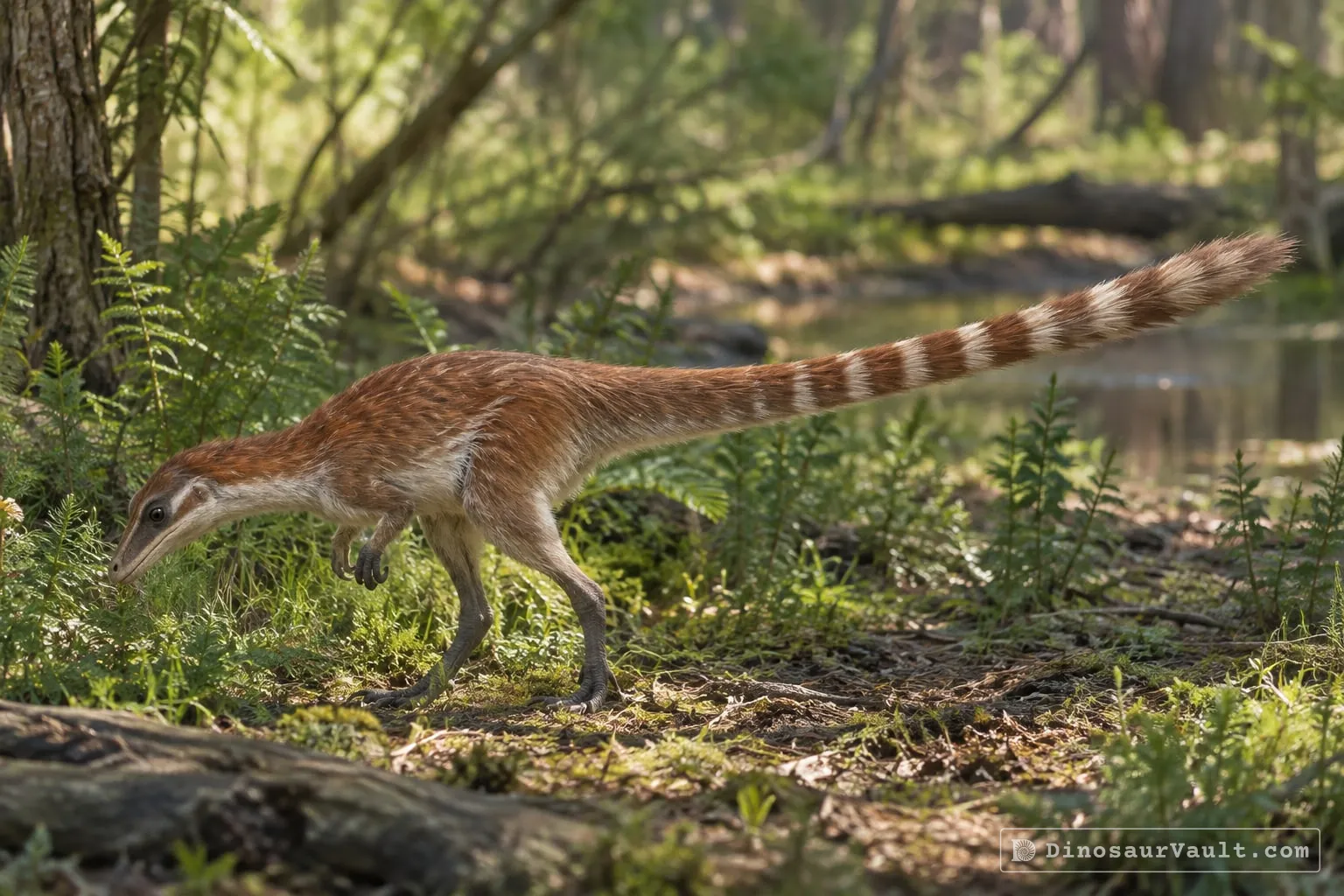


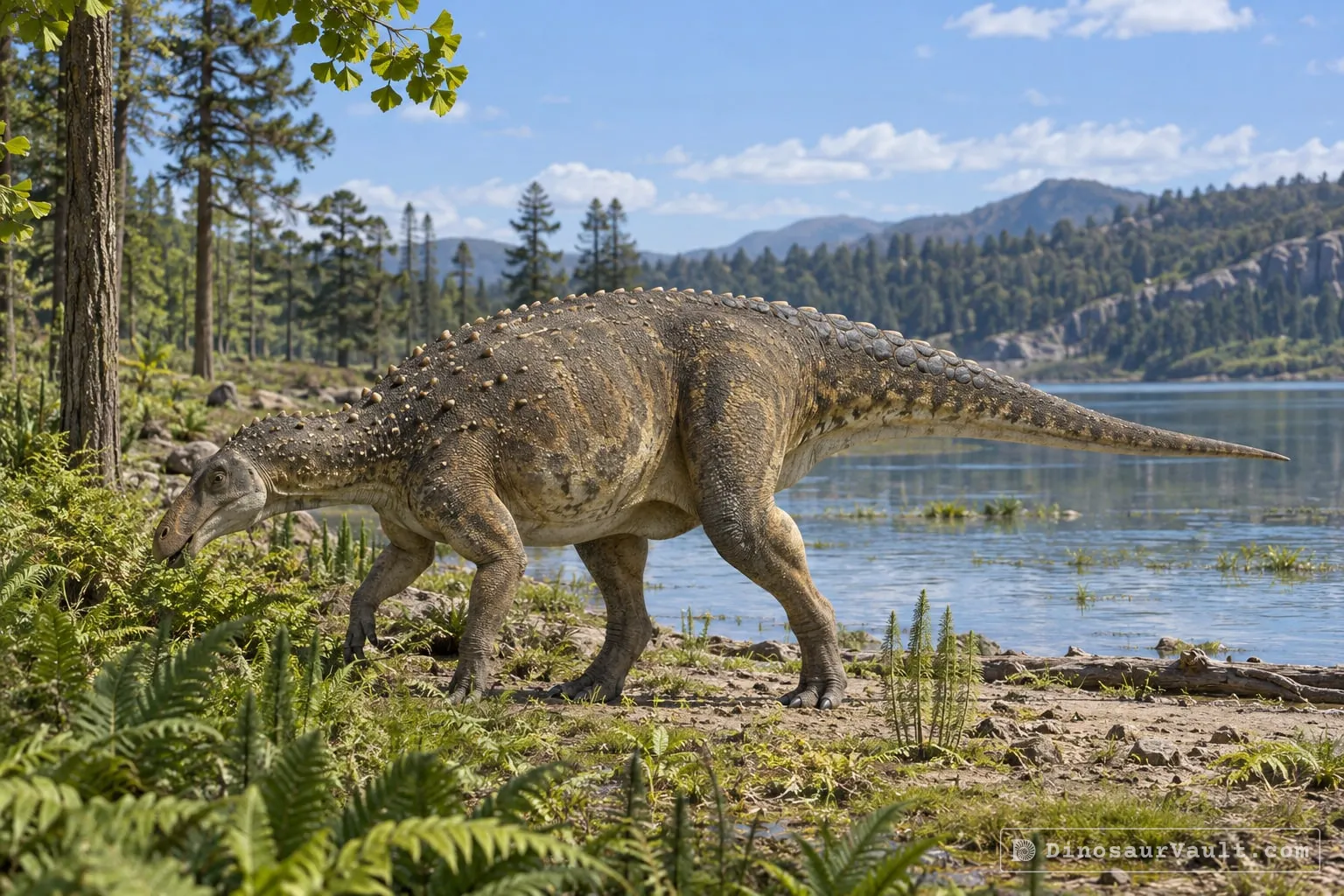
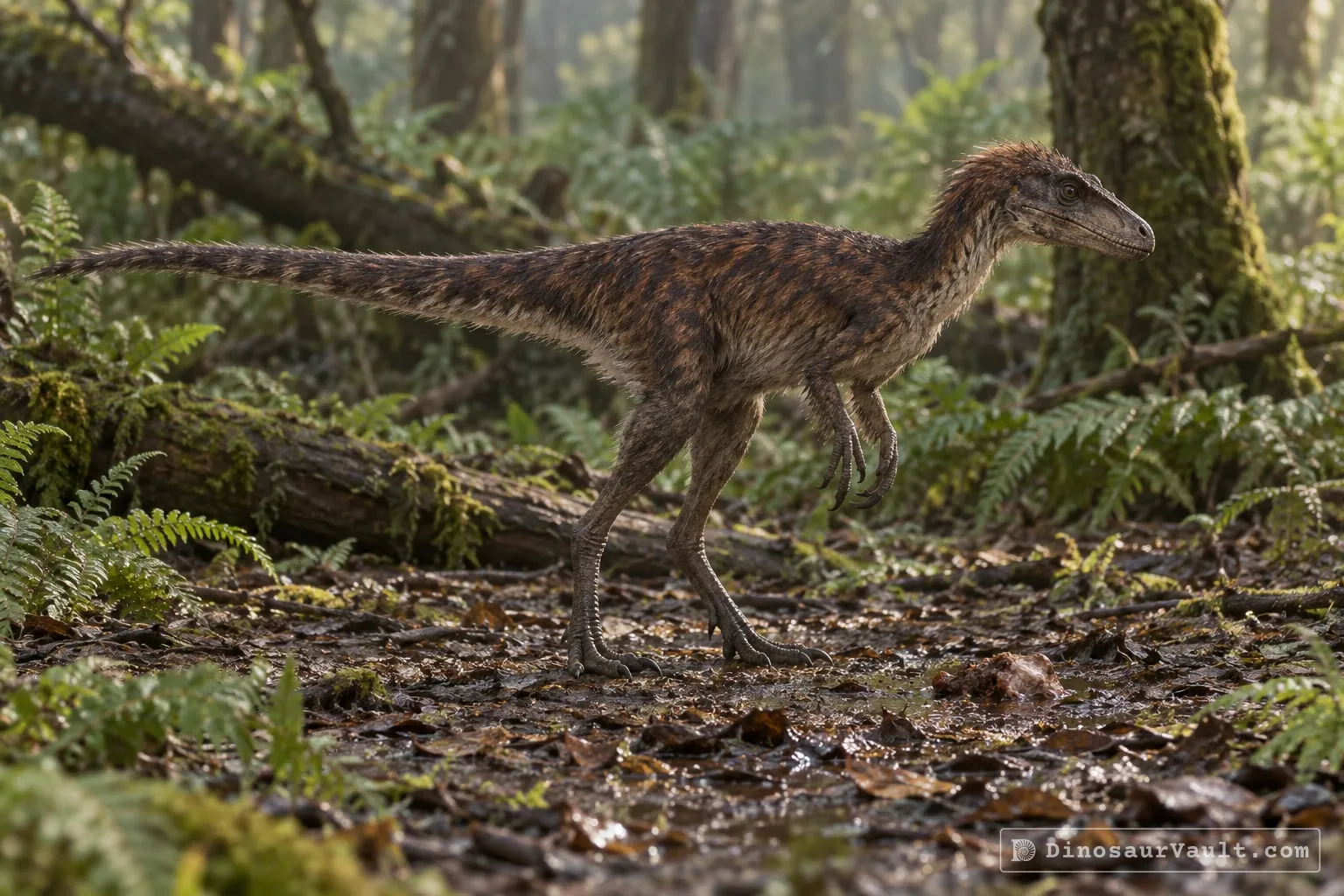


A rock formation can hold fossils laid down millions of years apart, so not every animal here met Liaoceratops.
The evidence
The science behind Liaoceratops
Which parts of the picture come from its own bones, and which come from its relatives.
From its own fossils
- Adult and young skulls show a small frill and horn-like projections on the cheeks.
- Scans of the jaws reveal replacement teeth developing behind the teeth in use.
- Remnants of older tooth roots remain buried inside the growing jaws.
Borrowed from relatives
- The body is restored from better-known early horned dinosaurs such as Archaeoceratops; its own skulls provide the head shape.
Still unknown
- Its body proportions and usual walking posture.
- Its skin covering and color.
- How it used its cheek projections and small frill.
Discovery timeline
- 2002Named itXu et al.
- 2018How it fedHe et al.
Key papers
The research behind what we know of Liaoceratops
Named it
Described skulls of a small early horned dinosaur that helped trace the beginnings of the later horned-dinosaur lineage.
A ceratopsian dinosaur from China and the early evolution of Ceratopsia. Nature 416: 314-317
Read the paper : A ceratopsian dinosaur from China and the early evolution of Ceratopsia (opens in a new tab)How it fed
Scanned young and adult jaws, revealing developing replacement teeth and buried roots left by earlier generations of teeth.
High-resolution computed tomographic analysis of tooth replacement pattern of the basal neoceratopsian Liaoceratops yanzigouensis informs ceratopsian dental evolution. Scientific Reports 8
Read the paper : High-resolution computed tomographic analysis of tooth replacement pattern of the basal neoceratopsian Liaoceratops yanzigouensis informs ceratopsian dental evolution (opens in a new tab)
Close relatives
Other members of Neoceratopsia


Sources: Wikidata