Outline: a typical ceratopsian
Mosaiceratops
Type species Mosaiceratops azumai
- Lived
- 94 to 72 million years ago, Late Cretaceous
- Diet
- Herbivore
- Group
- Ceratopsians
- Found in
- China
- Named by
- Zheng et al. 2015
Where its fossils were found
The evidence
Today

80 million years ago
Field notes
About Mosaiceratops
What it was like
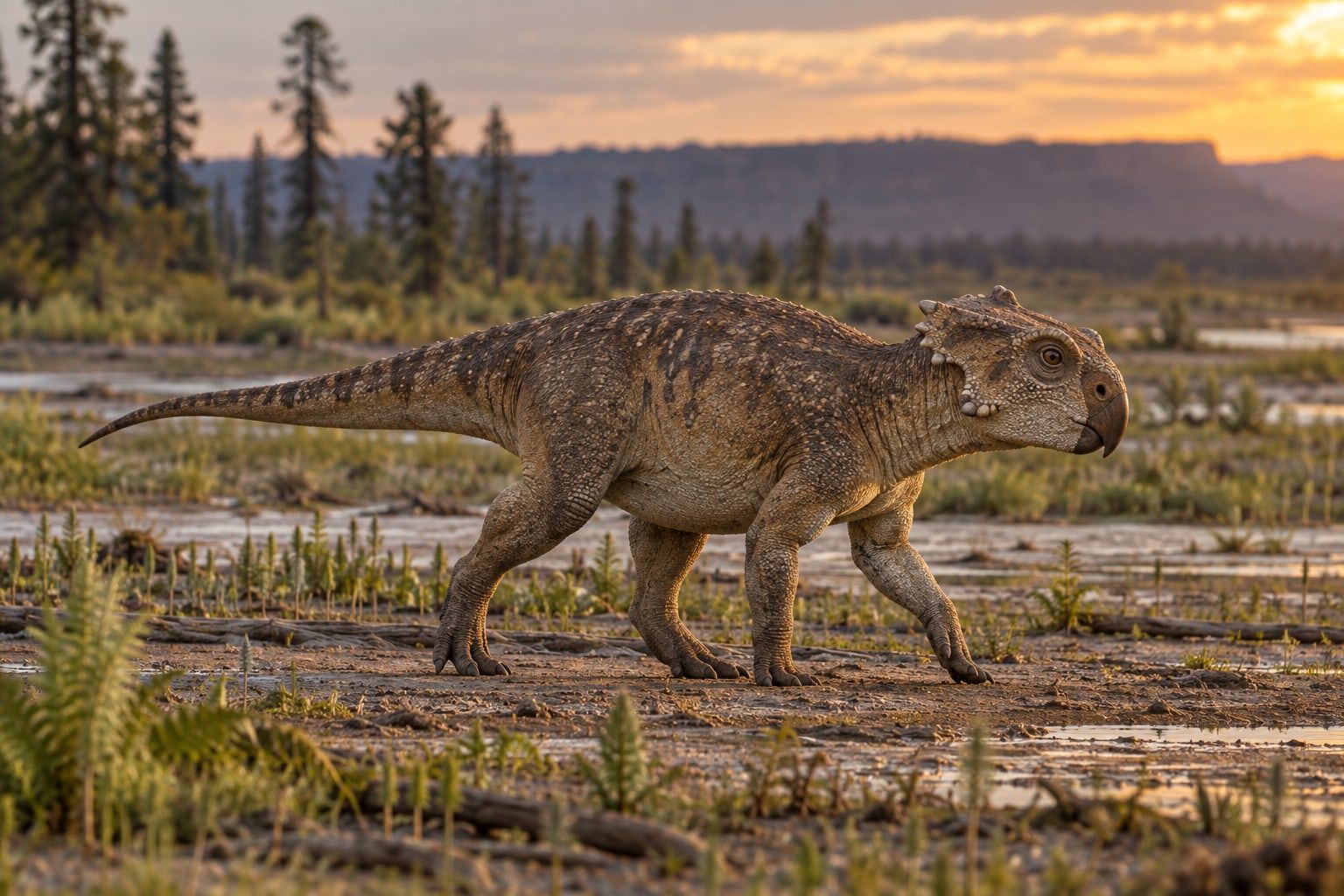
Mosaiceratops was a small horned dinosaur with a beak and no horns. It had a mix of old and new features, like a mosaic, which gave it its name.
Its world
It lived in the Late Cretaceous, in what is now China. It comes from the Xiaguan Formation, where the sauropod Baotianmansaurus was also found.
How it was found
Zheng and colleagues named Mosaiceratops in 2015. The type species is Mosaiceratops azumai.
Lived alongside
Found in the same rock formations
Close relatives
Other members of Neoceratopsia
Sources: WikidataNamed in: W. Zheng, X. Jin, and X. Xu. 2015. A psittacosaurid-like basal neoceratopsian from the Upper Cretaceous of central China and its implications for basal ceratopsian evolution. Scientific Reports 5:14190:1-9